Table of Contents
What a Pebble Tray Is
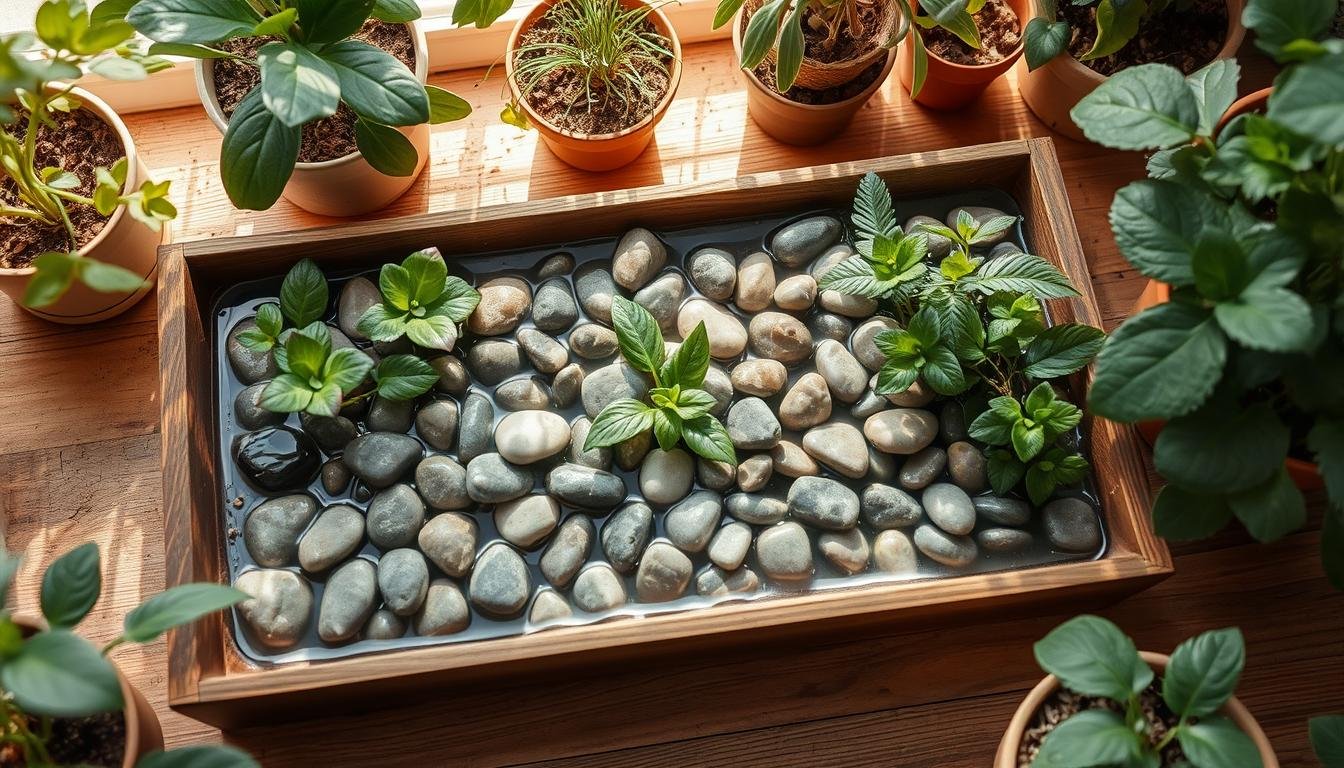
A pebble tray is a shallow tray or saucer filled with stones and a small amount of water, with the plant pot resting on top of the stones rather than sitting directly in the water. The basic idea is simple: as the water evaporates, it adds a bit of moisture to the air immediately around the plant. That makes a pebble tray a localized humidity tool, not a room-wide solution. Missouri Botanical Garden, Nebraska Extension, and other plant-care sources describe it as a practical way to raise humidity around indoor plants, especially when winter heating dries the air out. (Missouri Botanical Garden)
The key word is localized. A pebble tray does not turn a dry living room into a tropical greenhouse. Current horticultural guidance is far more restrained than the hype you see on social media: pebble trays can help a little, especially near the foliage of smaller plants, but moving air in most homes quickly disperses that added moisture. Better Homes & Gardens quoted horticulturist Justin Hancock saying pebble trays can work, but their effect drops off as air circulation spreads the humidity through the room. (Better Homes & Gardens)
Why Dry Indoor Air Stresses Houseplants
Most common houseplants are comfortable somewhere around 40% to 60% relative humidity, while many tropical species prefer even more. University of New Hampshire Extension says most houseplants do well in the 40% to 60% range and notes that some tropicals prefer roughly 70% to 80%. Missouri Extension also points to 40% to 60% as a strong target for many indoor plants, while the EPA recommends keeping home humidity between 30% and 50% to avoid indoor air issues like mold. That overlap matters because plant needs and home-health needs are related, but not always identical. (Extension | University of New Hampshire)
This is why the “before” side of the pebble tray story matters. Before you add one, many plants are not suffering from a total lack of water in the soil. They are losing moisture through their leaves faster than dry indoor air lets them comfortably replace it. Heated homes are especially rough on tropical foliage plants because warm forced air lowers relative humidity. That mismatch often shows up fastest in thin leaves, soft leaves, and plants that evolved in humid understory conditions rather than desert climates. (Extension | University of New Hampshire)
Common Low-Humidity Symptoms
Low humidity does not create one neat, universal symptom, which is why plant owners misread it all the time. The classic signs are brown or crispy leaf edges, dry tips, curling leaves, some leaf drop, and stalled-looking new growth. Better Homes & Gardens also highlights that dry conditions can make spider mites more likely, which is one reason a plant can look worse in winter even when your watering schedule has not changed much. (Extension | University of New Hampshire)
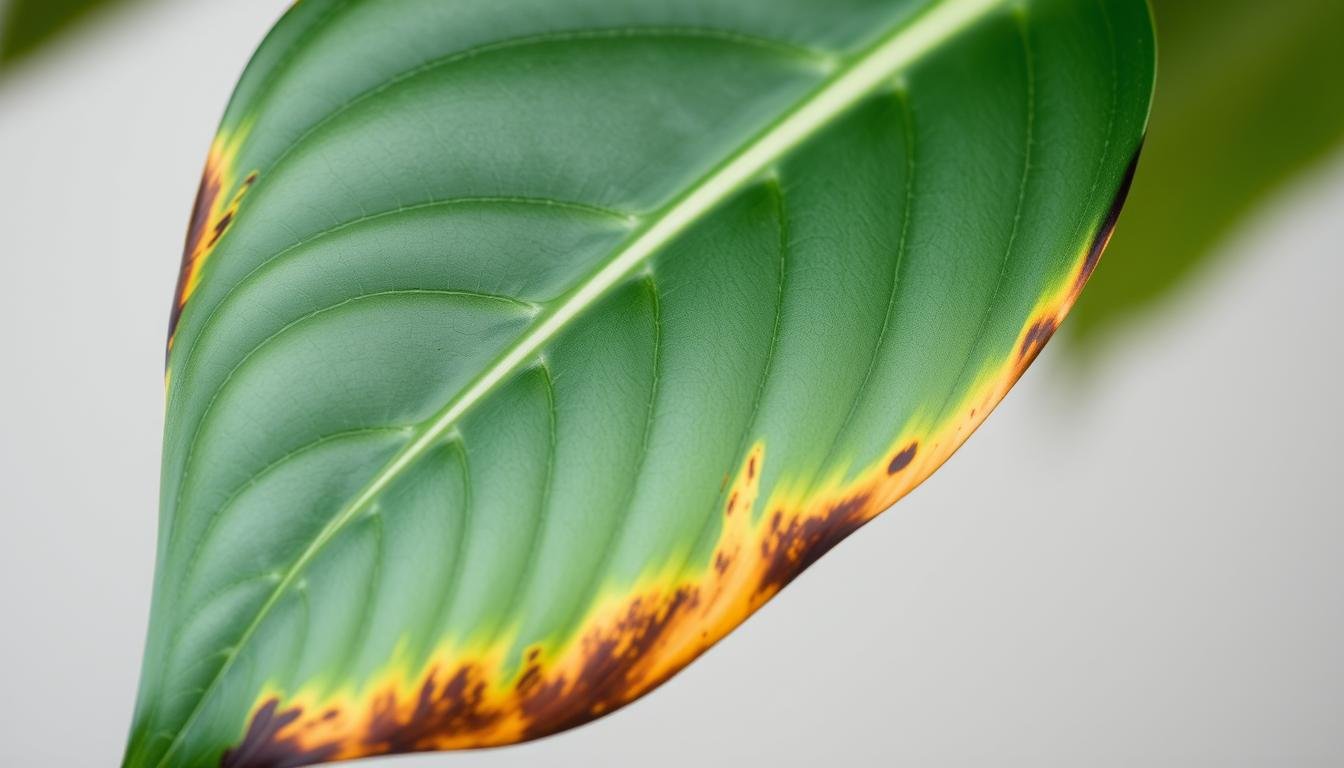
The catch is that these symptoms overlap with other problems. Brown edges can mean dry air, but they can also point to inconsistent watering, fertilizer salt buildup, hard water sensitivity, or too much direct sun. Wilting can mean low humidity, but it can also mean the roots are already stressed from overwatering. That is why a “before and after” comparison only makes sense if you first rule out the obvious impostors. (Better Homes & Gardens)
Plants That Benefit Most
A pebble tray for houseplants makes the most sense for smaller, humidity-loving plants that sit close to the tray and notice minor humidity gains around their leaves. Recent horticultural guidance specifically calls out fittonia, creeping ficus, ferns, calathea-type plants, orchids, and other tropical foliage plants as the kinds most likely to respond. By contrast, cacti and many succulents are poor candidates because dry air is not their main problem. (Better Homes & Gardens)
Plant size also matters more than many guides admit. A compact fern or fittonia hovering just above a broad, damp tray is positioned to benefit from that tiny humidity bubble. A large monstera with leaves stretching well beyond the tray footprint will experience far less of that effect, especially in a room with fans, HVAC vents, or frequent drafts. The closer the foliage is to the evaporation zone, the more likely you are to notice a difference. (Better Homes & Gardens)
Before Using a Pebble Tray
The most useful thing you can do before setting up a tray is stop guessing. A hygrometer tells you whether the air around your plants is 28%, 42%, or 58% humidity, and that number changes the whole diagnosis. If your room is already sitting near the upper end of the normal range, a pebble tray may do very little. If it is deeply dry because of forced-air heat, the tray may still help a bit, but you should not expect it to fix everything. Extension guidance now consistently recommends measuring humidity rather than relying on feel alone. (Extension | University of New Hampshire)
Measure Humidity and Rule Out Other Causes
Before-and-after results only count if the starting point is clear. Check humidity with a hygrometer near the plant, then look at the other basics: soil moisture, drainage, light, temperature swings, and pests. A plant that sits above a heat vent, gets blasted by afternoon sun, or lives in soggy soil will not suddenly recover because you put a tray of wet stones underneath it. The tray is a supportive adjustment, not a universal repair tool. (Extension | University of New Hampshire)
This is also the point where expectations should get realistic. If your plant has heavy brown edging already, those damaged areas usually do not turn green again. What you are looking for after using a pebble tray is not cosmetic reversal of old damage. You are looking for less new damage, slower crisping, better leaf unfurling, and steadier-looking new growth. That is a very different promise, and it is the honest one. (Better Homes & Gardens)
How Pebble Trays Actually Work
The mechanism is basic evaporation. Water in the tray slowly evaporates and slightly raises the relative humidity in the thin layer of air just above and around the tray. Extension and botanical garden guidance supports this principle, and so do modern how-to articles from major gardening publishers. The disagreement is not about whether evaporation happens. The disagreement is about how much of a practical difference that evaporation makes in a normal home. (Missouri Botanical Garden)
What Changes After Setup
After you place the plant over a properly filled tray, the immediate air around the pot and lower foliage may become a little less dry. On the plant side, that can mean slower browning on new leaves, less edge crisping, and fewer dramatic humidity swings between waterings. For a sensitive plant that was only slightly below its comfort range, that small shift may be enough to move it from “struggling” to “acceptable.” That is why some growers swear by pebble trays while others say they barely matter: both can be telling the truth from different starting conditions. (Extension | University of New Hampshire)
A modest real-world example comes from user-measured experience on Reddit, where one grower reported an average rise from about 45% to 53% humidity in the plant area after adding a pebble tray. That is not controlled scientific proof, and it should not be treated like one, but it is a useful reminder that small local gains are plausible in the right setup. The extension and horticulture sources line up with that middle-ground view: pebble trays can help a little. (Reddit)
What Does Not Change
What a pebble tray does not do is just as important. It does not humidify a whole room. It does not outmuscle a heating vent. It does not rescue a big plant sitting several inches or feet above the tray’s moisture zone. And it does not replace a humidifier when your indoor air is consistently very dry. Current expert commentary is blunt on this point: for larger plants or drier rooms, a humidifier is usually the more effective tool. (Better Homes & Gardens)
It also does not correct core care mistakes. If the pot is too dense, the light is wrong, or the roots are stressed, the tray may do almost nothing. Some growers throw a pebble tray under every unhappy plant and then conclude the method is useless. Often the method was simply addressing the wrong problem. That is why the best “after” results show up when humidity is the actual bottleneck rather than a convenient guess. (Extension | University of New Hampshire)
How to Set One Up Correctly
A proper setup is not complicated, but small mistakes ruin the point fast. The tray should be wide, shallow, and filled with clean pebbles or similar inert material. Water goes in until it sits below the top of the pebbles, so the base of the plant pot stays above the standing water. That detail matters because if the drainage holes sit in water, you shift from “humidity support” to “root-rot risk.” Multiple reputable how-to sources repeat this same core setup. (Missouri Botanical Garden)
Tray Size, Water Level, Placement, and Cleaning
Tray size affects performance more than people think. Flora Grubb notes that a wider saucer increases the humidity effect because more exposed water surface means more evaporation. Better Homes & Gardens also notes that wider trays work better for small, low-growing plants. Keep the tray near the plant but away from strong drafts, heating vents, and fans, because air movement quickly breaks up that moisture pocket. (Flora Grubb Gardens Plant Nursery)
Maintenance is not optional. Refill the tray as the water evaporates, rinse it, and clean the stones often enough that algae, mineral crust, and grime do not build up. Dirty trays do not just look bad. They can smell, attract gnats, and undermine the whole “low-maintenance humidity boost” idea. If you want the before-and-after comparison to be fair, the tray has to stay clean and functioning rather than turning into stagnant water decor. (Better Homes & Gardens)
Before and After Using a Pebble Tray
Before a pebble tray, the usual picture is familiar: dry indoor air, a humidity-sensitive plant, and symptoms that appear slowly rather than dramatically. New leaves may emerge smaller or a bit warped. Leaf tips may crisp faster than you can trim them. A calathea may look acceptable one week and frayed the next, especially during heating season. That “before” state is often not a crisis. It is a plant operating with too little margin. (Extension | University of New Hampshire)
What Changes After Setup
After a well-built pebble tray is in place, the realistic win is stability, not magic. On a plant that truly needed a slight humidity bump, you may notice new leaves opening with less edge damage, less dramatic daytime droop, and fewer fresh crispy tips over the next one to four weeks. Existing brown sections usually stay brown. The change is mostly in what stops getting worse quite so fast. That is the most honest version of the before and after using a pebble tray for houseplants. (Extension | University of New Hampshire)
If you see no change at all, that result is useful too. It usually points to one of four realities: the room is too dry for a pebble tray to matter, the plant’s problem was not humidity, the tray is too small or poorly placed, or the plant itself needs a stronger intervention like a humidifier or a more humid room. In other words, “after” is not always improvement. Sometimes it is a clearer diagnosis. (Better Homes & Gardens)
Pebble Tray vs Other Humidity Methods
A pebble tray sits in the sweet spot between “almost free” and “modestly helpful.” It is cheaper and easier than a humidifier, less repetitive than misting, and more flexible than moving every plant into a bathroom. But in raw effectiveness, it usually loses to a humidifier, especially in winter or in homes with aggressive heating. UNH Extension directly says a portable humidifier near the plants can provide the most benefit, while pebble trays may help a little. (Extension | University of New Hampshire)
Grouping plants can also help because clustered plants create a small shared microclimate through transpiration, and terrariums or enclosed cabinets can maintain far higher humidity for species that really need it. So the best method depends on the plant and the room. For one small fern on a shelf, a pebble tray may be enough. For a large alocasia in a dry apartment at 28% humidity, it is probably not. (Extension | University of New Hampshire)
If you want the cleanest decision rule, use this one: choose a pebble tray when the plant needs a small boost, choose grouping when you have multiple compatible plants, choose a terrarium or enclosed setup for truly humidity-hungry small species, and choose a humidifier when the whole room is too dry. That is the practical hierarchy most current expert guidance points toward, even when different sources phrase it differently. (Extension | University of New Hampshire)
Conclusion
A pebble tray for houseplants is neither a myth nor a miracle. It is a small, valid humidity tool with a narrow job description. Before using one, many growers expect dramatic rescue. After using one correctly, the real result is usually subtler: a slightly kinder microclimate, less fresh leaf damage on the right plant, and a better buffer against dry indoor air. That is valuable when the problem is mild and the plant is a good candidate. (Extension | University of New Hampshire)
The smart way to judge a pebble tray is simple. Measure humidity. Set the tray up correctly. Watch the next few leaves, not the old damage. If your plant improves, keep it. If the room is still too dry or the plant keeps declining, move up to a stronger solution instead of forcing a weak one to do a bigger job than it can handle. (The Spruce)
FAQs
Do pebble trays really increase humidity?
Yes, but usually only in a small area around the plant, not across the whole room. University and botanical garden sources support the basic principle, and recent horticultural commentary says the effect is most meaningful for small, low-growing, humidity-loving plants rather than large plants in airy rooms. (Missouri Botanical Garden)
How long does it take to see results from a pebble tray?
The air around the tray starts changing as soon as evaporation begins, but visible plant results take longer. In practice, you usually judge a pebble tray over one to four weeks, looking for reduced new leaf damage, steadier foliage, and fewer crisping edges rather than reversal of old damage. (Extension | University of New Hampshire)
Can a pebble tray cause root rot?
Yes, if the pot sits directly in water or the drainage holes stay submerged. The safe setup keeps the water line below the top of the pebbles so the pot rests above standing water. That way you get evaporation without keeping the root zone constantly wet. (The Spruce)
What houseplants respond best to a pebble tray?
Small, humidity-sensitive plants tend to respond best. Think fittonia, ferns, calathea-type plants, orchids, creeping ficus, and other tropical foliage plants that naturally prefer more moisture in the air. Succulents and cacti usually do not need this kind of help. (Better Homes & Gardens)
When should you skip the pebble tray and use a humidifier instead?
Skip straight to a humidifier when your room humidity is consistently very low, your plant is large or highly humidity-dependent, or you need to improve conditions for several plants at once. Current extension guidance is clear that humidifiers provide the biggest benefit when indoor air is broadly too dry, while pebble trays are more of a small-scale assist.