Winter Mulch for 6 Evergreens: Healthier Trees in Spring
Protect boxwood, rhododendron, holly, azalea, mountain laurel, and arborvitae from winter stress with the right mulch, timing, moisture, and wind protection.
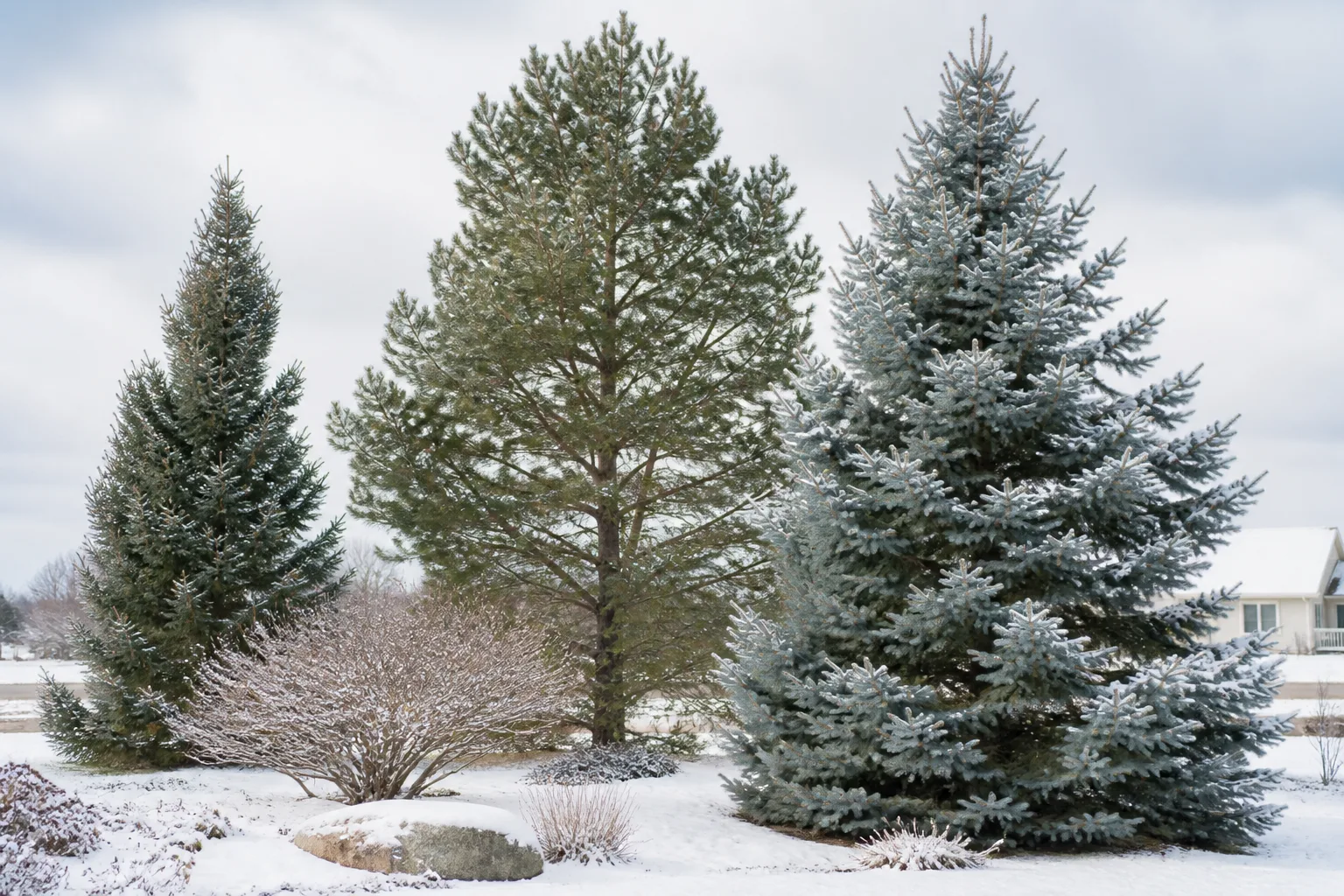
Winter mulch is most useful when it solves a specific problem: an evergreen is losing water from its foliage while cold or frozen soil slows the roots’ ability to replace that water. A shallow, permeable layer over the root zone can reduce moisture loss and soften freeze-thaw swings, but it is not a blanket you pile against the trunk.
The six plants below are especially good candidates because they combine broad or scale-like foliage, shallow roots, new plantings, or exposed sites with a real risk of winter desiccation. The right response is not identical for every yard. A sheltered, well-established holly in moist soil may need little more than a clean mulch ring, while a new boxwood beside a salted driveway may need mulch, a wind screen, and careful fall watering.
The quick answer: which evergreens benefit most from winter mulch
The strongest candidates are boxwood, rhododendron, holly, azalea, mountain laurel, and arborvitae. Broadleaf evergreens such as boxwood, rhododendron, holly, and azalea expose a relatively large leaf surface to dry wind and winter sun. Mountain laurel also has broad leaves and shallow roots, while arborvitae’s scale-like foliage can dry on the windward side of a hedge.
Prioritize a plant if it was planted this year or last fall, sits in full winter sun, faces prevailing wind, grows beside pavement treated with deicing salt, or enters winter in dry soil. Give mulch a lower priority if the site stays waterlogged, the plant is already covered by stable snow, or the species is well adapted and protected by a building or established hedge. Even then, a thin, correctly placed organic layer can still reduce weeds and moderate the root-zone temperature.
Mulch is a root-zone treatment. It does not shade leaves, stop wind, rinse salt, correct a buried root flare, or make a poorly sited plant hardy. Think of it as one part of a winter plan, not the entire plan.
Why evergreens dry out in winter even when they look dormant
Evergreen foliage continues to lose small amounts of water through transpiration in winter. When the ground is frozen, the roots cannot replenish that moisture at the same pace; bright sun and moving air can increase the imbalance. Penn State Extension describes this combination as winter burn, or winter desiccation, and lists boxwood, rhododendron, mountain laurel, holly, arborvitae, and needled evergreens among the plants that can be affected. Penn State Extension explains the winter-burn mechanism and prevention steps.
Mulch helps below ground in three related ways. It slows evaporation from the soil, buffers rapid temperature changes, and reduces the repeated expansion and contraction that can lift shallow roots during freeze-thaw cycles. It also protects the fine feeder roots in the upper soil without requiring you to keep the entire shrub wrapped.
The risk is highest when three conditions overlap: low soil moisture, freezing temperatures, and drying wind. The Missouri Botanical Garden describes that combination as the basic recipe for winter burn and notes that damage is often worse on the side exposed to sun and wind. Its winter-burn guidance is a useful reminder that a plant can be cold-hardy on paper and still suffer in a particular microclimate.
How to tell winter burn from bronzing or another problem
Winter burn usually appears on exposed outer foliage first: leaf margins and tips on broadleaf evergreens, or needle tips that progress inward on conifers. The interior may remain green, and the damage often maps clearly to the windward or sunny side. A twig-bend test is helpful in spring: living wood is flexible under the bark, while a dead twig is dry and brittle all the way back.
Bronzing is a little different. Some boxwoods develop reddish or bronze color in cold, sunny weather as chlorophyll production slows. The color can fade when spring growth resumes, so do not prune or replace a plant solely because it has bronzed. Brown, papery foliage, cracked bark, dead twigs, or damage concentrated beside a road points to a more serious combination of desiccation, sunscald, salt, or cold injury.
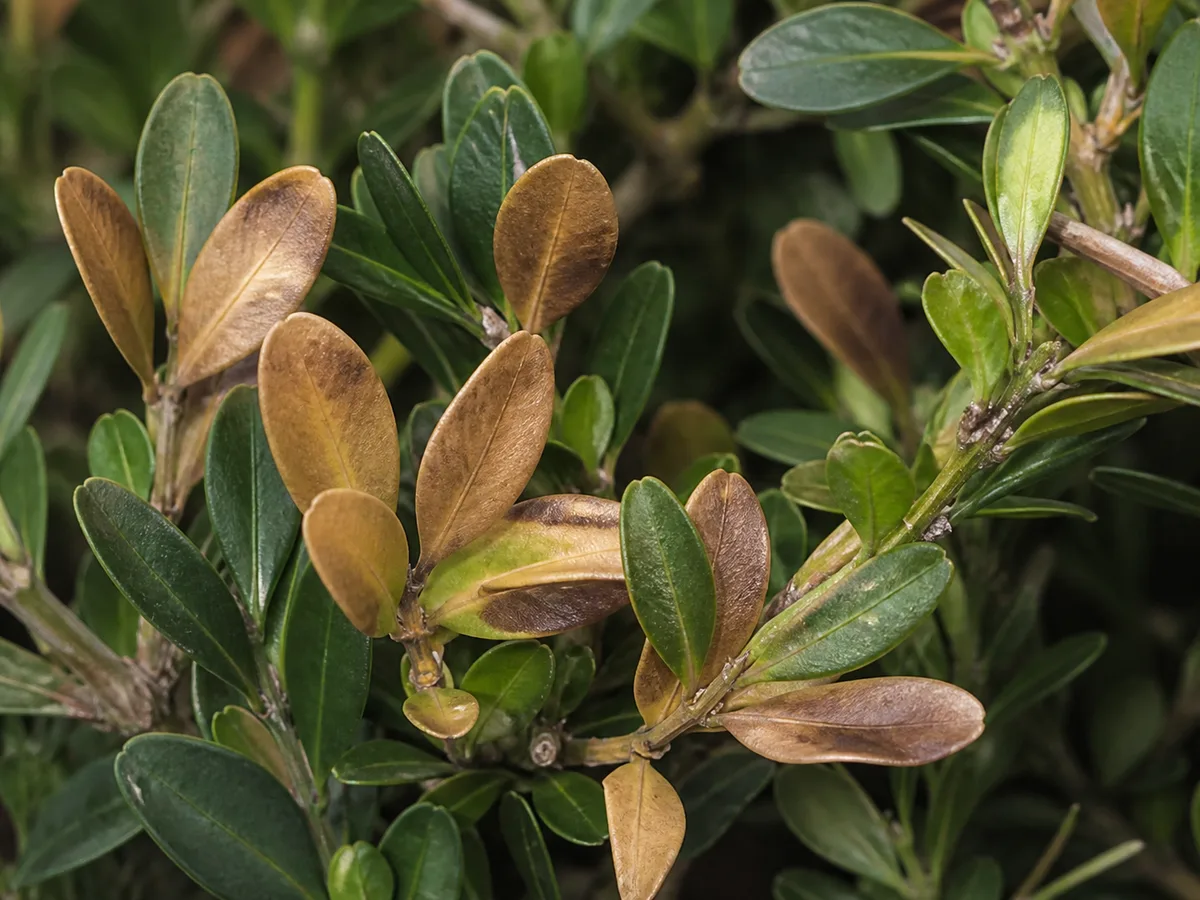
Look for pests and disease before treating a diagnosis you have not confirmed. Webbing, scale insects, swollen buds, black lesions, a sour smell at the crown, or browning that began well before cold weather suggests a different problem. Mulch can support recovery from environmental stress, but it cannot cure root rot or a foliar disease.
Before you spread mulch, make this 10-minute site check
The best mulch layer cannot rescue roots that went into winter dry or sat in saturated soil. Walk around each candidate plant before the ground freezes and inspect the soil, the base of the plant, and the direction from which weather reaches it.
Test moisture and drainage while the soil is workable
Push a soil probe, narrow trowel, or long screwdriver into the root zone in two or three spots. If it stops immediately in hard, dry soil, the plant needs a slow, deep watering before the freeze. If the tool sinks into soupy soil or water stands in the hole, do not add a deeper mulch layer; improve drainage and avoid creating a wet collar around the stems.
As a broad fall benchmark, the Missouri Botanical Garden recommends about 1 inch of water per week, or wetting soil to roughly 12–18 inches, while the ground remains unfrozen. That is not a command to water on a calendar in every climate. Count rainfall, use the soil test, and water slowly enough that the root zone absorbs it rather than sending water down a slope or into a foundation drain.
Remove old, matted mulch before adding new material. Rake away leaves packed against the crown, expose the root flare if it has been buried, and check for circling roots or stems that are already soft. New mulch should start over clean, moist soil, not over a damp composting pile.
Map wind, winter sun, salt, and snow exposure
Stand at the plant and notice which side receives afternoon sun and prevailing wind. A south- or west-facing wall can create warm daytime conditions followed by a sharp night freeze; an open corner can strip moisture from leaves; a hedge beside a driveway can collect salt spray. These observations determine whether mulch alone is enough.
Newly planted shrubs deserve extra attention because their root systems have not occupied the surrounding soil. Container-grown evergreens are more vulnerable than their in-ground counterparts because the entire root ball sits closer to temperature swings. If a roof edge, snowplow, or walkway regularly dumps snow on the foliage, plan a barrier or a safer planting arrangement rather than relying on mulch to hold up branches.
1. Boxwood
Boxwood is a classic winter-mulch candidate: its dense, shallow root system and evergreen leaves are vulnerable to dry wind, bright winter sun, and salt splash. The New York Botanical Garden notes that boxwood is often grown in protected woodland-like conditions, drains best in loose soil, and can be damaged by winter wind and sun, salt, poor planting, pruning, and irrigation. Read the New York Botanical Garden’s boxwood guidance.
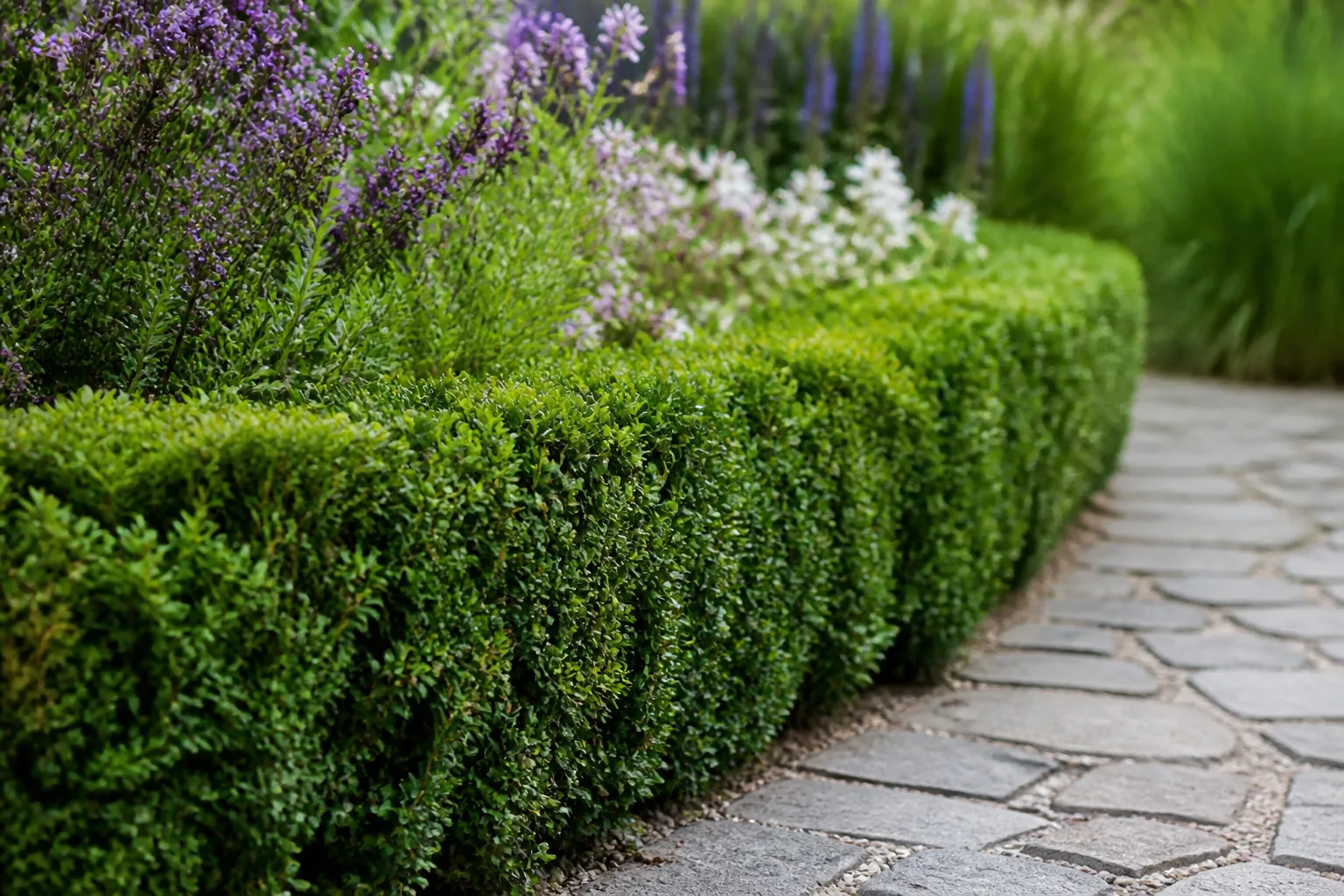
Spread about 2–3 inches of composted bark or another permeable organic mulch from just outside the stem area toward the drip line. Boxwood roots are wide rather than deep, so a broad ring is more helpful than a tall mound. Keep foliage and the base of the shrub open to air, especially inside dense hedges where trapped leaves and wet mulch can encourage disease.
Mulch is only half the fix for a boxwood beside pavement. Water deeply while the soil is unfrozen if it is dry, then put a burlap screen between the shrub and the prevailing wind or salt spray. Do not wrap the plant tightly unless it faces a specific physical threat such as snow thrown from a roof; a screen that blocks wind while preserving airflow is usually the better compromise.
2. Rhododendrons
Rhododendrons have large, thin evergreen leaves and shallow roots, so their winter risk rises in exposed, dry, sunny sites. In cold weather, the leaves may curl inward and droop as a natural response that reduces water loss. That temporary curl is not the same as dead foliage, but a dry root zone or persistent wind can still turn leaf margins brown.
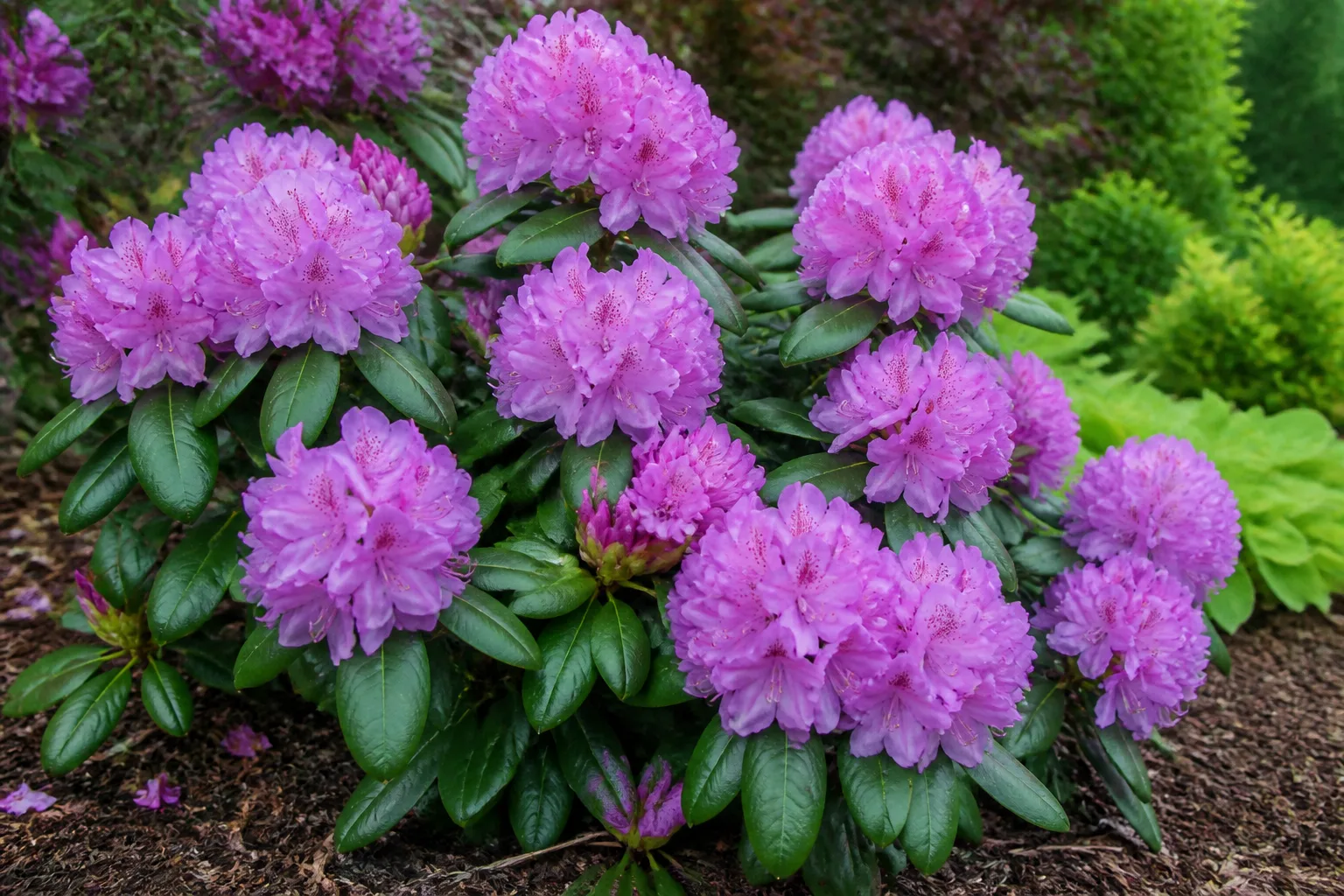
Use a 2–3-inch layer of fine-to-medium bark, pine bark, or clean leaf mold over the root zone. Keep the material away from the stems and do not bury the crown. Rhododendrons prefer acidic soil, but adding more pine needles will not reliably transform a neutral soil into the pH the plant needs; use a soil test and a species-appropriate amendment plan if pH is the underlying issue.
If snow settles gently over the root zone, leave it in place. Snow can insulate soil and reduce wind exposure, but heavy, wet snow on a branch or snow pushed from a roof can break stems. Protect an exposed rhododendron with a windward screen and inspect it after storms instead of shaking or bending frozen branches.
3. Holly
Evergreen hollies such as American holly, inkberry, and many landscape cultivars keep glossy leaves through winter, making them vulnerable to leaf-edge drying when the soil is frozen and the site is windy. Holly is often tougher than a broadleaf shrub in a protected bed, but a young specimen, a hedge facing an open lot, or a plant near salted pavement has a much higher return from winter mulch.
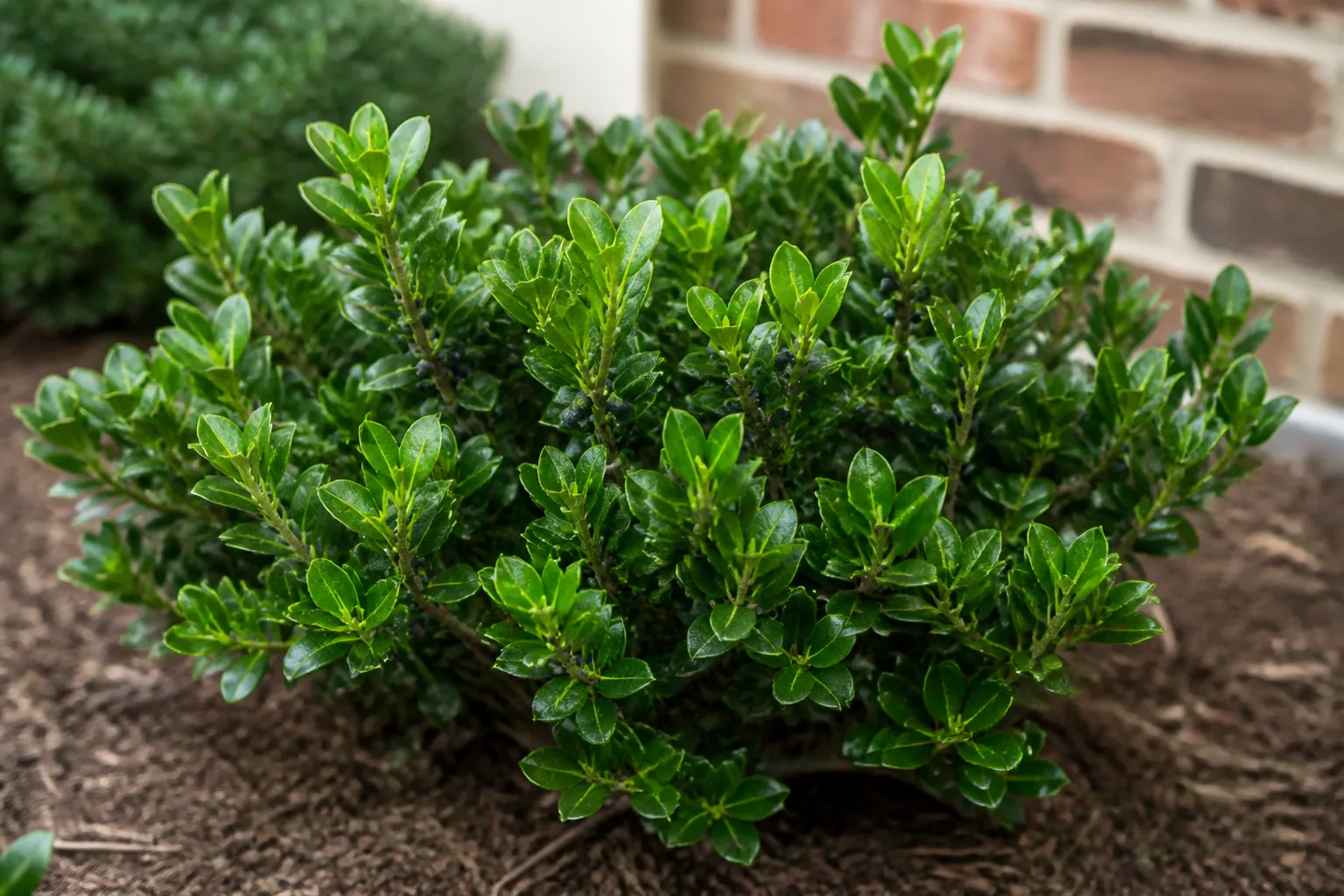
Apply 2–3 inches of pine bark, shredded bark, or another coarse organic mulch in a flat ring. The purpose is moisture conservation and temperature moderation, not soil acidification. Pine bark and pine needles are useful physical mulches even when they do not change soil pH enough to replace a soil test.
Inspect the berries and lower branches before mulching. Dense litter, mulch touching the base, and a sheltered pocket can provide cover for rodents. If voles or mice are a regular problem, use a thinner, airy layer and keep the immediate stem area clear; Horticulture’s winter-mulch guidance also points out that loose evergreen boughs can insulate soil while offering less cover than a thick layer of leaves or shredded bark. See the practical winter-mulch comparison from Horticulture.
4. Azaleas
Azaleas are shallow-rooted broadleaf evergreens in many landscapes, and their smaller leaves do not make them immune to winter desiccation. A sunny, exposed azalea can dry out even when the air feels cold, especially after a warm spell followed by frozen ground. New transplants and plants in raised beds need closer monitoring because their root zone loses moisture faster.
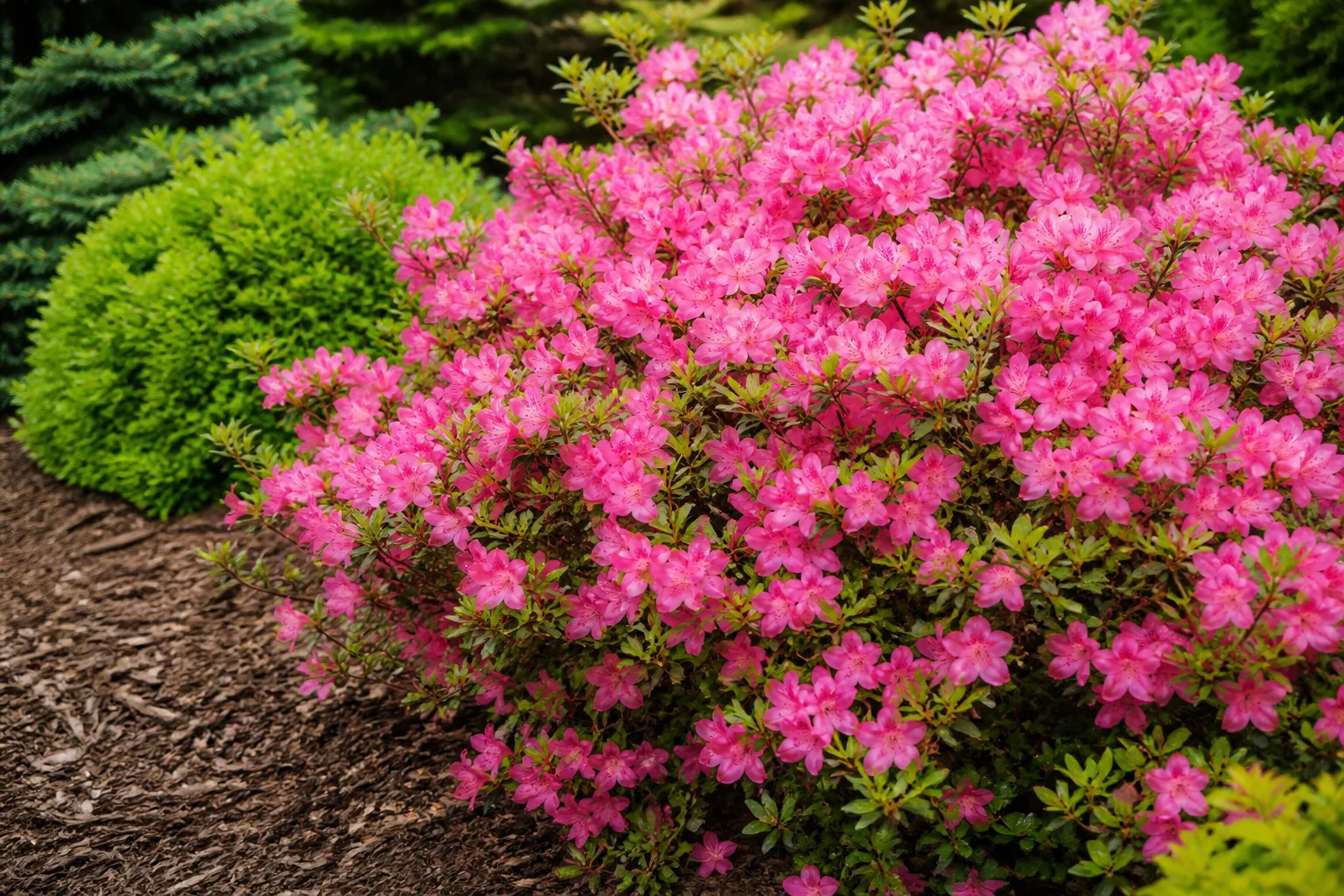
Cover the root area with 2–3 inches of pine bark, bark fines that do not compact, or shredded leaves that have been chopped and allowed to settle. Keep a clear gap around the main stems and avoid pressing mulch into the foliage. Do not use a deep, water-holding blanket in heavy clay or beside a downspout; azalea roots need oxygen as well as moisture.
The best winter protection for an azalea starts in the planting site. Morning sun or filtered shade is often less stressful than strong afternoon exposure, and a windbreak can matter more than another inch of mulch. If the plant repeatedly suffers winter burn despite adequate moisture, reassess its cultivar, siting, drainage, and exposure rather than increasing mulch depth each year.
5. Mountain laurel
Mountain laurel is a native broadleaf evergreen with leathery leaves and shallow roots that performs best in a cool, well-drained, partly shaded setting. A mulch ring helps keep its upper root zone from cycling rapidly between frozen and thawed conditions. It is particularly useful for young shrubs, plants on a slope, and specimens exposed to winter sun after deciduous trees lose their leaves.
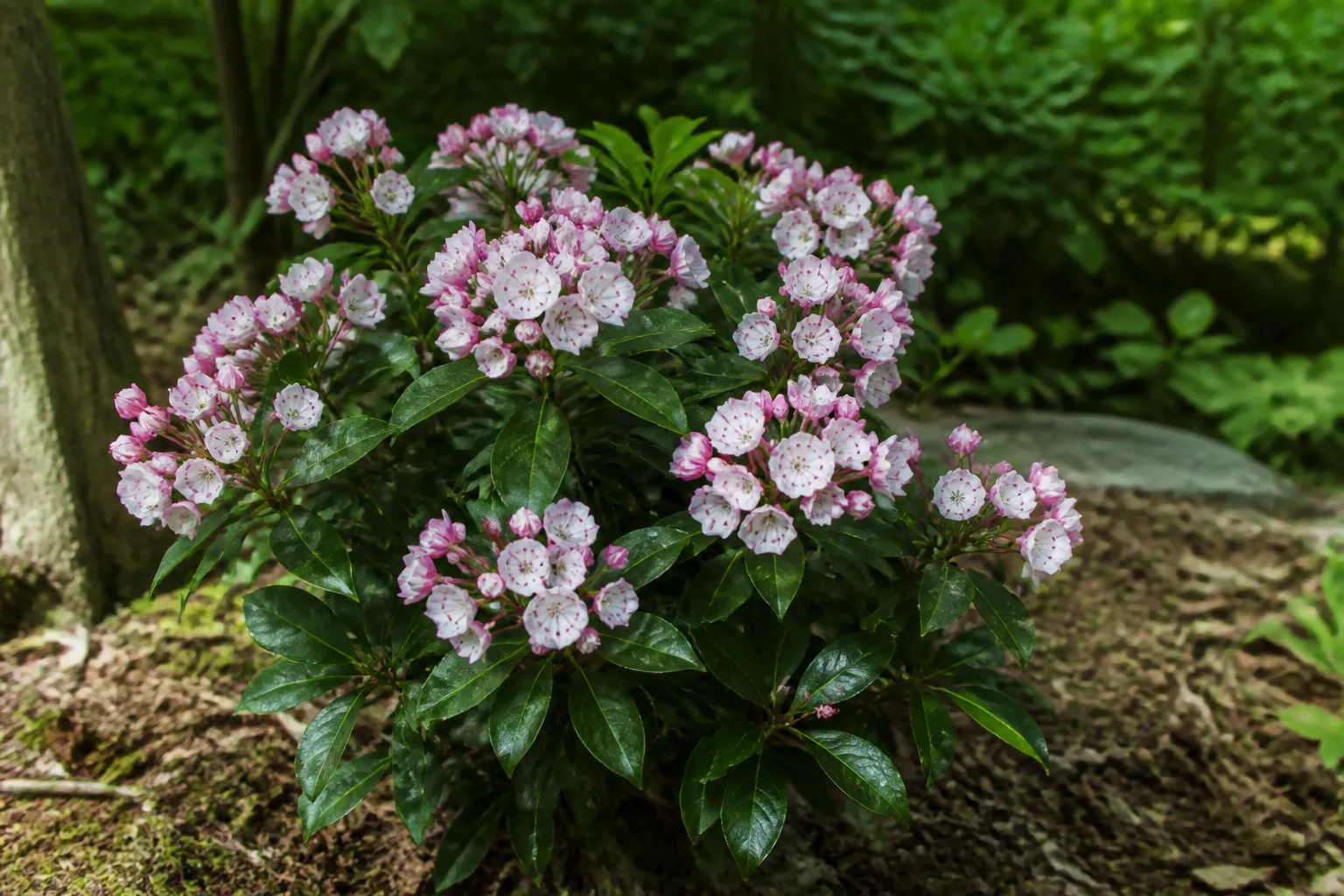
Spread a loose 2–3-inch layer of pine bark, shredded leaves, or composted bark beneath the canopy, widening it as the plant grows. Do not bury the lower stems or create a wet pocket where leaves collect. Mountain laurel dislikes both drought and stagnant, saturated soil, so the site check matters as much as the material.
Use the plant’s surroundings as protection. A nearby evergreen hedge, fence, or building can reduce wind without sealing the shrub in. If a screen is needed, place it on the weather-facing side rather than wrapping the foliage so tightly that air movement and light disappear.
6. Arborvitae
Arborvitae has scale-like foliage and is frequently planted as a hedge, which creates a large, exposed surface for wind and winter sun. Individual plants can be hardy yet still brown on the side facing a prevailing wind. Newly planted arborvitae are especially likely to show stress because roots have not fully spread into the surrounding soil.
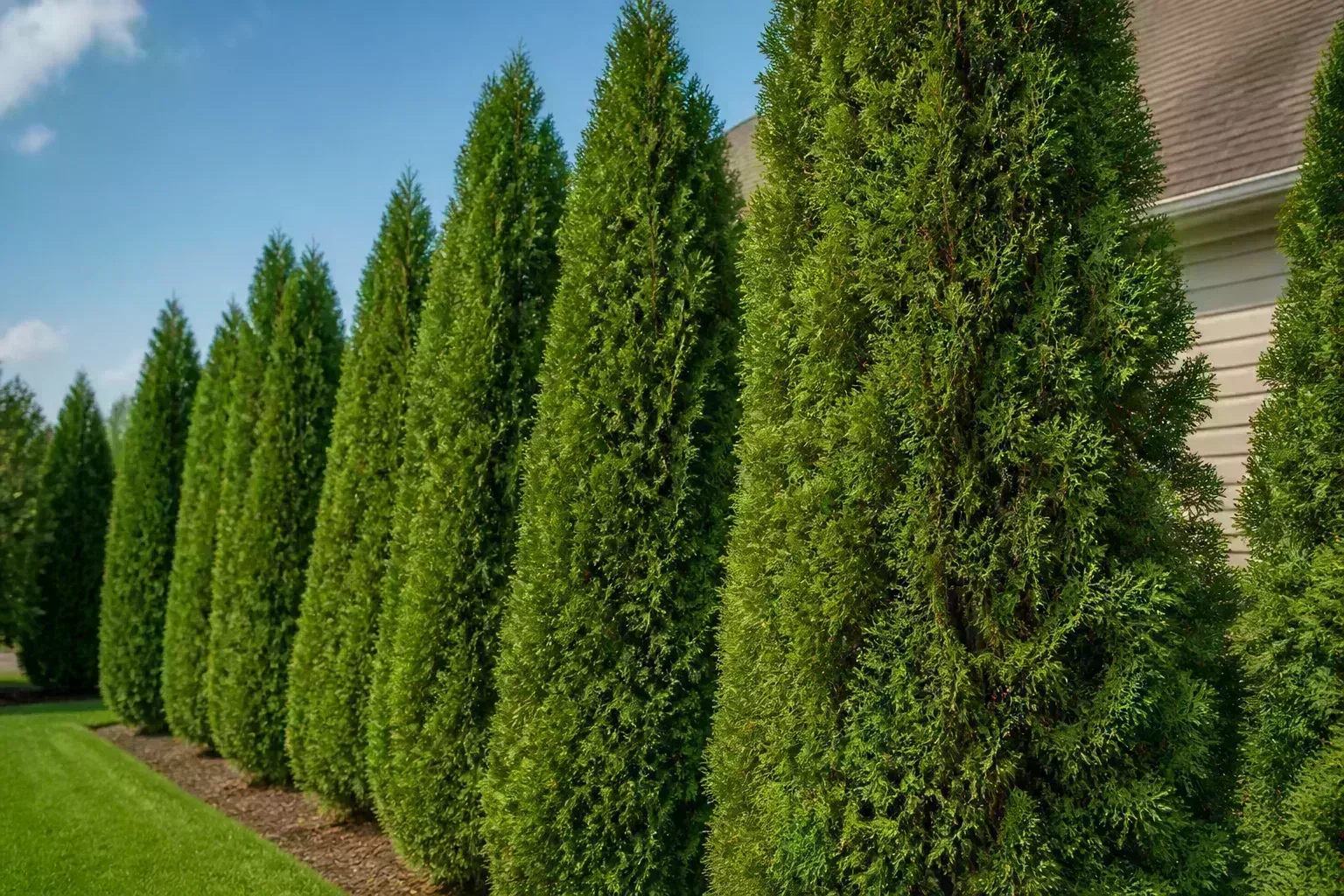
Mulch along the hedge or around the individual drip line with 2–3 inches of coarse bark or another permeable organic material. Keep the layer flat and the trunks visible. A hedge does not need a separate volcano around every trunk; one continuous, broad bed that covers the occupied root zone is easier to water and less likely to create piles.
Mulch will not stop an arborvitae from drying in a strong wind. Water the root zone before the ground freezes, install a wind screen when the site is truly exposed, and leave normal light snow in place if it is not bending the branches. Avoid tying or wrapping a hedge so tightly that snow and moisture stay trapped inside; the goal is to deflect the worst wind, not create a sealed tunnel.
How to mulch evergreens correctly
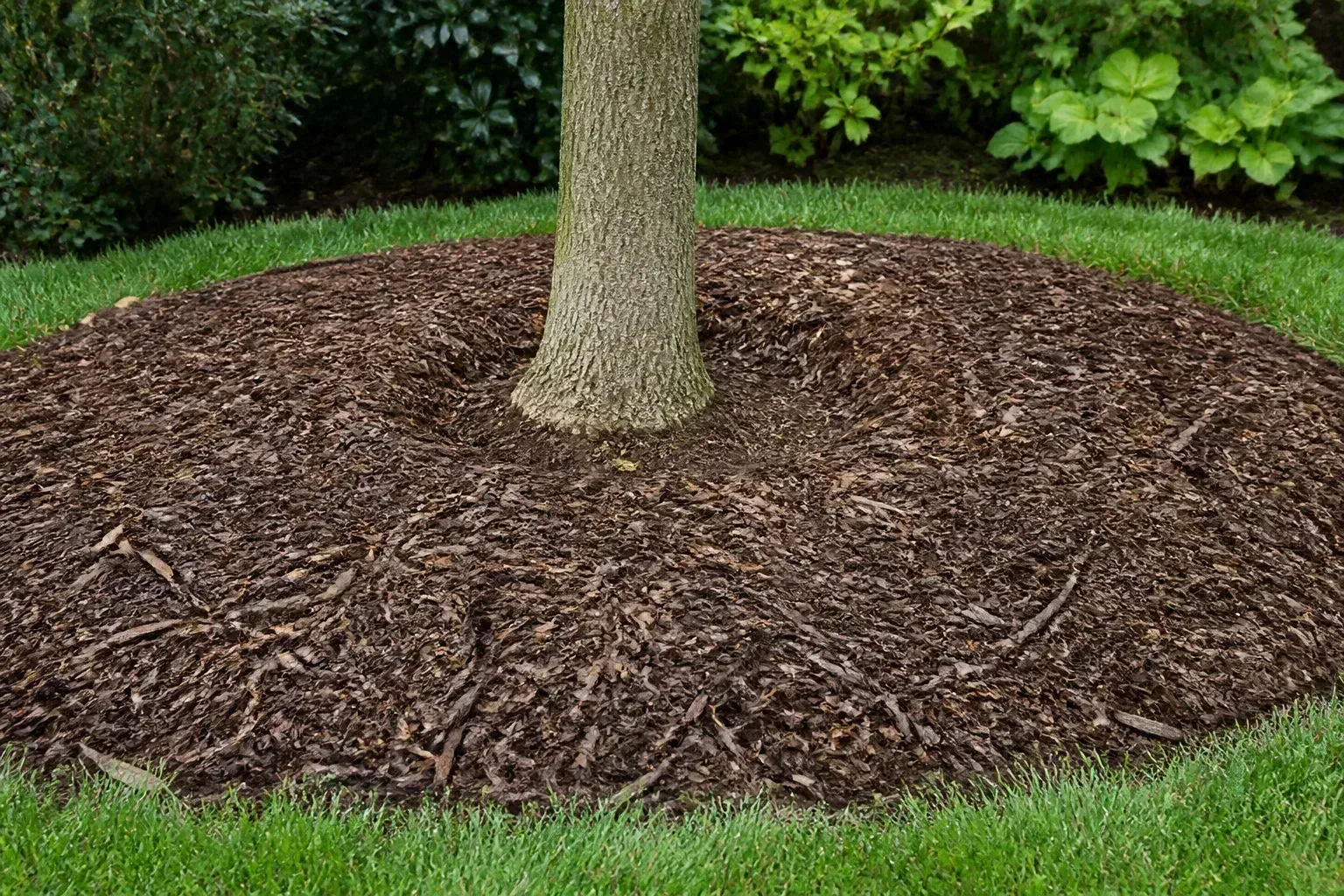
Correct application is a shallow, wide, breathable donut. Holden Forest & Garden’s tree-care guidance recommends organic mulch, no more than about 3 inches, and a visible gap between mulch and trunk; it also explains why a volcano can starve roots of oxygen and hold moisture against bark. Review the mulching do’s and don’ts from Holden Forest & Garden.
Choose a coarse, permeable organic mulch
Good winter choices include composted bark, shredded bark, pine bark, chopped leaves, and clean evergreen boughs. Choose the material that stays open enough for rain and air to pass through and that is available without disease, herbicide contamination, or a strong chemical odor. Aged material is preferable to fresh, nitrogen-hungry material piled deeply around shallow roots.
Do not lay plastic, rubber, or a thick stone layer around a shrub to “insulate” it. These materials can trap heat, shed water away from the root zone, or restrict oxygen exchange. Fresh grass clippings and whole leaves can mat into a wet layer; if you use leaves, chop them first and keep them away from the crown.
Measure depth and build a mulch donut
Use a ruler rather than your eye. Spread 2–3 inches of mulch over the root zone after the material settles, aiming for the lower end in mild, well-sheltered sites and the upper end for a young or exposed shrub. Do not keep adding material every fall without checking the old layer; rake out compacted buildup so the total depth does not creep higher.
Leave a visible bare ring around the stems: about 3–6 inches for a shrub, or enough to expose the root flare on a small tree. The ring should look like a donut, not a volcano. Extend the outer edge toward the drip line or beyond where practical, because fine roots usually occupy that broad area rather than sitting directly beneath the trunk.
Water the soil before spreading mulch if it is dry and unfrozen. Then place the mulch gently instead of throwing it into the foliage, tamping it down, or building a wall that redirects rain. After a storm or windy spell, check that the material has not drifted against the stems and that rodents have not tunneled beneath it.
When to apply winter mulch
Apply winter mulch in late fall after the plant has experienced a hard frost or the soil has become consistently cold, but before repeated freeze-thaw cycles make the root zone vulnerable. In colder climates, the target is often when the ground is just about frozen. This timing lets the plant slow down before insulation is added and avoids encouraging tender growth in warm soil.
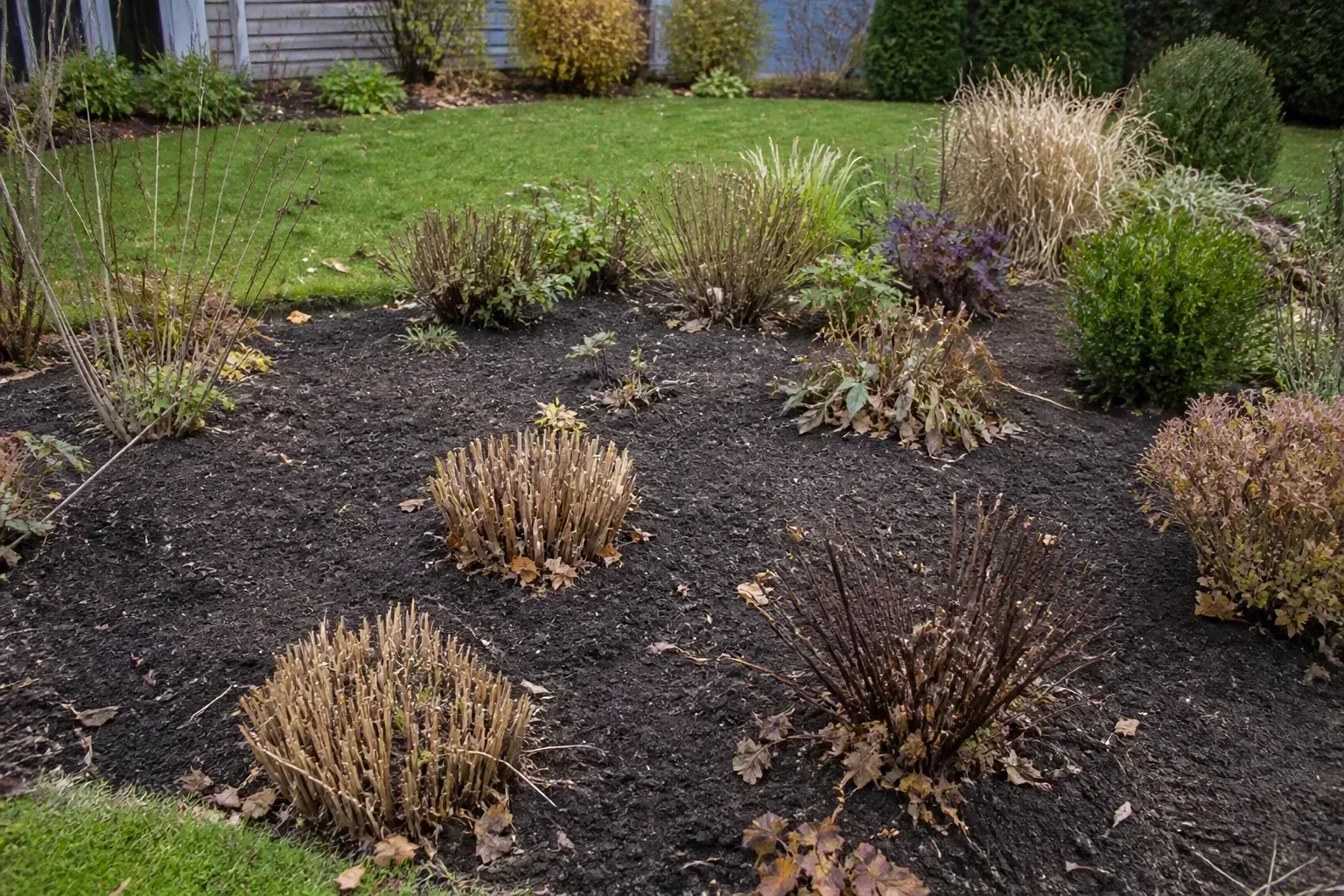
Do not rush to mulch on the first cool night of autumn. A still-warm soil covered too early can stay warm and damp, while a plant that has not hardened off may continue soft growth that is easily damaged by a hard freeze. At the other extreme, do not wait for the ground to be frozen deeply for weeks if a dry, exposed evergreen needs root-zone protection.
Use weather rather than a fixed date. Water during dry fall stretches while the ground accepts it, wait until the plant is dormant or clearly slowing, then apply the measured layer before the forecast settles into prolonged cold. Horticulture describes winter mulch as a way to keep soil consistently frozen and highlights evergreen boughs as a loose, easy-to-remove option where leaves or bark could stay soggy.
Care that mulch cannot replace
Water before freeze-up. A mulch layer conserves moisture already in the soil; it does not fill a dry root zone. Give established evergreens a slow, deep soak during dry autumn weather while drainage is good, then check soil moisture during above-freezing winter thaws. Stop when the soil is frozen or when additional water would sit around the roots.
Protect the foliage from wind. For a new or highly exposed shrub, install stakes several feet away from the plant and attach burlap to the windward side, leaving the top open. The screen should block the worst moving air while allowing light and circulation. Remove it when the severe-weather window has passed; a permanent wrap can trap moisture, reduce light, and create its own problems.
Treat salt as a separate risk. Salt spray from roads, sidewalks, and plowed snow can brown evergreen leaves and damage shallow roots. A burlap screen between the pavement and the plant can reduce splash, and careful placement is the long-term solution. Do not pile salty snow into the root zone, and do not expect extra mulch to neutralize a salt load.
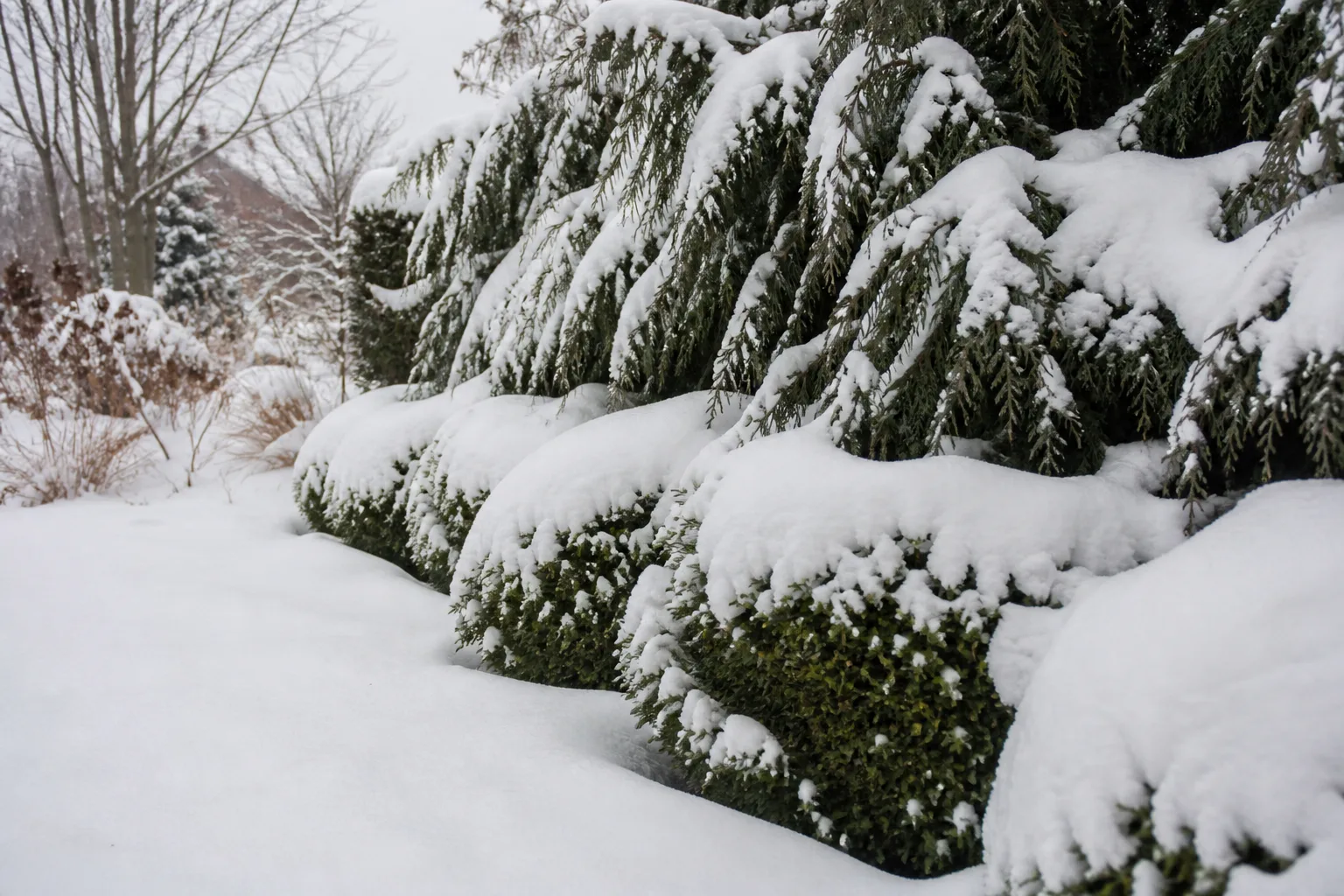
Use snow thoughtfully. Stable snow over the soil is useful insulation, and a light layer on foliage is usually harmless. Heavy, wet snow or snow dumped from a roof can bend or break branches, so redirect the source or gently remove the load once branches can move without snapping. Never beat frozen branches with a broom or shovel.
Skip late stimulation. Avoid late-season pruning that pushes tender growth and avoid fertilizing simply because winter is coming. A healthy plant with sound roots, good drainage, and correct siting is better prepared than a plant coaxed into soft growth. Save corrective pruning for spring, when you can see which wood is truly dead.
Recheck after storms. Wind can move mulch, expose roots, or press it against stems. A quick inspection after heavy rain, snow, or a thaw catches small problems before wet mulch, rodents, or salt accumulation becomes a spring dieback issue.
Conclusion
Winter mulch earns its place around boxwood, rhododendron, holly, azalea, mountain laurel, and arborvitae when it is used to protect a real root-zone risk. Start with moist, well-drained soil; apply 2–3 inches of loose organic material after the plant has slowed and the soil has cooled; keep a visible gap at every stem; and spread outward instead of upward.
Then match the rest of the plan to the site. Wind may call for a burlap screen, salt may call for a barrier or relocation, and a dry autumn may call for deep watering before the ground freezes. In spring, rake away compacted buildup, uncover the crown, test twigs for life, and wait to prune until new growth shows you what recovered. That measured approach gives evergreen roots insulation without turning winter protection into a new source of rot, rodents, or stress.