ZZ Plant Care: Growing & Care Tips
Grow ZZ plants (Zanzibar gem) indoors with rhizome-safe watering, bright indirect light, fast-draining soil, and fixes for yellow leaves and leggy stems.
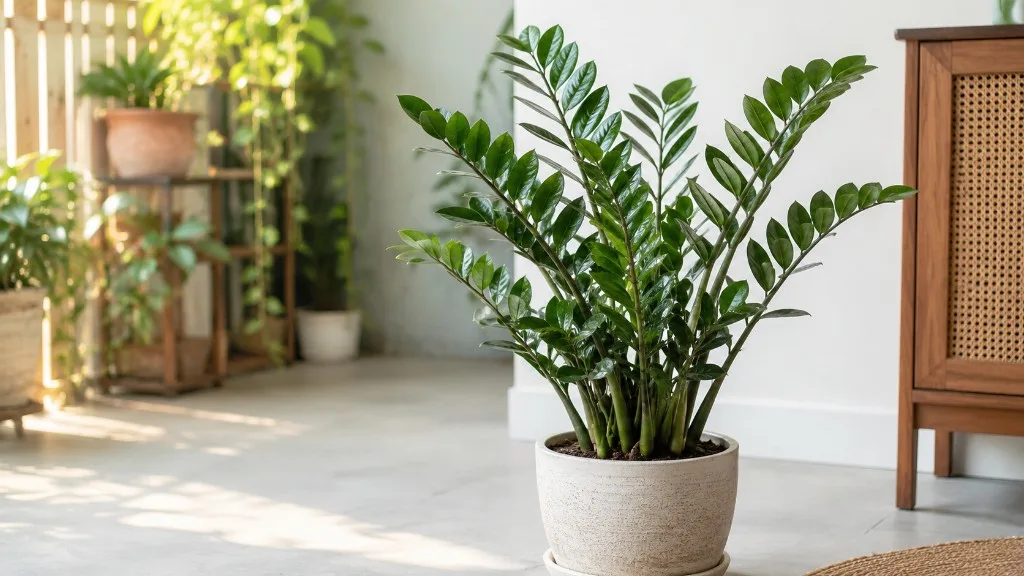
The ZZ plant (Zamioculcas zamiifolia) looks sculpted—glossy pinnate leaves on upright stems, almost too perfect to be real. That polish hides a tougher story: underground rhizomes that store water like a backup battery, letting the plant coast through missed waterings that would wreck a fern or calathea. Native to grassland and dry-season forests in eastern Africa, the ZZ plant (also called Zanzibar gem, eternity plant, or emerald palm) became a global office staple after Dutch nurseries scaled commercial propagation in the 1990s. It is genuinely forgiving, but forgiving is not the same as indestructible. Most ZZ plants die from kindness—water on a calendar instead of dry soil—and most yellow-leaf panics start there too.
Treat a ZZ Plant like a semi-succulent with aroid roots: bright indirect light when you want growth, fast-draining soil always, and water only after the mix has dried through the root zone. North Carolina State Extension notes that wet feet are not tolerated and recommends watering once monthly in winter and about twice monthly in summer only when soil is completely dry. (NC State Extension) Get that rhythm right and a single pot can look good for decades.
ZZ Plant Quick Reference
Use this table as a checkpoint before you change light, pot size, and watering all at once—a common post-purchase mistake.
| Factor | Indoor target | Watch for |
|---|---|---|
| Light | Bright indirect; tolerates low light and fluorescent | Leggy stems = too dim |
| Water | Soak when fully dry; empty saucer | Yellow new leaves = too wet |
| Soil | Well-draining; perlite or cactus blend | Sour smell = rot risk |
| Temperature | 65–79°F (18–26°C) comfortable | Damage below 45°F |
| Humidity | Average indoor 30–50% | Rarely a limiting factor |
| Fertilizer | Balanced liquid 1–2× in active season, half strength | Skip in winter |
| Growth rate | Slow; rhizome-driven | Patience for propagation |
| Pets | Toxic to cats and dogs | Keep out of reach |
| Outdoor | USDA 9–10 in shade; bring in below 60°F | Not frost-hardy |
| Lifespan | 20+ years with stable care | Crowding OK until rhizomes press pot |
For topic-specific schedules, the ZZ Plant hub splits care into light, watering, soil, fertilizer, repotting, propagation, and pruning pages plus dedicated problem guides when one symptom—not the whole plant—needs attention.
What Makes the ZZ Plant Different
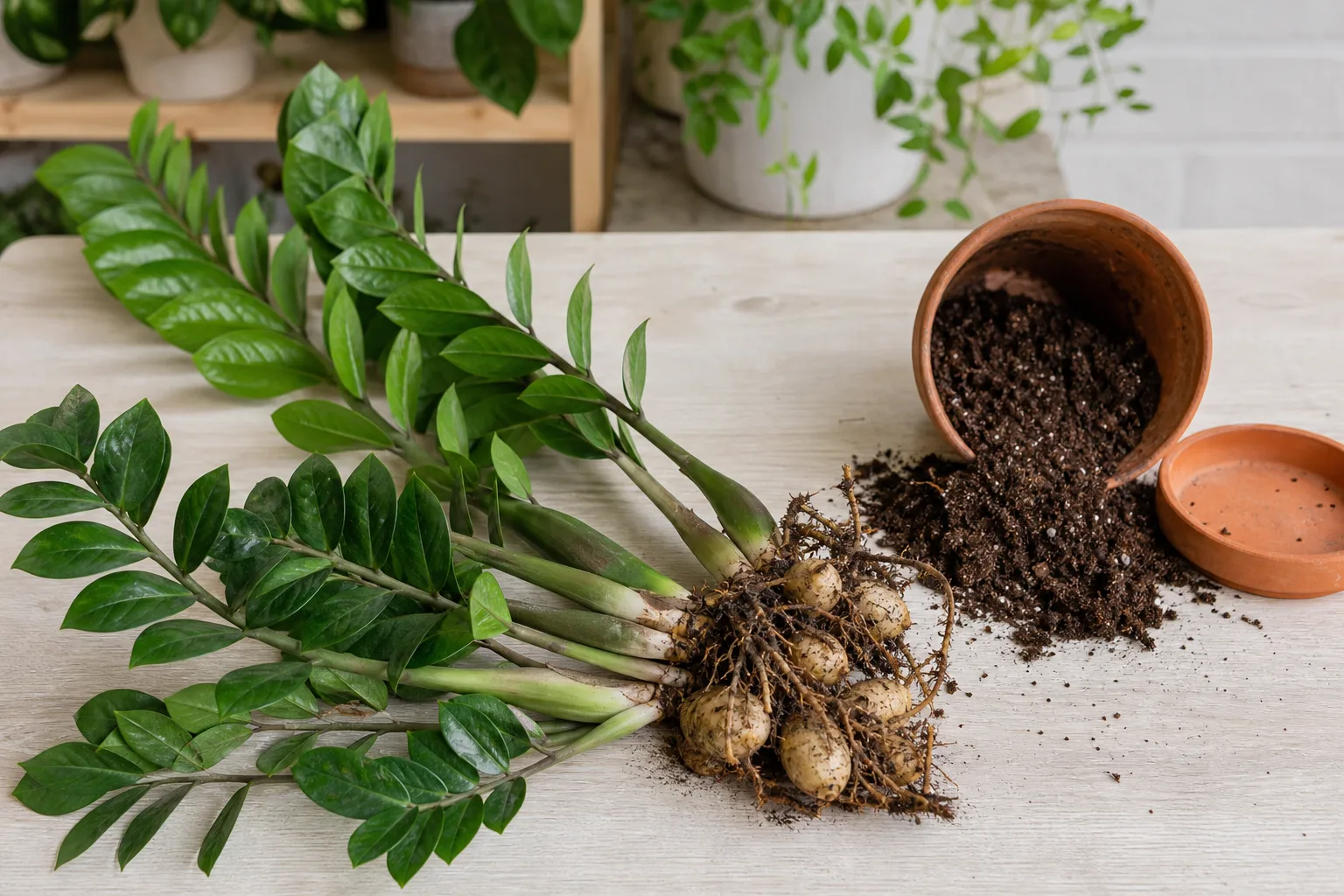
Most houseplant advice assumes roots need steady moisture. ZZ plants break that model. Thick rhizomes under the soil surface hold water and starch, and the waxy leaflets reduce transpiration. Missouri Botanical Garden describes Zamioculcas zamiifolia as an herbaceous perennial with bulbous rhizomes that store water and make the species highly drought tolerant. (Missouri Botanical Garden) That storage is why a ZZ can sit in a dim office and still look presentable while you travel—but it is also why saturated soil suffocates rhizomes faster than you notice above ground.
The leaves are compound and pinnate—six to eight pairs of glossy leaflets per stem—giving the plant a cycad-like silhouette even though it belongs to Araceae, the same family as peace lilies and philodendrons. Flowers are rare indoors: a cream spadix inside a green spathe at the soil line. Do not buy a ZZ expecting blooms; buy it for structure and low-input care.
Slow growth is normal. NC State Extension lists a slow growth rate and mature height of two to four feet. A plant that adds a few inches of stem per active season is healthy; one that shoots up thin and sparse is usually hunting for light, not starving for fertilizer.
Light Requirements
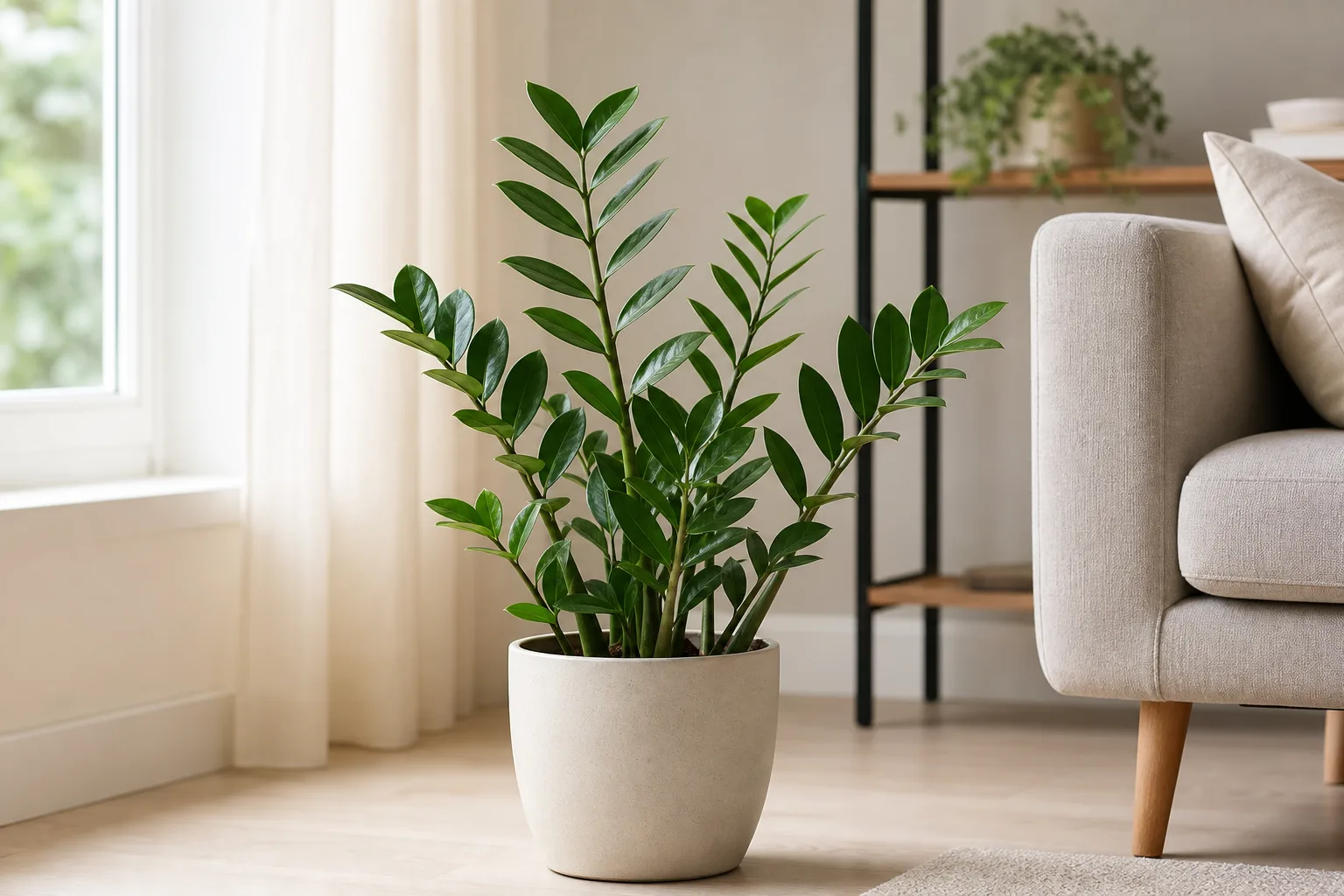
ZZ plants tolerate a wider light range than most tropical foliage plants, but tolerance and optimal growth are different goals. Bright indirect light produces the tightest stems and shiniest leaflets. An east-facing window or a few feet back from a south- or west-facing window filtered by a sheer curtain is a reliable default. NC State Extension says ZZ plants grow in very low light—including areas with only fluorescent fixtures—but perform best with bright indirect sunlight, and direct sun can scald leaves. (NC State Extension)
Low light, windows, and office fluorescent
In a low-light hallway or office, a ZZ will often survive and keep green leaflets because the waxy surface captures available photons efficiently. Growth slows, new stems emerge less often, and stems may stretch slightly. That is acceptable if you want a sculptural accent that simply stays alive. If you want a fuller plant, move it within a few feet of a window or add a modest grow light on a 10–12 hour timer.
Direct sun through glass can bleach or brown leaflets, especially on variegated cultivars. If leaves curl away from the window or show crisp brown patches on the sun-facing side, pull the pot back or add filtering. Rotate the pot a quarter turn monthly so stems do not lean permanently toward the glass.
Fluorescent or LED office lighting alone can maintain a ZZ for years—exactly why the species dominates commercial interiorscapes. Pair dim light with less frequent watering; soil dries slower in low light, and overwatering is the main failure mode in offices. The dedicated ZZ Plant light guide walks through window direction and grow-light distance if you need finer placement tuning.
Watering Without Rotting the Rhizomes
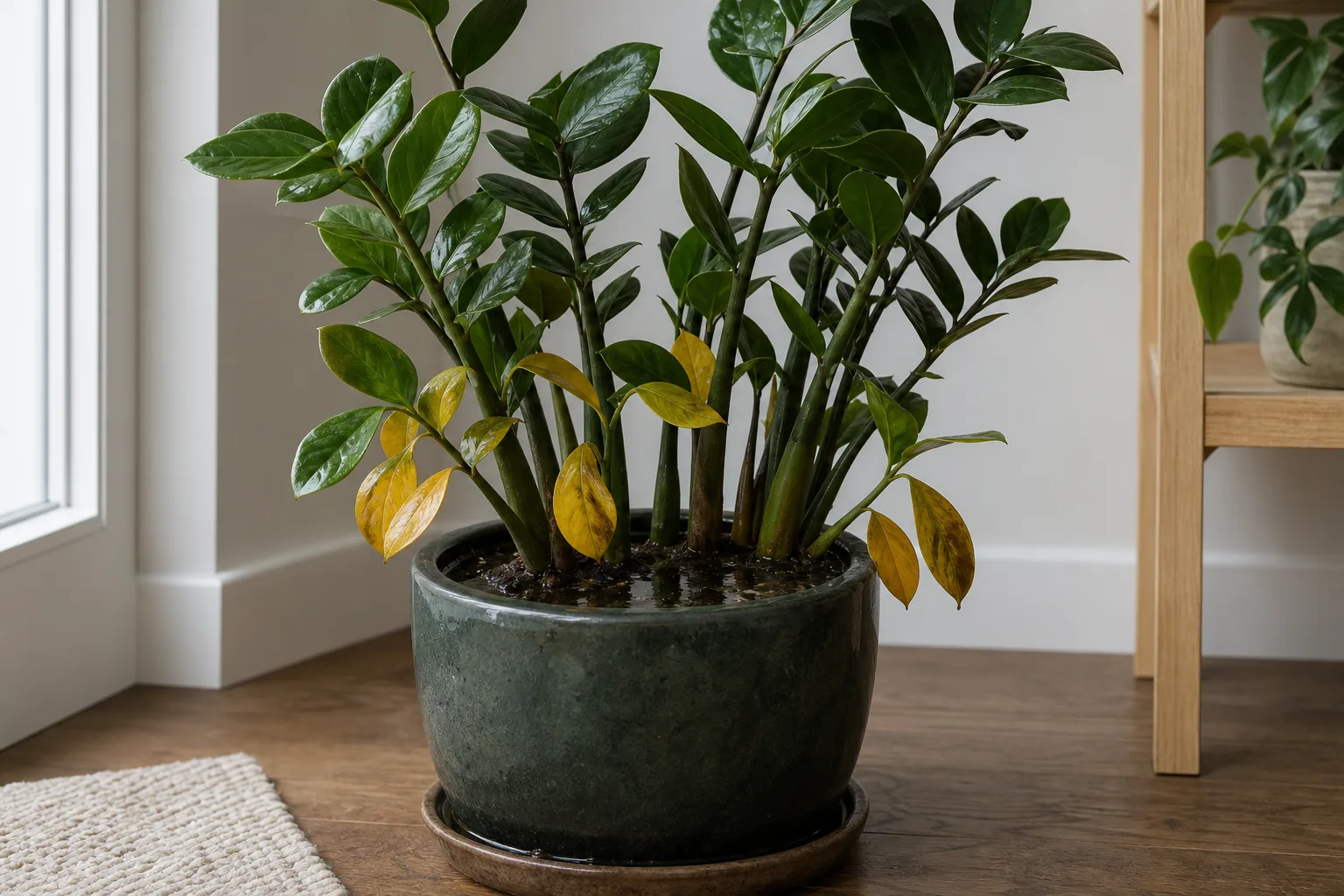
If you remember one rule: let potting mix dry completely between waterings, then soak until water runs from the drainage hole and discard the saucer within 30 minutes. NC State Extension is explicit—wet feet are not tolerated, and winter watering drops to about once monthly when the plant is not actively growing. (NC State Extension) In bright warm rooms during spring and summer, many pots need water every two to three weeks, but calendar guessing fails because pot size, mix, light, and AC humidity all change drying speed.
Test before you pour. Stick a finger or a bamboo skewer into the drainage hole. If any cool dampness clings, wait. Lift the pot: a dry ZZ in plastic feels noticeably lighter. For glazed ceramic, the skewer test is more trustworthy than weight alone. When in doubt, wait three more days—underwatering stresses a ZZ slowly; overwatering can collapse it in one bad week.
Water thoroughly when you do water. A shallow sip keeps outer roots wet while inner rhizomes still think drought is coming, encouraging uneven growth. Never let the pot sit in a full saucer or decorative outer cache without drainage. If you use a cache pot, lift the inner pot to water at the sink.
Claims that a ZZ can survive months without water are situational, not a care target. A cool dim room with a large rhizome mass can coast a long time. A small pot in hot dry air cannot. Survival without water is not the same as attractive growth. For step-by-step recovery when soil has stayed wet too long, see overwatering on ZZ Plant and root rot.
Soil and Drainage
ZZ plants want fast-draining, low-fertility mix—think succulent logic, not moisture-retentive tropical blend. NC State Extension recommends well-drained potting soil allowed to dry between waterings, treated similarly to cactus and other succulents. (NC State Extension) A practical indoor blend: two parts high-quality potting base to one part perlite or pumice, or a commercial cactus mix lightened with extra perlite if your home runs humid.
Drainage holes are non-negotiable. Rhizomes pressed against soggy mix at the pot bottom rot before top leaves yellow. Avoid heavy garden soil, water-retention crystals, and dense peat-heavy mixes unless you amend aggressively. Top-dressing with decorative moss looks tidy but can slow surface drying—skip it if you tend to overwater.
Repot into fresh mix when you see salt crust on the soil surface, when water runs straight through without absorbing, or when diagnosing chronic poor drainage. The ZZ Plant soil guide compares mix ratios for different home humidity levels.
Temperature and Humidity
Average indoor temperatures suit ZZ plants well. NC State and Missouri Botanical Garden both note cold sensitivity: damage below about 45°F (7°C). Keep pots away from winter window sills that drop overnight, air-conditioning vents that blast cold dry air, and exterior doors that open frequently in winter.
Ideal active-growth comfort sits roughly 65–79°F (18–26°C). Heat above 85°F with strong light can increase watering frequency but rarely requires extra humidity. ZZ plants are not fussy about humidity; 30–50% indoor air is fine. Very dry winter air may brown leaflet tips on small plants, but misting leaves is cosmetic and can encourage fungal spotting—address dry air at the room level if multiple plants show tip burn.
In USDA zones 9–10, ZZ plants can grow outdoors in partial to deep shade with excellent drainage. NC State lists zones 9a–10b. Everywhere else, treat them as houseplants or patio specimens only when nights stay above 60°F, then bring pots in before cold snaps.
Fertilizer
ZZ plants are low feeders. NC State Extension suggests a balanced liquid houseplant fertilizer once or twice a year during active growth, applied at half strength. (NC State Extension) That is enough for most home pots. Heavy feeding does not speed a naturally slow plant; it can salt the mix and burn leaf margins.
If stems look pale and you have not repotted in three-plus years, one diluted spring application is reasonable. Skip fertilizer entirely in winter when new growth pauses. Never fertilize into wet, suspiciously sour soil—fix moisture first. More detail lives in the ZZ Plant fertilizer guide.
ZZ Plant Varieties Worth Knowing
The species Zamioculcas zamiifolia is the classic deep-green form. Breeders have expanded the palette:
- Raven™ ‘Dowon’ — new growth emerges lime green and matures to near-black purple. Color holds best with bright indirect light; dim rooms may green slightly over time.
- ‘Chameleon’ — leaves open golden-yellow and mature to green, giving a two-tone look seasonally.
- ‘Lucky’ — rounded, wider leaflets on a compact habit.
- Variegated forms — white or yellow streaking that fades in low light because variegated tissue photosynthesizes less efficiently; give variegated pots brighter placement than green siblings.
All cultivars share the same rhizome biology and watering rules. Color is the variable; rot from overwatering is not.
Pruning for Shape
Pruning is optional cosmetic work, not mandatory maintenance. To reduce leggy height, cut stems at a 45° angle just above a leaf node with clean snippers. Removed stems do not branch from the cut point; new shoots emerge from rhizomes at soil level, so stagger cuts if you want layered height rather than a flat top.
Pull or cut yellowing lower leaflets as they senesce naturally—older leaflets age out while the stem stays green. Wipe dust from glossy leaflets with a damp cloth monthly. Skip commercial leaf shine sprays; they clog stomata and add nothing a cloth does not.
Sap can irritate sensitive skin. Wear gloves if you are pruning heavily or dividing rhizomes. The ZZ Plant pruning guide covers sterilizing tools and shaping multi-stem pots.
Propagation: Division, Stems, and Leaf Cuttings
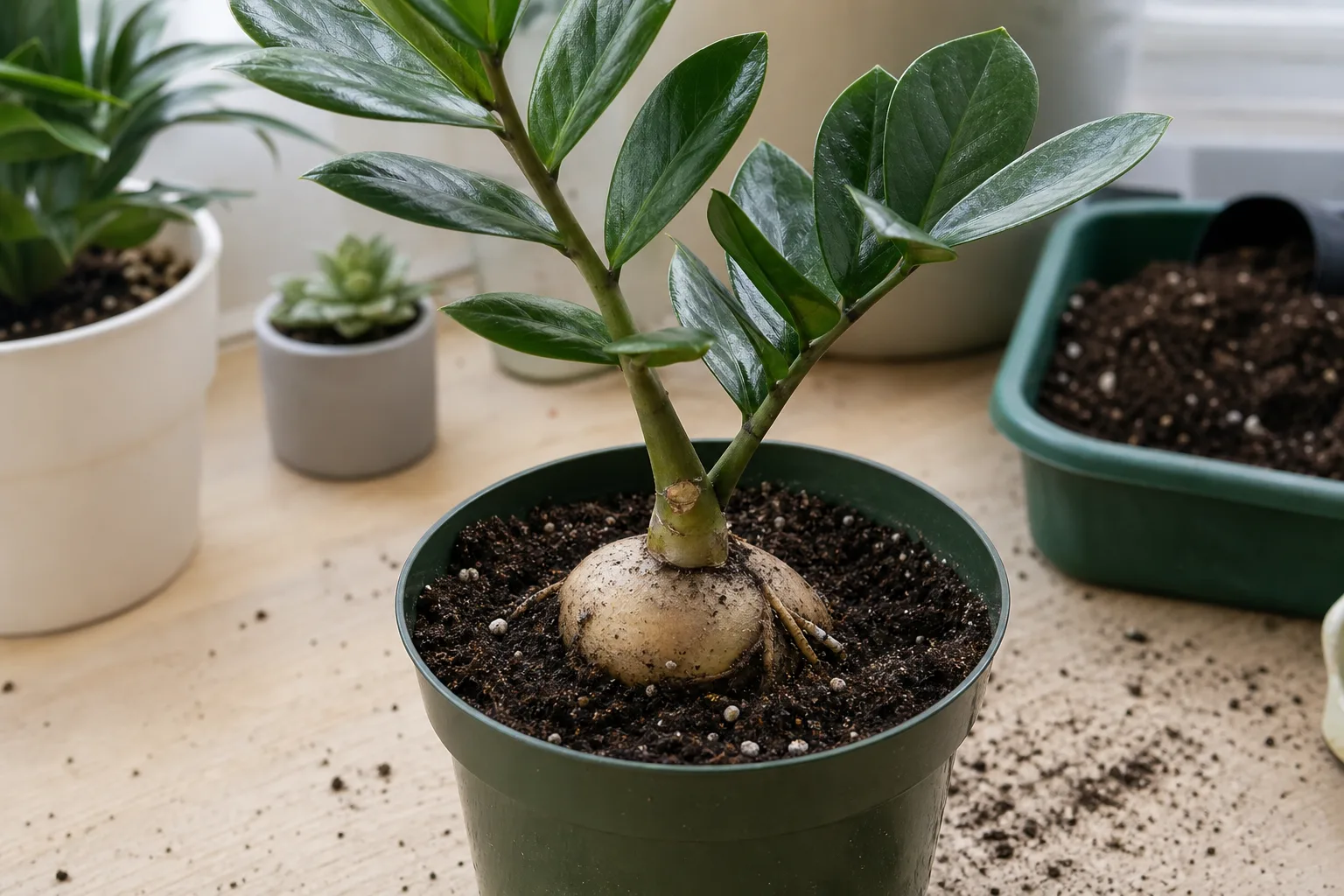
ZZ plants propagate three ways; pick based on patience and plant size.
Division (fastest, highest success). During repotting, unpot the plant and gently separate rhizome clusters, each with at least three to five stems and healthy roots. Plant divisions into fresh mix in pots only one size larger than the root ball. Water once, then return to normal dry-down watering. NC State Extension lists division and leaf cutting as recommended propagation strategies. (NC State Extension) Wait until the mother plant is at least two to three years old before dividing aggressively.
Stem cuttings (medium speed). Cut a healthy stem near the soil line, remove lower leaflets, and root in moist perlite-heavy mix or water changed weekly. New rhizome formation takes several months before top growth accelerates.
Leaf cuttings (slowest). Remove leaflets with as much petiole base as possible; insert petiole bases into moist propagating mix. Expect six to nine months before a new rhizome and shoot appear—this is normal, not failure. Propagate several leaflets at once because not every cutting takes.
Full timing, mix ratios, and aftercare are in the ZZ Plant propagation guide.
Repotting and Root-Bound Signs
Repot in spring or early summer when the plant is actively growing— not because you brought it home yesterday. ZZ plants tolerate some crowding; rush repotting is a common kill switch for new owners.
Repot when rhizomes bulge against the pot wall, roots exit drainage holes, or water runs through instantly without absorbing. Move up one pot size only—two inches wider is plenty. Tease outer roots gently, trim black mushy sections with sterile snippers, and backfill with fresh fast-draining mix. Water once, then let the plant settle without extra fertilizer for six weeks.
Plastic nursery pots make rhizome inspection easy; heavy ceramic looks better but hides dryness—check moisture more carefully. The ZZ Plant repotting guide covers when to divide instead of upsize.
Pests and Diseases
ZZ plants are relatively pest-resistant but not immune. Dusty leaflets in low airflow attract scale; NC State Extension flags scale as the main insect to watch. (NC State Extension) Mealybugs and aphids appear on stressed, overfed, or crowded plants.
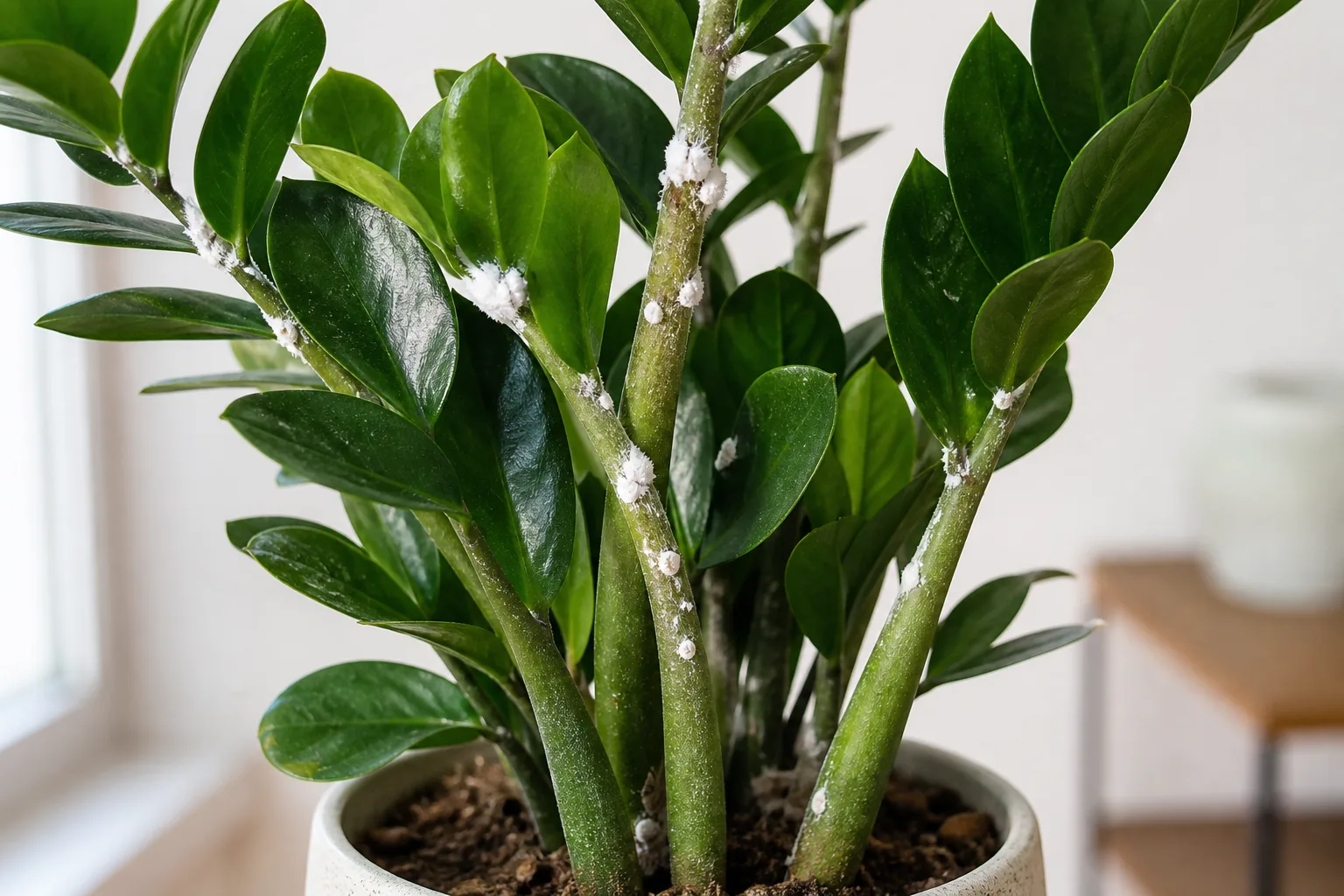
First response: isolate the pot, wipe visible insects with isopropyl alcohol on a cotton swab, and rinse leaflets in the shower. Repeat weekly until gone. Fungus gnats signal chronically wet soil—dry the mix out before reaching for pesticides; see fungus gnats on ZZ Plant.
Leaf spots with yellow halos often follow overwatering or splash on cold wet leaflets. Cut affected leaflets, improve airflow, and let soil dry. Fungicide helps only after watering habits change. Problem-specific photos and steps: mealybugs, scale insects, leaf spot disease.
Troubleshooting Common Problems
Start with the simplest explanation that matches recent care, then escalate.
Soft stems and mushy rhizome smell — overwatering or poor drainage. Stop watering, check roots, repot into dry mix if rot is present. Root rot guide.
Crispy brown tips on leaflets — underwatering in hot bright rooms, or fertilizer salt buildup. Soak when dry; flush soil if salts crust the surface.
Slow or no new stems — often normal in dim light or winter dormancy, not always a crisis.
Leggy growth and yellow leaves
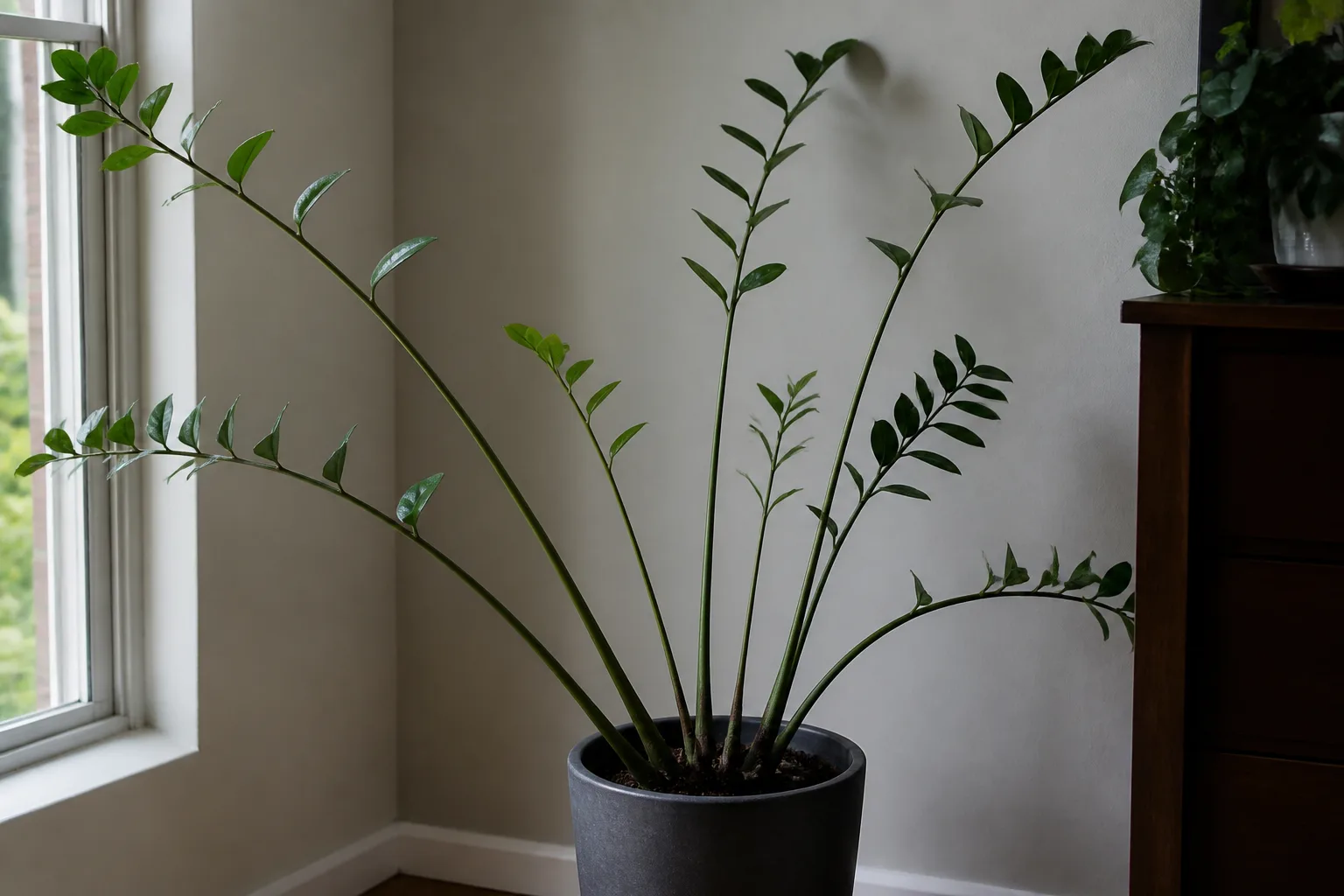
Leggy, thin stems mean the plant is stretching for photons. Move it closer to a window or add a grow light; prune overly long stems if shape bothers you. More detail: leggy growth on ZZ Plant.
Yellow leaflets split into two buckets. Lower older leaflets yellow and drop naturally—normal senescence. New or widespread yellowing with soft stems points to overwatering. Let soil dry completely, confirm drainage holes are open, and hold water until the mix is dry top to bottom. If yellowing continues after two dry cycles, unpot and inspect rhizomes. Yellow leaves guide and drooping leaves cover overlapping symptoms.
Do not fertilize yellow plants by default—nutrient deficiency is rare compared to rot from kindness.
Pet and Human Safety
ZZ plants are toxic to cats and dogs. NC State Extension rates medium severity poison characteristics; all parts contain calcium oxalate crystals that irritate mouth and digestive tissues. (NC State Extension) ASPCA lists ZZ plant as toxic to pets and notes that any plant material can cause vomiting or gastrointestinal upset. (ASPCA)
Touching intact leaflets is fine for most people. Sap released during pruning or division can irritate sensitive skin—wear gloves, wash with soap and water after handling cut surfaces. Keep plants on elevated shelves or in closed rooms pets cannot access. If a pet chews foliage, contact your veterinarian or ASPCA Animal Poison Control at (888) 426-4435.
This is a display plant, not a floor plant in homes with curious chewers.
Conclusion
The ZZ plant earns its reputation: rhizomes store water, leaflets shine in dim corners, and growth asks little once you respect dryness. Give bright indirect light when you want fuller stems, fast-draining soil always, and water only after the mix is completely dry—then soak and drain. Fertilize lightly once or twice a year, repot when rhizomes press the pot walls, and propagate by division when you want a second plant without a nine-month wait.
When something looks wrong, suspect overwatering before fertilizer, light before humidity, and rot before pests. Link back to the ZZ Plant hub for deep dives on watering tests, propagation timelines, and symptom-specific fixes. Get the rhizome rhythm right and this Zanzibar gem stays polished for years—not months.