Annuals vs. Perennials: Which Plants Fit Your Garden?
Compare annuals and perennials by lifespan, cost, bloom time, and care. Learn how climate changes the label and how to combine both in one garden.
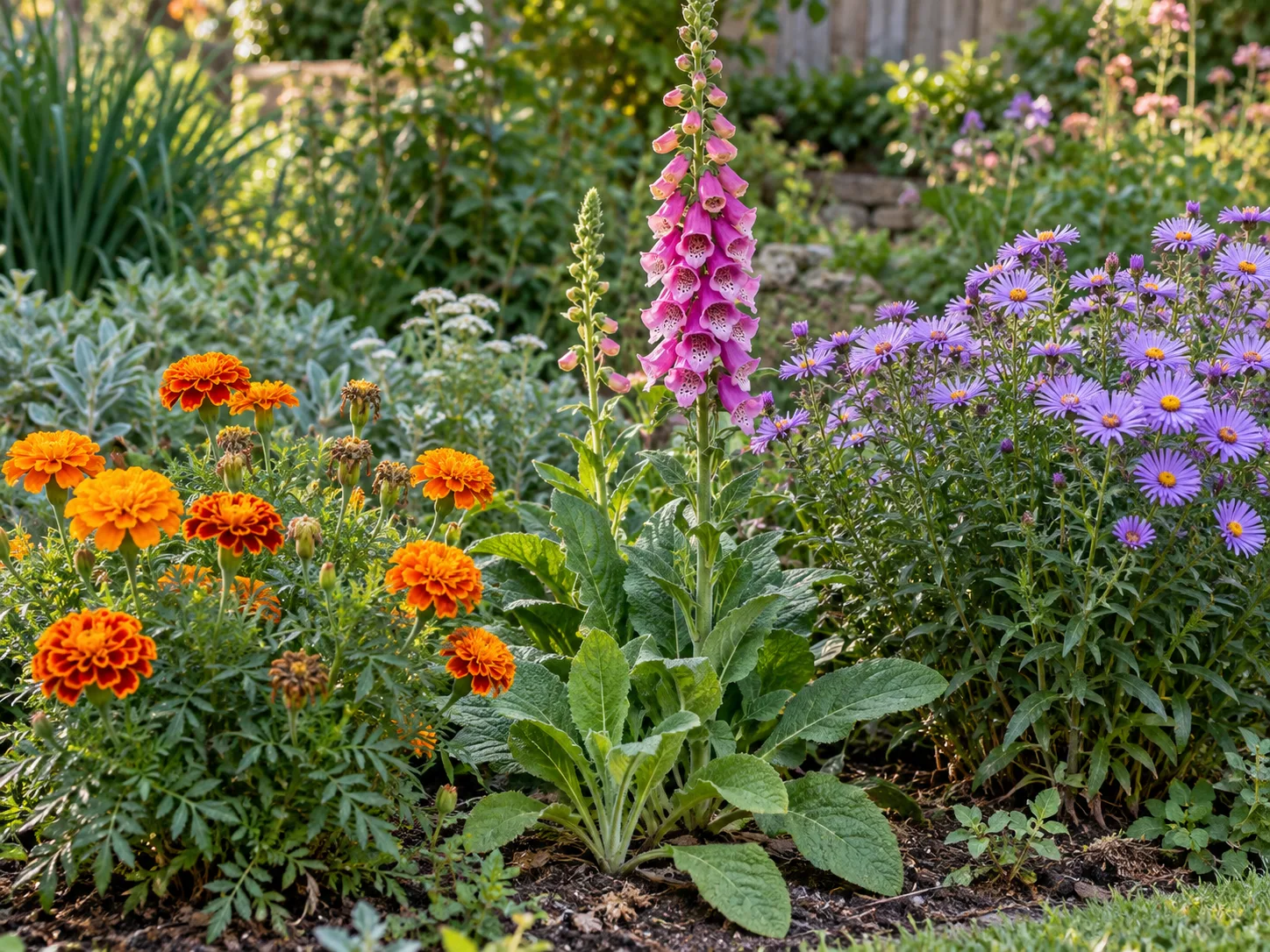
An annual completes its life cycle in one growing season; a perennial can live for multiple years and grow again from surviving roots, crowns, stems, or other structures. That describes how long the plant lives, but it does not guarantee that a perennial will survive winter in your garden: climate, drainage, exposure, and the plant’s hardiness all matter.
In practical terms, annuals give you flexible color you can change each season, while hardy perennials build a planting that returns. Most gardens benefit from both. The right balance depends on whether you want a bed to look full immediately, avoid yearly replanting, keep flowers coming through a long season, or experiment before making a permanent choice.
The short answer: a life-cycle difference, not a beauty contest
Gardeners often use “annual” as shorthand for a plant that dies in winter and “perennial” for one that comes back. The useful distinction is slightly more precise: an annual goes from germination to flower, seed, and death within one growing season; a perennial survives beyond that cycle. Winter cold may kill either kind of plant, and a plant labeled an annual at a local nursery may actually be a perennial that cannot tolerate the local winter.
So when you are standing in front of plant tags, ask two separate questions: What is this plant’s natural life cycle, and can it survive outdoors here? The first tells you whether the species is annual, biennial, or perennial. The second tells you whether you should expect it to overwinter in your bed or pot. University of Vermont Extension makes the same distinction when it describes tender perennials that gardeners in colder regions grow as annuals (UVM Extension).
How the three plant life cycles work
The categories describe the number of growing seasons a plant needs to complete its life cycle, not how long a flower remains open. A perennial may bloom for only a few weeks in a given year and still live for many seasons; an annual can flower repeatedly for months but still finish its entire life cycle within that one season.
Annuals complete a cycle in one growing season
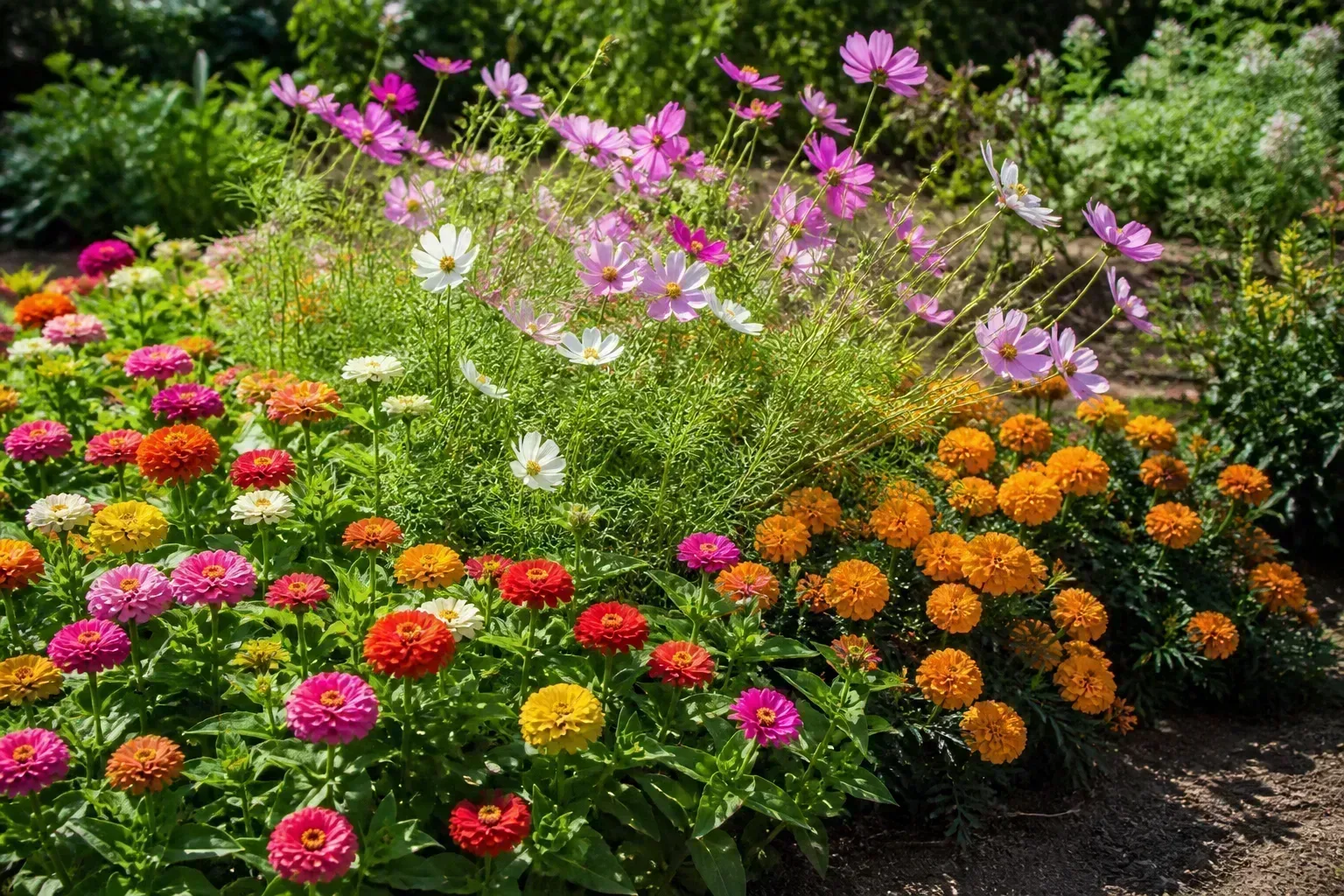
An annual grows from seed, builds leaves and stems, flowers, produces seed, and dies within one growing season. Marigolds, zinnias, sunflowers, and many petunias are familiar examples. If you buy an annual as a nursery transplant, it has already spent some of its life growing before it reaches your garden, but it is still programmed to complete its cycle within the season.
“One year” does not always mean January through December. A cool-season annual such as calendula or sweet alyssum may germinate and flower during a cool spring or fall, while a warm-season annual such as zinnia needs warmer soil and weather. Some annuals tolerate light frost; tender types can be damaged by frost. Use the planting guidance for the species and local conditions instead of assuming every annual belongs in the garden on the same date.
Annuals are useful when you want a strong display quickly, need a plant that can be replaced without disturbing an established layout, or want to try a new color scheme for one season. The trade-off is recurring setup: you sow or buy them again, and many bedding varieties need watering, feeding, or deadheading to maintain the show. Virginia Cooperative Extension notes that annuals often bloom through much of the growing season, but also need to be planted each year and some require spent-flower removal (Virginia Cooperative Extension).
Perennials survive through an overwintering structure
A perennial lives for more than one growing season. In cold-winter gardens, many herbaceous perennials lose their above-ground stems after frost while their roots or crowns survive below ground; they send up new shoots when conditions suit them again. Other perennials keep some or all of their foliage through winter, and woody trees and shrubs are perennials too, although gardeners often use “perennial” to mean a non-woody flower that comes back.
Hostas, peonies, coneflowers, and many garden phlox are perennial examples, but the species and cultivar determine the details. A perennial may take a season or two to reach its mature size or put on a generous display, and its flowers usually have a defined seasonal window. The Royal Horticultural Society distinguishes herbaceous perennials, which die back to ground level, from evergreen and semi-evergreen perennials that keep foliage for much of the year (RHS perennial growing guide).
Do not mistake dormancy for death. Mark the spot where a late-emerging perennial is planted, especially if you weed in spring; it is easy to dig into a sleeping crown before it shows. A perennial that returns is also not necessarily immortal. Its lifespan depends on the plant, growing conditions, and care, and some clumps eventually need dividing, replanting, or replacing.
Biennials need two seasons
A biennial needs two growing seasons to complete its cycle. It usually makes roots and leaves in its first season, rests or overwinters, then flowers, sets seed, and dies in its second. Foxgloves and hollyhocks are familiar examples; parsley and some other vegetables can also behave as biennials when grown for seed rather than harvested first.
That first-season rosette can look like the plant is doing nothing, when it is actually building the structure needed to flower later. If you sow a biennial in spring, you may not see blooms until the following year. A biennial that drops seeds can keep appearing in the garden across years, but each individual plant still completes its own life cycle in two seasons. UVM Extension provides this two-year foliage-then-flowering description and examples including foxglove and hollyhock (UVM Extension).
Why a plant can act like an annual in your climate
The label on a nursery pot often describes how the plant is sold or used locally, not just its botanical identity. In a warm climate, a frost-tender species may survive outdoors as a perennial; in a colder region, gardeners may buy a new one each spring and treat it as an annual. “Grown as an annual” is a practical description of the garden’s winter, not necessarily a claim that the species is botanically an annual.
Tender perennials and plant hardiness zones
Tender perennials include plants that are perennial in warmer climates but cannot reliably survive the coldest conditions in a particular garden. Lantana, some begonias, and many tropical plants are examples often grown as annuals in colder regions. Some gardeners lift or bring select plants indoors, but that takes space, light, and attention; it is not automatically simpler or more successful than buying a new plant.
Check the plant’s stated hardiness range against your location before purchasing, and use the zone as a screening tool rather than a promise. The USDA Plant Hardiness Zone Map is based on the average annual extreme minimum winter temperature and helps identify where perennial plants are more likely to survive (USDA map and guidance). It does not account for every factor that determines success, including summer heat, waterlogged soil, drying winds, snow cover, late frosts, or the warm and cold pockets within a yard. A plant can fail in a nominally suitable zone if its site is too wet or exposed, and a sheltered microclimate can sometimes help a borderline plant.
When comparing tags, look for a cultivar-specific hardiness range where one is given. If a plant is hardy only to a warmer zone than yours, decide whether you are willing to overwinter it indoors, protect it, or replace it annually. In containers, roots are more exposed to cold than roots in the ground, so an otherwise hardy perennial pot may need extra winter protection or a sheltered location.
Self-seeding is not the same as returning
An annual can appear in the same place next spring because seeds fell from last year’s flowers and germinated. The original plant did not return; a new generation grew. This is self-sowing, and it can be welcome when you want a loose, natural look, but it may also put seedlings in paths, crowd slower plants, or produce offspring that do not match a hybrid parent.
If you want to encourage a self-sowing annual, leave a few flower heads to mature and drop seed, then avoid disturbing the soil where seedlings should emerge. If you want a tidy bed, deadhead or remove seedheads before they scatter. Virginia Cooperative Extension warns that self-sown seedlings can spread beyond their intended place and may not retain hybrid characteristics (Virginia Cooperative Extension).
Annuals vs. perennials at a glance
| Garden question | Annuals | Perennials |
|---|---|---|
| How long does an individual plant live? | One growing season, from germination through seed production | More than one growing season, if conditions suit the plant |
| What happens after flowering? | It sets seed and dies; seedlings may replace it later | It may go dormant, keep foliage, or continue growing, depending on type |
| When is it useful? | Fast seasonal color, temporary gaps, containers, and design experiments | Long-term structure, repeat growth, foliage, and predictable garden anchors |
| How often do you plant it? | Usually every season; self-sowing may reduce reseeding work | Usually once, with occasional dividing or replacement as needed |
| What is the main caveat? | Replanting and seasonal care add cost and labor | Survival and bloom depend on hardiness, site fit, and establishment |
Treat the table as a starting point, not a ranking. A well-chosen perennial is not automatically lower-effort if it is in the wrong soil or climate, and an annual is not automatically high-maintenance if it is well matched to the site and allowed to self-sow.
The real trade-offs: color, care, and cost
Plant choice is easier when you compare the job each plant does rather than count the years on its label. Annuals tend to prioritize first-season impact and flexibility. Perennials tend to prioritize repeat growth and longer-term structure. Both need the right light, soil, moisture, and spacing, and either can be a poor fit when those needs do not match the planting site.
Bloom duration and seasonal gaps
Many annuals keep producing flowers across a long stretch of the growing season, especially when their spent blooms are removed or the variety is bred to self-clean. That can be valuable along a path, in a container near a doorway, or wherever you want a reliable color block. It does not mean every annual blooms continuously: heat, drought, shade, pests, and plant age can shorten or interrupt the display.
Most perennials have a more concentrated bloom period. A peony may give a spectacular but finite spring display, while a coneflower or a long-blooming cultivar may carry color later into summer. To keep a perennial border interesting, choose plants with different bloom seasons and include foliage or seedheads that provide structure when flowers are absent. The RHS advises considering both the flowering season and foliage when selecting perennials, since leaves can contribute interest after blooms fade (RHS).
Annuals can bridge a gap while early perennials finish and later ones are still developing. Fine Gardening describes using annuals to maintain color, connect a planting palette, and test a design that can be changed the following year (Fine Gardening: adding annuals). That role is especially useful in a new bed, where perennials may be deliberately spaced for their future mature size and therefore look sparse at first.
Labor and cost over several years
Annuals usually have a lower purchase price per plant, especially when bought in multipacks, but the cost repeats if you replace them every year. Perennials can cost more at purchase, and smaller starter plants may need time to fill out, but they can reward that initial investment with multiple seasons of growth. Neither group guarantees savings: annuals grown from seed can be economical, while a perennial that dies from poor site choice is an expensive lesson.
Count the work as well as the purchase price. Annuals need sowing or planting again, and containers of annuals can need frequent watering during hot spells because their root volume is limited. Perennials avoid routine annual replacement, but established beds still require weeding, watering during establishment or drought, occasional pruning, and sometimes division or staking. A perennial in a pot needs more winter attention than the same plant in the ground because the root ball is exposed on all sides.
If your main aim is fewer planting days, use hardy perennials and shrubs as the framework, mulch to reduce bare soil, and reserve annuals for the spots where their seasonal effect matters most. If you enjoy changing the garden every spring, the recurring replanting may be part of the pleasure rather than a cost to minimize.
Choose plants by the job you need them to do
Before buying, write down what the planting has to accomplish. Is it meant to fill a container for one summer, hold a slope for years, provide flowers while a new border fills in, or create a changing display by the front door? Once the job is clear, compare the plant’s light, water, mature size, bloom timing, and hardiness with the site.
Use annuals for flexible, immediate color
Choose annuals when you need the bed to look full this season, want to experiment with a color combination, or need temporary color in the spaces between young perennials. They also suit seasonal containers that you expect to refresh, and small beds where repeating the same plant is more important than building a permanent framework. A limited palette repeated in groups usually looks more deliberate than buying one of every color because each pot caught your eye.
Do not plant annuals close enough to smother a perennial you intend to keep. Give both groups room to reach their listed mature width, and keep the annuals shallow-rooted or easy to remove if they are temporary fillers. If water is limited, group plants with similar needs rather than pairing a thirsty container annual with drought-adapted perennials and trying to compromise between them.
Use perennials for lasting structure
Choose perennials when you want a planting that builds over time and you can match a plant to the site. Start with the permanent elements: height and spread, sun or shade, soil moisture, hardiness, and the season when flowers or foliage will matter. A plant that thrives in those conditions will usually be a better long-term choice than a fashionable perennial that needs constant correction.
Expect the first year to look different from the third. Leave room for mature size even if that creates open soil at the start, and fill only the open spots that will remain accessible as the perennials expand. Mark late-emerging plants and resist cutting back every stem in autumn by default; the right winter cleanup depends on the plant, disease issues, and whether you value standing seedheads or habitat.
Plan containers differently from beds
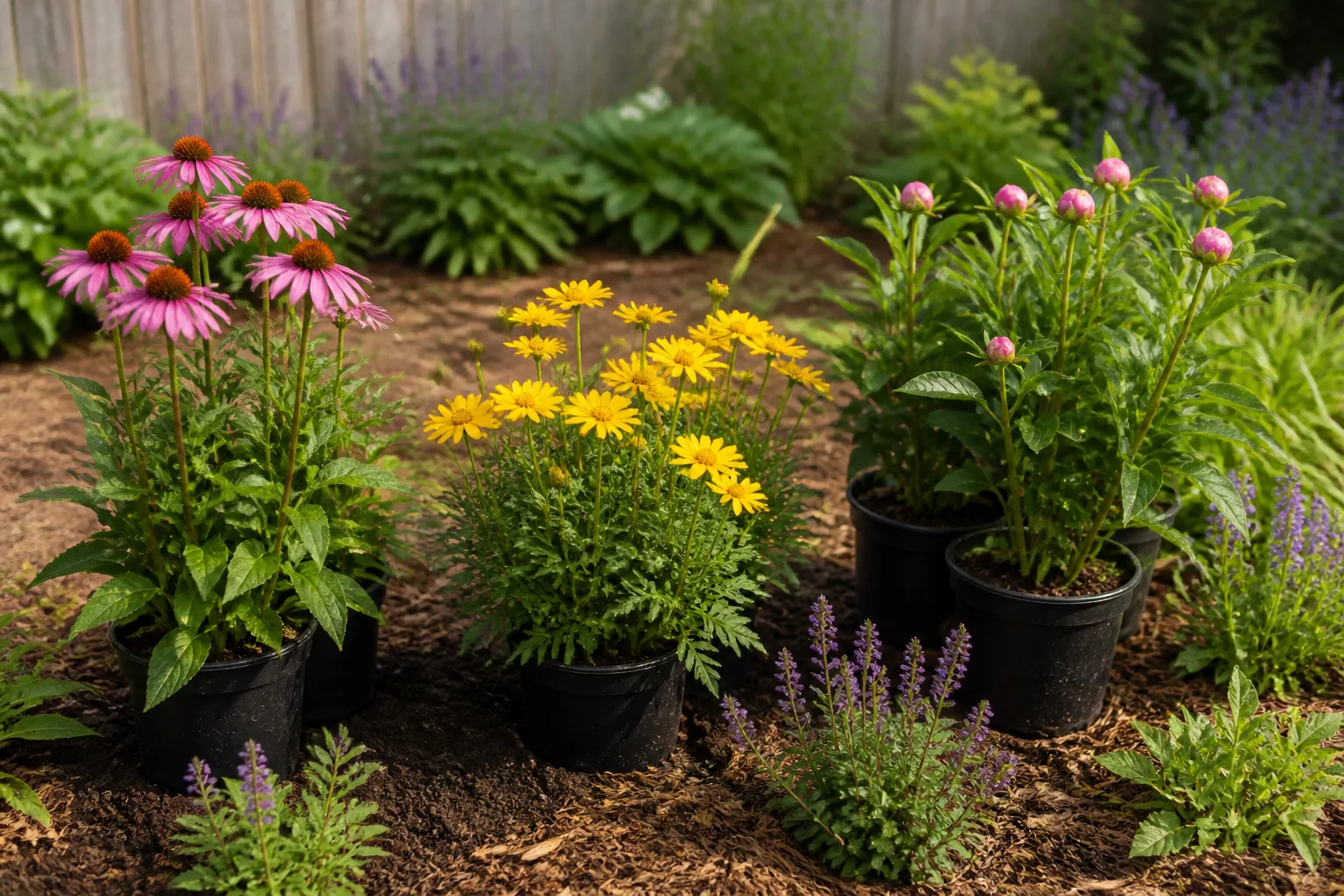
Containers magnify the seasonal decision because pot space is limited and the display is close to the viewer. Annuals make it easy to build a dense, uniform arrangement and refresh it when the season changes. A container can also hold a perennial, but check its mature size and winter needs; many perennials outgrow a small pot or need protection from cold that would not harm them in the ground.
For a long-lived container, select a perennial that is hardy in a colder zone than your garden as a buffer, choose a sufficiently large pot with drainage, and protect the root ball if winters are severe. For a one-season pot, choose annuals whose light and water requirements align, then place the container where you can water it consistently. A mixed pot can work, but avoid combining a thirsty annual with a drought-tolerant perennial just for a short-term arrangement; the two plants will ask for different watering schedules.
A practical way to combine both
Think of a mixed flower bed in layers. Put hardy perennials and shrubs in the permanent positions where their mature height, spread, and bloom sequence make sense. Use annuals in smaller groups at the front or in open patches to supply color while the permanent plants establish, and replace or reduce the fillers as the perennials grow. Keep labels or a simple sketch so you remember what is permanent before spring cleanup begins.
For example, a new sunny border might use coneflowers and salvias as repeating anchors, with zinnias or marigolds filling the foreground for the first season. In a shaded bed, choose a shade-tolerant perennial framework and use annual impatiens only where the soil stays evenly moist enough for both groups. These are design examples, not fixed recipes: plant tags and local extension guidance should settle the final choice for your region and soil.
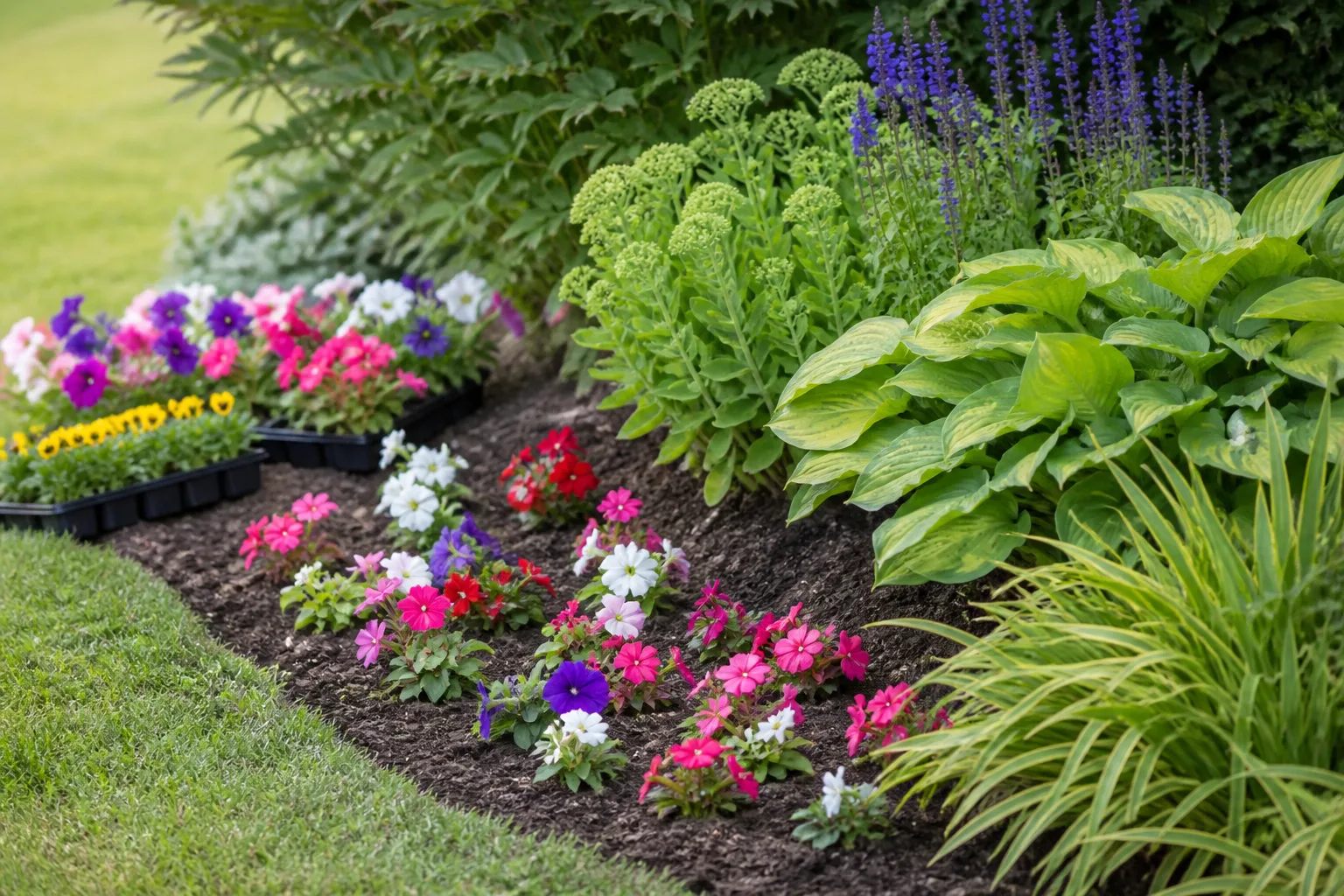
To make the plan manageable, decide what you want to repeat each year and what you are willing to replace. Buy fewer kinds, plant them in visible groups, and track which areas look bare at which point in the season. If annuals are doing all the work year after year, consider adding one or two well-matched perennials that will eventually take over that role. If a perennial border has a predictable lull, choose an annual whose timing, height, and watering needs fit the gap instead of adding more permanent plants indiscriminately.
Conclusion
Annuals and perennials differ in life cycle: annuals finish in one growing season, while perennials can survive for multiple years. Biennials take two seasons, and some plants that are botanically perennial are grown as annuals where winter is too cold for them to survive. Those distinctions explain the plant tag; your climate and garden conditions determine what you can expect in practice.
Use annuals for changeable, fast color and temporary gaps. Use hardy, site-appropriate perennials for a lasting framework, and use biennials when you are comfortable waiting for the second-season bloom. A mixed planting usually gives the best balance: perennials build continuity while annuals fill open space, test new combinations, and keep the display lively as the garden matures.



