Artillery Fungus: Identification and Prevention
Learn how to identify artillery fungus, trace black spots to mulch, choose lower-risk ground cover, and clean siding or cars without causing more damage.
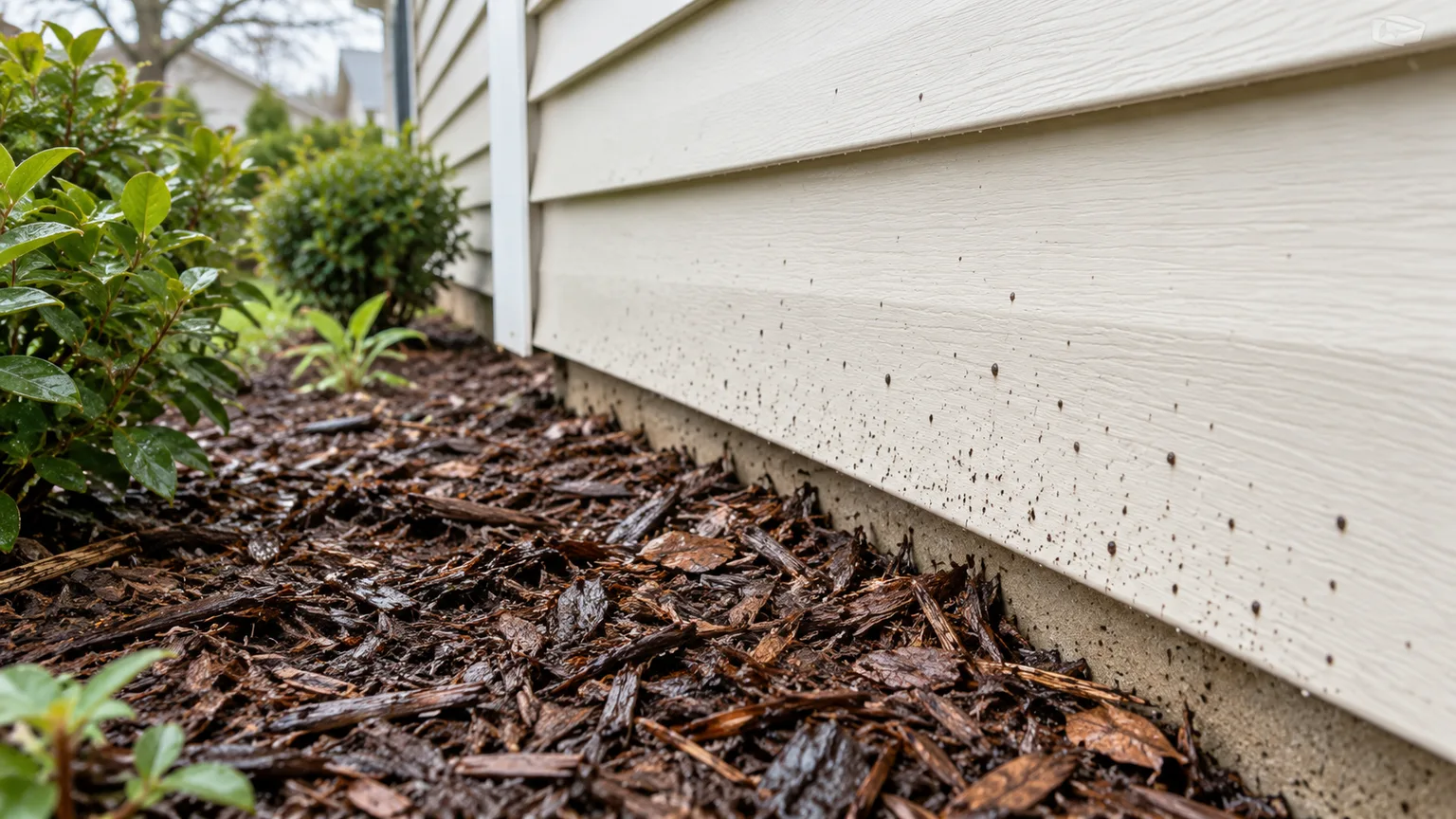
Tiny black dots on siding, windows, cars, or nearby leaves can look like tar, insect droppings, or a paint defect. If they are hard to wipe away and a bed of aging wood mulch sits nearby, artillery fungus is a likely explanation. The fungus grows on decomposing organic matter and ejects sticky packets of spores toward light-colored surfaces.
The dots are frustrating because they cling tightly, but the main problem is usually appearance and cleanup. Artillery fungus is a wood-decay organism rather than a disease that attacks landscape plants, and Extension guidance says it does not damage the surface it lands on. The practical response is to confirm the pattern, avoid spreading viable spore packets into another bed, clean only with a method safe for the material, and reduce the nearby source.
At a Glance: What to Do First
If black specks have appeared, start by looking down before reaching for a scraper or spray bottle. Check the closest mulch bed, especially old shredded hardwood or mixed wood chips, for small tan-to-brown cups and matted, light-colored patches; then look for decaying leaves, wood, or other organic debris that could be feeding the fungus.
Use this short sequence:
- Photograph the spots and the nearby bed. A close photo and a wider view help you compare the dots with Extension images and avoid confusing deposits with a plant disease or insect.
- Do not sand, scrape, or brush dry dots into the mulch. Penn State notes that the stuck spore packets can remain alive and seed a nearby bed if they fall there.
- Try the least aggressive surface-safe cleaning method first. For recent deposits, a soft cloth or brush with soapy water may help; older packets can leave a stain even after they come off.
- Address the bed, not just the siding. If the same area is producing new dots, cleaning the wall without changing the source treats the symptom only.
- Escalate uncertain or expensive surfaces. Ask the siding maker or an experienced exterior-cleaning or auto-detailing professional before using abrasives, solvents, strong cleaners, or pressure.
This is not an emergency for most landscapes. A measured response protects the finish, avoids needless pesticide use, and gives you better evidence before deciding whether to replace the mulch.
How to Recognize Artillery Fungus
The organism is a tiny wood-decay fungus in the genus Sphaerobolus. Its nickname comes from the way it launches dark spore masses; “shotgun fungus” and “cannonball fungus” refer to the same general nuisance. On the bed itself, look for inconspicuous cream, tan, or orange-brown cup-shaped fruiting bodies, roughly one-tenth of an inch across, sometimes on patches of matted mulch. The much easier clue is a scatter of persistent, tar-like specks on a light or reflective surface nearby.
Penn State Extension describes the black packets as small, sticky masses that may reach the second story of a house; Iowa State reports that they can be projected as high as 18 feet. The actual pattern varies with the bed, building, wind, moisture, and reflective surfaces, so height alone does not confirm or rule out the diagnosis. Look for a cluster of clues: hard-to-remove black dots, a decaying wood source, and a nearby mulch bed with small cups or pale matted areas. Penn State Extension’s identification guide and Iowa State University Extension’s mulch-fungi guide show the typical pattern.
What the Spots Look Like
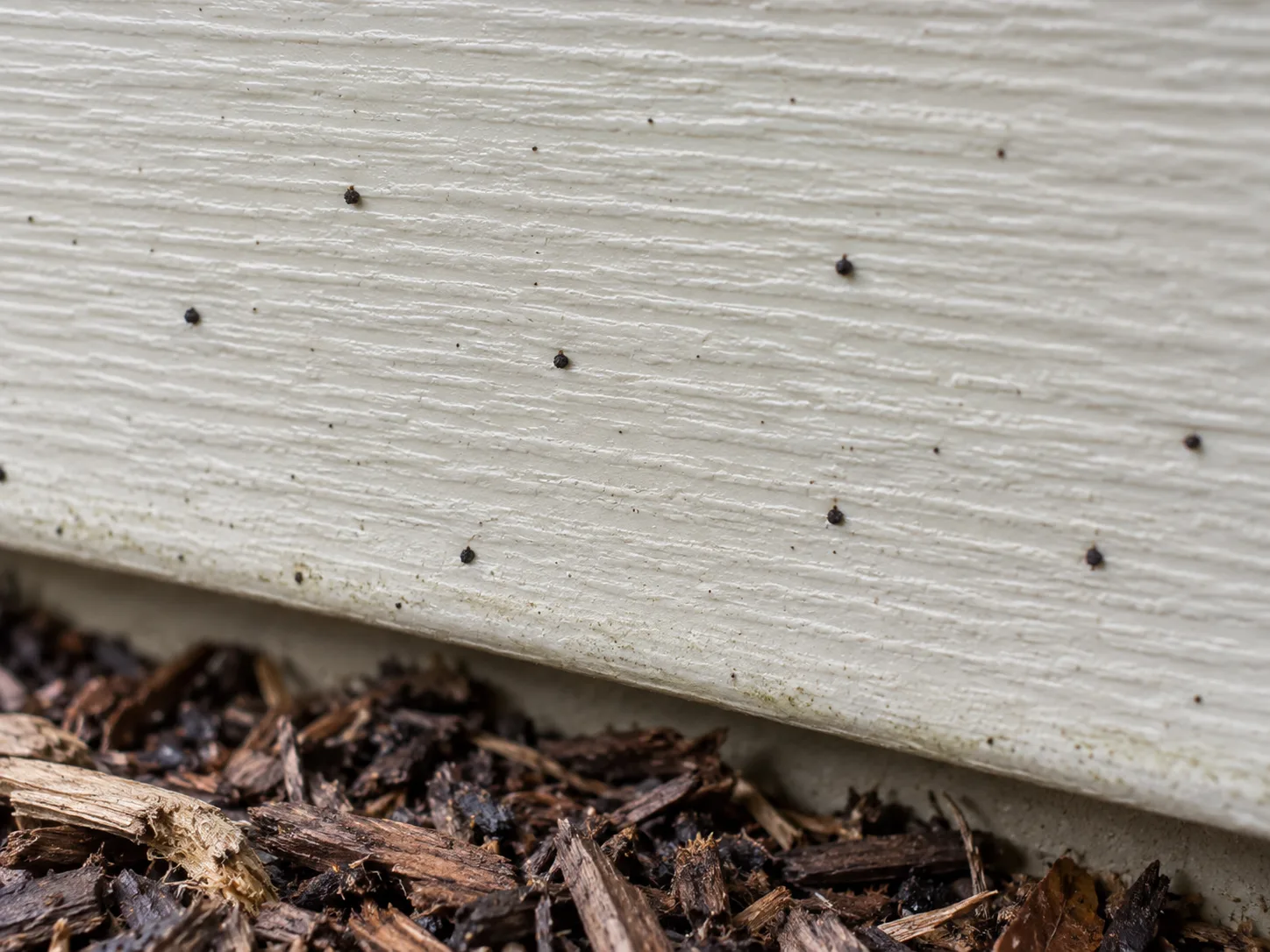
A mature spore packet, called a peridiole or gleba, is usually a tiny, dark brown-to-black disc or bead. It is often slightly raised and feels more like a dried speck attached to the surface than a smear of soot. A magnifier can help you see the shape, but do not pry at it on delicate siding just to inspect it.
These deposits commonly show up on light-colored siding, fences, cars, windows, or the undersides of leaves facing a mulch bed. They may appear as isolated dots at first and then accumulate over several wet, cool periods. A dark mark that wipes away easily, moves when touched, or appears without any nearby decomposing organic matter could have another cause, so treat appearance as a clue rather than a diagnosis by itself.
Artillery Fungus vs. Lookalikes
Several organisms can appear in mulch, but their structures and movement differ. Bird’s-nest fungi form small open cups with visible “eggs” in the cup; rain splashes those packets outward rather than the fungus shooting them at reflective surfaces. Slime molds often appear as a soft, brightly colored film or mass on mulch, then dry or disappear, rather than leaving many hard black dots fixed to a wall.
On a plant, artillery-fungus packets are surface deposits; leaf spot diseases usually affect the tissue itself and may form expanding lesions, yellow halos, or dead areas. Sooty mold often forms a removable dark film over sticky honeydew, while scale insects are individual insects attached to plant parts. If you are not sure, compare the whole scene: the mulch bed, the location of the deposits, the leaf surface, and how firmly the spots adhere. A local Extension plant clinic can help identify a sample or photograph when the answer would change what you remove or treat.
Why the Spots Land on Siding and Cars
The fungus is a decomposer: it uses dead wood and other decaying organic matter as food. Landscape mulch made with finely shredded wood, mixed wood-and-bark, recycled woody material, or aging chips can provide that food source, especially when the bed stays damp. Spores or colonized material can also arrive with mulch or fall back into a bed from nearby leaves and debris, so the newest bag of mulch is not always the only possible source.
The name can be misleading because the fungus does not simply “grow on the house.” The fungus is usually growing in an organic bed, and its packets travel to objects some distance away. A north-facing wall may collect many deposits if nearby mulch stays cool and wet; a bright car or white siding can also receive packets because the fungus directs its launch toward light. The University of Delaware Cooperative Extension notes that excessive irrigation and moisture around foundation plantings favor the problem.
How the Spore-Launch Cycle Works
A tiny cup-shaped fruiting body forms on colonized wood. As it matures, water and pressure build inside; the cup turns inside out and launches a sticky, dark packet toward a light source. The packet adheres where it lands and can remain difficult to remove after drying. Cool, wet weather favors fruiting: UMass Amherst Extension describes activity in roughly 50–68°F conditions, while Penn State notes spring and fall as common periods in its region.
This cycle explains why a bed may look quiet for weeks and then pepper the siding after a run of cool rain. The individual fruiting bodies are small and easy to miss, and mowing, raking, or trimming can disturb the mulch without eliminating the fungus already living in it. Hot, dry weather may slow visible activity, but it does not prove that the bed has been sanitized. UMass Amherst Extension’s 2026 notes on mulch fungi describe the fruiting bodies, weather conditions, and cultural controls.
Is Artillery Fungus Harmful?
For most homeowners, the practical harm is persistent staining and the time or cost of cleanup. Iowa State Extension says these fungi do not cause structural damage to the surface they land on, but a packet may be hard to remove and can leave a stain. That distinction matters: the organism is not eating siding or car paint, yet an aggressive attempt to remove it can damage the finish.
Artillery fungus on a leaf is generally a deposit rather than proof that the plant is infected. Do not prune a healthy shrub just because a few black packets are stuck to its leaves; rinse or gently wipe a small area first and check whether the leaf tissue underneath is intact. If the leaf has expanding lesions, yellowing, or decay, or the spots are not raised packets, diagnose that plant symptom separately.
Avoid eating any wild fungus or letting children handle unknown mushrooms. Extension sources characterize common mulch fungi as decomposers and nuisance organisms, but no field guide can identify every mushroom in a yard from a short description. For pets, the same conservative rule applies: prevent chewing on unknown fruiting bodies and contact a veterinarian or animal poison service if an animal eats one and becomes ill.
Your First-Response Plan for a New Outbreak
Before you disturb the bed, establish where the deposits are concentrated. Note the height and direction of the dots, then inspect the strip of mulch below that area and any nearby dead wood, leaf piles, old tree stumps, compost, or potted plants. If you find more than one possible source, begin with the closest damp organic material and observe whether new deposits continue after you change it.
If the source is a small patch of clearly decomposed mulch, remove it carefully rather than broadcasting the material across the yard. Wear garden gloves, use a scoop or tarp to contain the loose mulch, and avoid shaking dry material toward the siding or shrubs. Penn State’s management guidance recommends containing infested mulch and keeping it out of another landscape bed; ask your municipality whether contaminated yard waste belongs in a local green-waste program or should be bagged for disposal.
Do not start by spraying the entire wall with bleach, vinegar, or a fungicide. A spray may lighten or damage the surface, wash chemical residue into the bed, or leave viable packets untouched; University of Maine Cooperative Extension reports no registered chemical treatment for the fungus. First take a photo, identify a likely source, and test a gentle cleaning method on a small hidden spot if the surface maker permits it.
How to Remove Spots Without Damaging the Surface
Fresh packets are easier to address than packets that have weathered and dried, but there is no guaranteed cleaner that works safely on every siding, paint, glass coating, or vehicle finish. Begin with plain water and a mild soap approved for the material, then use a soft cloth or nonabrasive brush without grinding the packets into the finish; the University of Delaware’s Extension guide notes that soap and water can work before the material dries. Rinse the area and inspect it before repeating; repeated force is more likely to create a visible scuff than to improve an old stain.
Treat “remove the packet” and “remove the stain” as separate goals. The sticky outer coating may release while leaving a brown or dark shadow behind, and a packet may have sat long enough to discolor the surface. Penn State’s field study on recycled mushroom compost notes how difficult dried glebae are to remove from vinyl siding and that removal can leave staining. If the dots are widespread or the surface is valuable, ask the manufacturer or a qualified cleaner what is safe before trying a stronger method.
Vinyl, Glass, and Metal
For vinyl siding, start with a mild soap solution and a soft brush or cloth, working a small area at a time and rinsing gently. Do not assume a pressure washer is safe because the siding looks sturdy: high pressure can force water behind laps, loosen caulk, or damage a weathered finish. If a packet is firmly attached, a professional who cleans vinyl can advise whether a controlled low-pressure method is appropriate for that specific installation.
Glass may tolerate a different approach than textured siding, but coated, tinted, insulated, or specialty glass can be scratched or damaged by blades and abrasive pads. Follow the window maker’s cleaning instructions and test a corner first. Metal trim and painted metal vary in coating, so use the same conservative sequence and stop if the surface dulls, softens, or changes color.
Painted Siding and Vehicle Finish
On painted wood or composite siding, skip sanding, steel wool, magic erasers, and untested solvents. These can remove paint, roughen the surface, or create a larger repair than the original dots. If a deposit remains after a gentle wash, decide whether the mark is less costly to live with until repainting than to remove immediately; a qualified painter can test a small area without committing the whole wall.
Treat a car as a clear-coat problem, not a garden-surface problem. Do not scrape with a razor, use a household scouring pad, or apply a degreaser without checking the vehicle finish guidance. A car-detailing professional can test a nonabrasive method and explain whether the black packet can be lifted without harming the clear coat; old marks may need correction beyond ordinary washing. Gardening Know How’s artillery-fungus guide also warns that powerful washing can damage vehicles and wood siding, so match the method to the material rather than the fungus alone.
Remove or Replace the Mulch Source
If new packets continue appearing and the closest bed is heavily colonized, removing that source is the most direct reset. Focus on the small area near the affected wall or parking spot rather than stripping every organic material from the yard without evidence. Remove visibly decomposed wood mulch and accumulated debris; do not scrape packets off the siding and flick them down into a fresh bed, because Penn State Extension’s solutions guide says those packets can remain viable.
A new material can still be colonized later if spores arrive from leaf litter, old mulch, rotting wood, or a nearby bed. Penn State researchers found that every tested wood or bark mulch eventually supported some artillery fungus after years outdoors, although some materials supported less than others. The replacement is therefore a way to lower the odds or break an active cycle, not a sterilization guarantee. Keep the replacement layer within ordinary landscape depth so it does not bury plant crowns, trap excess moisture, or create a thick wet layer against the foundation.
If the source is unclear, avoid removing established healthy plants or excavating tree roots. Check the boundary between the bed and siding, any shaded mulch behind shrubs, and spots where irrigation routinely wets the ground. A repeated pattern after a change suggests you may have missed another reservoir, not that the fungus is coming from the house itself.
Pick a Lower-Risk Ground Cover
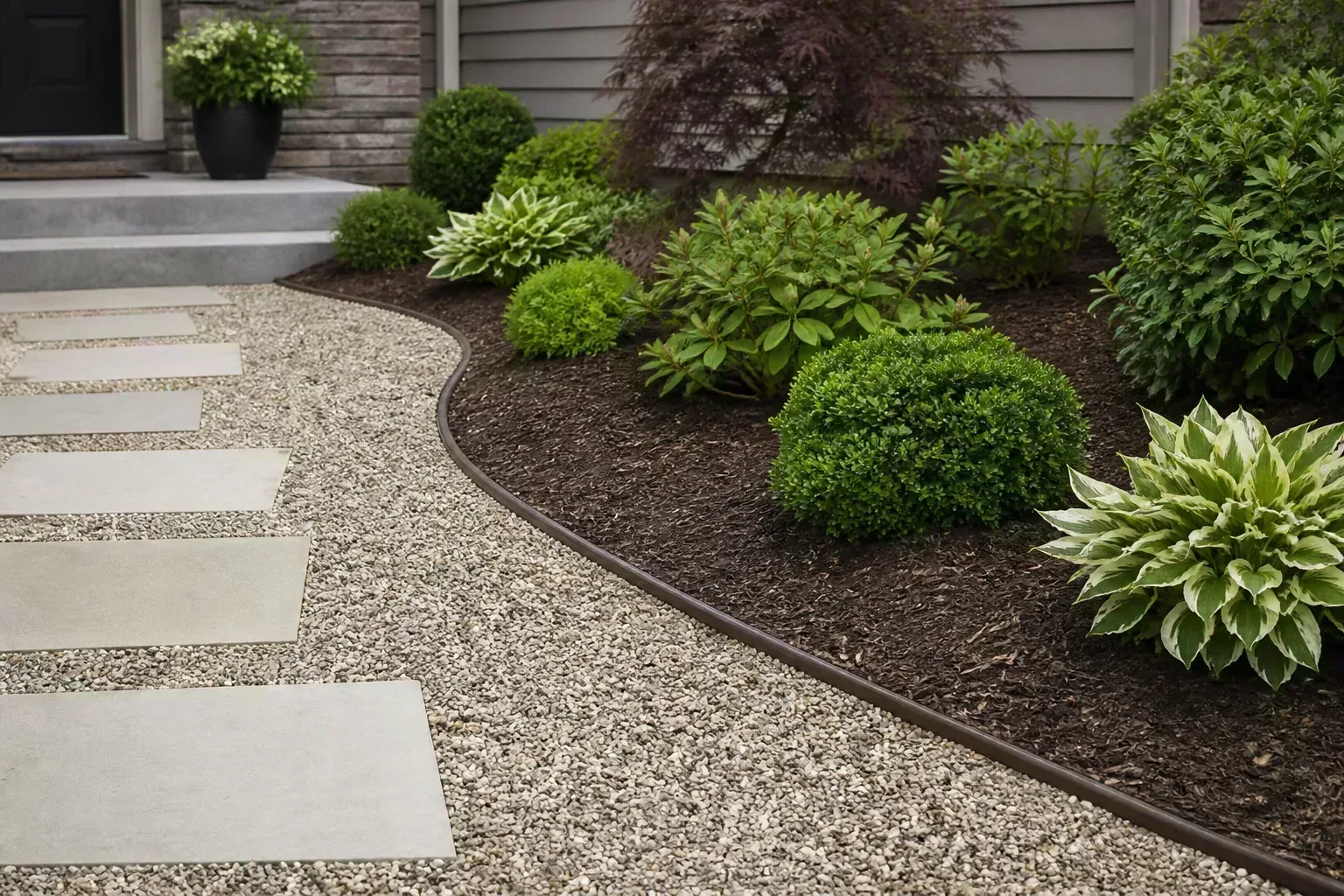
The best choice depends on why you use mulch and how close the bed sits to a light-colored wall or vehicle. If you want organic matter and soil protection, choose a coarser, bark-rich product rather than fine shredded wood; if preventing new spots on a highly exposed foundation is the priority, a non-wood surface or groundcover plants offer a stronger break from the fungus’s food source. Preserve organic mulch where it is useful and change the narrow zone that threatens the siding.
How the Main Options Compare
| Option | Relative risk and best use | Trade-off |
|---|---|---|
| Large pine bark nuggets | Lower-risk organic option; the pieces tend to stay harder and drier than fine wood chips. | They can still support the fungus over time and may not suit every planting or local climate. |
| Bark-rich mulch | Less favorable than shredded interior wood; UMass recommends material above 85% bark. | Product labels may not disclose the bark-to-wood ratio, so ask the supplier. |
| Spent mushroom substrate blended with mulch | Research-supported way to suppress sporulation where suitable material is available. | It is not a guaranteed cure and needs sensible handling based on plant and soil needs. |
| Stone or gravel | Does not provide the decomposing wood food source and can be useful in the narrow foundation strip. | Heavier to install, harder to remove, and does not feed soil like organic mulch. |
| Living ground cover | Replaces exposed mulch with plant cover and can be attractive after establishment. | Requires plant selection, establishment, and ongoing care; fallen leaves can still add organic matter. |
The University of Delaware Cooperative Extension recommends bark mulch or pine bark nuggets over hardwood as a less favorable substrate. UMass Amherst Extension recommends mulch containing more than 85% bark, while Penn State’s field guidance highlights large pine bark nuggets as one of the more resistant choices. These are relative-risk recommendations, not proof that a mulch is fungus-proof.
If a supplier uses “artillery-fungus resistant” in a sales description, ask what the product contains and what evidence supports the claim. A mixed shredded product may contain a large amount of wood even when the label says bark; large nuggets are a visibly coarser material. If your area has repeated outbreaks, consider reserving stone or another non-wood surface for the narrow strip beneath vulnerable siding and using organic mulch farther from the house.
When Used Mushroom Compost May Help
Used mushroom compost, also called spent mushroom substrate or mushroom soil, has been studied as a way to suppress artillery-fungus sporulation when blended with landscape mulch. In a four-year field study by Donald D. Davis and Michael A. Fidanza, blends containing 10%, 20%, and 40% fresh mushroom compost reduced sporulation by 62%, 80%, and 95%, respectively, compared with the no-compost control; the study tested specific field plots and a specific mulch, so those figures are not a household guarantee. Penn State Extension also describes the 40% blend as a promising option.
Think of this as a material blend to consider, not a fungicide or quick “top-dress and done” cure. Ask a local Extension office or compost supplier about the product’s composition, and confirm it is spent mushroom substrate intended for landscape use rather than fresh manure or an unknown soil amendment. A blend may help suppress the fungus over time, but it does not clean existing wall deposits or remove other sources of decaying wood.
Check plant and soil needs before applying a large amount. Mushroom compost can be alkaline and may contain soluble salts; the Royal Horticultural Society’s compost guidance cautions against using it in potting mixes because of salt levels. Penn State advises considering salt-sensitive plants when using spent mushroom substrate. In a bed with acid-loving plants or a history of salt problems, a bark-based alternative or stone buffer may be a better first choice.
Reduce Persistent Moisture Without Stressing Plants
Artillery fungus favors decomposing organic matter that remains moist, but “keep the bed dry” is not a safe instruction for every shrub or tree. Instead, stop avoidable wetting: aim sprinklers at roots rather than the whole bed, repair a leaking downspout, and correct irrigation that repeatedly soaks the foundation strip. Do not deprive established plants of water during drought just to discourage a fungus.
Loosen a matted mulch surface lightly with a rake when it is appropriate for the plants in the bed, then allow the top layer to dry between irrigation events. Avoid deep cultivation around shallow-rooted plants, and do not pull mulch away so far that roots are exposed to heat or freeze-thaw swings. The goal is to reduce a persistently damp, compressed wood layer, not to make the soil beneath a landscape planting bone dry.
Also watch the depth and age of the mulch. Fine pieces knit together as they decompose and can hold moisture; a thick layer against stems or foundation trim can create other problems even when artillery fungus is absent. If you reapply mulch, refresh the surface in a moderate layer and inspect it after cool, rainy weather rather than waiting for another season of dots.
Why Common Quick Fixes Fail
Bleach and household disinfectants do not fix the growing source. They may damage paint, plants, soil organisms, or nearby metal, and an outdoor treatment can wash away with rain. In the United States, Extension guidance reports no fungicide labeled for controlling artillery fungus in landscape mulch; always check local product labels and do not use a product on a site or organism unless its label allows that use.
Fresh mulch over an infested bed can hide rather than remove the problem. A new top layer may act as a temporary barrier, and some Extension sources discuss layering as a management option, but the buried organic matter remains available as food and can later reappear. Do not stack layer after layer until the bed is too deep for plant crowns or drainage; if the outbreak is strong, remove the active source or change the surface where it matters most.
Scraping or sanding dots can spread viable packets and damage finishes. A razor blade may be suitable for certain uncoated glass under specific instructions, but it is a risky default for vinyl, paint, composite siding, and car clear coat. Catch debris rather than letting it drop into the mulch, and stop if a gentle test changes the finish.
Changing the mulch color is not a control method. Penn State found that dye did not reliably inhibit the fungus; any early difference may be temporary and tied to how wet the mulch stays. Choose by material, texture, and moisture conditions instead of color.
Track a Recurring Problem
After cleaning and changing the bed, take a few photos from the same position every couple of weeks during cool, wet weather. Note whether new dots appear, which side of the home receives them, how high they land, and whether the nearby bed is damp or matted. This simple log helps separate old stains that remain from new packets that indicate an active source.
If dots continue, check beyond the replaced mulch. Look for leaf litter under shrubs, old wood edging, a hidden stump, compost stored against the building, or a second bed that directs spores toward the same wall. Penn State Extension notes that spores may arrive with contaminated mulch or plant material and can be moved around when packets are scraped from a house. If the dots are only on foliage and the underlying tissue looks unhealthy, send clear photos of both leaf surfaces and the bed to your local Extension plant diagnostic service.
Be realistic about the timing. Removing a source can reduce future deposits, but it will not erase old stains, and neighboring organic material can keep the cycle going. If one season passes with no new dots, keep the lower-risk surface near the house and continue ordinary mulch maintenance; if the spots return, revisit the source map before repeating a whole-yard removal.
Conclusion
Artillery fungus is usually identified by sticky, tar-like black packets on light surfaces near moist, decaying wood mulch. The spots are unsightly and stubborn, but the fungal packets do not eat siding; the greater surface risk comes from scrubbing or scraping with a method that damages the finish. Photograph the pattern, inspect the nearest organic source, and clean a small test area gently before using stronger methods.
For long-term prevention, remove or manage the active source and choose a lower-risk surface where deposits are costly: large pine bark nuggets or bark-rich mulch can reduce risk, while stone or living ground cover removes the decomposing wood that feeds the fungus in that zone. Mushroom-compost blends have promising field evidence but need local, plant-aware use. Keep moisture sensible, contain material you remove, and ask Extension for help if spots do not match the pattern or the source remains unclear.



