How to Grow and Care for Bacopa Plants
Grow bacopa (Sutera cordata) with the right light, watering, feeding, and container setup for trailing blooms from spring through frost.
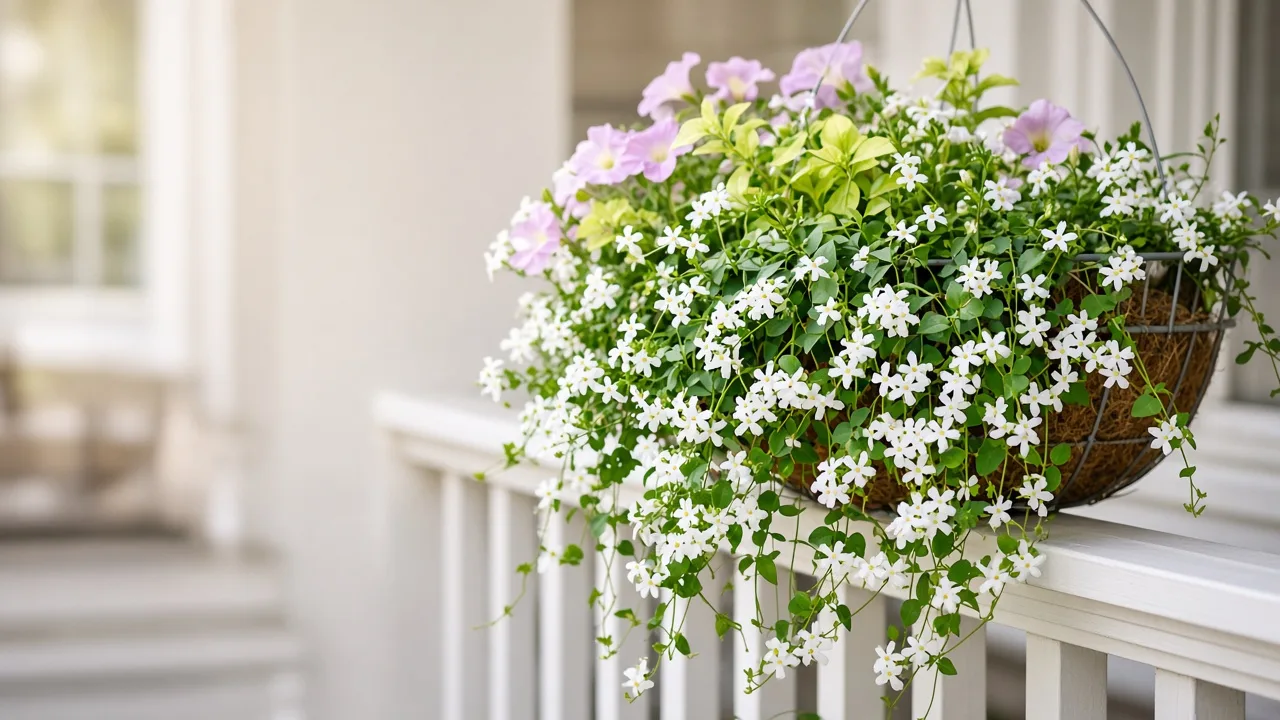
Bacopa is the quiet workhorse of summer containers: tiny five-petaled flowers on fine trailing stems that soften pot edges, fill gaps between bolder partners, and keep going from late spring until frost — if you respect one non-negotiable rule. Unlike petunias or impatiens, bacopa often does not wilt when it gets too dry. It simply drops every open flower and unopened bud, then needs two to three weeks of steady moisture before it blooms again. That quirk separates gardeners who get a solid season of color from those who wonder why their hanging basket went bare by July.
This guide covers Sutera cordata and its modern hybrids — the ornamental trailing annual sold for baskets, window boxes, and bed edges. It is not Bacopa monnieri, the aquatic herb sold for ponds and supplements. Same common name, completely different plant. Everything below applies to the bedding bacopa you see labeled Sutera, Chaenostoma, or simply bacopa at the nursery.
What Is Bacopa (Sutera cordata)?
Ornamental bacopa is a low, spreading to trailing herbaceous plant native to South Africa. In the nursery trade it is usually listed as Sutera cordata, though botanists have also placed it in Chaenostoma. For shopping purposes, look for the genus Sutera on the tag — that is the plant this guide describes.
Mature plants typically reach 4 to 8 inches tall and spread or trail 12 to 36 inches, depending on cultivar and container depth. Stems are slender and brittle; leaves are small, oval, and lightly toothed. Flowers are dime-sized or smaller, with five petals around a yellow or darker “button” center. Colors include white, pink, lavender, blue, and bicolor forms. The plant is self-cleaning, meaning spent flowers fall away without deadheading.
In USDA Zones 9 through 11, bacopa can behave as a short-lived perennial or evergreen ground cover where winters stay mild. Everywhere else it is treated as a warm-season annual planted after the last frost and replaced or overwintered indoors when cold arrives.
Don’t Confuse Ornamental Bacopa With Bacopa monnieri
Garden centers and online listings reuse the name “bacopa” for two unrelated plants. Ornamental bacopa (Sutera cordata) is a flowering trailer for sun and part shade. Bacopa monnieri is a creeping wetland herb grown in aquariums and sometimes as a memory-support supplement — completely different culture (wet feet, different light, no basket use). If you want the white or blue cascade on your porch rail, confirm the label reads Sutera or shows a trailing bedding plant, not a pond or herb listing.
Bacopa at a Glance: Quick Reference
| Trait | Typical range |
|---|---|
| Botanical name | Sutera cordata (syn. Chaenostoma cordatum) |
| Common use | Trailing spiller in containers; ground cover in mild climates |
| Height / spread | 4–8 in. tall; 12–36 in. trail or spread |
| Sun | Full sun to part shade; afternoon shade in extreme heat |
| Soil | Moist, fertile, well drained; pH roughly 5.6–5.9 |
| Hardiness | Perennial in Zones 9–11; annual elsewhere |
| Bloom season | Planting time until frost in most regions |
| Key care rule | Never let root zone dry completely |
Use the table as a snapshot, then read the sections below for the decisions that actually control performance — especially watering in containers and heat management.
Where Bacopa Performs Best in the Landscape
Bacopa shines anywhere you need a soft trailing edge rather than a upright focal point. It is not a thriller plant; it is the spiller that ties mixed pots together and hides bare rim space.
Hanging Baskets, Mixed Containers, and Ground Cover Uses
Hanging baskets are bacopa’s signature role. One vigorous white cultivar can fill a 12-inch basket alone; in mixed designs, tuck two or three plants along the rim while a mounding petunia, geranium, or calibrachoa occupies the center. Bacopa’s fine texture contrasts beautifully with bold leaves like sweet potato vine or coleus.
In mixed patio containers, plant bacopa at the forward edge where stems can spill freely. Avoid burying it under taller partners that block light and airflow — bacopa at the back of a deep pot often grows thin and flowers poorly.
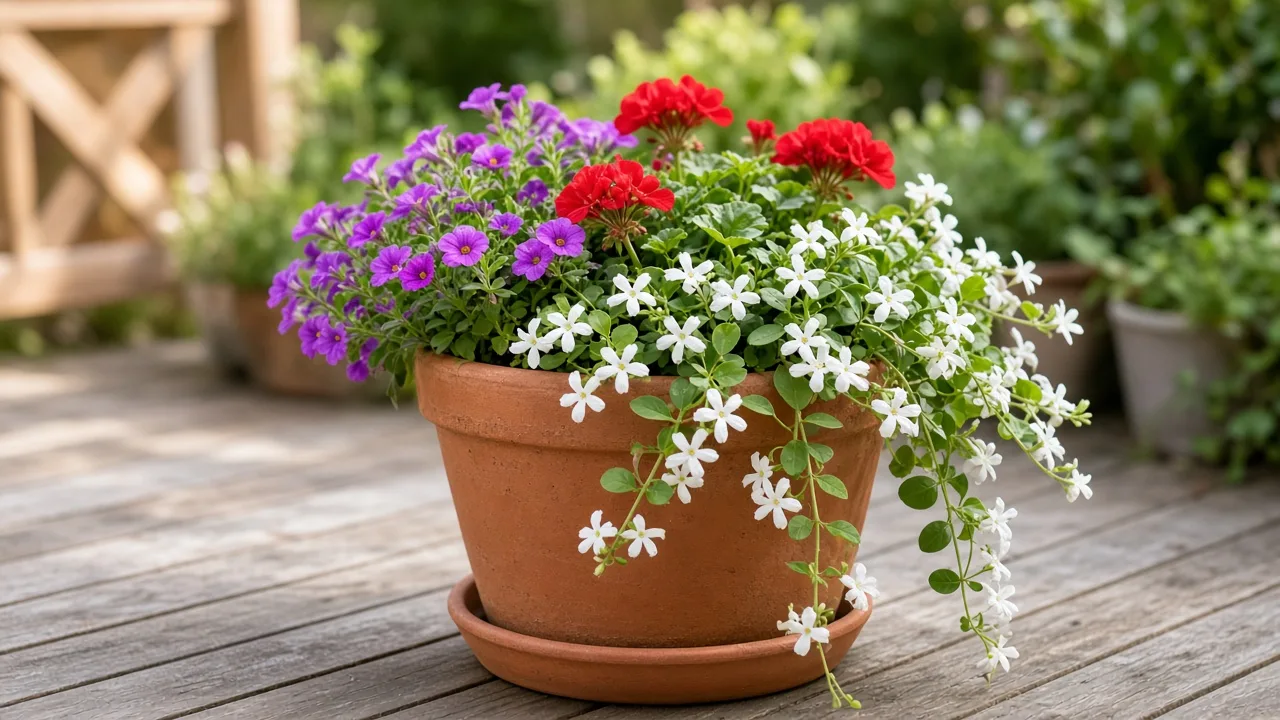
Window boxes and rail planters benefit from the same edge placement. In the ground, bacopa works as a flowering ground cover between stepping stones or at the front of a sunny border, provided soil stays evenly moist. In hot inland climates it is usually happier elevated in a basket where you can monitor water daily than baking in compacted bed soil.
For combination ideas with other part-shade annuals, see shade annuals — bacopa appears there as a reliable trailer for morning-sun beds.
Light Requirements for Bacopa
Bacopa grows in full sun to partial shade. Maximum flower count generally comes with at least six hours of direct sun and steady moisture. In cool-summer or coastal climates, full sun from morning through mid-afternoon is ideal.
Partial shade — bright morning sun with protection from harsh afternoon rays — is often the sweet spot in hot regions. Bacopa tolerates less sun than many basket annuals, but deep all-day shade produces loose growth and fewer buds.
Heat Strategy for Hot-Summer Gardens
High day temperatures, especially when nights stay warm, can shut down flowering even if soil moisture is adequate. Many older bacopa lines pause bloom during the hottest weeks of summer; newer heat-tolerant cultivars (MegaCopa, Calypso Jumbo White, Snowstorm series selections) were bred to keep producing closer to 90°F.
Practical heat rules:
- Move containers to afternoon shade when bloom counts drop during heat waves.
- Avoid dark-colored pots that radiate heat into the root zone.
- Increase watering frequency without leaving roots soggy overnight.
- Choose white-flowered varieties if your summers are brutal — they historically recover faster and flower longer than some pink or blue lines.
If buds disappear during a July heat spike, fix shade and moisture first before assuming disease.
Soil, Planting, and Spacing
In garden beds, loosen soil and mix in compost or other organic matter to improve fertility and drainage. Heavy clay should be amended with compost and, where drainage is poor, raised slightly so winter wet does not rot crowns. Optimal pH is slightly acidic, roughly 5.6 to 5.9, according to horticultural references including Garden Design.
In containers, use a high-quality peat- or coir-based potting mix with perlite for drainage — not garden soil. Bacopa roots are fine and shallow; they need air as much as water. Mix in slow-release fertilizer at planting if you prefer fewer liquid feedings later.
Spacing: Allow 8 to 12 inches between plants in beds. In containers, one bacopa per 10 to 12 inches of pot diameter is a workable starting point for mixed plantings; a 12-inch hanging basket can carry one vigorous trailer or two compact types.
When to plant: Set out transplants after all danger of frost has passed and soil temperatures are reliably warm — typically mid to late spring. Cold, wet soil stalls roots and invites rot.
Watering Bacopa Without Losing Your Bloom Run
Water is the make-or-break factor. Bacopa prefers evenly moist soil — not bone dry, not waterlogged. The tricky part: when drought-stressed, bacopa drops flowers and buds before leaves look obviously wilted. Gardeners often miss the first warning sign.
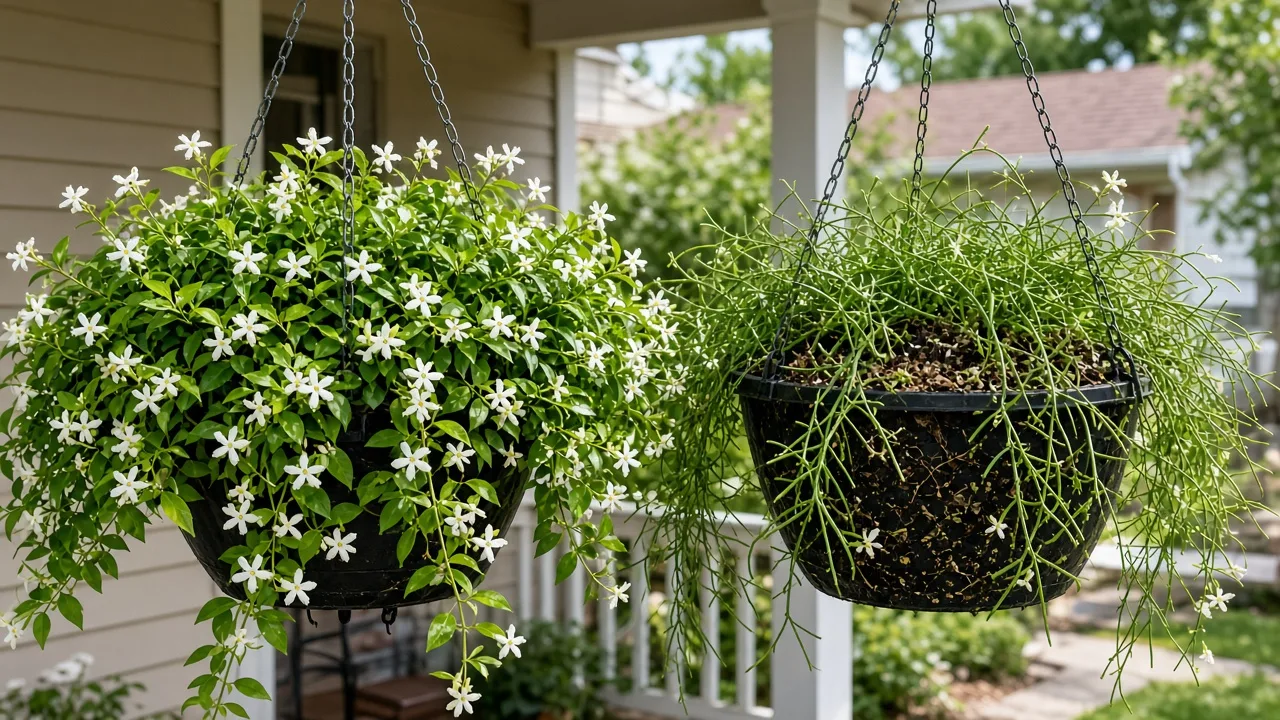
Container watering guidelines (adjust for rain, wind, and pot material):
| Conditions | Typical basket/pot need |
|---|---|
| Cool, overcast (below 70°F) | Check daily; water when top inch feels dry |
| Warm, sunny (70–85°F) | Often daily; small pots may need twice daily |
| Hot or windy (above 85°F) | Twice daily for hanging baskets; wind dries liners fast |
| Self-watering reservoir | Refill reservoir before it empties; still check surface moisture |
In-ground plants in full sun usually need deep watering weekly in moderate weather, more during heat. Mulch 1 to 2 inches to slow evaporation, keeping mulch off stems.
A useful trick from experienced container growers: pair bacopa with a wilting indicator plant — coleus, verbena, or petunia in the same pot — that limps visibly when the mix dries. When the indicator droops, bacopa may already be aborting buds.
If bacopa does dry out, do not panic-prune. Resume steady watering, place the pot in bright light with afternoon protection, and feed lightly after new growth appears. Expect two to three weeks before bloom volume returns — Garden UK documents this recovery lag clearly.
Water at the soil surface or with a wand, not overhead sprinklers that soak foliage overnight. Wet leaves in humid heat invite powdery mildew.
Temperature, Humidity, and Seasonal Behavior
Bacopa performs best with daytime temperatures around 75°F to 80°F and nights between 60°F and 70°F. Extended periods above roughly 80°F can reduce flowering; prolonged below 50°F also slows or stops buds.
The first hard frost kills bacopa in annual zones. In frost-free climates, plants may continue blooming through winter if light and moisture stay adequate.
High humidity alone is not a problem, but humid plus crowded, shaded, or overhead-watered plantings increase fungal leaf issues. Space containers for airflow and water early in the day.
Fertilizer Schedule That Supports Nonstop Flowers
Bacopa is a moderate feeder, not a heavy hog like calibrachoa, but it still needs regular nutrition to keep producing hundreds of small flowers.
Container plants: Apply a balanced water-soluble fertilizer (such as 10-10-10 or 20-20-20) diluted per label directions every 10 to 14 days, or a bloom-boosting formula with higher potassium every two weeks during peak summer. MyGardenLife recommends bloom-oriented ratios like 5-10-5 for flowering annuals.
In-ground plantings: Feed every three weeks through the growing season, or incorporate slow-release granules at planting and supplement with liquid feed midsummer.
Avoid over-fertilizing, which pushes soft foliage at the expense of flowers and can burn shallow roots. Skip foliar feeding on seedlings — water-soluble sprays from above can scorch young tissue.
If flowers thin but stems keep elongating, the issue is often heat or drought, not hunger — diagnose moisture before doubling fertilizer.
Best Bacopa Varieties to Grow
White cultivars historically offer the longest bloom window and largest flowers. Colored forms are gorgeous but sometimes less forgiving of missed waterings.
| Cultivar | Highlights | Size / habit |
|---|---|---|
| Snowstorm® Giant Snowflake® | Large white flowers; classic basket performer | 4–8 in. tall, trails to 36 in. |
| Snowstorm® Blue | Violet-blue flowers with yellow centers | 4–8 in. tall, ~24 in. spread |
| MegaCopa™ | Improved heat tolerance; large white blooms | 4–6 in. tall, ~18 in. spread |
| Calypso Jumbo White | Excellent heat tolerance; large white flowers | 4–6 in. tall, ~16 in. spread |
| Gulliver’s White | White with yellow throat; strong basket habit | 4–6 in. tall, trails ~16 in. |
| Olympic Gold | White flowers; gold-variegated foliage — needs more shade | Compact mounder |
When shopping, favor Proven Winners, Ball Horticultural, or local growers who label heat tolerance if your summers run hot and dry. For cool, cloudy regions, older white trailers still perform beautifully with less stress.
Pruning and Midseason Renewal
Bacopa is self-cleaning — no deadheading required. That alone makes it lower maintenance than many petunias.
Still, stems can become leggy or hollow in the center by midsummer, especially if the plant went through a bloomless drought recovery or heat pause. When flowering slows and lower stems turn woody:
- Trim back up to one-third of the length with clean scissors.
- Water deeply and place in bright light with afternoon shade if hot.
- Feed with diluted liquid fertilizer within a week.
- Allow 10 to 14 days for fresh side shoots and buds.
Light shaping anytime improves basket symmetry. Do not shear into bare old wood without leaves — bacopa rebounds best from green, leafy stems.
Propagating Bacopa From Cuttings
Vegetative propagation is easier and more reliable than seed for matching nursery flower size. Take cuttings in late spring through summer, and again in early fall if overwintering indoors.
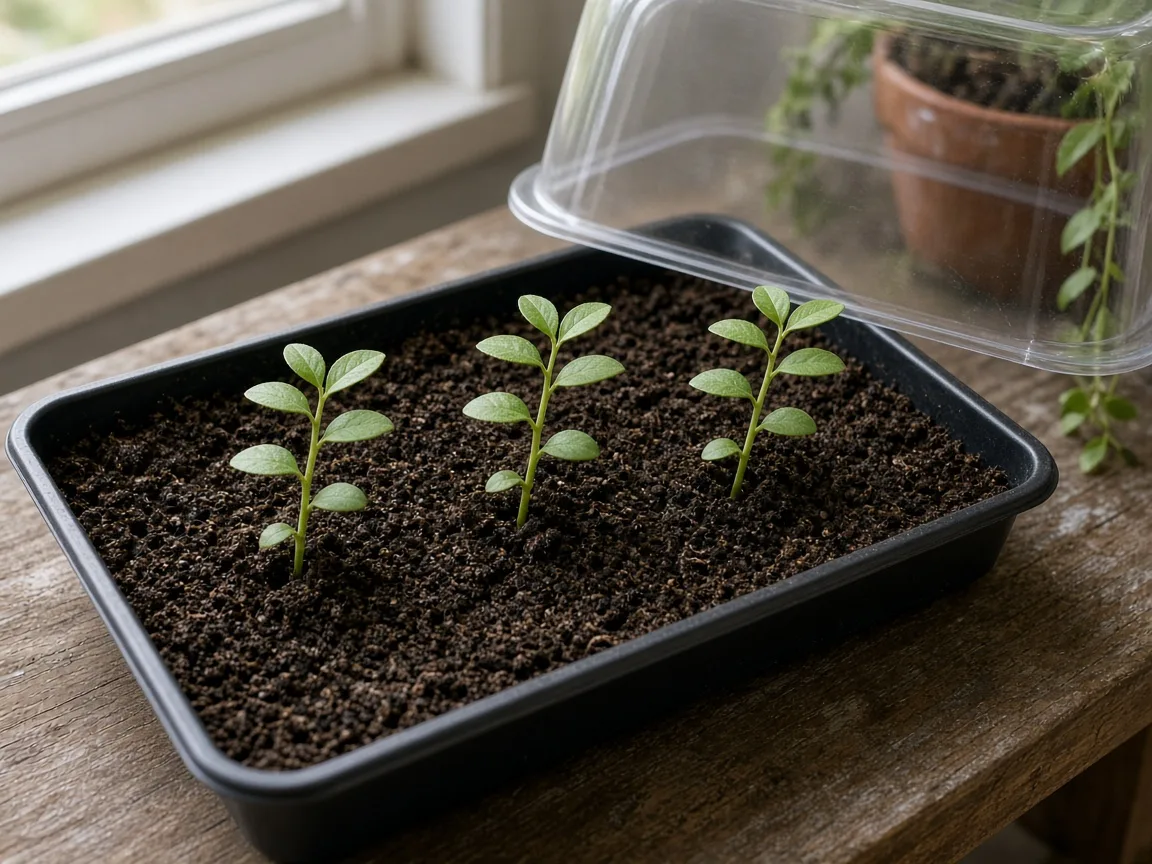
Softwood cutting steps:
- Snip 2 to 3 inches of healthy stem just below a leaf node.
- Strip lower leaves, leaving two or three pairs at the tip.
- Optional: dip the cut end in rooting hormone.
- Insert into moist seed-starting mix or half peat, half perlite.
- Cover with a clear bag or dome; keep in bright indirect light (no direct midday sun).
- Mist to maintain humidity; roots typically form in 3 to 5 weeks.
- Transplant when roots hold the plug together; harden off before outdoor placement.
Cuttings rooted in late summer can become free replacement plants next spring if you overwinter them on a cool, bright windowsill.
Starting Bacopa From Seed
Seed-grown bacopa is possible but flowers are often smaller than vegetatively propagated lines. Seeds are tiny and frequently sold pelleted for easier handling.
Start indoors 8 weeks before your last frost date:
- Fill flats with moist seed-starting mix.
- Press pelleted seeds onto the surface — light is required for germination; do not bury deeply.
- Cover with a humidity dome; maintain 70°F to 75°F.
- Keep mix moist, not saturated. Germination usually occurs in 7 to 10 days.
- Remove dome after sprouting; grow on at around 60°F with bright light.
- Transplant the sturdiest seedlings into individual pots before setting outdoors after frost.
Because seed strains vary, buy from reputable seed houses and expect some trial and error compared with buying named cultivars as plugs.
Overwintering Bacopa in Warm and Cold Climates
Zones 9–11 (and warm parts of Zone 8): Bacopa may survive outdoors if frost is rare. Cut back ragged growth in late winter, refresh mulch, and resume feeding as new shoots emerge.
Colder regions: Treat plants as disposable annuals, or repot and move indoors before first frost. Indoor success requires a south- or west-facing window or supplemental grow lights — short winter days rarely sustain heavy bloom, but foliage can persist. Reduce watering slightly while growth slows; avoid letting pots sit in saucers of water.
Expect leggy indoor growth. A February trimming and brighter light can produce cuttings for spring baskets cheaper than buying new flats.
Common Pests and Diseases
When culture is correct, bacopa has few serious problems. Stress invites trouble.
Aphids are the most common pest, clustering on tender tips and causing sticky residue and distorted growth. First response: a strong jet of water to knock insects off (avoid blasting fragile stems repeatedly). Persistent colonies respond to insecticidal soap or neem oil applied to undersides of leaves, following label rates and re-treating as directed. Gardening Know How notes aphids as the primary recurring pest on bacopa.
Also watch for spider mites in hot, dry microclimates (fine webbing, stippled leaves) and whiteflies in crowded greenhouse-purchased stock.
Powdery mildew appears as white powder on leaves during humid spells with poor airflow. Improve spacing, water at soil level, and remove heavily infected stems. Preventive fungicides are a last resort in edible-adjacent patio settings — cultural fixes usually suffice for home baskets.
Root or stem rot follows overwatering or pots without drainage. If the plant collapses despite wet soil and stems darken at the base, discard it and refresh the mix rather than trying to salvage saturated roots.
Troubleshooting: Why Your Bacopa Stopped Blooming
Work through this sequence before replacing the plant:
1. Dry soil (most common). Probe the top 2 inches. If dry, water thoroughly. Expect weeks, not days, for full bloom return. Pair with an indicator plant next season.
2. Heat shutdown. If moisture is adequate but days exceed 85°F, move to afternoon shade and switch to a heat-tolerant cultivar next year.
3. Aphids or mites. Inspect stem tips with a hand lens. Sticky leaves or curled new growth point to sap feeders — treat or rinse as above.
4. Leggy, aged growth. Lower stems woody, few buds at tips — trim back one-third, feed, and wait for renewal.
5. Root-bound or exhausted mix. If water runs straight through and the basket dries twice daily, the root mass may have outgrown the container. Slide the plant out; circling roots mean repotting into fresh mix or replacing with a cutting.
Yellowing leaves with wet soil suggest overwatering or fertilizer burn — flush once and pause feeding until new growth looks normal.
Conclusion
Bacopa earns its place on porches and patios because it delivers fine-textured, self-cleaning color without constant deadheading — provided you treat moisture as seriously as you treat sunlight. Plant it at the rim where it can trail, choose white or heat-bred cultivars for difficult summers, and never let a hanging basket go dry on a hot windy afternoon. When flowers disappear, check water before reaching for pesticide or fertilizer. Master that rhythm and bacopa becomes one of the most reliable spillers in the annual container toolkit — a small plant that reads as a full, soft cascade by midsummer.