Beautyberry Care: How to Grow American Beautyberry
Learn how to grow American beautyberry with the right light, moisture, pruning, propagation, winter care, and fixes for brown leaves or few berries.
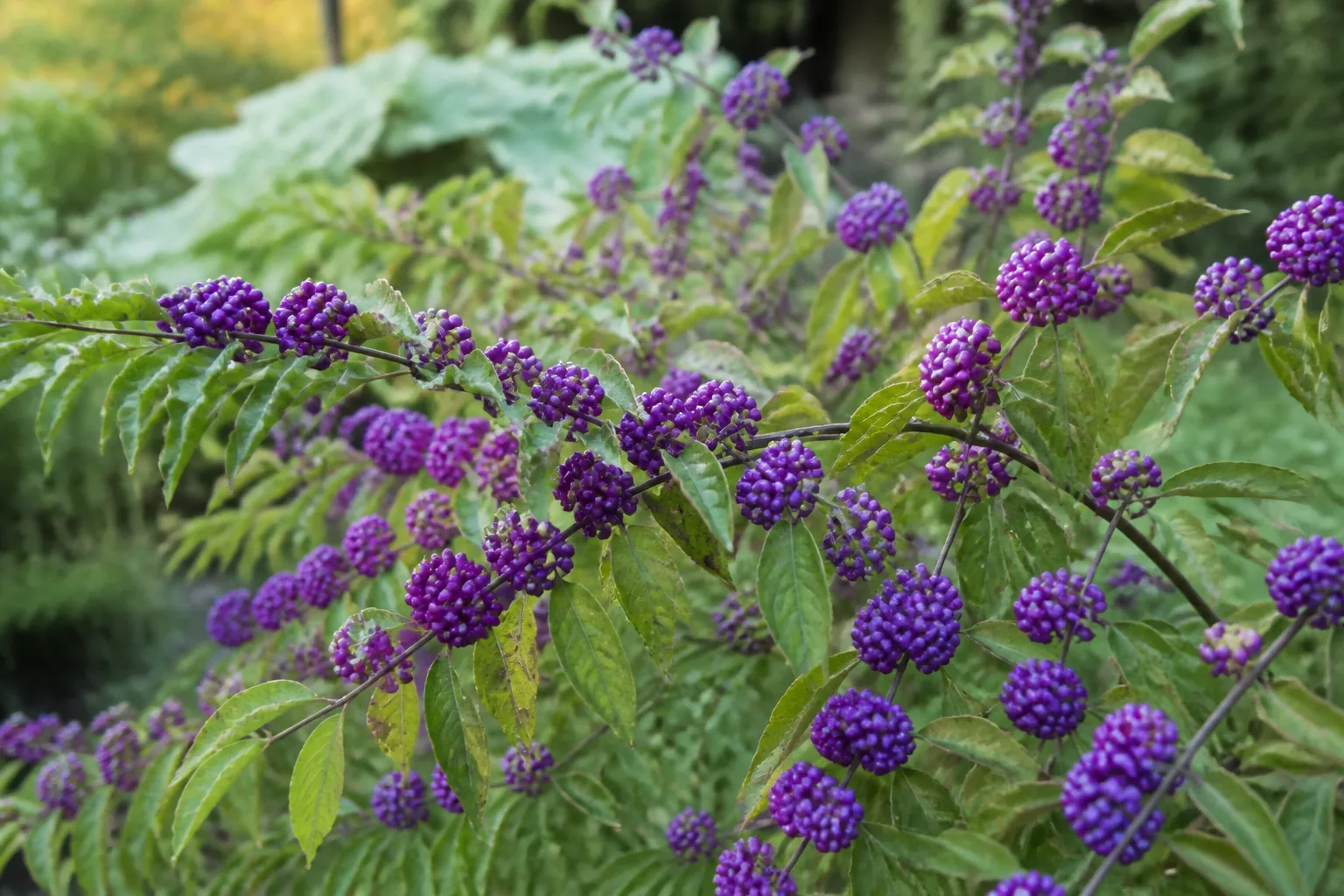
American beautyberry (Callicarpa americana) earns its place in a garden late in the year, when arching stems fill with rings of purple fruit and the surrounding foliage begins to fade. It is a low-maintenance native shrub once established, but “easy” does not mean you can put it anywhere and expect a heavy berry display. The best results come from matching the shrub’s woodland-edge habits with enough light, reliable moisture while it settles in, and pruning that encourages new shoots rather than removing them.
The care rule is simple: give beautyberry full sun to light shade, well-drained soil, deep watering during establishment, and late-winter pruning. It tolerates clay and some drought, yet prolonged heat and dry soil can still reduce fruiting. Adjust maintenance to the effect you want: a wildlife shrub, border plant, or container specimen.
Beautyberry at a Glance
| Care factor | Practical target | What changes the result |
|---|---|---|
| Botanical name | Callicarpa americana | Other species are also sold as beautyberry, so check the label. |
| Mature size | About 3–8 feet tall and 3–6 feet wide | Cultivar, climate, pruning, and soil moisture affect the final spread. |
| Light | Full sun for the strongest fruit display; light or partial shade is acceptable | Deep shade commonly produces a thin shrub with less fruit. |
| Soil | Moist but well drained; loam, sand, or clay can work | Poor drainage is more dangerous than a less-than-perfect soil texture. |
| Water | Keep evenly moist while establishing; taper after roots are settled | Hot, sunny weather and sandy soil shorten the interval between deep waterings. |
| Flowers | Small clusters in late spring and summer | The flowers are easy to miss, but they form the fruiting sites. |
| Fruit | Purple to bluish-purple clusters, usually late summer through fall | White and pink cultivars are available; birds may remove fruit early. |
| Pruning | Late winter, before new shoots emerge | The shrub flowers and fruits on new growth, so late spring cuts can reduce the display. |
| Hardiness | Commonly grown from zone 6 into warmer climates; local listings vary | Cold exposure can kill back stems even when the root system survives. |
NC State Extension describes American beautyberry as a deciduous, arching shrub that grows in sun or partial shade and many soil textures when drainage is adequate. The Missouri Botanical Garden notes that established plants tolerate clay and drought, but prolonged hot drought can reduce fruiting. (NC State Extension; Missouri Botanical Garden)
Identify the Shrub and Understand Its Growth
The plant most gardeners mean by American beautyberry is Callicarpa americana, also called American mulberry, French mulberry, or beautyberry. It belongs to the mint family, Lamiaceae, despite having the woody, open shape of a small shrub. Its long stems arch outward instead of forming a naturally dense ball, which is why a mature plant can look graceful in a naturalized bed but floppy in a formal foundation planting.
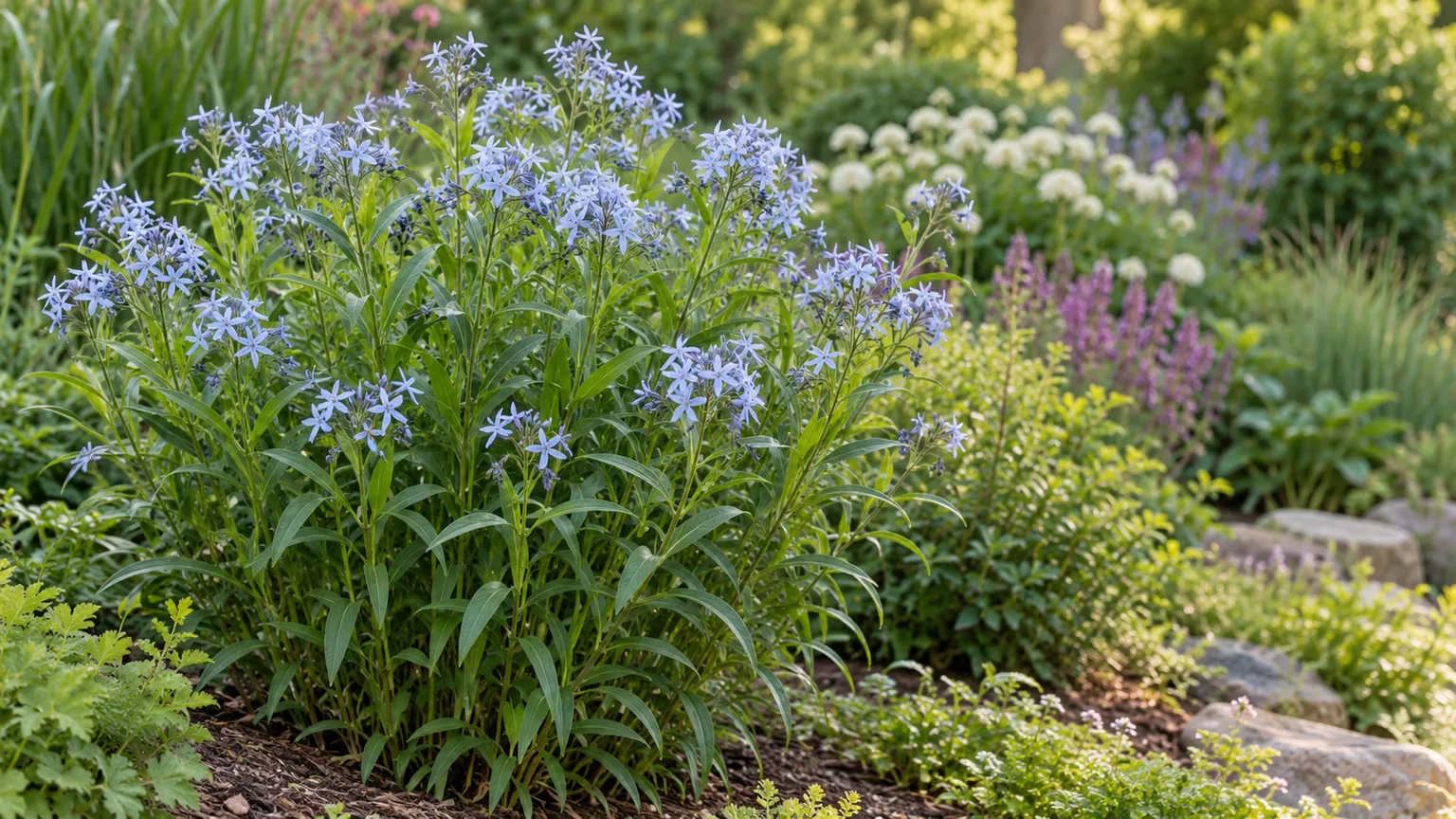
Opposite, oval leaves emerge green in spring. They have coarse teeth along the margins and can feel slightly rough or fuzzy, especially on the underside. Small pink, lavender, or pale flowers form in clusters where leaves meet stems in late spring or early summer. Those flowers are not the main attraction; they are the quiet first stage of the fruit that later wraps around the branches.
The fruit clusters are the reliable identification clue. Small berries form in dense whorls that encircle the stem, color up from late summer into fall, and may persist into early winter. NC State Extension lists them as food for songbirds and small mammals and notes that the plant has few significant pest or disease problems in a suitable site.
Beautyberry is not evergreen. In fall, its leaves may turn yellow or pale chartreuse before dropping, leaving the colored fruit on bare stems. That seasonal sequence matters when you assess the plant: a leafless shrub covered in berries can be performing exactly as it should, while a bare shrub in midsummer needs a closer look at water, roots, and weather.
Choose the Right Beautyberry for Your Site
American Versus Asian Beautyberry
“Beautyberry” is a common name for several Callicarpa species, not a guarantee that the plant in a nursery pot is American beautyberry. C. americana is native to the central and southeastern United States as well as parts of the Caribbean. Asian species such as Japanese beautyberry (C. japonica) and Chinese beautyberry (C. dichotoma) can have different proportions, berry placement, and local planting considerations.
Read the botanical name before you buy. If a native wildlife planting is the goal, look for C. americana or a clearly labeled cultivar. If the label only says “beautyberry,” ask for the species and check regional extension guidance before planting a nonnative Callicarpa.
Cultivars for Purple, White, or Pink Fruit
The straight species is usually selected for its purple to violet fruit, but named forms broaden the palette. NC State Extension lists ‘Alba’, ‘Lactea’, and ‘Russell Montgomery’ for white fruit, and ‘Welch’s Pink’ for pink berries. A white-fruited plant can be especially effective against dark evergreens, while the purple forms make a stronger autumn focal point.
Buy a plant with a known name when color or habit matters, and propagate it from cuttings if you want a close copy. Seedlings can be excellent garden plants, but may not repeat a named parent’s fruit color or form.
If your priority is fruit rather than a single specimen, group several compatible beautyberries nearby instead of scattering lone plants across the yard. Extension and botanical-garden guidance both report that multiple plants often produce a better fruit display, although the exact effect varies with site, age, and weather. Leave enough room for mature spread so the group reads as a loose thicket rather than a row of crowded stems.
Planting Site: Light, Soil, and Room
Choose a place with at least six hours of direct sun if you want the heaviest berry display. Beautyberry also grows in partial shade, especially at the edge of woods or beneath high, open trees, but dense shade often produces fewer flowers, fewer fruits, and a more open, leaning habit. Morning sun with afternoon shade can be a useful compromise in hot regions where an exposed western site dries too quickly.
Soil texture is flexible. Beautyberry can grow in sandy, loamy, or clay soil, but the root zone should drain after rain rather than staying saturated for days. Add organic matter across a broad bed if the soil is extremely compact or depleted; do not turn the planting hole into a small pocket of rich, water-holding soil surrounded by hard ground. Roots need a gradual transition into the surrounding soil, and the long-term goal is a bed that drains and holds useful moisture throughout its profile.
Give the shrub room to arch. A mature plant may be three feet tall in a clipped or cold-exposed garden, or closer to eight feet in a favorable site. Plan on roughly four to six feet of width for an average specimen, and more if you intend to let it naturalize.
Planting Beautyberry Step by Step
Fall and spring are the easiest planting windows because the shrub can build roots before facing the stress of intense summer heat. In warm climates, winter planting may also work while the plant is dormant. Avoid planting a new specimen immediately before a heat wave unless you can provide consistent deep watering.
- Prepare the site broadly. Remove competing turf and perennial weeds in a circle at least two to three times wider than the nursery container. Loosen compacted soil without making a deep, soft hole that can collect water.
- Check the root ball. Slide the shrub from its pot and look for circling roots. Gently loosen a few outer roots if they are tightly wrapped, but do not shred the root ball or bare-root a healthy container plant.
- Set the height correctly. Dig a hole no deeper than the root ball and several times wider. Set the top of the root ball level with, or just slightly above, the surrounding soil; burying the crown can keep the base too wet.
- Backfill with the native soil. Firm the soil lightly around the roots so there are no large air pockets, but do not pack it hard. A shallow basin at the edge of the planting area can guide water toward the root zone on the first few waterings.
- Water deeply. Saturate the entire root ball and the surrounding soil immediately after planting. If water sits on the surface for a long time, stop and correct drainage rather than adding more water on a schedule.
- Mulch without smothering the stem. Spread two to three inches of organic mulch over the root zone, keeping it several inches from the stems. Mulch piled against bark holds too much moisture.
For the first growing season, check the soil beneath the mulch every few days during hot weather. A new shrub needs a consistently moist root zone, not a daily sprinkle that wets only the surface; once it makes strong new growth, move to deeper, less frequent watering.
Watering and Fertilizing Without Forcing Weak Growth
Water a newly planted beautyberry when the upper few inches of soil begin to dry, then soak slowly enough that water reaches the full root ball. The exact schedule depends on soil, rainfall, temperature, wind, and container size. Sandy soil may need attention more often than clay; a heavily mulched shrub beneath trees may be competing with thirsty roots even after rain.
An established shrub can tolerate periods of dry soil, but drought tolerance is not a promise of maximum fruit with no water. During prolonged summer heat, beautyberry may drop leaves early or produce a smaller fruit display. If you need to triage water, give the shrub a slow, deep soak at the root zone and avoid wetting the foliage every evening. Deep watering supports roots; frequent shallow sprinkling encourages a shallow root system and can keep the crown damp.
Use the plant’s response rather than a calendar to decide when to water. Leaves that wilt during a hot afternoon but recover by evening may be reacting to temporary heat demand; leaves that stay limp in the morning or new shoots that stop extending indicate a persistent shortage. Yellowing or browning paired with sour, saturated soil points toward poor drainage or root stress, not a need for more water.
Beautyberry usually does not need routine fertilizer in reasonably fertile soil. A thin spring top-dressing of compost can support the soil without pushing a flush of soft foliage. If growth is weak across several seasons, test the soil before applying fertilizer. High-nitrogen feeding can create a large leafy shrub at the expense of the restrained, fruit-focused growth you want, and excess nutrients can run into waterways.
Pruning for a Fuller Shrub and More Berries
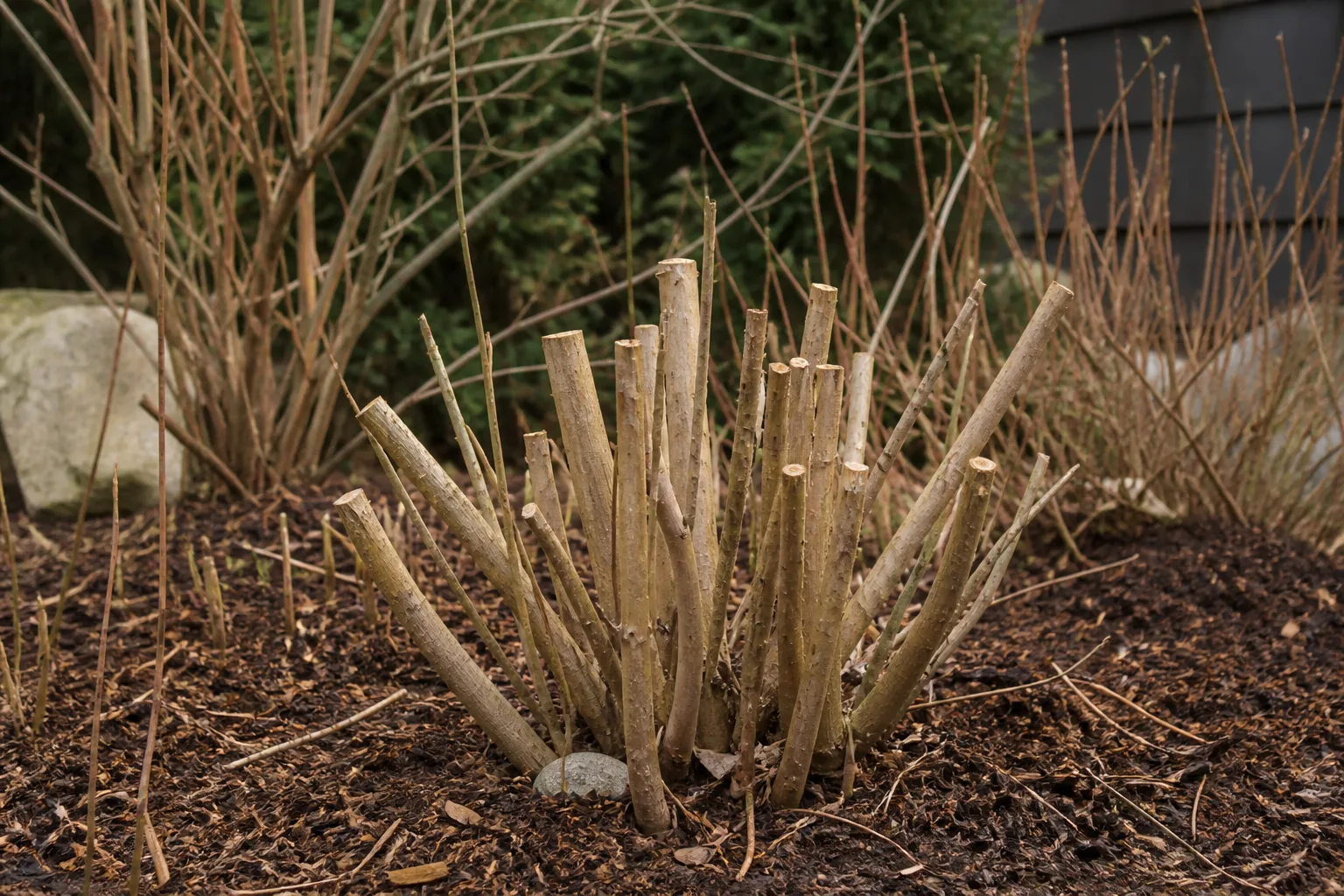
Prune beautyberry in late winter before new growth begins. This timing is the safest default because the shrub is dormant, the structure is visible, and the new shoots that carry flowers and fruit have not yet elongated. The Missouri Botanical Garden says the plant can be cut back to about one foot from the base for a bushier, more compact result, while NC State Extension also recommends late-winter pruning to about one foot because flowers and fruit appear on new shoots. (Missouri Botanical Garden; NC State Extension)
Begin by removing dead, broken, or crossing stems at their base. Then decide whether you are renewing the shrub or only refining its outline. Beautyberry can look awkward after a hard cut for a few weeks, but it responds by sending up vigorous new stems from the crown. That renewal is often more useful than repeatedly shortening the tips of old, arching branches.
Hard Renewal Pruning Versus Light Shaping
Use hard renewal pruning when the shrub is overgrown, bare at the base, damaged by winter, or too large for its space. Cut the main framework back to about one foot, or reduce it by roughly two feet less than the final height you want. Make clean cuts and leave enough healthy buds or young stems for a balanced flush of regrowth.
Use light shaping when the plant already has a good structure and you only need to remove a stray branch, dead tip, or stem that is rubbing against a path. Shorten a long stem to a strong outward-facing bud or side branch rather than shearing every tip to the same height. The shrub’s natural arch is part of its character; turning it into a tight box usually creates dense outer growth and a hollow interior.
Avoid heavy pruning in fall if berries are still providing food and winter interest. Avoid late-spring or summer cuts when possible because they can remove the new stems that would have flowered and fruited. If a storm breaks a branch or a dead stem becomes hazardous, remove that material when necessary; protecting the plant takes priority over preserving a perfect fruit display.
Propagating Beautyberry From Softwood Cuttings
Softwood cuttings are the most practical way to make a genetic copy of a beautyberry you already like. Take them in late spring or early summer, when the current season’s stems are flexible and green but firm enough not to collapse. Gardener’s Path recommends four- to six-inch pieces with two or three sets of leaves and reports that transplantable roots commonly take six to ten weeks under suitable conditions. (Gardener’s Path)
- Choose healthy material. Select a nonflowering shoot with no wilt, leaf spot, or insect damage. Take several cuttings because not every piece will root.
- Make a clean cut. Use a sharp, clean pruner and cut just below a node. Keep the cuttings cool and shaded while you prepare the pots; do not let them sit in direct sun and dry out.
- Prepare the cutting. Remove leaves from the lower half, leaving a few leaves at the top. If the remaining leaves are large, trim them slightly to reduce water loss. Rooting hormone is optional, but a light coating can make the process more consistent.
- Insert into a clean, moist mix. Use a small container of seed-starting or other free-draining propagation mix. Make a hole first so the hormone is not scraped off, then press the mix around the stem.
- Maintain humidity without making a swamp. Cover the pot with a clear bag or dome, keeping the plastic from touching the leaves. Place it in bright, indirect light and vent the cover if condensation stays heavy. The mix should remain evenly moist, never soupy.
- Wait for roots before increasing exposure. New top growth is encouraging, but tugging on the cutting can tear new roots. After several weeks, test for gentle resistance, then gradually open the cover over a few days before moving the young plant into stronger light.
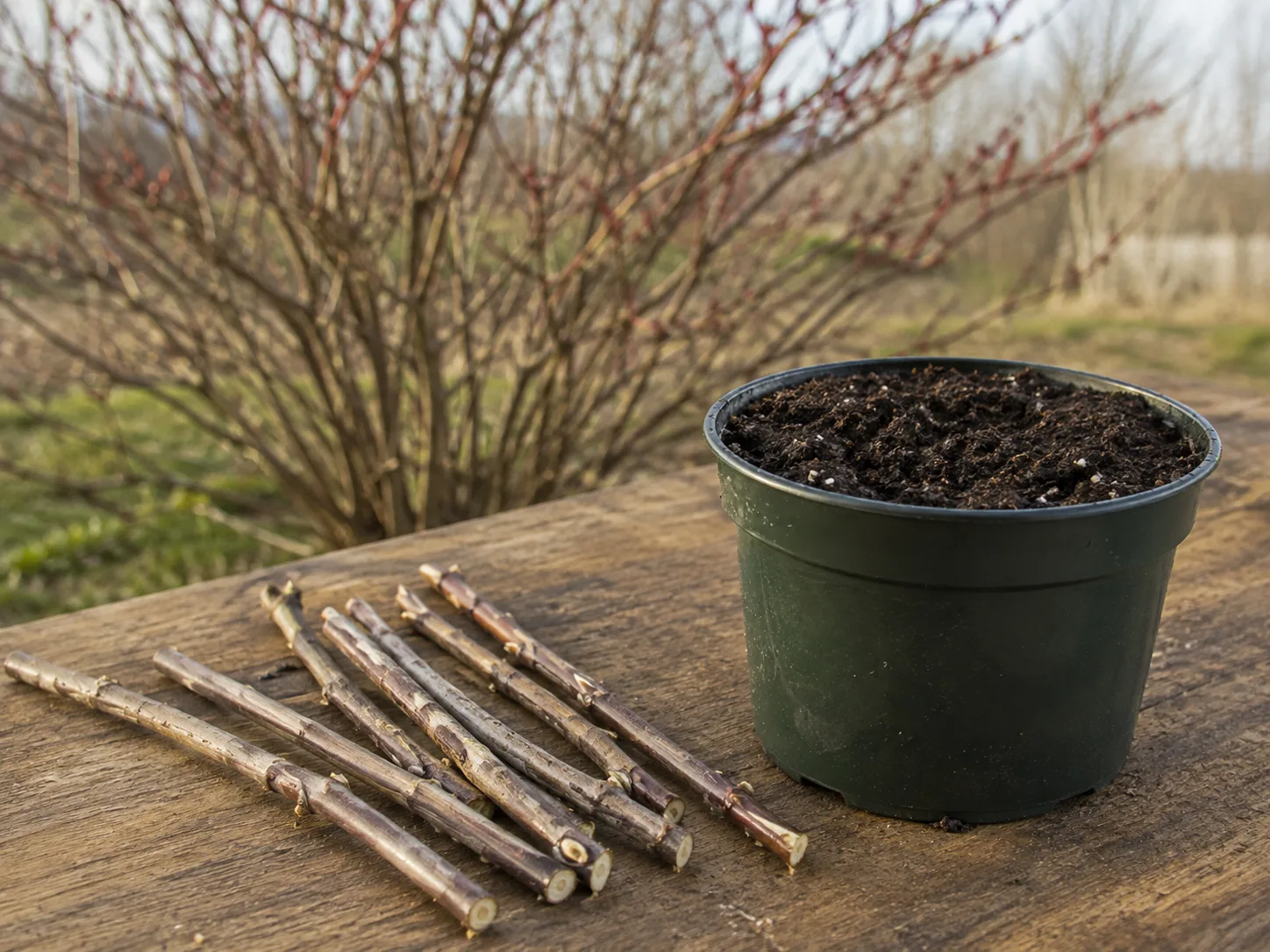
Rooted cuttings are not ready for a dry, exposed border immediately. Pot them on when roots hold the mix together, let them establish a fuller root ball, and harden them to outdoor conditions. Plant in the ground during a mild period with reliable moisture, or keep the young shrubs protected until the next suitable planting window.
Growing Beautyberry From Seed and Volunteer Seedlings
Seed is inexpensive and useful when you want several plants for a naturalized area, but it is slower and less predictable than cuttings. Collect fully colored, ripe berries in fall. Remove as much fruit pulp as possible, rinse the seeds, and let them dry briefly before storing them in a cool, dry place.
When you are ready to sow, soak the seeds in cool water for about 24 hours. Sow them shallowly—roughly one-sixteenth of an inch deep—in a clean seed-starting mix. Keep the medium consistently moist and place the container in bright light. Germination can be erratic and may take several weeks to around three months, so do not discard the tray just because it is quiet after ten days.
If more than one seedling emerges in a cell, keep the strongest and snip the extras at the soil line rather than pulling them. Pulling can disturb the roots you want to keep. Transplant seedlings when they have a stable root system and several true leaves, moving them outdoors gradually.
A volunteer seedling beneath an established shrub can be easier than starting a tray. Move small volunteers while dormant, preferably in late winter or early spring, and dig a generous root ball. Water the new location deeply and protect it from competition while it re-establishes. Volunteers are useful for filling a wildlife planting, but they are not the best choice when you need the exact berry color or habit of a named cultivar.
Container Growing, Transplanting, and Winter Care
Beautyberry can grow in a container, but its natural size and arching form make a pot a management project rather than the easiest long-term home. Choose a heavy container at least about 18 inches wide and deep for a young specimen, with several drainage holes. A pot without drainage turns every watering into a root-health gamble.
Use a quality potting mix that drains freely but does not dry instantly. Water when the upper layer begins to dry, then allow excess water to escape completely. Container plants need more frequent monitoring than in-ground shrubs because their root volume is limited and the pot heats and dries from every side. Do not use a fertilizer schedule to compensate for a container that is too small or a plant placed in deep shade.
Repot only when the root ball has filled the container or the plant dries so quickly that normal watering becomes impractical. Move up one pot size rather than jumping into a huge container full of slow-drying mix. Prune a patio specimen during dormancy, but expect lighter flowering and fruiting than from an in-ground plant.
Beautyberry is deciduous, not a permanent tropical houseplant. In colder areas, keep a potted shrub dormant in a sheltered, unheated space; an in-ground plant near the cold edge may lose its stems and resprout from the base. Mulch after the ground cools, avoid late-season nitrogen, and wait until spring to assess winter damage.
Flowers, Berries, and Wildlife Value
The small flowers are easy to overlook because the berries get all the attention, but the flowers are the bridge between spring growth and fall color. They occur in clusters along the stems where leaves emerge, not only at the branch tips. If you prune away new growth after it has started, you may remove those future fruiting sites even though the shrub looks healthy.
The berries are technically small drupes and appear in tight rings around the branches. Their color can look violet, magenta, or bluish-purple depending on light and ripeness. White- and pink-fruited cultivars follow the same broad seasonal pattern. Birds and small mammals may feed on them, so a shrub that loses its fruit quickly is not always failing; it may be succeeding as wildlife habitat.
Beautyberry works at the back of a mixed border, along a woodland edge, beside a pond or rain garden with adequate drainage, or in a native and pollinator planting. Its open winter structure lets lower plants show through, but it is not a formal evergreen screen: the plant is deciduous and naturally loose.
Common Problems and Practical Fixes
Beautyberry is relatively trouble-free in suitable light and moisture. A problem is more often a site mismatch, weather event, pruning mistake, or root stress than an infestation, so look at season, leaf position, soil moisture, and recent work before spraying.
Brown Leaves, Sudden Leaf Drop, or Scorch
Brown foliage in fall can be normal, especially after frost. A beautyberry leaf may turn golden-yellow in a mild autumn, but an early freeze can take it from green directly to brown before it drops. If the stems remain firm and new buds appear in spring, that one season of brown foliage does not necessarily indicate disease.
Brown leaves in summer deserve a different check. Feel the soil several inches down, inspect whether the browning is concentrated on the sunny side, and look for recent transplanting or root disturbance. Dry soil, reflected heat, and a damaged root ball can all limit water reaching the leaves. Water the root zone deeply if it is dry, then monitor recovery rather than keeping the soil constantly wet.
If the soil is saturated and leaves are browning from the bottom upward, investigate drainage and roots. Move standing water away from the crown, correct the site if possible, and stop adding fertilizer while the plant is stressed. Leaf spots can occur, but the Missouri Botanical Garden describes beautyberry as generally disease- and pest-free, with leaf spots usually not serious. (Missouri Botanical Garden)
Few Flowers, Few Berries, or a Sprawling Shrub
Start with light. A shrub that receives only deep shade may grow leaves but produce very little fruit. Next check water during the period when flower clusters and new shoots are developing. A prolonged hot drought can reduce both vigor and fruiting even if the shrub is technically established.
Review pruning history as well. A hard cut in late winter is usually compatible with good fruiting because new shoots follow, but a heavy cut in late spring or summer can remove the growth that would have carried flowers. Excess nitrogen can also produce a lush canopy with fewer flowers. If the shrub is young, give it time; a small transplant may spend its first season building roots rather than making a dramatic berry display.
A sprawling form is not automatically a health problem. Beautyberry naturally arches, and repeated tip-shearing can make it denser on the outside while leaving bare wood inside. Use late-winter renewal pruning to reset the structure, or move the shrub to a place where its width is an asset. Root sprouts and volunteer seedlings are also normal. Remove them at the soil line or dig and replant the smallest ones if you want a colony; do not mistake every new shoot for disease.
Edibility and Mosquito-Repellent Claims
American beautyberry berries are reported as edible, but they are usually bland when eaten raw. Extension plant information describes them as insipid and notes that they are most often used to make jelly. If you harvest them, positively identify the plant, wash the fruit, and never use berries from a shrub treated with an ornamental pesticide unless the product label specifically permits that harvest. Edibility is not a reason to taste an unknown Callicarpa or to assume that every landscape treatment is food-safe.
The leaves contain compounds associated with repellent activity, including callicarpenal and intermedeol. That makes the plant interesting for research and traditional garden lore, but a beautyberry shrub does not create a dependable mosquito-free zone. Crushing leaves and applying homemade extracts to skin also bypasses the testing, concentration, and safety information provided by a labeled repellent. Treat the shrub as habitat and an ornamental plant; use a product labeled for personal protection when you need reliable bite prevention.
Conclusion
Beautyberry is easiest to grow as a native woodland-edge shrub, not a compact evergreen foundation plant. Give Callicarpa americana sun or light shade, draining soil, establishment moisture, and room for arching stems.
For the strongest fruit display, prune in late winter so new shoots can carry summer flowers and fall berries. Take softwood cuttings for a genetic copy, or sow ripe seeds when quantity matters more than uniformity. Before diagnosing brown leaves, check the season, light, drought, drainage, and pruning history.