Best Time to Water Tomato Plants
Find the best time to water tomato plants, why morning helps, and how to adjust for heat, rain, containers, dry soil, disease, and fruit cracking.
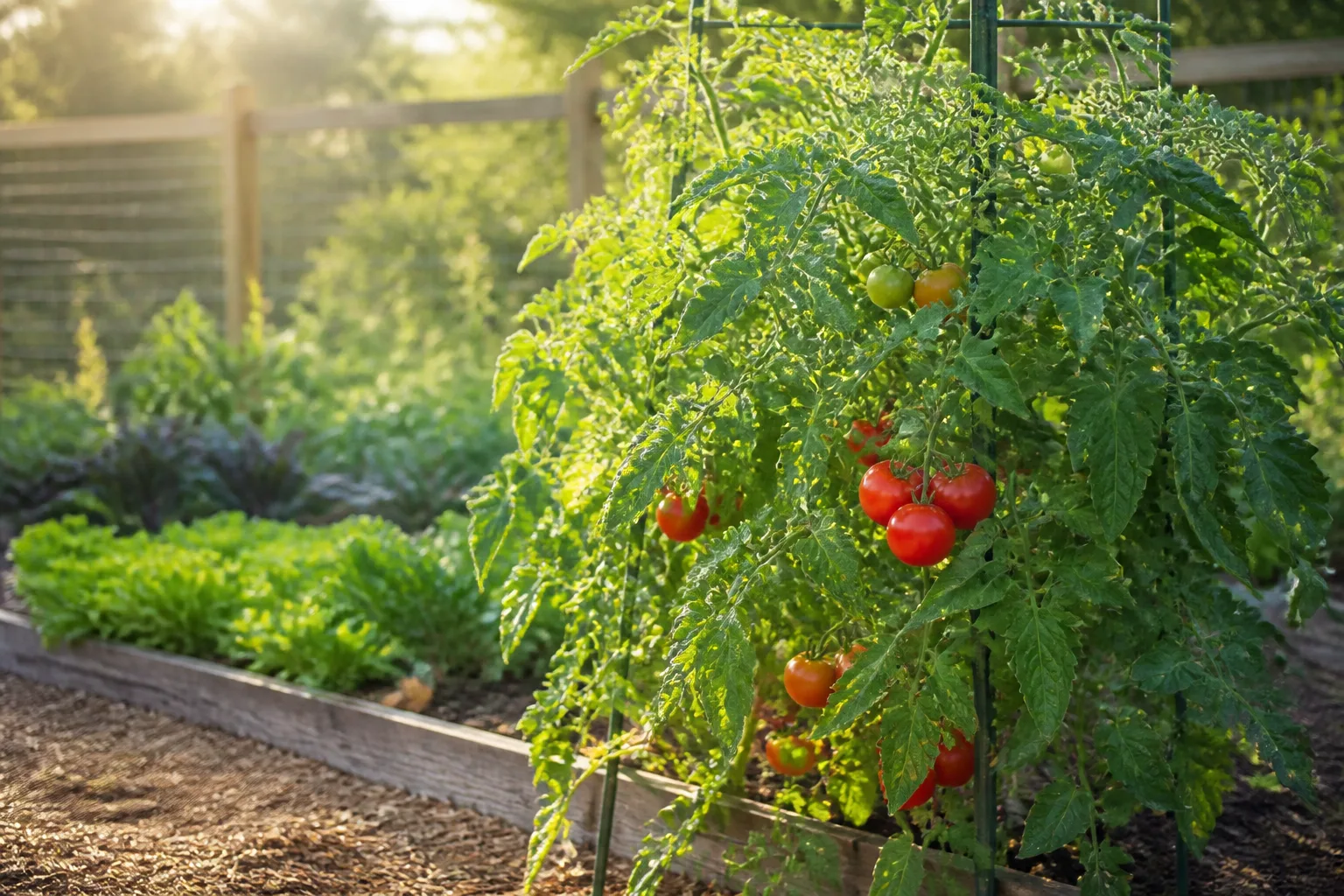
The best time to water tomato plants is early morning, ideally before the day becomes hot. Water applied then has time to soak into the root zone before peak evaporation, and any stray droplets on the foliage can dry in daylight. That is why many gardeners use a before-10-a.m. routine.
Morning is a timing advantage, not a substitute for checking the soil. If a plant is genuinely dry at 2 p.m., waiting until the next morning can prolong stress. If the soil is already wet from rain, adding water at 8 a.m. can damage roots even though the timing looks perfect. The strongest rule is: water when the root zone needs it, and choose early morning whenever you have a choice.
Established tomatoes often use roughly 1 to 2 inches of water per week, including rainfall, but that is a starting benchmark rather than a universal prescription. UGA Extension recommends wetting the soil to about 6 to 8 inches deep so the plant can develop a stronger root system, while UC Statewide IPM advises deep irrigation and avoiding wet foliage and fruit. (UGA Extension) (UC Statewide IPM Program)
The best time is early morning, but soil moisture comes first
Think of watering as a three-part decision: need, method, and timing. First decide whether the soil is drying in the active root zone. Then choose a slow, soil-level method that can wet the roots without creating runoff. Finally, if the plant needs water, aim for the morning so it begins the day hydrated and the foliage has the whole day to dry.
This order matters because a clock-based schedule can fail in both directions. Watering every morning can keep a poorly drained bed saturated, while refusing to water after 10 a.m. can leave a container plant wilted through a hot afternoon. Tomatoes respond better to stable moisture and oxygen around the roots than to a ritual that ignores the conditions underground.
If you can water only once a day, morning is the best default. If your soil is dry and the plant is under heat stress, water at the next practical opportunity and aim at the base. If a storm has just delivered a thorough soaking, skip the planned watering and test the soil again later.
Why early morning works better
Morning watering helps for two separate reasons: it places moisture in the soil before the plant faces the day’s highest demand, and it reduces the length of time that leaves remain wet. Those benefits are strongest when you water at the base, but the timing still helps if a little water splashes upward.
It gets water to roots before heat
As sunlight and temperature rise, water is lost from exposed soil and through transpiration from the leaves. A morning soak gives the roots access to moisture before that demand accelerates. The plant is less likely to begin the afternoon already behind, especially in a shallow raised bed, a small container, or a windy garden.
Morning does not mean you must water at dawn. The useful window is the cooler part of the morning, after the soil can be checked and before intense heat has driven rapid evaporation. A cloudy, cool morning may not require the same urgency as a bright, windy one, and a mulched bed may hold water well past the time a bare bed would dry.
Colorado State University Extension says avoiding overhead irrigation helps limit disease and notes that morning watering can help plants dry before night. Its guidance also emphasizes that mulch conserves moisture and reduces soil splash, so morning timing works best as part of a larger moisture-management system rather than as a standalone trick. (Colorado State University Extension)
It gives leaves time to dry
Tomato leaves do not need to be wet for the plant to absorb water. The roots take up moisture from the soil, so spraying the foliage is usually a less efficient route and can create a longer period of leaf wetness. Water sitting on leaves, combined with warm or humid conditions, gives some disease-causing organisms a more favorable surface.
Keeping foliage dry also reduces splash from the soil onto lower leaves. Soil can carry spores and bacteria, and a hard overhead spray can move them from the ground to the plant. Use a watering wand held low, a soaker hose, or drip irrigation when possible. If leaves become wet despite your best effort, morning is safer than evening because sunlight and air movement can shorten the drying time.
This is a risk-reduction step, not a guarantee against blight or leaf spot. Crowded plants, poor airflow, infected debris, extended rain, and weather conditions can still cause disease. Morning watering simply removes one avoidable source of prolonged wetness.
What “before 10 a.m.” means in real gardens
“Before 10 a.m.” is a memorable rule because it is easy to follow, but the plant does not recognize a particular number on the clock. The better interpretation is water during the cool morning period, before the strongest heat and before evening arrives. In a mild climate, late morning may be fine; in a hot, dry climate, an earlier start may conserve more moisture.
If you are watering a large bed with drip irrigation, the system may run for hours and still fit the morning principle as long as it begins early enough to hydrate the root zone before the hottest period. If you are hand-watering one container, a quick morning check may be enough on one day and completely inadequate on the next.
Adjust by weather, climate, and setup
Hot sun, low humidity, wind, porous soil, and small containers all shorten the time between waterings. Cool clouds, recent rain, heavy soil, thick mulch, and large in-ground root zones lengthen it. The same tomato variety can therefore have a different schedule on a balcony, in a raised bed, and in an established in-ground plot.
When the forecast calls for a hot afternoon, check earlier and water before the heat if the root zone is drying. When heavy rain is likely, do not water just because the morning is your normal day. Let the rain do the work if it reaches the soil, then test beneath the mulch once the surface is safe to walk on.
If you miss the morning, use this priority order:
- Dry soil and visible stress: water at once at the soil line, slowly and deeply enough to rehydrate the root zone.
- Slightly dry soil with no stress: water in the late morning or early afternoon if that is convenient, keeping the foliage dry.
- Genuinely dry soil late in the evening: water the base rather than waiting until morning, but avoid wetting the leaves and do not turn a small need into a flood.
- Damp or saturated soil: do not add more water; improve drainage or inspect the irrigation system.
Midday watering will not scorch healthy tomato leaves. The old idea that water droplets automatically burn leaves in strong sun is not a useful reason to leave a dry plant unwatered. The practical concern at midday is faster evaporation and runoff, not a magnifying-glass effect.
The reliable decision rule: check soil, not the clock
The most dependable tomato watering schedule starts with a small inspection. Look at the soil near the plant, check the plant’s posture and leaves, and consider rain and forecast. Then water only if those clues point in the same direction or if dry soil is clearly the limiting factor.
The finger test
Move mulch aside and push a finger into the soil a few inches from the stem. Test down to about 2 inches for a container or young transplant, and several inches deeper for an established bed. If the soil feels cool and slightly damp below the surface, wait. If it is dry, loose, and crumbly through the root zone, water slowly.
Do not test directly against the stem, where irrigation may create an artificially wet pocket. Check two or three locations around a larger plant because one emitter or one low spot can misrepresent the whole root zone. In a container, lift the pot before and after watering; the change in weight becomes easier to read with practice.
Mulch makes the surface test less obvious, not less useful. Dry straw on top can conceal damp soil underneath, so reach through the mulch before deciding. Conversely, a damp surface after a short shower can conceal dry soil lower down. The goal is to find moisture where the roots are, not where the sun has recently touched.
Read the plant and forecast together
Leaves can droop for different reasons. A plant with dry soil and persistent morning wilt likely needs water. A plant with wet soil and drooping leaves may have damaged or oxygen-starved roots, disease, heat stress, or another problem that more water will not solve.
Afternoon wilt that improves when temperatures fall can be a temporary heat response, especially during a hot spell. Check the soil before watering, then check again the next morning. Morning wilt, dry soil, curling leaves, and a container that feels unusually light are stronger evidence of true water stress.
Recent rain deserves equal weight. A light shower may wet the mulch but contribute little to the root zone, while a slow storm can meet much of the plant’s weekly need. Use a rain gauge if you want a number, but probe the soil before turning irrigation back on.
How to water so tomatoes actually benefit
Watering well means placing enough water across the root zone at a rate the soil can absorb. A fast blast can run off a compacted bed, pool around the stem, or leave the lower soil dry even though the surface looks soaked. A short sprinkle can make the plant look better briefly while encouraging shallow roots.
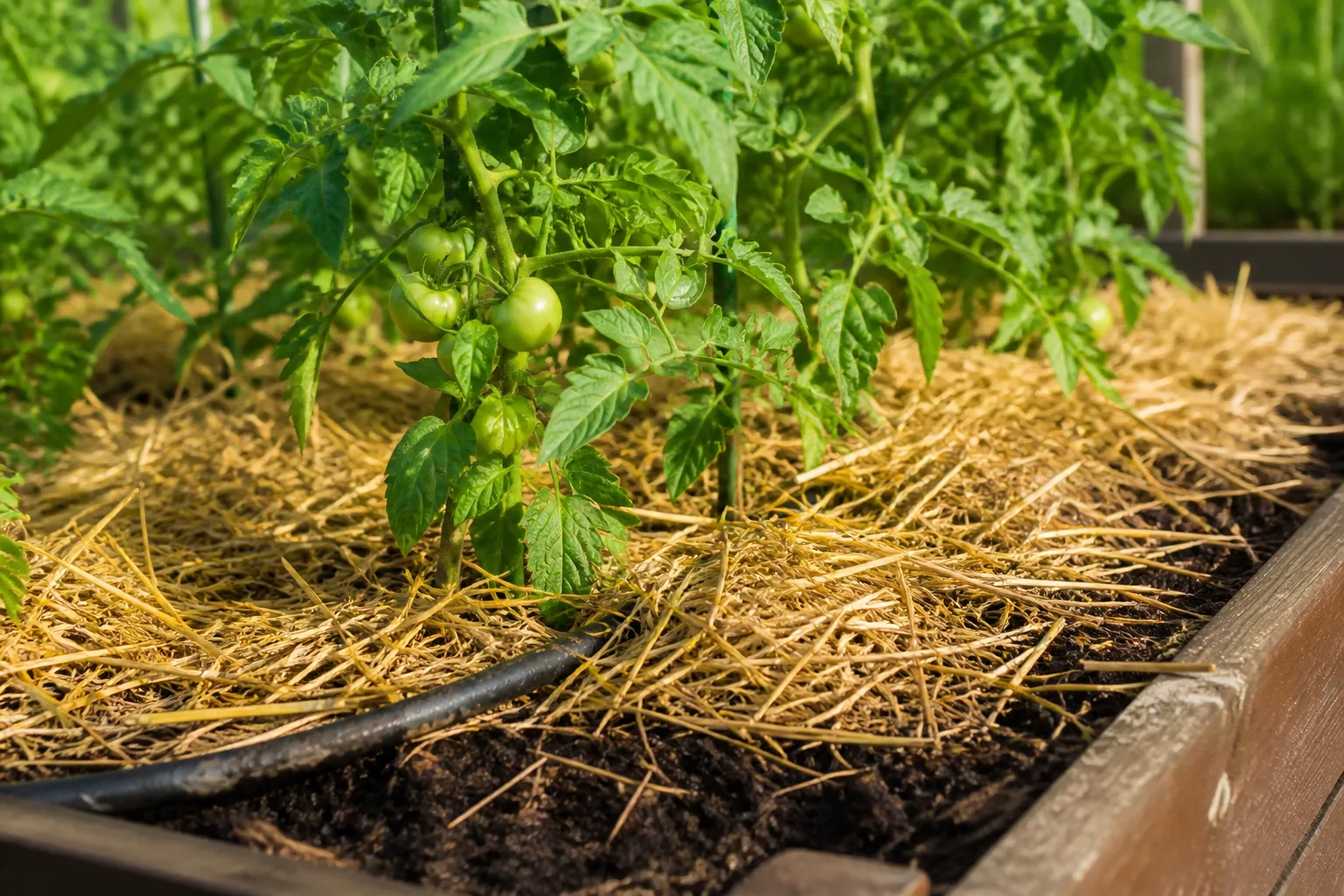
Soak the root zone slowly
Begin near the plant’s base, then widen the wetting circle as the plant grows. Use a gentle stream and pause if water starts to run off. In heavy soil, apply water in two passes several minutes apart; the first pass opens the soil’s absorption capacity and the second reaches deeper.
After watering, push a narrow trowel or soil probe into the bed in several places. UGA Extension recommends wetting roughly 6 to 8 inches of soil for a strong root system, while UC IPM warns that wetting only the top few inches can stunt root growth and make deep moisture harder to replace later. (UGA Extension) (UC Statewide IPM Program)
Deep does not mean permanently soggy. Roots need both water and air, so the bed must drain after a thorough soak. If the soil stays saturated for days, more watering will not build better roots; loosen compaction where appropriate, clear blocked drainage, or reduce irrigation.
Keep leaves and fruit dry
Aim the stream at the soil, not the plant’s canopy. A watering wand is a good choice for a small garden because it lets you direct water under the foliage. For rows, a soaker hose or drip line distributes water slowly at the ground and avoids the splash created by a sprinkler.
Keep the hose pressure low enough that soil is not thrown onto the lower leaves. Mulch also helps by creating a barrier between bare soil and the foliage. Gurney’s gardening guidance recommends morning, base-level watering because wet leaves can contribute to disease, and notes that even an evening emergency watering is safer when the leaves stay dry. (Gurney’s)
Inspect irrigation rather than assuming it works. A clogged emitter can leave one plant dry while another receives too much. A soaker hose can deliver unevenly along its length. Run the system, test soil at both ends of the bed, and adjust the layout before changing the whole schedule.
How much water tomato plants need
Timing answers only one part of the question. Frequency and volume depend on the size of the plant, depth and texture of the soil, weather, rainfall, drainage, and whether the tomato is in a pot or in the ground.
Start with a weekly benchmark, then adjust
For established tomatoes, about 1 to 2 inches of water per week, including rain, is a reasonable starting range. It is not a reason to pour a fixed amount onto each plant regardless of conditions. A sandy bed may need the lower end delivered more often; a deep clay-loam bed may hold moisture longer but can become waterlogged if irrigation is too frequent.
The weekly number is also difficult to translate into minutes because a hose, soaker hose, and drip emitter have different outputs. A straight-sided rain gauge can track rainfall, and a container placed under an emitter can help you learn its flow rate. Use those measurements to calibrate your system, then verify with a soil probe.
Tomatoes use more water as they grow a large canopy and fill fruit, but watering demand does not increase in a neat line. A cool week during fruiting can require less water than a hot week during vegetative growth. Wind and low humidity can dry a bed faster than temperature alone suggests.
Give containers and fruiting plants closer attention
Potted tomatoes have less soil around their roots and more exposed surface area, so they can dry much faster than in-ground plants. A mature plant in a small pot may need a daily check during hot weather and can need water more than once in a severe heat wave. That does not mean it needs water every day in cool, cloudy weather.
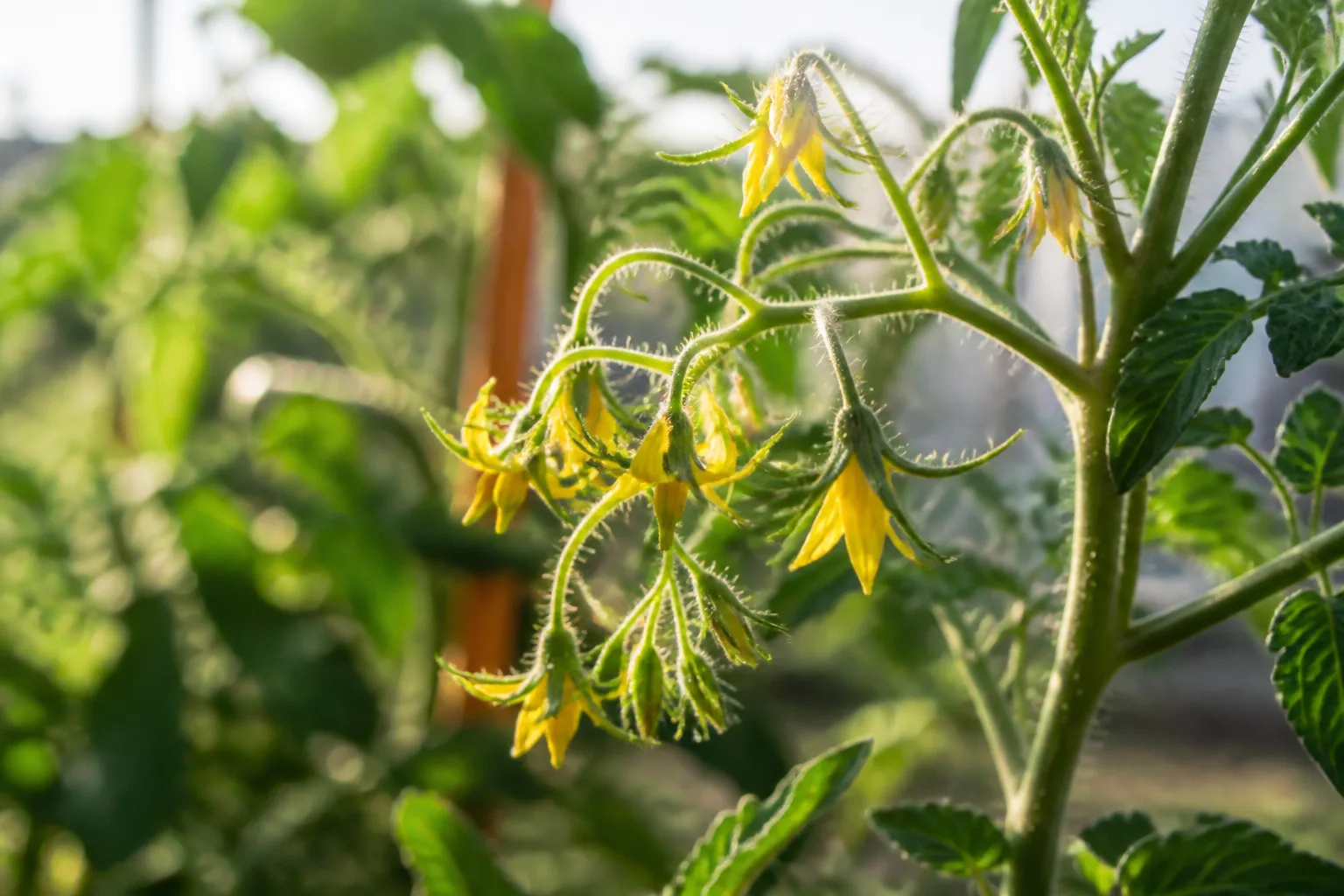
Water a container slowly until the mix is evenly wet and a small amount drains from the bottom. This helps rehydrate dry pockets, but empty the saucer afterward so the roots do not sit in standing water. Use a well-draining potting mix, keep drainage holes clear, and avoid treating a container like a garden bed.
Fruiting plants also deserve closer observation because inconsistent moisture can show up as cracked fruit or blossom-end rot. UGA Extension explains that calcium uptake depends on adequate, even moisture moving through the plant; simply adding calcium does not correct a root zone that alternates between dry and saturated. (UGA Extension)
Do not intentionally let a fruiting plant wilt to improve flavor. Savvy Gardening’s practical guidance emphasizes that containers, plant size, pot material, soil, weather, and growth stage all affect frequency, and that stable moisture is more useful than a universal calendar. (Savvy Gardening)
Prevent common watering problems
Watering is closely connected to tomato problems, but the connection is often indirect. Moisture stress can affect calcium movement and fruit growth, while wet foliage and soil splash can help disease spread. Overwatering can damage roots so severely that the plant looks thirsty even when the soil is wet.
Blossom-end rot and fruit cracking
Blossom-end rot appears as a dark, sunken area on the end of the fruit opposite the stem. It is a physiological disorder associated with calcium transport, not a contagious infection. Keep moisture reasonably even, protect the soil with mulch, avoid root damage, and do not add lime or calcium products without a soil test or a specific recommendation.
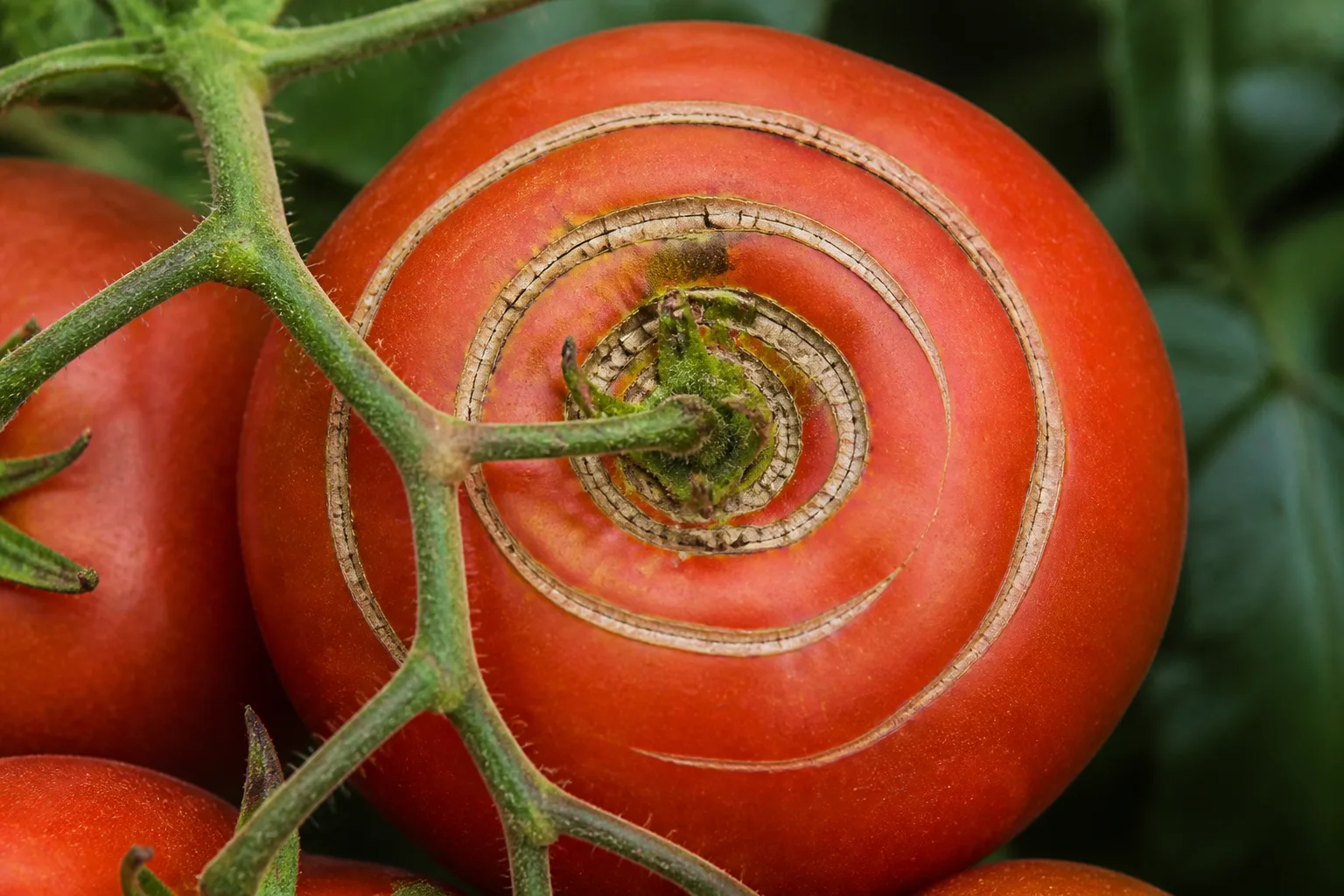
Fruit cracking is different: the skin splits when the inside of the fruit expands faster than the skin can accommodate, often after a dry period followed by heavy irrigation or rain. Consistent root-zone moisture helps, but variety, fruit maturity, and weather also matter. Mulch can buffer the swings, and harvesting ripe fruit before a major storm reduces the time it spends vulnerable on the vine. Epic Gardening connects cracking with rapid moisture changes and recommends deep, regular watering rather than a drought followed by a flood. (Epic Gardening)
The first response to either problem is to stabilize the watering pattern. Do not jump from one extreme to another, and do not assume every black or split fruit is asking for fertilizer. Remove badly damaged fruit, keep the plant’s root zone steady, and inspect the soil before the next irrigation.
Yellow leaves, wilt, and root stress
Yellow leaves can follow overwatering, poor drainage, nutrient problems, aging, disease, or root damage. Wilting can follow dry soil, heat, disease, or roots that cannot absorb water from a saturated bed. The symptom is a reason to investigate, not proof that the plant needs another drink.
Use this quick triage:
- Dry soil plus morning wilt: water slowly and deeply, then check the plant the next morning.
- Wet soil plus wilt: stop watering and inspect drainage, roots if practical, and signs of disease.
- Afternoon-only wilt: compare soil moisture in the evening and morning before adding water; heat stress may be temporary.
- Yellowing with lesions or rapid spread: keep foliage dry, remove affected material carefully, and identify the disease rather than treating it as a watering schedule problem.
Virginia Cooperative Extension lists irregular soil moisture among the cultural factors associated with blossom-end rot and fruit cracking, while also describing tomatoes as plants that prefer moist but not waterlogged soil. (Virginia Cooperative Extension) That distinction is the key to recovery: neither drought nor saturation is a healthy long-term target.
Conclusion
The best time to water tomato plants is early morning, and before 10 a.m. is a useful routine when the soil is actually drying. Morning watering gives roots access to moisture before heat peaks and gives foliage time to dry, especially when you direct water to the base instead of spraying the leaves.
But the clock is not the final authority. Check the soil several inches down, account for rain and the forecast, water slowly to the root zone, and adjust for containers, raised beds, soil texture, plant size, and fruiting. If a tomato is dry after the morning window, water it at the next practical time; if the soil is already saturated, do not add more. Stable moisture, good drainage, dry foliage, and a flexible morning-first routine will do more for tomato health than any rigid watering schedule.