Brown Lines on Pothos Stems: Normal or a Problem?
Brown lines on pothos stems are often harmless, but mushy tissue, yellow leaves, or spreading discoloration need attention. Learn how to tell the difference.
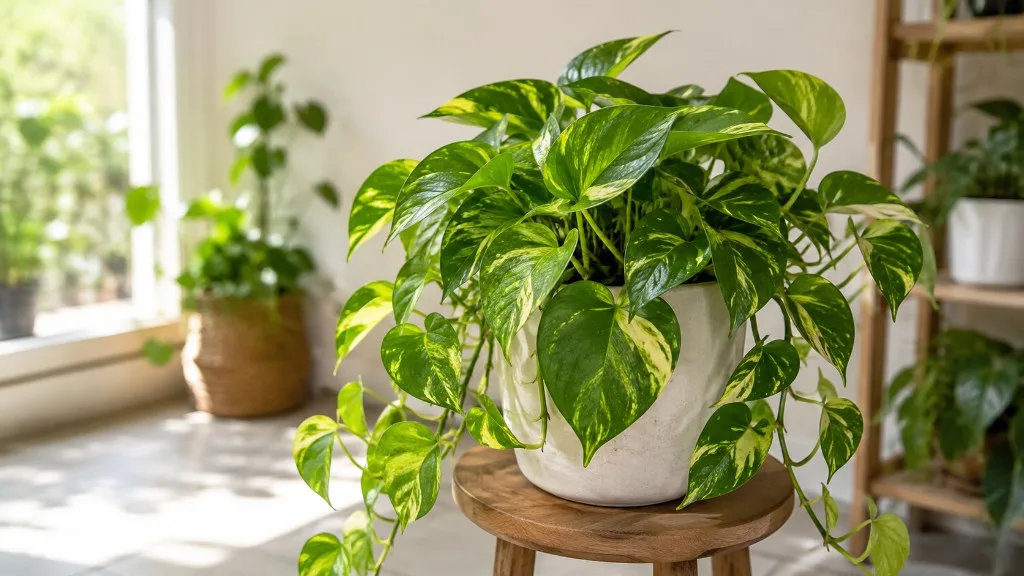
Brown lines on a pothos stem can look like the first sign of a dying plant. Often they are not. If the mark is dry, papery, narrow, and limited to the small stalk that holds a leaf, while the stalk and vine remain firm, it is usually a cosmetic change that does not need treatment.
The recommendation changes when the brown area is soft, wet-looking, spreading, sunken, or paired with yellow leaves, wilt, a sour smell, or soil that stays saturated. Those clues point to a root-zone, stem, pest, or environmental problem rather than an ordinary aging mark. Start by checking texture and location; do not water or cut solely because a line is brown.
The quick answer: dry, firm lines are usually cosmetic
Pothos leaves grow on petioles, the short stalks that connect each leaf to a main vine. As a leaf and its petiole mature, a thin surface layer can dry into a tan or brown seam. That seam may be most visible on green stems, pale petioles, or highly variegated cultivars, and it can remain in place while the plant continues to grow normally.
The simplest test is to look at the whole plant, not just the mark. A stable line on firm tissue, clean new growth, normal leaf color for the cultivar, and a pot that dries between waterings are reassuring. A line that changes shape or texture deserves a closer inspection, even if the pothos still looks mostly attractive.
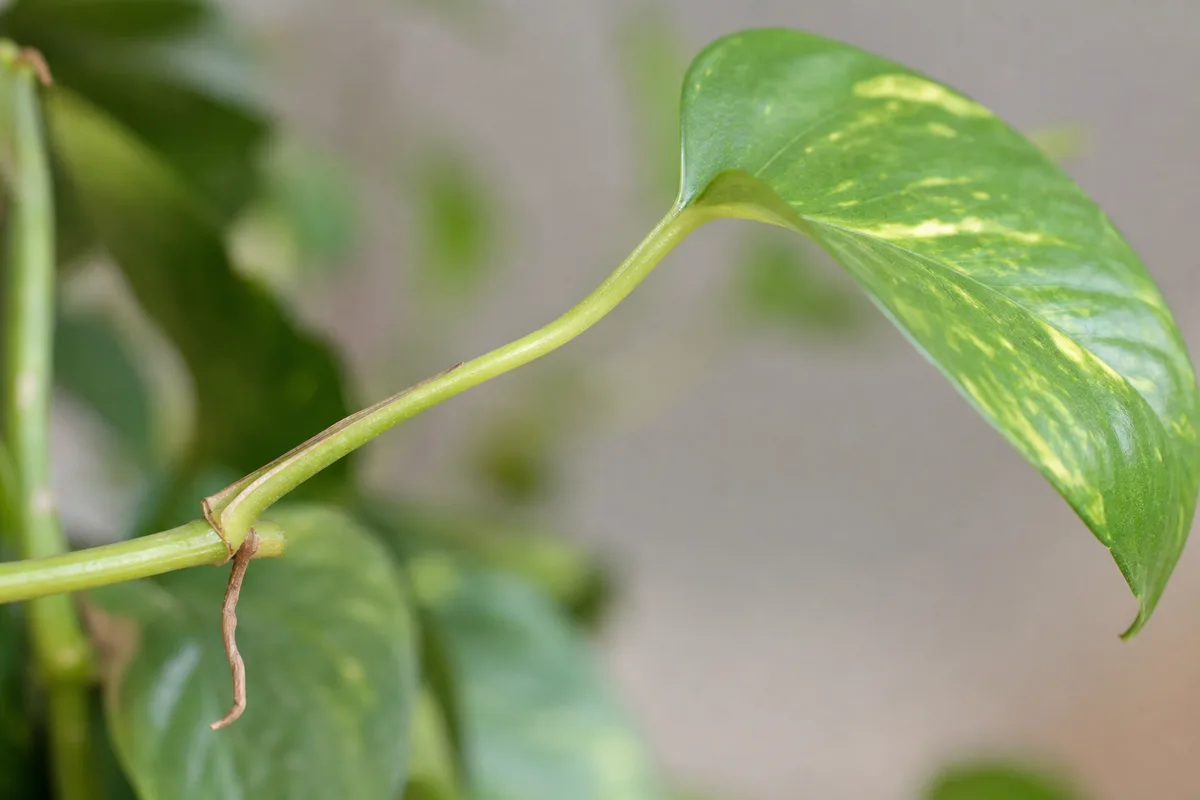
Do not scrape off a dry line to make the stem green again. The mark may be part of the plant’s surface tissue, and digging into it creates a wound that is more vulnerable to rot. Leave it alone unless the tissue underneath is soft or the line is advancing.
Know what you’re seeing: petiole or main vine?
The petiole is the little stalk between a leaf blade and the vine. The main vine is the longer stem that carries several leaves and nodes. A brown line along one petiole is much less concerning than a dark band encircling the main vine at the soil line or a section that collapses when you touch it.
Follow the mark with your eyes. If it stops at the leaf base, looks like a dry edge, and does not cross into the vine, compare it with other mature petioles on the same plant. If the mark begins at a node, moves along the vine, or appears on several stems at once, inspect the root zone and the undersides of the leaves.
A dry line is different from an active lesion
A harmless surface line is usually flat or slightly raised, dry to the touch, and sharply limited. It may be tan, brown, or reddish-brown, but it should not ooze, smell, feel waterlogged, or make the petiole bend at the mark. Old marks do not need to fade for the plant to be healthy.
An active lesion is more likely to look water-soaked, sunken, or irregular. It may enlarge over several days, darken the tissue on both sides of a node, or coincide with a leaf that is wilting even though the potting mix is wet. Those changes are not proof of one particular disease, but they are enough reason to stop guessing and inspect the plant.
Use this 60-second triage before you water or prune
Before doing anything, take one close photo of the line and one photo of the whole pothos. Then check these five clues:
| Check | Reassuring pattern | Escalation pattern |
|---|---|---|
| Texture | Dry, firm, papery | Soft, hollow, wet, or collapsing |
| Spread | One stable mark | New marks or a widening band |
| Leaves | Firm leaves with normal color | Yellowing, sudden wilt, or rapid drop |
| Soil | Mix has dried as expected | Mix stays wet for many days or smells sour |
| Pests | No insects, webbing, or sticky residue | Scale, mealybugs, mites, or visible clusters |
This quick check prevents the two most common overreactions: watering a plant that is already waterlogged and cutting off a healthy petiole that only has a dry seam. It also creates a baseline, so you can tell whether the mark is actually spreading instead of relying on memory.
Firm, dry, and unchanged points toward a harmless mark
If the line is dry and the plant passes the other checks, leave it in place. Give the pothos its normal care, keep watching the newest leaves and the soil moisture, and compare the mark again in seven to ten days. A cosmetic line may never disappear, but a healthy plant should continue to hold leaves firmly and produce new growth when conditions are suitable.
You do not need to raise humidity dramatically, apply fertilizer, spray a fungicide, or repot a pothos merely because one petiole has a brown line. Extra intervention can create the conditions that cause real trouble: wet soil, fertilizer salts, root disturbance, or a fresh cut that stays damp.
Soft, spreading, or foul-smelling means investigate now
If the tissue gives way under light pressure, the line is spreading, or the base of the plant smells sour, move the pothos away from other plants and inspect the container. Do not place a visibly declining plant back into a shared tray where runoff can reach healthy pots.
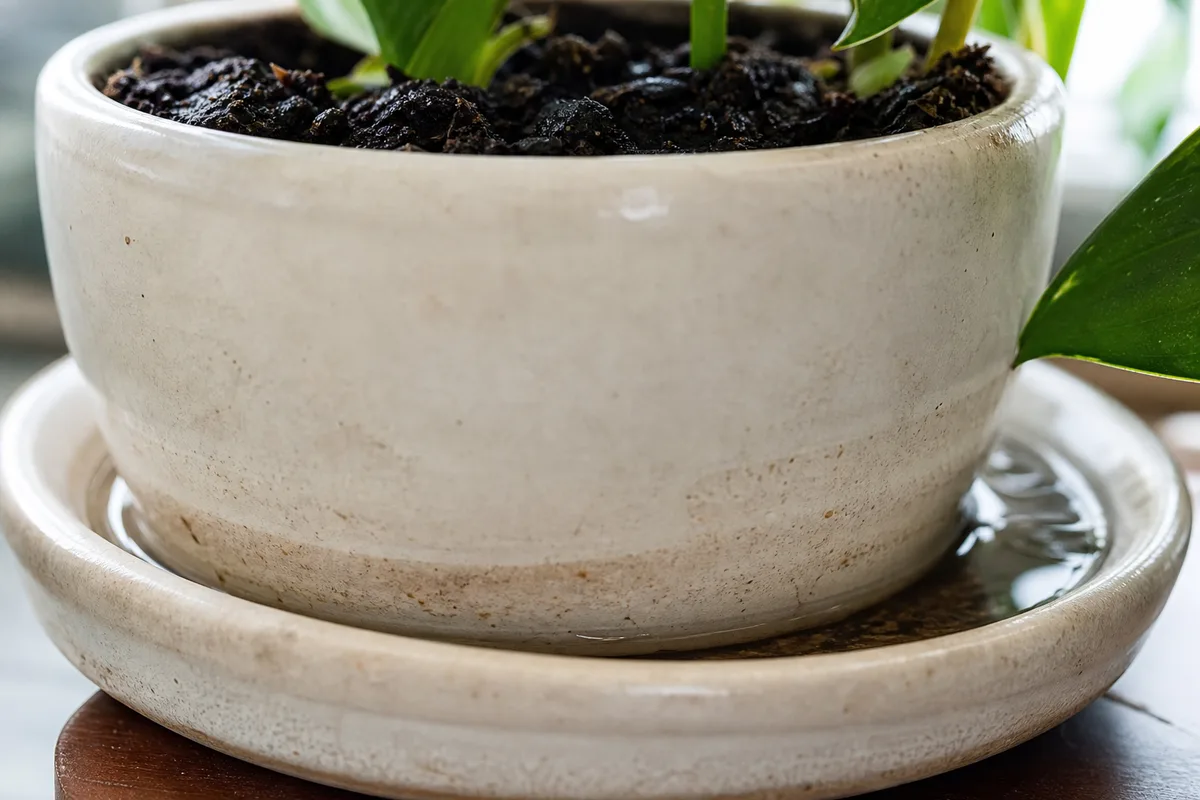
Check whether water is trapped in a cachepot or saucer, whether the inner pot has drainage holes, and whether the mix is heavy and wet below the surface. If several leaves are yellowing or the plant is wilting while the soil is moist, unpot it and inspect the roots rather than trying to correct the problem with another drink.
Why healthy pothos can develop brown petiole lines
Pothos are vigorous tropical vines, but vigor does not mean every stem surface stays bright green forever. Petioles age, leaf bases dry after growth unfolds, and the plant can leave a papery seam where tissue has matured. The mark is especially easy to notice when a new leaf unfurls or when the surrounding foliage is glossy and bright.
Cultivar also changes what looks “normal.” Golden, Marble Queen, Pearls and Jade, and Manjula pothos can have different amounts of green and pale tissue around the petiole. A line that is ordinary on one plant may be more visible on another, so compare the plant with its own older petioles rather than with a photograph of a different cultivar.
Normal aging does not explain every brown stem. It is a plausible explanation only when the mark is dry and stable and the rest of the plant supports that reading. Clemson Cooperative Extension describes pothos as a warm-climate houseplant that prefers bright, indirect light and a well-draining mix; those conditions support steady growth, but they do not erase old surface marks (Clemson Cooperative Extension’s pothos care guide).
When brown on a stem points to root or stem rot
Rot changes the feel and function of the tissue. The stem may become soft, translucent, dark brown, or black, and the plant can wilt because damaged roots no longer supply water even though the potting mix is wet. Brown discoloration that begins low on the plant and moves upward is more concerning than a single dry line on a petiole.
Missouri Botanical Garden explains that crown and collar rots can darken tissue around the soil line, spread around the stem, and eventually cause wilting and dieback. It also notes that bacterial soft rot is often accompanied by a foul smell (Missouri Botanical Garden’s guidance on root, stem, crown, and collar rot). That is a useful home threshold: a dry mark is a watch-and-wait issue; soft, spreading, smelly tissue is a sanitation and root-inspection issue.
Watering and soil clues reveal what the mark cannot
Overwatering is not simply “too much water once.” The larger problem is a root zone that stays saturated because the pot is too large, the mix is compacted, the drainage hole is blocked, or runoff remains in a saucer. Saturated mix contains less air, which weakens roots and makes rot more likely.
Pothos can also suffer after severe under-watering. A dry, neglected root ball may pull away from the pot, resist rewetting, and leave leaves limp or crispy. Under-watered stems tend to feel dry and stiff rather than soft and water-soaked, but the leaf pattern and pot weight matter more than a calendar-based watering schedule.
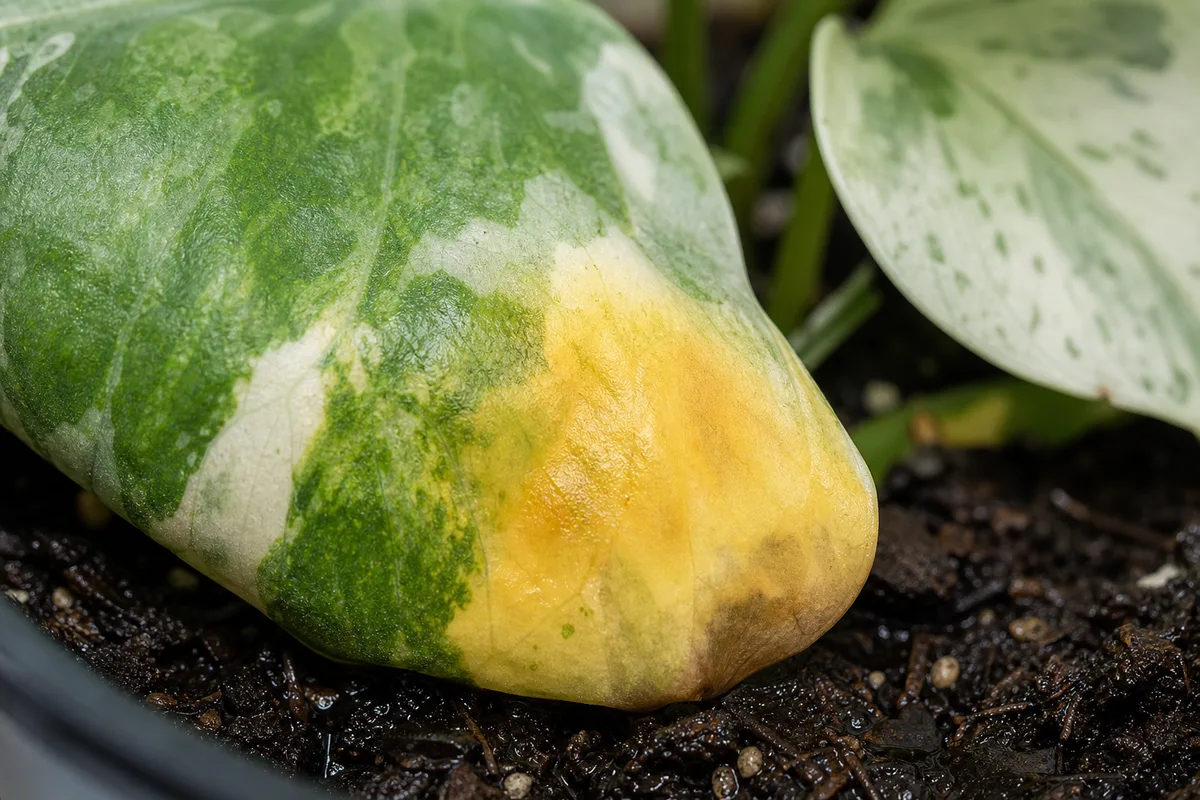
UF/IFAS identifies Phytophthora root rot as a significant disease of pothos in commercial production and describes infection moving from roots into the plant, with dark brown to black leaves. Its guidance also emphasizes that poor cultural conditions can resemble disease, so a home grower should not identify a pathogen from a brown line alone (UF/IFAS guidance on pothos diseases).
To check the roots, slide the plant from its pot without pulling on the vines. Healthy roots are generally firm and light-colored for the plant; rotted roots are often brown or black, soft, and easy to strip. Rinse away enough mix to see the crown and main roots, then decide whether there is enough firm tissue to repot or take a clean cutting.
Other lookalikes: pests, cold, and fertilizer salts
Not every brown mark is rot. Physical damage from a bent vine, a tight plant tie, a rubbing shelf, or a leaf that was forced open can leave a narrow scar. Cold air from a window or air-conditioning vent can damage exposed tissue, while strong sun through glass can scorch leaves without causing a soft stem.
Fertilizer salt buildup is another possibility when brown tips, a white crust on the soil, and stalled growth appear together. A pothos that has been fed repeatedly in a small pot may have damaged roots even if the stems are still firm. Pause feeding, water only when the mix has dried appropriately, and repot if the mix is compacted or crusted rather than adding more fertilizer to “fix” slow growth.
Pest damage usually comes with evidence on the plant
Pests rarely create one perfectly dry line with no other sign. Inspect the petiole joints, nodes, leaf undersides, and newest growth with a bright light. Look for cottony clusters from mealybugs, hard bumps from scale, fine webbing and pale stippling from spider mites, sticky honeydew, or small insects that move when disturbed.
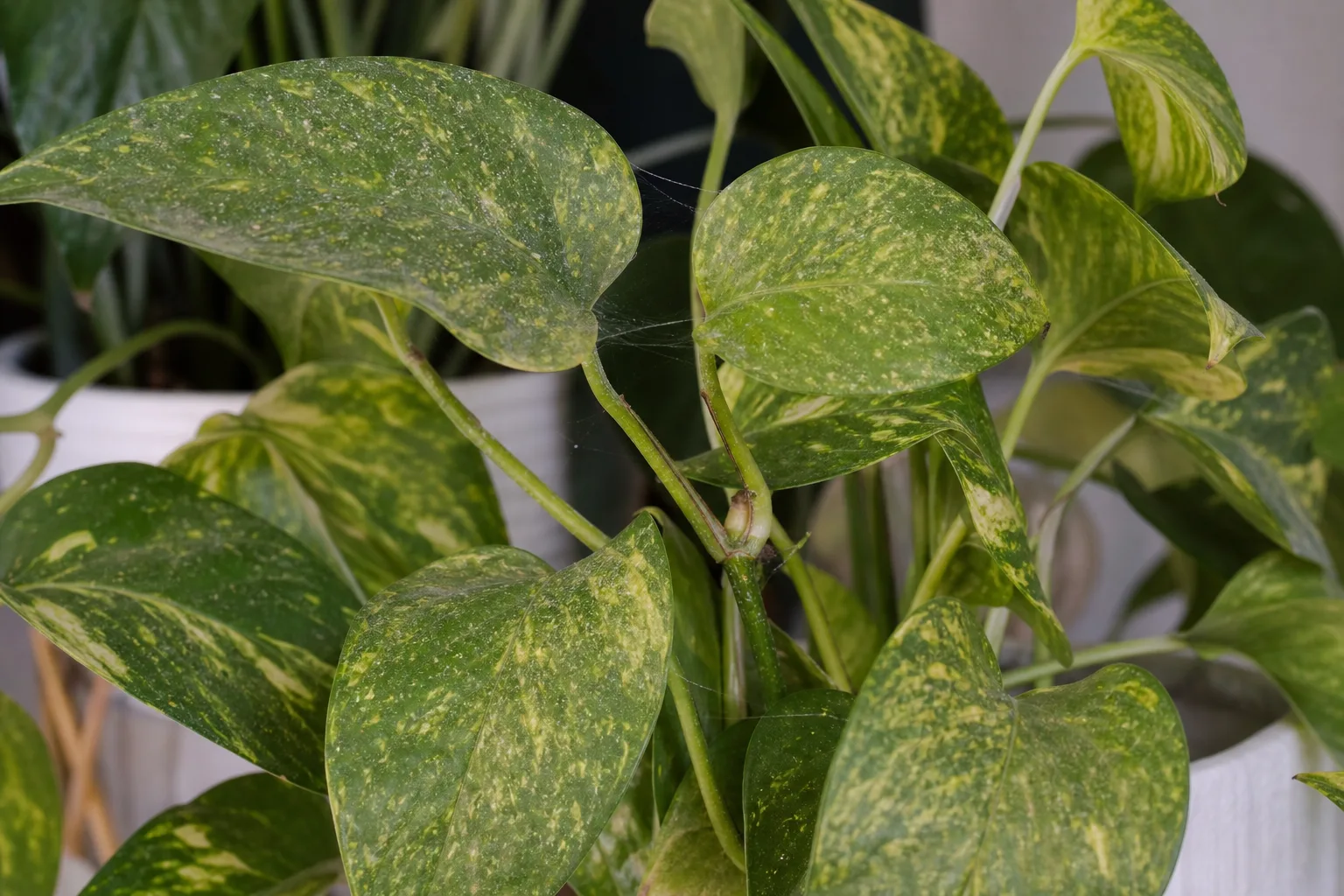
Epic Gardening’s practical troubleshooting guide separates dry, stiff discoloration from the soft, mushy stems associated with excess moisture and also lists pests, cold exposure, and fertilizer salt buildup as possible causes of brown stems (Epic Gardening’s pothos brown-stem guide). If you find pests, isolate the plant, rinse or wipe it as appropriate for the pest, and use a labeled treatment according to its directions. Do not spray a healthy-looking plant for a line that has no pest evidence.
What to do during the next 24 hours
Use this order when the mark worries you:
- Photograph the line and the whole plant. Include a node, the soil surface, and one healthy leaf for comparison.
- Feel the tissue gently. Do not squeeze hard enough to bruise a healthy petiole.
- Check the pot before watering. Lift it, feel below the surface, and empty any standing runoff.
- Inspect for pests. Check the leaf undersides and the places where petioles meet vines.
- Isolate only when there is active decline, pests, or suspected disease. A stable cosmetic line does not need quarantine.
- Hold fertilizer and unnecessary sprays. Stabilize the root zone before adding products.
If the mix is dry and the leaves are limp, water thoroughly until some water exits the drainage holes, then empty the saucer. If the mix is still wet, do not “balance” the situation with a small top-up; let excess water drain and correct the container or mix if it cannot dry.
Repair the care conditions that let trouble spread
Put pothos in a pot with a real drainage opening and an airy, well-draining indoor mix. A decorative cachepot is fine as an outer cover, but the plant should be watered in its nursery pot and returned only after the runoff has stopped. A container that holds a reservoir beneath the root ball is not the same as a saucer that stays full.
Use soil dryness, pot weight, light, season, and temperature together. Clemson lists bright, indirect light and a warm indoor range for pothos, and recommends allowing the soil to dry between waterings. RHS likewise describes Epipremnum aureum as preferring moist but well-drained growing conditions and bright filtered light when grown under glass (RHS’s golden pothos profile).
Humidity can help a tropical plant avoid dry-air stress, but misting the leaves is not a treatment for rot. Improve room humidity with a humidifier if needed, keep leaves from staying wet overnight, and leave space between crowded plants. Move the pothos away from cold drafts, hot vents, and abrupt temperature changes rather than trying to compensate with more water.
When to prune, repot, or take cuttings
Do not prune a healthy petiole for appearance alone. Cut only dead leaves, clearly collapsing sections, or tissue that is confirmed to be soft and advancing. Use a clean, sharp blade and make the cut in firm tissue; wipe the blade between plants when disease is possible.
Repot when the mix stays wet, roots are rotting, the container has no usable drainage, or the root ball is so compacted that water runs around it instead of wetting it. Remove damaged roots and stems, use fresh mix, and clean the old pot thoroughly before reusing it. If most of the crown is soft or the plant smells foul, repotting may spread the problem without leaving enough healthy tissue to recover.
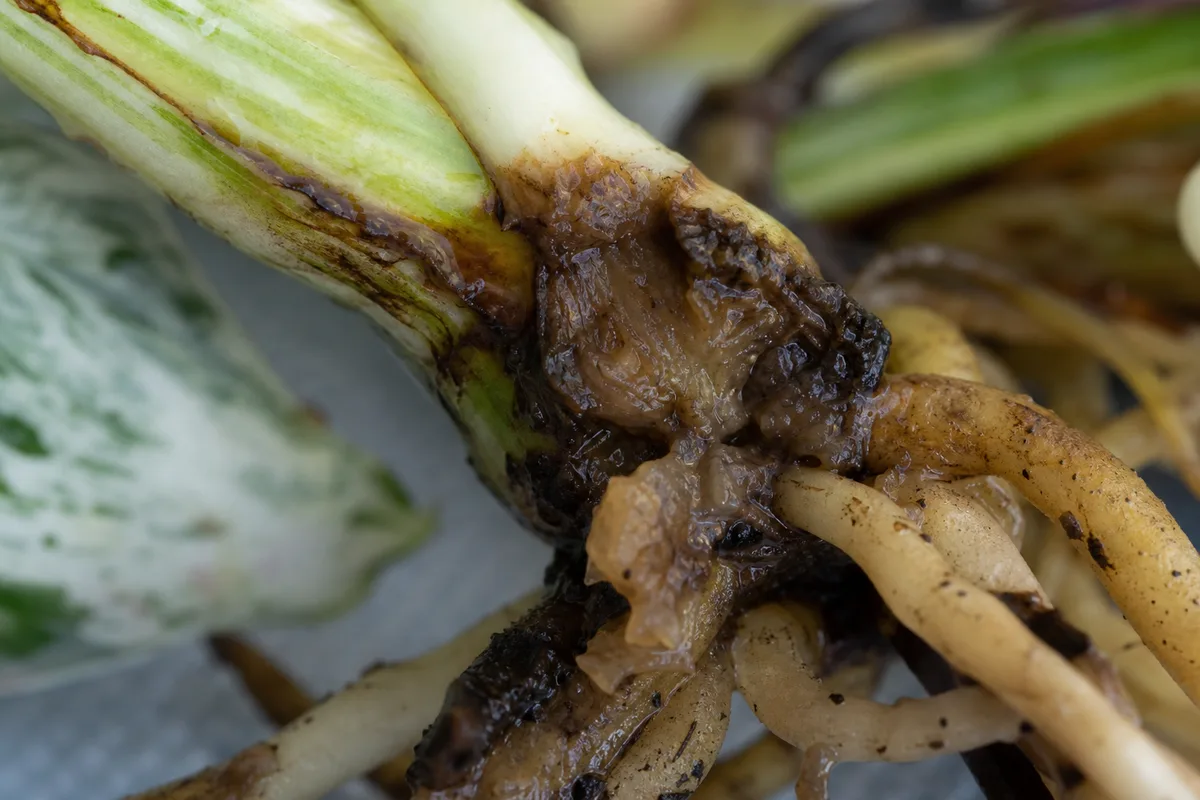
Healthy cuttings are a fallback only when the section you cut is firm and free of suspicious discoloration. Every pothos cutting needs at least one healthy node; a leaf or a petiole without a node may stay green temporarily but cannot produce a complete new plant. Keep the cutting from a clean tip or node well above the damaged area, and discard it if the brown tissue continues into the node.
Variegation and new growth are your best follow-up signals
After you correct watering or light, do not judge recovery by whether an old brown line disappears. The better signals are firm leaves, a stable stem, normal soil dry-down, and new leaves that are appropriately sized and colored for the cultivar.
Variegated pothos may produce greener new growth in low light because the plant has more usable green tissue for photosynthesis. Clemson notes that lower light can reduce variegation, while brighter indirect light helps maintain the pattern. Move the plant gradually toward better filtered light instead of placing it in harsh midday sun, which can scorch leaves.
Sparse vines and small leaves can also reflect insufficient light, root damage, or a plant that is still recovering. Fertilizer is not the first response to any of those clues. Wait until the root zone is functioning and the plant is producing stable new growth, then feed lightly and according to the product label during active growth.
When to isolate or discard the plant
Isolate a pothos when discoloration is spreading, leaves are collapsing quickly, pests are present, or the base of the plant is soft. Keep the pot off shared trays, clean runoff, and disinfect tools after cutting. Avoid propagating from a plant with active soft rot or a suspected systemic disease; a cutting can carry the problem into a clean jar or pot.
Discarding is reasonable when the crown and most vines are soft, the odor is foul, the plant is rapidly wilting in wet soil, or there is no firm, clean node left to save. UF/IFAS recommends discarding pothos showing serious disease symptoms in commercial production because water can spread some pathogens between plants. A rare plant may justify an extension diagnostic service, but random sprays and repeated repotting are not a substitute for diagnosis.
If the line is dry, the plant is firm, and new growth looks normal, do the opposite: leave the mark alone. Observe it, keep the root zone appropriately watered, and resist turning a harmless surface change into a wound.
Conclusion: read the line together with the whole plant
The key distinction is not brown versus green. It is dry and stable versus soft and spreading. A narrow papery line on a firm pothos petiole is usually a cosmetic sign of maturing tissue; a darkening main vine with wet soil, yellow leaves, wilt, pests, or a bad smell needs an inspection.
Take a photo, feel the tissue gently, check the soil and roots, and then choose the smallest action that fits the evidence. Leave a stable mark alone, correct drainage and watering when they are wrong, prune only damaged tissue, and save cuttings only from firm clean nodes. That sequence protects a healthy pothos from unnecessary treatment while giving a genuinely declining plant a timely chance to recover.