How to Grow and Care for Catmint
Grow catmint successfully in beds or pots. Get clear advice on spacing, first-season watering, rebloom pruning, floppy plants, spread, and cold-weather care.
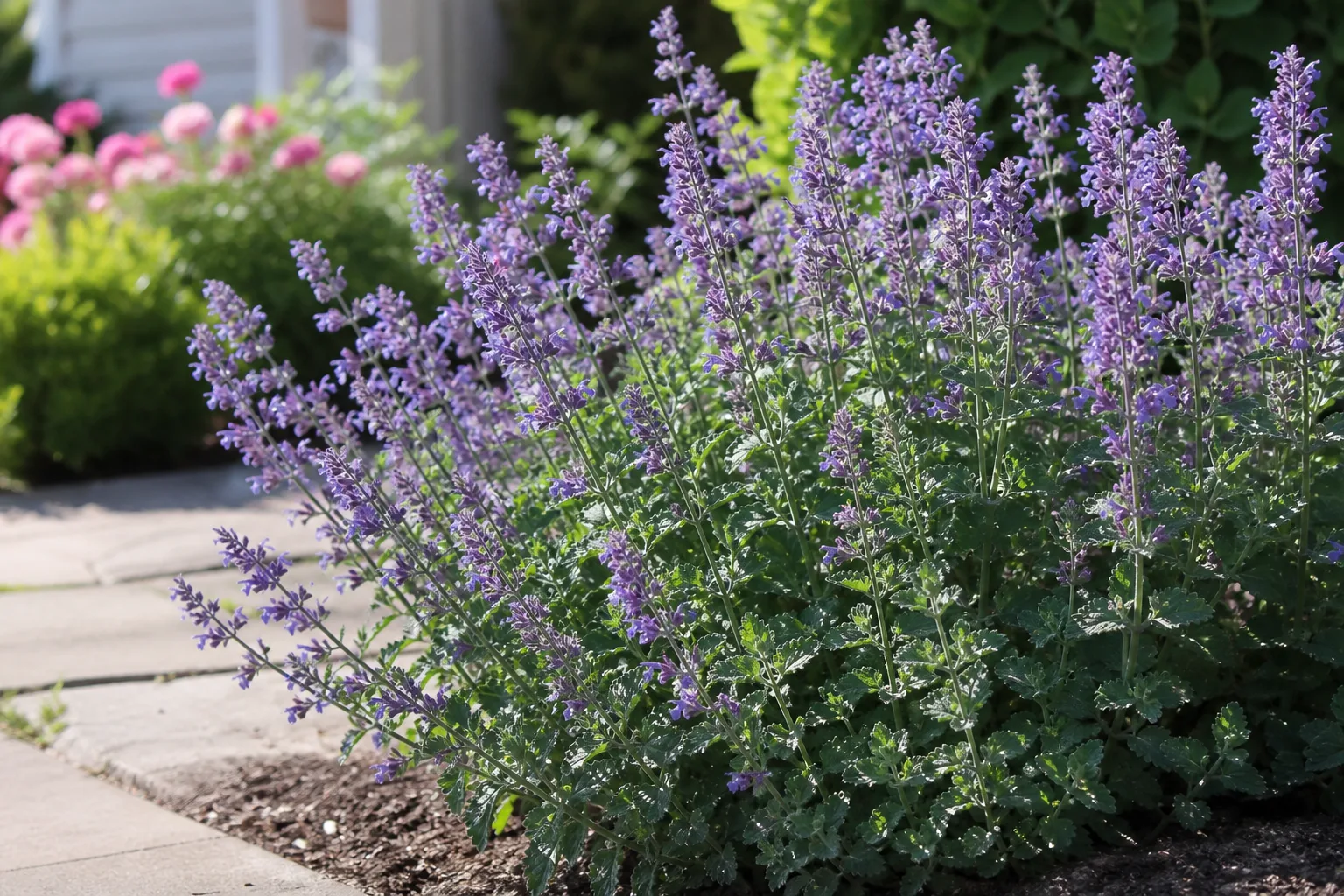
Catmint is one of the most forgiving flowering perennials you can plant, provided you give it the kind of site it evolved to enjoy: plenty of sun, moving air, and soil that does not stay wet. The name covers a large group of Nepeta species and hybrids, so the best care plan starts with the label. A compact, sterile ornamental hybrid and a rangy true catnip may share mint-scented leaves, but they do not behave exactly the same way.
In the right place, catmint forms a low mound of soft gray-green foliage and sends up small two-lipped flowers in blue, lavender, pink, or white. Bees and butterflies work the flower spikes, deer and rabbits usually leave the aromatic foliage alone, and an established plant can handle dry spells better than many lush perennials. The NC State Extension plant profile for Nepeta describes the group as a clumping, spreading herbaceous perennial that tolerates clay, loam, sand, and shallow rocky soil when drainage is good.
Choose the Right Nepeta Before You Plant
“Catmint” is a useful garden name, not one single plant with one guaranteed size. Most ornamental catmints sold for borders are Nepeta hybrids or species such as Nepeta × faassenii and Nepeta racemosa. They are selected for flowers, a tidy mound, long bloom, and manageable spread. Nepeta cataria, the true catnip, is a different species grown more often for its effect on cats and its herb use; it can be rangier and more prone to reseeding.
Start with mature width, not the size of the nursery pot. A dwarf type such as ‘Blue Wonder’ can suit a path edge, rock garden, or small container, while ‘Walker’s Low’ and ‘Junior Walker’ make broad mounds. ‘Six Hills Giant’ belongs toward the middle or back of a sunny border because it can reach roughly 2 to 3 feet tall and spread several feet. The Garden Design catmint guide lists this broad range—from about 9 inches to 3 feet tall depending on variety—so a name on the plant tag matters more than a generic spacing rule.
If you want dependable flowers and less volunteer cleanup, choose a named ornamental hybrid advertised as sterile. Sterile does not mean the plant cannot get bigger: a clump can widen, and stems can lean over neighboring plants. It means you are less likely to find a carpet of seedlings around it. If you want a naturalized herb or a cat-friendly planting, N. cataria may be the better fit, but put it where you can cut flower heads and remove volunteers easily. For a fuller catnip discussion, see our catnip growing and harvest guide.
Find a Site with Sun, Airflow, and Fast Drainage
Catmint rewards a deliberate site choice more than a complicated maintenance schedule. Pick the sunniest part of the garden that does not collect water after rain, and leave enough room for the plant to spill outward without being trapped between taller, denser perennials. A sunny edge beside a path, rose bed, rock garden, slope, or dry border is usually a better match than a rich, irrigated corner.
Balance Light with Heat and Humidity
Aim for at least six hours of direct sun for the strongest flowering and the most compact habit. Catmint tolerates light or partial shade, but fewer hours usually means fewer flower spikes, looser stems, and a plant that opens toward the light. In a hot climate, a few hours of afternoon shade can prevent the foliage from looking tired during the worst heat; it should not turn the plant into a full-shade perennial.
Heat and humidity change the advice slightly. Give plants in hot, humid regions extra spacing and morning sun so leaves dry quickly, and avoid crowding them against a wall or a constantly wet irrigation zone. The Duke Gardens profile notes that ornamental catmint grows in full sun to part shade and is visited by bees, butterflies, wasps, flies, and even hummingbirds across a long warm-season display.
Build Soil That Drains Without Overfeeding
Catmint is tolerant of clay, sand, loam, and rocky soil, but it is not tolerant of a root zone that stays saturated. If water remains in the planting hole after a heavy rain, plant on a slight mound or raised bed, improve the structure across the bed rather than filling one hole with a pocket of compost, or choose a container. Do not “fix” wet soil by placing gravel in the bottom of a planting hole; that creates a perched water layer instead of reliable drainage.
Use ordinary garden soil with a modest amount of finished compost if the bed is depleted. Catmint does not need a rich feeding program, and too much nitrogen can produce lush, weak stems with fewer flowers. The Proven Winners catmint guide likewise recommends little or no supplemental fertilizer and warns that overfertilizing can encourage flopping.
Mulch can help a new plant hold moisture while roots spread, but keep it a few inches away from the crown. A thin, even layer is enough; a wet mulch collar pressed against the stems can hold humidity where you want airflow.
Plant Catmint and Establish It Without Stress
Plant nursery catmint in spring after the danger of hard frost has passed, or in early fall while the soil is still warm enough for roots to grow. Spring gives a small plant a long runway before winter, while early fall can be excellent in regions with a long autumn. Avoid planting into a heat wave if you can wait a week; transplant shock and intense sun are a poor combination.
Dig a hole about as deep as the root ball and at least twice as wide. Slide the plant out, loosen circling roots gently, and set the top of the root ball level with the surrounding soil. Backfill with the native soil, firm it lightly, and water slowly enough to settle the soil around the roots without washing the crown deeper.
Get Spacing and First-Season Watering Right
Use the mature width on the label to set spacing. About 18 to 24 inches works for many medium catmints, while larger cultivars may need 24 to 30 inches or more; compact edging types can be closer. Wider spacing gives each plant better airflow and leaves room to shear without the stems disappearing into a solid, damp mass.
For the first month, check the root zone every few days rather than watering by a rigid calendar. Water deeply when the upper inch or two begins to dry, then let excess drain away. In a hot, windy site or a small root-bound nursery plant, that may mean watering more often; in cool clay soil after rain, it may mean waiting longer. The objective is evenly moist soil while roots establish, not permanently wet soil.
Keep watering at the base when possible. Wetting the foliage late in the day is not automatically a disease sentence, but repeated wet leaves plus crowding and poor airflow make powdery mildew and leaf spotting more likely. Once you see fresh growth extending beyond the original root ball, you can start lengthening the interval between waterings.
Water Catmint Once It Is Established
Established ornamental catmint is usually drought tolerant, especially when it has gray, aromatic foliage and grows in fast-draining soil. That does not mean it should be ignored through every drought. During several hot, rainless weeks, water slowly at the root zone so the soil is moistened below the surface, then allow it to dry moderately before watering again.
Use the plant and the soil together as your gauge. Leaves that wilt during an extreme afternoon but recover by evening may be showing heat stress rather than a serious lack of water. Persistent wilt in cool morning conditions, dry soil several inches down, or a plant that stops producing new growth calls for a deep drink. Yellow leaves with wet soil point in the opposite direction: improve drainage and reduce watering before adding anything.
Containers need a different routine because they have less soil and more exposed sides. A potted catmint may need water when the top inch is dry even though a bed-grown plant nearby is fine. Water until it drains from the holes, empty a saucer, and never use a pot without a drainage hole simply because catmint is “drought tolerant.” Drought tolerance is a property of an established root system in a suitable site, not permission to let a confined root ball swing from bone dry to waterlogged.
One important exception is Nepeta subsessilis, sometimes called Japanese catmint. Unlike many silver-leaved ornamental types, it is better suited to partial shade and more consistently moist soil. The Garden Design variety notes make this distinction clear: match the watering plan to the species instead of assuming every plant sold under the catmint name wants a dry, hot bed.
Prune Catmint for Rebloom and a Better Shape
Pruning catmint is mostly about timing and purpose. Deadheading removes individual spent spikes and tidies the plant. Shearing cuts the whole plant back after the first flush to encourage fresh foliage and another wave of flowers. Fall cleanup removes old material for a reason such as disease or a difficult winter site. Those are three different jobs, and confusing them is how gardeners either do too little or cut at the least useful time.
When the first bloom fades, shear most stems back by about one-third to one-half, cutting just above a leafy node or low enough to leave a rounded mound. Do not scalp into the crown. Water during the recovery period if the weather is dry, and give the plant a few weeks to rebuild before judging the second bloom. Some cultivars rebloom dramatically; others give a smaller second show but still look better for the trim.
Separate Spring Cleanup from Fall Cutback
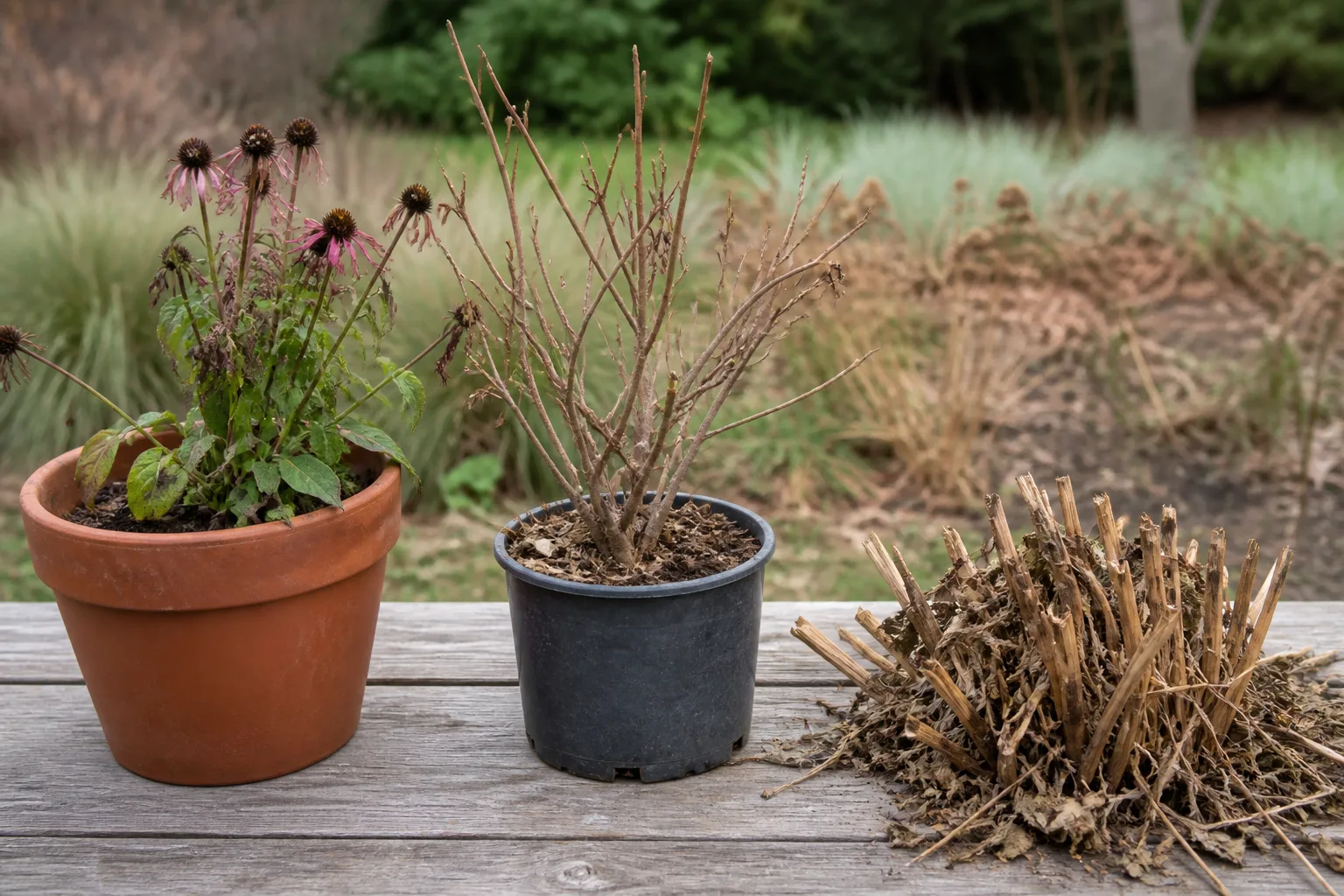
In cold-winter climates, leave healthy catmint stems standing through winter if they provide structure or shelter for small wildlife, then cut them back when new growth begins in late winter or early spring. Cutting too early in autumn can expose the crown and may encourage tender new growth during a mild spell. The plant’s old stems also help you see where the crown is before you start working around it.
There are good reasons to cut in fall. Remove foliage that was heavily diseased, collapsed into wet soil, or is likely to mat over the crown in a rainy climate. Bag diseased material rather than composting it at home, and disinfect pruners between visibly affected plants. In mild climates where catmint stays partly evergreen, selective cleanup may be better than an automatic hard cut.
If the plant is simply too wide, do not keep shortening the outer stems all season. Shear after bloom, check whether the cultivar is too large for the space, and divide or move it during the appropriate season. A plant that repeatedly sprawls into a walkway is giving you useful information about variety choice and spacing.
Choose the Best Catmint Propagation Method
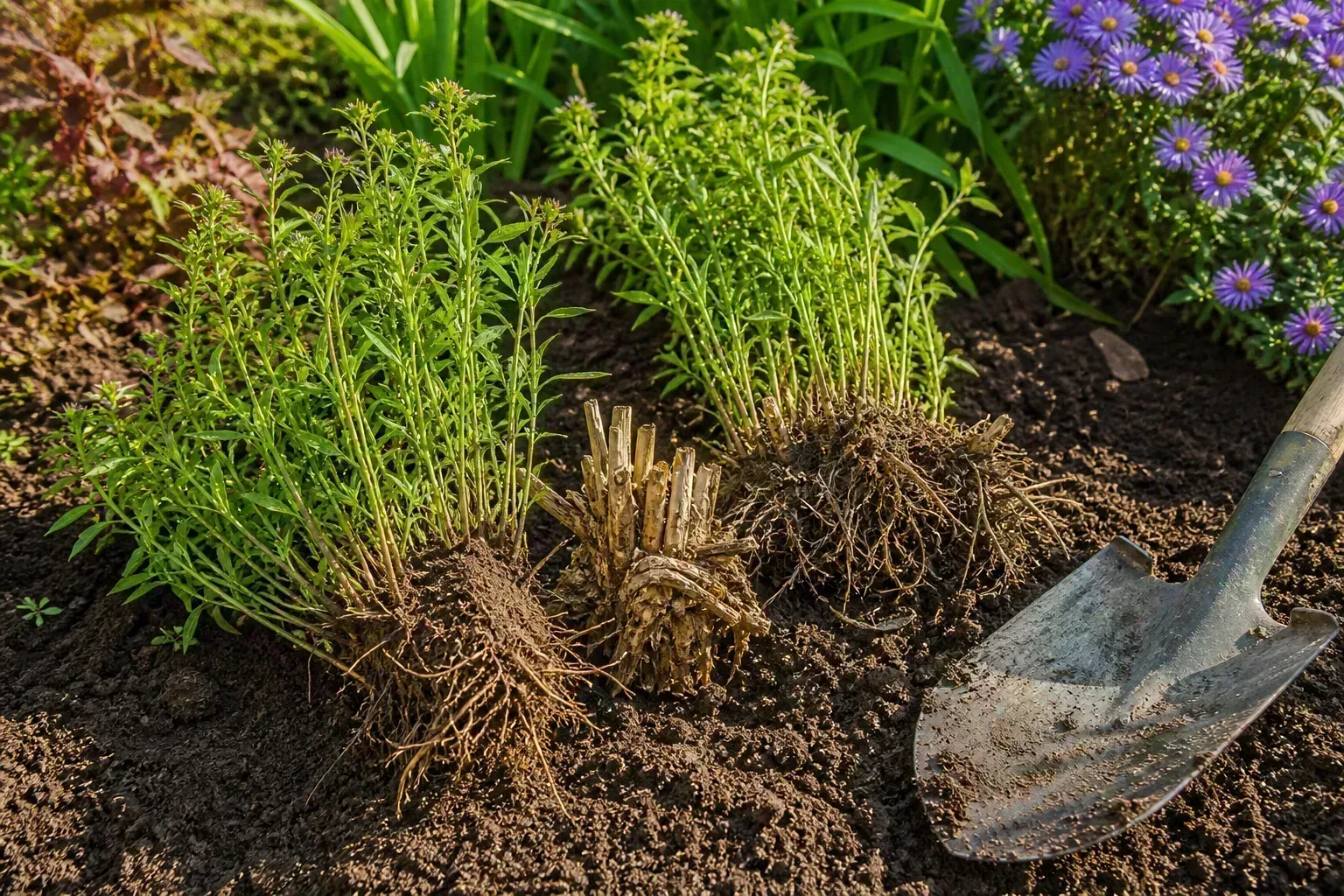
Division is usually the most reliable way to make an exact copy of a named catmint. It preserves the cultivar’s flower color, height, habit, and sterile or non-sterile behavior. Divide in spring as new shoots begin or in early fall, when temperatures are gentler and the soil can be kept evenly moist.
Lift the clump with a spade, or cut a section from the edge of a large plant. Each division needs a piece of crown with several shoots and a healthy set of roots. Replant divisions at the original depth, firm the soil around them, and water until you see new growth. Keep them from drying out during the first few weeks, even if the parent plant is normally drought tolerant.
Compare Division, Cuttings, and Seed
Stem cuttings are useful when the plant is too large to lift or when you want several new plants without disturbing the parent. In late spring or early summer, take a 4- to 6-inch nonflowering stem, remove the lower leaves, and place it in a clean, lightly moist propagation mix. Bright light without harsh direct sun, steady moisture, and good airflow give it a better chance than a jar of stagnant water on a hot windowsill.
Once the cutting resists a gentle tug and begins making new growth, move it to a small pot or sheltered bed. Harden it off before putting it into full sun. A cutting that wilts repeatedly or turns black at the base is usually suffering from excess moisture, poor sanitation, or a stem taken after it has become too woody.
Seed is best for an open-pollinated species such as true catnip or a species sold specifically for seed. Many named ornamental hybrids are sterile or do not come true from seed, so a packet may produce variable plants even when it germinates well. Sow seed shallowly in a fine seed-starting mix, keep it lightly moist, and give it light to germinate; transplant seedlings after they have several true leaves and outdoor conditions are settled. For species identity and propagation options, NC State Extension’s catmint and catnip profiles are more useful than treating every seed packet as interchangeable.
Grow Catmint in Containers and Small Spaces
Container culture is a smart choice when you want to control spread, garden on a balcony, or give a large plant a better-drained root zone. Choose a pot at least 12 inches wide for a typical plant, with several open drainage holes and enough weight that a broad flowering mound will not tip it over. A compact cultivar is easier to keep balanced than ‘Six Hills Giant’ in a small pot.
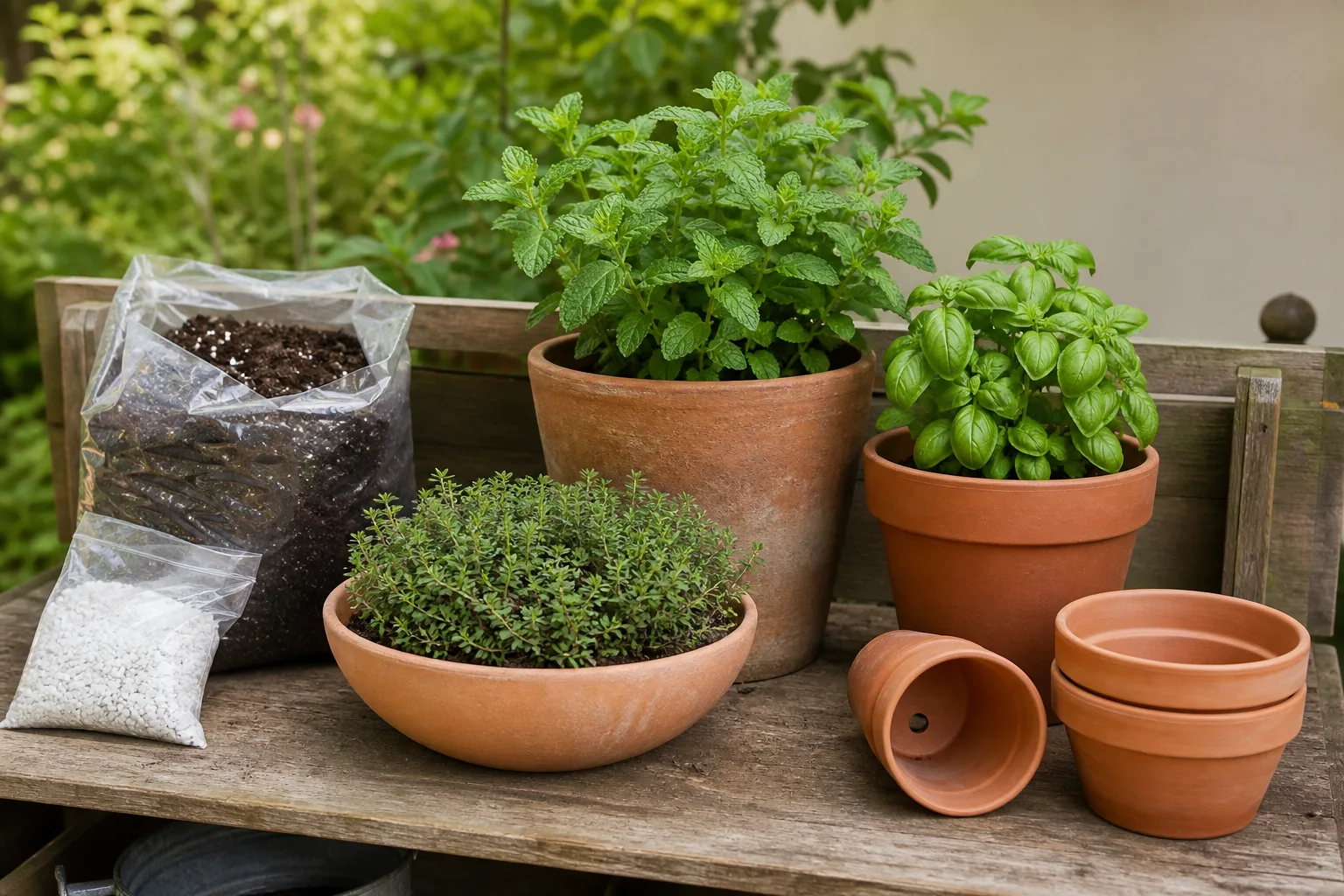
Fill the container with a quality all-purpose potting mix rather than dense garden soil. Set the root ball at the same depth as it was growing, water thoroughly, and place the pot where it receives at least six hours of sun. Check moisture more often than you would in the ground, but do not leave the container standing in a full saucer of water after irrigation.
Potted catmint may need a light spring compost top-dressing or a restrained, balanced feed if growth is genuinely weak. Do not fertilize a floppy plant before checking light, drainage, and root crowding. Rich feeding can make the exact problem worse by pushing soft foliage rather than sturdy flower stems.
In cold climates, container roots experience winter temperatures more quickly than roots insulated by garden soil. Move the pot into an unheated garage or shed, bury the container up to its rim, or group and insulate pots in a protected outdoor location. Keep the plant cool and mostly dormant, but do not let the mix remain saturated. Bring it back into brighter conditions gradually in spring and begin watering as new growth resumes.
Use Catmint with Companions, Pollinators, and Wildlife
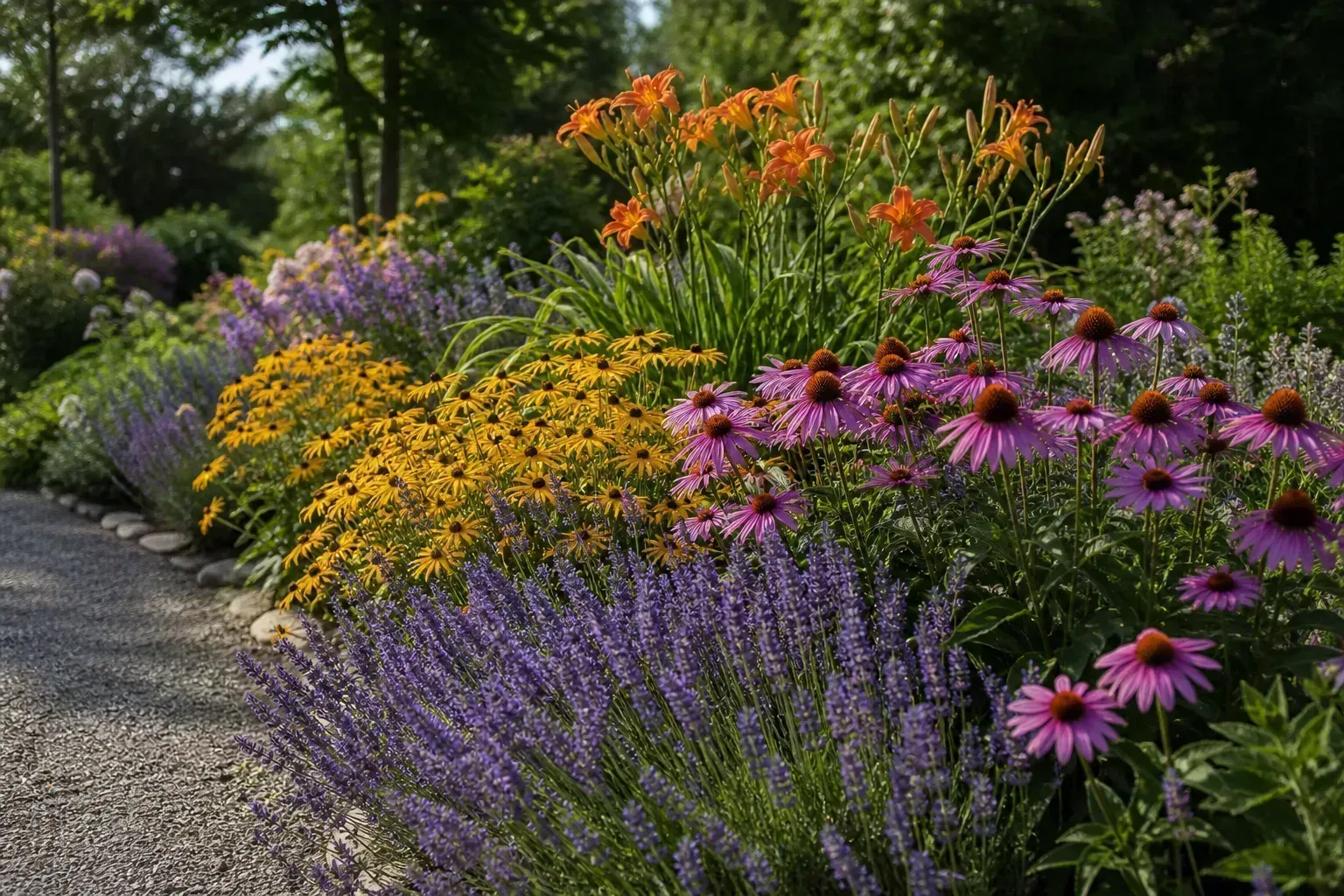
Design catmint around shared growing conditions. Pair it with plants that prefer sun, moderate fertility, and good drainage, such as lavender, salvia, yarrow, coreopsis, sedum, ornamental onions, roses, and ornamental grasses. In a richer or regularly irrigated bed, place catmint where it will not be overrun by plants that need constant moisture.
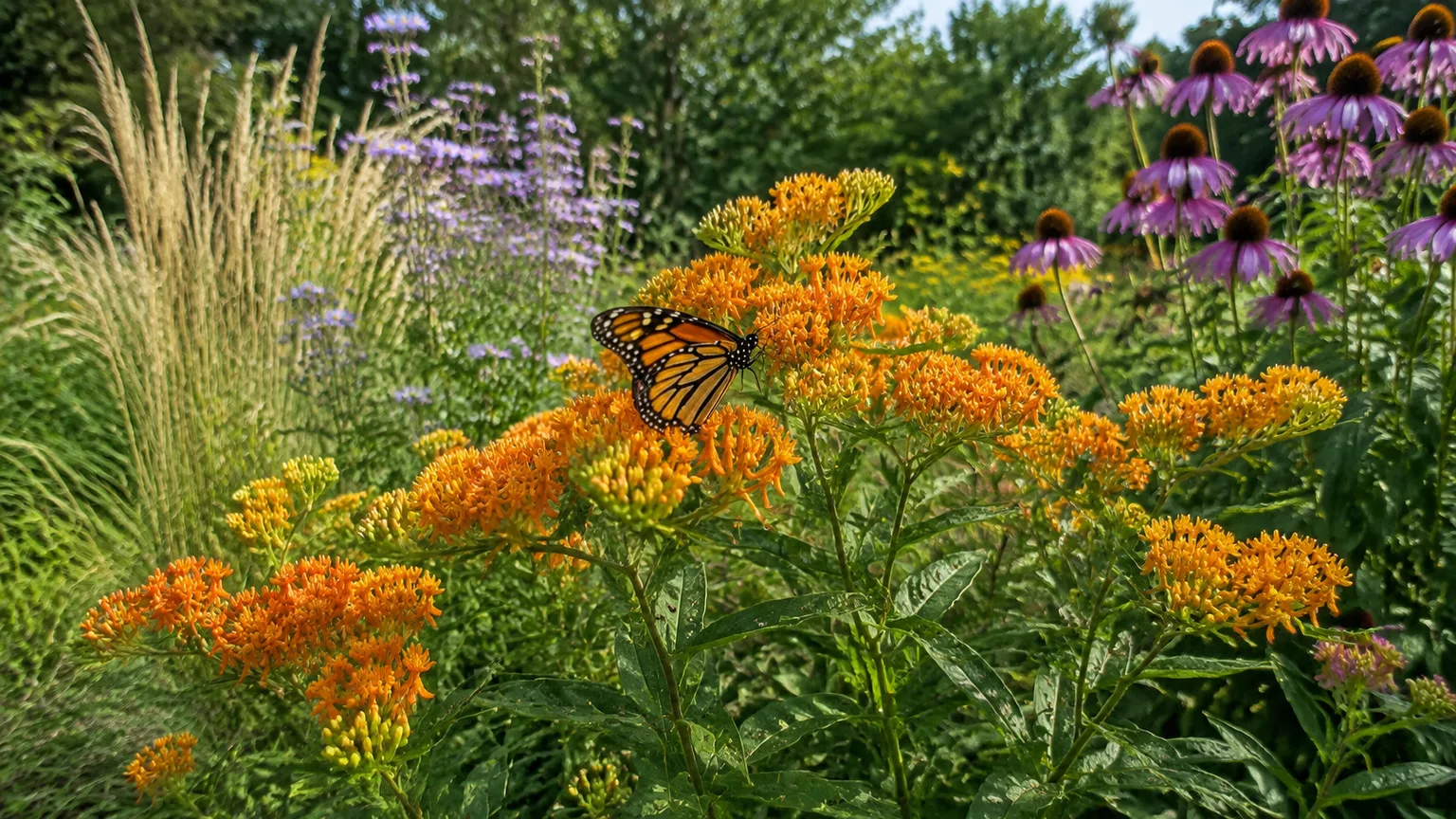
Its cool blue and lavender flowers are especially useful beside yellow yarrow or coreopsis, pink roses and coneflowers, or the vertical form of salvia and alliums. Low cultivars can soften a path edge or spill over a rock wall; taller types can fill the middle of a border without blocking every plant behind them. A mass of the same cultivar often looks tidier than scattering one vigorous plant into every gap.
Catmint is a strong pollinator plant, but “repels insects” needs a careful reading. Aromatic foliage may be unappealing to some pests, and NC State lists Nepeta as a plant associated with repelling certain insects, including aphids and squash bugs. That is not the same as a guaranteed pesticide barrier, and it should not replace checking the crop you are trying to protect. The Duke Gardens account is a helpful reminder that the plant’s most dependable wildlife role is as a nectar source for bees and other flower visitors.
If cats are the reason you are planting, verify the botanical name. True catnip is N. cataria, and the University of Wisconsin Horticulture profile describes it as a vigorous, sometimes weedy perennial that attracts many cats and may be damaged by rolling or chewing. Ornamental catmint can still interest some cats, but flower color and ornamental habit—not a guaranteed feline reaction—should guide most purchases.
Troubleshoot Catmint That Looks Wrong
Catmint problems usually reveal a mismatch among light, water, fertility, spacing, and variety. Before reaching for a spray, feel the soil, look at the light pattern, inspect the crown and leaf undersides, and compare the plant’s current width with the label. A plant that was healthy in May can look “diseased” in July simply because it finished its first bloom and needs a planned shear.
Flowering, Flopping, and Leggy Growth
If catmint makes leaves but few flowers, start with light. Six hours is a useful baseline, and a plant under a tree that leafs out in late spring may no longer be in full sun. Next check fertilizer and water: rich soil, frequent feeding, and constant moisture encourage foliage and soft stems, while a severely dry root zone can stop flowering too.
If the plant flowers once and then opens in the center, shear it after the first flush rather than removing only a few old spikes. Thin crowded neighboring plants if air cannot move through the mound, and use a smaller or more upright cultivar next time. A sprawling plant may be perfectly healthy; the problem is often that its mature habit was underestimated.
Leggy stems in a pot are most often a light or spacing issue. Move the container into stronger light, rotate it, and pinch the tips early in the season to encourage branching. Do not compensate for weak light with extra fertilizer.
Yellowing, Wet Soil, Pests, and Unwanted Spread
Yellow lower leaves plus wet soil, a sour smell, or a soft crown suggests excess moisture and possible root damage. Stop routine watering, improve drainage, and inspect roots if the plant continues to decline. Healthy roots should be firm; remove only clearly dead tissue, repot or replant into a faster-draining medium, and understand that a severely rotted crown may not recover.
Powdery mildew or leaf spotting is more likely when plants are crowded, overfed, or watered over the foliage in humid weather. Remove the worst affected leaves, improve spacing and airflow, and clean up fallen debris. If a pest is visible, identify it before treating; the presence of a few insects is not automatically a reason to spray a flowering plant that is supporting pollinators.
Spread can mean three different things: a clump widening from the crown, stems rooting where they touch soil, or seedlings from mature seed. Sterile hybrids mainly give you the first kind. To contain a vigorous non-sterile species, grow it in a pot, deadhead before seeds mature, use a firm bed edge, and pull small volunteers while the soil is soft. Check local guidance before planting a naturalizing species near a wild area; the NC State Nepeta profile calls the group somewhat weedy even while describing it as useful for meadows and naturalized areas.
Prepare Catmint for Winter and Next Spring
Most ornamental catmints are hardy across a broad range, commonly around USDA zones 3 to 8 depending on the variety, but the plant tag is the final word. The Duke Gardens profile lists the ornamental types grown there for zones 4 to 8, while NC State’s broader genus and species profiles show that hardiness can vary within Nepeta.
In the ground, winter care is usually simple: stop fertilizing late in the season, keep the crown from sitting in winter water, and leave healthy stems until spring if they are not collapsing. Do not wrap the plant in plastic or pile wet mulch against the crown. In a very exposed site, a loose layer of clean leaves after the ground cools can buffer temperature swings, but remove it if it mats and stays wet.
The next spring, wait for new shoots before cutting old stems, then remove winter-killed material just above the emerging crown. This is also the best time to divide an overcrowded clump, move a plant that outgrew its spot, or pinch young growth for a denser habit. The goal is not to keep catmint perfectly still; it is to give the plant enough room and the right seasonal cuts to flower generously without becoming a maintenance headache.
Conclusion
The dependable catmint routine is short: choose the variety by mature size and spread, plant it in sun and fast-draining soil, water regularly while it establishes, then let the root zone dry moderately between deep drinks. Feed sparingly, shear after the first flower flush, and use division or cuttings when you want an exact new plant.
If your site is hot and humid, protect airflow and offer afternoon shade; if your soil is wet, raise the planting or use a pot; if you want a cat-friendly herb, buy true catnip rather than assuming every Nepeta will attract cats. With those distinctions in place, catmint earns its reputation as a long-blooming, pollinator-friendly perennial that asks for timing and observation more than constant care.