20 Butterfly Bush Varieties by Size and Flower Color
Compare 20 butterfly bush varieties by size, flower color, and garden use. Find a compact pick, plan its space, and check regional guidance before planting.
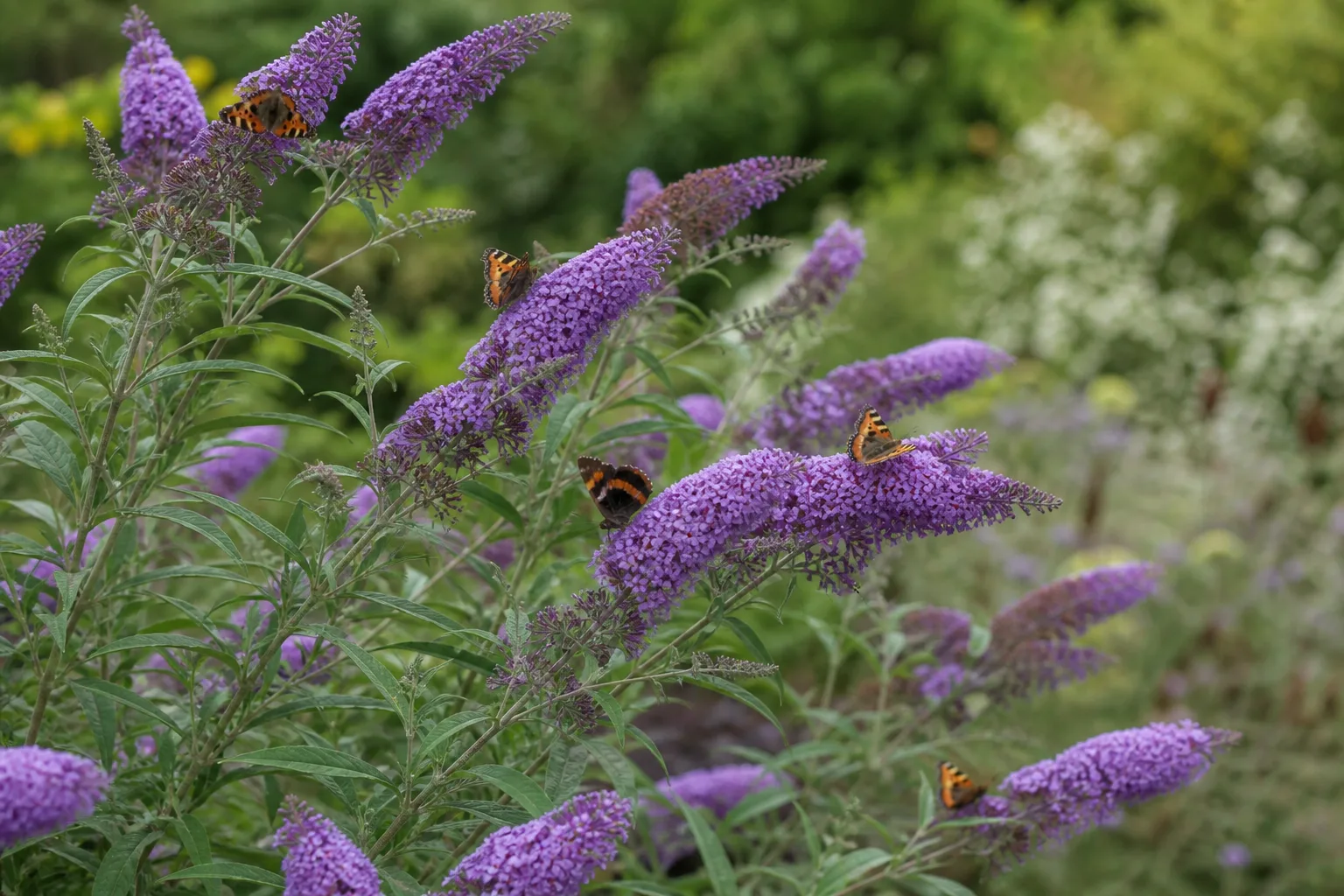
A butterfly bush can be a cloud of color in a sunny border, but the name covers plants that range from knee-high mounds to shrubs taller than a person. Start with the space you can give the mature plant, not the size of the nursery pot. Then choose the flower color and check the exact cultivar name before you buy.
That last step matters because a compact shrub is not automatically a low-seed shrub. Butterfly bush (Buddleja, also commonly spelled Buddleia) can spread beyond gardens in some regions, and a cultivar’s seed behavior is a separate question from its height. The 20 selections below include compact, medium, and vigorous choices; use the regional and ecological checks before treating any one as a universal recommendation.
Check Whether Butterfly Bush Belongs in Your Region
First check your state or provincial invasive-plant list and local extension guidance for the exact species and cultivar. Risk is regional: North Carolina State Extension flags Buddleja davidii as invasive in North Carolina and notes that its ‘Attraction’ selection can naturalize by wind-dispersed seed, while Oregon State University describes the species as naturalized in many parts of the United States. Those examples are reasons to check locally, not proof that every cultivar is equally invasive everywhere. North Carolina State Extension and Oregon State University’s plant profile provide useful regional context.
If a local authority advises against planting it, choose another shrub or perennial rather than relying on deadheading to make a prohibited plant acceptable. If it is allowed, look for a cultivar with documented low seed viability or local approval, and keep the nursery tag with the cultivar name. In a 2022 account of Oregon research, Oregon State University researchers explained that seed-fertility thresholds and interspecific-hybrid exemptions can be complicated; “hybrid” or “dwarf” alone is not a guarantee of sterility. Oregon State University’s research update explains why cultivar-specific evidence matters.
Also think about what you want the shrub to do for wildlife. Its fragrant flowers can offer nectar to adult butterflies and other insects, but one nectar shrub does not provide all the food and life-cycle resources a butterfly garden needs. Plan the rest of the bed around locally appropriate host plants and flowers that bloom at different times; do not judge habitat value only by the number of adult butterflies on a sunny afternoon.
Pick by Size, Then Color
A quick way to narrow the list is to choose a footprint first. These approximate dimensions are useful for comparing varieties, but they are not a guarantee: pruning, growing season, site conditions, and winter dieback can change the size you see in a particular garden.
| Garden use | Cultivars to start with | Approximate mature footprint |
|---|---|---|
| Low front edge or compact bed | Lo & Behold Blue Chip Jr., Pink Micro Chip, Queen of Hearts | About 1–3 ft tall and wide |
| Patio pot or small border | Pugster Periwinkle, Pugster White, Pugster Pinker, Pugster Blue, Flutterby Petite Blue Heaven | About 2–3 ft tall and wide |
| Mid-size shrub border | Adonis Blue, Empire Blue, Honeycomb, Miss Molly, Miss Violet, Nanho Purple, Prince Charming, Petite Snow | Roughly 3–7 ft tall; check the listed spread |
| Back of a large bed or specimen planting | Pink Delight, Black Knight, White Profusion, Sungold | Roughly 6–15 ft tall, with wide variation in spread |
If you want yellow, the choice is less about choosing between two similar plants and more about choosing a scale: Honeycomb is a mid-size yellow-flowered shrub, while Sungold can become a large, broad specimen. For white flowers, Pugster White is compact, Petite Snow is a middle-scale option, and White Profusion needs considerably more room. Dark-flowered choices such as Black Knight and Miss Violet read as deep purple rather than truly black; flower color can also look lighter or warmer under different light.
For a container, start with the smallest mature footprint on the tag, such as a Lo & Behold or Pugster cultivar, and use a large, stable pot with several unobstructed drainage holes. Even a dwarf shrub needs root room, and a pot dries and freezes faster than garden soil. Full-size choices are usually a poor long-term fit for a patio container because annual pruning cannot turn a naturally large shrub into a permanently tiny one.
20 Butterfly Bush Varieties to Compare
The cultivar notes below are organized by likely footprint, not by a single “best” ranking. Dimensions are approximate nursery or horticultural descriptions; ask for the current tag because names, availability, and plant sizes can vary by supplier. The genus includes many species and hybrids, so the botanical name and cultivar name are more reliable than a flower-color label alone. Fine Gardening’s butterfly-bush guide is a useful horticultural reference for the genus and its range of growth habits.
Compact and Dwarf Varieties
Lo & Behold Blue Chip Jr. is one of the smallest blue-purple options, usually described around 1 to 2.5 feet tall and 1 to 2 feet wide. Its compact, mounded outline suits the front of a sunny bed or a substantial patio pot, where a taller cultivar could block the view. The breeder describes it as an early-flowering selection in the Lo & Behold series, but local season still affects bloom timing.
Lo & Behold Pink Micro Chip offers pink flowers on an especially small plant, commonly listed at about 1.5 to 2 feet tall and 1 to 2 feet wide. It works where you want a low, flowering accent rather than a screen or tall focal point. Cornell’s woody-plant database includes Pink Micro Chip among listed sterile selections; confirm current local guidance and the exact cultivar name rather than generalizing that status to every compact butterfly bush. Cornell University’s cultivar record gives a reference point for the named selection.
Flutterby Petite Blue Heaven has violet-blue flower spikes and a naturally compact, branching habit, often around 2 to 3 feet tall and wide. It can soften a small border without the scale of a conventional full-size shrub. The name resembles other Flutterby cultivars, so check that the plant tag says Blue Heaven rather than assuming all selections in a series share the same size or seed behavior.
Pugster Periwinkle puts periwinkle-purple blooms on a stocky plant of about 2 feet tall and 2 to 3 feet wide. It is a useful choice when you want the visual weight of full-size flower clusters without a tall, loose framework. The breeder describes the Pugster line as short and sturdy-stemmed, which may help where winter dieback is common; that does not make it invulnerable to cold or wet soil.
Pugster White keeps the same compact, roughly 2-foot scale but changes the palette to white flowers with warm centers. It is easier to place near a path or patio than a tall white cultivar, but still needs sun and a well-drained root zone. Use its mature width—not the plant’s size at sale—to decide how close it belongs to paving or neighboring perennials.
Pugster Pinker is a compact pink choice, generally around 2 feet tall and 2 to 3 feet wide, with saturated flowers that carry a warm orange center. It suits a small pollinator border or a pot large enough to keep the root ball from drying too quickly. The name signals flower color and habit, not automatic proof that the cultivar is sterile.
Pugster Blue offers blue to blue-violet blooms with orange-yellow eyes on a similarly compact, sturdy-looking shrub. Expect a plant near 2 feet tall and 2 to 3 feet wide, then leave a little room around it for airflow and seasonal growth. If blue flowers are the priority, compare this with Adonis Blue: Pugster Blue is the smaller option, while Adonis Blue grows into a fuller medium shrub.
Queen of Hearts is a compact magenta selection, often listed near 2 to 3 feet tall and wide. Its flower panicles can be strikingly long for a small shrub, so it gives a border a focal point without taking up the footprint of a large cultivar. It is a good example of why “dwarf” does not have to mean visually insignificant: the plant stays low, while its flower spikes remain prominent.
Mid-Size Varieties
Adonis Blue pairs deep blue-purple flowers with a fuller plant around 4 to 5 feet tall and 3 to 4 feet wide. Choose it when the smallest dwarf cultivars look too low for the middle of a border but a six-foot shrub would crowd the bed. Its proportions are also easier to combine with medium-height perennials than a large, arching selection.
Empire Blue is a classic violet-blue cultivar with a relatively even form, often about 5 feet tall and 5 feet wide. Its balanced dimensions make it a practical middle-of-the-bed choice where you want a rounded shrub rather than a narrow column. Give it enough width to branch naturally instead of pruning its sides into a tight ball.
Petite Snow brings white panicles to a moderate shrub, with published dimensions varying widely—roughly 4 to 7 feet tall and 3 to 9 feet wide. That unusually broad spread range is a cue to leave room and read the local supplier’s label before planting it near a walk. It is a better pick for a mixed border with space behind it than for a narrow foundation strip.
Honeycomb is a Buddleja × weyeriana selection with creamy yellow flowers and orange eyes, a color combination uncommon among familiar butterfly bushes. It typically reaches about 5 to 7 feet tall and 4 to 5 feet wide, so it adds height without the scale of Sungold. Consider it if you want yellow blooms and have room for a genuine shrub, rather than a low edging plant.
Prince Charming carries raspberry-pink to red flowers on a tidy shrub of roughly 3 to 4 feet tall and wide. It fills the gap between the petite selections and the larger pink cultivars, making it useful for the center of a smaller border. Availability can be inconsistent, so verify the cultivar name; a generic red or raspberry label may refer to another plant.
Miss Violet produces saturated violet flowers on a shrub around 4 to 5 feet tall and wide. The Miss series is generally positioned as a medium-height, refined group, which makes this selection a stronger fit for a mixed border than a tiny patio pot. If the site has room for only a low plant, choose a dwarf cultivar instead of trying to maintain Miss Violet at half its natural scale.
Miss Molly offers vivid deep-pink to red flowers, often on a 4- to 5-foot shrub with a similar spread. It is the red-leaning color choice among these varieties, though its blooms are better described as raspberry or magenta than a pure scarlet. Fine Gardening notes that butterfly bush flowers attract butterflies and bees, while the breeder describes the Miss series as medium in height; use both facts as context, not a promise of a particular visitor count or exact size. Fine Gardening’s plant profile and the breeder’s cultivar guide support those general characteristics.
Nanho Purple is a fragrant purple selection with a compact-to-medium habit, generally about 3 to 5 feet tall and wide. It gives you a fuller shrub than the tiny Lo & Behold types without demanding the same space as the largest traditional cultivars. Use it in a sunny mixed border and avoid planting it where its eventual width would force annual shearing against a wall or fence.
Large Shrubs and Distinctive Colors
Pink Delight is a substantial pink-flowering shrub, commonly listed at about 6 to 8 feet tall and 4 to 6 feet wide. Its long, bright flower panicles show best toward the rear of a border or as a specimen with open space around it. It is not a sensible choice for a small patio merely because the nursery plant is still compact in its pot.
Black Knight is prized for very dark purple flower spikes, often on a shrub around 6 to 10 feet tall and 5 to 6 feet wide. The “black” in the name is a color impression: the blooms are deep purple, especially in shade or at a distance. Place it where its height can be seen against a lighter background, and where pruning access will remain easy.
White Profusion has clear white flower spikes and a vigorous, potentially very large habit—published estimates range from about 6 to 12 feet tall and 4 to 15 feet wide. That range is too broad for close spacing, so treat it as a large shrub and confirm dimensions with the nursery selling the specific plant. Choose it for a spacious bed, not a narrow foundation planting.
Sungold is a Buddleja × weyeriana selection with yellow-gold flowers and the largest footprint in this list, often 8 to 15 feet tall and 4 to 10 feet wide. It can be a dramatic seasonal specimen, but its deciduous habit means it is not a year-round privacy screen. If yellow is the goal and the space is limited, Honeycomb is the more manageable starting point.
Where Butterfly Bush Fits in a Pollinator Garden
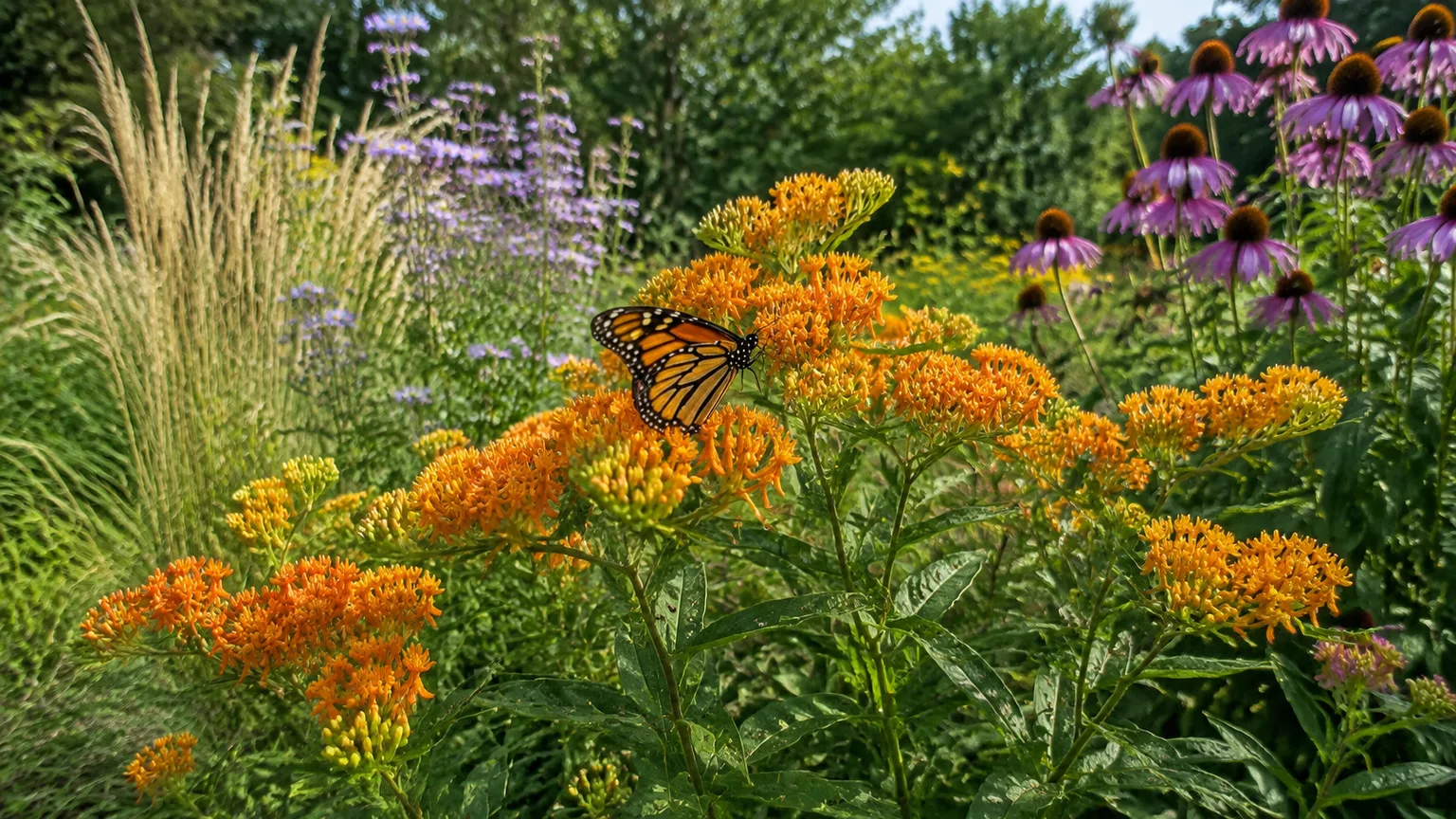
Think of butterfly bush as one nectar stop in a broader planting, not as a complete butterfly habitat. Build the bed with regionally appropriate caterpillar host plants, a succession of flowering plants, and a sunny sheltered area; native milkweed is one example for monarchs, but the right host species depends on which butterflies occur where you live. A mixed border also offers different flower forms and bloom periods instead of concentrating all resources in one shrub.
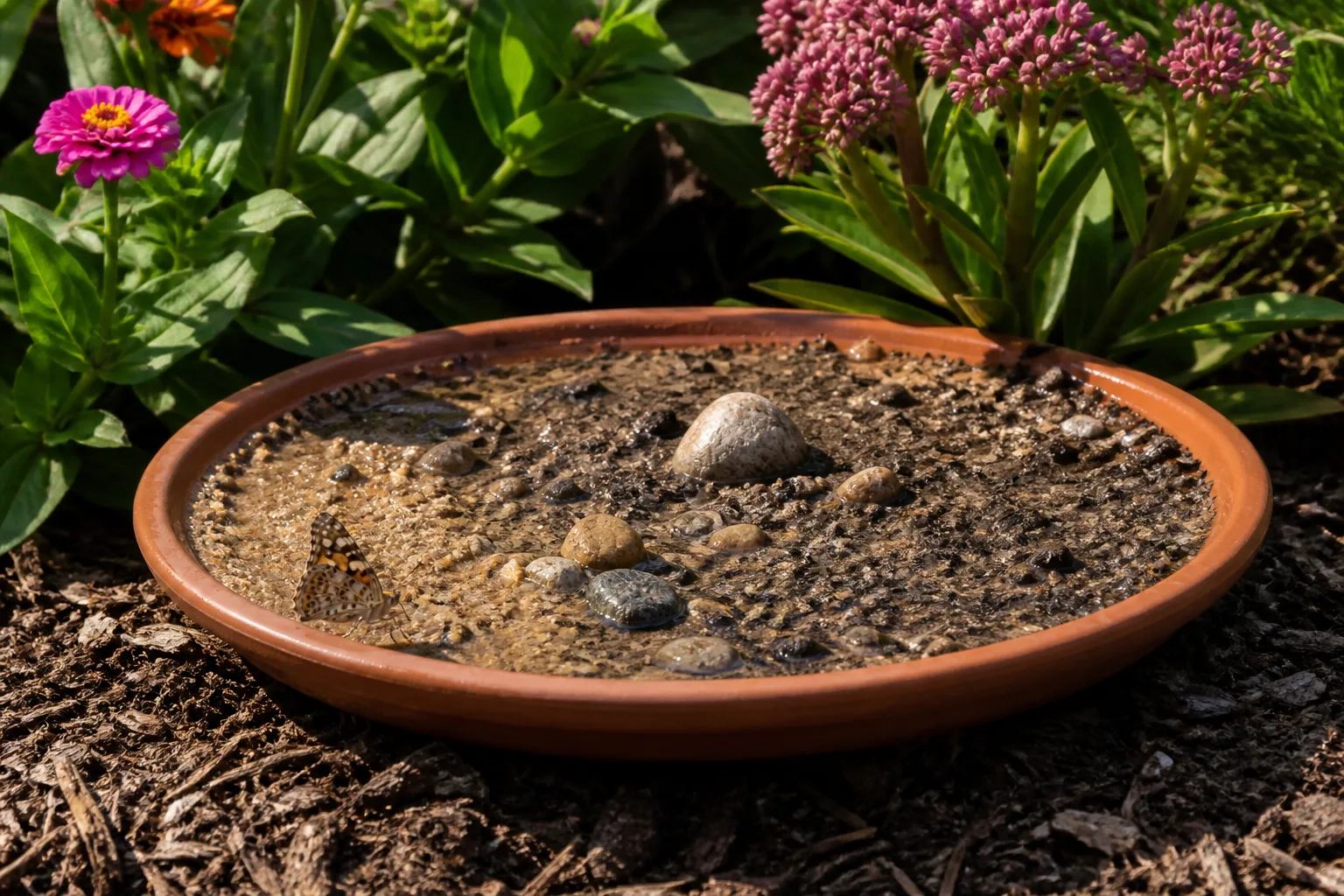
Adult butterflies also need places to bask and, for some species, access to damp mineral-rich soil. A shallow puddling station is a different garden feature from nectar planting; keep it clean and place it where it will not become a mosquito-breeding container. Oregon State University’s research overview describes pollinator visits and resource measurements as separate questions, a useful reminder that one flower’s popularity does not measure the whole garden’s ecological value.
Care Choices That Protect the Flowers
Most B. davidii cultivars are straightforward once the site fits. The trouble is usually a mismatch—too much shade, soil that holds water, too little room, or pruning that removes too much growth at the wrong time.
Give It Full Sun and Fast-Draining Soil
Aim for at least six hours of direct sun. North Carolina State Extension defines full sun as six or more hours for its ‘Attraction’ profile, and Fine Gardening also lists the species as a full-sun plant. A little light shade may be tolerated in some gardens, but it usually means a looser plant and fewer flowers than a sunny position. North Carolina State Extension and Fine Gardening provide cultivation baselines.
Drainage is just as important as fertility. Butterfly bush will grow in ordinary soil, but it struggles when roots sit wet for long periods, especially in cool seasons. If water pools after rain, choose a different site, improve drainage at the bed scale, or select another shrub; simply adding rich compost to the planting hole does not solve a poorly drained site.
Space for Mature Spread, Not the Nursery Pot
Use the expected mature width to estimate the spacing between plants. For a loose, natural row, leave roughly the listed mature spread between centers; if you want a dense mass, use the lower end of the mature-size range and accept that pruning and airflow will need more attention. The exact gap depends on the cultivar and the look you want, so one generic five-foot spacing rule is not right for a 2-foot dwarf and a 10-foot shrub.
In a container, use the smallest cultivars and a pot wide enough to remain stable as the top grows. Pick a weather-resistant container with several open drainage holes and a fast-draining potting mix; the grower guide for these cultivars recommends that setup for container planting. In a cold-winter climate, a pot exposes roots to colder temperatures than in-ground soil, so plan winter protection or move the container to a sheltered location rather than assuming the cultivar’s zone label covers the pot. The breeder’s growing guide outlines those container and drainage considerations.
Prune in Spring and Adapt to Winter
Many Buddleja davidii selections flower on new growth, which is why spring pruning is common. Remove dead or damaged wood first, then shorten the remaining framework to a manageable shape once the plant is beginning to show life. The Royal Horticultural Society places summer-flowering deciduous shrubs such as Buddleja davidii in the spring-pruning group; Fine Gardening likewise recommends a hard spring cutback for the species. RHS pruning guidance and Fine Gardening’s plant profile support this timing.
Do not make an autumn hard cut simply to tidy the garden, especially where winters are cold and wet. Some plants die back to the ground and regrow from the base; others retain a woody framework. Wait until you can distinguish living buds from dead stems, then prune for the actual plant in front of you. Dwarf selections need less reduction than a vigorous shrub, but they still benefit from removing dead wood and keeping flower stems accessible.
Deadhead as a Deliberate Choice
Remove spent flower clusters if you want to encourage more flowering or reduce the number of mature seed heads. Cut the cluster back to a leaf node before seed capsules dry and split, and bag the clippings if regional spread is a concern. North Carolina State Extension notes both benefits of deadheading and the role of wind-dispersed seed for its ‘Attraction’ cultivar.
Deadheading is not a substitute for local approval or a verified low-fertility cultivar. It can reduce seed production when you keep up with it, but missed clusters may still mature, especially on a large plant with many stems. In a region where the species is restricted, follow local rules rather than treating maintenance as an exemption.
Buying Mistakes to Avoid
Compact Does Not Mean Sterile
Treat size, seed production, and legal status as separate fields on a plant label. “Dwarf,” “compact,” and “container-friendly” describe habit or use; they do not establish reproductive behavior. Cornell’s woody-plant database lists specific selections such as Blue Chip Jr. and Pink Micro Chip among sterile cultivars, while Oregon State’s research account explains why fertility claims and hybrid categories need cultivar-level evaluation. Check the exact name against current local recommendations before you buy.
Do not infer that every member of a named series shares one status, either. A breeding line can contain several cultivars, and different jurisdictions can evaluate or regulate them differently. If the tag uses only a common name, ask the nursery for the botanical cultivar name and written details; if it cannot provide them, you do not have enough information to make a responsible choice in a region with spread concerns.
Hardiness Zones Do Not Predict Every Winter
A zone rating describes expected winter minimums, not the amount of cane that will survive in a particular yard. Cold, wet soil, wind exposure, snow cover, drainage, and whether the plant is in a pot all affect how much growth returns. Oregon State’s landscape profile notes that the species can be killed to the ground in colder areas even where the roots survive.
That changes how you compare size claims. A plant advertised at five feet may reach that height from the base in a long growing season, while the same cultivar may regrow from low buds after a harsh winter and bloom later. Choose for the mature dimensions the plant can reach in a good season, then leave enough room for that size; do not design a tight border around its winter dieback.
Conclusion
Choose butterfly bush in this order: confirm it is appropriate in your region, identify the exact cultivar, compare its mature width with the space available, and only then pick a color. For a compact bed, start with Blue Chip Jr., Pink Micro Chip, or a Pugster selection; for yellow flowers in a moderate footprint, compare Honeycomb with the much larger Sungold; for a tall purple backdrop, Black Knight needs the room to show its scale.
Give the shrub sun and drainage, prune it in spring according to how it came through winter, and remove seed heads when that fits local guidance. If your goal is a butterfly garden, pair any permitted cultivar with native host plants and flowers that cover more of the season. That combination makes a more thoughtful planting than choosing a bloom color alone.