Weeping Redbud Tree Care: How to Plant and Prune It
Learn how to plant, water, prune, and protect a weeping redbud, including Lavender Twist hardiness, graft care, bloom timing, and common stress signs.
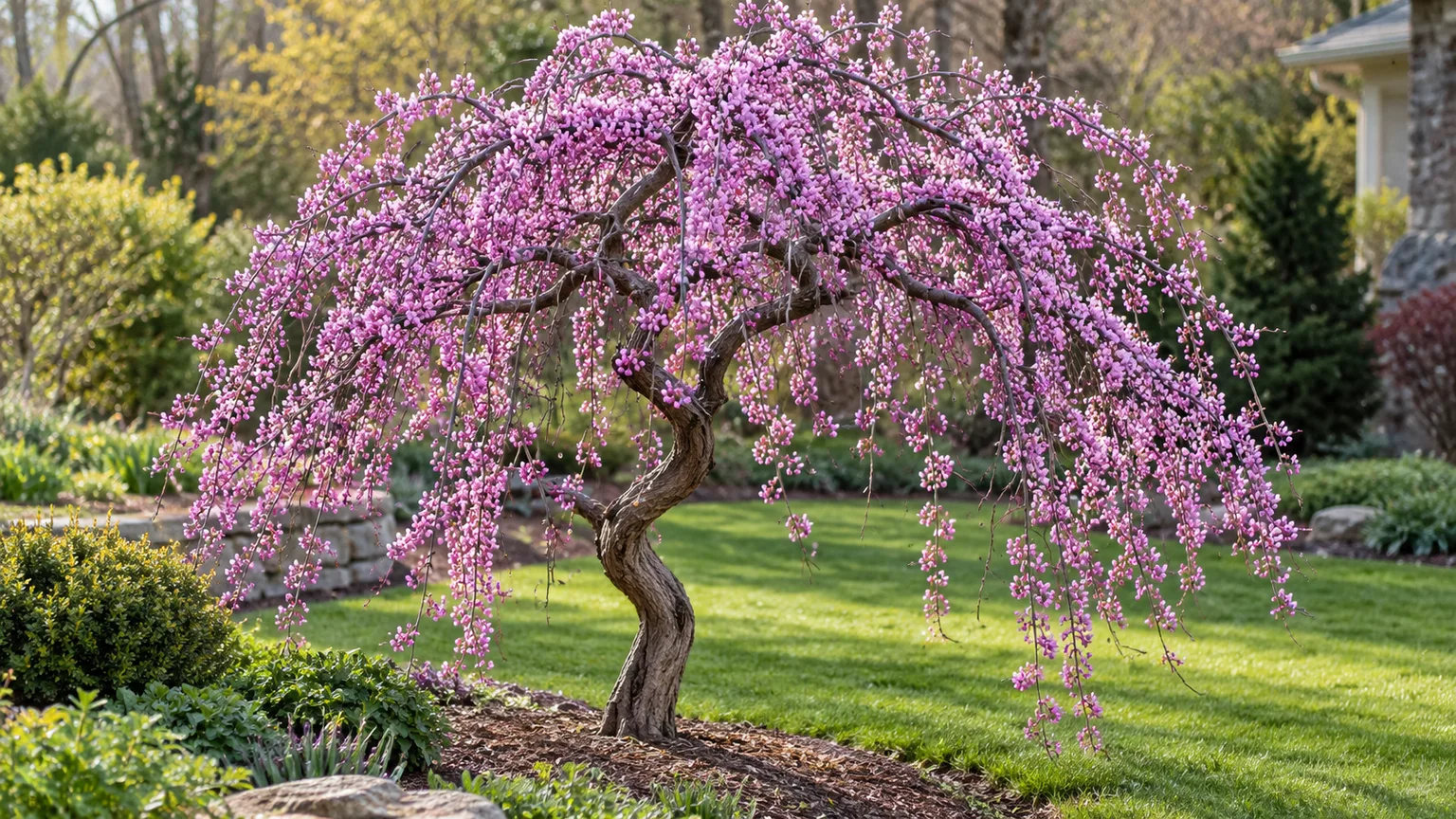
A weeping redbud earns its place with spring flowers on bare, curving branches and a small canopy that can anchor a front garden or patio edge. The tree is forgiving about soil texture, but it is not a “plant it anywhere and forget it” specimen: standing water, a hot exposed site, drought during establishment, or a poorly structured crown can shorten its good years.
The first useful decision is identifying the tree. Most gardeners mean Lavender Twist® (‘Covey’), a weeping cultivar of Eastern redbud, but Ruby Falls and Golden Falls® also have cascading forms. Cultivar identity affects leaf color, size, and cold response, so check the plant tag before applying a generic care range.
Is a Weeping Redbud Right for Your Space?
A weeping redbud is a small ornamental tree, not a narrow column. Lavender Twist is commonly listed at roughly 5 to 15 feet tall and wide, although some horticulture references give a tighter mature estimate near 6 feet tall by 8 feet wide. That difference reflects cultivar, nursery training, site, and the way a grower measures a naturally arching canopy; use the named cultivar’s tag and allow for the branches to spread outward and hang down.
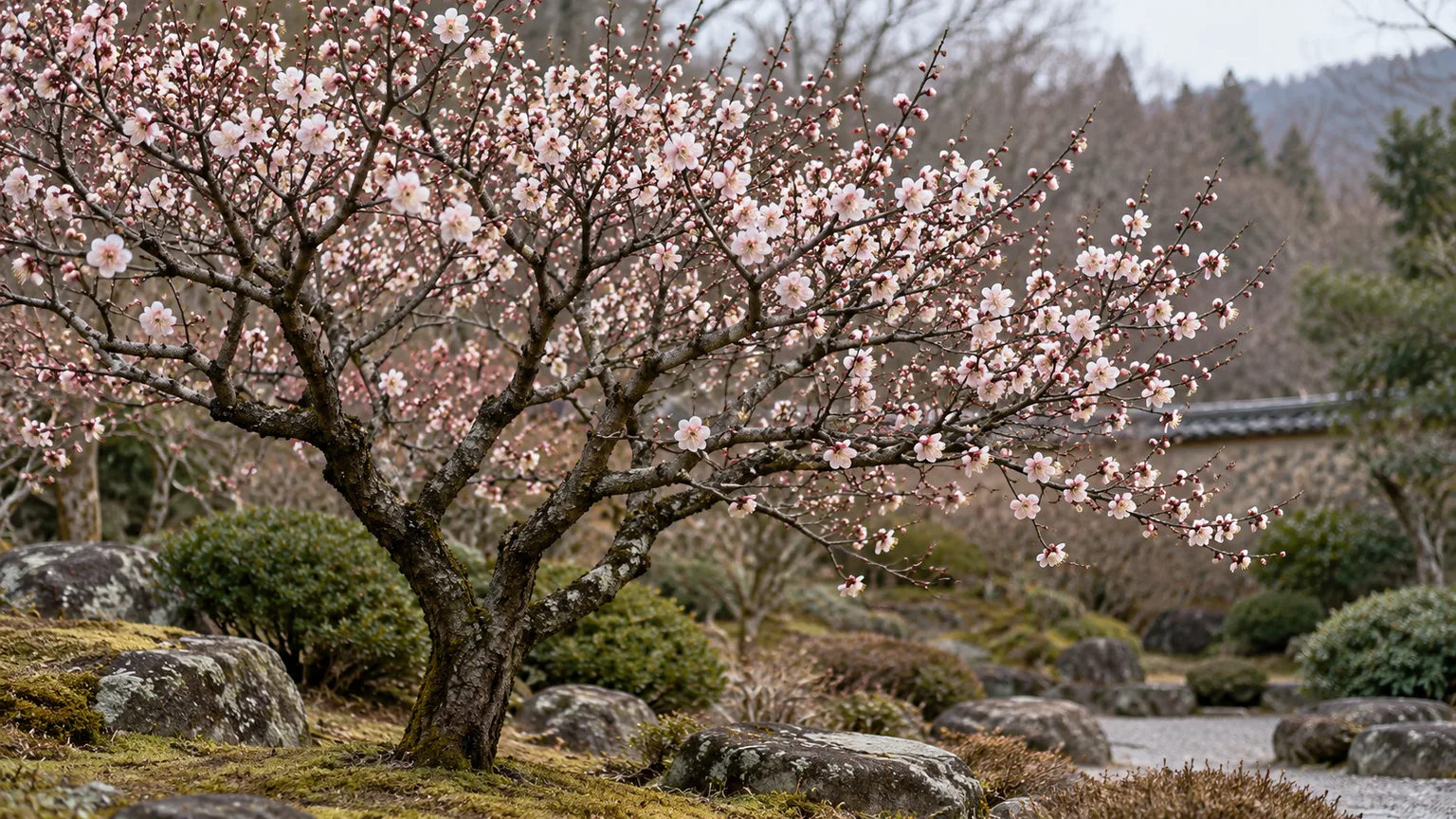
Its most visible season is spring, when rose-pink to lavender flowers appear before leaves. The heart-shaped foliage then provides summer shade, often turns yellow in fall, and gives way to a contorted branch structure in winter. This is a good fit when you want a compact focal point with year-round form, but a poor choice for a spot where branches must be held away from a walkway or wall by repeated hard pruning.
Before buying, stand where you expect to view the tree and picture the mature canopy at ground level. Leave room for its widest branches, overhead clearance, and access for mowing or walking; don’t calculate spacing from the nursery pot or assume a small trunk means a tiny mature plant.
What “Weeping Redbud” Means
The name usually refers to a cultivar of Cercis canadensis, the Eastern redbud, rather than a separate botanical species. ‘Covey’ is sold as Lavender Twist® and is known for its pendulous, twisting branches; NC State Extension lists it among redbud cultivars, while the UConn Plant Database describes ‘Covey’ as a weeping form with contorted, arching limbs (NC State Extension, UConn Plant Database).
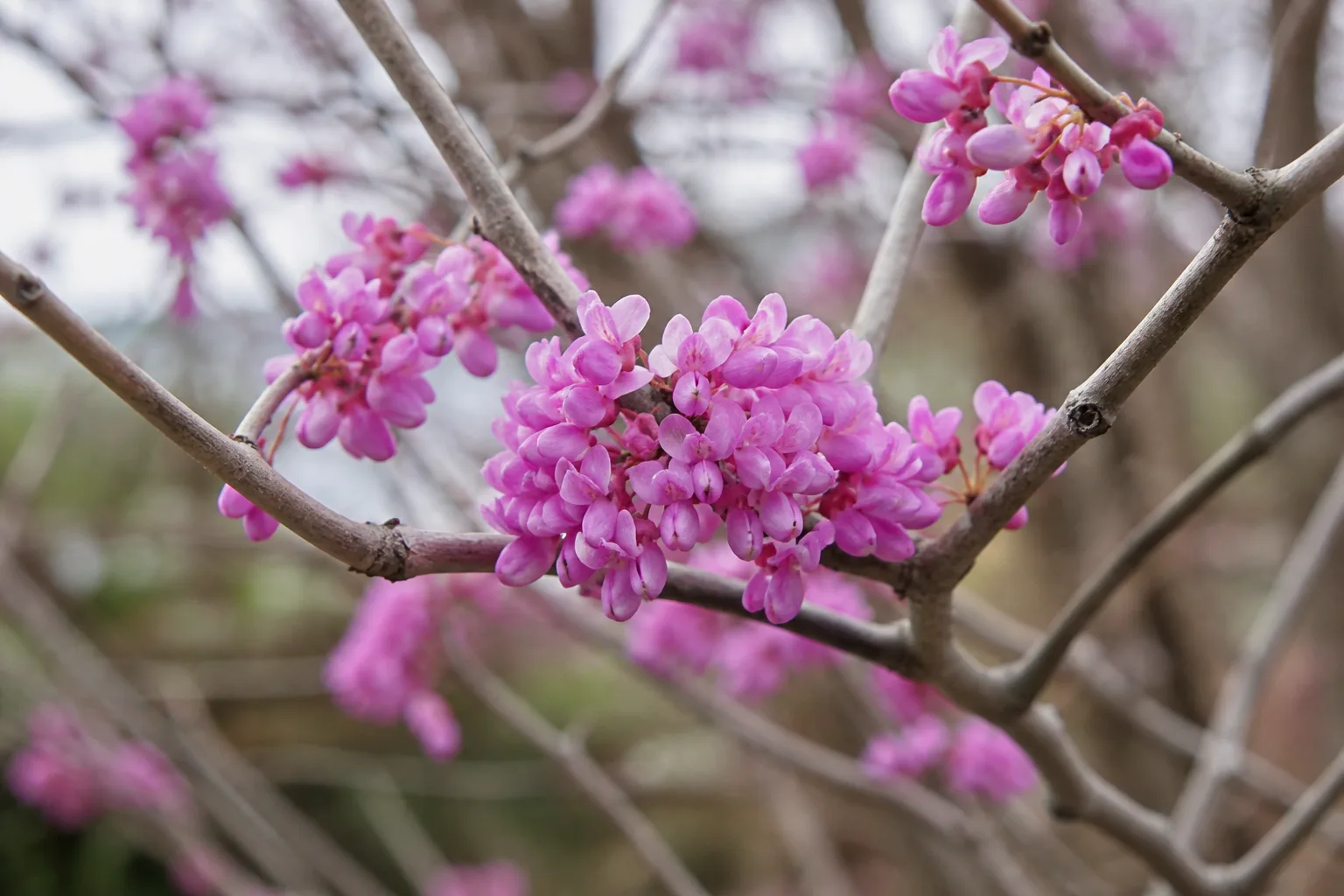
A redbud’s flowers are pea-shaped and can appear along older branches and the trunk as well as on younger growth. That trait explains the dramatic bare-branch display, but it also means a cut made before flowering can remove buds you were waiting to see. The branch pattern is part of the tree’s identity, so select a cultivar for its natural habit rather than trying to force an ordinary upright redbud into a cascade.
Cultivars are maintained by vegetative methods such as budding or micropropagation, not by saving seed and expecting an identical tree. If your plant has a graft union, the top growth is the named cultivar and shoots emerging from below that union may belong to the rootstock; check the tag or ask the nursery if the planting looks unlike the form you purchased.
If you are comparing this cultivar with the usual upright tree, the Eastern redbud growing guide covers species-level habits and siting.
Choose a Site Before You Plant
Choose the permanent position before the tree goes into the ground. Eastern redbuds are sensitive to root disturbance and do not respond well to being dug up and moved once established, so resolve the space, sunlight, and drainage questions first. A sheltered lawn edge, open woodland margin, or garden bed with room for a low canopy is usually more practical than a narrow foundation strip.
A useful site check is to watch the area after a soaking rain. If water sits over the future root zone for hours or the soil stays saturated, choose another spot or improve drainage across the broader area before planting; a small pocket of amended soil will not correct a wet site. Also keep the tree out of the strongest reflected heat from pavement or a south- or west-facing wall in hot-summer regions.
Light, heat, and bloom
Full sun to light shade is suitable, and more direct sun generally supports heavier flowering. In a mild climate, a spot with six or more hours of sun is a sensible target; in a hot region, morning sun with some afternoon shade can reduce leaf scorch and moisture stress. The trade-off is straightforward: deep shade can reduce bloom and encourage a lopsided reach toward light, while intense afternoon sun adds heat to a tree that is already short of water.
Do not treat a USDA hardiness zone as a complete climate rating. It estimates winter cold tolerance, not the combination of summer heat, humidity, rainfall, soil, and exposure that determines how a redbud performs in a particular yard.
NC State gives the Eastern redbud species a broad range, but cultivar-specific references place Lavender Twist in Zones 5 through 9; the UConn profile also notes twig kill and dieback in colder Zones 4 and 5. Check the exact named cultivar and local nursery guidance rather than assuming every weeping selection inherits the species’ full range (Gardening Know How, UConn Plant Database).
Soil and drainage
Redbud tolerates a range of soil textures, including clay and sand, as long as water can drain and the roots are not left in a permanently soggy site. Slightly acidic to alkaline soils can work; a routine pH adjustment is not needed unless a soil test points to a real issue. “Moist but well drained” means the root zone can hold some water between rains without staying saturated.
Avoid both extremes: very dry, hot soil can stress a young tree, and persistently wet soil can damage roots. If your yard is heavy clay, planting slightly high on a broad, gently sloped mound may be more effective than filling a deep hole with peat or compost. Do not place a redbud where roof runoff, irrigation overspray, or a low spot keeps its roots wet.
Planting for a Shallow, Sensitive Root System
Plant in spring or fall when the soil is workable and temperatures are moderate. Fall planting gives roots time to settle before summer heat; spring works well where winter is severe, provided you can keep the root ball evenly moist as new growth begins. Avoid planting into frozen ground or during a heat wave, and do not leave a container-grown tree drying out while you wait for a convenient weekend.
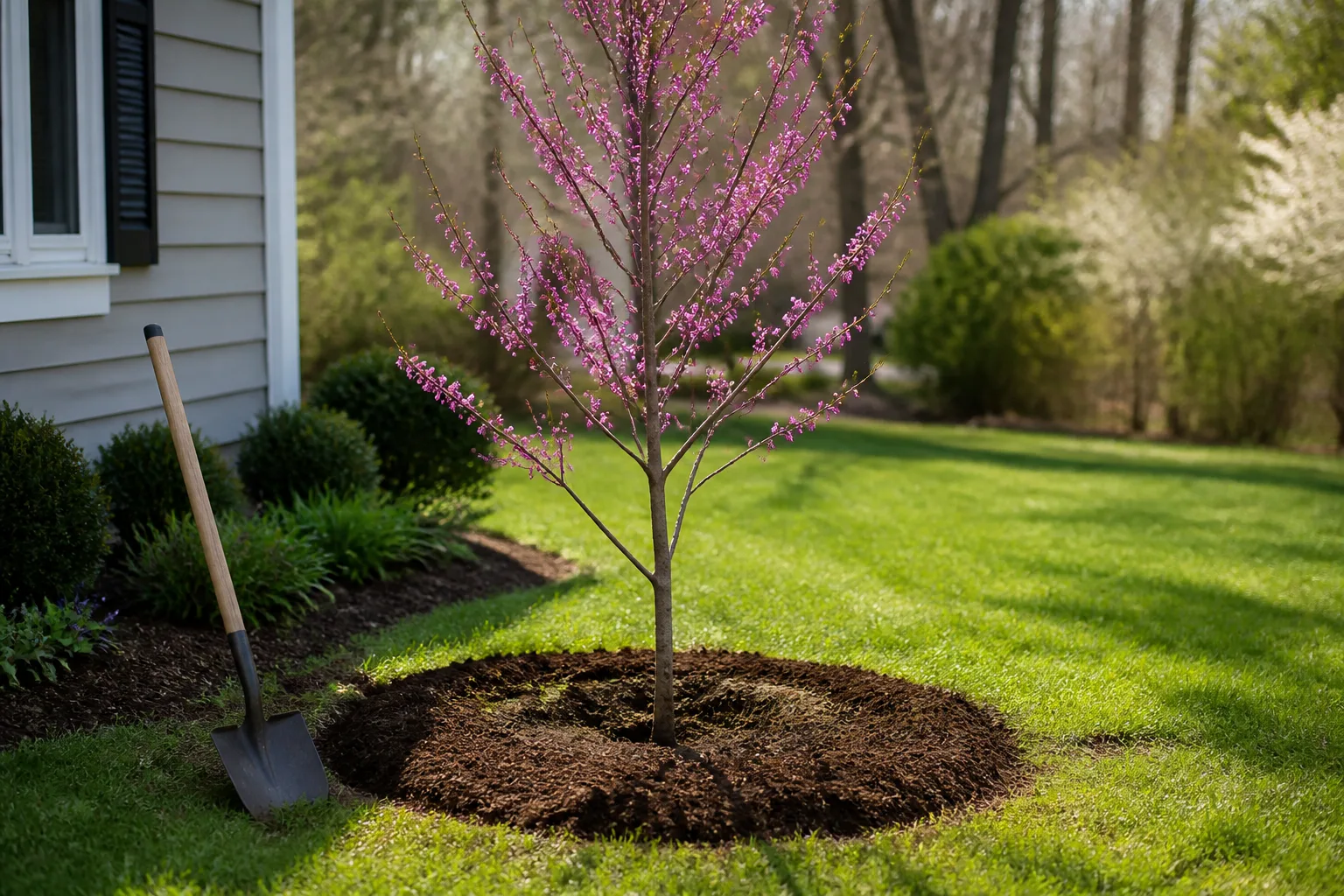
Dig a hole two to three times as wide as the root ball but no deeper than its height. Find the root flare—the point where the trunk broadens into the first main roots—and set it level with or slightly above the surrounding grade. If the plant has a visible graft union, keep that union above soil; burying the trunk or graft can invite decay and allow the rootstock to take over.
Remove the pot or burlap, loosen circling roots, and set the tree upright without pulling it by the trunk. Backfill with the soil you removed, firming gently to close large air pockets; don’t pack it hard or create a rich, isolated pocket of peat that drains differently from the surrounding ground. Water slowly to settle the soil, then spread 2 to 3 inches of mulch over the root zone while keeping it several inches away from the trunk.
Staking is not a routine requirement. Use a temporary, flexible support only if the root ball shifts in wind or the trunk cannot remain upright, and remove it after the tree is stable; a tight permanent tie can rub the bark and restrict trunk movement. If a nursery has trained the top into a raised umbrella form, preserve that structure rather than tying a different leader into place without a clear reason.
Water for Establishment, Not by the Calendar
During the first growing season, check the root ball and nearby soil several times a week, especially during hot, dry, or windy weather. Water slowly when the upper few inches near the roots feel dry, soaking the root ball and surrounding soil instead of wetting only the surface. The exact interval changes with rain, soil texture, temperature, wind, and whether the tree was planted in spring or fall, so a fixed “every Tuesday” schedule is less reliable than a moisture check.
Check both the original root ball and the soil outside it. A container mix can dry faster than surrounding clay, while a heavy soil can look dry on top but remain wet below; watering from appearance alone can lead to either drought stress or waterlogging. If water pools after irrigation, stop and reassess drainage rather than giving the tree another dose.
Keep checking through the second and, in dry climates, sometimes the third growing season. As roots extend, the tree becomes less dependent on frequent attention, but it can still suffer in a prolonged summer drought. Deep, occasional irrigation during dry spells is more useful than frequent shallow sprinkling, which may leave the deeper root zone dry.
Do You Need to Fertilize or Mulch?
Do not apply a general-purpose fertilizer automatically before spring bloom. A healthy redbud in ordinary garden soil usually needs no special feeding, and fertilizer cannot correct shade, poor drainage, drought, root damage, or cold-injured buds. If growth is weak year after year, first review water, light, planting depth, and root competition; use a soil test before adding nutrients.
A light layer of compost over the root zone can improve surface soil over time, but keep it away from the trunk and do not bury the root flare. Maintain a 2- to 3-inch mulch ring that extends outward as the canopy grows, leaving a visible gap around the bark. This buffers soil moisture and temperature without turning the trunk into a damp, buried stem.
Avoid piling mulch into a “volcano.” Deep mulch against the bark can keep the trunk wet, hide rootstock sprouts, and encourage roots to grow in the mulch layer. Replenish only when the layer thins; more is not better.
What to Expect Through the Seasons
In early spring, small rosy-pink, purple-pink, or lavender flowers appear on bare branches before the heart-shaped leaves. Bloom timing depends on local weather and cultivar, so a tree can flower in March in a warm area and weeks later in a colder one. The display usually lasts a few weeks, not a fixed calendar month, and a late frost can shorten it.
After bloom, the leaves fill in and provide the main summer canopy. In autumn they turn yellow before dropping, while the tree’s zigzagging and contorted branches become easier to see in winter. Flat seed pods may follow the flowers and persist into colder months; remove them only if you dislike the look or want to reduce litter, not because the tree needs deadheading.
Choosing a Weeping Redbud Cultivar
Read the plant label carefully because “weeping redbud” can describe several cultivars. Lavender Twist® (‘Covey’) is the classic green-leaved form with lavender-pink flowers and twisting, pendulous limbs. Published mature-size estimates vary, so compare the tag’s height and width, then ask whether the tree was grafted high or trained to a particular trunk height.
Ruby Falls combines a weeping habit with dark burgundy or purple foliage. Golden Falls® is a yellow-leaved cascading selection.
The leaf color may change in summer as conditions shift, so choose these for their overall habit and seasonal interest rather than expecting leaves to hold one saturated color from spring through fall. NC State Extension’s cultivar list distinguishes these weeping forms from upright redbuds with other foliage or flower traits (NC State Extension).
At the nursery, look for a sound trunk, a visible root flare, and a canopy with several well-spaced limbs rather than one large fork with included bark. Ask the seller for the cultivar name, expected mature spread, hardiness range, and whether it is grafted. A label that says only “redbud” does not confirm the weeping habit you want.
Prune to Preserve Structure and Flowers
Prune lightly and with a goal. A young weeping tree may need a few cuts to remove dead, broken, crossing, or badly placed branches; a mature one usually needs only occasional cleanup and clearance. Gardeners Path’s cultivar guide also emphasizes early training for growers who want a raised umbrella canopy, followed by selective removal of dead or crowded growth once the form is established (Gardeners Path).
Redbud branches can be brittle, and a weak fork can split as its limbs gain weight, so selective early correction is safer than trying to reshape a crowded canopy in one season.
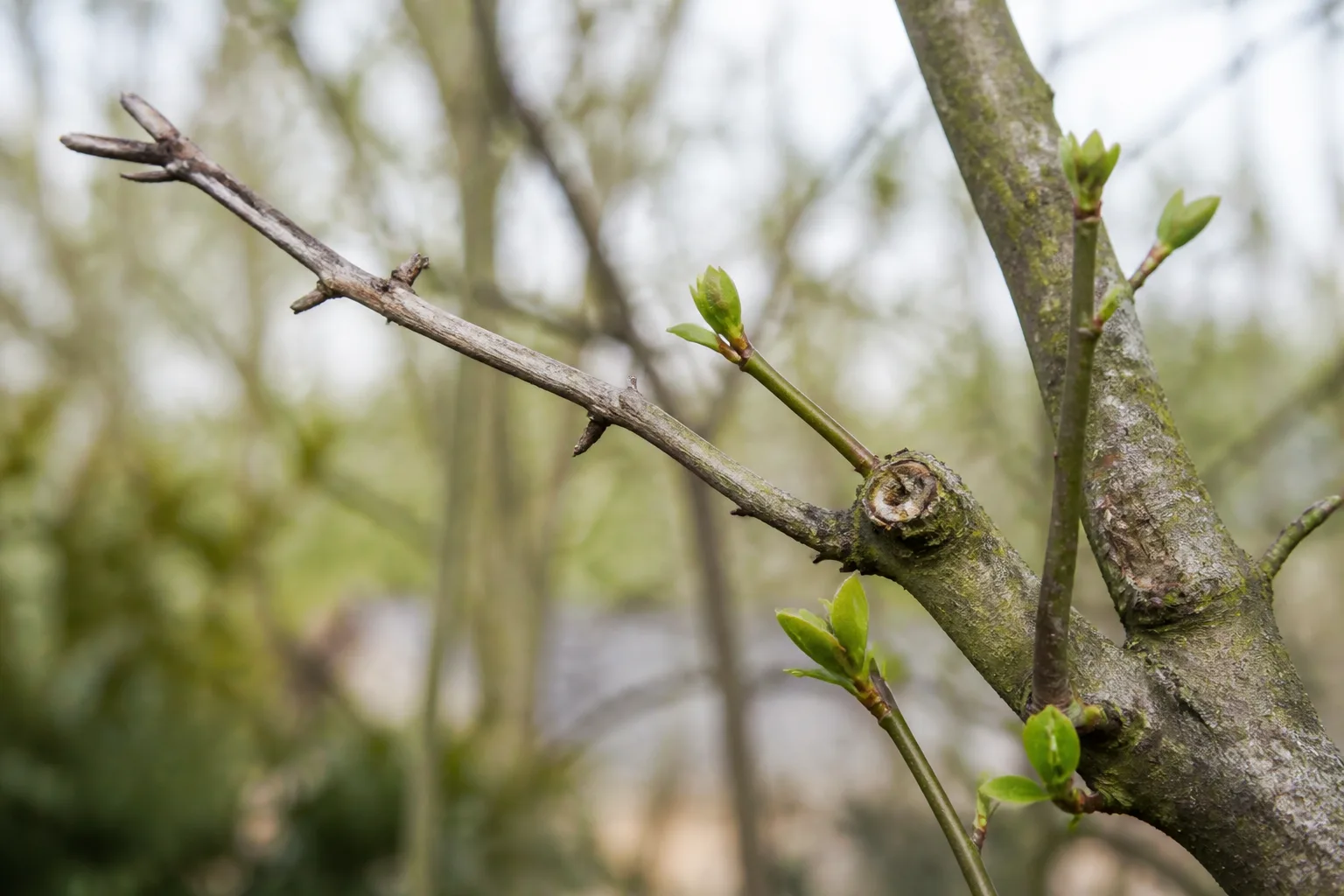
For routine shaping, wait until the flowers fade so you can see the tree’s framework and avoid cutting off the spring show before it opens. Remove a branch just outside its branch collar—the slight swelling where it joins a larger limb—rather than cutting flush to the trunk or leaving a long stub. If a branch is heavy enough to tear bark as it falls, use the three-cut method or have an arborist handle it.
Do not top the tree to make it shorter or thin out every interior branch to create an artificial umbrella. Topping produces weak regrowth and removes the cascading outline; excessive thinning can expose branches to sun and wind while doing little to improve health. If a large limb is cracked, attached at a tight V-shaped union, or growing over a roof, stop before making a major cut and consult a certified arborist.
Train a Young Tree Only If You Want a Taller Crown
A weeping cultivar can be allowed to retain a low, twisted silhouette or be trained toward a higher trunk and more umbrella-like canopy. That is a design choice, not a care requirement. Some nursery-grown trees have already been trained, while a young untrained plant may have a contorted top that will remain closer to the ground.
Decide before planting because training a young tree means selecting a dominant upright shoot and supporting it loosely while it lengthens. Remove competing shoots gradually rather than stripping the plant, and reassess after each season; if the desired trunk height would require severe cuts, choose a taller-trained specimen instead. A stake is for temporary support, not a permanent brace that forces the tree against its natural growth.
Watch for shoots emerging below a graft union. Those shoots are rootstock growth, not a new branch of the chosen weeping cultivar, and can grow vigorously if left in place. Cut them back at their point of origin with clean pruners; if the union is unclear or the growth is coming from the canopy, confirm the plant’s identity before removing it.
Winter Care and Hardiness
For an established tree in a locally suitable climate, winter care is usually simple: keep the root zone mulched, avoid late-season fertilizer that encourages tender growth, and water during a dry fall before the soil freezes. A newly planted tree is more vulnerable to drying winds and freeze-thaw cycles, so maintain moisture through autumn and protect the root zone with mulch without covering the trunk.
Cultivar hardiness is not identical across all weeping redbuds. The Eastern redbud species is commonly listed for Zones 4 through 9, while cultivar-specific references place Lavender Twist in Zones 5 through 9 and report more twig dieback at the colder edge. A plant may survive a winter yet lose young tips or flower buds; survival and reliable flowering are not the same thing.
In colder areas, choose a locally proven cultivar and site it away from an exposed wind tunnel. Do not wrap the whole crown or build a tight enclosure unless a specific local risk calls for it; trapped moisture and rubbing can create new damage. For a patio container, winter roots are less insulated than roots in the ground, so use a large frost-resistant pot and protect the container during hard freezes.
Problems: Diagnose Before Treating
When a redbud looks stressed, start with the pattern and the soil rather than reaching for fertilizer or pesticide. Ask when symptoms began, whether they affect one branch or the whole canopy, how recently the tree was planted, and whether the root zone is dry, saturated, or compacted. NC State Extension lists canker, dieback, leaf spots, wilt, mildew, and several insect groups among potential problems, but the same leaf symptom can also follow heat, drought, or root stress (NC State Extension).
Do not diagnose a disease from one brown leaf. Check the trunk and branch unions, inspect the root zone without digging into major roots, and compare affected and unaffected branches. If symptoms are progressing, involve a local Extension office or certified arborist before applying a treatment that may not match the cause.
Summer leaf drop or browning
Leaves dropping in late fall are normal; leaves that yellow or fall during summer point to stress. Dry soil, heat, wind, recent root disturbance, and saturated roots can all produce wilt or browning, so “brown leaves” alone do not tell you whether to add or reduce water. Feel the soil a few inches down beside the root ball and again just outside it, then water only if the root zone is dry.
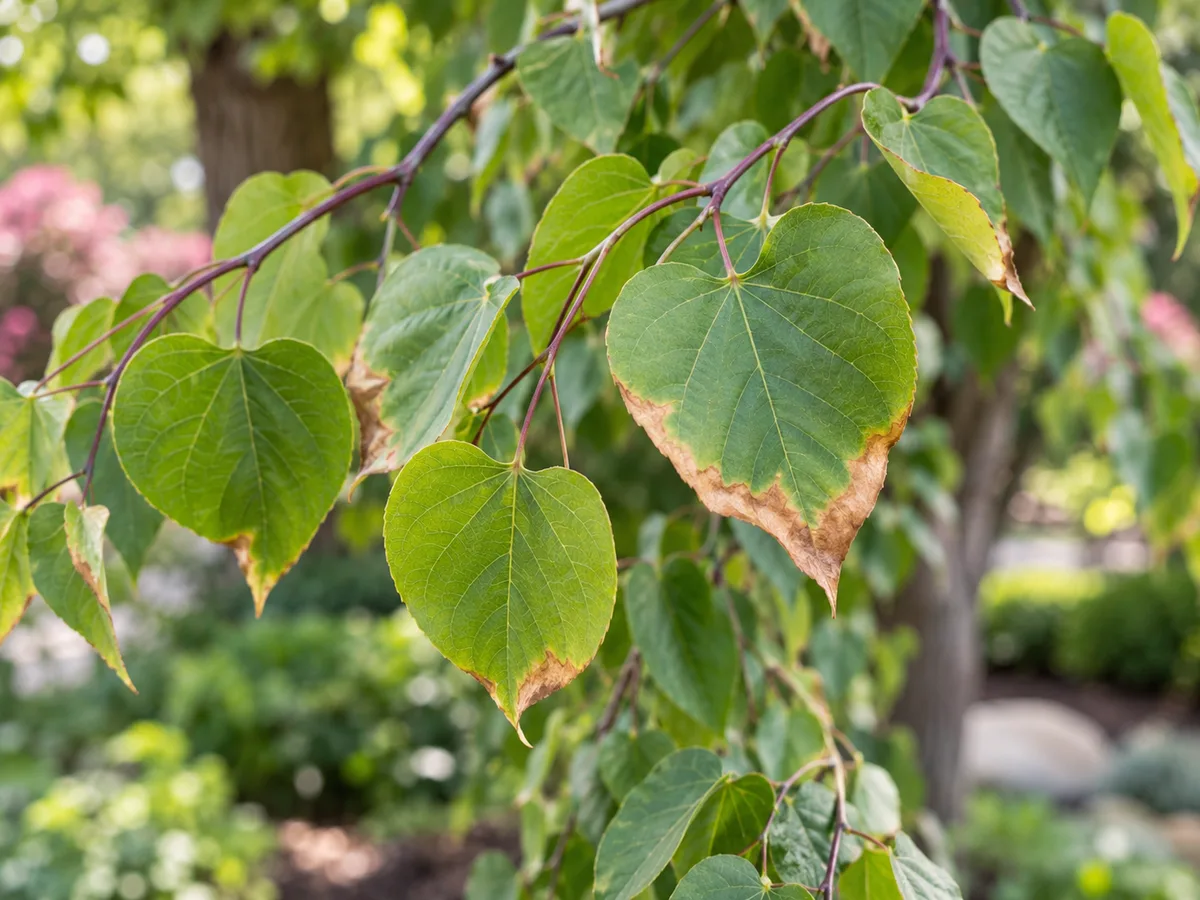
Brown leaf edges can follow heat or water stress; check soil moisture before changing irrigation.
If the soil is wet, stop irrigation and check where excess water is coming from. A newly planted tree in heavy clay may be sitting in a wet pocket, while a root ball in sandy soil can dry quickly even after nearby rainfall. Correct the condition you find—adjust watering, redirect runoff, or improve drainage across the site—rather than changing several variables at once.
If leaf scorch appears mainly on the hot, exposed side during a heat wave, reduce reflected heat and maintain even moisture. Don’t expect affected leaves to turn green again; look for healthy buds and new growth after the weather improves. Persistent decline or dieback from the tips inward deserves a closer inspection for canker, root problems, or a failed graft.
Dieback, canker, or broken branches
A dead tip after a hard winter may be limited cold injury, especially near the cultivar’s hardiness edge. Wait until spring growth makes the boundary clear, then prune dead wood back to live tissue and a sound branch union. A scratch under the bark can help distinguish green living tissue from dry dead wood, but make a small check rather than stripping bark from the trunk.
Canker can appear as a sunken or discolored area of bark followed by branch dieback. Remove a small affected branch during dry weather by cutting back to a healthy union, and clean tools between suspect cuts; a canker on the trunk or a major scaffold limb needs professional diagnosis. Do not paint over a wound or apply a broad pesticide without identifying the problem.
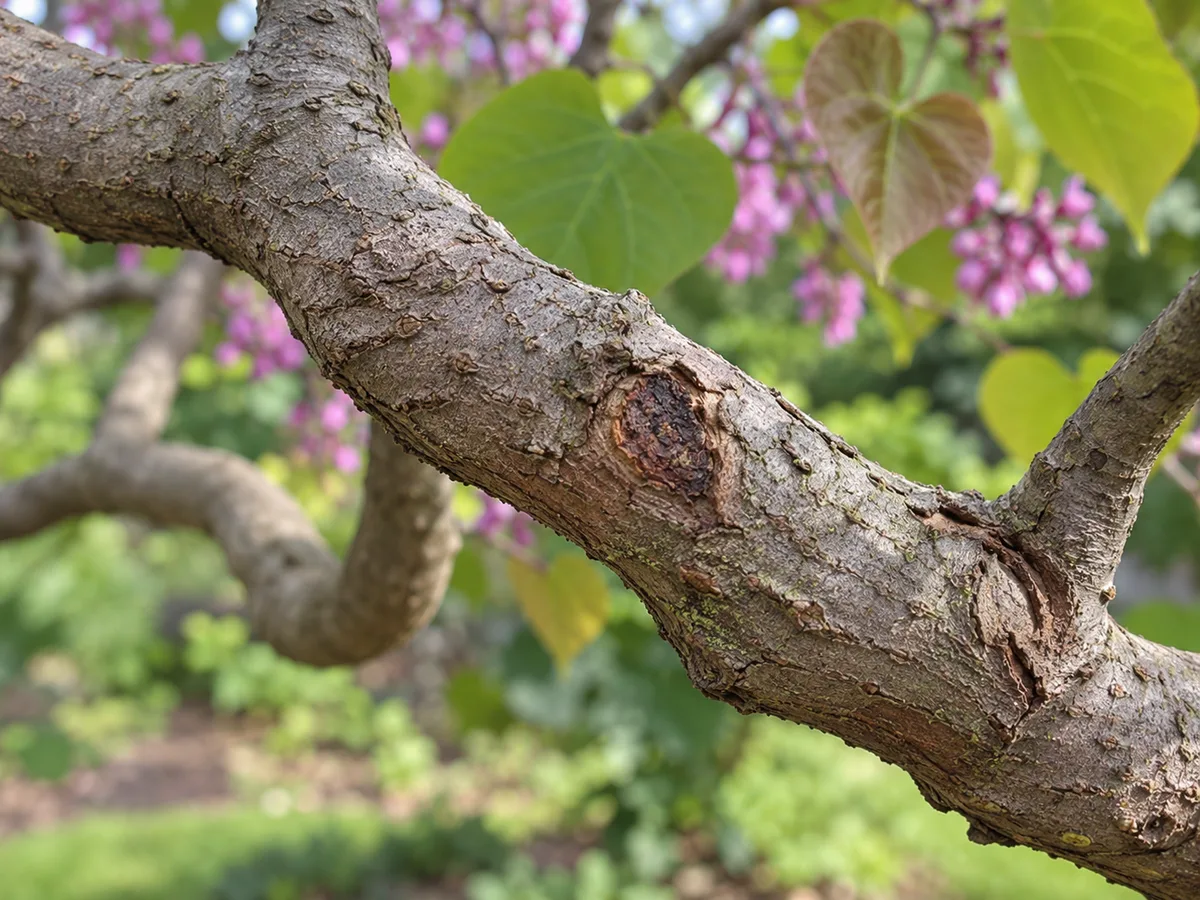
A bark lesion is a sign to investigate, not a diagnosis from a photo alone.
If a limb has split, hangs over people, or has a crack extending into the trunk, keep clear of the area and call an arborist. Redbud’s small stature does not make a failing branch harmless, and a large corrective cut can destabilize the whole canopy. Preventive pruning should focus on obvious weak attachments while they are small enough to remove cleanly.
Can You Propagate a Weeping Redbud?
You can grow an Eastern redbud from seed, but a seed-grown plant will not reliably reproduce the cultivar’s weeping habit, flower color, or foliage. Cultivars such as ‘Covey’ are maintained through vegetative propagation; the UConn Plant Database notes that redbud cultivars are bud grafted or micropropagated. For a true Lavender Twist, buy a correctly labeled nursery plant rather than gambling on a seedling (UConn Plant Database).
If you want a species redbud for a naturalized area, seed can be a rewarding but slower project. The hard seed coat and dormancy mean germination is less predictable than sowing a soft vegetable seed; use a propagation method recommended by a regional Extension or native-plant nursery for your climate. Keep seedlings protected from drying and transplant them while small, since mature redbuds resent root disturbance.
Cuttings can also be challenging and may not root true to the named cultivar without appropriate nursery techniques. Propagation is most worthwhile when you want a species-level seedling or enjoy the experiment; for a particular cascading form, buy a named cultivar and concentrate on getting its permanent site right.
Conclusion
A weeping redbud thrives when its cultivar, climate, and site agree. Identify the plant before buying, give its spreading branches room, and choose well-drained soil with enough sun for flowers but some relief from punishing afternoon heat in hot regions.
Plant with the root flare visible, water by checking the root zone, mulch without burying the trunk, and skip automatic fertilizer. After the flowers fade, prune only what improves safety or structure; then watch for moisture stress, canker, or a split before treating symptoms. Those few decisions protect both the tree’s health and the cascading form that made it worth planting.