How to Use Strawberry Runners to Grow More Strawberries
Learn when to root strawberry runners, how to pin them into soil or pots, and when to separate daughter plants for a healthier, more productive bed over time.
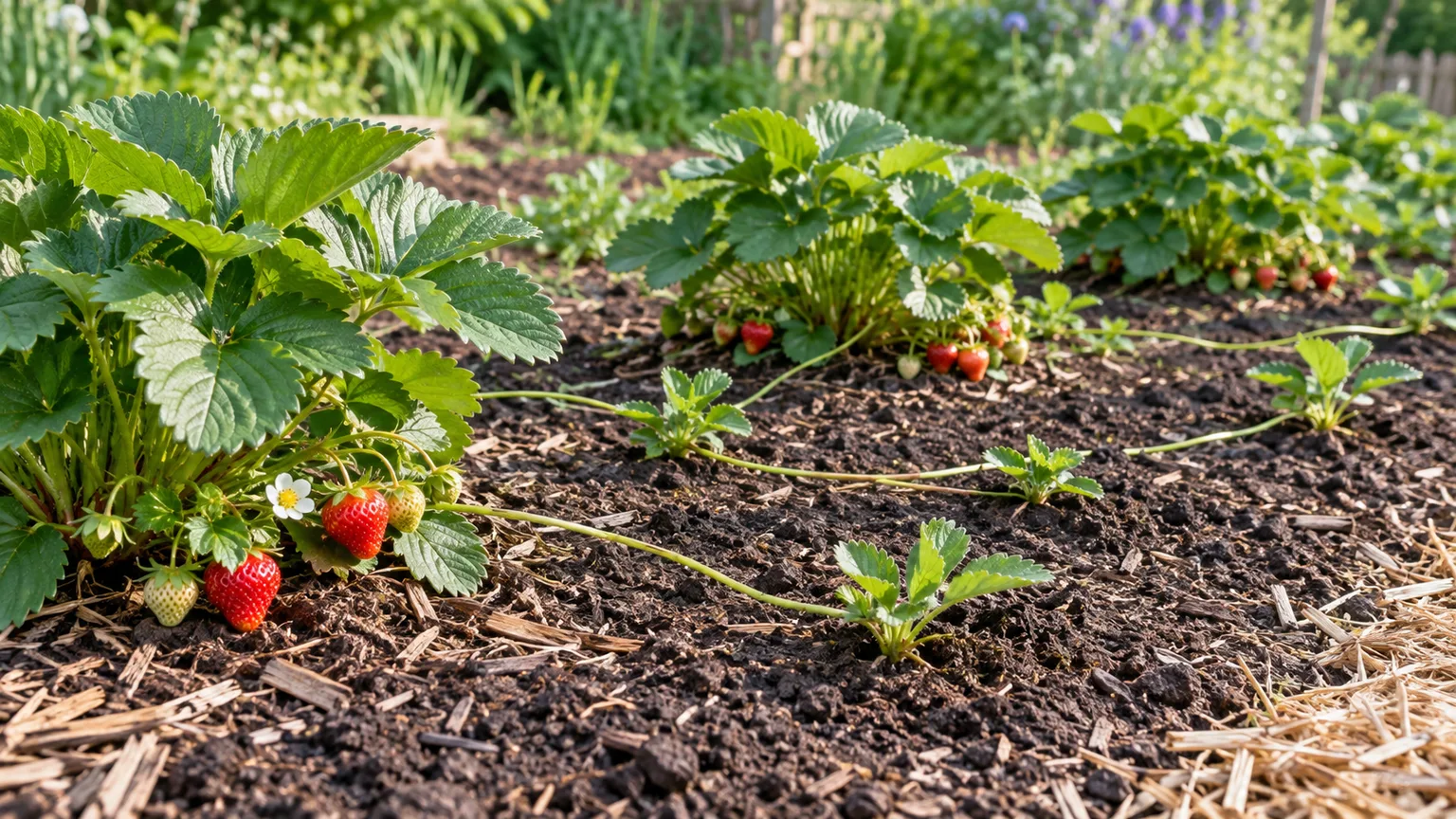
To grow a new strawberry plant from a runner, let a healthy daughter plant root while it is still attached to its mother. Guide the runner to an open spot in a bed or pin the daughter plant into a small pot of moist, free-draining mix; once it has its own roots and holds firmly, cut the connecting stem and transplant it. Root first, sever second is the simple rule that prevents a tiny, unrooted plantlet from drying out.
You do not have to save every runner. Keep the ones that fill a planned gap or replace an aging plant, and remove the rest before they tangle through the bed. The right choice depends on your strawberry type, how much room you have, and whether you want this season’s fruit or next season’s new plants.
What a strawberry runner can—and cannot—do for you
A strawberry runner, also called a stolon, is a slender horizontal stem that grows from the crown or a leaf base and travels over the soil. At a node along that stem, a small rosette of leaves can develop; when the node contacts suitable soil, it forms roots and becomes a daughter plant. The mother remains connected to the young plant through the runner until you cut it or the stem dies back.
That connection is useful: it lets you place the young plant where you want it before asking it to live on its own. It is not a guarantee that every node will root, however. A runner can remain suspended above bare soil, land on dry mulch, or put out several weak plantlets if the mother is stressed. A little guidance at the right time makes the difference between a useful new plant and a tangled stem that never establishes.
How a runner forms a daughter plant
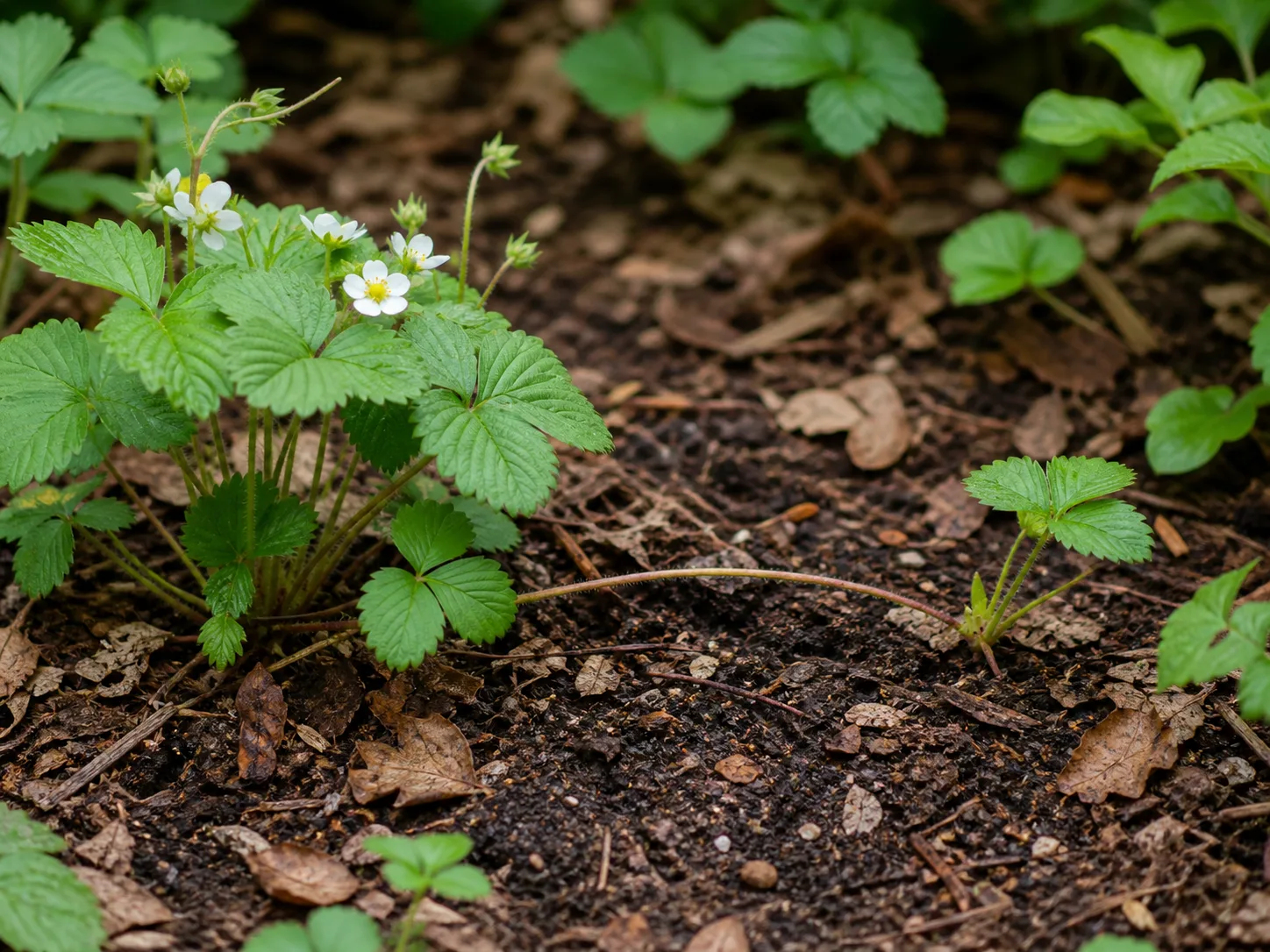
The little leaf cluster at a runner node is the future plant; it is not a seedling and it will not need to germinate. As roots emerge from the underside of the node, the daughter’s crown—the compact point where roots and leaves meet—begins to support its own growth. Once a young plant is rooted, it can survive after the runner is severed.
Runners usually emerge during active growth, often after the main crop, but temperature, day length, cultivar, and growing conditions all influence when and how many appear. University of Delaware Extension describes runner tips as daughter plants and notes that some cultivars produce far more tips than others. In a commercial plug operation, growers look for root initials and at least two trifoliate leaves before removing a tip; for a home garden, treat those as useful maturity cues rather than a rigid checklist. (University of Delaware Extension’s runner-tip guidance)
Why runners differ between strawberry types
June-bearing, or summer-fruiting, strawberries tend to make more runners than day-neutral or perpetual types. That does not mean every June-bearing cultivar is a prolific runner or that every day-neutral plant produces none. The Royal Horticultural Society’s strawberry guide notes that perpetual varieties are less likely to make runners, and alpine strawberries vary too: some spread by runners while others do not.
The distinction matters when you plan propagation. A vigorous June-bearing plant may send out more daughter plants than a small bed can support, while a day-neutral variety may give you only a few. If your named cultivar produces few runners, that is usually a cultivar trait—not proof that the plant is sick. Check the plant label or variety description before you decide how many new plants to expect.
Decide whether to root, transplant, or remove each runner
First decide what you want the bed to look like next year. There are three practical choices: let selected runners root in the existing row, guide them into pots so you can move them, or cut them off to keep the mother plant compact. The best method is the one that puts a healthy daughter plant where it has room, light, drainage, and access for watering.
| Your goal | Best approach | Main trade-off |
|---|---|---|
| Fill gaps in a June-bearing bed | Root a limited number in the row | Easy, but the bed can spread beyond its planned width |
| Start plants for a new bed or container | Pin daughters into pots while attached | More control, but pots need steady moisture |
| Keep a compact planting or protect fruit production | Remove runners promptly | Less propagation, but fewer plants compete for space |
Keep selected runners in a matted row
If you grow June-bearing strawberries in a traditional matted row, the runners can root in the row and gradually fill the space between mother plants. That system works best when you set a boundary: allow the strongest daughters to fill the intended row, then remove the ones that cross paths, grow into walkways, or crowd the plants you plan to keep. A row that becomes a dense carpet is hard to weed, inspect, and harvest.
UConn’s Home & Garden Education Center describes both a matted-row approach, where runners root within a defined row, and a more controlled system that keeps only the first or second daughter plants. Its guidance also treats June-bearing and day-neutral plants differently: day-neutral plants generally make fewer runners, and their new daughters may be removed or replanted elsewhere. Use those systems as models, then follow the growth habit of your cultivar and the space available in your own bed. (UConn Home & Garden Education Center on strawberry renovation)
Root runners in pots when placement matters
A small pot is the neatest option when the runner is reaching over a path, a container edge, or into an area where you do not want a strawberry bed. Set a pot with drainage holes beside the mother plant, fill it with fresh potting mix, and guide one daughter plant onto the surface. Pin the node down with a U-shaped piece of wire or a bent paper clip so the crown touches the mix without being buried.
Keep the pot close enough that the runner is not stretched tight or bent sharply. Check the mix more often than the garden soil because a small container can dry quickly, especially in sun or wind. Once the daughter plant has formed its own roots, you can cut the runner and move the pot without digging up the mother. The RHS recommends this pot-and-pin method for late-summer strawberry propagation; Gardening Know How also describes rooting the plantlet in a pot before severing it.
Remove runners to prioritize a compact fruiting bed
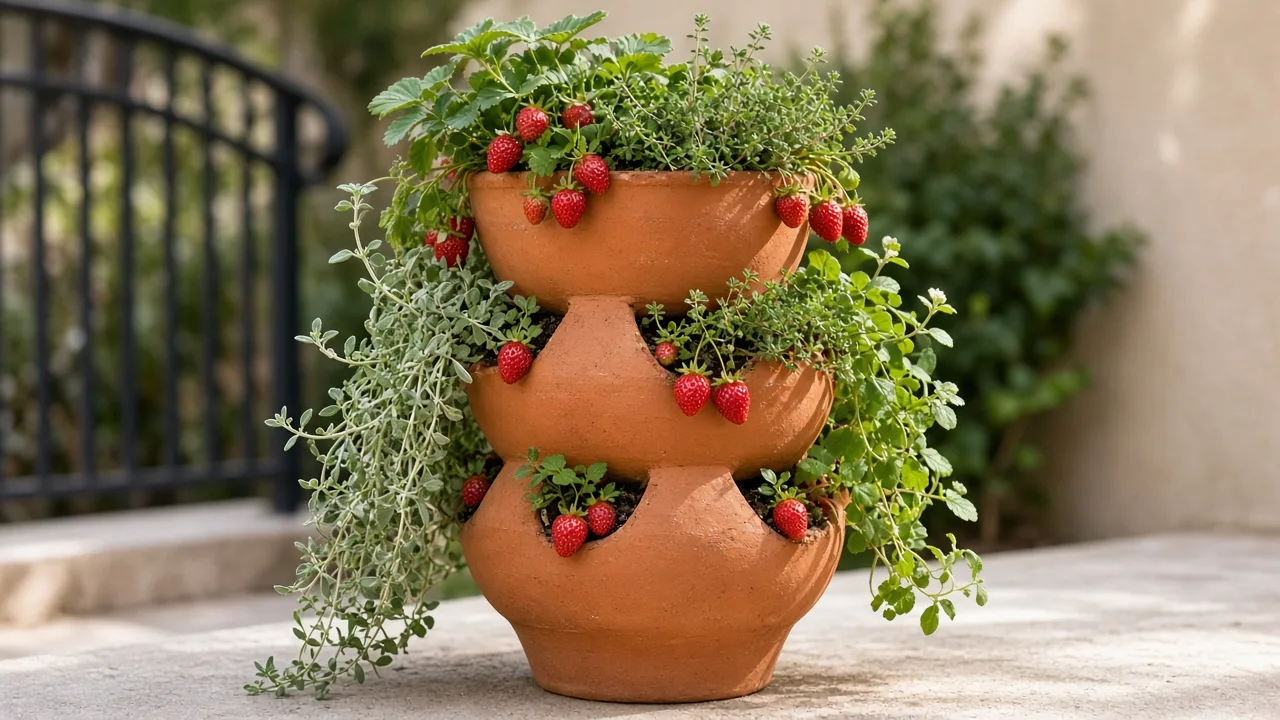
Remove runners if you want to keep plants in their current positions, prevent a container from becoming crowded, or reduce the number of new crowns competing for water and growing space. This is especially useful for day-neutral varieties grown as individual plants rather than as a spreading row. Snip the runner stem cleanly with hand pruners; avoid pulling, which can loosen the mother plant or tear at the crown.
A simple starting rule for a home bed is to retain one or two strong daughters from a healthy mother when you need replacements, then remove the surplus. That is not a universal yield formula; it is a manageable way to avoid a patch in which every plant is competing with every other plant. If you are trying to maximize the current crop or maintain a small container, remove runners as they appear rather than waiting until they have woven through neighboring plants.
Choose vigorous daughter plants from healthy parents
Start with the mother plant, not just the runner. Choose a strawberry that has grown well, has healthy leaves and a firm crown, and has produced the fruit quality you want to keep. A runner is a vegetative copy of its parent, so a weak or diseased mother can pass the same problems into the new planting. The RHS advises buying from a reputable supplier for true-to-type, disease-free plants; UConn likewise recommends replacing older beds with disease-free stock. Epic Gardening’s reviewed propagation guide also makes the parent plant’s condition the first selection check, a useful reminder that propagation multiplies the source plant’s strengths and weaknesses alike.
Among the daughters, prefer a plantlet with several healthy leaves, a compact crown, and pale root bumps or visible roots underneath. If the first daughter is robust and the later ones are small, keep the first. If it is damaged but the second is thriving, choose the healthier plant instead; position on the runner is a useful clue, not a substitute for looking at the actual plant.
Do not propagate from a mother that is repeatedly weak, has suspicious leaf mottling or distortion, or produces poor fruit year after year. Home gardeners cannot diagnose every virus or soil-borne disease by sight, so when a bed has a persistent serious problem, replace it with clean stock rather than multiplying it. Also check cultivar rights before producing plants for sale or commercial distribution: some strawberry varieties are protected and require permission to propagate, as University of Delaware Extension explains.
Time propagation to weather and your crop calendar
Think in terms of establishment time, not a calendar date. A runner plant needs enough mild growing weather to form roots and settle in before severe heat, drought, or hard freezes make establishment difficult. In many cool-temperate gardens, late summer into early fall is a useful window because the first crop is over and the soil is still warm; this is why horticulture guides often recommend rooting runners then.
Why late summer often works
Late summer gives a daughter plant time to root before winter dormancy in regions with cold winters. If it stays attached while rooting, the mother continues to support it; after the roots hold, the daughter can be separated and planted in a prepared bed. Do not wait until the ground is frozen or waterlogged, but do not rush to transplant a barely rooted plant just because the calendar says fall.
The season is also a chance to plan next year’s patch. Keep only as many daughters as you can plant at the spacing and bed width you can maintain. The RHS notes late summer as an ideal time to propagate runners, while UConn’s advice places bed renovation for June-bearing strawberries after harvest, generally in midsummer. These are related but not identical jobs: renovation reshapes an existing bed; runner propagation creates or relocates young plants.
When spring or a warmer-climate schedule makes more sense
Spring can be a better choice if a runner appears late, the young plant has not rooted enough to survive winter, or your area has mild winters and a cooler spring planting window. In a warm region, avoid lifting and transplanting a tiny runner during the hottest, driest stretch; root it in place or in a pot first, then move it when temperatures ease and you can keep the root zone evenly moist. Local extension guidance is more useful than applying a month from another climate.
Do not treat June, September, or any single named month as a universal transplant date. Strawberry varieties fruit and runner at different times, and southern-hemisphere calendars reverse the seasons. The practical test is whether the daughter has established roots and whether the weather ahead gives it time to settle without heat stress or frozen soil.
Root a runner before you detach it
Rooting in place first is the most forgiving way to propagate strawberries. The daughter plant remains attached to its mother until it can absorb water through its own roots, so you avoid the main failure of runner propagation: separating a leaf rosette that has little or no root system.
Pin a daughter plant into garden soil
Prepare the receiving spot before you guide the runner. Choose a sunny location with soil that drains well, loosen the surface, and water it if it is very dry. Move the runner gently so the daughter sits flat on the soil; use a small U-shaped wire or a hairpin to hold the stem just behind the crown. The crown and leaves should stay above the surface, while the root-forming base touches moist soil.
Leave the runner attached, and check the spot every few days. If the daughter lifts when the soil dries or the runner pulls it back, reposition the pin and restore soil contact. Water the rooting area when the surrounding soil begins to dry; constantly wet soil is not a shortcut and can deprive roots of air.
When new roots are visible or the daughter resists a gentle nudge, the connection can be severed. If you are growing a matted row, there may be no reason to dig it up at all; simply remove extra runners and leave the chosen daughter growing in place. For a new bed, wait until the root system holds soil before lifting the plant.
Root a daughter plant in a small pot
Use a clean pot with drainage holes, roughly 3 to 4 inches wide for one small daughter plant. Fill it with a fresh, light potting mix and moisten the mix before placing it beside the mother. The mix should feel evenly damp, not muddy; waterlogged roots are less likely to establish well than roots in a moist, aerated medium.
Set the daughter plant on the surface with its crown at soil level, then pin the node so the roots can grow into the pot. Do not cover the crown with mix or bury the leaves. If the node is very small or has no roots yet, keep it attached and give it more time instead of cutting and trying to root it in water.
Place the pot where it gets the same bright outdoor conditions as the mother but will not bake dry. Check moisture with a fingertip and water when the surface starts to lose its damp feel. A pot in hot afternoon sun or under a roof edge may need checking daily; a shaded pot in cool weather may stay moist much longer. The plant’s condition, not a fixed “every other day” schedule, should guide watering.
After roots form, clip the runner between the daughter and the mother with clean pruners. Let the newly independent plant remain in its pot until it is growing steadily, then transplant it or hold it there temporarily. Do not leave the pot connected through a tight, kinked runner; the connection should be loose and undamaged while the plant roots.
Separate and transplant the rooted runner
Choose a cool, cloudy part of the day or work in the morning so the roots do not sit exposed in drying sun. Water the daughter plant beforehand if its soil is dry. If it is rooted in the garden, use a narrow trowel to lift around the root zone rather than pulling on the leaves or runner; preserve as much of the fine root system as you can.
Prepare the new hole before lifting the plant, so the roots spend as little time exposed as possible. Set the roots downward and spread them naturally instead of bending them into a tight J shape. Backfill, firm the soil gently, and water the root zone to settle soil around the roots. The crown should sit at the soil surface: covering it can encourage rot, while leaving roots exposed lets them dry.
Space each new plant according to the growing system and cultivar rather than packing every runner into the bed. If you are renewing an existing row, use the row spacing recommended by your local extension service; UConn’s strawberry-renovation guidance, for example, thins established plants to open space and airflow, not to create a solid carpet. Leave room to weed, pick berries, and inspect leaves after rain.
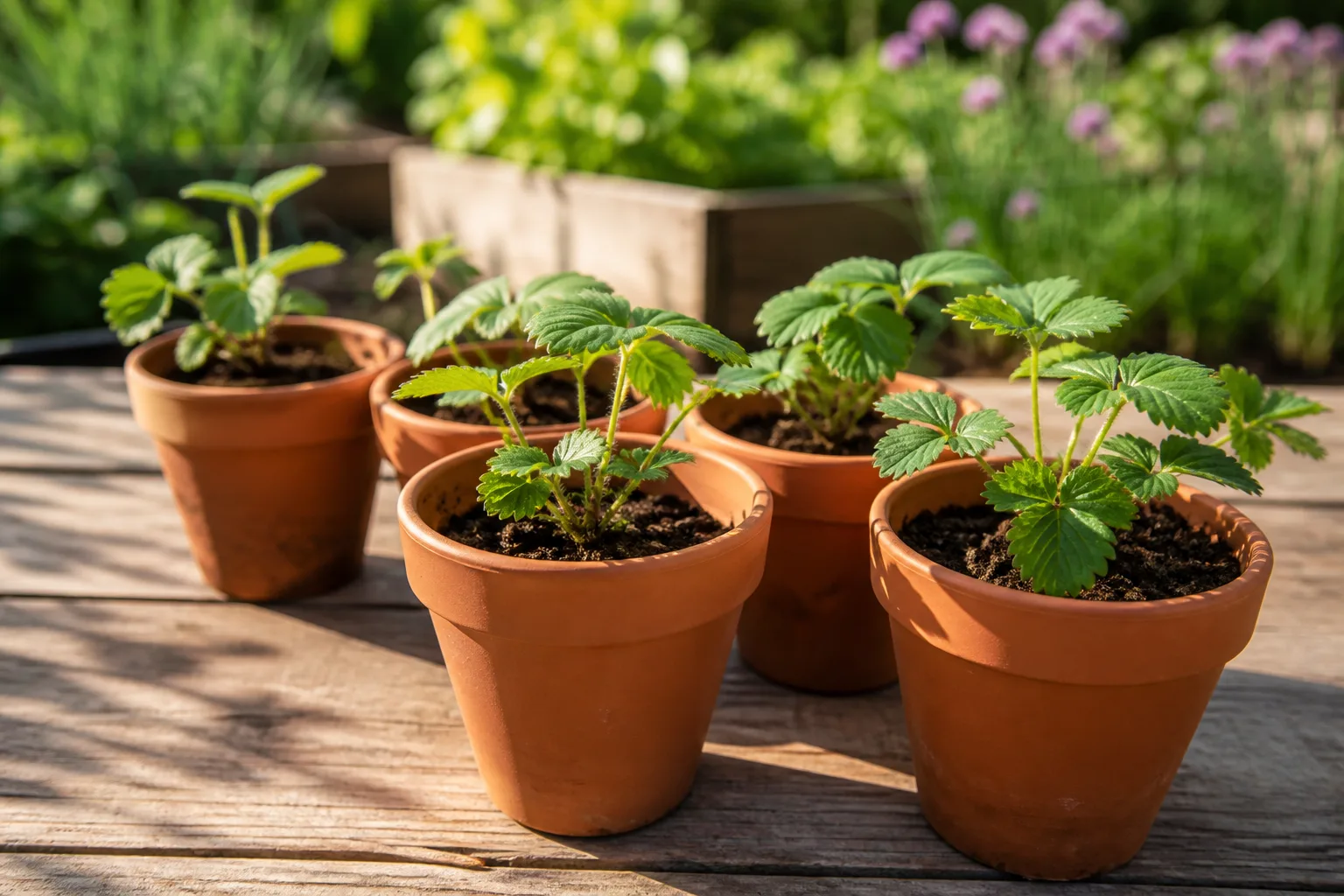
If roots are sparse, leave the daughter attached longer or pot it up before moving it to the bed. A rooted daughter that wilts briefly after transplant may be responding to root disturbance, but a plant that stays limp in wet soil may have damaged or oxygen-starved roots. Keep the soil moist while it recovers, not saturated, and provide temporary protection from harsh afternoon sun if the day is hot.
Care for new runner plants through establishment
The first job after transplant is to keep the root zone evenly moist while new roots grow into surrounding soil. Water at the base when the soil begins to dry; the amount and frequency depend on rainfall, soil texture, container size, wind, and temperature. Check containers more often because their limited volume dries faster than a garden bed, especially when roots are still small.
Keep weeds from competing with the young plant, but do not dig deeply near its shallow roots. A light layer of clean straw or other suitable mulch can reduce soil splash and moisture loss, but leave a small gap around the crown so it does not stay buried or damp. The RHS recommends regular watering during establishment and warns against placing mulch over the crown.
Avoid heavy feeding simply because the plant is new. A fresh potting mix may already contain fertilizer, and rich nitrogen can encourage leaves and runners when the priority is balanced establishment. If the bed needs nutrients, follow a soil test or regional strawberry recommendations and the product label rather than guessing at a dose.
In cold-winter areas, a daughter plant rooted in garden soil is generally better buffered than one left in a small exposed pot. Either plant it into its final bed while the soil is workable or protect the container so the root ball does not undergo repeated hard freezing and thawing. In mild climates, the pot can often remain outdoors in a sheltered spot, but drainage still matters; a pot sitting in winter water can damage roots.
Expect the daughter to focus on roots and foliage before it produces a substantial crop. A runner plant established in late summer may fruit the next season, but flowering and yield depend on the cultivar, planting date, and strength of the plant. If it looks small or weak as flower buds appear, prioritize a healthy crown and leaves rather than expecting a full harvest immediately.
Fix common runner-propagation problems
The runner is not rooting. Check whether the daughter actually touches soil. If it is resting on dry mulch, a pot rim, or a hard path, roots have nowhere to grow. Move it to moist mix or loosened soil and pin the base gently; then give it time instead of repeatedly lifting it to inspect.
The leaves wilt soon after separation. The plant may have been cut before it had enough roots, or the fine roots may have dried during lifting. If the runner is still attached, reconnect it to moist soil and let it root longer. If it has already been separated, place it in a small pot of moist mix, keep it out of severe direct heat while it recovers, and do not let the container sit in water.
The daughter has roots but stays tiny. A small plant may need more time, especially if it formed late or the parent plant is competing with several other runners. Remove extra runners nearby, keep moisture steady, and check that the daughter is not shaded by taller foliage. If it remains weak or develops abnormal growth, discard it rather than using it as a replacement.
The crown is buried or the roots are exposed. Reset the plant so roots are covered and the crown is level with the soil surface. A deeply buried crown can stay wet and rot; a crown set too high leaves roots vulnerable to drying. After adjusting, water gently to settle the soil without washing it over the crown.
A pot dries out before roots form. Move it out of strong afternoon heat or wind, use a slightly larger pot, and check the mix more frequently. Do not compensate with a waterlogged saucer; keep the potting mix moist and allow excess water to drain. If the daughter cannot be monitored, root it directly in the bed where the soil holds moisture more evenly.
The bed becomes crowded with runners. Decide how many replacement plants you need, mark those daughters, and snip the rest at the point where the runner leaves the mother or daughter. Remove the extra stems before they root through the row. UConn recommends renewing older June-bearing beds with clean plants and managing daughters by row system; a strawberry patch is easier to maintain when you refresh it deliberately instead of letting every runner stay.
You have few or no runners. Confirm the variety and growing type first, since some cultivars make few runners. A plant that is stressed by heat, drought, poor drainage, or disease may also have limited growth. Correct the growing condition and let the plant recover; if you need more plants immediately, buy a healthy nursery plant rather than dividing a weak crown or forcing a runner that is not there.
Conclusion
Use a strawberry runner as a shortcut to a new plant, but let the daughter root before you disconnect it. Root it in the row if you want a managed matted bed, pin it into a pot if you need control over placement, or remove it if you are keeping a compact fruiting plant. Choose daughters from healthy parents, adapt timing to your local weather and cultivar, and keep the crown at soil level after transplanting. With those checks in place, one good strawberry plant can help renew a bed without turning it into an unmanageable tangle.