How to Grow and Care for Pride of Madeira
Pride of Madeira thrives in a sunny, sheltered spot with sharp drainage. Get practical planting, watering, pruning, propagation, winter, and safety advice.
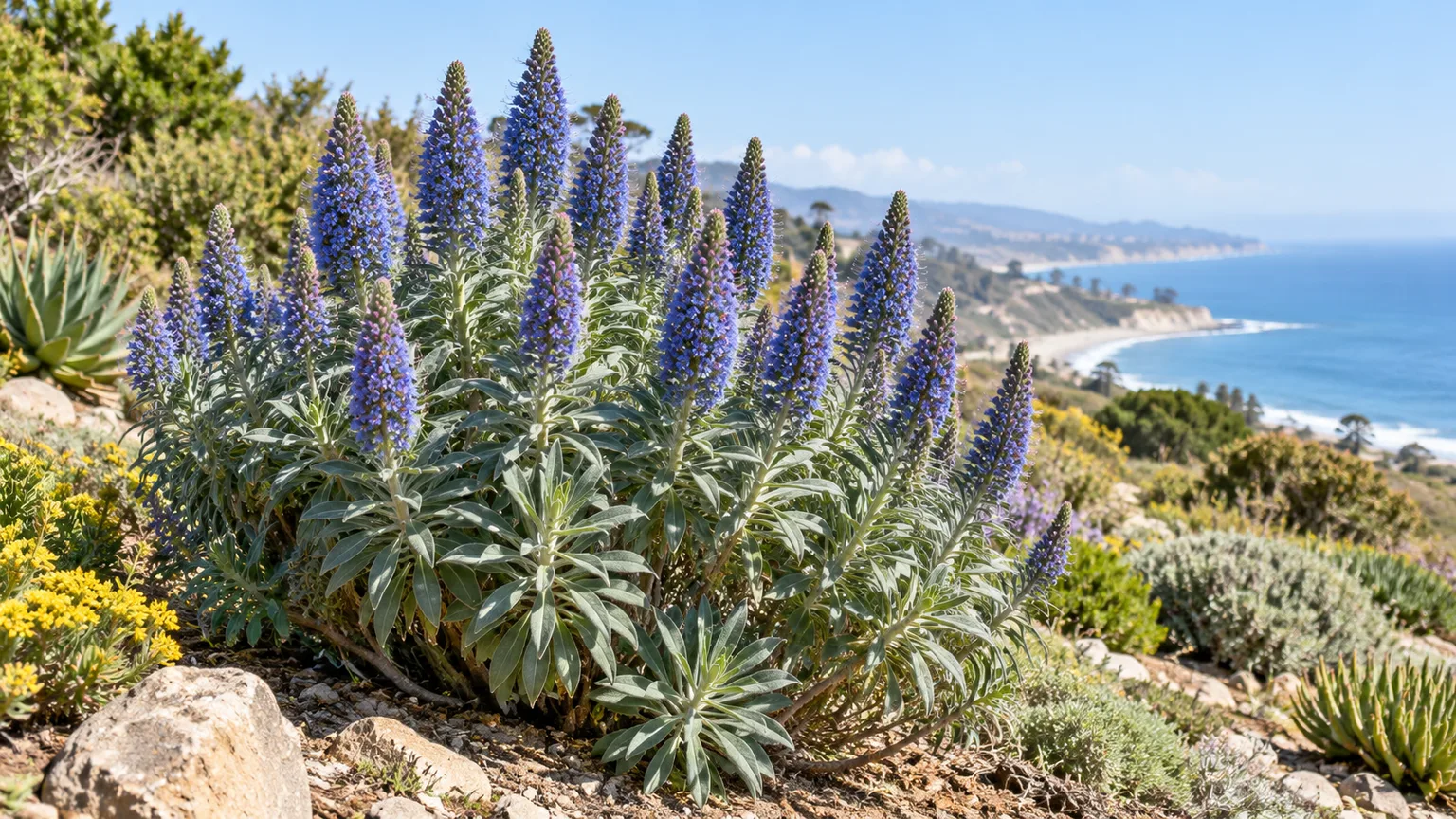
Pride of Madeira (Echium candicans) earns its place in a garden with a dramatic contrast: tall cones of blue or violet flowers above soft-looking, silvery leaves. The plant is less forgiving of the wrong site than its reputation for easy care suggests. Give it sun, room, and soil that sheds excess water—especially in winter—and it can become a striking, low-input shrub in a mild climate.
The most useful care distinction is between a newly planted shrub and an established one. Water a young plant while its roots settle; later, avoid keeping its root zone wet and judge irrigation by the soil and weather, not a fixed weekly schedule. Also plan for its mature spread and for the possibility that it will reseed where local conditions suit it.
Pride of Madeira care at a glance
| Need | Practical starting point |
|---|---|
| Light | Full sun; aim for at least six hours of direct light |
| Soil | Any workable texture if water drains freely; avoid winter-soggy ground |
| Water | Deeply after planting and during establishment; less often once rooted |
| Feeding | Usually none; avoid pushing soft growth with high-nitrogen fertilizer |
| Size | Roughly 5–8 feet tall and often as wide, depending on climate and pruning |
| Flowering | Usually spring into early summer in mild regions; local timing varies |
| Cold | Best suited to mild climates; protect young plants and container roots from frost |
| Habit | Woody, branching subshrub; longevity ranges from short-lived to many years by site |
The Royal Horticultural Society’s plant profile describes a bushy perennial subshrub reaching about 1.5–2.5 meters in both height and spread. Garden references differ on whether to label it a shrub, subshrub, biennial, or short-lived perennial because climate and growing conditions alter how long individual plants persist. Think of it as a substantial woody flowering plant whose lifespan is not guaranteed, rather than a reliably permanent shrub.
Confirm your climate and choose the right site
Pride of Madeira is a good fit for a mild, sunny garden with a dry or well-drained winter. It is commonly listed for USDA zones 9–11, but a zone number cannot capture the full risk: a plant may tolerate a brief cool spell yet fail in a cold, rain-soaked root zone, or survive a light frost in a sheltered coastal pocket that a windy inland site cannot match. If your winters bring repeated hard freezes, treat it as a container specimen you can protect or choose a locally hardier alternative.
Look for the warmest open position you can give it, ideally protected from harsh wind without being shaded by a wall, tree, or roof. Its stems and flower spikes rise above a broad, woody base, so allow several feet of breathing room from paths, windows, neighboring plants, and walls. The RHS guidance recommends a sunny, sheltered position and cautions that cold, wet winter conditions are particularly hard on the plant.
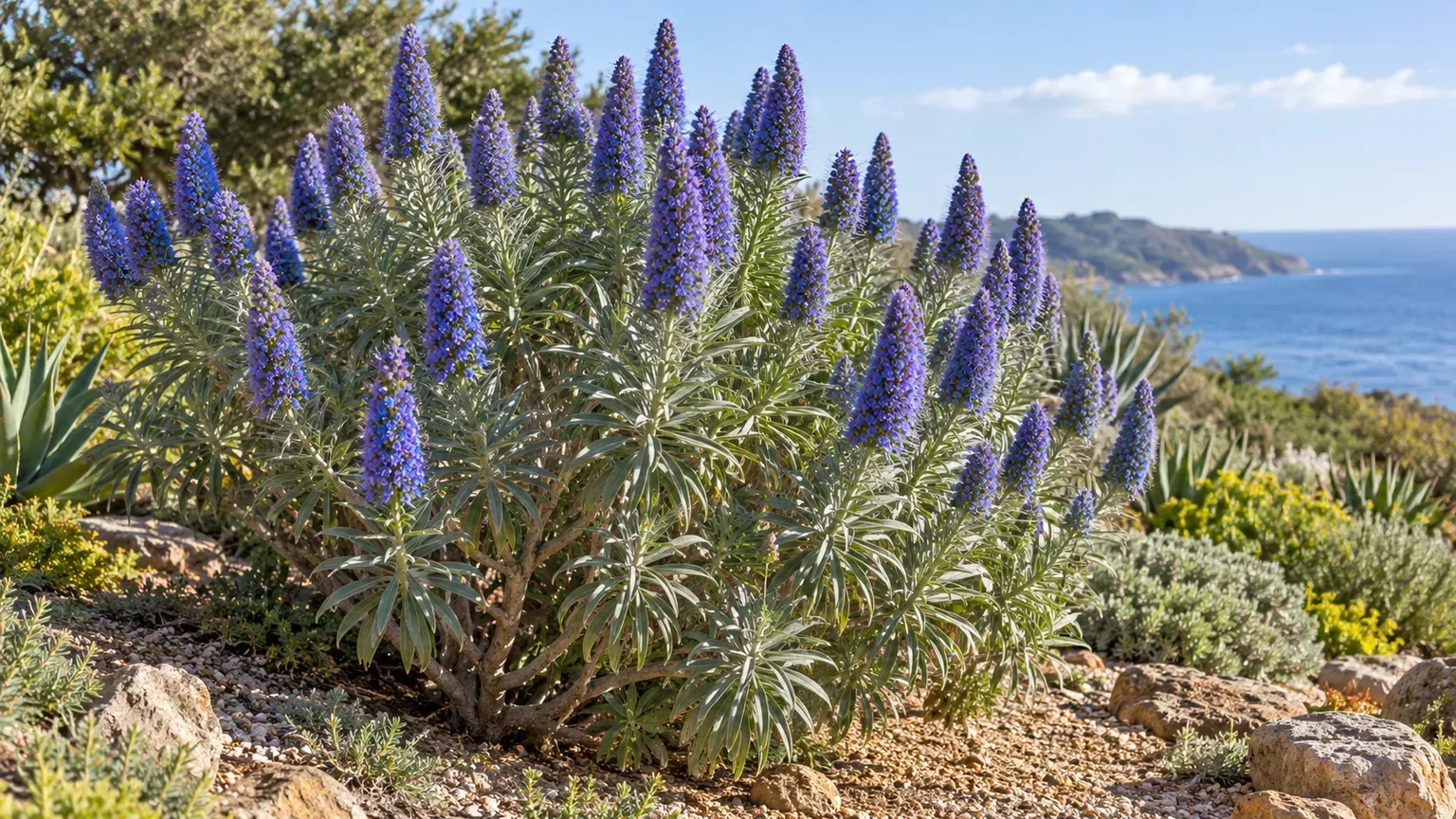
Coastal exposure can suit the plant, but salt tolerance does not mean it enjoys every windy location. Strong gusts can bend or break heavy flowering stems, especially when the shrub is exposed on a hill or planted in shallow soil. A stable slope, gravel garden, or sunny border with a windbreak often works better than an exposed cliff edge or an enclosed corner that stays damp.
Give it full sun and room to mature
Choose a spot with at least six hours of direct sun, with more light generally supporting denser growth and better flowering. The RHS lists full sun as its preferred position; BBC Gardeners’ World notes that echiums can tolerate some shade, but they may stretch or grow unevenly toward the light. In practice, partial shade is a compromise for a plant whose main appeal is its upright bloom display.
Before planting, visualize the shrub at its eventual size rather than judging the small nursery pot. The mature plant can spread as widely as it grows tall, and its branches may lean outward with age. If it will sit beside a walkway, account for the entire canopy so leaves and flower spikes do not crowd the route or brush people as they pass.
Spacing also affects air movement and upkeep. A plant pressed between a wall and another shrub is harder to inspect, prune, or remove if it outgrows the space. Give it enough clearance to see its woody framework and reach the base without repeatedly climbing over neighboring plants.
Plant in soil that drains quickly
Drainage matters more than whether the soil is sandy, loamy, or somewhat clay-rich. Pride of Madeira can grow in different soil textures, but roots that sit in cold water are vulnerable to decline. The RHS lists chalk, clay, loam, and sand as possible soil types while still specifying well-drained conditions; the practical interpretation is that texture is flexible, but a persistently wet planting hole is not.
Test the spot after a soaking rain. If water remains pooled or the ground stays tacky and saturated for days, plant on a raised mound or in a different location rather than digging a deep hole and filling it with a lighter mix. A hole that drains more slowly than the surrounding soil can act like a basin. Improving the entire bed or raising the root zone is more reliable than adding a small pocket of gravel beneath the roots.
Set the root ball at the same depth it grew in its nursery pot, firm the backfill gently, and water to settle the soil. Avoid burying the woody base or piling mulch against the stems. A thin, breathable mulch can reduce weeds, but keep it away from the crown and do not use a thick, moisture-trapping layer where winters are wet.
Water deeply while the shrub establishes
For the first growing season, water thoroughly after planting and whenever the root zone begins to dry. The goal is to encourage roots to grow outward into the surrounding soil, not to keep the surface continuously moist. Check below the top layer with a finger or narrow trowel; if the soil is still cool and damp several inches down, wait and check again rather than watering on habit.
Once established, Pride of Madeira tolerates dry spells, but drought tolerant does not mean no water in every climate. The California Invasive Plant Council’s species profile notes that landscaped plants may need summer moisture in inland California, where heat and dry air can differ sharply from coastal conditions. During a long hot spell, water slowly at the base if the root zone has dried deeply or the plant shows sustained loss of vigor. A brief midday droop that recovers in the evening is not by itself proof that it needs water.
Reduce irrigation in cool weather, particularly where winter rain is frequent. Yellowing, soft growth, or a shrub that declines while the soil is wet points toward excess moisture or poor drainage rather than thirst. Container plants dry faster than plants in the ground, so check pots more often, but still let excess water drain freely and empty saucers after watering.
Skip routine fertilizer
A feeding schedule is rarely necessary for this shrub. It is adapted to lean, freely draining conditions, and rich soil or repeated high-nitrogen fertilizer can favor lush foliage at the expense of sturdy growth and flowers. If the plant is green and making normal new growth, do not add fertilizer simply because the calendar says it is time to feed.
Start with the growing conditions when growth is weak. Poor light, a waterlogged root zone, recent transplant shock, or winter damage are more likely explanations than a missing fertilizer dose. If a soil test or clear deficiency points to a nutrient shortage, use a modest product at the label rate during active growth rather than applying a strong feed near the dormant season.
Compost is optional, not a requirement. If your soil is extremely poor, a small amount worked into a broad planting area can improve structure, but do not create a rich pocket around the roots. Drainage and light remain the better investments.
Understand its flowering cycle
Pride of Madeira forms dense, upright flower panicles, usually in shades of blue, violet, or purple, above gray-green foliage. In mild coastal California, a gardener featured by Fine Gardening described bloom beginning in mid-March and lasting into May; elsewhere, flowering may shift with temperature, sun, and local seasons. Use the plant’s own seasonal pattern as your guide rather than expecting an exact calendar date.
A mature plant in a sunny position is more likely to flower than one kept in shade or pushed into leafy growth with fertilizer. If it fails to bloom, first check its age and history: a young seed-grown plant may need time to reach flowering size, and a shrub damaged by cold may spend a season rebuilding. Then assess sun and drainage before making drastic cuts or feeding it.
The flower spikes are rich in nectar and draw visiting bees and other insects. Leave some blooms if you want to observe pollinators, then decide whether to remove the remaining spikes before seeds mature. That simple choice balances a long display with control over where seedlings may appear.
Prune lightly and deadhead with a purpose
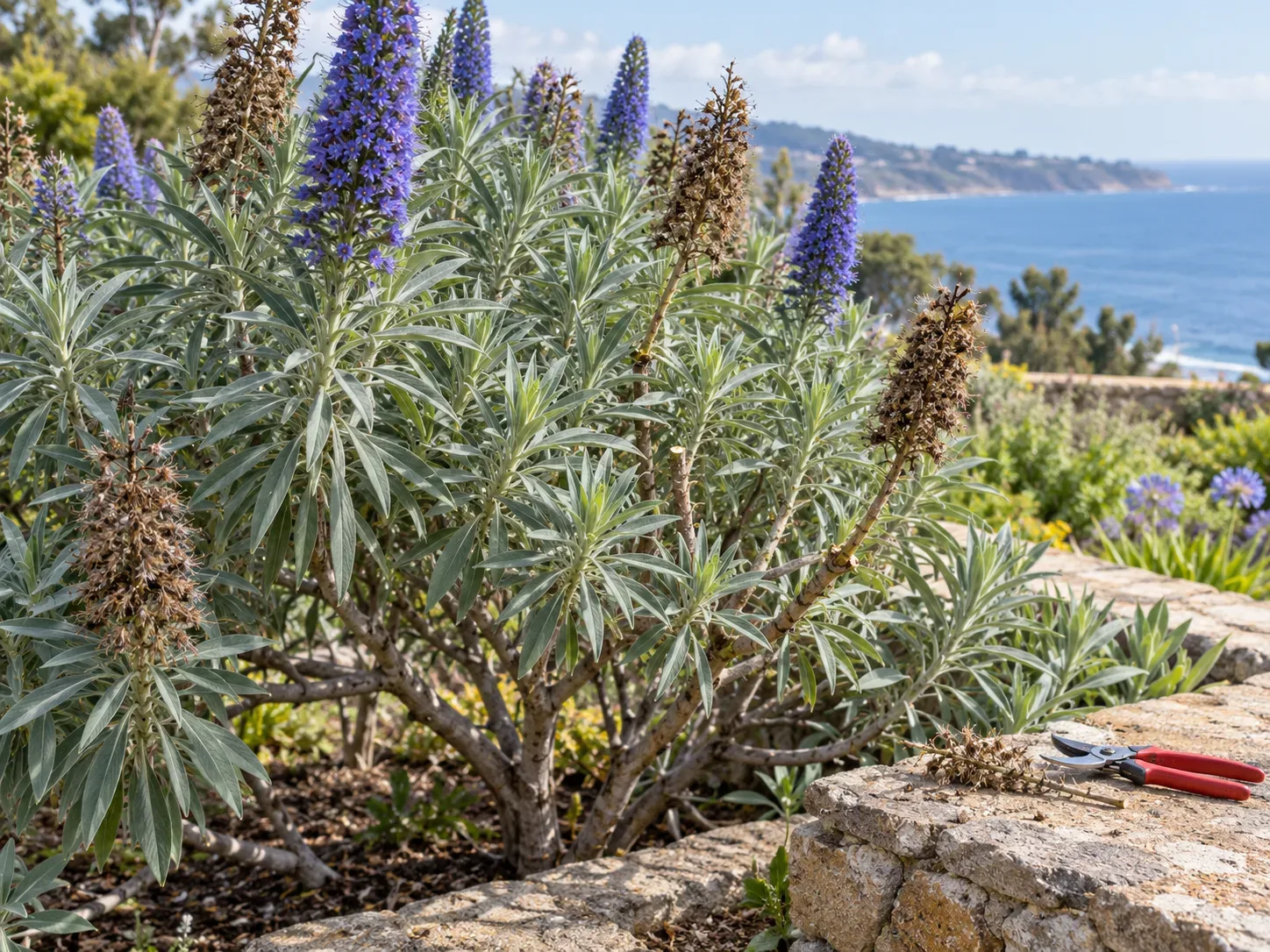
The safest routine is selective deadheading after the main flush of flowers fades. Cut each spent spike back to a healthy leafy branch or to the point where it joins the flowering stem, using clean, sharp pruners. Removing the flowers before seed matures tidies the plant and limits self-seeding; it does not guarantee another flowering flush that season.
Keep structural pruning modest. Pride of Madeira develops a woody framework, and severe cuts into old, bare wood may not produce quick or even regrowth. The RHS plant advice recommends light shaping after bloom or in spring as needed, while avoiding hard cuts into old wood. If the shrub has become too large for its site, gradual selective reduction is safer than shearing the whole plant down at once.
Prune on a dry day and wear gloves and long sleeves. The plant’s hairy foliage can irritate skin, and working through a dense shrub increases contact with stems and leaves. Disinfect blades between plants if you are removing diseased material, and collect cut flower heads rather than leaving mature seed clusters on the ground.
Propagate from seeds or cuttings
Choose propagation by the result you want. Seed is simple and useful for raising several plants, but seedlings may not match the parent exactly and they can be difficult to control in places where the species self-seeds. Cuttings preserve the parent plant’s characteristics and are a more direct way to replace a plant with the same flower color or habit.
Use clean pots and a free-draining medium for either method. Keep new roots evenly moist but never waterlogged, give young plants bright light without scorching them, and label the cultivar or source if that matters to you. If you live near native habitat or a region where Pride of Madeira is reported to spread, avoid distributing seed or planting it where wind or runoff can carry it into wild areas.
Sow seed for a new generation
Sow fresh seed in a small pot or tray of seed-starting mix, covering it only lightly. The RHS recommends summer sowing at about 13–16°C (55–61°F), then overwintering seedlings in cooler conditions around 5–7°C (41–45°F). The precise calendar depends on your hemisphere and climate; aim for germination in mild conditions and protect tiny seedlings from both waterlogging and sudden drying.
When seedlings have several true leaves and roots hold the plug together, pot them individually or plant them out once weather is suitable. Harden them off gradually if they have been raised indoors or under cover: expose them to outdoor conditions for increasing periods over roughly a week rather than moving them from a sheltered tray into full sun and wind in one step. If the seedling’s location is not acceptable in the long term, do not plant it out just because it has germinated successfully.
Root semi-ripe cuttings to clone a plant
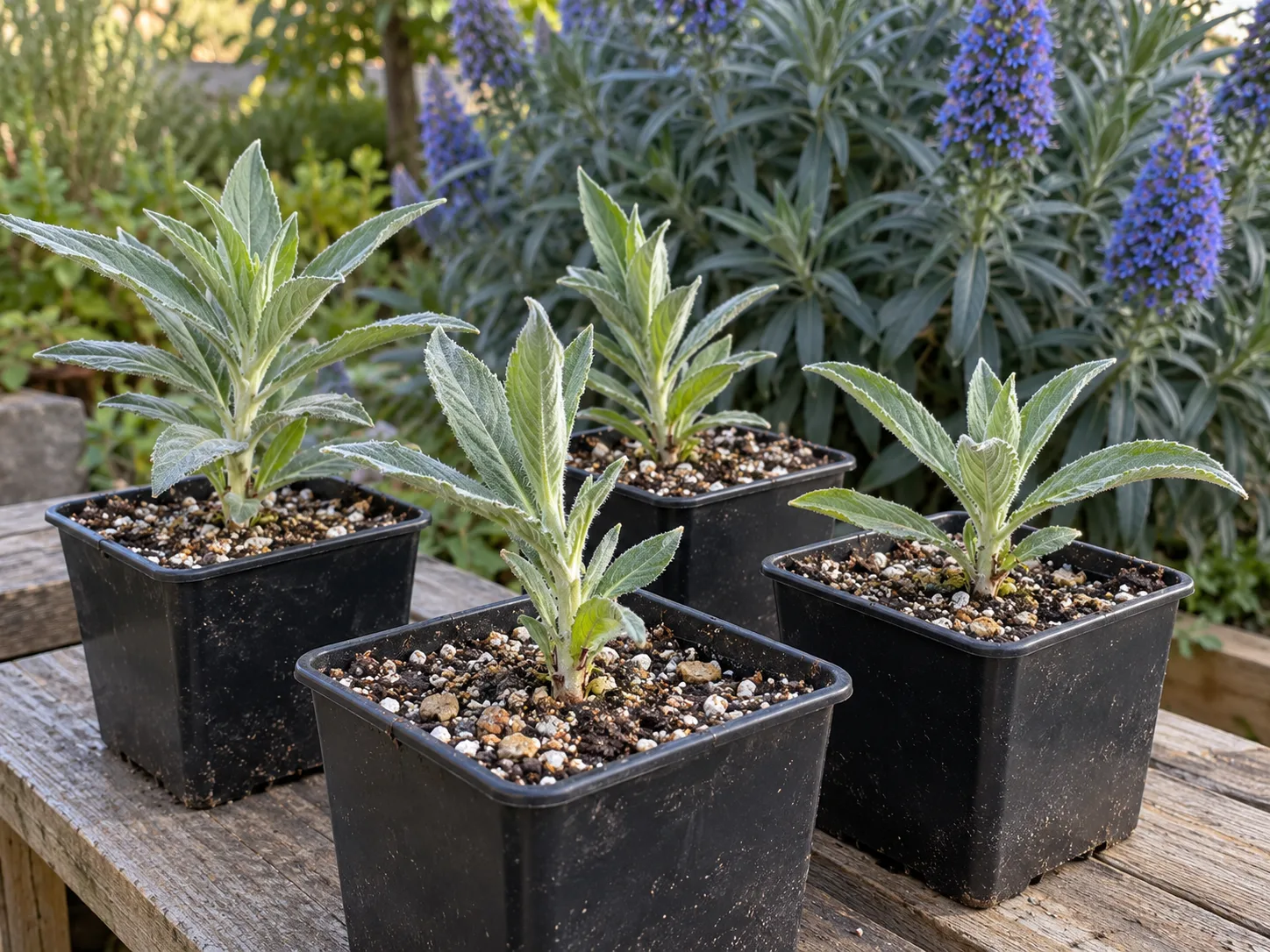
Take non-flowering semi-ripe shoots in midsummer, when the current season’s growth has begun to firm but is not old and woody. Cut just below a node, remove lower leaves, and insert the base into a clean pot of gritty, free-draining propagation mix. BBC Gardeners’ World lists shrubby echiums for softwood or semi-ripe cuttings, and Fine Gardening’s Echium guide also identifies semi-ripe cuttings as a suitable method for shrubby perennials.
Place the pot in bright shade, not direct midday sun, and keep the medium slightly moist while roots form. A loose clear cover can reduce water loss, but it should not press against the leaves; ventilate it if condensation stays heavy. Tug very gently after several weeks: resistance and fresh growth suggest rooting, while a cutting that wilts or turns black should be discarded rather than kept soggy in the hope it recovers.
Grow Pride of Madeira in a container
Container growing makes winter protection easier and is useful where garden soil stays wet, but the plant eventually becomes large and top-heavy. Choose a substantial, stable pot with multiple drainage holes and a coarse, free-draining potting mix. A lightweight plastic pot on a windy balcony may tip when flower spikes rise, so consider the container’s weight and placement before the shrub reaches full size.
Do not leave the pot standing in a water-filled saucer. Water when the mix begins to dry, then allow the excess to drain; in hot weather, a container may need checks more often than a garden bed. Repot only when roots are crowded or the mix has broken down, and move up one pot size rather than placing a small root ball into an oversized mass of wet compost.
A container also makes it possible to move the plant into a bright, frost-free place in winter. That is useful at the edge of its climate range, but Pride of Madeira is not an easy long-term indoor houseplant: it needs strong light, airflow, and space. Treat indoor shelter as seasonal protection, then return it outdoors when conditions are safe.
Protect it from cold and winter wet
Cold tolerance varies by plant size, exposure, and the duration of a freeze. Young plants are more vulnerable than established woody specimens, while container roots chill faster than roots in the ground. If frost is forecast, move a potted shrub under cover or wrap it with horticultural fleece, especially during its first winters.
Winter moisture can be as damaging as cold. Avoid heavy watering during dormancy, do not let a container sit in water, and keep the root crown clear of thick wet mulch. The RHS recommends frost protection in colder areas and describes the plant as tender enough to need shelter in some settings. If your climate routinely combines hard freezes with damp soil, a more cold-hardy substitute may be a better long-term choice.
After a cold spell, wait until new growth begins before deciding that branches are dead. Remove only clearly damaged material, then reassess the plant as the weather warms. Cutting back too early can remove live stems that were temporarily stressed but still capable of recovery.
Diagnose pests and common problems
Pride of Madeira is not usually a high-maintenance pest plant, but young seedlings can be chewed by slugs and snails. Plants under glass may attract whiteflies or spider mites. Inspect the undersides of leaves and new growth before treating; a few pests on a large shrub may not justify spraying, especially while flowers are drawing pollinators.
If you find a problem, first correct the growing condition. Overwatering and slow drainage are more serious recurring risks than a lack of fertilizer. Remove badly damaged material, improve airflow, and water the soil rather than wetting dense foliage. If a treatment is needed, identify the pest and use only a product labeled for that site and plant, following its directions and pollinator precautions.
Read the leaves before reaching for a treatment
Silvery or dusty-looking leaves are part of the plant’s normal appearance: the foliage is naturally gray-green and hairy. Powdery mildew is more likely when a distinct white coating spreads over the leaf surface and can be rubbed away, particularly in crowded or damp conditions. Do not apply fungicide just because the plant looks pale; compare new growth and check whether the soil remains wet.
Yellowing can result from excess water, cold injury, nutrient stress, or normal aging of a few lower leaves. If only older leaves yellow gradually while the rest of the shrub remains firm, monitor rather than reacting immediately. If yellowing spreads and the soil is soggy, stop irrigation and address drainage; if the plant is dry several inches down during prolonged heat, water deeply and observe whether it recovers.
Handle the plant carefully and manage seed spread
Wear gloves and sleeves when pruning or handling dense foliage. The RHS flags Pride of Madeira as a skin irritant, and BBC Gardeners’ World advises care with echiums because contact can irritate skin and ingestion is unsafe. Keep cuttings and flower heads away from children and pets that chew plants, wash exposed skin, and contact a medical or veterinary professional if someone ingests it or develops a significant reaction. Do not use the flowers or leaves as food or home remedies.
Consider local ecology before planting. Cal-IPC lists Echium candicans with a Limited rating in California and reports that it occurs along parts of the central and southern coast and in the San Francisco Bay region, where it can escape cultivation and spread slowly into native plant communities. That rating is regional and does not mean the plant is invasive everywhere. Check local invasive-plant guidance before buying it, keep it away from natural areas where it is flagged, and remove flower heads before seeds mature if you want to prevent seedlings.
Conclusion
Pride of Madeira is easiest when the site does the hard work: full sun, room for a broad shrub, and soil that drains rather than staying wet through winter. Water consistently while it establishes, then irrigate only when the root zone needs it; skip routine feeding and prune lightly after flowering instead of cutting deep into old wood.
Before planting, check your winter conditions and local guidance on seed spread. If you can offer warmth, drainage, and space, this shrub can reward you with striking spring flower spikes and a busy pollinator stop. If your garden is cold, wet, or close to sensitive native habitat, choose a protected container or a more suitable alternative.