How to Grow and Care for Popcorn Plants in Pots and Beds
Learn how to grow popcorn plants in full sun with practical advice on watering, soil, feeding, seed starting, pruning, container care, and winter protection.
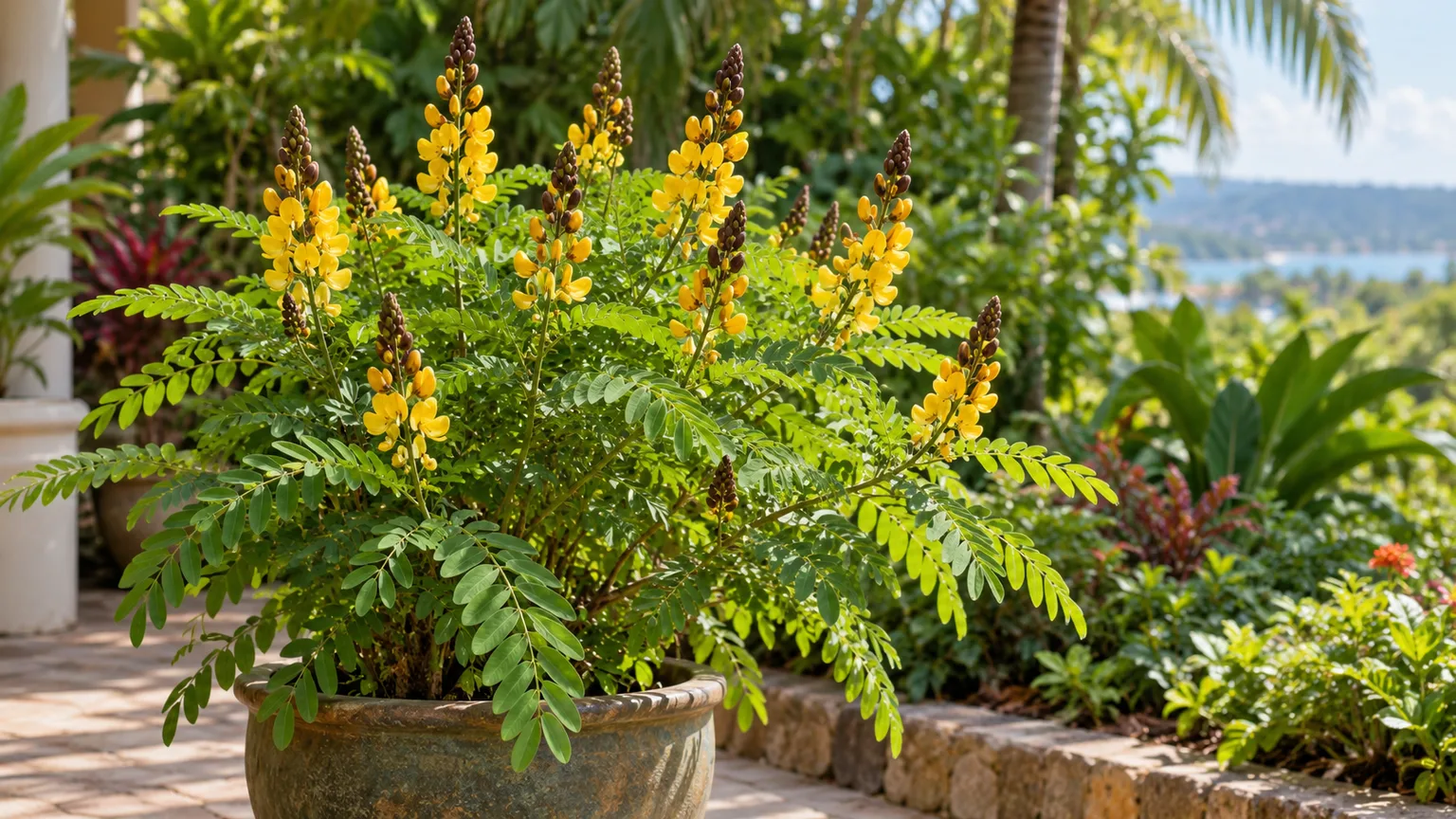
Popcorn plant (Senna didymobotrya) is a heat-loving tropical shrub grown for its feathery leaves, tall spikes of yellow flowers, and the scent released when its foliage is rubbed. The fragrance is often compared with buttered popcorn or peanut butter, though some people find it less pleasant; the flowers themselves are not the main source of the smell. In a frost-free garden, the plant can become a large perennial shrub. Where winter freezes the ground, it is usually treated as a fast-growing summer annual or kept in a pot that can be moved indoors.
That climate choice determines almost every care decision. Before buying seed or a starter, decide whether you have room for a shrub that can reach several feet, whether you can bring a heavy container inside, and whether your local climate and planting guidance make this species appropriate. Then give it sun, warm weather, moisture that does not leave roots waterlogged, and enough room to show its height.
Popcorn plant basics: a tropical shrub with seasonal options
Popcorn plant is also sold as popcorn cassia, African senna, peanut butter cassia, and candelabra tree. It belongs to the legume family, Fabaceae, and older references may list it under the synonym Cassia didymobotrya. Its native range is tropical central and eastern Africa. The Wisconsin Horticulture Extension describes a multi-branching shrub or small tree that may reach 6 to 10 feet in cultivation and taller in favorable conditions; annual plants grown in cooler regions often stay much shorter. That difference is why a plant sold in a small nursery pot can be more imposing than its first-season appearance suggests. (University of Wisconsin–Madison Extension; UC Irvine Natural History of Orange County)
The leaflets are paired along long, featherlike leaves. Rounded dark buds sit above them and open into yellow flowers progressively from the bottom of each upright spike, followed by long, flat seed pods. The scent is released when the foliage is crushed or rubbed, and descriptions vary from popcorn or peanut butter to damp animal fur. That variation is normal; it is not a reliable sign that the plant is unhealthy. The distinctive buds, pinnate leaves, and yellow flower spikes help distinguish this ornamental from other plants also called senna. (University of Wisconsin–Madison Extension; Gardening Know How)
A practical overview:
| Growing situation | What to expect | Best plan |
|---|---|---|
| Warm, frost-free garden | Woody shrub, often several feet tall and wide | Give it a sunny site, room to branch, and ongoing moisture |
| Cold-winter garden bed | Usually killed by a hard freeze | Grow it as a seasonal annual; save seed only where planting is appropriate |
| Container in a cold climate | Portable but thirsty and potentially top-heavy | Use a stable pot with drainage and move it indoors before chilly nights |
The plant is generally described as hardy in USDA Zones 9–11, but a zone label is not a promise that every site in a zone is safe. Exposure, cold snaps, drainage, and a sheltered microclimate matter; container roots are also less insulated than roots in garden soil. Treat it as a tropical plant that dislikes cold, not as a shrub to test against repeated freezes. (University of Wisconsin–Madison Extension; Gardener’s Path)
Where popcorn plants grow best
Choose the warmest bright location you can provide. In a garden, that may be a sunny border or a sheltered patio; in a cold region, a container gives you the option to extend the growing season and protect the plant before frost. Popcorn cassia grows vigorously during hot weather but can slow down when temperatures are cool. If summer nights remain chilly, expect slower growth and later flowering than in a warm, humid climate. (University of Wisconsin–Madison Extension; Gardener’s Path)
Give the plant direct sun
Aim for at least six hours of direct sunlight a day. More sun generally supports denser growth and more flower spikes, provided the root zone stays adequately moist. A spot that gets bright shade for most of the day may keep the plant alive but tends to produce a lankier plant with fewer blooms. If you move a plant outdoors from a greenhouse or indoor winter location, expose it to direct sun gradually over a week or two; leaves grown in lower light can scorch when suddenly placed in intense afternoon sun.
In very hot, dry weather, leaflets may fold or droop temporarily to reduce water loss. That response does not automatically mean the plant needs a larger watering dose right away. Check the soil first. If it is still damp below the surface, give the plant some afternoon shade or reduce reflected heat rather than adding water to already wet roots.
Use temperature, not the calendar, to judge the season
Popcorn plant is best suited to a long, warm growing season. It may survive a very light frost in some conditions, but that does not make it reliably cold hardy. For containers, move the plant inside before nighttime temperatures approach 40°F; waiting for the first frost can leave too little time to protect it. Bring outdoor plants back out only after the local frost threat has passed and nights are consistently mild. Wisconsin Extension recommends waiting until frost danger has passed before planting outdoors, about the time tomatoes can go out locally. (University of Wisconsin–Madison Extension; Gardener’s Path)
Choose an in-ground spot or a stable container
A garden bed makes sense only where winters are mild enough for the plant to survive, local guidance supports planting it, and there is space for a potentially large shrub. Give it room from paths, windows, and smaller plants; its upright flowering stems add height, but the branches can spread as it matures. In colder climates, buying a small starter and growing it as an annual may be easier than trying to overwinter a mature plant every year.
A container is useful when you need portability or want to keep the plant’s spread contained. Choose a broad, heavy pot with several unobstructed drainage holes. A tall, leafy shrub in a lightweight nursery pot can tip in wind, while a pot that is much larger than the root ball holds excess wet mix and takes longer to dry. Start with a vessel only a few inches wider than the root ball, then move up when roots fill the pot or water begins running straight through because the mix is root-bound. A 15- to 20-gallon pot is a practical eventual size for a substantial specimen, but use the plant’s actual root mass and the ability to move the container as your guide.
Avoid placing a container in a saucer that remains full of water. The plant likes steady moisture, but roots still need oxygen. If moving the pot indoors will be difficult, use a rolling plant caddy and plan the route before the plant becomes heavy. A smaller annual can be allowed to grow through summer and replaced next year; a perennial-size container is a real overwintering commitment. For more ways to prevent containers from drying too quickly, see how to keep a container garden from drying out.
Build rich soil that drains after watering
Use fertile soil that holds some moisture but does not remain saturated. In a garden bed, mix compost into poor or compacted soil before planting, and correct drainage problems rather than trying to solve them with more frequent watering. If water sits in the planting hole for hours after rain, choose a raised bed or a different location; roots still need oxygen.
For a pot, choose a quality general-purpose potting mix that drains freely while retaining enough moisture for a large, fast-growing plant. Do not use dense garden soil by itself; it can compact in a container and drain poorly. Likewise, an extremely coarse mix that dries within hours can make summer care unnecessarily demanding. The goal is not “wet soil” but a root zone that stays evenly damp between thorough waterings. Wisconsin Extension summarizes the preferred conditions as full sun and rich, moist, well-drained soil. (University of Wisconsin–Madison Extension)
Water by checking the root zone
Water deeply enough to wet the full root ball, then let excess drain. During active growth, check the top inch or two of soil every day or two in a hot spell, especially for a container in full sun. If that layer is dry, water slowly until moisture reaches the bottom of the pot and flows from its drainage holes. If it is still moist, wait and check again. Avoid watering by a fixed daily rule; wind, rain, pot size, and sun change how quickly soil dries.
Newly planted shrubs and first-year plants need closer monitoring than established plants because their roots have not spread far into surrounding soil. Once a plant is established in the ground, it may need less supplemental irrigation, but extended drought can still cause wilt and reduce flowering. Container plants have no surrounding soil reservoir, so they need more frequent checks. In peak heat, a mature potted specimen may need water every day; use soil moisture and drainage, not the calendar, to decide. (Gardener’s Path)
When leaves fold during the heat of the day, touch the soil before watering. If it is dry, water thoroughly and reassess in the morning. If the soil is wet, do not add more. Repeatedly wet soil, a sour smell, or leaves yellowing while the pot stays heavy point toward poor drainage or overwatering, not thirst. Avoid routine misting as a substitute for root-zone watering; it does not correct dry potting mix and can leave foliage damp without improving the plant’s water supply.
Feed for flowers instead of excess foliage
Popcorn cassia grows quickly and can use nutrients while producing a tall canopy. Before reaching for fertilizer, improve depleted soil with compost and make sure light and water are right. A shaded, dry, or cold plant will not flower simply because it receives more plant food.
If growth is active and the plant is in a container or poor soil, use a balanced all-purpose fertilizer according to the label. A cautious starting point is half-strength liquid fertilizer every three to four weeks during active growth, or a slow-release product applied at the labeled rate. Stop or reduce feeding as the season cools and growth slows. Do not combine several fertilizer products or apply extra nitrogen to force size: strong nitrogen-heavy feeding can favor leafy growth at the expense of flowers. Gardener’s Path recommends balanced nutrition and stopping late-season feeding so tender new growth is not pushed just before cold weather. (Gardener’s Path)
Watch the plant’s response. Healthy new leaves and steady growth suggest the current feeding plan is adequate. If leaf edges brown after fertilizing, pause feeding and flush a container with plain water, allowing it to drain freely. A soil test is more useful than guesswork if an in-ground plant repeatedly grows poorly despite good light and drainage.
Plant outdoors only after cold nights pass
Plant a nursery-grown specimen after frost danger has passed and the weather is reliably warm. Harden it off first if it has been grown under cover: set it outside for a few hours in a sheltered bright spot, bring it back in, and increase its outdoor exposure over about a week. That short transition helps leaves adapt to sun, wind, and outdoor temperature swings.
Dig a hole as deep as the root ball and roughly twice as wide, loosen circling roots gently, and set the crown level with the surrounding soil. Backfill with the native soil, water slowly to settle it, and add a light layer of mulch over the root zone while keeping mulch away from the stems. For a container, cover the roots with fresh potting mix and water until the whole root ball is moistened. Do not bury the stem deeper than it grew in the nursery pot.
If you plan to grow from seed, start early enough to establish a sturdy plant but not so early that seedlings sit in cramped indoor pots for months. In colder regions, Wisconsin Extension recommends sowing in late winter—February or March—and planting outside only after frost danger passes. Match the timing to your last frost date and the seed packet’s directions rather than copying a calendar date from a different climate. (University of Wisconsin–Madison Extension)
Grow popcorn plants from seed
Seed is a practical way to raise several plants, but the hard seed coat can make untreated seed slow or uneven to sprout. You can also buy a rooted cutting or nursery plant if you want a shorter path to summer flowers. Seeds collected from mature pods should be fully dry before storage; label them with the plant name and year, and keep them in a cool, dry place until sowing.
Soften the hard seed coat
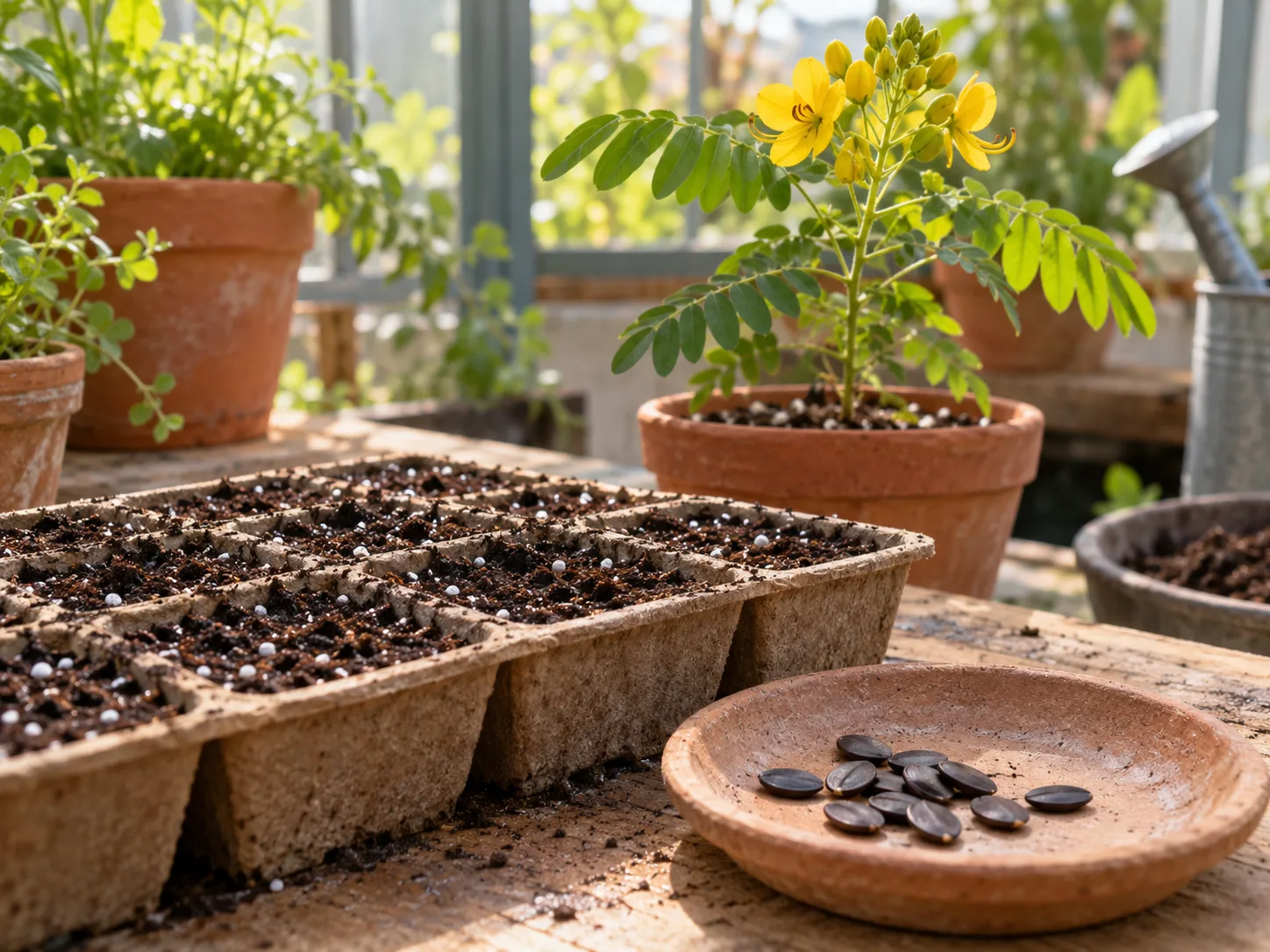
Before sowing, soak seeds in warm water for about 24 hours. Some gardeners use a brief hot-water treatment or carefully nick the seed coat instead, but soaking is the simpler option for home propagation. The goal is to help water enter the hard outer coat; discard seeds that remain damaged, mushy, or foul-smelling after soaking. Wisconsin Extension notes that soaking or scarifying can improve germination. (University of Wisconsin–Madison Extension)
Fill a clean seed tray or small pots with pre-moistened seed-starting mix. Sow each seed about ¼ inch deep, cover lightly, and keep the medium evenly moist rather than waterlogged. Set the container in a warm place with bright light; a room temperature around 70°F is a reasonable starting point. Do not leave the tray in a cold windowsill at night or in direct sun under a plastic cover, where it can overheat.
Sow warm, then harden seedlings off
Check the tray often but do not keep opening it or disturbing seeds to look for roots. Germination timing varies with seed age and treatment, so keep conditions steady and give the seeds time. Once seedlings emerge, provide strong light to prevent weak, stretched stems and allow the surface of the mix to dry slightly between waterings. When each seedling has several true leaves and a root system holding its plug together, move it into an individual pot.
Harden seedlings off before planting outdoors. Over seven to ten days, begin with a short spell in bright shade, then gradually add morning sun and longer exposure to wind. Bring them inside if nights turn unusually cold. A seedling ready for the garden has firm growth, holds upright, and has experienced outdoor conditions without wilting or leaf scorch. The process is similar to other tender annuals; this guide to starting seeds indoors covers the setup and light decisions in more detail.
Prune for shape and manage seed pods
Popcorn plant does not need frequent shaping to flower. Remove dead, broken, or crowded stems with clean pruners, cutting back to a healthy branch or just above a leaf pair. If the plant is grown as an annual, avoid a heavy midsummer cut that removes the stems already preparing to flower. A light trim after a flowering flush can improve the outline, but pruning may delay the next flush while the plant grows replacement shoots.
Deadhead flower spikes if you want to keep the display tidy and limit seed production. If seed pods are forming and you do not want seedlings, remove pods before they dry and split. Keep the prunings and pods away from children and pets, and dispose of them according to local yard-waste guidance rather than leaving them where seeds can escape. In mild climates, removing pods is especially important if local authorities advise against planting the species.
Bring the plant through winter—or replace it in spring
In frost-prone regions, choose between two realistic options: grow popcorn cassia as an annual and replace it next spring, or keep a container plant that you can move before cold weather. A large in-ground shrub is not a good candidate for repeated winter rescue if the ground freezes. In warm zones, an established plant may remain outdoors, though a cold snap can still damage exposed growth. Zone labels describe average annual extremes, not a guarantee for an individual yard.
Keep an actively growing pot in bright light
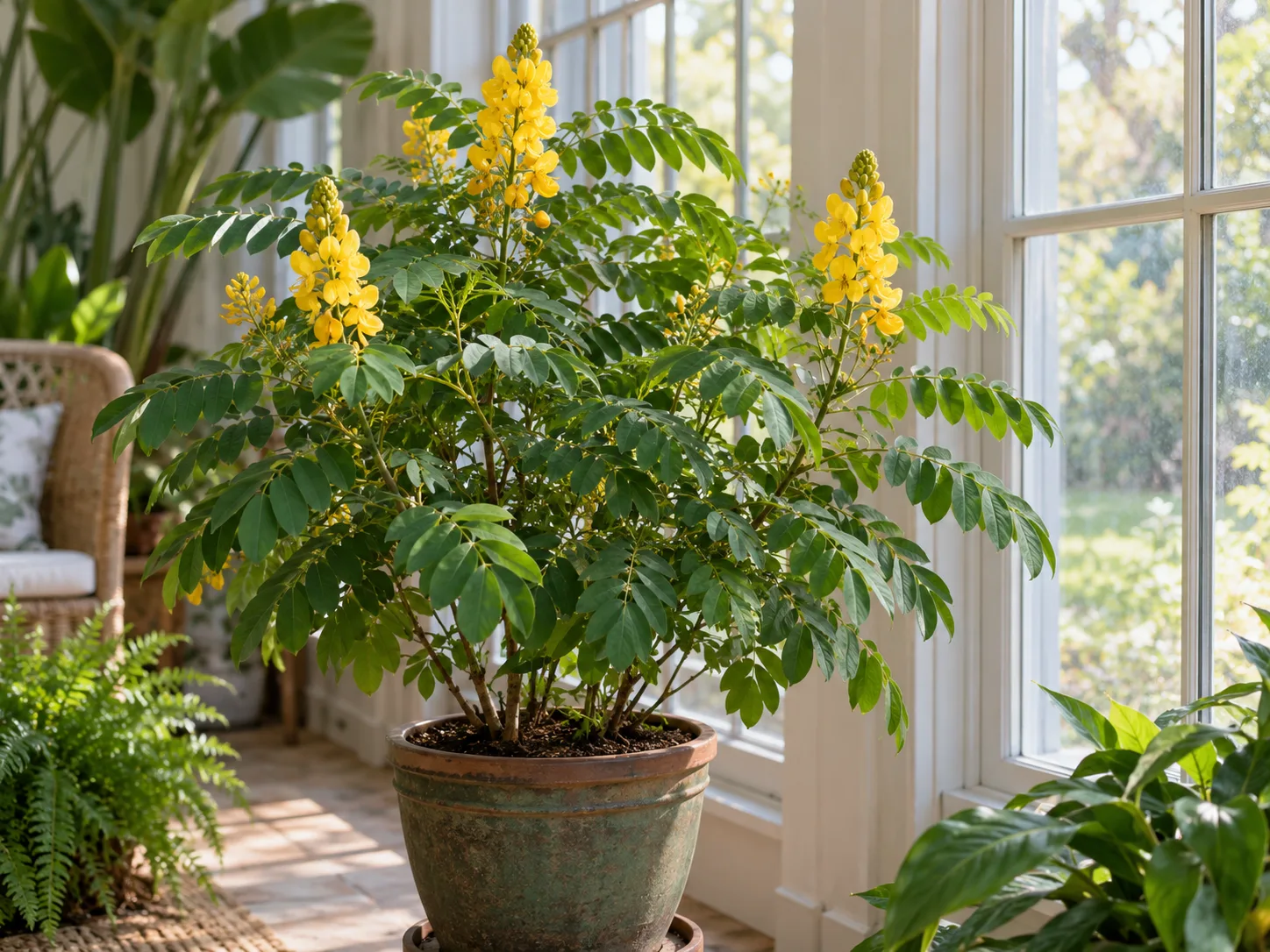
Before moving a plant indoors, inspect leaves and stems for insects, remove dead growth, and rinse dust from the foliage. Do this before bringing it near other houseplants. Put the pot in your brightest available window or a bright greenhouse, away from cold drafts and heating vents. A plant that was growing outdoors in full sun may drop some leaves or slow down as light levels fall; that does not necessarily mean it needs more water or fertilizer.
Check the pot with a finger before watering and allow the top inch or two of mix to dry. Because indoor light and temperatures are lower than summer conditions, water use falls. Do not continue the same summer schedule. Hold fertilizer while growth is slow, and monitor for aphids or other insects that can build up indoors. If the plant becomes too large for your indoor space, taking a few cuttings or starting fresh from seed next year may be more practical than moving the whole shrub.
Store a dormant plant cool and barely moist
A cool, dim, frost-free space may suit a plant that naturally sheds leaves and rests, but it is not the same as leaving the pot in an unheated location that can freeze. Gardeners’ Path describes dormant storage around 40°F, with the root ball allowed to become nearly dry between occasional waterings. The exact schedule depends on temperature, pot size, and how much foliage remains, so inspect the soil periodically instead of watering on a rigid interval. (Gardener’s Path)
In late winter, move the pot into brighter light, resume watering as new growth appears, and wait for safe outdoor conditions before returning it outside. Harden the plant off again instead of placing tender indoor growth directly into strong sun. If the roots are soft or the pot smells sour, the plant may have stayed too wet. If all stems are brittle and brown down to the crown, it may not have survived; scratch one small area of stem to check for green tissue before discarding it.
Troubleshoot drooping, brown leaves, and poor flowering
Leaves fold or droop in afternoon heat: Check the root zone. If it is dry, water slowly and deeply; if damp, provide temporary shade from reflected heat and improve airflow rather than adding more water. A plant in a small pot can wilt quickly because the soil volume is limited, so consider a larger stable container if the root ball fills the pot.
Leaves turn yellow and the soil stays wet: Suspect waterlogged roots, poor drainage, or a container without open drainage holes. Stop watering until the upper mix begins to dry, empty any standing saucer water, and repot into fresh free-draining mix if the medium is sour or compacted. Yellow leaves alone do not prove a nutrient deficiency.
Leaf edges brown after a hot spell: Dry wind, a pot that dried out, salt buildup from fertilizer, or sun exposure after an abrupt move indoors or outdoors can all contribute. Check which event preceded the damage. Correct the cause, then wait for healthy new growth; damaged leaflets will not turn green again.
The plant grows leaves but few flowers: Start with sun and temperature. A shaded position or a cool season can delay blooming; excess nitrogen may also encourage foliage at the expense of flowers. Improve light gradually, avoid overfeeding, and remember that seed-grown plants may flower later than mature nursery starts. In cold regions, the growing season may simply be too short for the long display seen in tropical gardens.
The whole plant turns brown after a cold night: Frost-sensitive growth may collapse quickly after exposure to near-freezing conditions. Move a container to protection before another cold night and wait until temperatures recover before pruning. If stems remain flexible with green tissue under the bark, the plant may regrow; if the crown and roots are frozen or mushy, recovery is unlikely.
Protect the plant from pests, disease, seed spread, and accidental ingestion
The species is not known for constant pest or disease problems, but outdoor plants can still attract aphids. Look beneath new leaves and around flower stems for clusters of soft-bodied insects or sticky residue. A firm stream of water may dislodge a small population. If you need a labeled horticultural product, identify the pest first, read the product label, and protect pollinators by avoiding open flowers and applying only as directed.
Persistently wet soil and crowded growth create more trouble than a routine spray can solve. Make sure containers drain, keep fallen leaves from matted soil, and remove dead stems so air can move through the plant. If a potted plant wilts while its soil is saturated, inspect the root zone rather than adding water. Persistent disease symptoms call for local extension advice before treatment.
In warm regions, seed pods can produce volunteer seedlings. Pull seedlings while they are small and remove pods before they split. The UF/IFAS Assessment currently lists S. didymobotrya as high invasion risk in Florida and says it is not recommended there, while noting the assessment is incomplete. Florida gardeners should follow current state and county guidance rather than a nursery label. (UF/IFAS Assessment)
Popcorn cassia is ornamental, not an edible herb. Common names can cause confusion because “senna” also refers to other species used in medicinal products. Do not eat the leaves, seeds, or pods or use them as a home remedy. Gardener’s Path reports that ingestion can cause severe gastrointestinal illness; keep plant parts away from children and pets, and contact a veterinarian or poison-control service if ingestion is suspected. (Gardener’s Path) A large shrub with conspicuous pods should not be placed where a toddler or curious dog can reach it. If you cannot supervise access or remove pods, choose another ornamental.
Conclusion
Grow popcorn plant as a tropical shrub only where warmth, space, and local guidance make that sensible; elsewhere, treat it as a summer annual or keep it in a movable pot. Full sun, rich but freely draining soil, and steady moisture during active growth are the foundation. Check the soil instead of watering by habit, feed moderately with a balanced product, and remove seed pods when you do not want volunteers.
For cold climates, decide before planting whether you can protect a container from chilly nights and provide enough winter light—or whether starting over in spring is easier. Scarify seed gently, harden seedlings off, and wait for frost danger to pass before setting them outside. With those choices made up front, the plant’s unusual foliage scent and tall yellow blooms can be a rewarding warm-season feature without turning care into guesswork.



