Can You Hang Plants on a Neighbor’s Fence? The Rules
Can you hang plants on a neighbor’s fence? Learn how ownership, shared fences, written permission, planter weight, vines, and local rules affect your safest option.
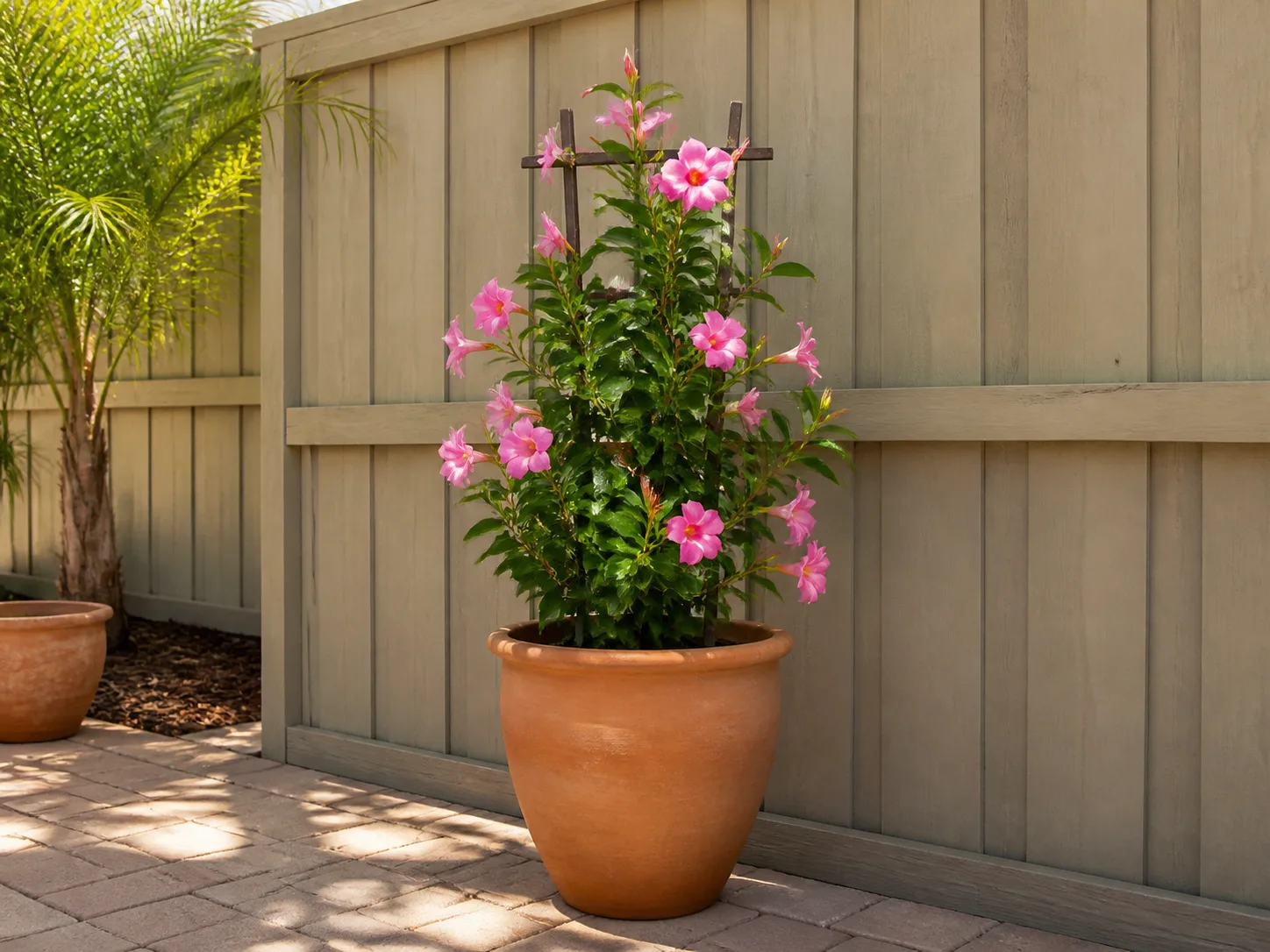
If a fence separates your yard from your neighbor’s, do not treat the side facing you as automatically yours. A hanging basket, planter bracket, wire, or climbing vine can still be an alteration to someone else’s property, even when the plant is entirely in your yard.
The practical answer is simple: confirm who owns the fence, ask before attaching anything, and choose a setup that remains safe if the plant becomes wet, heavy, woody, or difficult to remove. The legal answer depends on your state, city, HOA documents, title records, and any agreement between the two properties.
The Short Answer Depends on Two Separate Questions
There are two issues people often collapse into one. The first is permission: who has the right to decide what happens to the fence? The second is responsibility: who pays or repairs if a plant causes rot, leaning, breakage, blocked access, or injury?
You need a “yes” to both before treating the fence as a plant support. Permission to hang one lightweight basket does not necessarily authorize a row of large planters, a permanent trellis, or a vigorous vine that must be cut from the fence later.
Who owns the fence or boundary structure?
If the fence is wholly on your property and you own it, you have more control, but that still does not erase HOA covenants, local height or setback rules, drainage concerns, or your duty not to create damage or a nuisance. If the fence is wholly on your neighbor’s property, get their approval before adding hardware, weight, irrigation, or a plant that relies on the fence.
If the fence sits on the boundary or is treated as shared, do not assume that “shared” means either person may make unilateral structural changes. A shared fence is a reason to agree on the change together, especially when screws, posts, heavy loads, or a permanent vine are involved.
What load, moisture, and maintenance will the plant add?
The plant is not the only weight. A basket filled with wet potting mix can be substantially heavier after watering, and a large ceramic pot or saturated hanging basket can pull on a panel or rail. Wind adds a repeated sideways force that a quiet, dry planter does not show when you first install it.
Moisture is another form of wear. Water dripping onto a fence can keep wood damp, soil can spill against the base, and dense foliage can make it harder to inspect for rot, insects, or loose fasteners. A vine also adds future work: someone must guide it, prune it, remove dead growth, and keep it from crossing into the adjoining yard.
How to Confirm the Fence’s Status Before You Touch It
Begin with the documents, not a visual guess. Look at your closing packet, recorded deed, plat, title documents, or property survey, then compare the fence’s location with the actual boundary. A fence’s position, the direction of its finished side, or an old neighborhood custom may provide clues, but none is a reliable substitute for records.
Also check the rules that can sit above a private agreement. An HOA’s covenants, conditions, and restrictions may control fence attachments, plant height, screening, or exterior appearance; a city or county may regulate structures, setbacks, drainage, or visibility near a corner or driveway. If the documents conflict or the line is genuinely disputed, pause and ask a title professional, land surveyor, or local real-estate attorney rather than turning a planter into evidence in a boundary fight.
The distinction between a boundary-fence obligation and a right to modify the fence matters. For example, California’s official Civil Code section on boundary fences presumes adjoining landowners share reasonable fence construction, maintenance, and necessary replacement costs, with notice requirements for certain work. That is a California rule about fence responsibilities; it is not a nationwide permission slip for attaching plants, and other jurisdictions may handle the issue differently.
| Fence situation | Safest practical move |
|---|---|
| Clearly yours, entirely on your land | Check HOA and local rules, then attach only if the fence and hardware can carry the load without creating damage or nuisance. |
| Clearly your neighbor’s | Ask for permission before drilling, hanging, tying, watering against, or training a plant on it. |
| On or near the boundary, treated as shared | Make the change jointly, preferably in writing, and agree on maintenance, repairs, and removal. |
| Ownership or boundary is disputed | Do not attach anything permanent; use a freestanding alternative while you verify the records. |
If you rent either property, add the landlord or property manager to the check. A tenant may be allowed to garden but not drill into an exterior structure, alter a fence, install a trellis, or make a change that must stay after the lease ends. The same applies to a condo or townhome where the fence may be a common element rather than an individual owner’s fixture.
There is also a difference between a plant beside a fence and a plant on a fence. A pot sitting on your own ground, even close to the boundary, is usually easier to control than a bracket that transfers load into the fence. A vine that merely appears in front of the fence can still become a fence problem if it uses the boards, rails, or posts as its only support.
What Permission Should Cover Before You Hang or Plant
“Is it okay if I put a plant there?” is a friendly start, but it is not a very good plan. A useful agreement removes the future questions that turn a small gardening project into an argument.
Put the plant, hardware, upkeep, and removal terms in writing
Write down the exact section of fence, the number and type of planters, the attachment method, and the maximum size or weight. State whether the plant will hang from an over-panel hook, a bracket, a wire, a trellis, or a separate support, and whether any hardware may pass through the fence or be visible from the neighbor’s side.
Agree on the care details too. Name who will water, who will prune, how often the fence and hardware will be inspected, how dripping will be controlled, and how the plant will be kept from growing over the boundary. If the neighbor needs access to their side for painting, repairs, pest control, or a property inspection, say how much notice they will give and how the plant will be temporarily moved.
Finally, set a removal and repair rule. Decide what happens if the permission is withdrawn, the fence is replaced, the plant outgrows the space, or the attachment causes staining, rot, cracking, leaning, or other damage. A short, dated note or email is easier to use than memory, although a local attorney should advise on any agreement intended to create lasting property rights.
A plain-language permission note might say: “I approve two lightweight plastic baskets on the inside face of the fence at the marked locations from May through October. You will water and prune them, keep water off the boards, remove them within seven days of a repair request, and pay for damage caused by the attachment or plant. This permission does not include screws, vines rooted at the fence, or access to my yard.” The wording should match the real plan, and both neighbors should keep the same dated copy.
Do not hide the awkward parts. If the arrangement works only as long as both households remain friendly, say that plainly and choose removable equipment. If the neighbor wants the plant but does not want responsibility for watering or trimming, that is useful information before you buy it.
Safer Ways to Add Greenery Without Drilling Into the Fence
The lowest-conflict design makes the plant look attached to the boundary without making the boundary carry the plant. It also lets you remove or rearrange the garden without leaving holes, trapped moisture, or a tangle of stems for the next fence repair.
Use a freestanding or independently supported trellis
Place a trellis, arbor, wire panel, or narrow screen entirely inside your property and give it its own feet or posts. Leave enough space to inspect and paint the fence, mow or weed behind the support, and remove the plant without pulling on the fence boards.
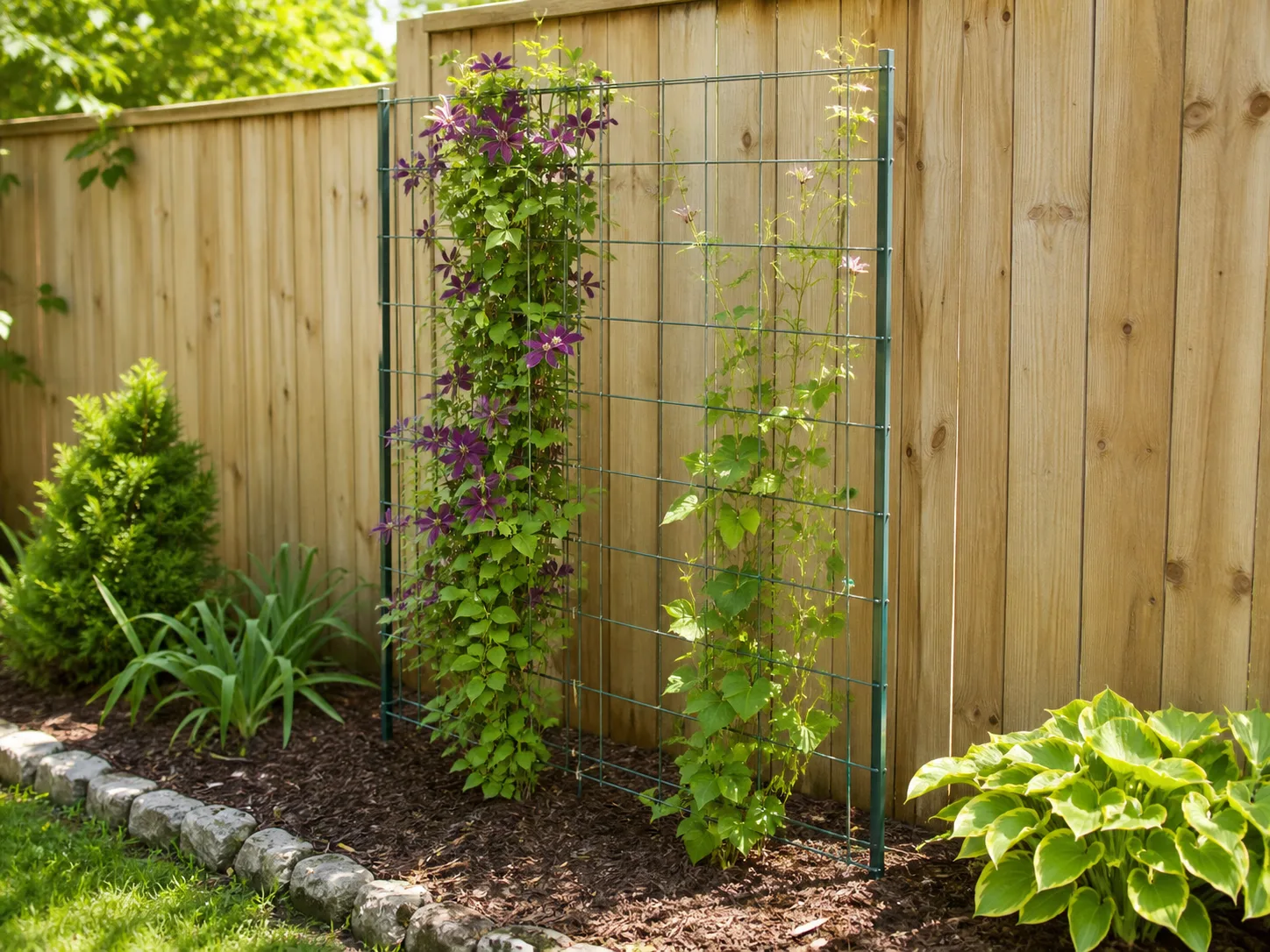
This setup is especially useful for vines. The plant can climb a grid or thin wires designed for it while the fence remains a backdrop rather than the primary structure. Gardener’s Supply’s clematis guidance explains that climbers need an appropriate support and that ties or clips should be adjusted as the plant grows; that is a better maintenance model than letting stems disappear behind fence boards.
Use the same logic for containers. A pot on your own pad, stand, or planter box can provide color at the fence line without transferring its full wet weight to a neighbor’s panel. Anchor a tall freestanding screen against wind according to its design, but do not quietly screw it into the fence unless the owner has agreed to that exact connection.
Design the support so you can see the fence behind it. A small gap makes it possible to spot a loose board, trapped leaves, insect activity, or a wet patch before the problem spreads. It also gives you a clean route for moving the trellis when the fence needs staining or replacement; if the support has to be dismantled through the neighbor’s yard, it is not as independent as it looks.
Treat over-panel hangers as permission-dependent, not permission-free
Over-the-fence hangers are removable, but “removable” does not mean “no permission required.” They may scratch the finish, concentrate weight on a narrow rail, swing in wind, drip onto the other side, or prevent the neighbor from opening a gate or accessing the fence.
If permission is granted, use a lightweight, shatter-resistant container and test the empty hanger first. Keep the pot clear of gates, utilities, walkways, and the fence bottom; use a tray or watering method that does not send muddy runoff across the boundary; and remove the planter before the neighbor needs to repair or replace the fence.
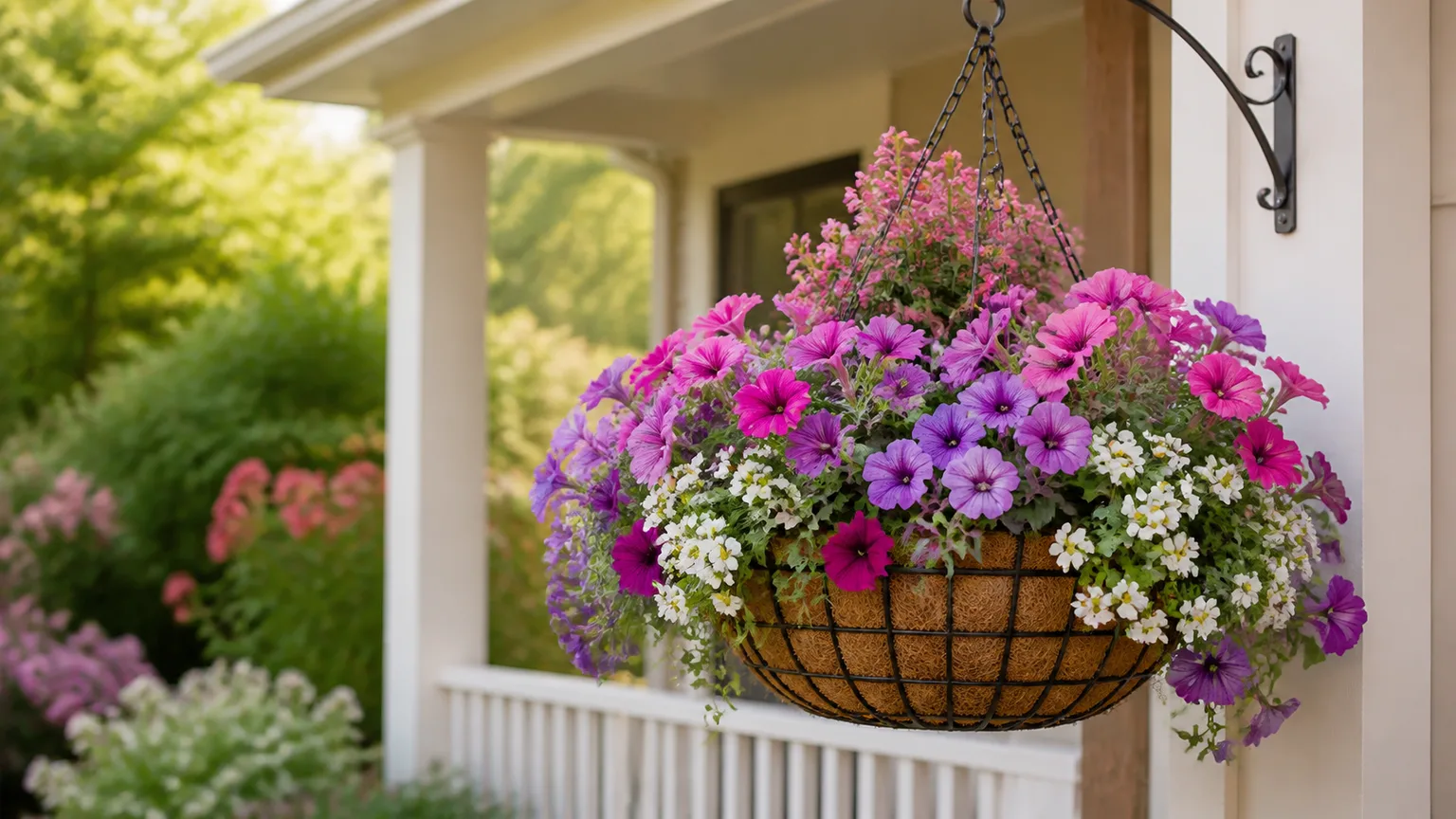
Avoid using a heavy ceramic pot, a water-filled reservoir, or a large basket on a rail that was designed only to hold fence pickets. If you cannot identify a sound structural member or do not know the fence’s condition, the correct answer is to move the basket to your own post, porch bracket, balcony rail, or freestanding shepherd’s hook.
Skip a fence hanger entirely when the panel is leaning, soft at the base, recently repaired, visibly cracked, or exposed to strong wind. Also skip it when the planter would sit above a path, a child’s play area, a gate, or a place where falling soil or water would create a hazard. “Lightweight” is a starting point, not a guarantee: check the container, wet growing medium, plant, hanger, and wind as one combined load.
Vines Need a Maintenance Boundary, Not Just a Starting Point
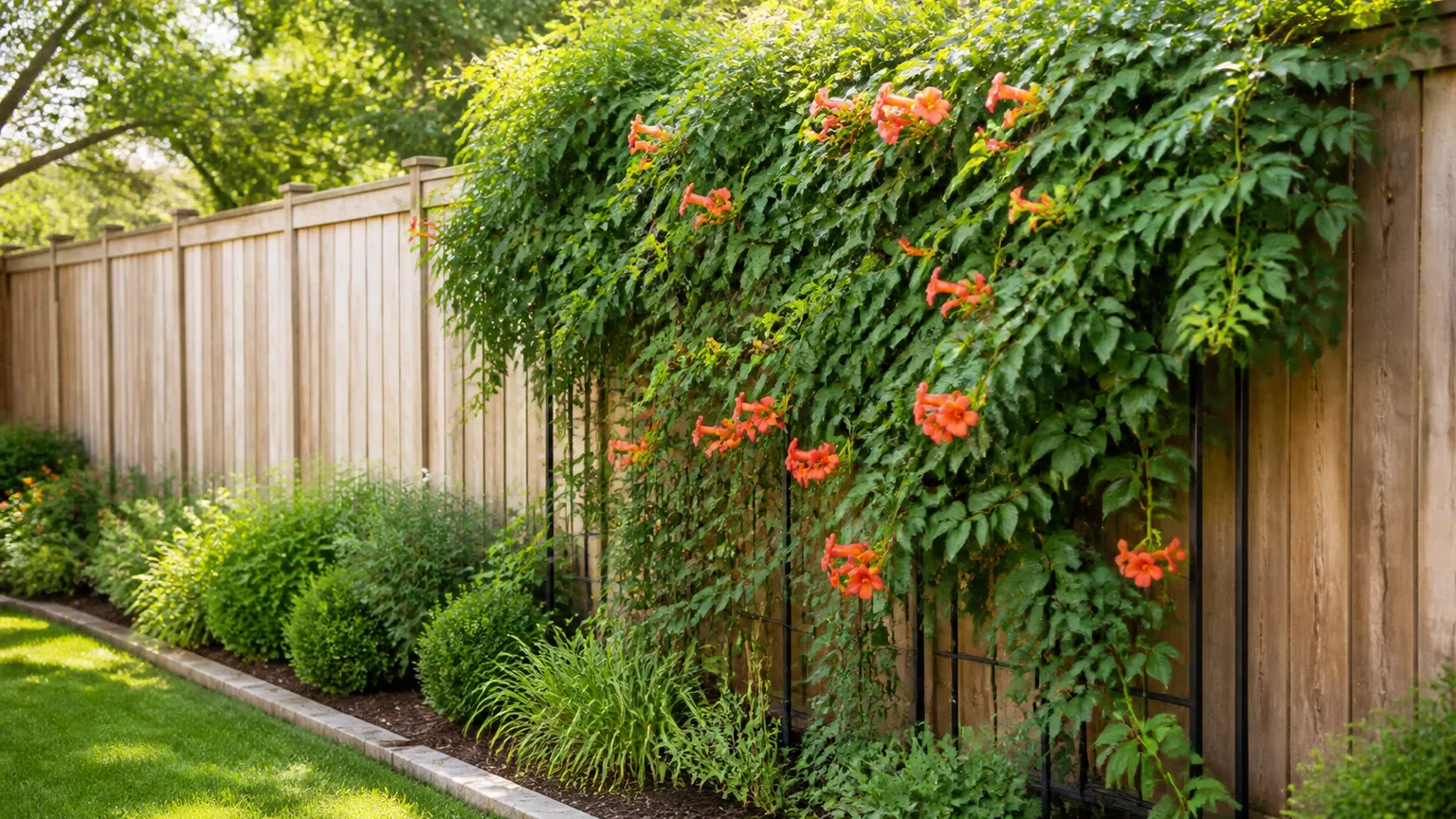
A vine that looks tidy in April can cover a panel, cross a gate, or reach the other yard by midsummer. Plan the mature spread and the pruning route before planting, not after the growth has threaded through the fence.
Choose a plant that fits the support and local conditions
Start with the plant’s mature size, growth habit, hardiness, sun exposure, and water needs. Prefer a manageable, non-thorny plant that can be trained on your own support and removed without tearing apart the fence line. Be cautious with woody or very vigorous climbers when the fence is lightweight, old, leaning, or already showing rot.
Some climbers twine, some use leaf stems, and some cling directly to surfaces. That difference affects how easily you can redirect or remove them. Southern Living’s guide to climbing plants for fences notes that even suitable fence vines vary in vigor and that some plants need ties or training, so choose for the actual site rather than for the fastest possible coverage.
Before buying, check your state or county invasive-plant resources and ask a local extension office about aggressive spread. “Fast-growing” is not automatically a benefit when the plant can escape the bed, seed into a neighbor’s yard, or require repeated cutting. Avoid thorny growth beside a path, fruit or seed drop over a neighbor’s patio, and plants whose mature weight would make the fence part of their support system.
Match the plant to the way you want to use the space. A seasonal annual or compact container climber is easier to remove when a fence is scheduled for repair; an evergreen or woody perennial may give better privacy but creates a year-round obligation to inspect the structure. In a dry climate, a container may need frequent watering and produce more runoff; in a wet or humid climate, dense foliage can slow drying. The right plant is the one you can keep within its line in the conditions you actually have.
Prune before growth crosses the line
Set a visual boundary inside your property and inspect it on a schedule during the growing season. Guide new shoots while they are flexible, loosen or replace ties before they constrict stems, and remove growth that reaches the top, gate, or opposite side instead of waiting until it has become woody.
Pruning timing depends on the plant and its flowering wood. Oklahoma State University’s pruning guidance emphasizes choosing plants that fit the site, controlling growth before it becomes overgrown, and timing cuts according to the type of plant; it also cautions that improper or excessive pruning can weaken plants. NC State Extension’s woody-ornamental handbook similarly treats pruning as a way to train growth and keep plants in bounds, not as an emergency substitute for choosing the right support.
Never assume you can solve a boundary problem by cutting everything visible from your side. A neighbor may have rights over a plant rooted on their land, an HOA may have a rule, a tree or woody climber may require skilled pruning, or an incorrect cut may kill a plant and intensify the dispute. Ask first, photograph the issue, and get local advice when the plant is large, valuable, thorny, attached to the fence, or close to a utility.
What to Do If a Plant Is Already Causing Trouble
If a planter is pulling on the fence or a vine has crossed the boundary, start with a calm, specific conversation. Describe the observable problem—“the rail is bowing,” “water is staining this panel,” or “the vine is growing through the gate”—rather than accusing the other household of trespass or neglect.
Document the condition, then escalate calmly and locally
Take dated photos from both sides you can lawfully access, record when you noticed the issue, and keep copies of messages and any permission. Do not enter the neighbor’s yard, remove their property, or cut a plant on the assumption that a fence dispute gives you unlimited authority.
Offer a concrete remedy: move the container to your own stand, add a separate trellis, prune back to an agreed line, remove hardware before a repair, or split a documented repair if the facts and local rules support that arrangement. If the fence is unsafe, a plant is damaging a structure, or the neighbor refuses a reasonable solution, contact your HOA or local code office where relevant, then consider mediation or advice from a licensed local real-estate attorney.
If the neighbor asks for removal, do not negotiate only in generalities. Ask which plant or attachment they want changed, what access they need, and whether the concern is weight, water, appearance, access, safety, or future repair. You may be able to solve a narrow problem by moving one basket, adding a separate trellis, or pruning one side instead of removing the entire planting, but make the agreed remedy and deadline clear in writing.
The same process applies if the plant came from your neighbor’s side and is entering your yard. Ask for a trimming plan before cutting, because the correct response can depend on where the plant is rooted, whether it is a tree or vine, local law, and whether trimming would kill or destabilize it. A neutral arborist or horticulturist can help with the plant; only a local legal professional can advise on property rights.
A Five-Minute Decision Checklist
Before you buy the bracket, basket, or vine, answer these questions:
- Do I know who owns the fence? If not, check the deed, plat, survey, and HOA records before attaching anything.
- Do I have permission for this exact setup? Name the hardware, location, plant, weight, watering, and removal terms rather than relying on a vague conversation.
- Can the fence carry the fully watered, wind-loaded weight? If the answer is uncertain, move the support onto your own property.
- Can I inspect, water, prune, and remove the plant without entering the neighbor’s yard? If not, redesign it before planting.
- What happens if the fence needs repair or permission ends? Choose a plant and support that can come out cleanly, and write down who handles the work.
If any answer is “no,” use a freestanding trellis, container stand, planter box, arbor, or hanging hook on your own post. You may give up a few inches of space, but you gain control over the load, the watering, the pruning, and the exit plan.
Conclusion
You can often create a beautiful planted boundary, but a neighbor’s fence is not automatically a free garden wall. Confirm ownership, check local and HOA rules, get specific permission, and treat weight, water, plant growth, and future removal as part of the agreement.
When there is any doubt, let the fence remain a backdrop and put the trellis, post, pot, or hook on your own property. That small design choice protects the fence, keeps maintenance in your hands, and gives both neighbors a much easier way to change their minds later.



