Road Salt Plant Damage: Signs and Recovery
Brown needles, crispy lawn edges, and stunted shrubs after melt? Road salt may be the culprit. A gardener's guide to spotting damage, helping plants recover, and preventing repeat injury.
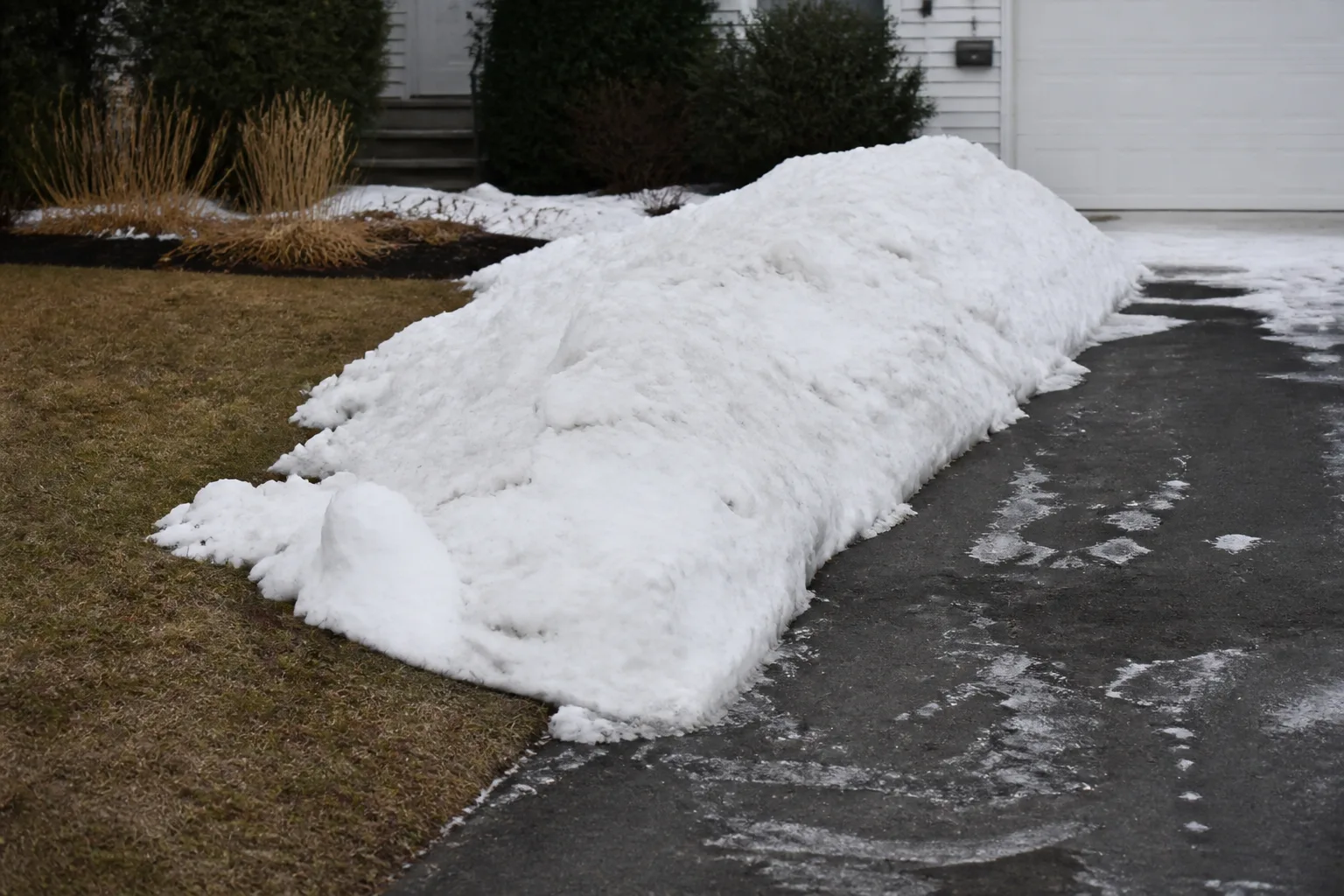
The first warm afternoon after a salty winter, you walk the edge of the driveway and notice brown needles on the street-facing side of a yew, a thin straw-colored stripe in the lawn, and a euonymus hedge that looks bleached instead of green. Your neighbor says the plants got too dry. Your gut says something in the meltwater poisoned them. Both can be true—and road salt is often the link between winter ice control and spring heartbreak.
Rock salt—ordinary sodium chloride—is cheap, effective, and everywhere on roads, walks, and driveways from late fall through early spring. When tires and plows throw salty slush onto beds, or when meltwater drains off pavement into soil, plants absorb sodium and chloride ions that pull moisture from tissues and disrupt basic cell chemistry. The damage is not always obvious until buds break or grass greens up, which is why this guide separates what you see, what it means, and what actually helps plants recover before next winter repeats the cycle.
Quick Answer: Spray Damage Shows Fast, Soil Salt Shows Late
Salt spray injures foliage and buds on the side facing traffic or salted pavement. Symptoms often appear in late winter or early spring: browned needle tips, bleached evergreen leaves, dieback on outer branches, and witches’ brooms where shoots regrow below killed buds. Soil salt is slower. Sodium and chloride leach into beds from runoff and piled snow, creating osmotic stress that makes roots unable to absorb water even when soil feels wet. Marginal leaf burn, stunting, delayed leaf-out, and a white crust on soil surface are classic clues.
Most leaf and needle burn from one bad winter can recover if crowns and major branches are still alive—especially on tolerant species. Repeated soil buildup on poorly drained clay near salted walks is harder to fix and may require soil replacement or relocating sensitive plants. Your first job in spring is triage: identify spray vs soil injury, flush well-drained beds after thaw, delay hard pruning until new growth shows what is dead, and change how you apply de-icers and aim snow before the next freeze.
How Road Salt and Snowmelt Injure Plants
De-icing products are not neutral once they leave the pavement. They become part of your garden’s water chemistry. Understanding the two injury pathways—airborne spray and soil contamination—stops you from treating salt burn like a watering mistake or a random disease.
Salt Spray on Foliage and Buds
On highways and busy streets, fast traffic kicks up wet, salted slush that coats evergreen leaves, needles, and dormant buds on the road-facing side of plants. The Missouri Botanical Garden describes this as dehydration of evergreen foliage—essentially winter burn accelerated by salt crystals drawing water from plant surfaces. Buds can die, twigs die back, and clusters of new shoots sprout from below the injury, forming witches’ brooms.
In residential yards, the same mechanism hits shrubs beside driveways and walks when you shovel or blow salty slush onto beds, or when passing cars spray melt from the street across your front border. Spray damage is directional: worst on the side closest to the salt source, often with a sharp line where the sheltered side still looks healthy.
Salt Runoff in Soil
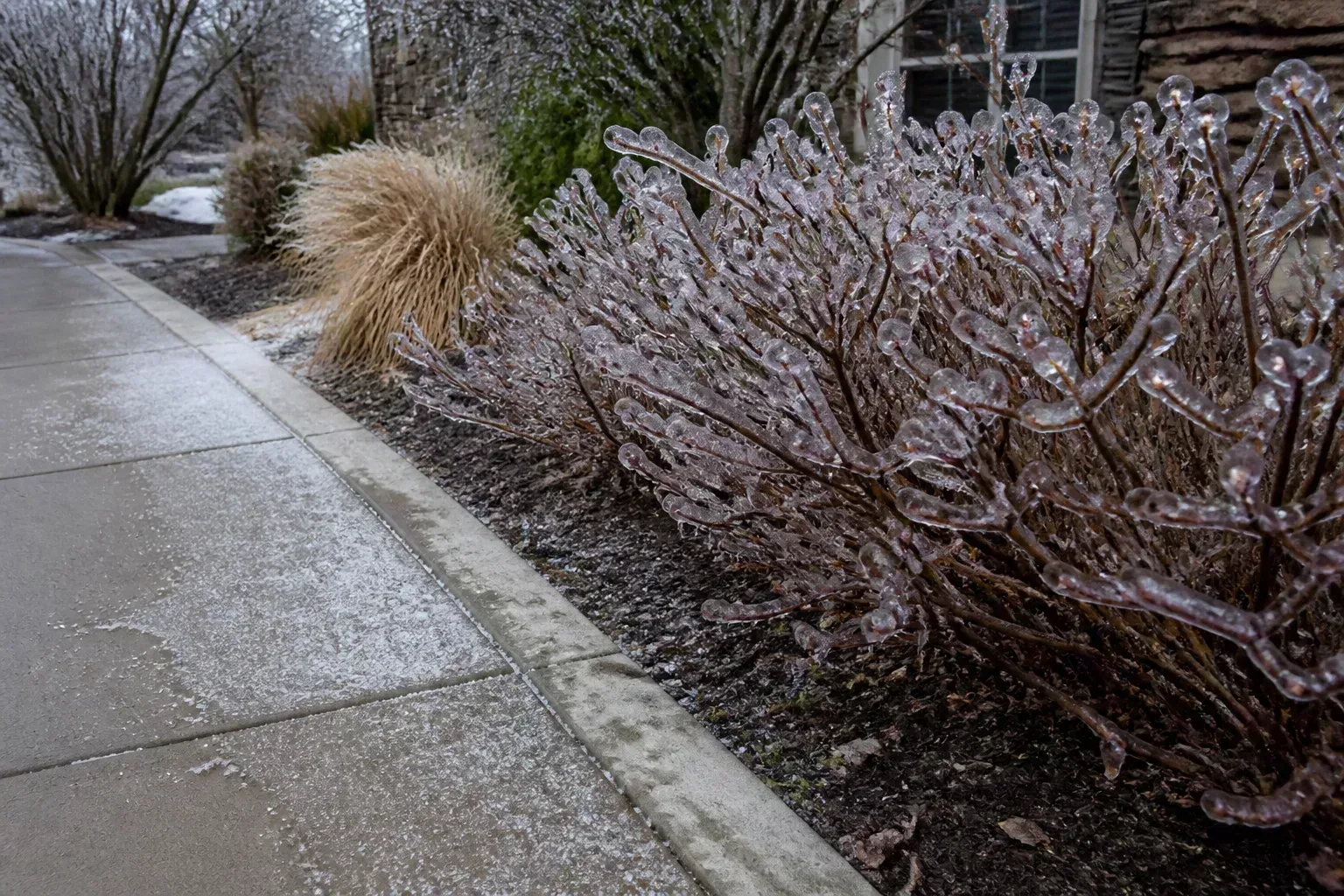
When salted snow melts or when you pile slush from treated walks onto lawn and beds, dissolved salt enters soil. Sodium can displace other nutrients at the root surface. Chloride is taken into foliage and interferes with photosynthesis. Together they create osmotic drought—roots sit in wet soil but cannot pull in water because salt concentrations outside root cells are too high. NC State Extension notes that sodium chloride de-icing salts can injure roots and foliage within roughly 30 feet of heavily salted pavement as melt carries ions off hardscape.
Soil injury is cumulative. A single sloppy February may yellow a lawn edge; five winters of piling salty snow in the same corner can leave soil too toxic for blueberries, azaleas, and many conifers. Heavy clay that drains poorly holds salt longer than sandy loam, which is why identical salt habits produce worse beds in some yards than others.
Signs Your Plants Have Salt Damage
Salt symptoms overlap with drought, fertilizer burn, and fungal disease, but placement and timing usually tell the story. Look for patterns tied to pavement, traffic, and melt direction—not random spots in the middle of the yard.
Evergreen and Shrub Symptoms
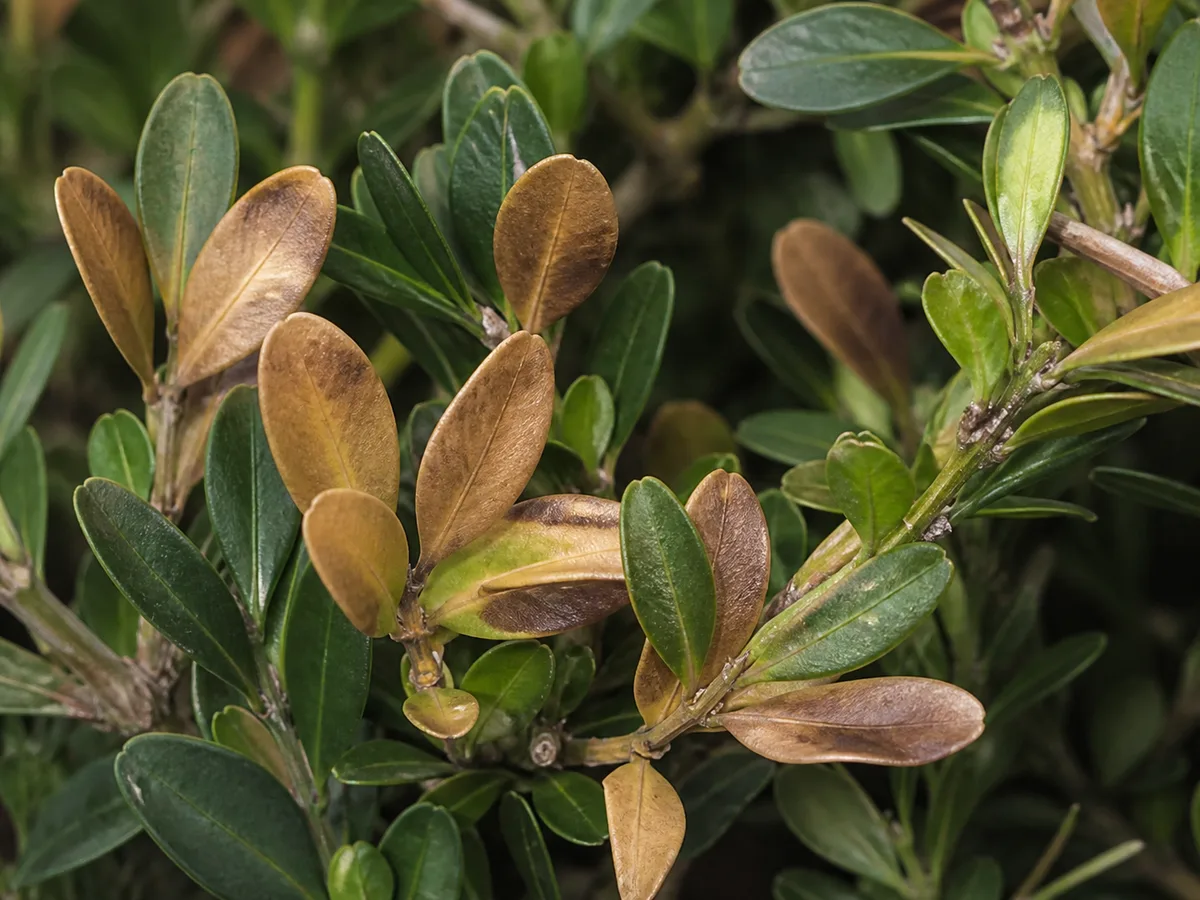
On conifers and broadleaf evergreens, watch for needle tip flecking, yellow or brown discoloration starting at margins, and twig dieback on the exposed face. Eastern white pine (Pinus strobus) is notoriously sensitive; the Missouri Botanical Garden specifically warns against planting it along roadways. Euonymus, boxwood, and yew often show bleached or bronze foliage on the traffic side while inner leaves stay greener.
Shrubs may leaf out weeks later than the same species elsewhere in your yard. Flowers and new shoots can be smaller than normal. Witches’ brooms—tight clusters of twigs sprouting from one point—signal past bud kill from spray. A white crust on soil or mulch near the crown, especially after dry spring weather, suggests salt accumulation at the surface.
Lawn and Perennial Symptoms
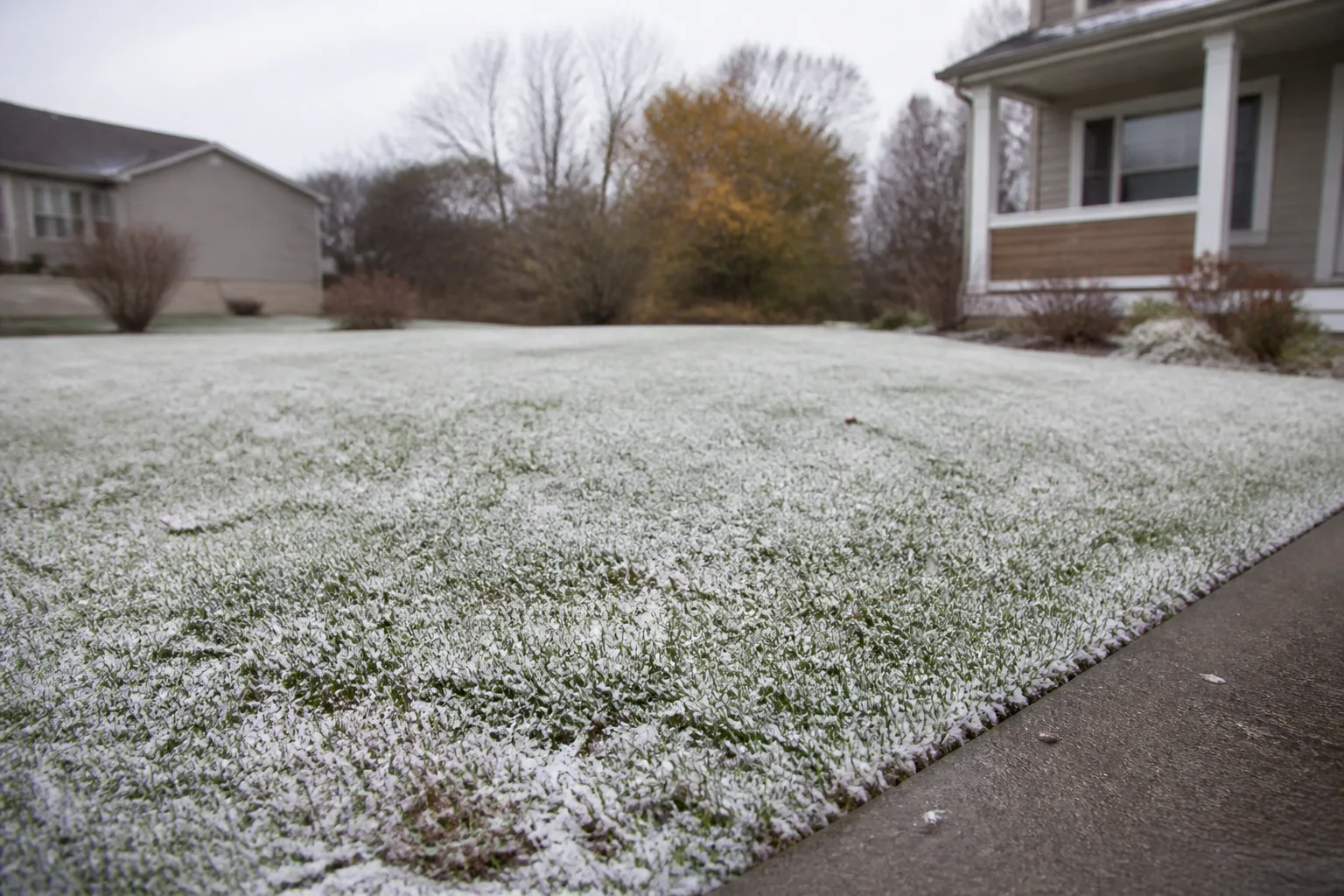
Turf along driveways, walks, and street edges often turns straw-colored or thin while the lawn center stays green. Grass may look wilted despite wet soil because roots cannot access water. Perennials in raised beds beside salted steps may show marginal scorch on first leaves, stunted growth, and early fall color or defoliation in late summer during hot dry spells—classic delayed soil-salt stress.
Compare both sides of the property. If damage hugs hardscape and follows the path meltwater travels, salt rises to the top of your suspect list. If identical symptoms appear on all sides regardless of pavement, investigate drainage disease, dog urine strips, or mower fertilizer overlap before blaming de-icers alone.
Salt Damage vs. Other Winter Problems
Winter desiccation without salt also browns evergreens, especially on windy sunny south exposures, but it usually affects whole plants or windward sides—not strictly the pavement side unless salt is involved. Snow mold on lawns produces circular matted patches under prolonged snow cover; it is fungal, not chemical, though salt-thinned turf recovers more slowly from mold the following year. Our guide on things to never do with grass in winter covers snow mold prevention separately.
Salt burn often appears earlier on evergreens (late winter into spring) while soil salt may not show full vigor loss until summer stress. Fertilizer burn from late-season lawn feeding can mimic edge browning but rarely follows a perfect pavement line. If you applied high-nitrogen products on frozen turf, cross-check timing; if you only salted walks, trust the edge pattern.
Pets and wildlife do not create witches’ brooms on shrubs. Vole tunnels in turf are unrelated to needle flecking on a street-facing hemlock. Separate problems can stack—salt-weakened plants are more vulnerable to drought and pests—so fix the salt pathway even when secondary issues appear.
Will Damaged Plants Recover?
Recovery depends on injury type, species sensitivity, how many winters exposure repeated, and soil drainage. There is no single yes or no; there is a decision tree.
What Usually Bounces Back
Light spray burn on needles or leaves where buds and branch bases are still green under a scratch test often outgrow damage after one season. New foliage can mask browned tips by midsummer. Turf with thinned but living crowns along a walk can fill in after spring leaching and normal mowing once soil salt drops. Deciduous shrubs that leaf out late but push healthy new shoots from lower wood frequently regain form within two years if soil salt is flushed and you stop piling salty snow on them.
Give plants a full spring before declaring death. Scratch small twigs: green and moist means wait; brittle and brown through the cambium means that branch is gone. Grass crowns near the soil should show white healthy tissue when you pull a few blades; black mush means reseed or sod that strip.
When Replacement Is Smarter
Replace when major scaffold branches die on slow-growing evergreens, when the same plant fails two springs in a row despite leaching, or when soil in a small bed stays crusty and plants wilt in wet soil every summer—signs chloride has built past practical recovery on your drainage type. Repeated pink-tinged lawn edges that never thicken may need sod plus soil amendment or a gravel border redirecting melt.
Do not keep replanting salt-sensitive species in the same hot zone. Switching from eastern white pine to Austrian pine, or from burning bush to fragrant sumac beside a salted walk, is landscape design—not surrender.
Spring Recovery Steps That Actually Help
Once you have identified salt as the culprit, spring work focuses on diluting soil salt, improving drainage, and reducing further chemical stress while plants are trying to regrow.
Flush Salty Soil After Thaw
The Missouri Botanical Garden recommends heavy watering in spring to leach salt from well-drained soils. Start when soil is thawed and can absorb water—not during hard freeze. Apply water slowly across affected beds and lawn strips so melt percolates downward rather than running off into storm drains carrying more salt to the storm sewer.
Rinse evergreen foliage on the road-facing side with clean water early in spring to dissolve dried salt crystals on leaves. This helps spray-injured plants hydrate before new growth emerges. In dry springs, repeat light rinses after rains if crust reappears on soil.
Leaching works poorly on compacted clay where water ponds. In those beds, mechanical aeration, adding compost on top (not buried in a thick layer that blocks gas exchange), and redirecting downspouts and melt paths matter more than a single heroic flood. If water stands for hours after flushing, you are fighting geology—not just salt.
Gypsum, Compost, and Drainage Fixes
Gypsum (calcium sulfate) is often suggested because calcium can help displace sodium on clay particles and improve structure in some soils. It is not a magic erase for chloride toxicity in foliage or for sand-dominated beds. Use gypsum as one tool on heavy roadside clay after leaching: spread according to label rates, water in, then leach again. Pair with organic matter—compost worked into the top few inches of perennial beds—to improve infiltration so future rains carry salt deeper.
Hold off on high-salt chemical fertilizers on injured plants until they show stable new growth. Salt-stressed roots are already managing ion balance; extra fertilizer salts can worsen marginal burn. Use a soil test before heavy feeding; phosphorus and potassium needs differ from nitrogen guesses.
Grade walks and driveways so melt drains away from beds when possible. A shallow channel or swale toward a drain—not through your prize border—beats treating symptoms every April. For lawn edges, see our guide on whether to use a snow blower or shovel on lawn for discharge rules that keep salty slush off turf.
Pruning After Salt Injury
Resist shaping burned evergreens the day you notice brown tips. Wait until new growth shows which buds are alive—often late spring for conifers, earlier for broadleaf shrubs. Prune dead twigs back to live wood with clean tools. Remove witches’ brooms only if you want a cleaner silhouette; they are harmless but busy-looking.
On deciduous shrubs, delay hard renovation until you can see live buds along stems. Light corrective pruning after leaf-out is safer than February guessing. Turf does not need pruning—reseeding or sodding comes after leaching and soil prep if crowns died.
If municipal spray killed the street-facing face of a hedge but the back is green, you may reshape asymmetrically or install a barrier before next winter rather than shearing the whole plant to stubs.
Prevent Salt Damage Next Winter
Prevention is cheaper than replacing a ten-foot juniper. Stack tactics: less salt, smarter placement, physical shielding, and appropriate plants.
Safer De-Icer Choices
The Missouri Botanical Garden urges reducing total salt use first. Pure salt should never land in heaps. Mix de-icers with sand, cinders, or ash so less chloride reaches plants while grit improves traction. Mechanical removal—shoveling and blowing before applying product—cuts chemical load dramatically.
Calcium chloride and magnesium chloride products are often marketed as safer; they still injure plants if overapplied and should be mixed with abrasives the same way. They are less soil-toxic than sodium chloride in many cases but not harmless to foliage spray. Potassium chloride is another alternative for some sites. Sand alone provides traction without melting in extreme cold but avoids chemical injury—ideal along lawn edges when safety still allows.
Read labels. Avoid fertilizers sold as ice melt unless you intend to feed pavement. Spot-treat ice patches instead of broadcasting across entire walks. Skip late-season applications when soil is thawing and salt will soak in instead of running off frozen ground.
Snow Placement and Physical Barriers
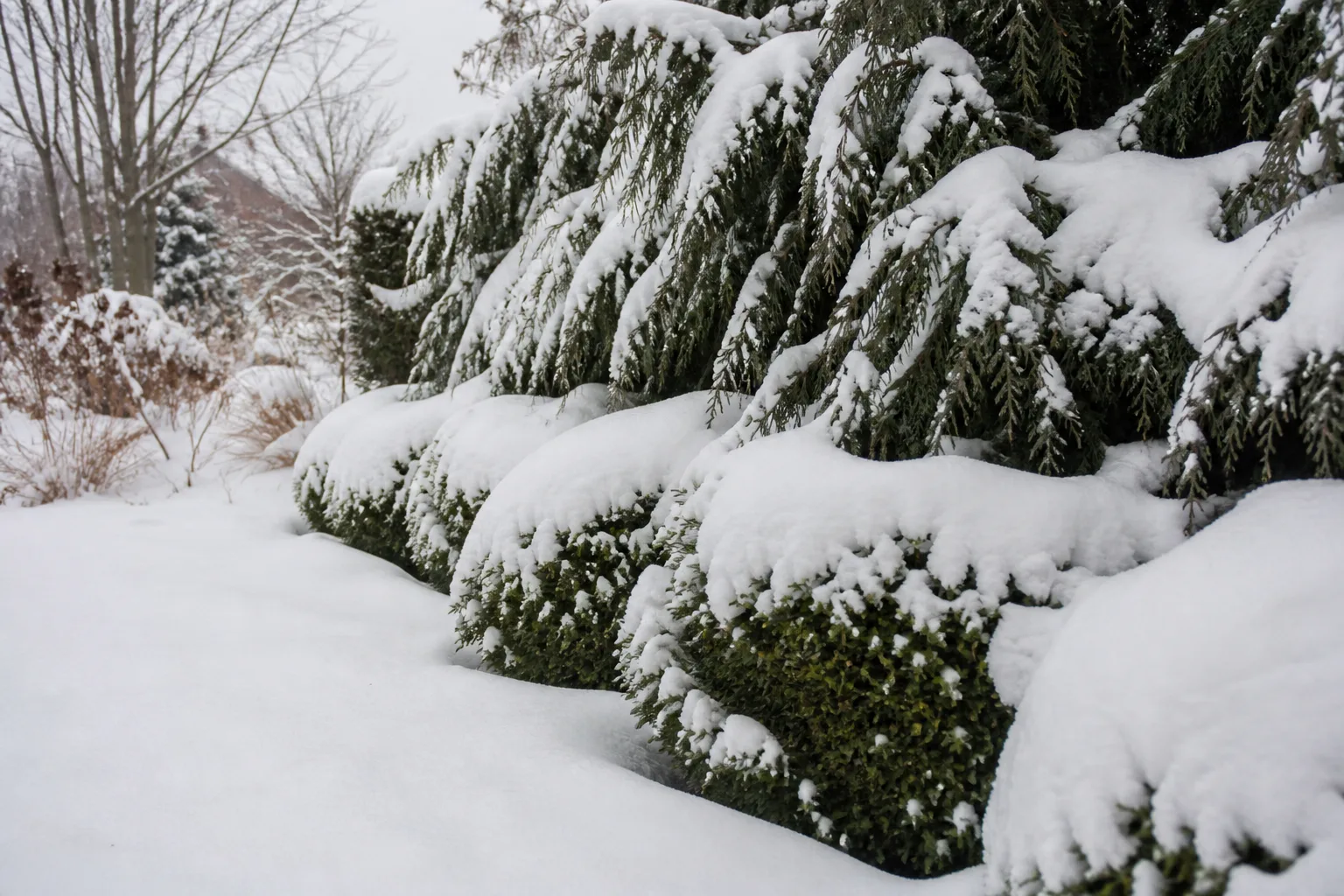
Where you put snow matters as much as what you melt it with. Never stockpile salty slush from walks onto lawn or beds—route it to pavement extensions, gravel pads, or thin-spread zones in full sun. Rotate discharge direction each storm so one turf strip does not collect every berm. Our winter lawn mistakes guide explains why repeat piles invite more than salt injury alone.
Shield sensitive plants with burlap, plywood, or mesh screens on the traffic side—temporary winter fences between shrubs and the spray drift zone. Plant new trees and shrubs at least 50 feet from highway salt spray if downwind; farther when possible. For residential drives, even a few feet of buffer plus a low snow fence reduces direct slush hits.
Reflective stakes along bed edges protect plants from plow scrape and remind operators where not to push salty banks. Communicate with snow contractors: “No sod edge scraping, no salty pile on the north bed” is a legitimate instruction.
Salt-Tolerant Plants for Roadside Beds
Even tolerant plants are not immune—they survive more salt, not infinite exposure. When redesigning a hell-strip or driveway border, choose species known to handle roadside stress per the Missouri Botanical Garden and extension references:
| Category | Examples |
|---|---|
| Trees | River birch, ginkgo, black gum, white oak, bald cypress, Japanese tree lilac |
| Shrubs | Fragrant sumac, barberry, black chokeberry, mock orange, blackhaw viburnum |
| Evergreens | Austrian pine, Colorado spruce, eastern redcedar, Gro-Low sumac |
Avoid eastern white pine, many azaleas, blueberries, and red maple in the direct melt path. Mix deep-rooted trees with gritty mulch and raised grade so salt-laden water moves past roots. Combine tolerant planting with less salt—not tolerant planting with more salt.
Conclusion
Road salt damage is a placement and chemistry problem dressed up as a mystery browning. Spray injury announces itself on the pavement-facing side of evergreens; soil salt whispers through stunted growth, wilted wet soil, and crusty edges until summer heat makes it obvious. Most plants can recover when exposure drops, soil leaches on well-drained beds, and you stop aiming salty snow at the same victims every storm.
This spring, walk your hardscape lines before buds break. Rinse foliage, flush soil where drainage allows, delay pruning until live wood is obvious, and plan winter habits—mechanical clearing, abrasive mixes, barriers, and tolerant species—that keep sodium and chloride out of your garden’s water. Safety on walks still matters; the win is clear ice with less poison, not choosing between broken bones and dead yews. Get the snow placement right and you will spend fewer April mornings wondering whether melt killed the plants—or whether they will come back.