Snow Blower vs Shovel for Lawn-Safe Winter Cleanup
Snow blower or shovel for winter cleanup? Learn when to leave lawn snow alone, which tool clears hardscapes safely, and where to pile snow without spring damage.
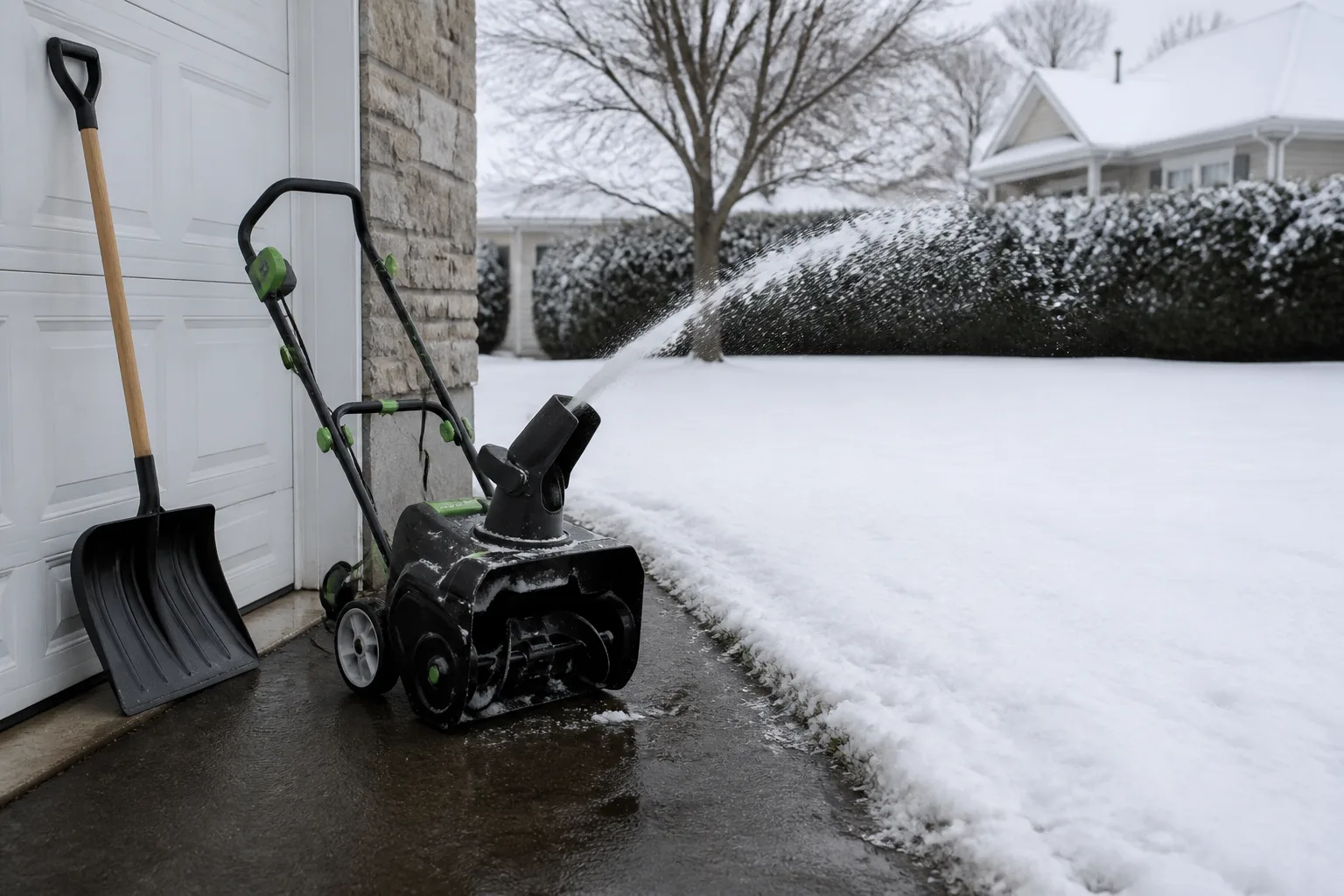
The question sounds like a tool comparison. It is not—at least not on the grass itself. Natural snow sitting evenly on your lawn needs neither a blower nor a shovel. The real winter job is clearing driveways, walks, and steps without turning the turf into a storage dump, a salt sponge, or a snow-mold incubator. Once you split those two jobs, the blower-versus-shovel decision gets much simpler—and your lawn stays healthier through melt.
Quick Answer: Clear Hardscapes, Leave the Lawn Alone
On open lawn: do nothing to natural snowfall. A moderate, even blanket insulates dormant cool-season crowns from bitter wind and freeze-thaw swings. Blowing or shoveling it off strips that protection and buys you nothing in spring.
On pavement: choose the tool that clears hard surfaces fastest with the least repeated pile-up on turf edges. Long driveways and frequent heavy storms favor a snow blower; steps, tight corners, and light dustings favor a shovel. Almost every homeowner needs both—the blower for bulk, the shovel for precision and touch-up.
Where the snow lands matters more than which tool moved it. Spread relocated snow thin across a wide area, rotate discharge zones storm to storm, and never stack every pass on the same lawn edge. For a deeper framework on pile placement, see our guide on whether to clear snow off grass.
The Two Winter Snow Jobs Homeowners Mix Up
Job one is insulation snow—what fell from the sky onto your yard in a more-or-less even layer. Job two is relocated snow—what you blew, shoveled, or plowed off pavement because humans need traction. Job one should usually stay put. Job two is the part that damages turf when it is piled, salted, or compressed in the same spot all winter.
Confusing the two is how people end up shoveling a whole backyard “to help the grass breathe” while leaving a four-foot berm along the driveway—the one place that actually needed a plan.
Why You Should Not Shovel or Blow Natural Snow Off Your Lawn
Clearing natural cover off turf is time-consuming, hard on your body, and actively unhelpful for grass health. You are removing insulation from crowns and soil without solving any access or safety problem—because nobody walks on the open lawn in January anyway.
Cool-season lawns—Kentucky bluegrass, tall fescue, fine fescues, perennial ryegrass—enter dormancy with crowns near the soil surface. Those crowns tolerate cold far better under an even snowpack than under bare, wind-scoured ground that heaves and refreezes all winter.
What Even Snow Cover Does for Dormant Turf
Snow traps air that slows heat loss from soil. That buffer reduces frost heave—the freeze-thaw push that lifts shallow roots and exposes crowns to drying cold. It also limits desiccation: winter wind on open turf pulls moisture from dormant tissue when roots cannot replace it.
Penn State Extension notes that gray snow mold develops under prolonged snow cover when soil is not frozen—which tells you snow creates a specific microclimate fungi can exploit, not that all snow is automatically harmful. The helpful version is moderate, temporary, even cover on healthy turf going into winter. That is the opposite of a plow berm frozen solid until April.
If you want the full picture on natural cover versus problem piles, read can snow kill your grass over winter.
The Few Times Lawn Snow Actually Needs Attention
Intervention on turf is about load, contamination, or access—not removing a normal blanket.
Spread or relocate when you have no other option and must put pavement snow somewhere: break deep piles into a thin layer across a larger lawn zone, or move snow to a gravel pad, mulched bed away from tree trunks, or sunny melt area. Utah State Extension recommends pushing snow away from driveways into sunnier yard areas when lawn storage is unavoidable—sun and thin depth speed melt and cut snow-mold risk.
Leave alone when snow is even, moderate, and temporary. Wait for melt when snow is frozen to the ground in a crust—you will scrape crowns trying to “help.”
Brush, do not shovel, when wet snow loads evergreen shrubs at the lawn edge—not the turf itself. That is a branch-load problem; our snow on garden beds guide covers it.
Snow Blower vs. Shovel for Driveways, Walks, and Steps
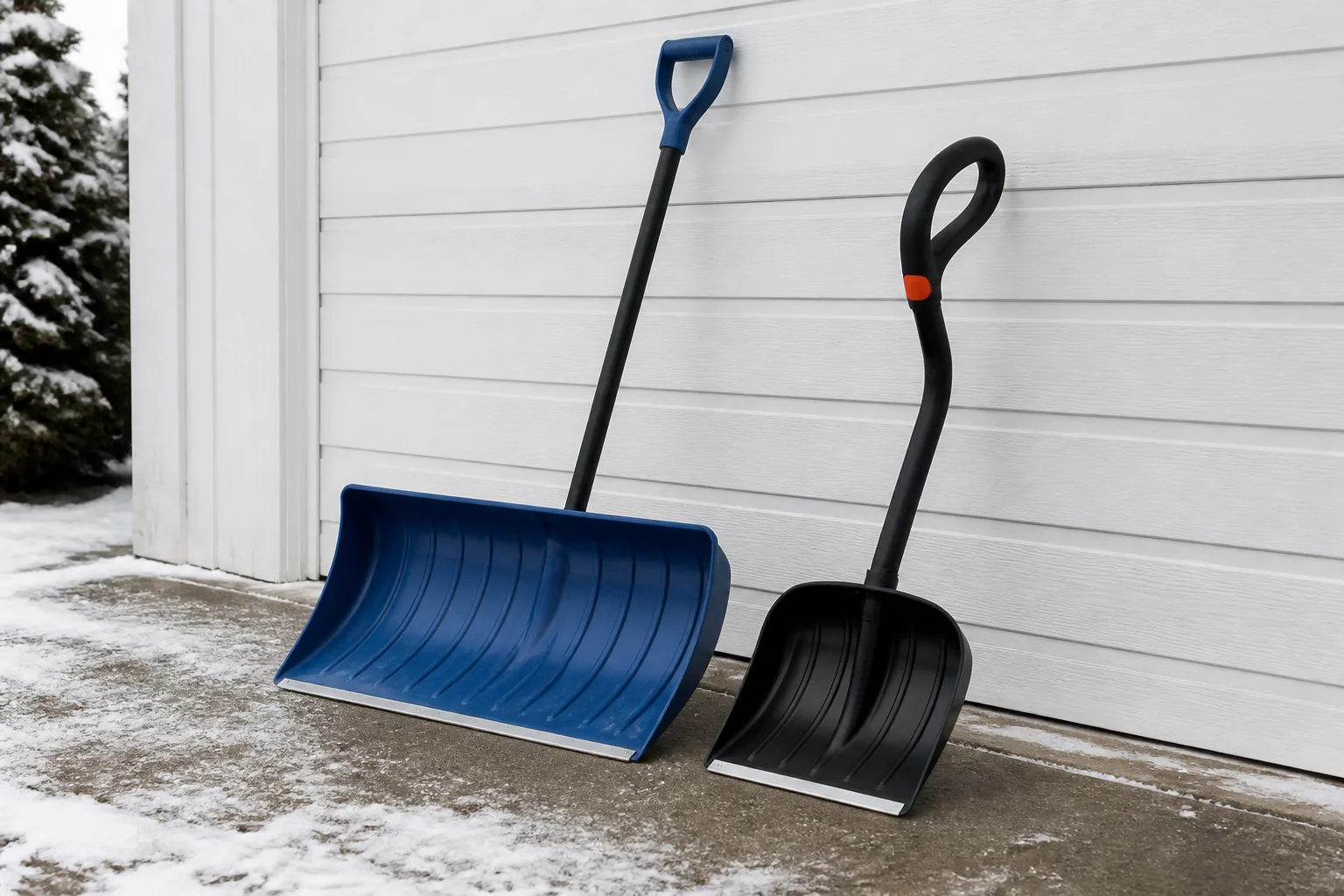
This is the comparison that actually matters. Both tools move relocated snow. Neither belongs on open lawn for natural cover. The choice comes down to area, depth, surface type, and your physical limits.
| Factor | Snow blower | Snow shovel |
|---|---|---|
| Best surfaces | Long driveways, wide walks, open aprons | Steps, porches, tight corners, car bumpers |
| Snow depth | Excels at 4+ inches and repeated storms | Fine for light dustings and touch-up |
| Physical strain | Low—steer, do not lift | High—lift, push, twist (see our how to shovel snow guide) |
| Lawn-edge risk | Creates concentrated discharge piles | Scraping risk if blade digs into turf |
| Startup cost | Higher purchase; faster on big jobs | Cheap; always worth owning |
When a Snow Blower Is the Smarter Choice
A snow blower wins when you clear large paved areas regularly—think a two-car driveway, long rural lane, or corner lot sidewalk stretch—and your region sees frequent storms that stack depth before you finish coffee.
Single-stage electric blowers suit light to moderate snow on flat, short drives. Two-stage gas or battery units handle deeper, wetter, or gravel-adjacent jobs where you need auger plus impeller power. The key lawn advantage: a properly adjusted blower does not scrape pavement to bare metal, so you are less likely to gouge sod at the lawn border than with an aggressive shovel edge—provided you aim discharge away from turf, not along it.
Blowers also reduce the cardiac and back strain that makes homeowners rush, pile badly, and throw snow wherever is closest. The National Safety Council links manual snow removal to thousands of injuries annually; clearing fast with a machine often means better pile decisions, not just saved time.
Use a blower when depth or area makes shoveling a multi-hour job, when you cannot safely exert that effort, or when you need consistent clearing mid-storm before compaction sets in.
When a Shovel Beats Starting the Blower
Keep a quality shovel in the garage even if you own a blower—always.
Steps and landings need a scoop or combination shovel; blowers are awkward and blowback is dangerous on stairs. Garage aprons and tight strips beside foundation planting often fit only a hand shovel. Two-inch refreshes after you already cleared do not justify dragging out a blower; a two-minute push with a wide pusher blade finishes faster.
Shovels also give precision at the lawn edge. You can feather the last inch off a walk without launching a discharge arc onto perennial beds. For technique that protects your back while you work, follow the push-first method in our snow shoveling guide.
Choose ergonomic models with a sturdy blade and curved or adjustable handle. A flimsy shovel encourages short, violent strokes that scrape turf and tweak your spine in the same motion.
Where to Put Snow So Your Lawn Survives Until Spring
Tool choice is half the battle. Discharge planning is the other half—and it is where most lawn damage actually starts.
Priority order when clearing pavement:
- Street or municipal collection zone where legal and safe—gets snow off your property entirely.
- Paved or gravel pad designed for storage—side yard, extra parking pad, alley apron.
- Mulched bed or ornamental ground away from sensitive tree trunks—not ideal, but better than repeat turf piles.
- Lawn only as last resort—spread thin across the widest possible area, in a sunny zone that melts quickly.
Never make the lawn edge your default dump because it is three feet from the driveway. That is how six inches per storm becomes a compressed wall by February.
Spread Thin, Rotate Zones, Never Build a Season-Long Berm
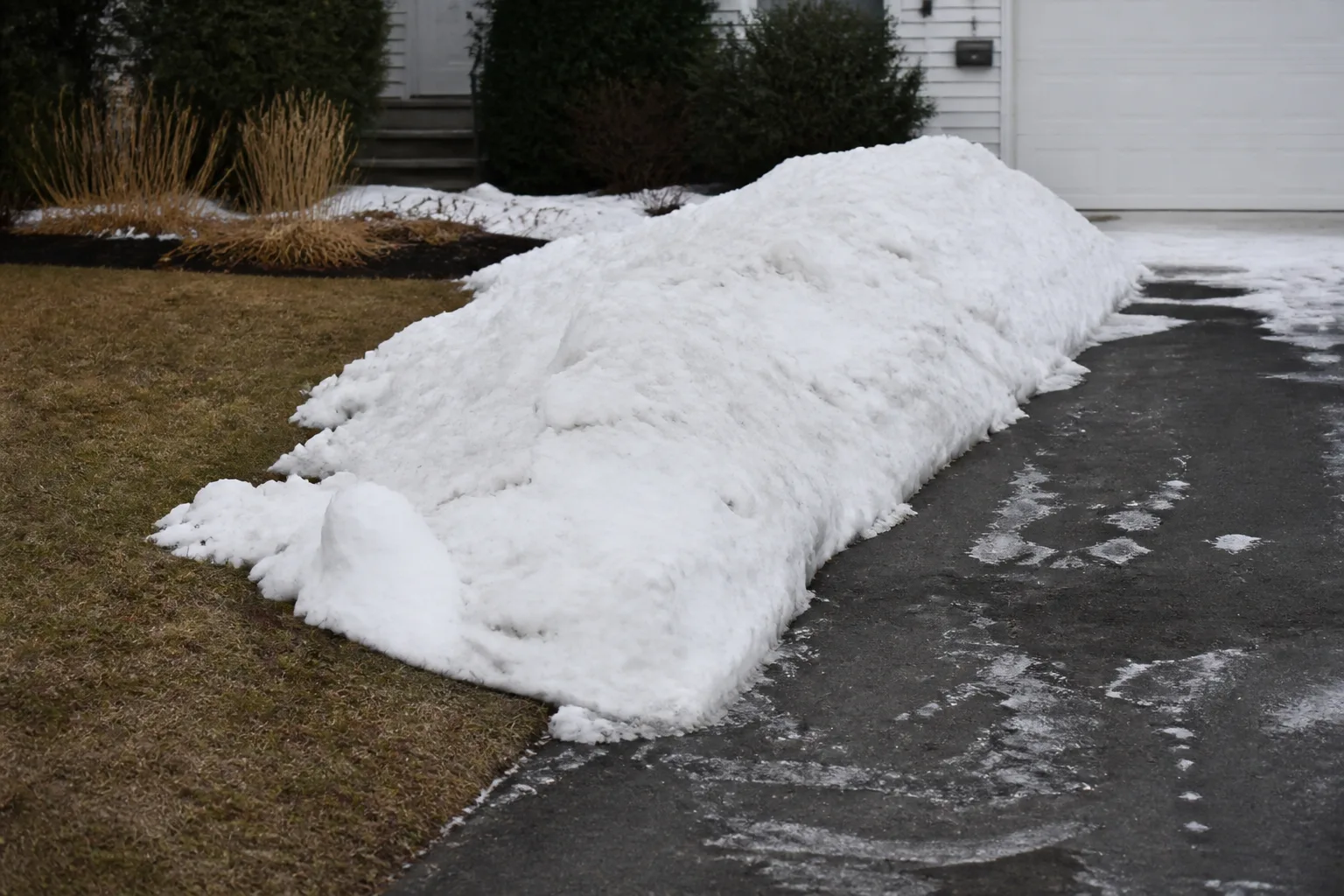
Depth plus duration plus placement decide whether relocated snow heals or leaves tan matted patches in March. Penn State Extension reports that the deeper the cover and the longer it remains, the greater the snow mold and turf injury—exactly what repeated edge piles create.
Rules that work in real yards:
- Spread, do not stack. Aim for an inch or two added per storm across a broad zone—not a four-foot wall on a ten-foot strip.
- Rotate discharge direction every few storms so no single patch stays buried all winter.
- Break up existing piles during a thaw if you still have weeks of cold ahead; a rake or shovel spread now beats a mold mat later.
- Favor sun and slope for any lawn zone that must receive snow; shade + pile + slow melt is the snow-mold trifecta. Learn what that looks like in our snow mold guide.
If you use a plow service, mark no-pile zones along beds and lawn corners before the first storm. A blower you aim carefully is often gentler on turf edges than a truck blade that adds weight every visit.
Keep Salt-Treated Walk Snow Off Turf Entirely
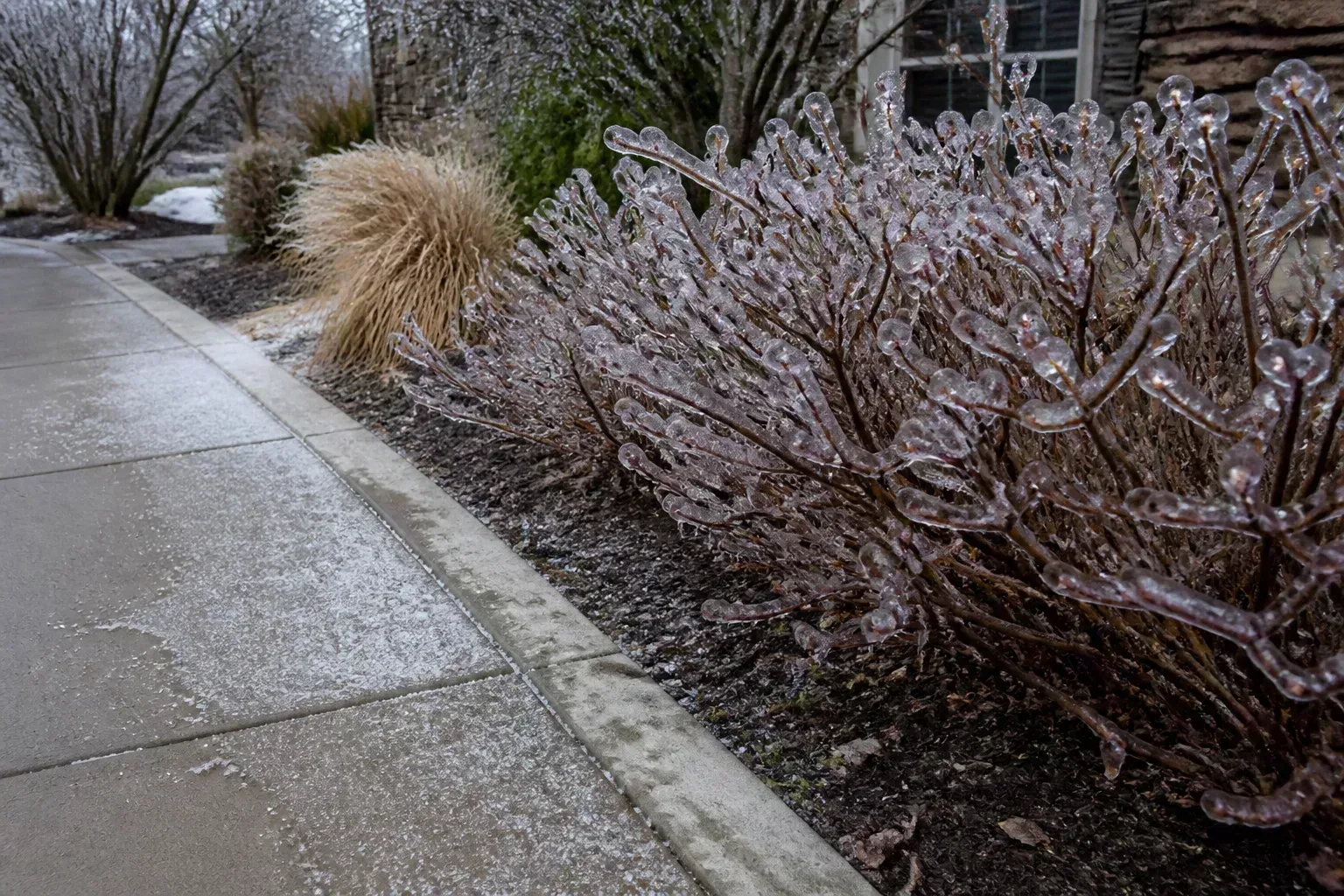
Snow from salted walks and steps is not the same as clean driveway powder. Sodium chloride and other de-icers dissolve into meltwater that soaks soil and burns roots. NC State Extension warns that sodium chloride de-icing salts damage roots and foliage within about 30 feet as melt carries salt off pavement. The Missouri Botanical Garden notes that salt in soil causes marginal burn, stunting, and long-term vigor loss—symptoms that show up late spring, long after you forgot where you piled February slush.
Never dump treated walk snow onto lawn. Stockpile it on pavement, route melt toward drains, or use sand for traction on walks and keep that snow separate. If salty slush already hit turf, plan spring leaching on well-drained soil once temperatures allow—see salt recovery in things to never do with grass in winter.
How Each Tool Can Damage Grass at the Lawn Edge
Both tools can hurt turf without ever touching the open lawn center. Edge damage is sneaky because the grass looks fine under snow until melt reveals scraped crowns, pink-tinged mold, or salt-burned strips.
Shovel Scraping, Salt Drag, and Crown Injury
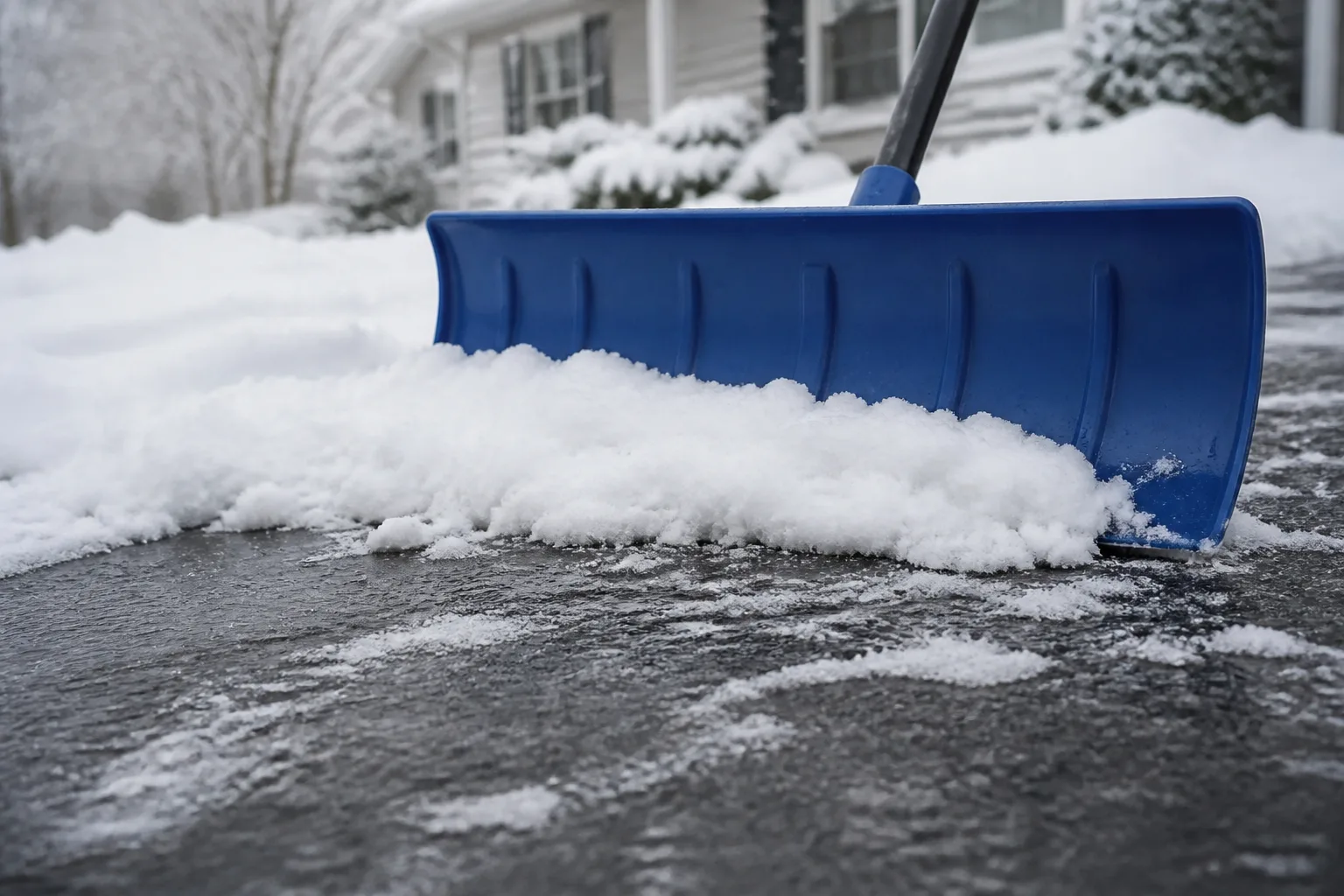
Shovel damage at the lawn border usually comes from scraping, not from lifting snow. When you angle a metal blade to get “clean” pavement, it digs into dormant sod, shears crowns, and exposes soil that erodes in thaw mud. Wet snow plus aggressive edging is the worst combo—heavy load, poor visibility, and turf that cannot heal until April.
Salt drag is the other shovel sin: clearing treated walks and pushing slush onto the grass strip beside the porch. That strip dies first every spring while the rest of the yard greens up.
Fix the habit, not the grass: leave a half-inch buffer of snow between blade and lawn when possible; finish the edge with a plastic-blade scoop or broom; keep treated snow on pavement.
Blower Discharge Arcs and Snow Mold Piles
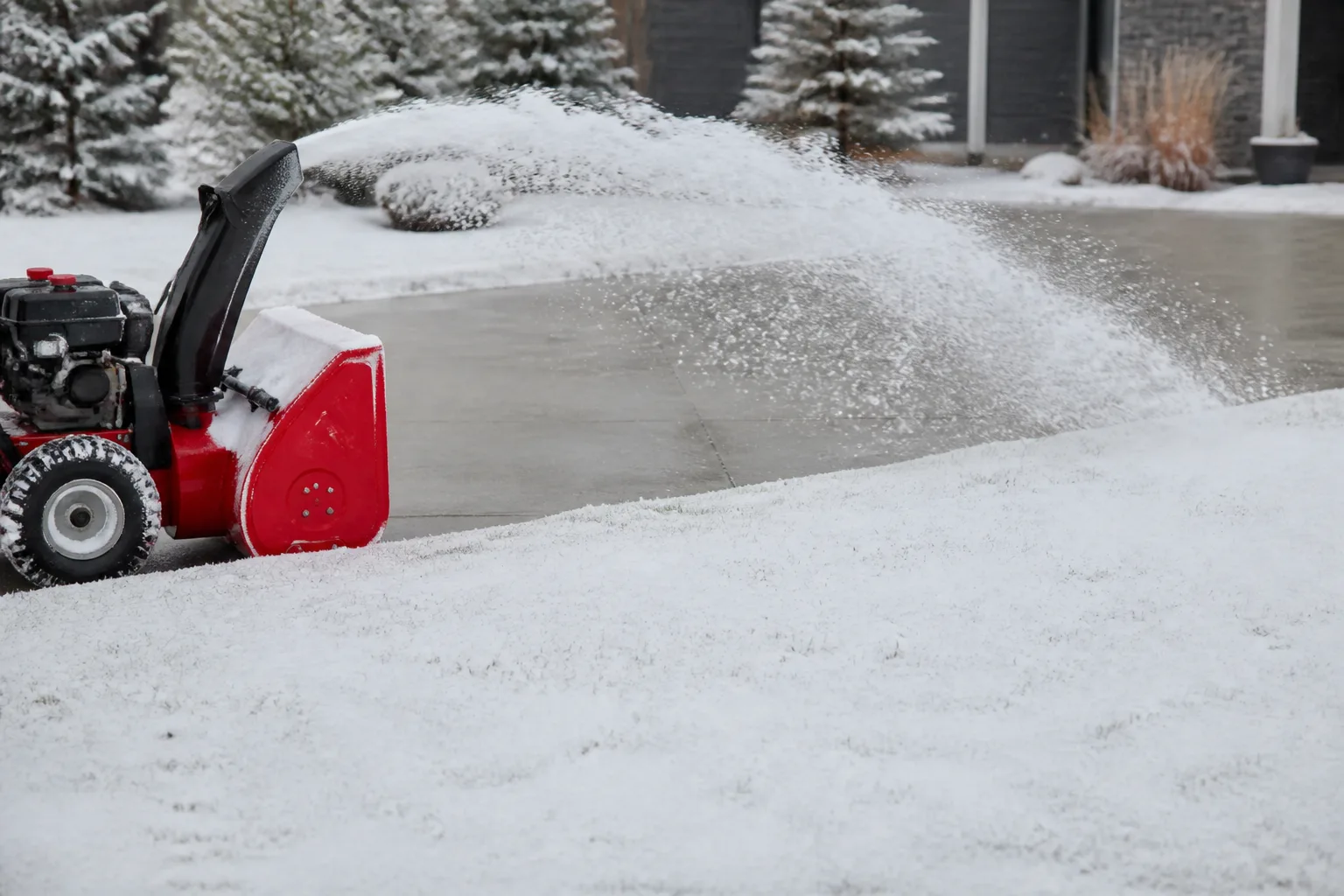
Snow blowers do not scrape turf when adjusted correctly—but they concentrate volume. A chute aimed down the lawn edge every pass builds the deep, persistent cover fungi love. Gray and pink snow mold thrive where snow stays wet, dark, and undisturbed for weeks—classic blower berm geometry.
Mitigation is aim and rotation:
- Point chutes toward pavement, beds, or thin-spread lawn zones—never the same shrub line or shade pocket twice.
- Walk discharge arcs after big storms; spread berms with a shovel while snow is still loose.
- Raise skids on gravel or uneven aprons so you are not throwing soil with snow onto lawn borders.
For spring patches that already show matted tan or pink crust, start recovery with our snow mold guide rather than panicking with April fungicide on damage that happened in January.
The Hybrid Setup Most Yards Actually Need
Treat snow removal like a two-tool system, not an either-or purchase.
Own a shovel always. Steps, touch-ups, edge feathering, and blower berm spreading all need it. Add a wide pusher for driveways plus a smaller scoop for stairs—one blade cannot do both well.
Add a blower when area or health demands it. If clearing takes more than 30–45 minutes by hand, you get multiple six-inch storms per winter, or your doctor has flagged strenuous exertion, a blower pays for itself in time and safer pile placement—not just convenience.
Electric blowers suit many suburban lots: quieter, no fuel mixing, lower maintenance. Cordless models trade run time for mobility; corded units need a plan for garage outlets and extension cords. Match intake height and clearing width to your deepest typical storm, not the once-a-decade blizzard.
Use the right tool for the pass: blower for the main driveway run; shovel for the apron beside beds, the strip along the garage, and the steps. Mid-storm, a quick shovel on walks plus one blower pass on the drive often beats a single marathon after compaction.
Decision Chart: Property Size, Snowfall, and Your Body
| Your situation | Best primary tool | Lawn-safe habit |
|---|---|---|
| Small urban walk + stoop only | Shovel (pusher + scoop) | Never pile on lawn; use street or pad |
| Suburban two-car drive, moderate snow | Blower + shovel | Rotate discharge; spread berms thin |
| Long rural drive or heavy lake-effect | Two-stage blower + shovel | Designate off-turf storage pad if possible |
| Physical limits or cardiac risk | Blower or hired plow | Mark no-pile zones; avoid manual marathon |
| Light dustings, flat lot | Shovel only | Push; do not scrape lawn edge bare |
When in doubt after a storm, ask one question: Did this snow fall on the lawn naturally, or did I put it there? If you put it there, spread it thin, keep salt off, and rotate next time. If it fell naturally, walk inside and make coffee.
Conclusion
For your lawn itself, neither a snow blower nor a shovel is “better”—because you should usually leave natural snow alone. The tools matter for clearing hardscapes without creating spring repair bills: blowers for speed and volume on large paved areas, shovels for precision, steps, and edge work. Most homeowners need both, plus a discharge plan that spreads relocated snow thin, rotates zones, and keeps salty slush off turf entirely.
Get pavement clear early before compaction, aim blowers away from repeat pile spots, and feather shovel edges instead of scraping sod. When melt arrives, matted patches get a rake—not panic. Nail those habits and your lawn enters spring with crowns intact, even if the driveway took a beating all winter.