Remove Snow From Garden Beds: When and Why
Most gardeners should not shovel snow off garden beds. Get a clear framework for bed-level snow, vulnerable evergreens, ice, and salt damage near planting areas.
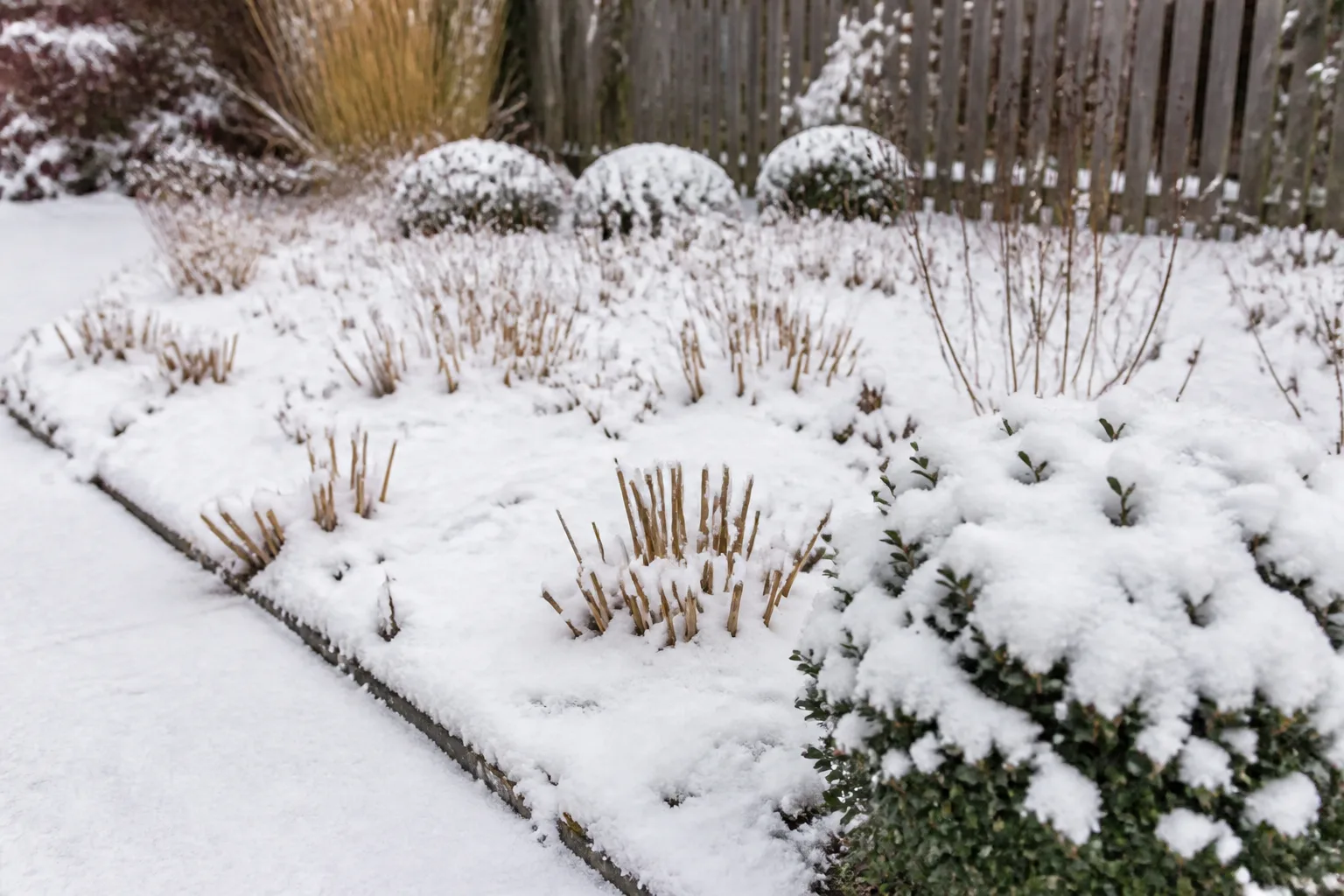
You wake up to six inches of fresh snow, grab the shovel, and head for the flower beds—then pause. Is clearing that white blanket helping your plants, or stripping away the best winter protection they have? The honest answer is both, depending on what kind of snow is where, and which plants are underneath.
Most of the time, snow sitting on the surface of a garden bed is doing good work. It insulates dormant crowns, moderates soil temperature swings, and holds moisture near roots. The problems start when wet, heavy snow loads up on branches—evergreen shrubs at the bed edge, winter-blooming hellebores pushing through the crust, or a young tree leaning over your perennials. That is a plant-load problem, not a bed-clearing problem. Understanding the difference saves you from two common mistakes: shoveling away valuable insulation, and ignoring shrubs that are about to snap.
Quick Answer: Most Bed Snow Should Stay Put
Default rule: Leave snow on open garden beds, raised beds, and mulch-covered perennial areas unless you have a specific reason to intervene—heavy load on vulnerable woody plants, salt-contaminated piles dumped on beds, or blocked drainage that will rot crowns in a thaw.
Light, fluffy snow on dormant beds is almost always an ally. NC State Extension notes that snow in the Carolinas is often heavy, but the insulating layer on soil and low crowns still beats bare frozen ground for root survival. You are not trying to expose soil; you are deciding whether above-ground plant parts need relief.
If your beds contain only cut-back perennials, buried bulbs, or dormant ornamental grasses, put the shovel down. If your beds mix those plants with upright evergreens, clipped boxwood, or winter flowers you can see above the snowline, scan those individuals—not the whole bed.
Why Snow Insulates Dormant Roots and Crowns
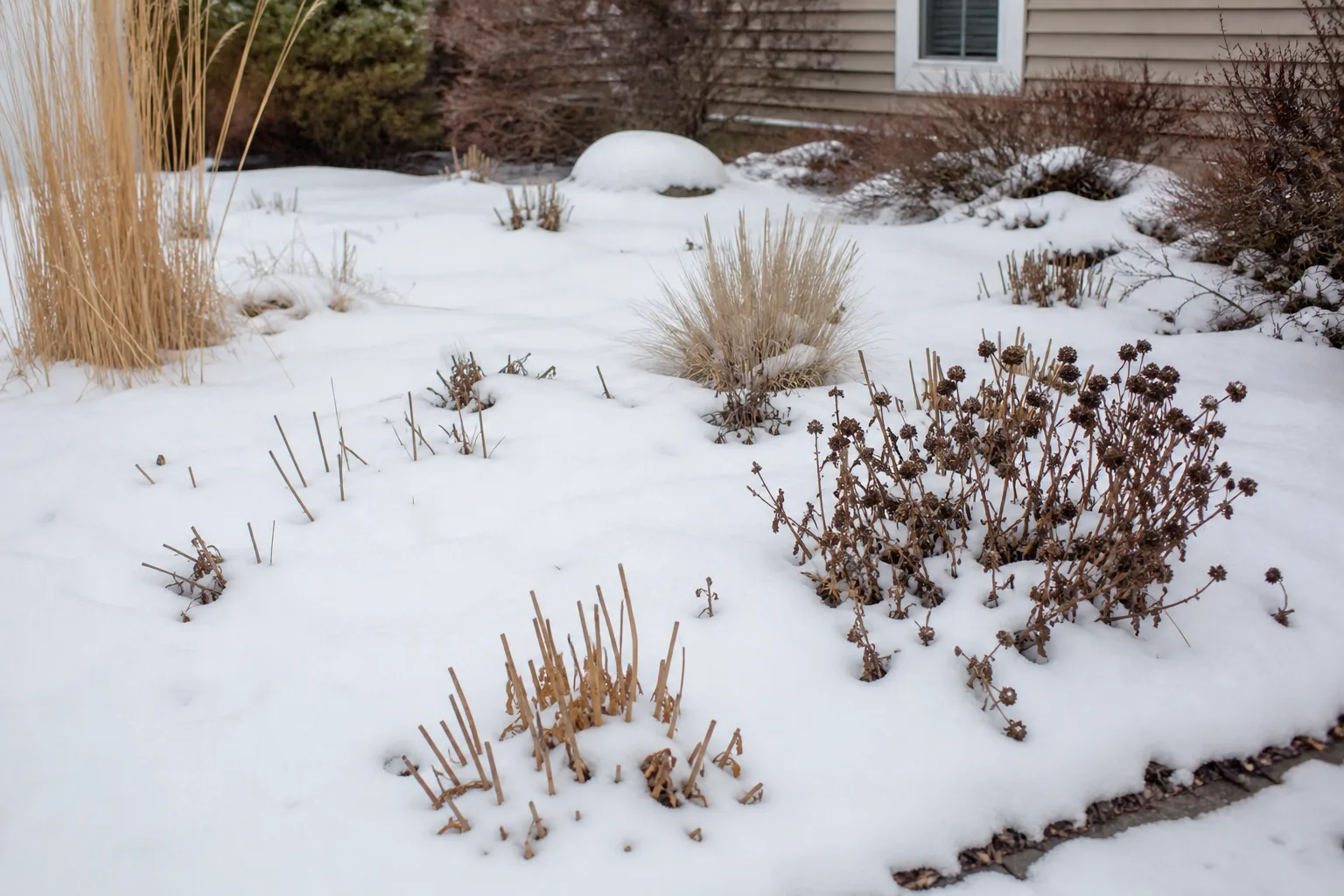
Snow traps air pockets that slow heat loss from soil. In climates with freeze-thaw cycles, that buffer reduces frost heaving—the push-pull that lifts shallow roots and exposes crowns to drying cold. Moist soil under snow also holds warmth longer than dry, exposed earth, which matters for marginally hardy plants and recently planted stock.
Tim Johnson, senior director of horticulture at Chicago Botanic Garden, puts it plainly: snow cover is a good insulator from cold temperatures for herbaceous perennials. Heavy snow and ice on branches are a separate issue. The insulation benefit lives at bed level; the breakage risk lives at branch level. Clearing every inch of a perennial bed to “help” plants often removes the blanket they needed and does nothing for shrubs that needed brushing at the tips.
When Heavy Snow on Bed Plants Demands Action
Wet snow near 32°F is the destructive kind. It adheres to needles and broad leaves, adds weight fast, and bends flexible wood until something cracks. After a heavy dump—or when cumulative storms stack more than a couple of inches on vulnerable plants—intervention is reasonable on the plant, not the bed floor.
Watch for these warning signs at bed edges and within mixed borders:
- Evergreen branches bowed below horizontal
- Formal hedges (boxwood, privet) with a concave “U” shape under load
- Winter-blooming stems pinned to the ground with flowers frozen in the snowpack
- Multi-stem arborvitae or upright junipers splaying outward at the base
- Young deciduous trees with narrow branch angles collecting snow like shelves
Powdery snow on a cold day is rarely urgent. The same depth of saturated, sticky snow on a borderline-freezing afternoon can break wood within hours—especially if a warm spell is followed by a hard refreeze that locks the load in place.
Winter-Blooming Perennials and Low Shrubs at Bed Edges
Hellebores, winter jasmine, early camellias, and witch hazel often bloom with snow on the ground. A light dusting on flowers is cosmetic. Heavy, wet snow bending stems to the soil is not—blooms and foliage saturate, freeze, and wilt against the pack.
For these plants, gently lift snow from stems and open flowers with gloved hands or a soft brush, but leave snow around the crown and root zone. You are freeing the display wood, not excavating the plant. If stems are already frozen into a crust, stop. Forcing them loose tears tissue; wait for melt and accept this year’s bloom may be shortened.
The Decision Framework: Leave, Lighten, or Wait
Use this three-way split before you touch anything:
| Situation | Action | Why |
|---|---|---|
| Snow on open soil, mulch, or dormant crowns | Leave | Insulates roots; clearing invites heaving and cold shock |
| Loose, fluffy snow on flexible shrub branches you can reach from the ground | Lighten | Bottom-up brushing prevents snap under added load |
| Snow or ice frozen to wood; mature tree canopy; ice storm glaze | Wait | Forcing frozen loads breaks bark and buds; trees need melt |
Leave applies to most vegetable beds in full dormancy, bulb beds, native pollinator patches left standing for winter interest, and any bed where plants are fully underground or cut back. Lighten applies to accessible shrubs and small trees with accumulating unfrozen snow. Wait applies to ice, crusted snow, and anything requiring a ladder.
If you are unsure, lean toward leave at bed level and lighten only where branches are clearly stressed. You can always brush more tomorrow; you cannot reattach a split leader.
Plants in Beds That Usually Need Snow Removal
Not every plant in a border shares the same risk. Structural evergreens and weak-wooded species in mixed beds are the usual candidates for gentle snow relief.
Evergreen Shrubs and Formal Hedges in Planting Beds
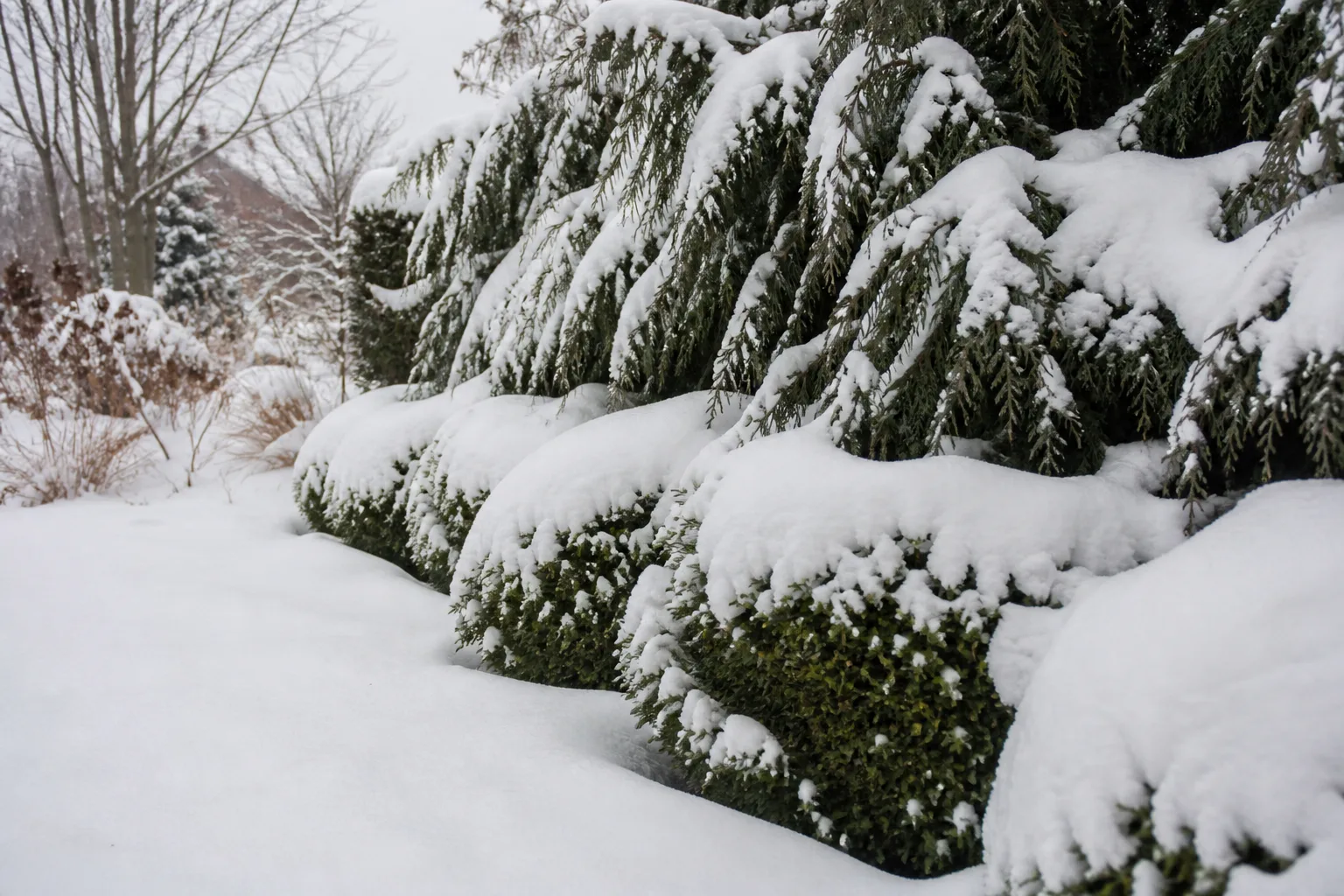
Arborvitae, Leyland cypress, upright junipers, boxwood globes, and sheared privet hedges collect snow on foliage and hold it. Globe forms and tight topiary are especially vulnerable—a broken branch creates a hole that may never fill in evenly. Colin Kirk of New York Botanical Garden notes that globe-shaped shrubs and formal sheared hedges are prone to flattening; weight can break branches that take years to recover.
NC State Extension recommends tying narrow, upright evergreens with multiple leaders before storms—rope around the outside or soft ties high inside the shrub—to prevent splaying. Remove bindings after melt. For post-storm care, brush snow before the next freeze glues it on.
Broadleaf evergreens in beds—rhododendron, holly, camellia—tolerate bending better than needled conifers but still benefit from lightening heavy wet loads on outer branches.
Young Trees and Multi-Stem Conifers Bordering Beds
Small ornamental trees planted at bed corners—Bradford pear, young Japanese maple, redbud—often have narrow crotch angles that fail under snow load. If a young tree borders your perennial bed and branches are touching down on hellebores or crushing path edges, lighten lower limbs from the ground upward.
Mature shade trees in or over beds are a different story. You can do little safely from the ground; patience until melt is the realistic option. For storm recovery after breakage, see our guide on what to do when snow crushes your plants.
Plants You Should Never Disturb Under Snow
Do not shovel snow off dormant perennial beds to “air them out” or speed spring. Exposed soil freezes deeper, cycles more wildly, and heaves crowns. Cut-back coneflowers, black-eyed Susans, sedum, and ornamental grasses smashed flat under snow will push new growth from the base in spring—the standing stems were already dead above ground.
Dormant Perennials, Bulbs, and Native Plantings
Tulips, daffodils, alliums, and lilies depend on stable cold under insulation. Garlic and overwintering kale in vegetable beds likewise benefit from snow cover unless a pile is physically smothering leaves you plan to harvest. Native meadow plantings and wildlife borders left standing for seed heads should stay buried; clearing exposes soil and removes habitat value without helping the plants.
Raised beds follow the same logic: snow on the soil surface insulates roots in the box. Only remove snow if you are relieving loaded plants at the bed edge or clearing a salt-contaminated dump (covered below)—not to bare the planting medium.
How to Remove Snow From Bed Plants Without Causing More Damage
When lighten is the right call, technique matters more than timing by five minutes. Cold, loaded wood is brittle. The goal is to reduce weight without shock.
Bottom-Up Brushing Technique
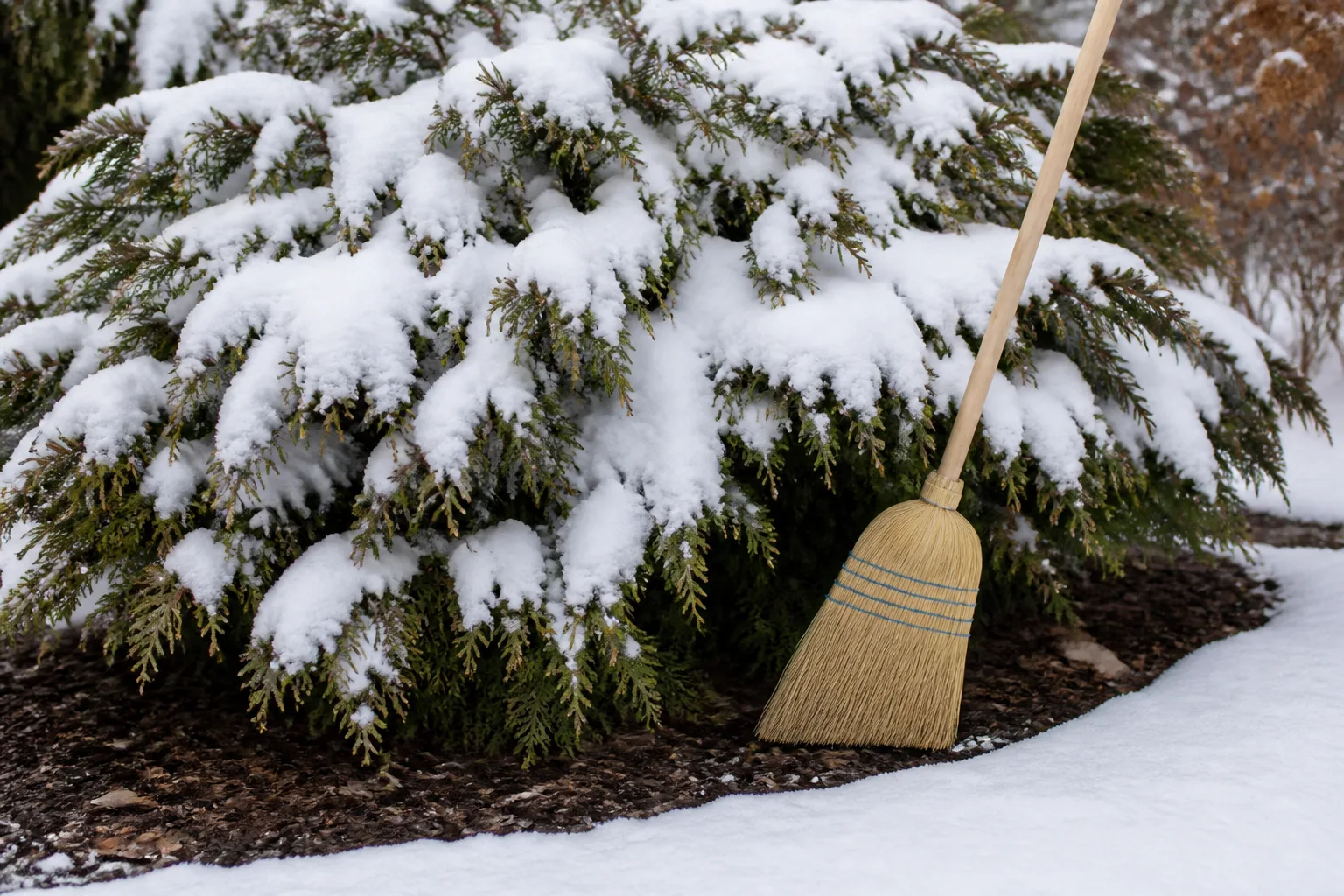
NC State Extension is explicit: begin at the bottom of the shrub and sweep snow off with a broom. Sweeping from the top dumps additional weight onto branches below and causes more breaks—the opposite of what you want.
Work outward from the trunk on each branch layer. Use light upward taps underneath laden twigs to let snow fall away. On small perennials, cup snow with gloved hands and lift—it off stems rather than pulling downward. Stop when the branch springs back slightly; you do not need bare wood.
Never shake plants to dislodge snow. Vibration on cold, stressed branches causes snaps at hidden weak points. The same rule applies to young trees: no shaking, no whacking with shovels.
Tools That Work (and What to Avoid)
Use: Soft household broom, car snow brush with foam head, gloved hands, small hand brush for hellebore clusters.
Avoid: Snow blowers aimed at beds (blows away mulch, damages bark, launches ice chunks), metal shovels scraping against stems, chemical de-icers tossed onto planting areas, and downward sweeping that bends limbs the wrong direction.
If wet snow is building through a multi-day storm, brush vulnerable shrubs when accumulation passes one to two inches on foliage—not because the bed needs clearing, but because repeated freeze cycles will cement the next layer. In regions with frequent storms, a quick pass on evergreens after each event beats one heroic session after everything has fused.
Ice on Garden Beds: Hands Off Almost Always
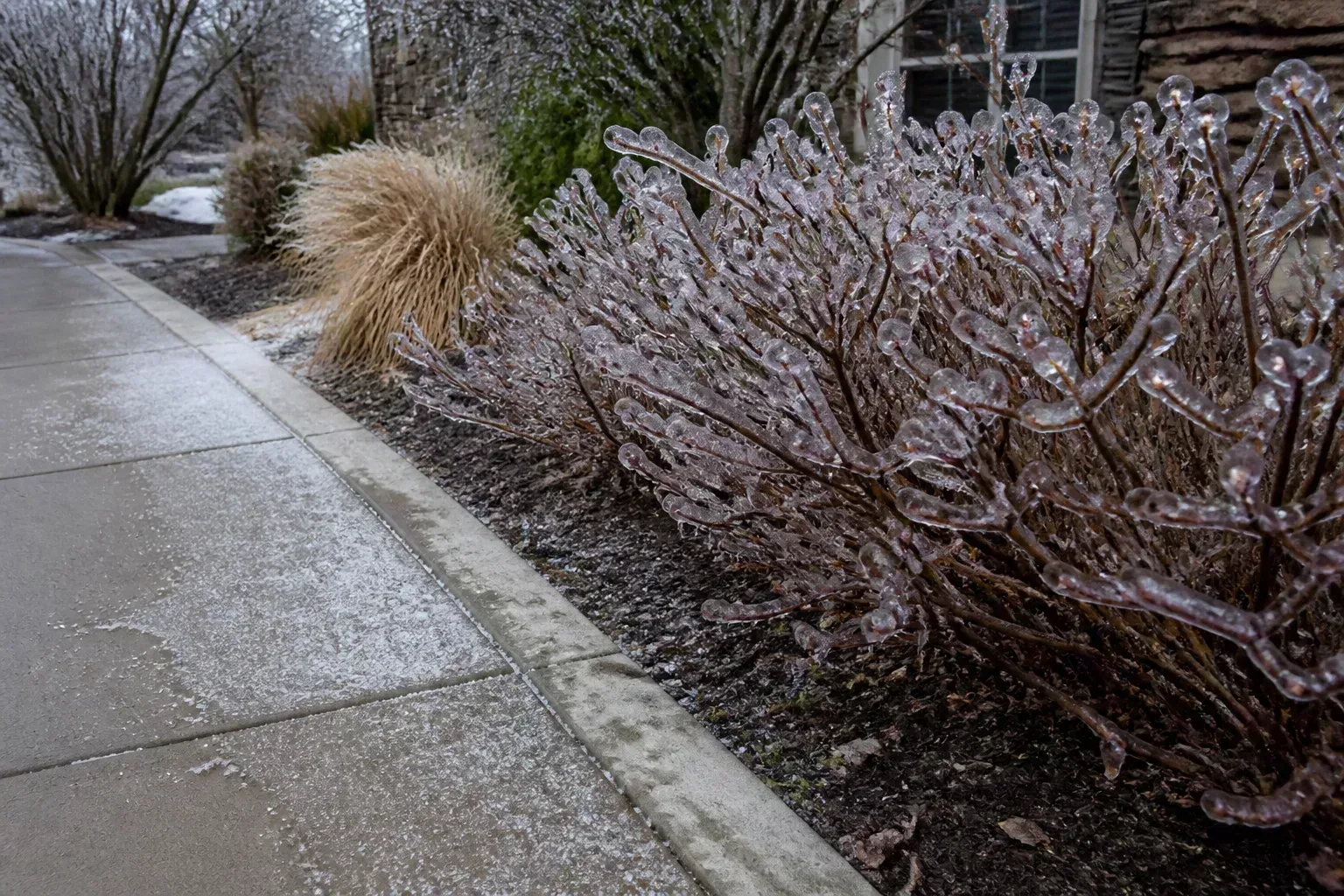
Freezing rain and glaze ice are not snow-removal problems—they are wait-for-melt problems. Once ice bonds to needles, buds, and bark, mechanical removal tears tissue. Tim Johnson at Chicago Botanic Garden advises that if snow or ice has frozen onto the plant, you should not try to remove it; you can do more damage than the ice itself.
The exception is a late-winter warm hose spray on fruit trees or flowering shrubs you are actively trying to protect from bud loss—and only when temperatures are safely above freezing and you accept runoff onto paths. That is a specialist move, not a general bed practice.
For ice-heavy branches threatening wires, walkways, or structures, call your utility or a certified arborist. Our post-storm recovery guide covers hazard triage in more detail.
Salt, De-Icers, and Snow Piles Near Your Beds
Some of the worst winter bed damage does not come from snow on plants—it comes from where you put snow after shoveling and what melts onto soil from treated walks.
Missouri Botanical Garden notes that sodium chloride de-icers injure plants through spray on foliage and salt-laden runoff into soil. Symptoms may lag until spring: browning evergreen needles, stunted new growth, marginal leaf burn. NC State Extension warns that sodium chloride can damage roots and foliage within 30 feet of application and recommends alternatives like calcium chloride or potassium chloride blends, sand for traction, and rinsing exposed evergreens when temperatures allow.
Bed-specific rules:
- Never pile shovelled walk snow onto planting beds if it contains de-icer residue
- Divert meltwater from salted drives away from beds when possible
- Choose salt-tolerant plants for bed edges along roads and walks, or erect burlap barriers before winter
- If salt has soaked into bed soil, slow leaching with plain water in spring on well-drained sites
Clearing snow off a bed for insulation reasons is usually wrong; clearing snow onto a bed from the driveway is often worse.
Before the Storm: Bed Prep That Reduces Snow Stress
The cheapest snow intervention happens in fall. A well-prepared bed needs less heroic brushing in January.
- Mulch after soil cools with two to three inches of shredded bark or leaves—moist, insulated soil holds heat better than bare earth (University of Minnesota Extension)
- Cut back spent perennials you do not want standing for winter interest, but leave healthy stems on grasses and seed heads if wildlife value matters
- Tie splay-prone evergreens at bed edges before the first heavy storm
- Install rigid A-frame shrub guards where roof snow avalanches onto foundation plantings
- Move pots off bed rims and away from eaves that dump sloughing snow
- Water deeply before hard freeze if autumn was dry—hydrated roots resist desiccation under snow better than dry ones
Avoid pruning broken-looking wood until late winter unless a limb is a safety hazard. Dormant cuts heal slowly and invite disease. For compost and bed cleanup timing in cold months, see what not to compost in winter.
After the Snow Melts: What to Check in Your Beds
When the pack retreats, walk beds with a notebook—not pruners.
Look for heaved crowns on shallow-rooted perennials and reset them promptly if soil is workable. Note split shrub leaders, torn bark, and branches that stayed bent after unload—many broadleaf shrubs rebound, but conifers with broken central leaders often warrant replacement. Check bed edges for salt burn on yew, boxwood, and white pine.
Photograph damage before cleanup; it helps if you consult an arborist or file insurance claims. Delay major pruning until you can see live wood in late winter. Fertilize lightly in spring only on plants that lost significant canopy—not as a reflex on every bed.
If damage was severe, our guide on recovering after heavy snow walks through save-vs-remove decisions plant by plant.
Conclusion
Removing snow from garden beds is usually a bad idea when you mean stripping insulation from dormant soil and crowns. Removing snow from plants in beds is sometimes essential when wet loads threaten evergreens, formal hedges, and winter flowers at the surface. Keep the bed blanket; lighten the branches that are bending.
Default to leave, brush bottom-up only when snow is loose and wood is reachable, and let ice melt on its own. Keep salted plow piles off your planting areas, prep beds in fall, and assess calmly after thaw. Get those three zones right—soil, stems, and runoff—and your winter garden survives the storm without the panic shoveling that causes more harm than the snow itself.