Snail vs. Slug: How to Spot the Difference
Learn the shell, mantle, and slime-trail clues that separate snails and slugs, plus how to confirm which pest is chewing your garden plants.
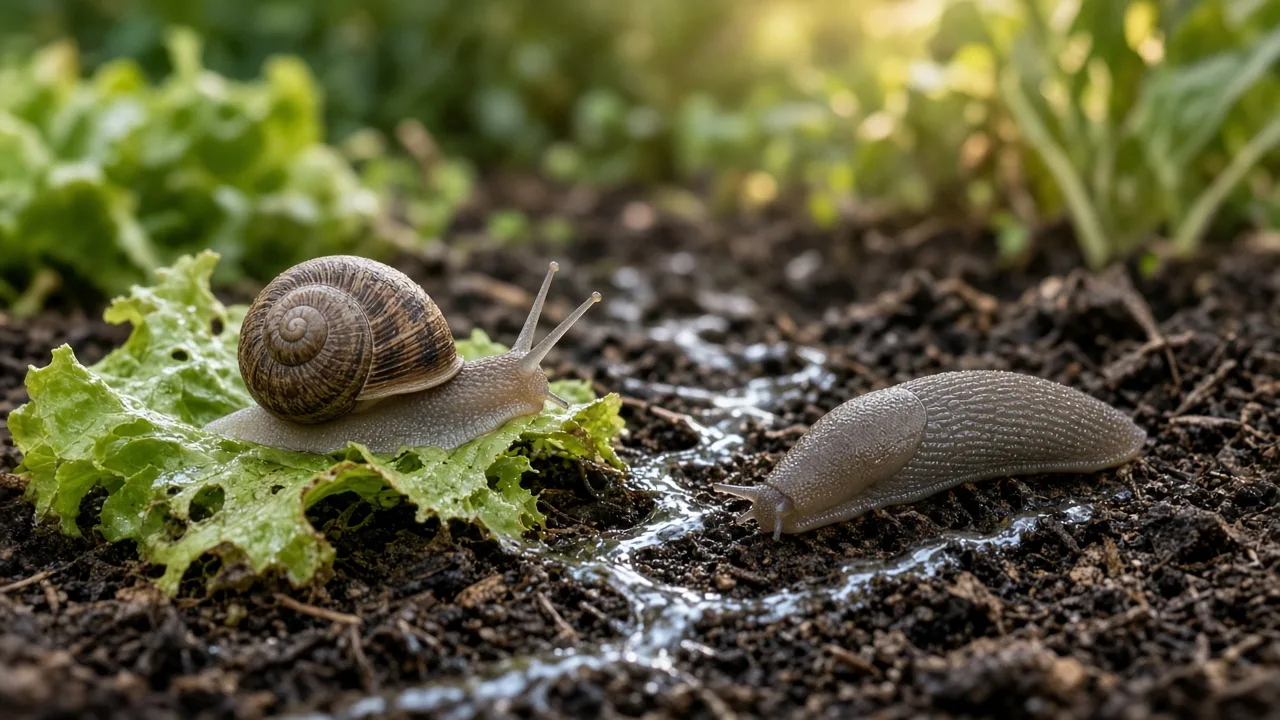
You stepped outside after a damp night and found ragged holes in your lettuce, a silvery streak across the flagstone, and something slimy retreating under a pot. Before you reach for bait or start crushing every slow mover you see, the useful first question is simpler: was it a snail or a slug? The answer changes which species you are likely dealing with, when it feeds, and how confidently you can confirm the ID from tracks alone.
Snails and slugs are not interchangeable pests. They share the same broad mollusk body plan, but the presence or absence of a visible shell changes how they move, where they hide, and how vulnerable they are to dry weather. A clear ID takes less than a minute once you know what to look for at the head, mantle, and foot.
What Snails and Slugs Have in Common
Both Are Gastropod Mollusks
Snails and slugs belong to the class Gastropoda within the phylum Mollusca — the same larger group that includes clams and oysters, but adapted for life on land (and in some cases in fresh or salt water). The name gastropod comes from Greek words meaning stomach and foot, which describes their basic layout: a muscular foot on the underside that glides forward while the digestive organs sit above it.
UC IPM notes that snails and slugs are similar in structure and biology except for the snail’s external spiral shell (UC IPM Snails and Slugs). That single difference drives most of what gardeners notice in the field.
Shared Body Features Beyond the Shell
Turn either pest over conceptually — not with bare hands if you are unsure of local parasites — and you will find the same basic toolkit. Both have two pairs of retractable tentacles on the head. The upper, longer pair carries light-sensitive eyespots at the tips and also helps with smell. The lower pair is shorter and used for touch and taste.
Movement depends on a gliding foot lubricated by mucus. The dried mucus is what creates the familiar silvery slime trail on pavers, pots, and leaf edges. Both snails and slugs scrape food with a tongue-like radula covered in tiny tooth-like denticles — which is why feeding damage looks like smooth-edged scraping rather than jagged tearing.
All common land snails and slugs are hermaphrodites, meaning each individual has male and female reproductive organs. They still usually mate before laying eggs, but a lone individual can sometimes reproduce on its own depending on species and conditions. Neither pest is an insect, so insecticides aimed at chewing caterpillars will not solve a mollusk problem.
The One Feature That Separates Snails From Slugs
External Shell vs. Internal Vestigial Shell
The defining difference is visible from arm’s length: snails carry a coiled external shell large enough to hide most or all of the body; slugs do not. If you see a spiraled shell on the back of a slow-moving garden visitor, you are looking at a snail.
Slugs are not shell-free in an evolutionary sense. Terrestrial slugs descended from land snails that reduced or internalized the shell over time (John Innes Centre — All About Slugs). Most garden slugs retain a small internal vestigial shell beneath the mantle — a calcium store you cannot see without dissection. That hidden shell is one reason slugs still need calcium-rich environments even though they cannot seal themselves inside a portable home.
Practically, the external shell gives snails a major advantage in dry weather. They can retract and estivate behind a parchment-like membrane that reduces moisture loss, sometimes clinging to tree trunks, fences, or walls until humidity returns (UC IPM). Slugs must seek cool, damp hiding places instead, which makes them more sensitive to drying heat and more likely to disappear deep into mulch, cracks, and irrigation boxes.
Do slugs turn into snails? No. They are separate branches of gastropod evolution, not life stages of the same animal.
How to Identify a Garden Snail in the Field
Brown Garden Snail Field Marks
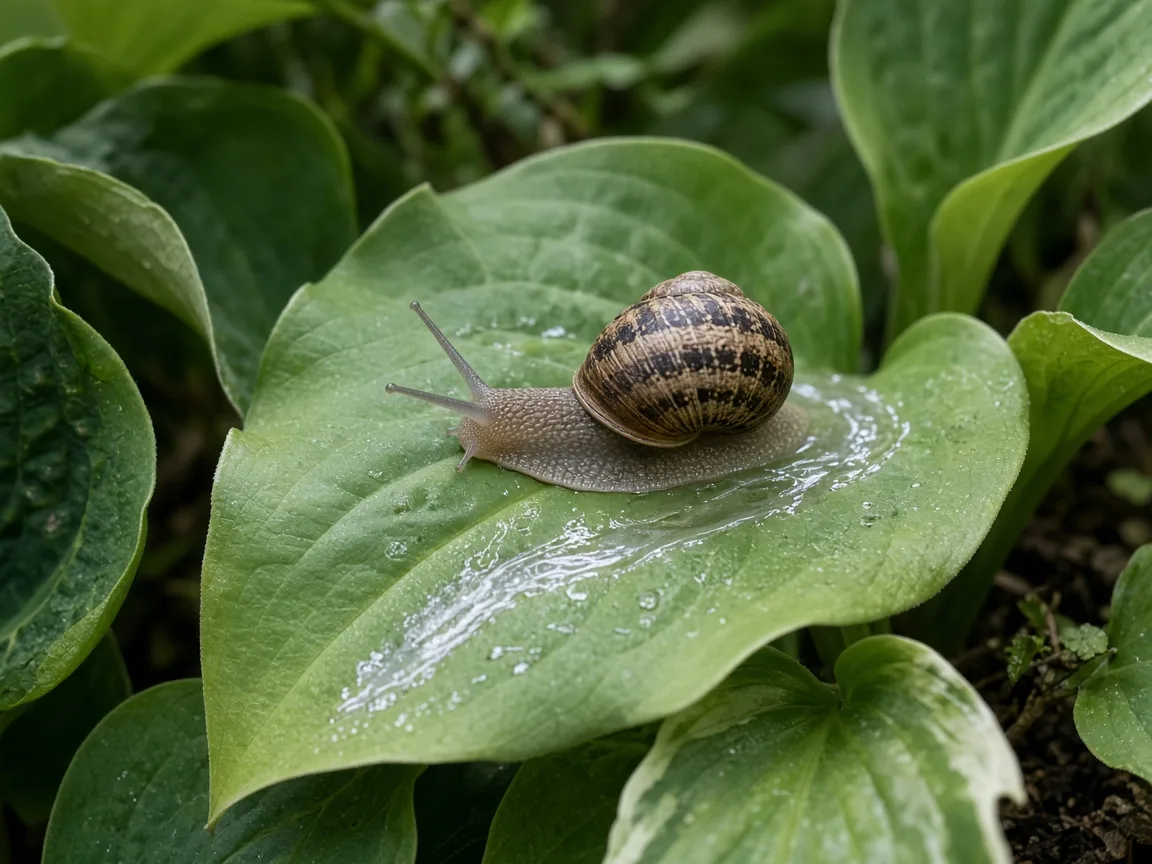
In much of the United States, especially California and other mild-climate regions, the snail most gardeners encounter is the brown garden snail, Cornu aspersum (formerly Helix aspersa). UC IPM identifies it as the most common snail causing garden damage in California, introduced from Europe in the 1850s for food (UC IPM).
Field marks for adults include:
- A globose spiral shell about 1 to 1.25 inches in diameter at maturity (roughly 28–32 mm), with 4 to 5 whorls
- Yellowish or horn-colored base crossed by chestnut-brown spiral bands, often broken by yellow flecks
- A body that withdraws fully into the shell when disturbed
- Nocturnal or cloudy-day activity, with daytime hiding in soil cracks, under debris, or against vertical surfaces
UF/IFAS notes that brown garden snails lay white, spherical eggs about 5 mm across in soil nests, averaging around 80 eggs per clutch, with multiple clutches possible during favorable seasons (UF/IFAS Slug and Snail Species). Juvenile snails look like small adults but may show a softer, developing shell — do not assume every shell-less blob is a slug.
Reading Shell Size, Color, and Whorls
Shell shape is your best snail ID tool. Count whorls from the center outward, note banding pattern, and measure diameter with a ruler if you need to compare look-alikes. In citrus-growing regions, brown garden snails can climb trunks and feed on low-hanging fruit, which is why orchard managers treat them differently from ground-hugging slugs (UC IPM Brown Garden Snail).
Other snails appear in gardens regionally — including the white garden snail (Theba pisana) in parts of Southern California — but the brown banded spiral shell is the benchmark image most gardeners should memorize first.
How to Identify Common Garden Slugs
Gray Field Slug and Milky Garden Slug
Slugs vary in size and color more than snails do, which makes mantle shape, keel, and mucus color important. UC IPM lists several landscape pests, including the gray garden slug (Deroceras reticulatum), banded slug (Lehmannia poirieri), three-band garden slug (L. valentiana), tawny slug (Limacus flavus), and greenhouse slug (Milax gagates) (UC IPM).
Two names appear repeatedly in extension literature and garden damage reports:
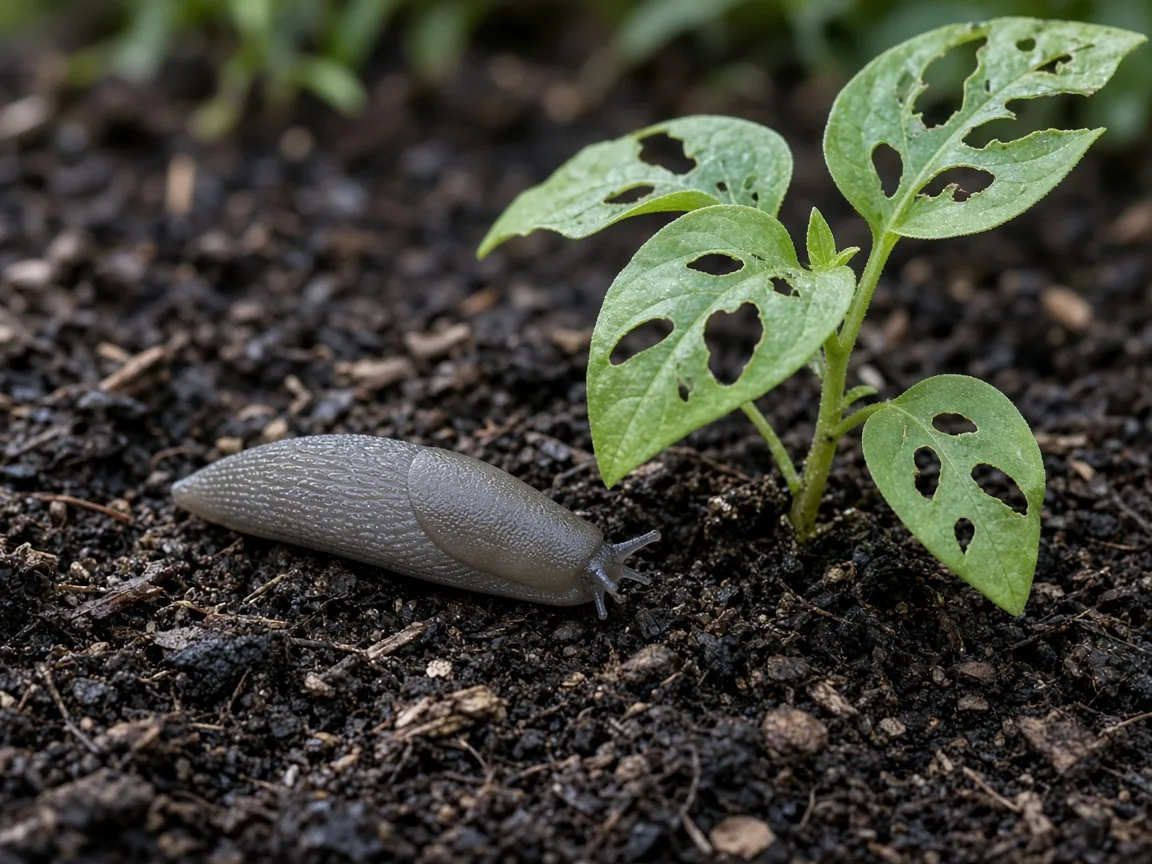
Gray garden slug / gray field slug (Deroceras reticulatum): Often 25–50 mm long, pale cream to gray or reddish brown with a network of dark mottling on the mantle and back. UF/IFAS describes a short keel at the rear, a rounded mantle, and milky white mucus when irritated — a useful ID clue if you disturb one while collecting (UF/IFAS). This species is active across much of the U.S. except parts of the Southeast coastal plain.
Milky garden slug / reticulated slug (Deroceras reticulatum is also called netted slug; smaller marsh slugs in the same genus can look similar): Light gray to brown, 1.5–2 inches in common garden reports, with a raised ridge on the mantle and no external shell. Extension sources treat D. reticulatum as the primary gray field slug in gardens, though common names vary by region.
The spotted garden slug (Limax maximus) is much larger — up to 6 inches — with dark spots and bands on a grayish body and a pale sole. The greenhouse slug (Milax gagates) is a burrowing species that damages roots and stems below soil level, a different damage profile from leaf-chewing field slugs (UF/IFAS).
Mantle, Keel, and Mucus Clues
If you only have a second to decide, check these three features:
Mantle: The thickened, saddle-like tissue behind the head. In many slugs it covers nearly half the body length and contains the internal shell. The respiratory pore (pneumostome) opens on the right side of the mantle in most species.
Keel: A ridge running along the back toward the tail on some slugs — absent in many small Deroceras species but prominent on spotted and greenhouse slugs.
Mucus: Clear and watery on some species; milky when disturbed on gray garden slugs. Snail trails tend to be wider and may include fecal smearing along the path; slug trails are often thinner but equally silvery when dry.
The John Innes Centre emphasizes that slugs navigate by following mucus trails back to shelter, which is why you often find several individuals along the same damp edge (John Innes Centre).
Snail vs. Slug Comparison at a Glance
| Feature | Garden snails (e.g., Cornu aspersum) | Garden slugs (e.g., Deroceras reticulatum) |
|---|---|---|
| External shell | Large, coiled, visible | Absent; small internal shell only |
| Body when disturbed | Withdraws into shell | Contracts body; cannot fully enclose |
| Typical size | Shell ~1–1.25 in. diameter; body extends beyond | ~1–2 in. common species; some much larger |
| Dry weather strategy | Estivation inside sealed shell | Seeks damp hiding places; more desiccation-sensitive |
| Egg appearance | White, round, ~3–5 mm in soil nests | Translucent oval batches under leaves or in soil cracks |
| Time to maturity | About 2 years (brown garden snail) | About 3–6 months for many pest species |
| Common activity | Night, cloudy days; hides by day | Night; especially active spring and fall in cool damp weather |
| Mucus clue | Silvery trail; snail may leave wider path | Silvery trail; gray slug may produce milky mucus when handled |
Speed is often overstated online. A commonly cited pace for snails is about 1 millimeter per second on smooth surfaces, while slugs vary by species and surface moisture (Diffen comparison citing Cornell Ask a Scientist). In the garden, both seem fast enough to vanish under a pot when your flashlight beam hits them.
Slime Trails, Chewed Leaves, and Confirming the Culprit
What Their Feeding Damage Looks Like
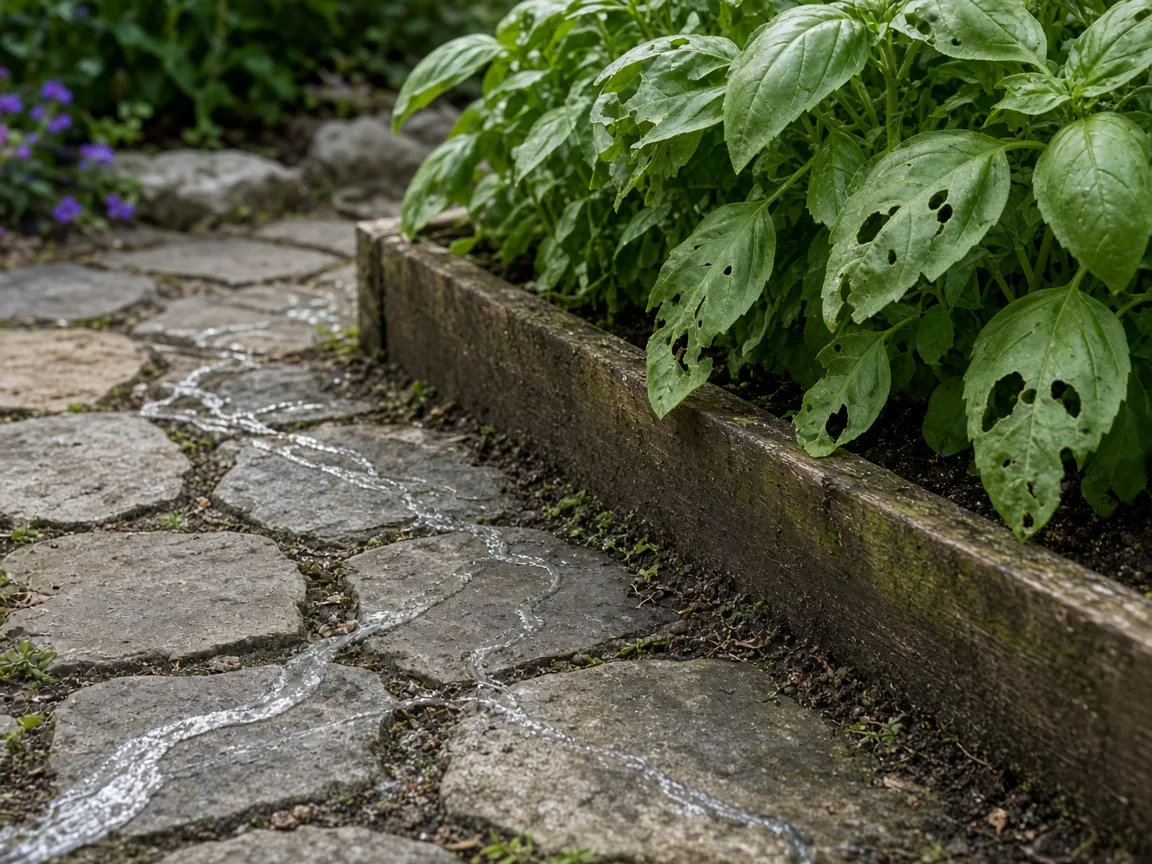
Snails and slugs cause similar plant damage because they use the same radula feeding method. UC IPM describes irregular holes with smooth edges in leaves and flowers, plus clipping of small succulent parts (UC IPM). Seedlings, lettuce, basil, hosta, strawberries, and low-hanging fruit are frequent targets.
Damage alone cannot tell you which pest was present — earwigs, caterpillars, and rabbits leave different patterns. The confirmation step is the dried silvery mucous trail on leaves, stems, or hardscape. If holes appear without slime, inspect for other culprits before treating for mollusks.
Slugs often dominate spring seedling damage because they mature quickly and feed heavily in cool, wet weather. Snails may build through summer in irrigated gardens and can climb into citrus and other tree fruit in mild climates. Neither pest needs a large population to ruin a row of young plants overnight.
Activity Patterns and Seasonal Timing
Both pests are most active at night and on foggy or overcast days. Sunny afternoons drive them into hiding — under boards, stones, dense ground covers, ivy, low tree skirts, and pot rims. UC IPM recommends checking after dark or in early morning with a flashlight if you rarely see them by day (UC IPM).
Seasonal differences matter for ID confidence:
- Slugs often peak in spring and autumn, when temperatures are cool and soil stays moist. Gray field slugs may remain active through mild winters and resume heavy feeding in September in some regions (UF/IFAS).
- Brown garden snails may lay eggs across multiple cycles in warm, damp periods and estivate during hot, dry spells, sealed in their shells. In mild coastal climates they can remain active much of the year.
If you only scout at noon, you may conclude slugs dominate simply because snails are sealed on vertical surfaces out of sight.
Life Cycles, Eggs, and Why Timing Differs
Understanding reproduction helps you interpret what you find in the soil.
Snail eggs are laid in shallow soil cavities, often in clusters of dozens, pearly white and nearly spherical. Brown garden snails may lay repeatedly when moisture and temperature cooperate; eggs near hatching darken slightly (UC IPM).
Slug eggs are translucent, oval to round, deposited in batches of a few to several dozen beneath leaves, in soil cracks, or under debris. Many species reach reproductive maturity within one season, which is why slug populations can explode in a single wet spring.
Neither pest delivers parental care. Juvenile slugs sometimes remain near egg clusters for weeks, while young snails hatch with soft shells that harden as they feed and absorb calcium.
Why Identifying the Pest Correctly Matters
For home gardeners the practical stakes are moderate but real. Slugs often cause more visible damage to vegetables and ornamentals because they are abundant, fast-maturing, and active during peak planting seasons. Snails can be fewer in number yet still serious on citrus, young tree bark, and ripe fruit near the ground — and they may require trunk banding or different monitoring because they climb.
Identification also prevents mistaken control. Copper barriers, hand-picking routines, and bait placement all work better when you know whether climbers, burrowers, or ground-only feeders dominate. The burrowing greenhouse slug, for example, will not be captured by a beer trap on the soil surface if most of the population is below the root zone.
Finally, not every gastropod in the garden is a pest. Some native snails and slugs recycle decaying material, and predatory species such as the decollate snail (Rumina decollata) are deliberately released in some citrus areas — with legal restrictions on where they may be used (UC IPM). Crushing every shelled creature indiscriminately can remove beneficial allies.
Quick Field Identification Checklist
Use this sequence the next time you find slime near damaged plants:
- Look for a shell. Coiled external shell = snail. No visible shell = slug (verify it is not a snail with a damaged or juvenile shell).
- Note mantle and keel. Slugs show a saddle-like mantle; some species have a rear keel.
- Check mucus when disturbed. Milky exudate suggests gray garden slug among common pests.
- Follow the trail. Fresh, silvery dried mucus confirms mollusk activity even if the animal is gone.
- Record time and weather. Night + damp cool conditions = highest catch rate for both pests.
- Inspect hiding edges. Lift pots, boards, and mulch along the trail direction — slugs often stop under the first dark cover; snails may cling to vertical surfaces above ground.
- Photograph before removal. Shell banding and mantle pattern help with species-level ID later using local extension guides.
If you capture a specimen, place it in a clear container with a damp paper towel and photograph the foot, mantle, and (for snails) shell whorls beside a ruler.
When the Damage Is Not From Snails or Slugs
Before you label every hole as mollusk damage, rule out common look-alikes. Earwigs chew leaves and can hide in similar damp spots but leave no continuous slime trail. Caterpillars produce frass pellets and often feed during daylight on upper foliage. Deer and rabbits leave ragged browsing higher on the plant with different track signs. Fungal and slug-chewing confusion happens on strawberries — confirm slime on the fruit surface or nearby leaves.
A garden with healthy bird, beetle, and toad populations may still show occasional mollusk damage without requiring aggressive intervention. UC IPM notes that low numbers often coexist with decomposition benefits and wildlife food webs (UC IPM). Identification is about matching response to actual pressure, not treating every trace of slime as a crisis.
Conclusion
Snails and slugs share a foot, a radula, hermaphroditic reproduction, and the silvery mucus trails that give them away — but the shell makes the split simple in the field. See a coiled external shell and you are dealing with a snail; see a soft-bodied gastropod with a mantle and no visible shell and you are dealing with a slug. From there, banding pattern, mantle mottling, keel presence, and egg location narrow the species.
The next time damp weather arrives, take a flashlight to the bed that suffered overnight damage. Confirm the slime, identify the body form, and note whether you are finding climbers on trunks or ground-hugging slugs under pots. That one minute of ID saves you from guessing — and sets up whatever control steps you choose next with a clear picture of which gastropod actually lives in your garden.



