How to Grow and Care for Castor Bean
Grow castor bean (Ricinus communis) with full sun, rich soil, seed-starting steps, cultivar picks, staking, and clear toxicity rules for pets and kids.
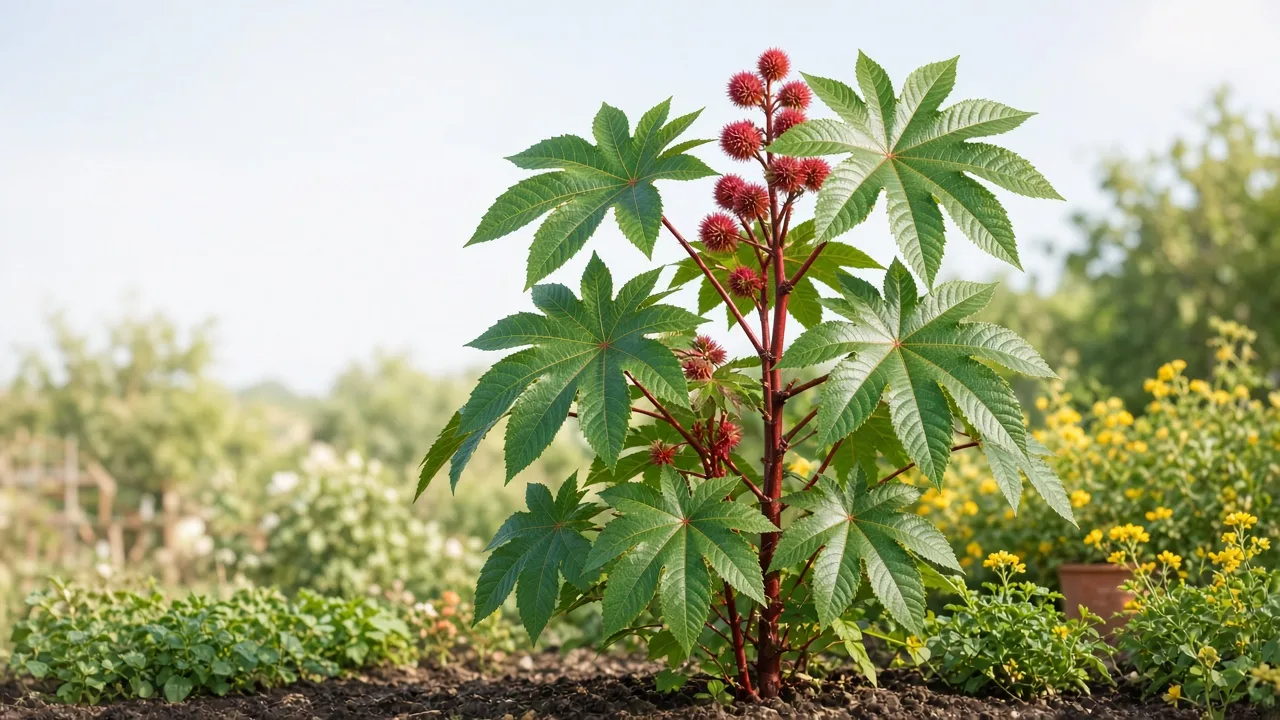
Castor bean (Ricinus communis) is the summer garden plant that looks like it teleported out of a tropical greenhouse: huge star-shaped leaves, red or bronze stems, and spiny seed capsules that steal the show after the tiny flowers fade. In most of the United States it behaves as a warm-season annual, shooting up to human height in a single growing season. In USDA Zones 9 through 11 it can persist as a semi-woody shrub or small tree and reseed freely.
That speed and drama come with a non-negotiable trade-off. Castor bean is highly toxic when seeds are chewed or swallowed, the sap can irritate skin, and the plant self-seeds aggressively in frost-free climates. NC State Extension classifies it as having high-severity poison characteristics, lists it as a problem plant for children, cats, dogs, and horses, and notes weediness in parts of California and Florida. This guide assumes you want the ornamental impact while treating safety and regional responsibility as part of care—not an afterthought.
Start with the plant’s real strengths, limits, and toxicity
Castor bean belongs to Euphorbiaceae, the spurge family that also includes poinsettia and many euphorbias with irritating latex sap. If you already grow spurges, our euphorbia plants guide explains the family’s latex risks; castor bean follows the same “respect the sap” rule, but its seeds are the primary lethal hazard because they contain ricin, a protein that inhibits protein synthesis in cells.
Processed castor oil is a different product. Commercial extraction and heat treatment remove ricin from the oil, which is why castor oil appears in cosmetics and medicine while raw seeds remain dangerous. UT Gardens notes that the oil itself does not contain ricin. Gardeners should never attempt home oil extraction from ornamental plants.
The ASPCA lists castor bean as toxic to dogs, cats, and horses, with beans causing oral irritation, vomiting, diarrhea, weakness, and potentially fatal systemic effects; ingestion of as little as one ounce of seeds can be lethal for horses. Signs often develop 12 to 48 hours after ingestion. If a pet or child may have eaten seeds, contact poison control or a veterinarian immediately—do not wait for symptoms.
Grow castor bean only where you can control access: back borders, fenced utility areas, or adult-only gardens. Skip it entirely if toddlers, curious pets, or livestock share the space. In warm climates where seedlings volunteer along paths or ditches, treat prevention as ongoing maintenance, not a one-time warning label.
Quick ID and at-a-glance care
| Trait | What to expect |
|---|---|
| Mature size | Usually 6–10 ft tall and 2–4 ft wide in one season; cultivars vary |
| Life cycle | Perennial shrub/tree in Zones 9–11; annual where frost kills top growth |
| Light | Full sun — at least 6–8 hours of direct sun daily |
| Soil | Rich, moist but well-drained loam or sandy loam |
| Water | Consistent moisture while establishing; avoid prolonged soggy soil |
| Bloom | Insignificant yellow-green flowers; showy spiny seed capsules in late summer–fall |
| Toxicity | High — seeds worst; sap causes contact dermatitis in sensitive people |
| Weed risk | Self-seeds; invasive or noxious in some states—check local guidance |
Choose a sunny site with wind protection
Castor bean is not a shade filler. It wants open sky and will grow taller, fuller, and more colorful in full sun. Partial shade produces leggy stems, smaller leaves, and fewer seed capsules. Avoid planting under deciduous trees that leaf out late—castor bean’s best growth window is early summer, when it needs maximum light to build structure.
Wind is the hidden site constraint. NC State Extension notes that castor bean is not wind resistant and top-heavy plants blow over easily. UT Gardens recommends protecting large glossy leaves from damaging winds. Choose a south- or west-facing wall, fence line, or shrub backdrop that blocks prevailing gusts but does not shade the plant for most of the day.
For a temporary privacy screen, a staggered row of castor beans can work in one season, but plan stakes at planting time rather than after a storm lays plants flat. Spacing of 3–4 feet between plants balances quick closure with airflow; tighter spacing increases blow-over risk once canopies merge.
Prepare rich, well-drained soil
Castor bean rewards deep, fertile soil. Aim for loamy or sandy loam with good drainage and steady moisture retention—not a bog. NC State Extension describes preference for rich moist soils and notes low drought tolerance until roots are established.
If your native soil is heavy clay, amend a wide planting zone, not just the hole. Mix compost into the top 12–18 inches and consider raising the bed slightly so winter rains or irrigation do not pool around the crown. Castor bean tolerates acid, neutral, and alkaline pH, so pH adjustment is rarely necessary unless a soil test shows extreme values.
Plant castor bean for a strong first season
Timing matters because castor bean is cold-sensitive. Soil should be at least 50°F and ideally warming toward 65–70°F before you transplant seedlings outdoors. In most regions that means after the last frost date, often late spring. Cold, wet soil stalls growth and invites root stress.
Direct-sowing is possible in warm climates, but starting indoors 4–6 weeks before transplant gives cooler regions a head start on height. Harden off seedlings for a week: gradually increase outdoor sun and wind exposure so leaves do not scorch.
Set transplants at the same depth they grew in pots. Water deeply at planting, mulch lightly to conserve moisture, and install stakes immediately if the site is windy. Do not bury stems—castor bean crowns rot in consistently wet soil contact.
Meet light, water, and temperature needs
Light: Target 8+ hours of direct sun where summers are mild; 6 hours minimum in hot climates. More light equals denser foliage and stronger stems. If leaves pale or internodes stretch, the plant is asking for more sun, not more fertilizer.
Water deeply without waterlogging roots
Castor bean prefers evenly moist soil during active growth. A practical rhythm in summer is about 1 inch of water per week from rain plus irrigation, adjusted upward during heat waves and downward during cool, cloudy stretches. Always check the root zone: if the top 2–3 inches are still damp, wait.
The failure mode is not underwatering—it is sitting in wet soil, which weakens roots on a plant that already topples easily. Ensure pots and beds drain freely. Established plants tolerate brief dryness better than constant sogginess, though drought-stressed plants attract spider mites (see pests below).
Heat, humidity, and frost sensitivity
This is a tropical warm-season plant. Optimal growth occurs roughly 68–80°F, with vigorous expansion when nights stay above 60°F. Castor bean handles humid summers well and appreciates heat more than cool coastal summers provide.
Frost ends the show in annual zones. At first light freeze, leaves collapse and stems die back. In Zones 9–11, plants may survive as herbaceous perennials, resprouting from lower stems or base growth. Even there, hard pruning in spring keeps size manageable.
Feed fast-growing castor bean correctly
Fast height requires fuel. Castor bean is a heavy feeder during summer expansion. NC State Extension recommends regular fertilization for best growth. Apply a balanced soluble or granular fertilizer every 3–4 weeks from transplant until early fall, or use a slow-release formula at planting plus one midseason boost.
Avoid extreme nitrogen alone late in the season if you want sturdy stems—overfed, soft growth is more likely to lodge in wind. If leaves are deep green and stems are rigid, you are feeding enough. Pale lower leaves on otherwise healthy new growth may indicate hunger; dark green flopping stems suggest excess.
Pick the right cultivar for height and color
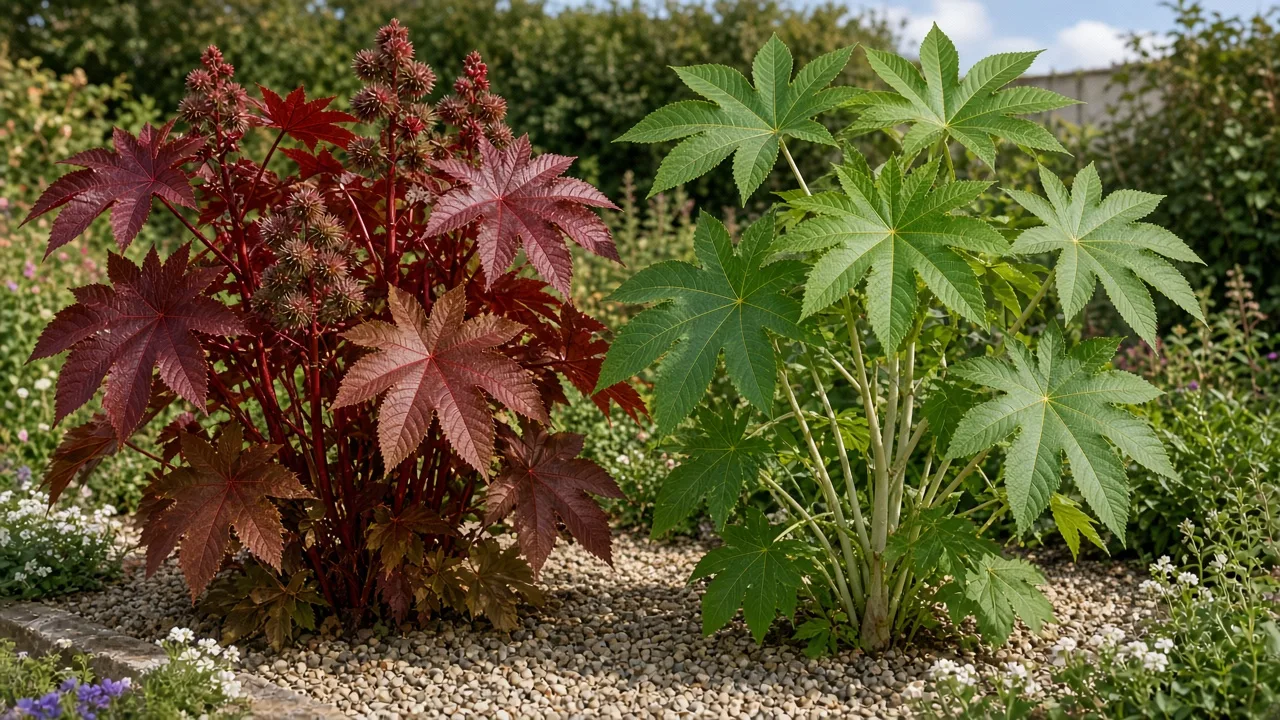
All castor beans share the same toxic seed chemistry; cultivar choice is about size, leaf color, and seed-pod display, not safety. NC State Extension and UT Gardens highlight several widely available forms:
- ‘Carmencita Bright Red’ — bronze-red leaves, red flowers, scarlet pods; medium-tall drama.
- ‘Carmencita Rose’ — bluish-green leaves with peach-toned pods; softer contrast.
- ‘Gibsonii’ — compact 4–5 ft habit, red-tinged leaves, pink pods; good for smaller beds.
- ‘Sanguineus’ — blood-red stems and leaves; strong focal point.
- ‘Red Spire’ — upright red stems, bronze foliage, red pods.
- New Zealand Purple / Black forms — near-black foliage in strong light; need full sun for best color.
Compact red-leaf forms versus giant foliage types
Match cultivar to space. ‘Gibsonii’ and Carmencita selections fit mixed borders and large containers. Zanzibariensis-type giants with leaves up to 30 inches wide need room, deep soil, and staking—spectacular in botanic-garden style displays, overwhelming beside a walkway.
For a first attempt in a short-season climate, start with a known compact cultivar rather than generic “castor bean” seed, which may grow taller than your frost window allows. Mother Earth Gardener notes that northern gardeners often start seeds indoors in March under protection and transplant after danger of frost—sound advice anywhere summers are brief.
Prune, stake, and manage size
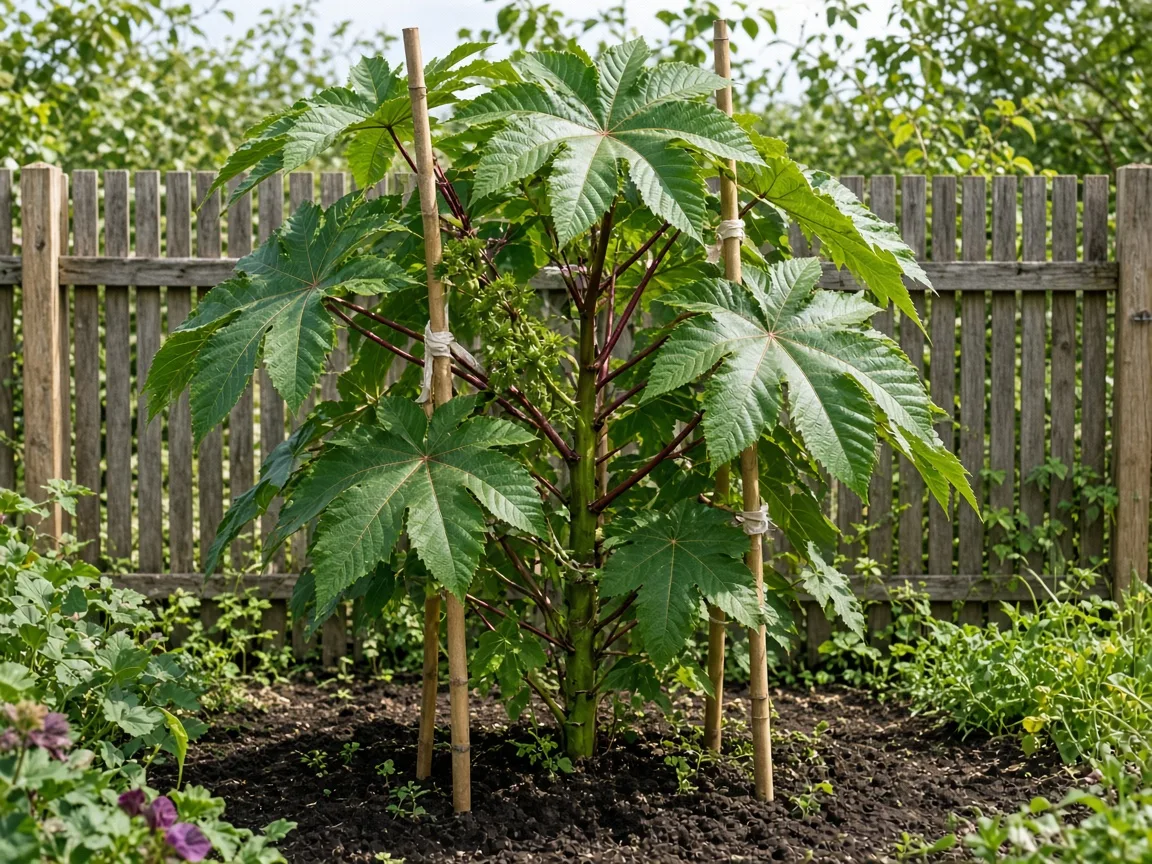
In frost-killed annual zones, pruning is optional. Remove blown stems or damaged leaves to reduce wind sail. If you want a shorter, bushier plant, pinch the terminal bud when the seedling has 4–6 true leaves—this delays height slightly but increases lateral branching.
In perennial zones (9–11), prune in early spring before new growth: remove dead wood, shorten leggy stems, and shape for stability. Wear gloves, long sleeves, and eye protection; sap causes contact dermatitis in many people.
Stake at planting if height exceeds 4 feet or wind exposure is high. Use one or two sturdy bamboo or metal stakes tied loosely with soft ties, adjusted as stems thicken. Remove stakes after frost kills annual plants.
To reduce seed hazards in pet-accessible areas, pinch off flower spikes early before capsules mature. This also prevents self-seeding you did not plan for.
Grow castor bean from seed
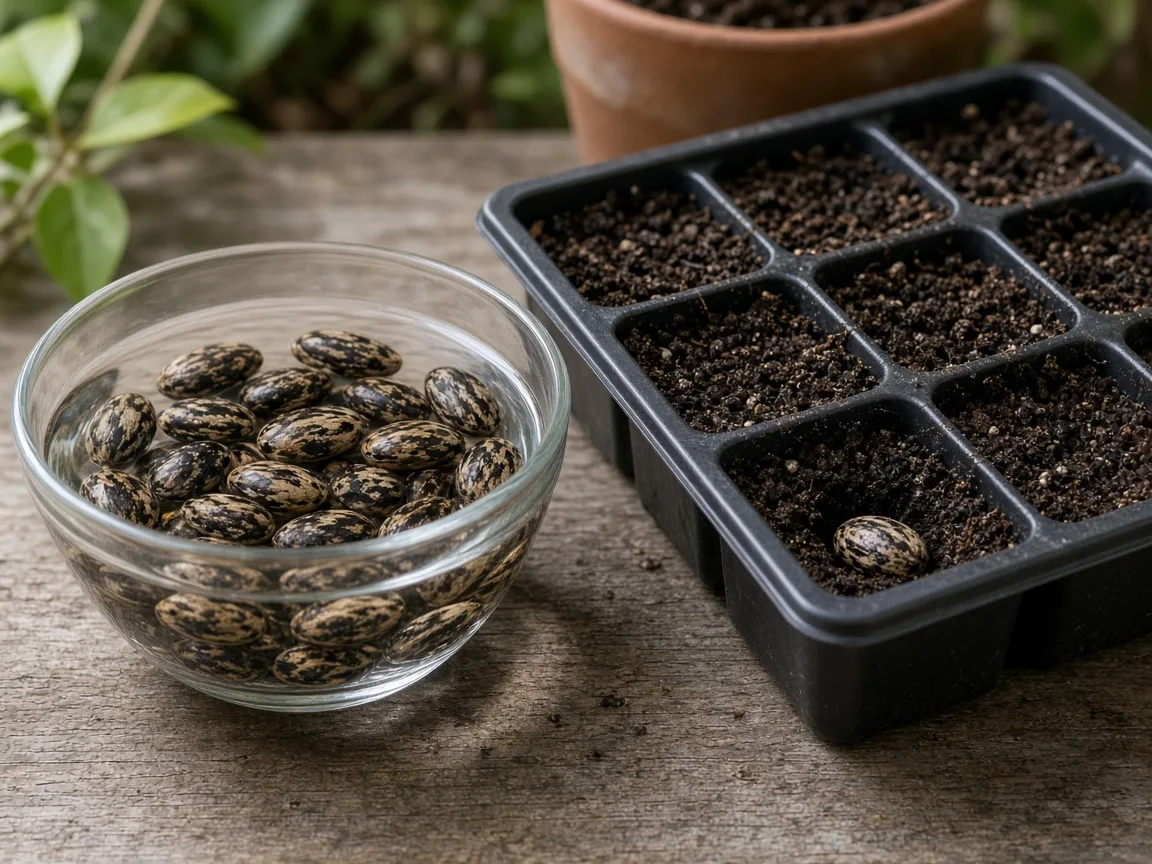
Seed is the standard propagation method; cuttings root poorly. Seeds have hard coats and germinate best after soaking 12–24 hours in warm water. Some growers lightly scarify the seed coat with sandpaper or a nick—avoid deep cuts that damage the embryo.
Soak, sow, and transplant on a warm schedule
- Soak seeds overnight in room-temperature water.
- Sow 1 inch deep in moist seed-starting mix or warm garden soil ≥68°F.
- Keep warm and evenly moist—germination often takes 1–3 weeks, occasionally longer with cool soil.
- Transplant promptly after true leaves develop; castor bean seedlings grow quickly and become root-bound or leggy in small cells.
- Harden off before permanent outdoor placement.
Save seed only if you accept ongoing toxicity risk in storage. UT Gardens describes cutting mature spikes, drying pods in a cool dark room, and extracting seeds with rubber gloves, then storing labeled envelopes in a secure place away from food and pet areas. Discard unwanted seeds in the trash—do not compost capsules whole.
Encourage blooms and ornamental seed pods safely
Castor bean flowers are small, yellow-green, and mildly sweet-scented; the spiny capsules are the real ornamental event, coloring up from late summer into fall. Full sun, adequate water, and steady feeding usually produce blooms without tricks.
If plants reach late summer without capsules, the usual causes are too much shade, nitrogen-heavy feeding without root support, or simply running out of warm days in short-season climates. Starting indoors resolves the last issue more reliably than August sowing.
Remember: more pods mean more toxic seed on the plant. In display gardens, that is desirable; in households with pets or children, it is a liability. Choose your goal before encouraging heavy seed set.
Handle pests and common problems
Castor bean has few serious disease issues in typical ornamental use. NC State Extension reports no major insect or disease problems except twospotted spider mites on drought-stressed plants. Mites show up as stippled, dusty-looking leaves during hot dry spells. Increase deep watering, rinse foliage in the morning, and improve airflow; severe infestations may need horticultural oil applied per label on non-stressed plants.
Deer generally avoid castor bean because of toxicity—one of the few reliable “deer resistant” traits—but never depend on that where hungry deer pressure is extreme.
Mosquito and mole repellent claims are mostly folklore. Castor oil products appear in commercial mole repellents, but extension guidance on mole control treats castor-bean planting as doubtful for lawn-wide repellency and emphasizes toxicity concerns. Plant castor bean for looks, not as a pest-control strategy.
Use castor bean in containers, screens, and beds
Containers are possible but not ideal for full-size forms. Use a pot at least 18–24 inches wide and deep, premium potting mix, and expect daily watering in heat. Compact cultivars like ‘Gibsonii’ outperform giants in pots. Move containers off ground after frost and discard plants and soil if seed pods formed—do not dump spent potting mix where seeds might sprout.
In beds, castor bean shines as a specimen, tropical-style backdrop, or single-season screen. Pair with sun-loving annuals that do not compete for root space: cannas, tall zinnias, or ornamental grasses for contrast in texture.
Because castor bean reseeds and is listed as invasive or weedy in some regions, avoid planting near waterways, vacant lots, or conservation edges. Pull volunteers early in spring if they appear where you did not intend them.
Safety for pets, children, and the wider landscape
Treat every mature seed capsule as hazardous waste until disposed of. Post-ingestion first aid is not DIY—call ASPCA Animal Poison Control at (888) 426-4435 (fee may apply) or your regional poison center for human exposure.
Wear gloves when pruning, staking, or harvesting seed. Wash skin promptly if sap contacts you. Keep pruned material and dried pods out of compost that wildlife or neighbors might access.
If your garden needs height without ricin risk, NC State Extension suggests native alternatives such as American beautyberry, yaupon holly, or fragrant sumac for structure and seasonal interest.
Conclusion
Castor bean delivers tropical scale and bold foliage faster than almost any annual—but only belongs in gardens where adults understand the ricin risk in seeds, the sap’s skin irritation, and the self-seeding habit in warm climates. Give it full sun, rich drained soil, steady summer moisture, regular feeding, and wind support; choose cultivars by mature height; start seeds indoors in short seasons; and remove or secure seed capsules if pets or children are nearby. Done deliberately, it is a striking summer star. Done casually, it is a weed and a safety problem. Match the plant to a site that can handle both its beauty and its boundaries.



