How to Grow Honeysuckle Plants Like a Pro
Learn how to grow honeysuckle with variety picks, planting timing, trellis training, pruning by bloom type, propagation, bloom fixes, and invasive-plant cautions.
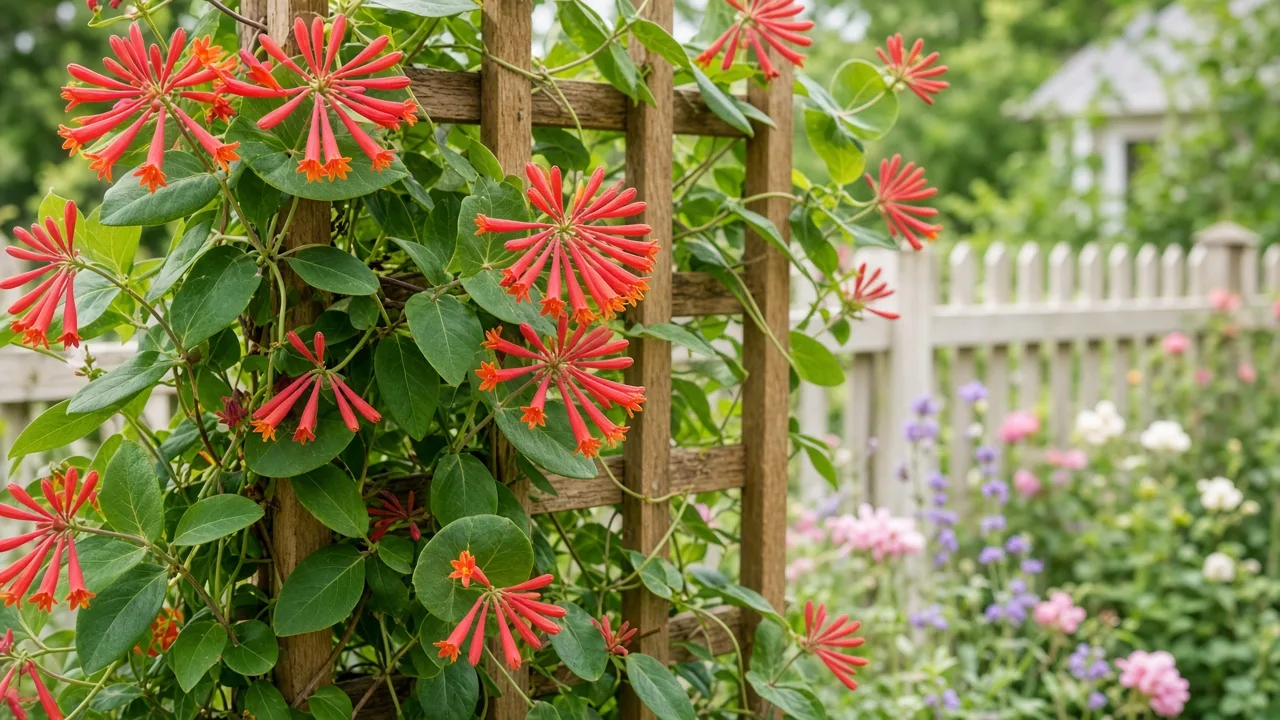
Honeysuckle (Lonicera spp.) can turn a plain fence into a hummingbird highway—or become the plant you spend years trying to remove. The difference is not luck. It is variety choice, planting site, and pruning timing. Get those three decisions right and most vines become low-maintenance, fragrant, long-blooming climbers. Get them wrong and you inherit mildew, leggy growth, or an invasive thicket that outcompetes everything nearby.
This guide focuses on the climbing honeysuckles gardeners actually buy for trellises, arbors, and cottage-garden walls, with clear rules for soil, water, support, propagation, bloom troubleshooting, and the invasive species you should refuse at the nursery bench.
Choose the Right Honeysuckle for Your Garden
Before you dig, decide which Lonicera you are growing. The genus holds roughly 180 species of vines and shrubs from North America, Europe, and Asia. They share a family name and tubular flowers, but they do not share the same garden behavior.
Native and well-behaved vines worth planting
For most U.S. gardeners who want fragrance, color, and wildlife without ecological regret, coral or trumpet honeysuckle (Lonicera sempervirens) is the benchmark native vine. NC State Extension describes it as a vigorous twining perennial native to the eastern United States, reaching 10 to 20 feet, flowering on new growth, and attracting hummingbirds as primary pollinators (NC State Extension). UF/IFAS notes it spreads less aggressively than Japanese honeysuckle and makes an excellent trellis or fence vine in full sun (UF/IFAS Gardening Solutions).
Other well-behaved options for home gardens include:
- Lonicera periclymenum (common or woodbine honeysuckle): highly fragrant European native; many cultivars for cottage gardens.
- Lonicera x heckrottii ‘Goldflame’: showy coral-and-yellow bicolor flowers; popular where a long bloom season matters.
- Lonicera sempervirens cultivars such as ‘Major Wheeler’, ‘John Clayton’, and ‘Alabama Crimson’: repeat bloom, compact habit, or color specialization.
Climbing types can be deciduous, semi-evergreen, or evergreen depending on species and winter severity. Deciduous vines often produce the showiest flower displays; evergreen types trade bloom size for year-round foliage cover (BBC Gardeners’ World).
Invasive honeysuckles to avoid
Several Lonicera species are documented ecological problems, especially in the eastern and midwestern United States. Do not plant these in home landscapes:
- Lonicera japonica (Japanese honeysuckle): white to yellow fragrant flowers; extremely aggressive spread by vines and bird-dispersed berries.
- Lonicera maackii (Amur honeysuckle): shrub, not a climber, but often sold generically as “honeysuckle.”
- Lonicera tatarica, L. morrowii, and related bush honeysuckles: multi-stem shrubs that form dense thickets.
UF/IFAS explicitly recommends coral honeysuckle as a Florida-Friendly alternative to Japanese honeysuckle (UF/IFAS Gardening Solutions). If you already have invasive honeysuckle on your property, see our guide to removing invasive honeysuckle before planting a replacement vine in the same spot.
Quick ID rule at the garden center: native coral honeysuckle bears red to orange tubular flowers with yellow throats and paired leaves that are often joined at the base below flower clusters. Japanese honeysuckle has white or cream flowers that yellow with age, broader leaves, and a reputation for taking over fence lines within a few seasons (University of Michigan CLIMBERS).
Quick Honeysuckle Growing Profile
| Factor | Typical climbing honeysuckle | Practical decision |
|---|---|---|
| Botanical name | Lonicera spp. | Read the tag species name, not just “honeysuckle.” |
| Plant type | Twining woody vine (some shrubs) | Match support to expected mature length. |
| Mature size | 10–25 feet on supports | Allow 3–6 feet width at the base for airflow. |
| Hardiness | USDA Zones 4–9 for many vines | Confirm your cultivar tag against local winter lows. |
| Sun | Full sun for best bloom; some woodland natives tolerate part shade | Aim for six or more hours of direct light on stems. |
| Soil | Well-drained loam; tolerates clay if drainage improves | Amend only when soil is truly compacted or soggy. |
| Bloom time | Spring through summer; reblooming cultivars into fall | Choose ‘Major Wheeler’ or Goldflame for longer color. |
| Wildlife | Hummingbirds, bees, butterflies, moths; berries feed birds | Leave some berries if you want winter bird visits. |
| Pet safety | Berries often toxic; flowers not a snack | Keep fruit away from curious pets and toddlers. |
Honeysuckle vines are perennials that return each year. Evergreen or semi-evergreen behavior depends on species and how cold your winters get. In Zone 4, even semi-evergreen types may die back to woody framework and releaf in spring.
Where and When to Plant Honeysuckle
Timing and placement matter more for honeysuckle than for many shrubs because the plant combines deep roots, fast top growth, and—on many types—a strong preference for cool roots and sunny stems.
Site selection and the clematis-style root rule
Woodland-edge climbers like Lonicera periclymenum and many Asian hybrids evolved with shaded roots and climbing stems reaching into brighter light. BBC Gardeners’ World recommends mimicking that pattern: keep the root zone shaded with low companions, mulch, or a north-facing base, while letting stems climb into sun (BBC Gardeners’ World). This “roots cool, tops warm” approach reduces summer stress and can improve fragrance intensity on warm sites.
Avoid planting directly in the rain shadow at the base of walls and fences where eaves or overhangs block rainfall. If that is your only vertical space, plan on supplemental irrigation and a wider mulch ring.
Fire-smart note: NC State lists trumpet honeysuckle with a high flammability rating and advises against planting it within defensible space immediately adjacent to structures (NC State Extension). That does not mean banishing the vine—it means keeping it on a perimeter fence or arbor away from the home’s zero zone, especially in wildfire-prone regions.
Planting steps that prevent failure
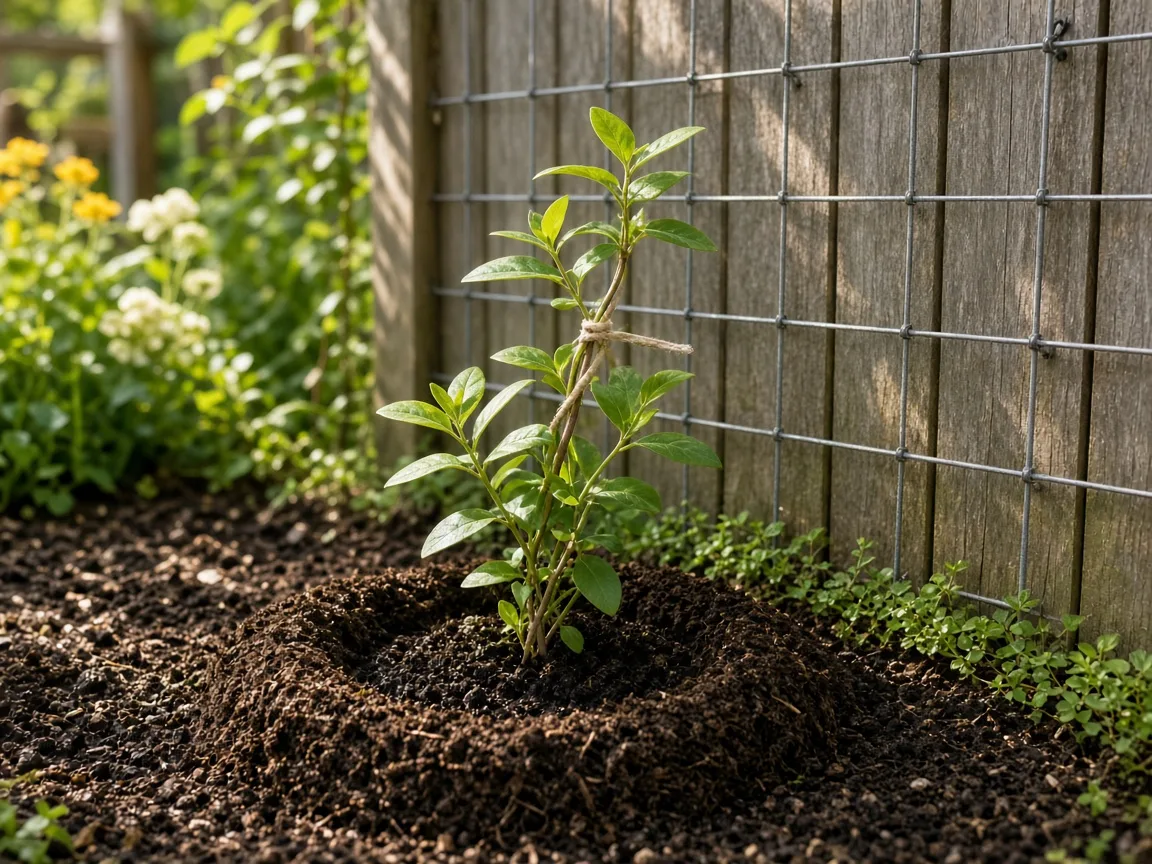
- Choose the season. Plant container-grown vines in early spring after frost, or in early fall while soil is still warm. Avoid midsummer heat if you can. Deciduous bare-root plants are best set in late winter while dormant (BBC Gardeners’ World).
- Install support first. Put up trellis panels, galvanized wires, or sturdy fencing before you backfill. Honeysuckle twines upward; it does not cling like ivy. Young stems need manual guidance.
- Dig a wide, shallow hole the same depth as the rootball—not deeper. Set the crown at soil grade.
- Amend poor soil with compost or well-rotted manure worked into the backfill, especially on sandy or heavy clay sites. UF/IFAS recommends organically rich, well-drained soil for best flowering (UF/IFAS FP354).
- Water deeply at planting, then mulch 2–3 inches with shredded bark or compost, keeping mulch off the stem.
- Train the first shoots horizontally if you want lower coverage; tie loosely with soft ties or guide stems with a bamboo cane toward wires.
Seeds can be sown outdoors in autumn for natural cold stratification, or started indoors after 60 days of moist refrigeration. Cuttings and nursery pots remain the faster path to first-year flowers on most cultivars.
Light, Soil, and Water Requirements
Light and airflow
Most climbing honeysuckles flower best with at least six hours of direct sun on the stems that bloom. Native coral honeysuckle tolerates partial shade but produces fewer flowers and may see more powdery mildew when air circulation is poor (NC State Extension). In hot-summer climates, afternoon shade on the hottest wall can prevent leaf scorch without sacrificing bloom if the morning sun is strong.
Space plants so foliage can dry after rain. Crowding against dense evergreen hedges invites mildew and aphid buildup.
Soil preparation and drainage
Honeysuckle adapts to a wide pH range—roughly 5.5 to 8.0 on many labels—but it struggles in waterlogged clay and extremely dry sand unless you improve organic matter. Work compost into the planting zone on heavy soils to increase drainage. On sandy soils, compost increases water retention at the root zone.
Do not over-amend a single planting hole in native clay in a way that creates a “bathtub” effect. Instead, loosen a wide area and plant slightly high if drainage is questionable.
Watering through establishment and drought
During the first growing season, aim for about 1 inch of water weekly from rain or irrigation, keeping soil evenly moist but not soggy. Deep soakings beat daily sprinkles because honeysuckle roots run deep (Harvest to Table).
After establishment, many vines need little supplemental water except during prolonged heat or drought, or when growing against a rain-shadow wall. Container plants dry faster and may need watering every one to two days in summer.
Sign you are overwatering: yellowing lower leaves, musty soil smell, and persistent powdery mildew on new growth in shade. Sign you are underwatering: wilt at midday, crisp leaf edges, and shortened flowering on new wood.
Best Honeysuckle Varieties for Home Gardens
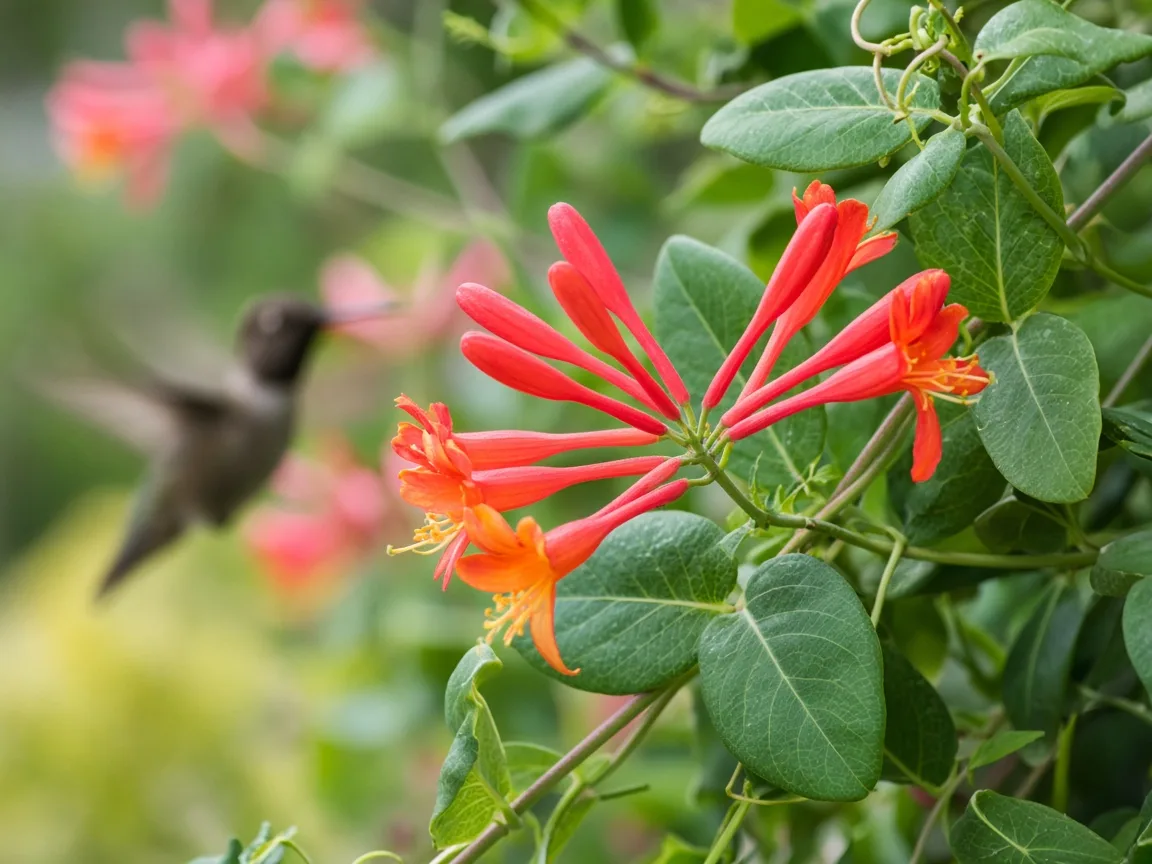
These cultivars cover most home-garden goals without the invasive baggage of Japanese honeysuckle:
| Cultivar | Species / type | Why plant it | Bloom notes |
|---|---|---|---|
| ’Major Wheeler’ | L. sempervirens | Heavy rebloom; mildew resistance in humid gardens | Red-orange tubes; hummingbird magnet (UTIA) |
| ‘John Clayton’ | L. sempervirens | Compact yellow form; good for smaller trellises | Profuse berries; tendency to rebloom (NC State Extension) |
| ‘Alabama Crimson’ | L. sempervirens | Deep crimson flowers; vigorous 10–20 ft vine | Non-fragrant but excellent pollinator value |
| ’Goldflame’ | L. x heckrottii | Bicolor coral and yellow; long season | Fragrant; good where you want extended color |
| ’Serotina’ / common woodbine | L. periclymenum | Classic cottage-garden scent | Blooms summer; red berries follow |
| ’Dropmore Scarlet’ | L. x brownii | Cold-hardy scarlet tubes | Good northern trellis choice |
If your primary goal is hummingbirds, prioritize red- and orange-flowered L. sempervirens selections. If your primary goal is evening fragrance, L. periclymenum types usually win. If your primary goal is all-summer color in humid heat, ‘Major Wheeler’ is the modern default recommendation from multiple public gardens.
Shrubby winter honeysuckles such as L. fragrantissima and box-leaved L. nitida belong to the same genus but are hedge and specimen shrubs, not fence climbers. They need a different pruning calendar and are not interchangeable with trellis vines.
Support, Training, and Spacing
Honeysuckle climbs by twining—wrapping its stems around narrow supports. Wire at 12–18 inch horizontal spacing, trellis lattice, chain-link, and open fencing all work. Smooth walls need a wire grid installed first.
Train young stems ** horizontally** along the lowest wires for two seasons if you want flowers low on the fence; vertical shoots alone tend to bloom at the top. Use soft plant ties or figure-eight loops that will not girdle expanding stems.
Allow 3 to 6 feet of width at the base for mature vines. If planting two cultivars on one long fence, separate them by at least 8 feet to simplify pruning and disease monitoring.
In containers, choose a pot at least 18 inches wide and deep, use a free-draining mix, and expect shorter stems and more frequent watering. Container honeysuckle is feasible for patios but rarely matches in-ground vigor.
How to Prune Honeysuckle by Bloom Type
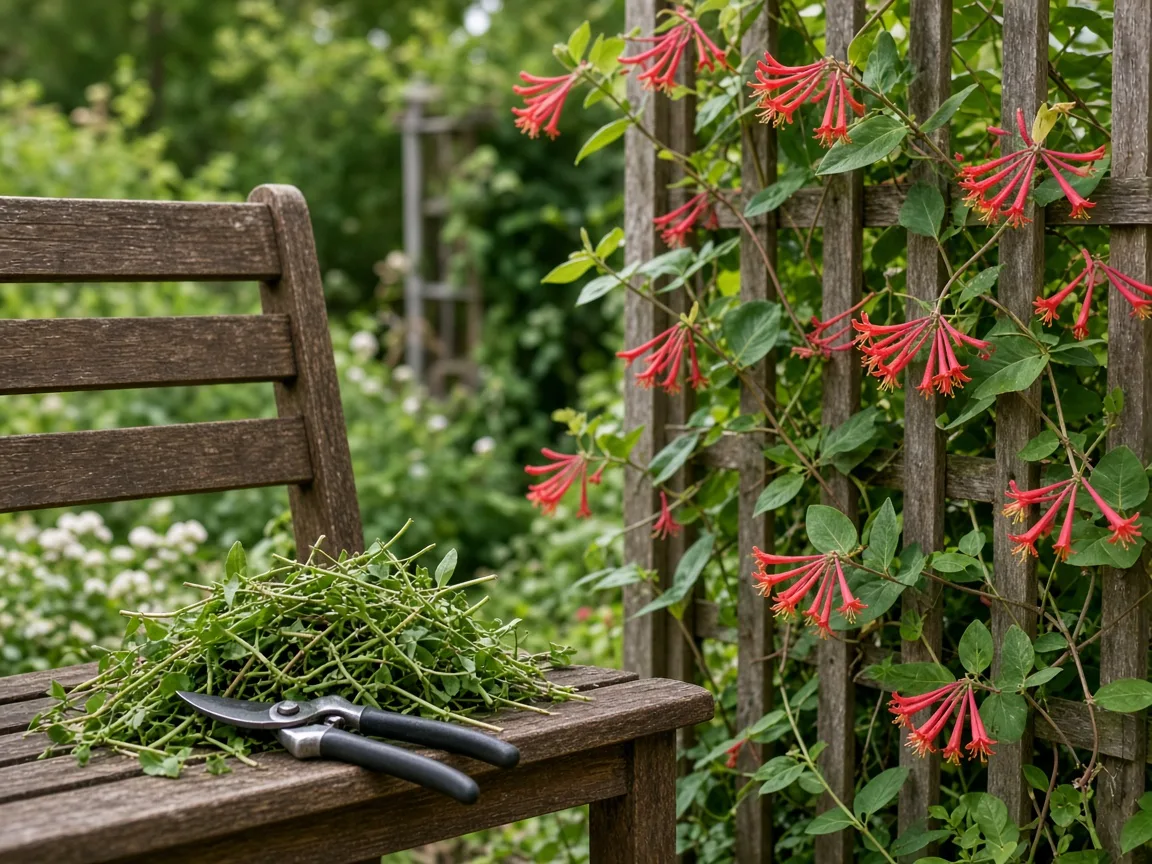
Pruning mistakes are the top reason gardeners “lose” a year of flowers. Honeysuckle species bloom on old wood, new wood, or both—and the timing follows that biology.
| Bloom habit | Examples | When to prune | How much to remove |
|---|---|---|---|
| Old wood (previous year’s stems) | Some L. periclymenum selections | Immediately after main flush finishes, midsummer | Light shape only; avoid late-winter hard cuts |
| New wood (current season’s growth) | L. sempervirens, many modern rebloomers | Late winter to early spring before bud break | Remove dead wood; shorten leggy stems by one-third |
| Both old and new wood | Some Goldflame-type hybrids | After first bloom, then light tidy in late winter | Deadhead spent clusters; thin crowded crossing stems |
For native trumpet honeysuckle, NC State advises pruning after flowering because it blooms on new growth—but avoid heavy nitrogen immediately afterward if you want flowers rather than foliage (NC State Extension). UTIA notes that trumpet honeysuckle tolerates pruning throughout the growing season after its bloom flush if you need size control (UTIA).
Renovation rule: if a vine is a tangled, mildewy mess, cut one-third of the oldest stems to the ground over three winters rather than shearing everything at once. Honeysuckle rebounds hard from hard cuts on new-wood types, but old-wood species may skip a year if you prune at the wrong time.
Propagating Honeysuckle From Cuttings and Seed
Softwood cuttings in late spring or early summer are the most reliable home method:
- Take 4–6 inch tips of non-flowering shoots.
- Strip lower leaves; keep one or two leaf pairs at the top.
- Dip the cut end in rooting hormone and insert into a moist half-sand, half-compost mix.
- Keep in bright indirect light; roots usually form in two to three weeks.
- Pot individually once rooted, grow on until the following spring, then plant out.
Water-rooted cuttings work but transplant less reliably than soil-rooted ones. Layering—bending a low stem to soil, wounding lightly, and pinning until roots form—is slow but foolproof on established vines (NC State Extension).
Seed propagation uses ripe red berries, not green ones. Mash berries in water, rinse seeds, then either sow outdoors in autumn for natural stratification or refrigerate moist seed 60 days before spring sowing 1/4 inch deep. Seedlings may not match named cultivars; buy vegetatively propagated plants if color and rebloom traits matter.
Fertilizer and Mulch Without Sacrificing Blooms
Honeysuckle is not a heavy feeder. In most garden soils, one application of balanced slow-release fertilizer or compost top-dress in early spring is enough. NC State warns that high-nitrogen fertilizer pushes leafy growth at the expense of flowers on trumpet honeysuckle (NC State Extension).
When planting new vines, improve soil with compost instead of blasting nitrogen. If leaves are deep green and stems shoot 3 feet in a month but you see no buds by early summer, cut fertilizer and increase sun if possible.
Refresh mulch each spring to cool roots, suppress weeds, and reduce wall rain-shadow stress. Pull mulch back slightly from the crown to avoid bark rot.
How to Get Honeysuckle to Bloom More
Start with variety: ‘Major Wheeler’, Goldflame, and long-flowering L. periclymenum selections naturally out-bloom generic nursery stock. Then stack these cultural levers:
- Sun on stems: move or retrain growth into brighter wood; thin overhead shade if a tree has grown.
- Correct pruning window for your vine’s bloom type (see table above).
- Even moisture during bud set in late spring; drought at the wrong moment reduces flower count.
- Moderate fertility; excess nitrogen is the silent bloom killer on new-wood types.
- Avoid heavy shearing midseason on old-wood bloomers.
Flowers are tubular, about 1/2 to 1 inch across, in red, orange, pink, yellow, and white combinations. Many types are strongly fragrant—especially white and cream L. periclymenum—while native coral honeysuckle trades perfume for hummingbird access (UF/IFAS FP354).
Deadheading is optional. Leaving spent flowers allows berries to form for birds. If mildew appears on spent clusters in humid gardens, remove only the affected tips rather than stripping the whole vine.
Pests, Diseases, and Common Problems
Aphids and spider mites cause curled, yellowing, or sticky foliage. Start with a strong hose blast on the undersides of leaves in early morning. If populations persist, horticultural oil or insecticidal soap applied according to label directions on ornamentals is the next step—test a small section first.
Powdery mildew shows as white coating on leaves in humid, shaded, or crowded sites. Improve airflow, prune out the worst stems after bloom, and avoid overhead evening irrigation. Mildew on L. sempervirens ‘Major Wheeler’ is less common than on older cultivars, which is why public gardens pushed that selection.
Canker and root rot follow chronic wet soil. If a vine declines despite good sun, dig carefully and inspect roots. Transplant to a raised bed or better-drained slope in autumn if the crown is still firm.
Yellow leaves with green veins on alkaline soils may indicate micronutrient stress; a soil test beats guessing.
Pet and human safety: honeysuckle berries are generally considered toxic to humans and pets if eaten in quantity; symptoms can include stomach upset. Flower nectar is part of the plant’s common name folklore, but eating unknown plant parts is never safe for children or pets. Keep vines with heavy berry set away from pet runs if your dog eats everything on the ground.
Wildlife value is a feature, not a bug: trumpet honeysuckle feeds ruby-throated hummingbirds, supports spring azure butterflies and snowberry clearwing moths as a larval host, and provides soft mast fruit for songbirds (NC State Extension).
Conclusion
Growing honeysuckle like a pro starts before you buy the pot: choose a non-invasive vine matched to your goal—native coral types for hummingbirds, woodbine for scent, Goldflame or ‘Major Wheeler’ for long color. Plant with support already in place, keep roots cool and stems sunny, and water steadily through the first year. Prune according to old vs new wood bloom habit, not a random calendar. Propagate from softwood cuttings if you want more plants without repurchasing.
When something goes wrong, diagnose in order: wrong species, too much shade, too much nitrogen, wrong pruning month, or wet feet. Fix the underlying condition and honeysuckle usually rewards you with the fragrant, bee- and hummingbird-filled screen you wanted—without sending you down the invasive-removal road later.



