How to Get Rid of Invasive Honeysuckle for Good
Late winter is the best time to see and cut invasive honeysuckle. Learn ID tips, cut-stump and herbicide-free methods, disposal rules, and how to stop regrowth.
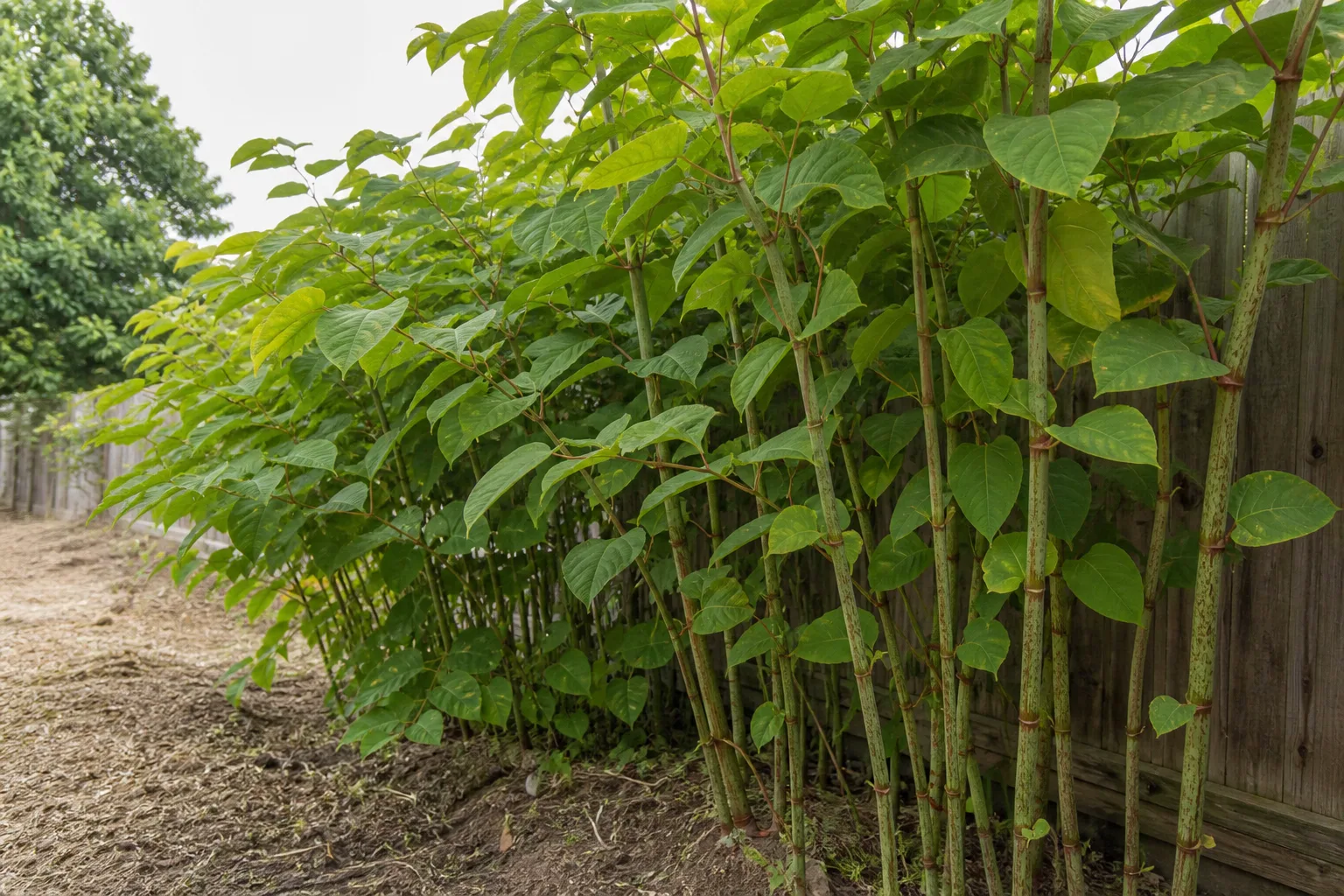
That arching green wall along your fence did not appear overnight. Invasive honeysuckle spreads through bird-dispersed berries, leafs out earlier than most native shrubs, and holds its foliage late into fall—shading out everything underneath until only a honeysuckle monoculture remains. Cutting it once in summer often feels like progress until spring, when dozens of new stems erupt from the same root crown and seedlings appear ten feet away.
The good news is that timing and method matter more than brute force. Late winter and very early spring, when leaves have dropped and you can finally see trunks, crowns, and the perennials you want to protect, is usually the best window to start serious removal. The sections below walk through identification, seasonal timing, control options from hand-pulling to cut-stump treatment, herbicide-free smothering backed by university research, and the follow-up work that keeps honeysuckle from winning the long game.
Why Invasive Honeysuckle Is So Hard to Eliminate
Honeysuckle succeeds because it combines fast above-ground growth with persistent below-ground storage. Mature bush honeysuckles develop wide, branching root systems that survive a single chop. Birds eat the red or orange berries and deposit seeds along fence lines, woodland edges, and in neighbor beds—so even if you remove every stem on your side of the property, new seedlings can keep arriving.
Ecologically, the damage is more than cosmetic. Amur honeysuckle (Lonicera maackii), one of the most common bush invaders in the eastern and midwestern United States, leafs out early, stays green late, and forms dense thickets that block tree seedlings and wildflowers. University of Cincinnati botanist Denis Conover, who has spent decades removing Amur honeysuckle from Cincinnati parks, notes that these shrubs can eventually replace the understory of a deciduous forest if seed rain and resprouting are left unchecked (University of Cincinnati). That is not a plant you manage with one afternoon of pruning.
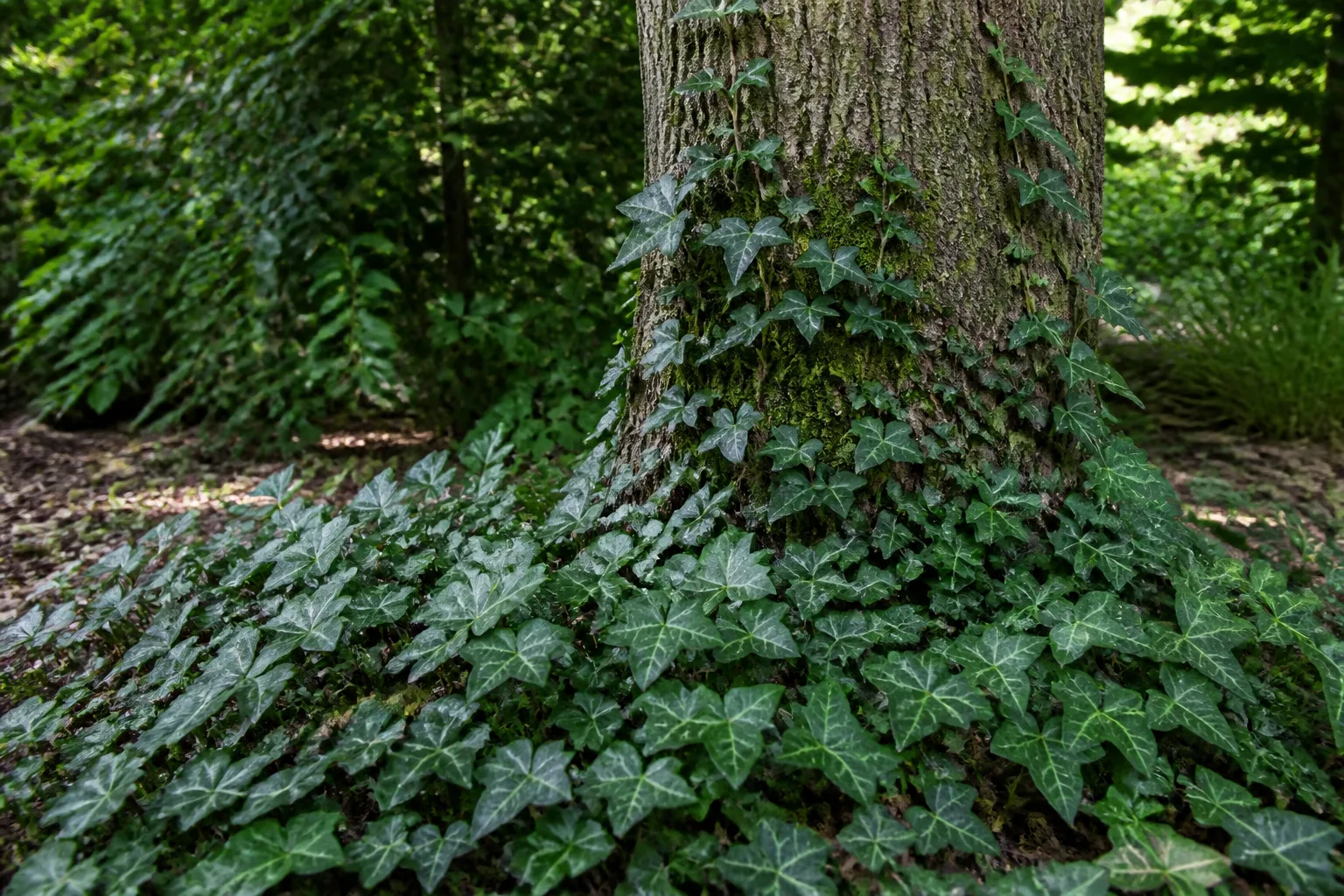
Bush Honeysuckle vs. Japanese Honeysuckle
Not all honeysuckles behave the same way, and the removal plan changes with growth form. Bush honeysuckles—including Amur, Morrow’s (L. morrowii), Tatarian (L. tatarica), and Bell’s hybrid (L. x bella)—grow as multi-stemmed shrubs, usually 6 to 15 feet tall, with opposite leaves and abundant spring flowers followed by berries. Japanese honeysuckle (L. japonica) is a twining woody vine that climbs fences, trees, and structures, with fragrant white-yellow flowers and purple-black fruit.
Bush honeysuckles are the shrubs most homeowners describe as “the invasive honeysuckle swallowing the yard.” Japanese honeysuckle is the vine version that mats over perennials and pulls down small trees. Both resprout from cut stumps and both require follow-up; the tools differ mainly in whether you are sawing shrub stems at ground level or untangling and cutting vines back to their crown.
Identify the Species Before You Cut Anything
Misidentification is an expensive mistake. Coral honeysuckle (Lonicera sempervirens) is a native twining vine with red-orange tubular flowers and a legitimate place on a trellis if you want hummingbird habitat without the invasiveness of Japanese honeysuckle. Our guide to climbing plants that don’t cause damage covers coral honeysuckle as the native alternative worth keeping.
For the invaders, use a combination of growth form, stem structure, and fruit timing. Amur honeysuckle stems are often hollow when cut, with light gray-brown bark and opposite, oval leaves that taper to a point. Spring flowers are white aging to yellow; summer fruit is bright red and abundant. Japanese honeysuckle vines have opposite leaves that may look lobed on young growth, extremely fragrant flowers in early summer, and dark berries later in the season. It is considered invasive across much of the eastern United States (invasive.org distribution map for L. japonica).
Winter ID is harder on flowers and berries, but easier on architecture. Without leaves, you can trace each trunk to its base, spot the multi-stem shrub versus a single twining vine, and mark which stems belong to desirable neighbors before you swing a saw.
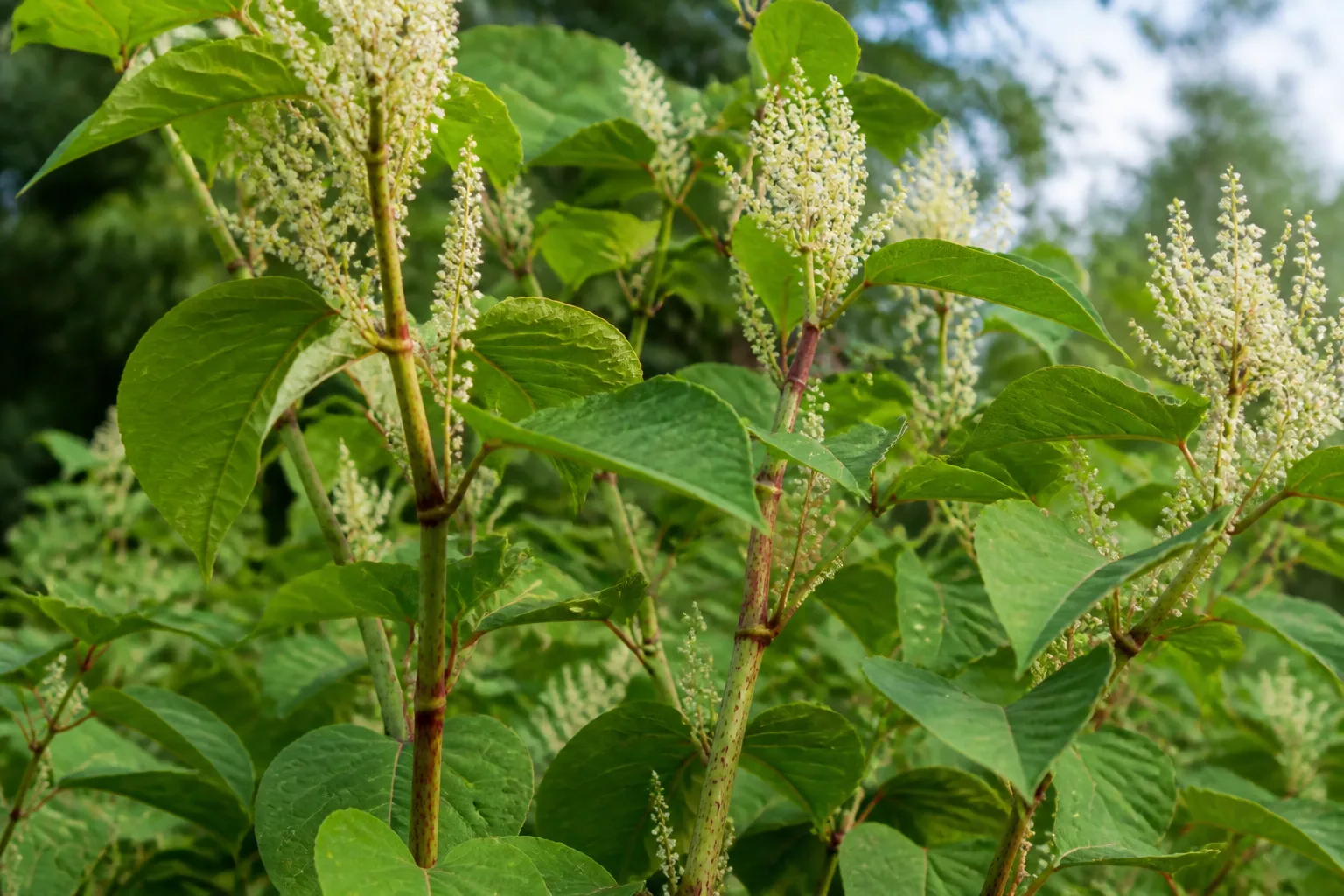
Field Marks That Separate Invaders From Native Coral Honeysuckle
When leaves are present, check leaf arrangement and fruit color. Invasive bush honeysuckles and Japanese honeysuckle have opposite leaves and produce berries that birds spread widely. Coral honeysuckle also has opposite leaves, but its flowers are red to red-orange, generally not fragrant in the overpowering way Japanese honeysuckle is, and it is a twiner that does not form the tall, freestanding shrub thickets typical of Amur honeysuckle.
If you are unsure, photograph the plant at the base, a stem cross-section if you can make a small test cut, and any remaining fruit or flower clusters, then compare against your state extension’s invasive plant list before clearing a whole patch. Regional lists in our invasive plants to avoid planting and worst invasive plants guides are a starting point, but the legal and ecological status is always local.
The Best Time of Year to Remove Invasive Honeysuckle
Late winter through very early spring is the sweet spot for most homeowners. Deciduous leaves have dropped, honeysuckle’s own bare stems stand out against gray bark, and dormant perennials and spring ephemerals are still below ground where you are less likely to trample them. Visibility is the practical reason winter wins: you can see the base of each shrub, plan cuts around desirable tree saplings, and haul brush without a curtain of foliage hiding half the job.
Winter work also interrupts the plant before the next berry crop ripens. Bush honeysuckle berries feed birds through fall and into winter; removing mature fruiting stems before spring growth reduces—though never eliminates—the seed rain for the coming year. For large woodland patches, dormant-season access is safer for the surrounding native community because you are not crushing actively growing wildflowers underfoot.
Penn State Extension notes that woody invasive honeysuckles often respond best when cut stems are treated with concentrated herbicide applied directly to the cut surface, or when regrowth is sprayed after a mid- to late-summer cut (Penn State Extension on Japanese honeysuckle control). That means your calendar has two linked events: the winter cut that clears visibility and access, and the growing-season follow-up if you choose foliar treatment or need to hit resprouts.
Seasons and Situations When You Should Wait
Avoid major clearing in peak summer—roughly June and July for many temperate regions—when honeysuckle is in full leaf, soils may be dry and hard to dig, and disturbance can scatter berries if fruiting stems are shaken during removal. You also risk damaging actively growing desirable plants woven into the thicket.
Do not postpone forever, though. If you only have time in summer and the patch is small, you can still cut and treat stumps; just work carefully around berries and bag fruiting material. Skip foliar herbicide sprays on breezy days or when desirable plants are in full leaf unless you are using the late-fall window described later. If the infestation sits on a steep slope, along a stream buffer, or under utilities, get local guidance before DIY work—soil disturbance and herbicide drift carry higher stakes there.
Choose a Control Method Based on Plant Size and Site
Think in tiers rather than hunting for one magic bullet. Seedlings and stems under about waist height with shallow roots are candidates for hand-pulling or digging when soil is moist. Established multi-stem shrubs usually need cutting to the ground plus either immediate stump treatment or long-term smothering. Large patches with hundreds of stems benefit from working from the edge inward, treating stumps as you go, and returning monthly during the growing season for seedlings.
Site sensitivity matters as much as plant size. Near vegetable gardens, play areas, or wells, precision cut-stump treatment or plastic smothering beats broadcast foliar spraying. In open woodland where few desirable plants remain in the understory, late-fall foliar treatment on resprouts may be efficient. Our natural ways to remove invasive plants guide covers mechanical tactics—pulling, mowing, smothering—that pair well with honeysuckle follow-up on mixed beds.
Quick Decision Guide
Hand-pull or dig when stems are flexible, roots release with a slow steady pull after rain, and you can remove the full root crown without leaving fragments. Cut-stump with labeled herbicide when stems are woody, the stand is too large to dig, and you need reliable kill with minimal drift. Plastic or fabric smothering when herbicides are off the table and you can keep cover sealed for many months. Late-fall foliar spray on resprouts when honeysuckle still holds leaves after natives have dropped theirs, giving you a selective window.
If any method feels like it “should have worked” but did not, assume the roots still have reserves or new seeds have arrived. Honeysuckle control is a seasonal habit, not a single chore.
Manual Removal for Seedlings and Accessible Shrubs
Manual removal is underrated for first-year seedlings and young bush honeysuckle with stems thinner than a finger. After rain or during winter thaw when soil is moist, grip low on the stem and pull slowly, keeping the root crown intact. A digging fork helps on older plants if you are committed to extracting the full root mass rather than cutting.
Work outward from the areas you want to protect first—tree saplings, garden beds, paths—so the thicket does not expand while you focus on the dense center. Bag any stems with berries attached; do not leave cut fruiting branches on the ground where birds can still feed. For Japanese honeysuckle vines, trace each stem to its base at soil line and cut there; pulling vines out of trees without cutting the root crown only tidies the canopy temporarily.
Manual removal alone rarely finishes a mature Amur stand. The roots on older shrubs are thick, widespread, and heavy. Treat hand-pulling as early detection and maintenance after you have knocked back the mother plants by cut-stump or smothering.
Cut-Stump Treatment for Established Stands
For most homeowners facing fence-line thickets, cut-stump treatment is the most reliable approach: cut every stem within a few inches of the ground, then apply systemic herbicide to the freshly cut surface before it dries. The chemical moves into the root system and prevents the explosive resprouting that makes honeysuckle feel immortal.
Use sharp loppers, a pruning saw, or a reciprocating saw for thick stems. Cut flat and level, not at a steep angle, so herbicide pools on the cambium rather than running off. On multi-stem crowns, treat each stem individually. Work in pairs if the patch is large—one person cuts, the other paints or daubs stumps within minutes.
Remove the above-ground brush for disposal once stems are treated. You get immediate visual relief while the underground kill proceeds over weeks to months. Flag treated stumps if you are working over several weekends so you do not lose track in a large area.
Herbicide Selection, Timing, and Application
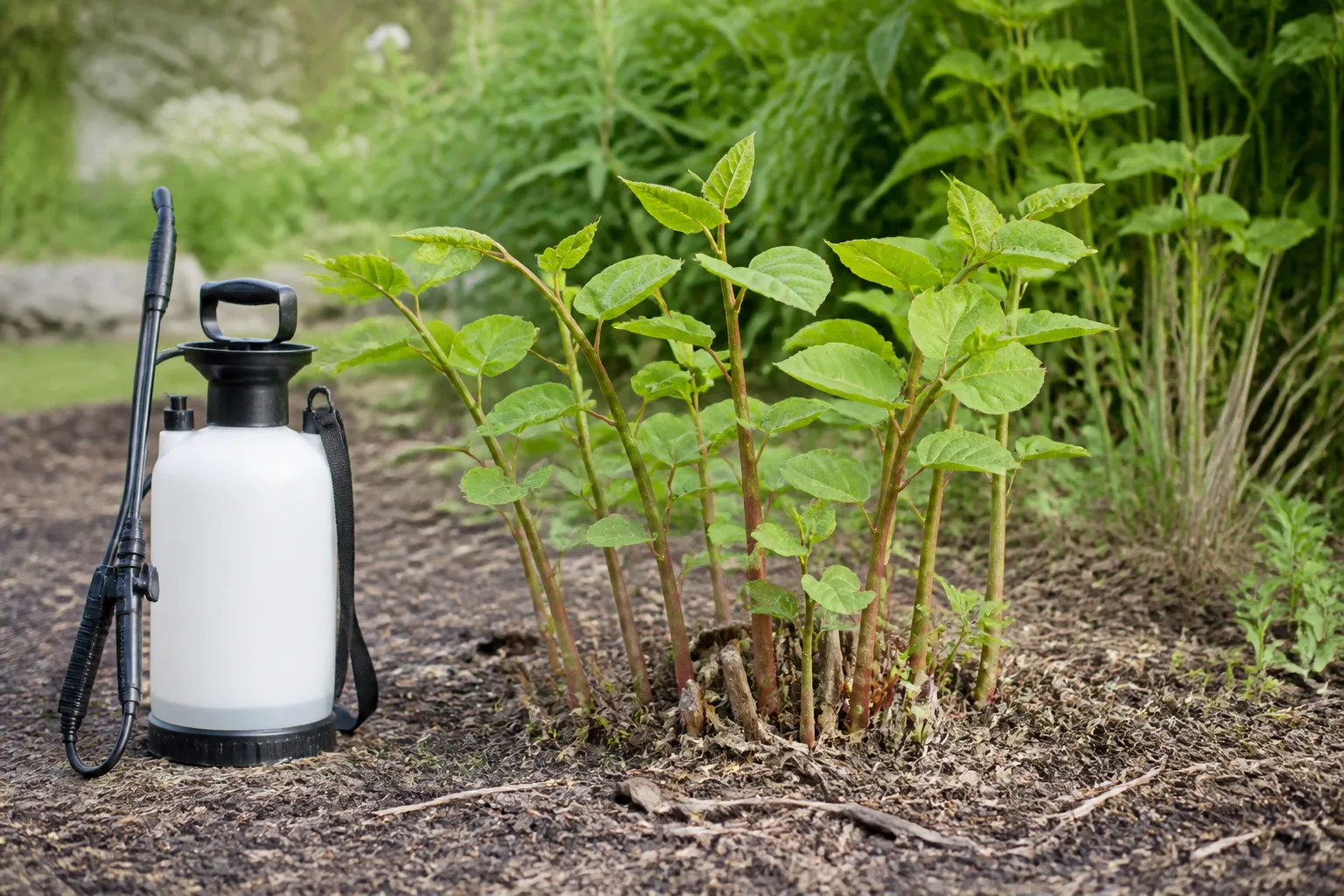
Penn State Extension lists glyphosate and triclopyr as effective options for cut-surface treatment on Japanese honeysuckle, with the reminder to follow the product label for concentration, personal protective equipment, and allowable application sites (Penn State Extension). Epic Gardening’s invasive honeysuckle guide, citing forestry practice, describes cut-stump mixes in the range of roughly 20–25% glyphosate or 8–10% triclopyr from concentrated products—always mixed per label, never eyeballed from memory (Epic Gardening).
Apply with a foam brush, dauber bottle, or low-pressure sprayer aimed only at the stump face. Cover the cambium ring thoroughly without dripping herbicide onto soil or nearby desirable plants. Adding a dye to the mix helps on large jobs so you can see treated stumps.
Cut-stump work can be done across much of the year, but late summer through early winter is often recommended for maximum translocation in living tissue. If you cut in late winter and skip herbicide, expect resprouts by spring—either treat those fresh cuts immediately or switch to the smothering protocol below. Never assume a product name from an old forum post replaces the label on the container in your hand.
Herbicide-Free Control That Holds Up Over Time
If herbicides are not appropriate for your site, cut low and deprive the stump of light long enough to exhaust root reserves. University of Cincinnati research led by Denis Conover found that cutting Amur honeysuckle at ground level and covering stumps with black plastic—secured with wire garden staples against wind—killed plants without chemical treatment (University of Cincinnati). Black garbage bags tied tightly around stumps and pinned to the ground worked in homeowner trials Conover described; he sometimes rakes leaves over the plastic to hide it while the plant dies underneath.
This is slower than cut-stump herbicide and it is not a one-week project. Roots on large shrubs can push new shoots until they starve. Check under covers monthly and slice off any escapes before they leaf out fully. Combine plastic on the main crown with hand-pulling of peripheral seedlings.
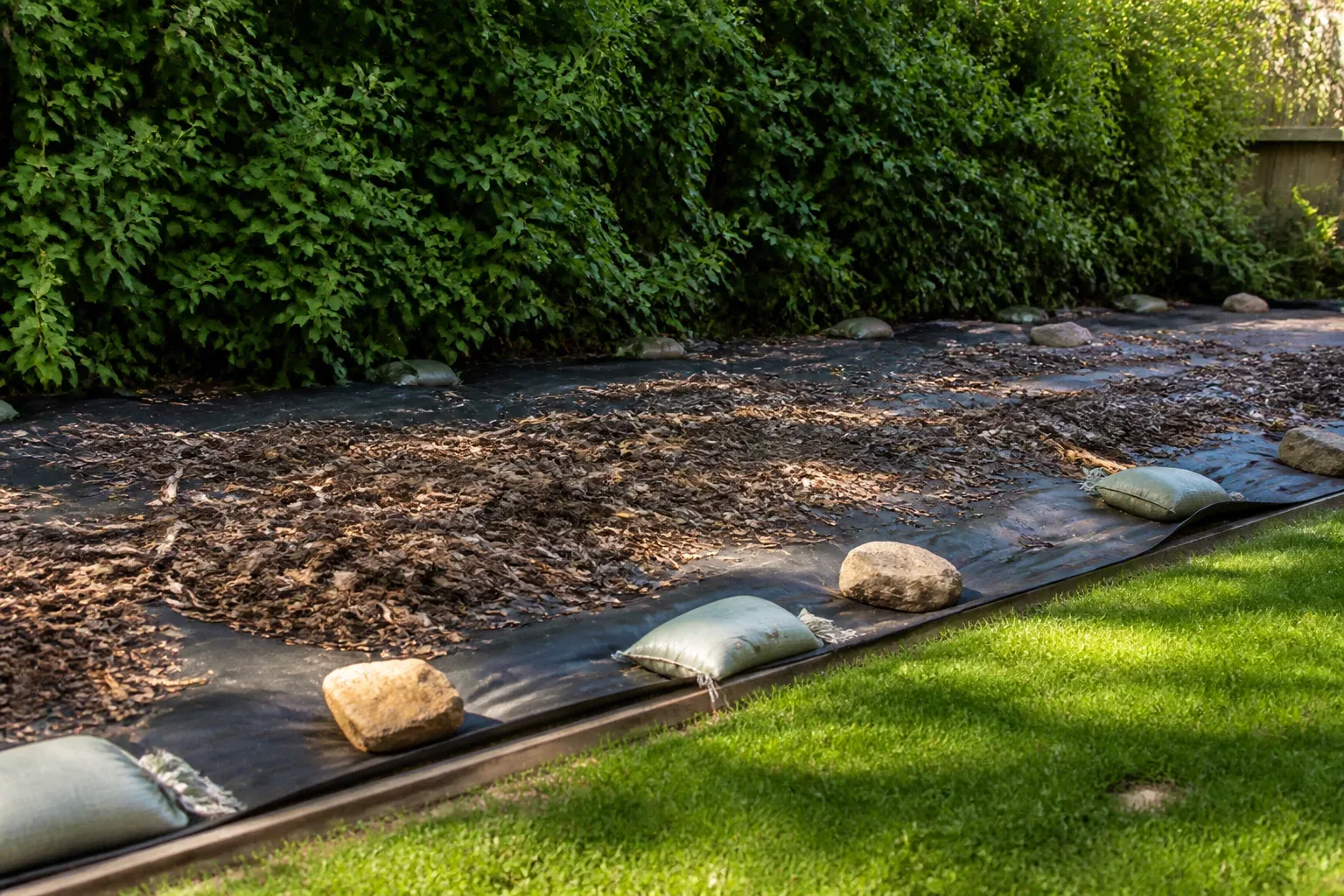
Mechanical smothering of the whole root zone—with opaque tarp weighted around the cut crown—fits small patches where you can leave cover in place for a full growing season. Our natural invasive removal guide explains how opaque smothering differs from solarization; honeysuckle crowns often need the longer timeline associated with woody plants, not the quick annual weed kill.
Smothering Fresh Stumps With Plastic or Fabric
After cutting, cover the entire crown and any exposed root flare with black plastic, heavy weed fabric, or doubled contractor bags. Extend cover at least 12 inches beyond the stem cluster so lateral buds cannot find light. Seal edges with staples, rocks, or soil berms.
Leave covers in place through at least one full growing season on large shrubs; longer is safer. When you remove plastic, plant native shrubs or sow native seed immediately so the gap does not refill with honeysuckle seedlings. Conover’s approach pairs each removal with planting acorns and native woody seed nearby to rebuild canopy competition (University of Cincinnati).
Foliar Sprays and the Late-Fall Leaf Window
Foliar herbicide is a specialist tool, not the default. Spraying leaves in spring risks hitting desirable plants growing in the same thicket. The selective trick—used by many forest managers—is to wait until late fall, when invasive honeysuckles still hold leaves after native deciduous plants have dropped theirs. You can spray honeysuckle foliage with a labeled glyphosate or triclopyr mix while neighboring natives are dormant above ground.
Another pattern is cut in summer, let resprout to knee- or waist-high, then spray tender regrowth in late summer or early fall when translocation is strong. Penn State Extension describes both cut-and-treat and cut-wait-spray sequences for Japanese honeysuckle (Penn State Extension). Foliar work shines in dense seedling mats where finding every tiny stump is impractical; cut-stump remains better when stems are few and large.
Always read the label for temperature limits, rain-free intervals, and aquatic setbacks. Foliar sprays drift. On suburban lots, cut-stump or smothering is usually the neighbor-friendly choice.
Disposal Rules So Berries Do Not Replant Your Yard
Honeysuckle’s berries are the reinfestation engine. Do not compost fruiting stems, berries, or moist piles likely to contain live root pieces. Bag material that could still set seed and follow your municipality’s yard-waste rules; many regions allow invasive woody debris in municipal pickup if fruit is bagged first.
Chip only dry, berry-free, seed-free woody stems if local guidance permits, and keep chips away from natural areas. A brush pile in the woods is not “disposal”—it is a bird feeder with a housing upgrade. If you must stage cut material temporarily, tarp it in full sun to desiccate before chipping or hauling.
Clean tools and boots when moving from an infested patch to a clean bed. Honeysuckle does not spread as aggressively by tools as some root-fragment weeds, but muddy boots after rain can track seeds.
Replant, Shade the Gap, and Monitor for Regrowth
Removal without replacement is an invitation. Honeysuckle seedlings love sunny disturbed soil. After clearing, plant native shrubs or trees suited to your light and soil—oaks where canopy is the goal, ninebark or dogwood for mid-height structure, coral honeysuckle on a trellis if you want flowers without bush honeysuckle’s spread. Even a thick mulch ring and a planned native groundcover beats bare dirt.
Monitoring is non-negotiable for at least two full growing seasons. Walk the site monthly from April through October. Look for single-leaf seedlings, multi-stem resprouts from missed crowns, and vines reappearing on fences. New stems smaller than your hand usually pull easily when caught early.
Mark your calendar for a late-winter revisit each year. That is when you will see architecture clearly again and catch what summer foliage hid. Honeysuckle control ends when seedlings stop appearing and resprouts stop surviving your follow-up—not when the brush pile leaves the driveway.
Conclusion
Invasive honeysuckle is beatable when you treat it like a system, not a one-time cutting chore. Identify whether you are fighting bush honeysuckle or a twining Japanese vine, use late winter’s bare-stem visibility to plan cuts that protect desirable plants, and match the method—digging, cut-stump treatment, plastic smothering, or selective late-fall foliar work—to the size of the stand and the sensitivity of the site.
Bag berries instead of feeding the local bird population, replant natives into the gaps you open, and keep monthly eyes on the ground for at least two years. The goal is not a sterile yard; it is a fence line and woodland edge where native plants get enough light and space to hold their own. Start this winter while you can still see the enemy’s base, and you will spend far less time fighting the same thicket every June.