How to Care for Hummingbird Bush (Flame Acanthus)
Learn how to grow hummingbird bush (flame acanthus) with the right sun, drainage, watering, pruning, winter care, propagation, and bloom fixes.
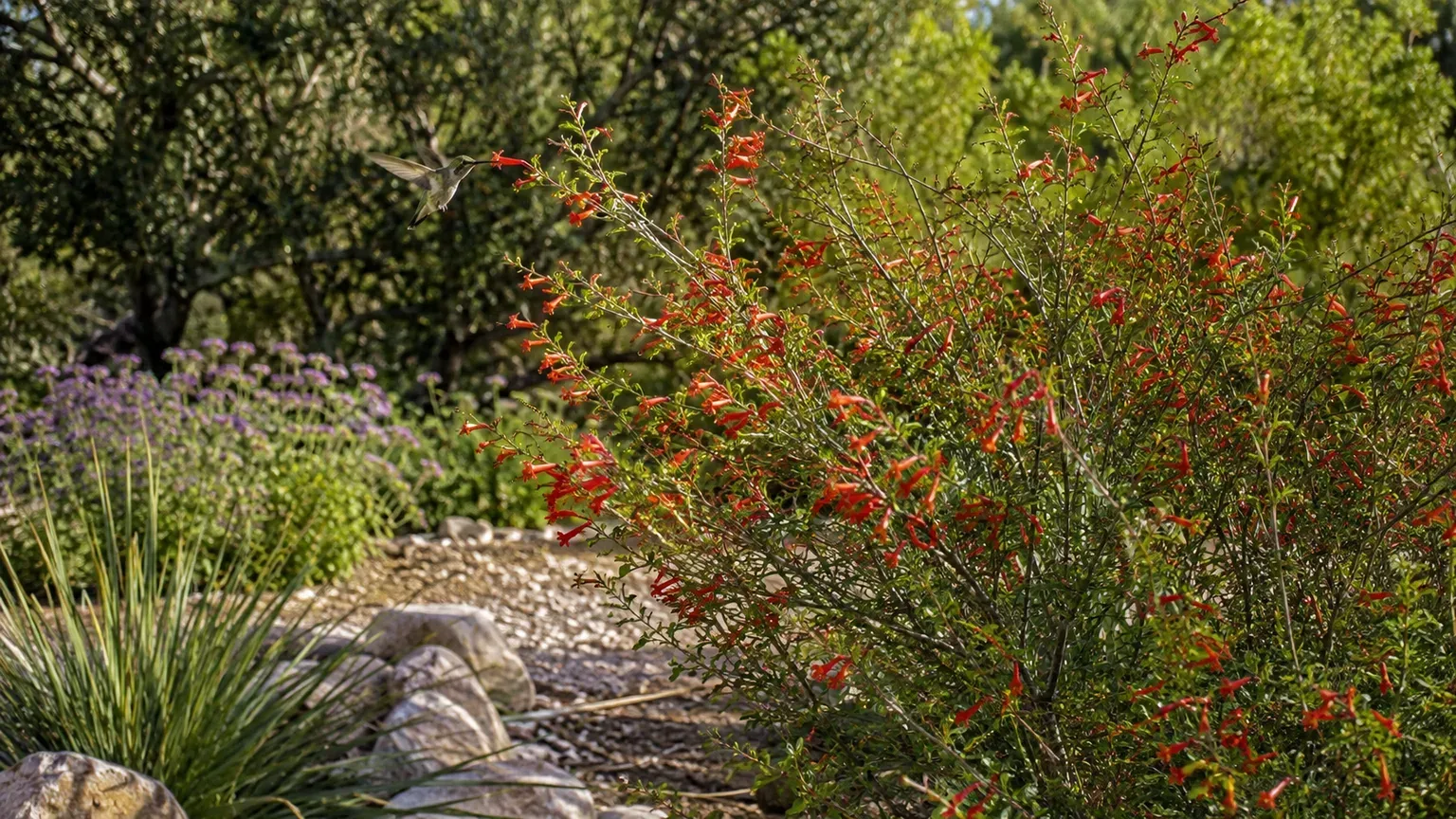
Hummingbird bush, commonly called flame acanthus, is a drought-tough flowering shrub that rewards the right site more than a complicated maintenance routine. Its botanical name is Anisacanthus quadrifidus var. wrightii, and its natural range runs through Texas and northern Mexico. In a sunny, fast-draining bed, it can carry red-orange tubular flowers through the warm season while needing far less irrigation than a thirsty flowering shrub.
The catch is that “tough” does not mean indestructible. A newly planted shrub needs a deliberate watering taper, roots fail in persistently wet ground, and cold can kill the stems even when the root system survives. Use the care plan below to match your actions to the plant’s age, soil, and winter climate instead of treating every hummingbird bush as if it lives in the same garden.
Start with the plant’s real strengths and limits
Flame acanthus is a deciduous, somewhat airy shrub in the acanthus family. TTU Plant Database describes an upright plant roughly 3 to 4 feet tall and 3 to 5 feet wide, with narrow opposite leaves and orange, trumpet-shaped flowers about 2 inches long. Other references list a similar mature footprint, but the final size changes with water, pruning, winter dieback, and whether the plant is growing in the ground or a container.
The common name causes avoidable confusion. This is not the same plant as firecracker bush (Hamelia patens), and it is not a honeysuckle vine. Check the botanical name on a nursery label if you want flame acanthus specifically. A mature specimen usually has slender branching stems, relatively sparse foliage, exfoliating bark, and flowers that sit along the stems rather than forming large rounded clusters.
The shrub’s best use is a hot border, rock garden, xeric planting, wildlife bed, or informal low hedge. It can also be grown in a large pot, but a container turns a low-water landscape plant into a plant that depends on you for moisture and winter protection. That difference matters more than the label’s “drought tolerant” claim.
Choose a sunny site with fast drainage
Give hummingbird bush at least six hours of direct sun, with more sun generally producing a denser plant and heavier flowering. Light partial shade can work, particularly in very hot climates, but shade is a poor solution for a shrub that is leafy but flowerless. Check the site in winter too: a wall, fence, or neighboring evergreen can cast a long shadow when the sun is low, leaving a perennial specimen underlit for the season when it is trying to survive and prepare new growth.
Drainage is the non-negotiable site feature. The plant can tolerate sandy, rocky, loamy, alkaline, and even some clay soils, but water must move away from the root zone. Avoid a low pocket, downspout outlet, irrigated lawn edge, or bed that stays shiny and saturated after rain. TTU lists adaptable soil and high heat tolerance, while UTEP places the plant in rocky stream banks and outwash plains—habitats that can receive water without holding it around roots for days.
Use a simple test before planting. Dig a hole about 12 inches deep, fill it with water, let it drain, then fill it again and watch the second fill. If water remains for many hours or the bottom is still soupy the next day, solve the drainage problem by moving the shrub, raising the bed, or choosing a different plant. Adding a small amount of compost to an individual hole rarely repairs a fundamentally wet site; it can create a pocket that holds more water than the surrounding soil.
Plant flame acanthus for a strong first year
Fall is usually the best planting season in warm climates because the roots can grow while top growth is slowing. Early spring is the next-best window where winter is colder, provided the plant has time to establish before the first serious heat. Southwest Gardener also recommends fall, or early spring as the backup window. Planting a nursery shrub during the hottest part of summer is possible, but it creates a high-water, high-stress first season and gives you less margin for error.
Use a simple planting sequence
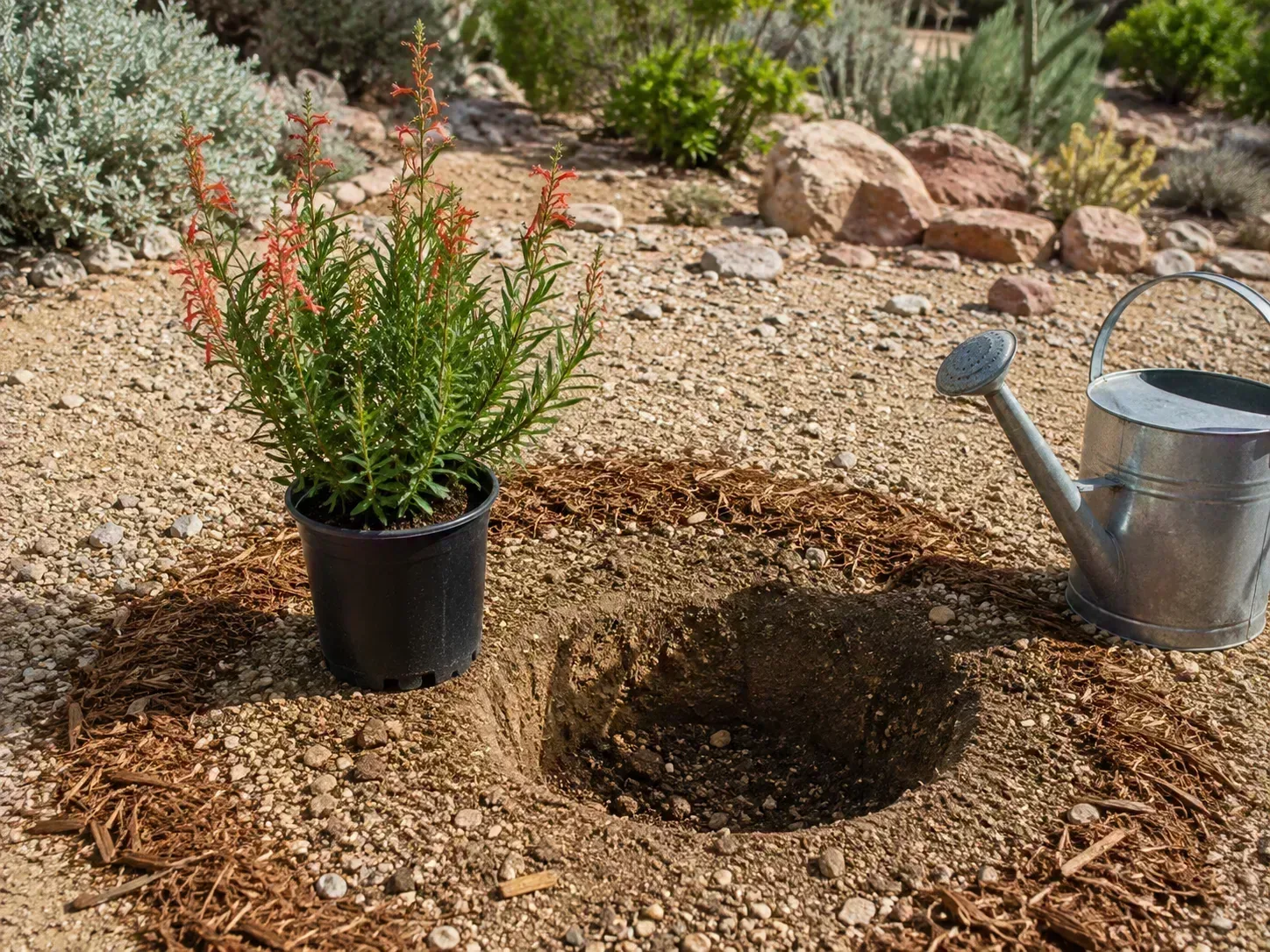
Set the plant where the top of its root ball will sit level with, or just slightly above, the surrounding soil. A buried crown stays wetter than it should. Make the hole about two to three times wider than the root ball but no deeper, loosen circling roots at the edge, and backfill with the soil you removed unless a local soil test or drainage correction calls for something more specific. The goal is a broad transition from nursery soil to native soil, not a rich underground pot.
Water slowly and deeply immediately after planting so the entire root ball and nearby backfill settle together. Shape a low temporary watering basin just outside the root ball, then apply a 2- to 3-inch layer of mulch over the root zone. Keep mulch a few inches away from the stems; mulch touching bark holds moisture against the crown and provides cover for chewing pests.
Do not fertilize at planting unless a soil test identifies a real deficiency. A plant that is adjusting roots cannot use a heavy dose of fertilizer as a substitute for good placement. Stake only if wind repeatedly rocks the root ball; a permanently rigid stake can prevent the trunk and branches from developing useful movement and strength.
Water by establishment stage, not by habit
Flame acanthus uses water differently at three stages: immediately after planting, during its first growing season, and after its roots occupy the surrounding soil. “Water sparingly” is good mature-plant advice but can kill a new transplant if it is interpreted as “leave it on its own.” Conversely, frequent shallow sips can keep the surface wet while failing to move moisture deep enough.
New plants need a tapering schedule
For the first two weeks, check the root ball every few days and water when the upper surface begins to dry, adjusting for rainfall, wind, temperature, and soil texture. During weeks three through six, stretch the interval while increasing the depth of each irrigation. By the second month, a plant in mild weather may need water roughly every 10 to 14 days; a plant in hot, sandy ground may need checking sooner.
The correct test is not a calendar alone. Push a finger or a narrow trowel into the root-ball edge, or use a soil probe, and look for moisture below the surface. If the root ball is dry while native soil is damp, aim water at the transition zone rather than only at the stem. If the soil is wet and the plant is wilting, stop adding water and investigate root stress or poor drainage. This transition from frequent checks to longer intervals follows the staged schedule described by Southwest Gardener, while Dallas County Master Gardeners emphasizes low water after establishment.
Established plants need deep, infrequent irrigation
Once a shrub is established, natural rainfall may cover much of its needs. During a long, hot, rainless stretch, a slow deep soak every two to three weeks is a practical starting point for many in-ground plants, but sandy soil, reflected heat, and smaller root zones shorten that interval. Gardenia’s plant profile gives a similar deep-watering range for best flower production. The best signal is the combination of dry soil several inches down, wilt that does not recover overnight, and a plant entering a heat wave with reduced flowering.
Water at the base in the morning and keep leaves and flowers as dry as practical. A soaker hose or low-flow emitter is useful during drought because it wets the root zone without spraying the canopy. Skip irrigation when the soil is already moist from rain. Overwatering is a more likely cause of decline than underwatering in a poorly drained bed, and root rot cannot be reversed by adding more fertilizer or moving the hose to a different side.
Handle soil, mulch, and fertilizer without overfeeding
The best soil for hummingbird bush is soil that drains promptly and does not collapse into a sealed, airless mass after irrigation. You do not need to chase a particular pH; TTU and other horticulture references describe this shrub as adaptable, including tolerance of alkaline soils. Improve structure across the bed if needed, but do not automatically replace native soil with a high-compost mix in one planting hole.
Use gravel or organic mulch according to the site’s needs. Gravel keeps the crown dry and suits a desert-style bed, while a thin organic mulch layer can moderate root temperatures and reduce evaporation. Neither mulch is a license for daily irrigation. Pull either material back from the stems and keep the root flare visible.
Routine fertilizer is usually unnecessary. Fast, soft growth from excess nitrogen can make the shrub floppy and may produce leaves at the expense of the compact, flowering form you wanted. If growth remains weak after you have confirmed sun, drainage, and appropriate water, test the soil before feeding. A light spring compost top-dressing is a reasonable low-risk option, but it should not become a yearly pile of rich material around a drought-adapted plant.
Prune at the right season
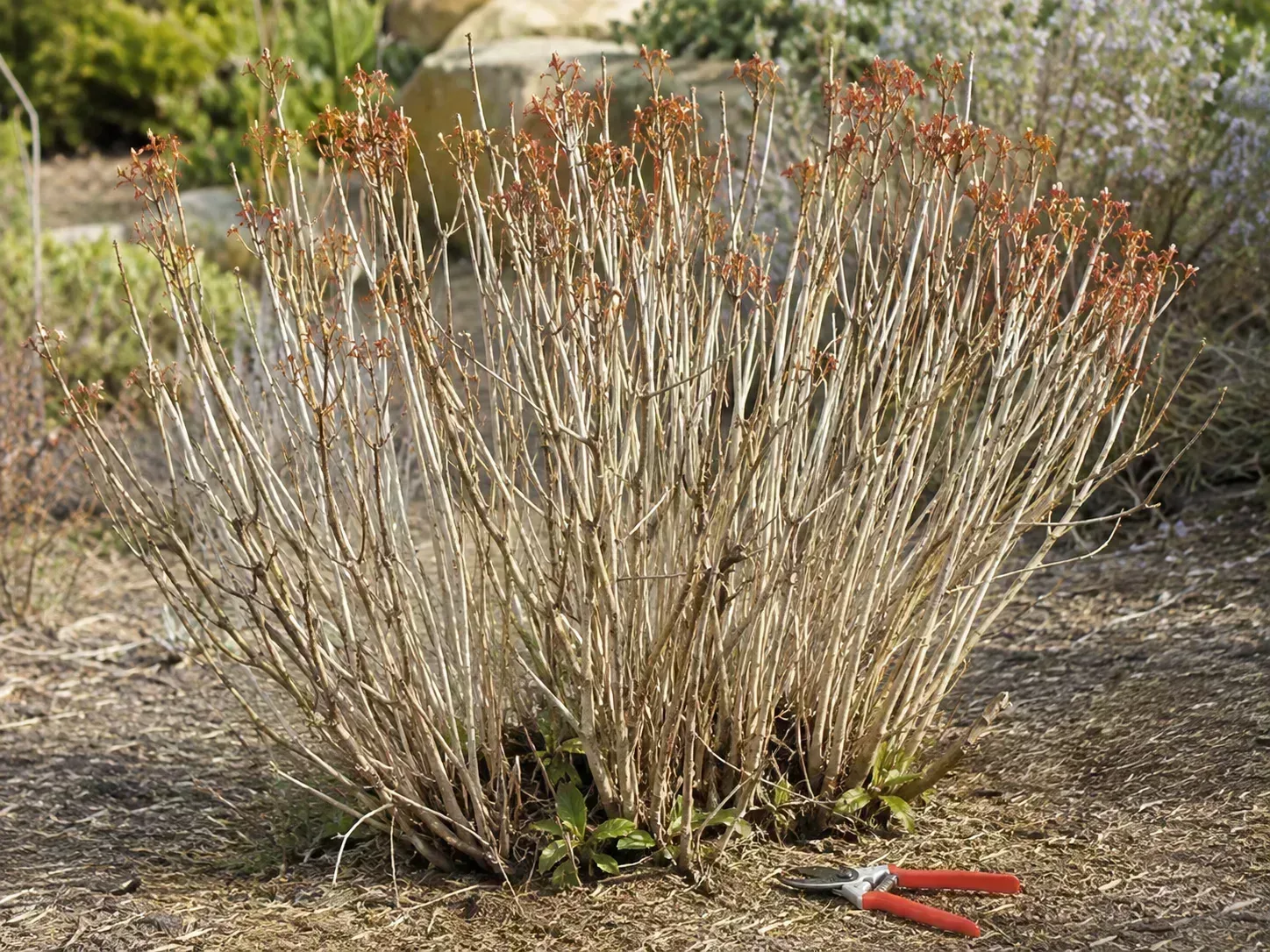
Flame acanthus does not need constant shaping. Lightly remove broken, crossing, or dead branches in late winter or early spring, just before new growth begins. If the plant is alive above ground, shorten long or awkward stems by about one-third rather than shearing the whole shrub into a hard geometric ball.
You can rejuvenate an old, sparse plant by cutting it back more severely every few years, but timing is important. Late-summer pruning removes stems that could carry the late-season flower flush. Fall pruning can also expose fresh cuts to cold before the plant has finished hardening. If you want a dense hedge, shear lightly after a flowering wave and keep the base wider than the top so lower branches receive light.
Treat winter dieback as a root-checking problem first
In the colder parts of its range, the top may freeze while the roots live. TTU separates root hardiness in roughly Zones 7–10 from stem hardiness in Zones 8–10, a useful distinction that explains why two gardeners can report different winter results. The plant may also lose leaves in a mild winter without being damaged; deciduous behavior is not automatically a diagnosis.
Wait until the worst cold has passed and new growth is beginning before deciding how far to cut. Scratch a small section of stem with a clean pruner or fingernail: green, moist tissue suggests life; brown, dry tissue suggests that section is dead. Follow living tissue downward and cut just above a healthy bud or back to the base if the whole stem is dead. Do not cut a dormant-looking shrub to the ground in midwinter and then assume the roots failed because no shoots appear immediately.
Get more flowers by fixing the limiting factor
The most reliable bloom formula is sun plus drainage plus steady establishment. A mature shrub can bloom with little supplemental water, but a severe summer drought may shorten the display. A deep soak during an extended hot, dry period can help the plant resume flowering; keeping the soil wet every day usually creates a root problem instead.
Rain often triggers a new flush because the plant receives a meaningful drink after a dry interval. That does not mean you should imitate a storm with repeated shallow watering. If the plant has green growth but few flowers, inspect the site first: count direct-sun hours, check for an overgrown neighbor, and dig into the root zone to see whether it is bone-dry or waterlogged.
If the shrub is tall and floppy, too much shade or too much nitrogen is more likely than a lack of bloom fertilizer. Prune at the right season, improve light if possible, and let new shoots mature. If cold killed the top, flowering may be delayed while the plant rebuilds stems from the crown. A first-year transplant may also spend its energy on roots and flower lightly; that is a reason to protect the establishment schedule, not to force-feed it.
Grow hummingbird bush in a container with realistic expectations
Choose a container at least 18 to 24 inches wide with large drainage holes, a gritty, free-draining mix, and enough weight to resist tipping. Epic Gardening notes that hummingbird bush can be grown in large pots, but it will not behave exactly like a ground-planted shrub. Roots cannot explore cooler surrounding soil, the pot dries faster in wind and heat, and winter roots are more exposed to freezing temperatures.
Water when the upper few inches of mix are dry, then soak until water exits the drainage holes. Empty a saucer rather than letting the pot sit in runoff. In summer, a container may need checking several times a week even though an established in-ground shrub needs water only occasionally. Reduce irrigation in cool weather but do not let the root ball become dust-dry for long periods.
Refresh or shift the plant into a larger container when roots circle densely, water runs straight down the sides, or new growth stays weak despite good light. Prune the top lightly after the main season rather than repeatedly chopping it to compensate for a pot that is too small. In cold climates, move the container to a sheltered, bright location before hard freezes, or grow the plant as a seasonal accent rather than promising yourself it will overwinter outdoors.
Propagate from cuttings or seed
The two practical routes are softwood cuttings and seed. Cuttings produce a genetic copy of the parent, which is helpful if you like its flower color, habit, or cold performance. Seed gives you more plants and can be rewarding, but seedlings may vary and take longer to reach flowering size.
Softwood cuttings are the quickest route
Take a 4- to 6-inch cutting from flexible current-season growth in spring through mid-summer, avoiding a stem carrying a heavy flower display. Use clean, sharp pruners and cut just below a node. Remove the lower leaves, keeping two to four leaves at the tip, and place the cutting in a sterile, airy rooting medium.
Moisten the medium, firm it around the stem, and set the pot in bright indirect light. A loose clear cover can slow moisture loss, but it should not seal the cutting in stagnant, dripping humidity. Check the medium frequently: it should remain evenly damp, never saturated. Gentle tug resistance and new growth suggest roots are forming; do not pull up the cutting every few days to check.
Once the cutting has a useful root system and stable new growth, harden it to outdoor conditions gradually. Pot it on before planting into the landscape, and protect it from intense afternoon heat until the root ball holds together. Rooting hormone is optional; clean tools, fresh medium, correct moisture, and healthy wood matter more.
Seed is slower but useful for more plants
Allow the dry flower capsules to turn brown, then collect them before they split and scatter. Store clean seed in a cool, dry place and sow in spring when seedlings can receive strong light and will not face a late frost. Press seed into a well-drained mix at roughly half an inch deep, keep it moist, and avoid waterlogging.
Seedlings started indoors need gradual hardening off before transplanting. Move them outside for increasing periods over a week or two, beginning in bright shade and avoiding a sudden jump from still indoor air to reflected pavement heat. If you want a predictable compact shrub, a nursery plant or cutting is usually a better choice than relying on seed.
Prevent the few problems this tough shrub can have
Hummingbird bush is generally considered low-maintenance and is not known for a regular roster of serious pests or diseases. That does not make it immune to poor conditions. The common failure pattern is a healthy-looking plant placed in wet soil, followed by yellowing, wilt, slow growth, and root decline.
If leaves yellow while the soil stays wet, stop irrigation and inspect drainage before treating for a disease. If leaves crisp during a heat wave and the soil is dry several inches down, provide a slow deep soak and add a correctly placed mulch layer. If only the tips die after a hard freeze, wait for spring growth before removing more than clearly dead wood.
Watch for chewing or sucking insects only when you can see the insects or the damage pattern. Avoid broad pesticide sprays around flowers visited by hummingbirds and other pollinators. Identify the pest, read the product label, and use the least disruptive option appropriate to the problem; spraying “just in case” can remove beneficial insects and does not repair root or watering mistakes.
Self-seeding can occur where the capsules mature. In a naturalized planting that may be a benefit, but in a small formal bed remove developing capsules or pull unwanted seedlings while young. “Not invasive” in a plant reference does not mean “cannot spread in my exact yard,” so monitor the plant and check local invasive-plant guidance before allowing it to naturalize beyond the bed.
Build a better hummingbird garden around it
The tubular red-orange flowers are a valuable nectar stop, but one shrub is not a complete hummingbird habitat. The National Park Service describes hummingbirds as pollinators that also depend on a broader landscape of flowers and habitat. Pair flame acanthus with other regionally appropriate nectar plants so bloom timing overlaps rather than leaving one gap after the shrub pauses.
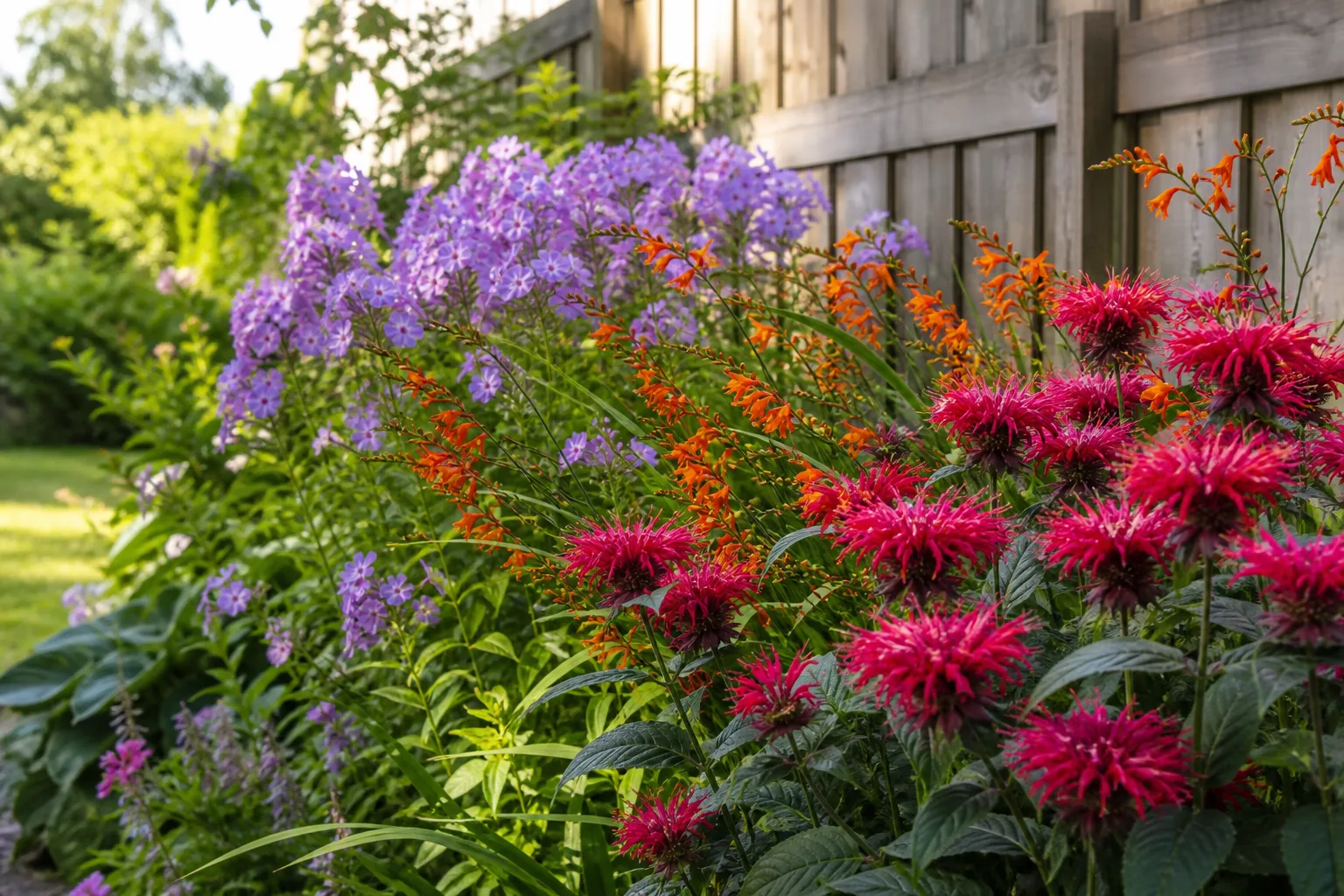
Use the shrub as a middle layer beside lower flowers and a taller, open plant that offers perches or shelter. Leave some protected vegetation nearby, keep cats away from the busiest feeding area, and avoid routine insecticide use where birds feed. Hummingbirds also consume small insects and spiders, so a perfectly sterile yard can be less useful than a clean, diverse planting with a few undisturbed corners.
If you supplement flowers with a feeder, treat it as a separate maintenance responsibility. Clean nectar and a clean feeder matter; a flowering shrub does not make spoiled sugar water safe. Our hummingbird nectar recipe explains the safe ratio and cleaning habits, while best plants to attract hummingbirds can help you build a sequence of regionally suitable blooms.
Conclusion: let sun and drainage do the heavy lifting
Good hummingbird bush care is mostly about choosing conditions the plant already understands. Give flame acanthus full sun, fast drainage, room to reach roughly 3 to 5 feet, and deep water while it establishes. Once roots are settled, let rainfall do much of the work and intervene during genuine drought rather than following a daily schedule.
Prune in late winter or just before new spring growth, and check living tissue before declaring a freeze-damaged shrub dead. If flowers are sparse, troubleshoot light, water, and winter recovery before reaching for fertilizer. With that sequence, this Texas-and-Mexico native can be a durable, wildlife-friendly shrub instead of another plant you have to rescue from the wrong spot.