How to Grow and Care for Mulberry Trees
Learn how to grow mulberry trees, choose a species, plan for fruit and roots, prune correctly, water, harvest, and avoid common site mistakes.
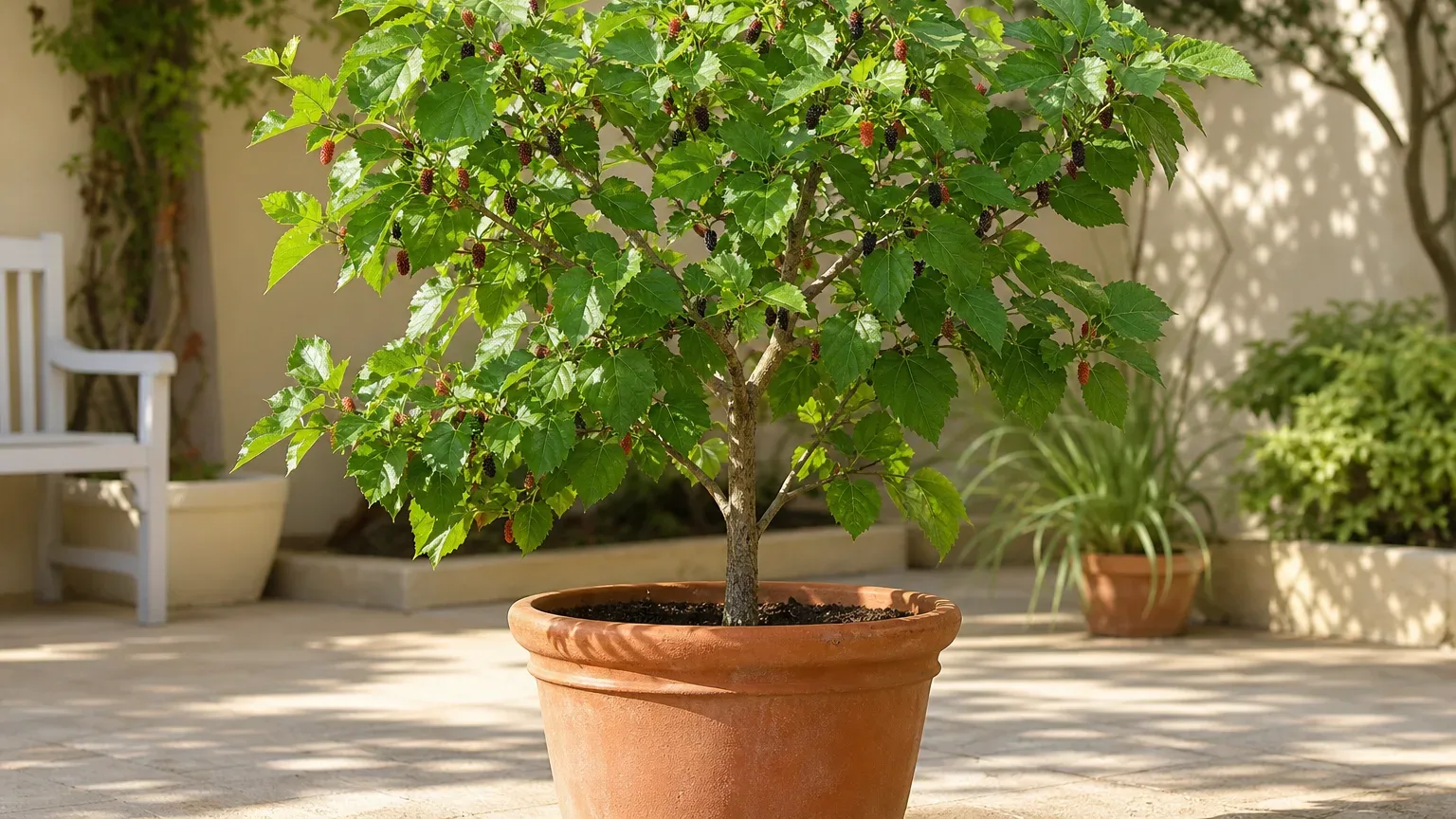
A mulberry tree can shade a backyard, feed birds and kids alike, and produce sweet berries for six to eight weeks in summer. It can also stain pavement purple, sprout volunteers by the hundreds, and spread a canopy wider than many yards can comfortably hold. The difference between a tree you love and one you regret is almost always decided before planting: species choice, pollination setup, and distance from anything you do not want stained or cracked.
Choose the right mulberry before you dig
Mulberries belong to the genus Morus in the fig family (Moraceae). They are medium to large deciduous trees with serrated leaves, gray-brown bark, and small greenish catkin flowers in spring. What changes between species is mature size, cold tolerance, fruit quality, invasiveness, and how aggressively the tree self-seeds.
Do not buy a tree labeled only “mulberry.” Check the botanical name on the tag and ask whether the cultivar is fruiting, self-fruitful, or ornamental.
Red mulberry (Morus rubra)
Red mulberry is native to much of eastern and central North America, from southern Canada through the eastern United States. NC State Extension describes it as a deciduous tree reaching roughly 25 to 60 feet tall with a spreading crown, alternate leaves that may be unlobed or shallowly lobed, and blackberry-like fruit clusters that ripen in summer.
For gardeners who want a landscape tree with ecological value, red mulberry is often the best starting point where it is native. Its fruit feeds birds, mammals, and pollinators, and it is not the species most often flagged as a landscape invader. It can still self-seed and drop messy fruit, so site planning matters.
Popular fruiting cultivars and hybrids include Illinois Everbearing (a red–white hybrid valued for long fruiting season), Silk Hope (larger fruit than Illinois Everbearing), Collier, Hicks Everbearing, Townsend, and Travis (noted for greater cold hardiness than black mulberry). Buy named cultivars from a nursery if fruit quality and timing matter; seedlings are variable and slower to fruit.
White mulberry (Morus alba)
White mulberry is native to China and was introduced to North America for silkworm production and as an ornamental. NC State Extension notes that it naturalizes in fields, forest margins, and roadsides, hybridizes with native red mulberry, and is considered invasive or restricted in some states. Wisconsin lists it as a noxious weed and restricts planting or movement.
White mulberry grows quickly—often 30 to 60 feet tall with a similar spread—and tolerates heat, drought, pollution, and alkaline soil better than many fruit trees. Male and female flowers typically form on separate plants, so a random seedling may be male (no fruit) or female (fruit and mess). Fruit color is misleading: “white” mulberry berries often ripen to pink, red, or purple.
For small yards, consider fruitless or low-mess landscape selections such as Chaparral (dwarf weeping form) or Pendula (weeping, roughly 6 to 10 feet). Kingan is a drought-tolerant sterile cultivar sometimes sold for shade without fruit. If you want fruit, buy a labeled female or self-fruitful cultivar rather than guessing at a roadside seedling.
Before planting white mulberry, check your state or county invasive-plant list and local nursery guidance. In regions where red mulberry is native, planting white mulberry can threaten native populations through hybridization.
Black mulberry and other species
Black mulberry (Morus nigra) produces some of the sweetest, largest berries but is less cold hardy than red or white mulberry and is uncommon in North American landscapes outside mild climates. Expect roughly 30 to 40 feet at maturity where it thrives.
Texas mulberry (Morus celtidifolia) is a Southwest native that often grows as a large shrub to about 25 feet. Korean mulberry (Morus australis) stays smaller, around 20 to 30 feet, with variable fruit color. These are specialty choices; most backyard growers will choose among red mulberry, a named hybrid, or a controlled white mulberry cultivar.
If you are identifying an existing yard tree, leaf texture helps. Red mulberry leaves tend to be rough above and softly hairy beneath, with a sandpapery feel. White mulberry leaves are often smoother and glossier, though hybrids blur the lines. Fruit alone is unreliable because color shifts as berries ripen and cultivars vary. When preservation of native genetics matters—as it does in many eastern states—favor nursery-grown Morus rubra or known hybrids rather than digging wild seedlings whose parentage is uncertain.
Mulberry tree care at a glance
| Need | Practical target |
|---|---|
| Light | Full sun (6+ hours) for best growth and fruit; tolerates partial shade |
| Soil | Rich, moist, well-drained loam; tolerates clay or sand if drainage is adequate |
| Water | Deep weekly soak while establishing; drought-tolerant once rooted |
| Hardiness | USDA zones 4–8 for most red and white mulberries |
| Mature size | 30–60 ft tall, 20–50 ft wide depending on species and cultivar |
| Fertilizer | Light annual feed if needed; avoid excess nitrogen |
| Pruning | Late fall or winter during dormancy; train young structure |
| Fruit timing | Mid to late summer; 6–8 week harvest window |
| Pollination | Varies by species and cultivar; confirm before buying |
| Main risks | Fruit stains, self-seeding, shallow roots near pavement, white mulberry invasiveness |
Light, soil, and where to plant
Site selection is the highest-leverage decision in mulberry care. A healthy tree in the wrong place becomes a maintenance problem you cannot prune away.
Sun exposure and spacing
Mulberries grow in full sun to partial shade, but fruit production improves with more light. Aim for at least six hours of direct sun daily. In partial shade, expect fewer flowers, lighter crops, and lankier growth reaching for light.
Plan for mature canopy spread of 20 to 50 feet and height of 30 to 60 feet unless you chose a dwarf or weeping cultivar. Keep the trunk at least 25 to 40 feet from foundations, driveways, sidewalks, patios, septic fields, and buried utilities. NC State Extension warns that white mulberry has a shallow root system that can lift pavement and invade moist soil near structures.
Do not plant under power lines unless you commit to ongoing canopy reduction by a qualified arborist. Mulberries respond poorly to topping; it is better to choose a smaller cultivar than to fight a 50-foot tree in a 15-foot space.
Soil, drainage, and planting depth
Mulberries adapt to clay, loam, and sandy soils when drainage is decent. They prefer slightly acidic to neutral pH (roughly 6.0 to 7.0) but tolerate alkaline conditions better than many fruit trees. What they dislike is standing water and chronically compacted soil with no oxygen for roots.
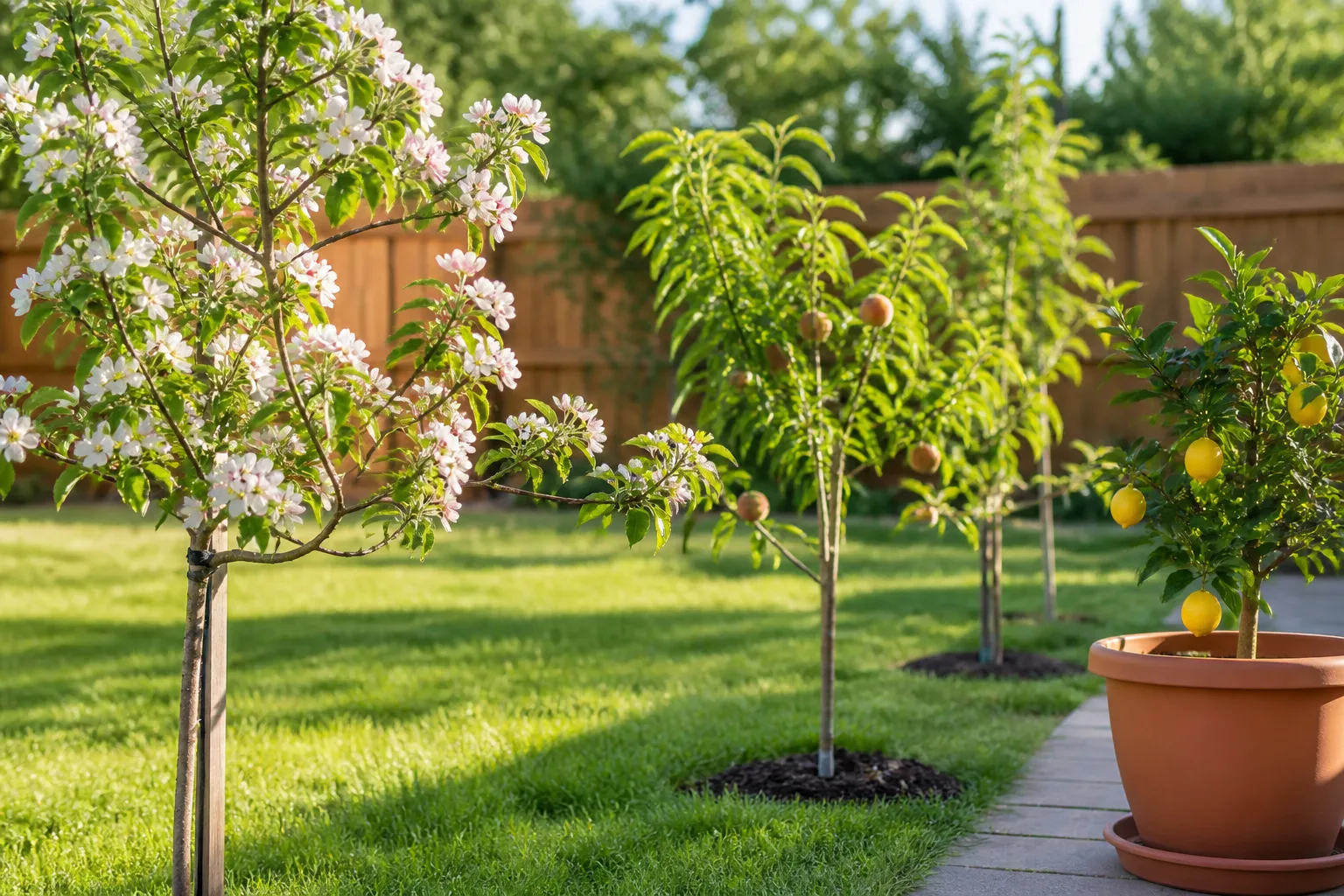
Plant in early spring after the ground thaws or in fall at least six weeks before first hard freeze. Dig a hole as deep as the root ball and two to three times wider. Set the tree so the root flare sits at or slightly above grade—never bury the trunk. Backfill with native soil rather than a small pocket of rich mix that holds water differently from surrounding ground.
Water thoroughly at planting, then mulch with 2 to 3 inches of shredded bark or wood chips in a wide ring. Keep mulch a few inches away from the trunk. Stake only if the root ball is loose or wind is severe; remove stakes after one growing season so the trunk can strengthen.
Bare-root trees planted in spring need the same depth rule and a soaking schedule; container-grown specimens may have circling roots that should be teased outward or lightly scored before backfill so they grow outward instead of girdling the trunk later. In windy, open sites, a low trunk wrap for the first winter prevents sunscald on thin bark without trapping moisture against the cambium all year.
Watering and fertilizing established trees
During the first growing season, water deeply once or twice a week if rain is insufficient—roughly 2 to 3 gallons per week for a young tree, scaled up as caliper increases. The goal is moist soil 8 to 12 inches down, not constant sogginess at the surface.
Once established, mulberries are drought tolerant, though extended dry spells can reduce fruit set or cause premature berry drop. Water deeply during prolonged drought rather than sprinkling daily. A slow soak at the drip line encourages roots to grow outward and downward.
Fertilizer is optional. Many mulberries grow vigorously without feeding. If growth is pale or a soil test shows deficiency, apply a balanced fertilizer (such as 10-10-10) once in late winter at roughly 1 pound per inch of trunk diameter measured 4 feet above ground. Excess nitrogen pushes leafy shoots at the expense of fruit and makes the canopy harder to manage. Mulch and occasional compost over the root zone often outperform heavy feeding.
Temperature, hardiness, and fruit timing
Most mulberries sold for North American landscapes are hardy in USDA zones 4 through 8. Dormant trees tolerate temperatures well below zero in northern zones; spring flower buds are more vulnerable to late frosts that kill blooms and wipe out that year’s crop.
Optimal fruit development occurs when summer temperatures sit roughly between 68°F and 86°F. In very hot, dry climates, fruit may ripen faster and irrigation becomes more important. Black mulberry needs milder winters and is not a reliable choice in zone 4 or 5 without protection.
Flowers appear in April and May as small yellow-green catkins. Fruit follows from mid to late summer, with harvest spread over six to eight weeks depending on cultivar. Everbearing types such as Illinois Everbearing can extend production across a longer window by ripening successive flushes on new growth.
Pollination, flowering, and when trees bear fruit
Pollination is where mulberry advice often goes wrong. White mulberry is typically dioecious: male and female flowers on separate trees. Only female trees bear fruit—but a nearby male is needed for pollination unless you have a self-fruitful cultivar. A male tree produces pollen and no berries, which solves the mess problem without eliminating pollination for a female neighbor.
Red mulberry is often monoecious (male and female flowers on the same tree) or has cultivars that fruit without a partner. Some hybrids are self-fruitful. Do not assume one rule covers every tag.
Before buying, ask the nursery: Is this cultivar self-fruitful? Is it male, female, or both? Will I need a pollinator within 50 feet?
Time to first fruit depends on how the tree was propagated. Grafted or cutting-grown named cultivars may fruit within 2 to 4 years. Trees grown from seed commonly take 8 to 10 years and may not resemble the parent plant. That is one reason volunteers in the garden are unpredictable—they are seedling lottery tickets.
If a mature tree flowers but sets no fruit, check late frost damage, drought during bloom, excess shade, and whether you accidentally planted a male or fruitless ornamental. Nutrient deficiency is a less common cause than environmental stress and sex mismatch.
Pruning for structure, size, and easy harvest
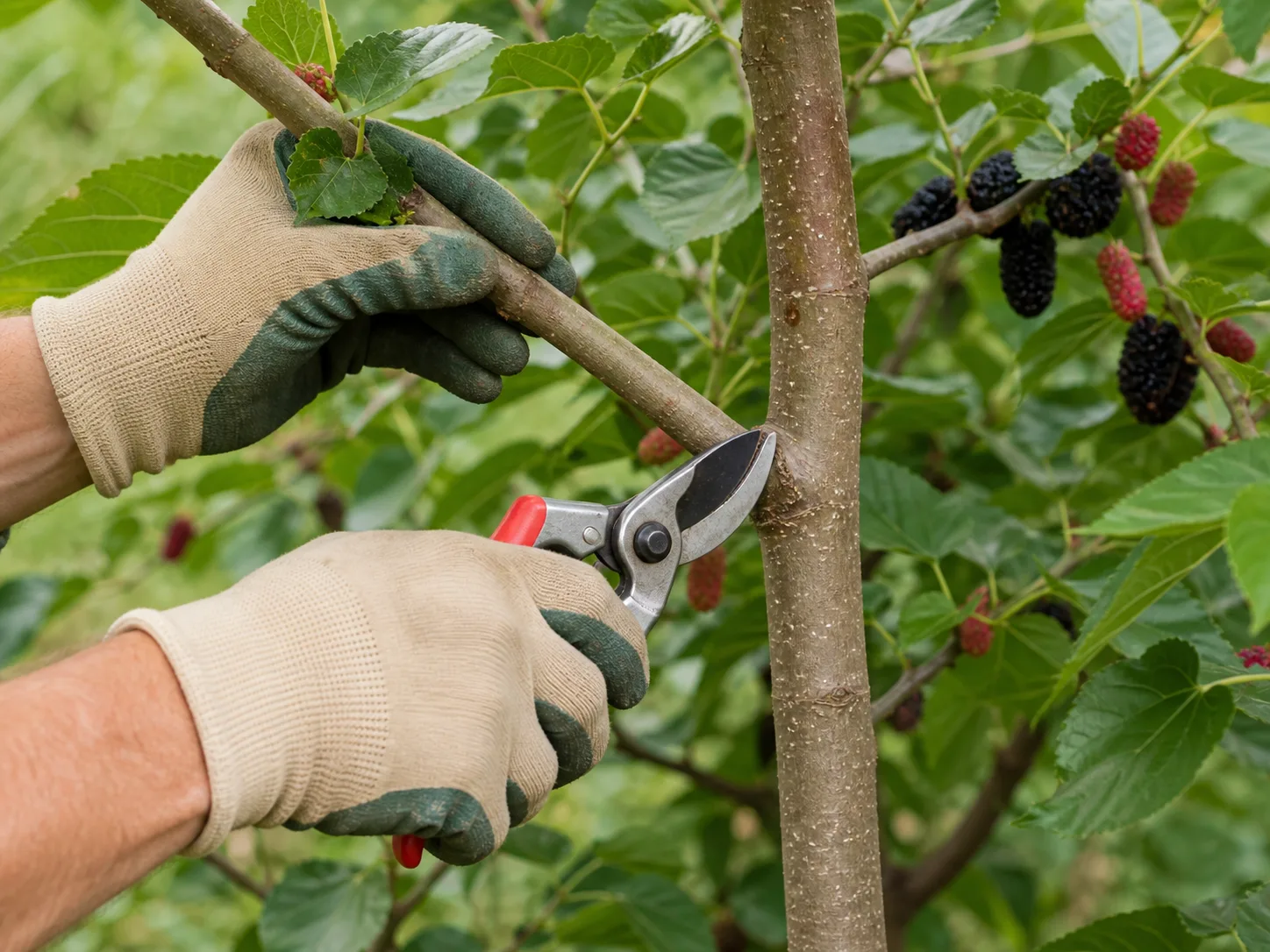
Mulberries do not demand heavy pruning, but young trees benefit from structural training, and mature trees need clearance pruning for paths, roofs, and harvest access. Prune in late fall or winter while dormant to minimize bleeding of the milky sap. All parts of mulberry exude latex-like sap when cut; it is irritating and unripe fruit can cause digestive upset, so wear gloves and wash tools after pruning.
On a young tree, choose a strong central leader or an open vase with three to five well-spaced scaffold branches. Remove crossing, rubbing, dead, and inward-growing wood. Keep lowest branches high enough to mow beneath—typically 6 to 8 feet above ground on a landscape specimen.
On fruiting trees, shortening long whips can keep berries reachable. Thinning dense interior branches improves air circulation and light penetration, which reduces some fungal issues. Avoid topping (cutting all branches to stubs). It triggers weak water sprouts, opens large wounds, and creates a tree that is harder to manage every year afterward.
If an established tree is too large for its location, consult a certified arborist about reduction pruning over several seasons rather than a single harsh cut.
Some backyard growers pollard mulberries—cutting back to the same framework each winter—to keep height manageable for sheet-and-shake harvest. Pollarding is a committed style, not a one-time fix; once started, the tree expects renewal cuts every dormant season. It works best on vigorous white mulberry and hybrids, less elegantly on slow-growing black mulberry. Never confuse pollarding with topping random branches mid-canopy; the cuts should be at predictable nodes you can revisit annually.
Propagating mulberries from cuttings or seed
Mulberries root readily from semi-hardwood cuttings taken in late spring or early summer when new growth is firming but not woody. Cut 6- to 8-inch segments from pencil-thick branch tips, dip the basal end in rooting hormone, and stick into moist potting mix or seed-starting medium. Cover with a clear humidity tent and keep in bright shade until roots form—often about four weeks.
Take four or five cuttings because not every stick roots. Pot up rooted cuttings and grow them in containers until fall planting or the following spring. Cuttings preserve cultivar traits; seed does not.
Seed propagation suits experimentation, not reliable backyard fruit. Collect ripe berries, mash and soak to separate seed, or dry fruit and extract seeds. Stratify seeds in a damp paper towel inside a sealed bag in the refrigerator for about 90 days (cold-moist treatment mimics winter). Sow in spring in a peat-lightened mix, keep warm and moist, and transplant seedlings to individual pots when they have true leaves. Grow in full sun for a year before field planting.
Expect a long wait and variable results from seed. For a known cultivar like Illinois Everbearing, buy grafted or cutting-grown stock.
Harvest, stains, wildlife, and self-seeding
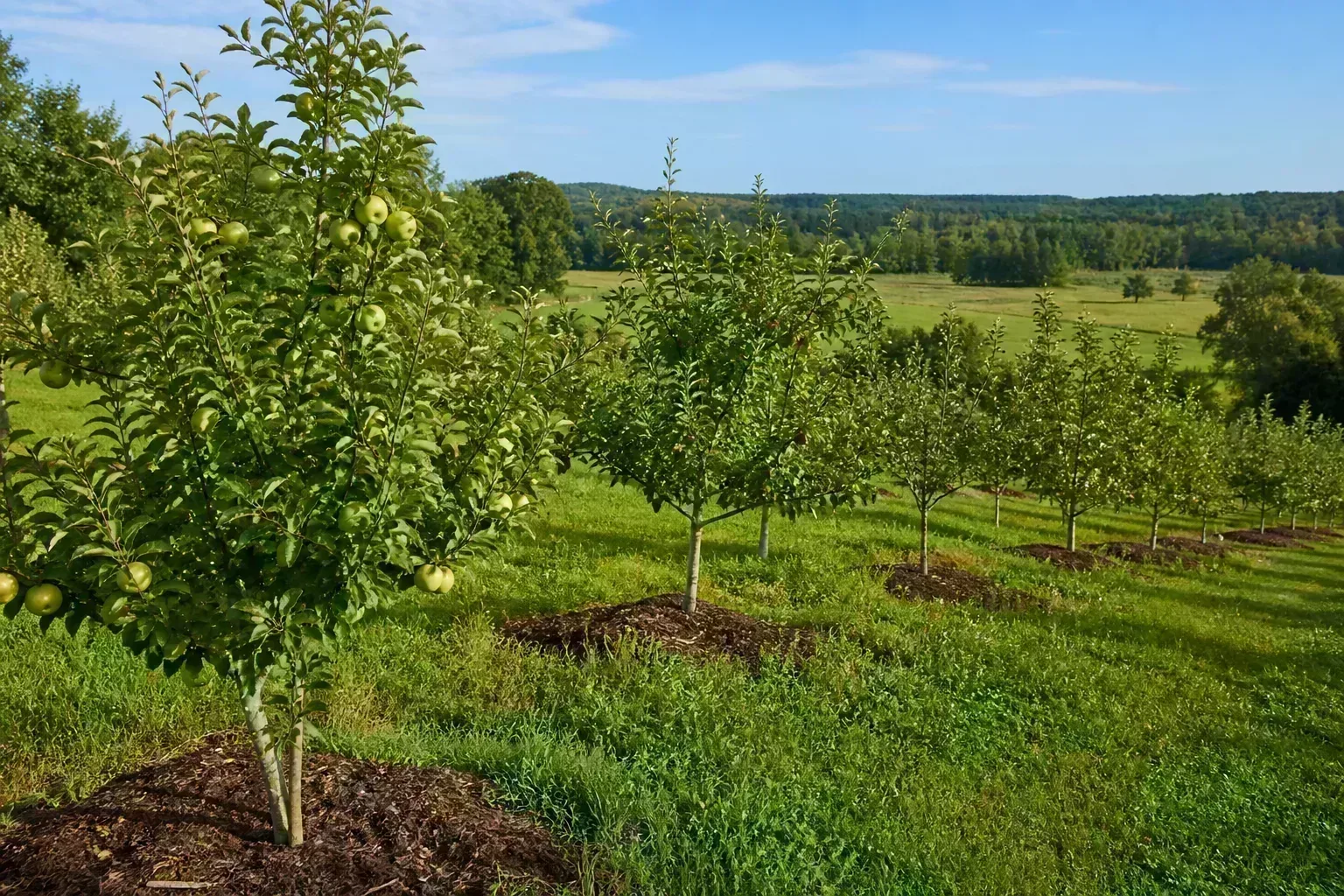
Ripe mulberries are soft, dark (for most types), and detach easily. Harvest daily during peak season. Shake branches over a clean sheet or tarp, or hand-pick into shallow trays—berries crush and leak juice when stacked deep.
Refrigerate promptly and use within a few days, or freeze on sheet pans for longer storage. Ripe berries are sweet eaten fresh and work in jams, pies, and muffins. NC State Extension notes ripe fruit is edible; unripe berries and the milky sap are toxic enough to cause stomach upset—do not snack on green fruit.
Staining is the main landscape complaint. Pigmented juice bonds with concrete, car paint, and shoe soles. Plant fruiting trees away from driveways, entries, and clotheslines. If you need shade without purple sidewalks, choose fruitless cultivars (Chaparral, Pendula, Kingan) or a confirmed male pollinator paired with a female placed where drops do not matter.
Birds, raccoons, squirrels, and opossums relish mulberries and will distribute seed in droppings. Clean fallen fruit promptly to reduce fermentation smell and volunteer seedlings. Seedlings appear thickly under and near parent trees; pull them while young because NC State Extension reports herbicides are ineffective and established taproots resist pulling.
Beyond fresh eating, mulberries dehydrate well into raisin-like snacks, cook into syrup, and substitute for blackberries in most recipes—though their higher water content means jams need slightly longer reduction. Freeze whole berries on rimmed trays before bagging so they do not fuse into a single purple brick. If you share the harvest with wildlife, expect catbirds, mockingbirds, and robins to arrive the week berries darken; netting is effective on small trees but impractical on 40-foot specimens, which is another argument for keeping fruiting trees away from outdoor dining areas.
Pests, diseases, and animal damage
Established mulberries are relatively tough, but young trees in warm climates attract whiteflies, scale, mealybugs, and mites. On small trees, horticultural oil or insecticidal soap applied to affected branches may help; severe infestations on large canopies are often left to natural predators unless the tree is in decline.
Borers can tunnel into trunks and branches, especially in the South. Keep trees stress-free with adequate water and avoid bark wounds from mowers and string trimmers. Remove and destroy heavily infested wood.
Diseases include bacterial blight, bacterial leaf scorch, powdery mildew, coral spot canker, and root rot in poorly drained soil. Most fungal leaf spots are cosmetic. Prune out dead wood, improve airflow, and avoid overhead irrigation that keeps foliage wet overnight.
Deer, rabbits, and rodents gnaw bark on young trunks. Install hardware cloth or metal trunk guards from ground level to 3 feet for the first three years. Remove guards before they girdle the expanding trunk.
Growing mulberry in a container
Standard mulberries outgrow pots quickly, but dwarf or weeping cultivars such as Pendula or Chaparral can live in large containers for years on a sunny patio. Use a pot at least 24 inches wide and deep with drainage holes. Fill with quality outdoor potting mix, not garden soil.
Water when the top inch of mix dries; container roots heat and dry faster than in-ground roots. Fertilize lightly every four to six weeks during active growth with a diluted balanced liquid feed. Repot or root-prune every two to three years when water runs straight through or growth stalls.
Move pots to a sheltered spot in zone 4 or 5 winters; roots are more cold-sensitive aboveground than in earth. Container trees still drop fruit—place the pot where stains are acceptable.
Common problems and quick fixes
Purple stains on pavement: Future trees go in open lawn or mulched beds, not over hardscape. For existing trees, lay landscape fabric during peak drop or harvest daily; pruning cannot eliminate fruit from a large female canopy without ruining form.
Hundreds of seedlings: Pull volunteers weekly; mowing prevents most from establishing. Avoid planting invasive white mulberry where it is restricted.
No fruit on a mature tree: Confirm sex and cultivar, increase sun, reduce drought stress, and protect flower buds from late frost with location or microclimate choice—not much helps after a freeze event.
Yellow leaves: Check drainage first. Waterlogged roots cause chlorosis and decline. If soil drains well and leaves are pale, consider a soil test before fertilizing.
Bleeding cuts in spring: Prune only in dormancy. Summer pruning opens wounds that weep sap and attract pests.
Weak, bushy regrowth after hard topping: Correct with gradual structural pruning over years, or replace with a properly sized cultivar.
Conclusion
Mulberry trees reward gardeners who plan ahead. Choose the species and cultivar for your climate and local ecology, confirm pollination needs at the nursery, and plant in full sun with generous clearance from pavement and pipes. Water deeply while young, prune in winter for structure, and harvest faithfully if you want less mess underfoot.
A fast-growing seedling beside the driveway will eventually outgrow your patience. A named cultivar in the right spot—native red mulberry where it belongs, or a fruitless weeping form where stains cannot be tolerated—delivers shade and berries without becoming a decade-long cleanup project. Match the tree to the yard, not the other way around.



