Can You Repot Plants in Winter? Timing and Tips
Can you repot plants in winter? Learn when to wait, when a rescue repot is safer, and how indoor plants, outdoor pots, and garden transplants differ.
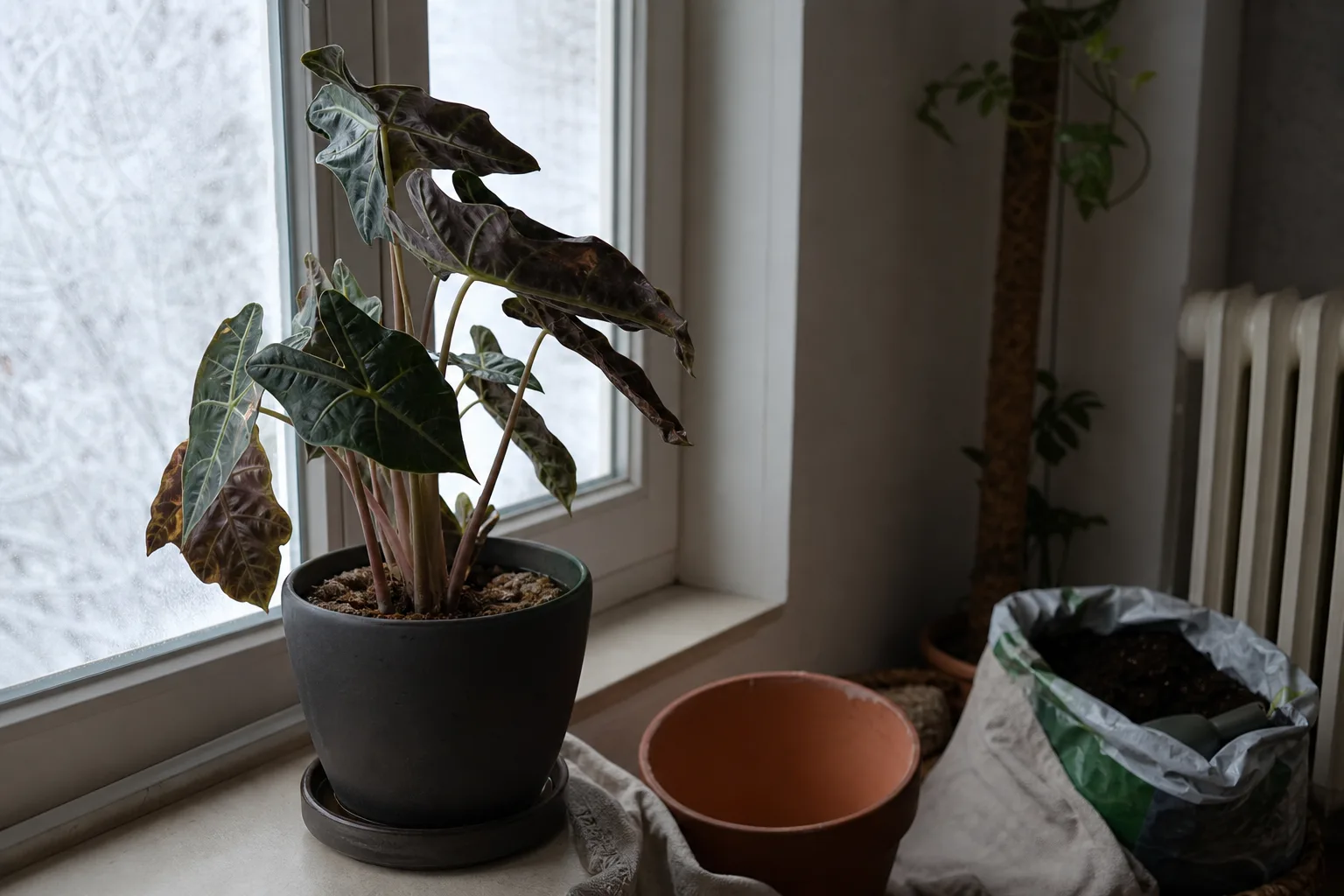
Yes, you can repot a plant in winter, but the calendar alone is not a reason to do it. For a healthy houseplant in a sound pot, spring or the first clear signs of new growth are usually easier on the roots. A broken container, active root rot, or a root ball so crowded that water cannot move normally can make waiting riskier than a careful winter repot.
The first thing to check is what you mean by “repot.” Moving a houseplant into fresh indoor mix, shifting an outdoor shrub from one container to another, and transplanting a shrub from garden soil are different jobs with different seasonal rules. Once you identify the job, decide whether the current root zone is causing harm or whether the plant can stay where it is until growth resumes.
The short answer: possible, but not the default
For indoor plants, winter repotting is a reasonable rescue or maintenance task when the roots need it, not a routine refresh for every pot on the shelf. Purdue University’s consumer horticulture guidance calls repotting a useful winter activity while emphasizing that not all plants need or benefit from it. It recommends checking the root ball and moving up only when roots are visible around its outside; a pot that is too large can hold excess moisture and encourage root rot. (Purdue University)
That advice sits alongside the safer general default: wait for spring if a plant is healthy and merely due for a cosmetic change. Penn State Extension identifies spring, as a houseplant begins active seasonal growth, as the best general time to repot. The Royal Horticultural Society likewise says spring is generally best for container plants and cautions that fresh compost can stay too wet when growth slows in autumn and winter. (Penn State Extension; RHS)
So use this rule: repot in winter if the existing pot or root zone is actively failing; wait if the plant is stable and the change can wait. “It has been a year” is not enough evidence by itself. A root inspection, the way water drains, and the plant’s recent growth tell you more than the month.
First, separate houseplant repotting from garden transplanting
“Repotting” means taking a plant already growing in a container and placing it in fresh growing media, either in the same pot or a different one. “Transplanting” usually means moving a plant from one garden bed to another, or planting a nursery-grown plant into the ground. The words are sometimes used loosely, but the roots face different conditions: a pot has a finite volume of mix and is exposed to air on its sides, while garden soil has a different moisture and temperature buffer.
Indoor houseplants
Indoor plants are protected from outdoor frost, but that does not make winter growth uniform. A warm room with a strong grow light may support active growth; a cool, dim corner may leave a tropical plant using water very slowly. Treat the plant’s actual conditions and condition as your timing signal. If it is resting and its roots are healthy, postponing a routine repot is usually sensible.
Compare two plants of the same species: one is making new leaves under a grow light, and the other has sat unchanged beside a dim window for weeks. The first may have a better recovery setup if its roots have truly filled the pot; the second is unlikely to benefit from fresh, wetter mix simply because a new container looks nicer. Seasonal labels shift by hemisphere and local weather, so follow growth and dry-down rather than assuming every “winter” plant is dormant.
Late winter can be a useful window when days are lengthening and a plant is beginning to grow, but it is not a magic date. The useful cue is a combination: the plant is healthy enough to recover, roots genuinely need space or fresh media, and the location provides adequate light and stable warmth. For detailed houseplant-only triage—including root rot, pot size, and aftercare—see our winter houseplant repotting guide.
Outdoor pots, shrubs, and perennials
An outdoor container behaves differently from a living-room pot. A pot left outside can become colder than surrounding garden soil because air reaches the container walls, and a wet root ball may be exposed to repeated freezing and thawing. A routine winter repot is therefore a poor default for an outdoor pot in a cold climate, especially if the plant is already dormant and the replacement mix would remain wet.
If the container is cracked, water cannot drain, or the plant is heaving out of its pot, take the least disruptive corrective action during a mild, workable spell. Keep the root ball intact, use a similar-size pot if the roots are not crowded, and protect the container afterward. If the plant is a hardy shrub or perennial that is merely ready for a larger home, use local species-specific advice and wait for the recommended planting window; “winter” can mean a mild, damp season in one region and frozen ground in another.
Plants growing in the ground
A shrub or perennial in a garden bed is not repotted. It is transplanted, and dormancy can be the appropriate time for some deciduous woody plants in climates where the soil remains workable. That timing does not automatically apply to tender evergreens, herbaceous plants, or a container-grown houseplant.
Check the species and regional extension guidance before digging. Frozen soil, waterlogged ground, or a plant actively flowering can make a winter move a poor choice; this guide’s potting advice does not set a transplant date for a garden bed.
Why winter changes the risk
Repotting temporarily changes how roots contact water, air, and nutrients. Even a gentle move can loosen fine roots or leave gaps between the old root ball and new mix. A growing plant can fill fresh media with new roots; a dormant or slow-growing one may leave that surrounding mix unused for longer. The risk is not that winter soil is inherently harmful, but that a disturbed root system may have less capacity to use the extra water held around it.
Less light slows recovery
Day length and window intensity often drop in winter, so a plant may make less new growth than it would in spring. Gardening Know How describes early spring as the preferred general window because increasing light and active growth help a houseplant settle into fresh soil; it warns that reduced light and slower winter growth can make recovery harder. (Gardening Know How)
This is why moving a plant to a much larger pot in a dim room can backfire. The new mix surrounds a small root system, but the roots are not growing quickly enough to occupy it. The plant may stay damp longer than its old pot did, even if you keep the same watering habit. Do not compensate for low winter light by fertilizing a recently repotted plant; feed only when the plant is actively growing and the product’s directions call for it.
Cold and wet roots compound stress
Cold can slow root activity, while saturated mix leaves less air in the root zone. A plant near a chilly window or exterior door may therefore face two stresses at once: disturbed roots and a colder, wetter pot. Penn State Extension stresses drainage holes and cautions against containers that remain waterlogged; the RHS notes that a crowded root mass can also interfere with drainage. (Penn State Extension; RHS)
Keep the plant’s recovery spot away from cold glass, drafts, radiators, and hot-air vents. A radiator is not a substitute for warmth: direct heat can dry leaves and soil unevenly, while the rest of the root ball remains cool and damp. Aim for steady conditions appropriate to the species, not a sudden temperature boost.
How to decide: wait, make a small fix, or repot now
Use the evidence you can see instead of treating every dropped leaf as proof that the plant needs a bigger pot. The table separates a true root-zone problem from symptoms that often have another cause.
| What you find | Winter decision |
|---|---|
| Healthy plant, sound container, roots not tightly circling | Wait for spring or new growth |
| A little surface crust, but the root ball still has space | Remove and replace a shallow surface layer; do not disturb the whole root ball |
| Dense circling roots, extremely fast dry-down, or unstable top-heavy plant | Consider a modest repot if the crowding is limiting care or safety |
| Broken pot, blocked drainage, sour wet mix, or soft roots | Correct the root-zone problem now |
| Yellowing, drooping, or slow growth without root evidence | Check light, watering, temperature, and pests before repotting |
The “small fix” matters because people often jump from “something looks wrong” to “buy a pot two sizes bigger.” Sometimes the right winter intervention is to remove water from a cachepot, move the plant into better light, or stop watering a mix that is still wet. A full repot adds disturbance; reserve it for a problem it can actually solve.
Signs that a winter repot is justified
Act now when the container or roots are in immediate trouble. A pot that has split open can no longer support the root ball safely. A plant sitting in stagnant water because the inner container lacks drainage needs a change in setup, even if the root ball itself is still healthy.
Root rot is another reason not to wait for spring. Look for a combination of persistently wet media, a sour smell, soft dark roots, or a stem base that is turning mushy. Brown roots alone do not prove rot; some healthy roots are naturally tan, and staining from potting mix can obscure color. Feel matters: healthy roots are generally firm, while decaying roots tend to be soft or hollow.
Severe crowding can also warrant action if the pot dries almost immediately after watering, roots form a dense shell around the root ball, or the plant repeatedly tips because the root mass is constricted. Penn State Extension recommends checking the root ball when roots emerge from drainage holes or the potting mix dries quickly, rather than relying on either sign alone. (Penn State Extension)
If a winter rescue is needed, choose the least disruptive solution. Replacing a broken pot with a same-size container may be enough. After root rot, a smaller pot can be safer if much of the root system had to be removed. Only increase the size when the remaining roots need more room.
Signs the plant can wait for spring
Wait if the plant is stable, the container drains, and the root ball is not tightly packed. A plant that has paused growth in winter may simply be responding to lower light; that pause alone does not mean its pot is too small. Likewise, one yellow lower leaf or a few dry tips can result from watering, temperature, or normal leaf aging.
Do not repot a newly purchased plant just because you want it in a decorative pot. Give it time to adjust to the new room, unless the nursery container is broken, stays waterlogged, or has a confirmed pest or root problem. Ideal Home’s plant experts also advise leaving newly bought plants to acclimatize and delaying repotting of delicate or slow-growing plants where possible. (Ideal Home)
Flowering is a reason to postpone a nonessential move. Root disturbance can interrupt a display, and an in-bloom plant has already committed energy to flowers. If it is healthy, wait until flowering finishes or new growth begins. If the pot is failing or roots are rotting, protecting the plant takes priority over preserving flowers.
Choose the smallest change that solves the problem
Repotting is not one fixed operation. You can move up a pot size, refresh the mix without increasing the container, top-dress the surface, or stabilize a failing pot. Matching the intervention to the root problem prevents the classic winter mistake: creating a larger reservoir of wet soil around roots that did not need more space.
Pot size, drainage, and mix
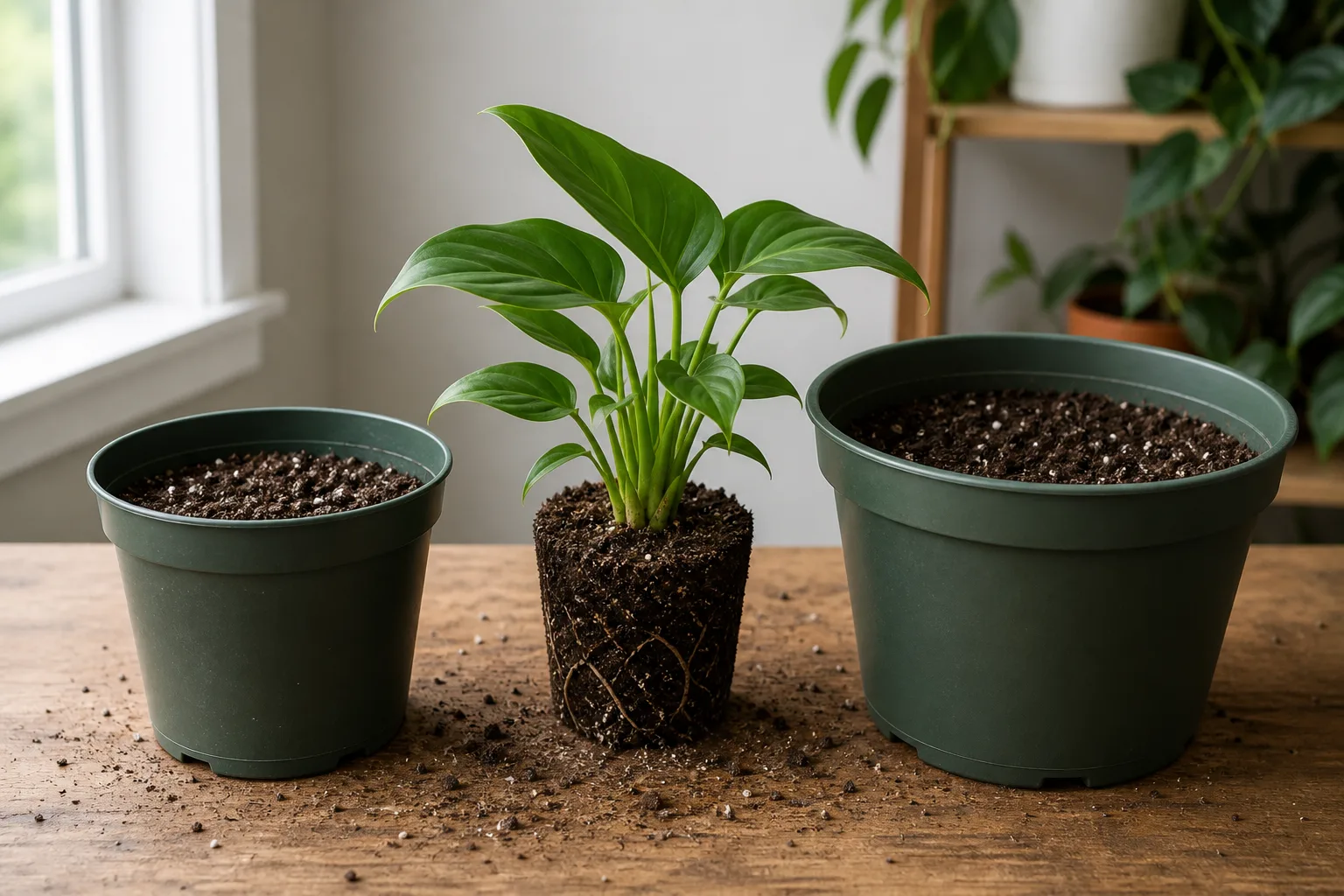
For a routine size increase, choose a pot only slightly wider than the root ball. Penn State Extension recommends a container slightly larger than the current one, while Purdue warns that an oversized pot can stay excessively moist; the RHS suggests no more than one-third larger, with small containers generally increasing by about 1–2 inches in width and depth. These are practical guardrails, not a universal measurement for every plant shape. (Penn State Extension; Purdue University; RHS)
Use a pot with an open drainage hole and a mix suited to that plant. Many foliage plants do well in a porous indoor potting mix; cacti, succulents, orchids, and bog plants need different media. Do not use garden soil as an indoor potting mix, and do not place a gravel layer at the bottom as a substitute for drainage. If you prefer a decorative pot without holes, keep the plant in a draining nursery pot and empty the cachepot after watering.
If the plant does not need more volume but the surface is depleted, top-dressing can refresh the upper layer with minimal disturbance. It will not fix a rotten core or a root-bound pot, so do not treat it as a cure for those problems. For a mature plant that is too large to upsize, a same-pot refresh or root-pruning plan may be appropriate in its active season; avoid aggressive root reduction as a casual winter project.
Root handling and flowering exceptions
When you take the plant out, support the root ball rather than pulling on the stem. Loosen only the circling outer roots that need redirecting, and cut away roots that are clearly soft and decayed with clean shears. Keep the root crown and plant at the same depth; burying stems or packing mix tightly around them can create a new moisture problem.
If the plant is flowering or has just arrived home, avoid combining a cosmetic repot with pruning, division, relocation, and fertilizing. Changing one factor at a time makes it easier to see whether the plant is recovering. An emergency root rescue is the exception, but even then, keep the operation focused on the damaged container or roots.
A safe winter repot, step by step
Prepare everything before removing the plant. Bring cold-stored mix indoors until it reaches room temperature, moisten it so it absorbs water evenly, and set out the pot, saucer, and clean tools. Work in a warm, draft-free place rather than leaving exposed roots beside an open window.
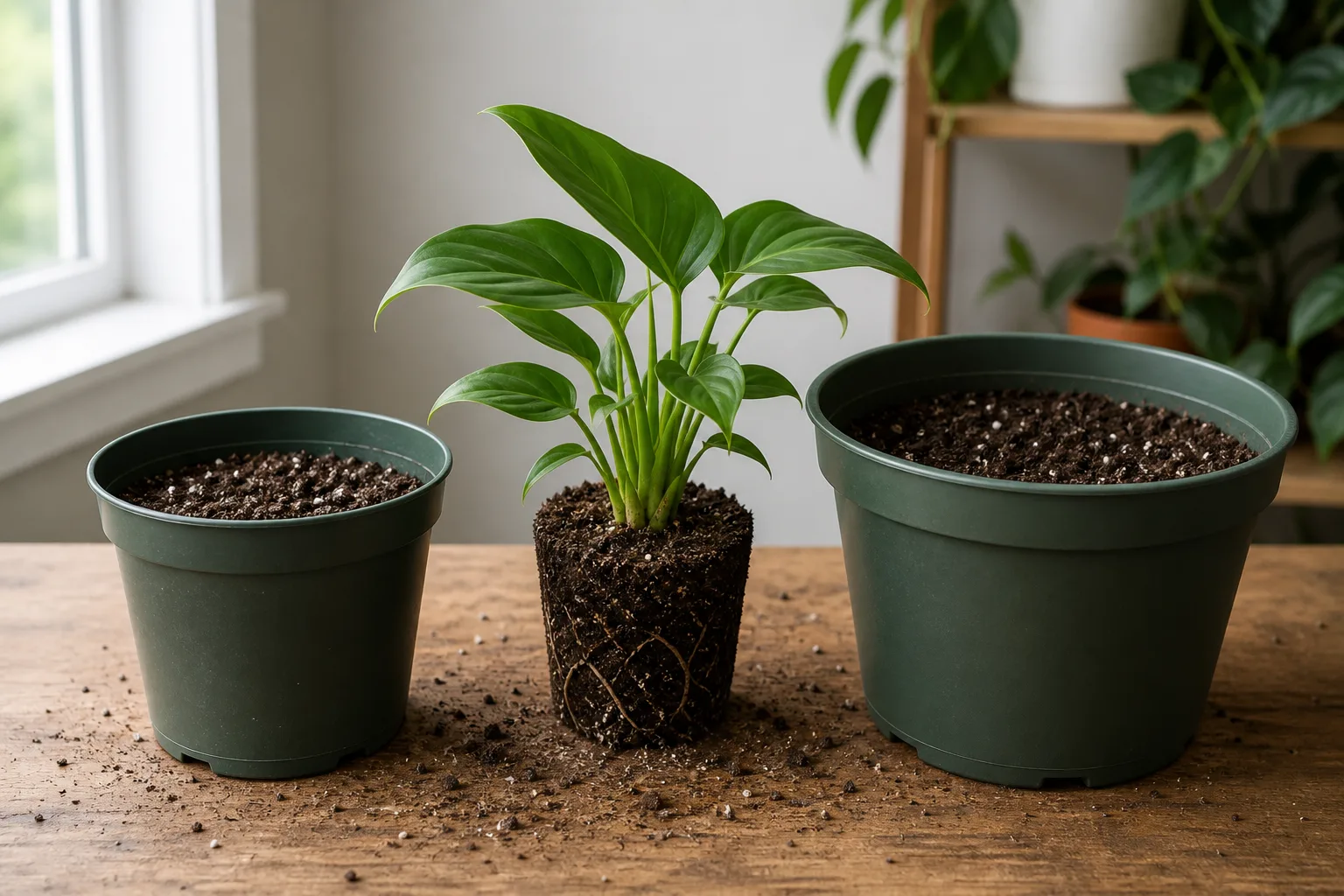
- Check the roots and choose the least disruptive container. Slide the plant out gently and confirm whether roots are crowded or damaged. Use the same size for a broken-pot move with a healthy root ball, a modestly larger size for genuine crowding, or a smaller clean pot if root loss has reduced the root mass.
- Remove only what needs to go. Brush off loose old mix if it is sour or saturated. Keep firm roots, trim mushy tissue with clean shears, and avoid aggressive root pruning unless a diagnosed problem requires it.
- Set the plant at its old soil line. Add enough fresh mix to position the root ball at its previous depth, then backfill around the sides. Leave space below the rim for watering, and settle the mix gently rather than compressing it.
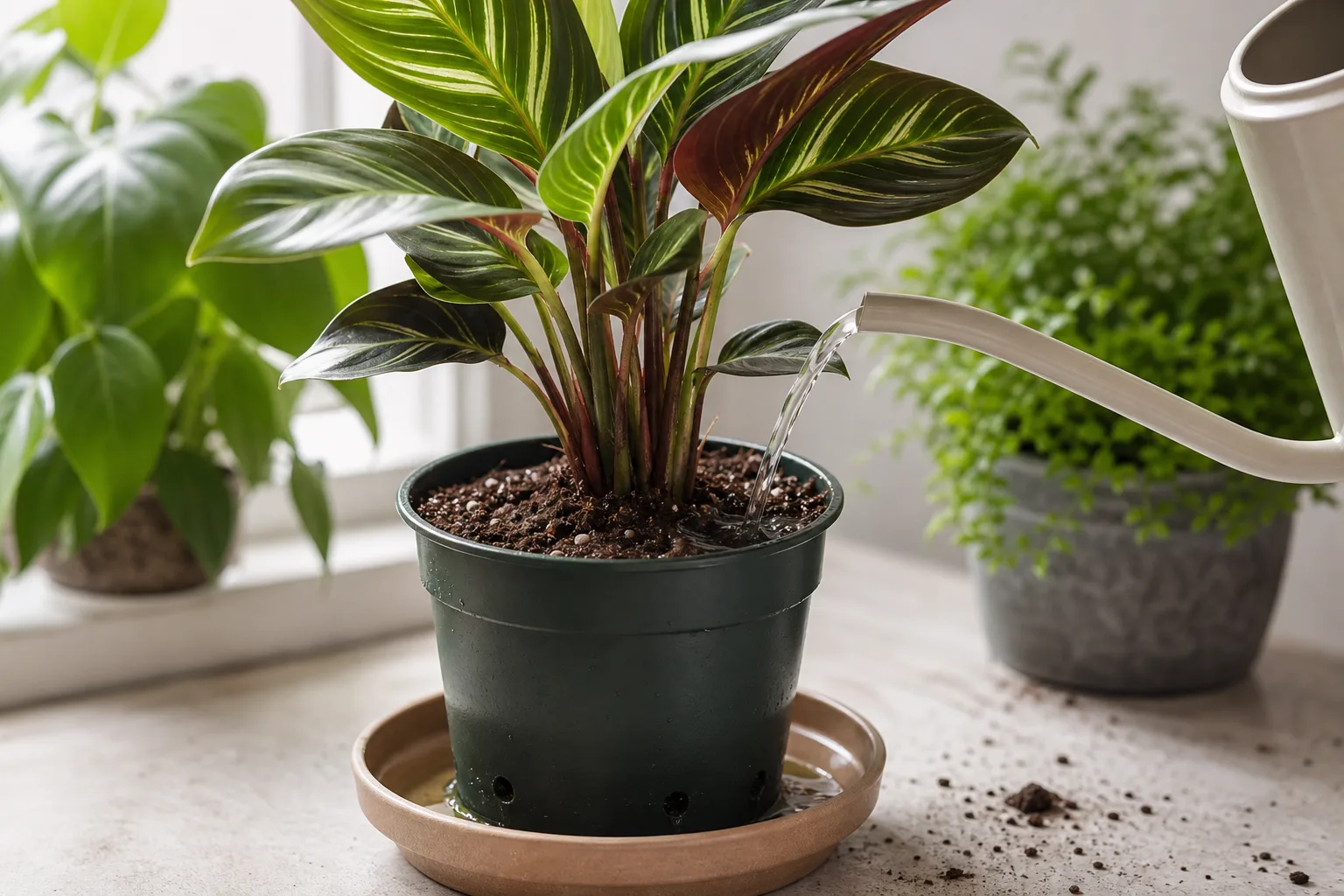
- Water for the situation, then drain fully. For a healthy plant moved into fresh, well-draining mix, water enough to settle the media and let excess run out. If you have removed many roots or are treating rot, avoid keeping the reduced root ball saturated; use the plant’s normal moisture needs and the new mix’s drying behavior as your guide.
- Return it to a stable recovery spot. Choose appropriate bright light and steady warmth for that species, away from cold drafts and direct heater blasts. Do not fertilize immediately after a routine winter repot; wait until the plant resumes active growth and follow fertilizer directions.
Aftercare while growth is slow
The new container may dry at a different rate from the old one, so do not carry over the old watering schedule automatically. Check the mix at the depth that matters for the species, feel the pot’s weight if that helps, and water only when the plant’s normal threshold is reached. Let the pot drain completely and empty the saucer or cachepot.
Keep the plant in the same suitable location for several weeks rather than moving it from a cold window to a dark shelf and then to a hot vent. A modest pause in growth or temporary droop can follow root disturbance. Worsening yellow leaves, a sour odor, a soft stem base, or a root ball that remains wet for an unusually long time calls for another check of drainage and moisture—not an automatic second repot.
Avoid stacking stressors. Hold off on division, hard pruning, routine fertilizing, and another location change while roots are settling. Gardening Know How’s winter-care guidance also recommends reducing water and withholding fertilizer when growth slows, then resuming normal care when new growth appears. (Gardening Know How)
Conclusion
You can repot plants in winter, but first decide whether the plant is in a pot or the ground, and whether a real root-zone problem exists. Healthy, stable plants can usually wait for spring; broken pots, blocked drainage, severe crowding, or active rot may justify a careful winter rescue.
When you do act, use a pot that fits the roots, keep the plant at its original depth, disturb healthy roots as little as possible, and watch how quickly the new mix dries. Winter is not a blanket prohibition or a universal opportunity—it is a season to be selective, solve the actual problem, and give the plant steady conditions while it recovers.