How to Grow and Care for Carolina Allspice in a Garden
Grow Carolina allspice in the right light and soil, shape it after bloom, control root suckers, and choose a cultivar with the fragrance and size you want.
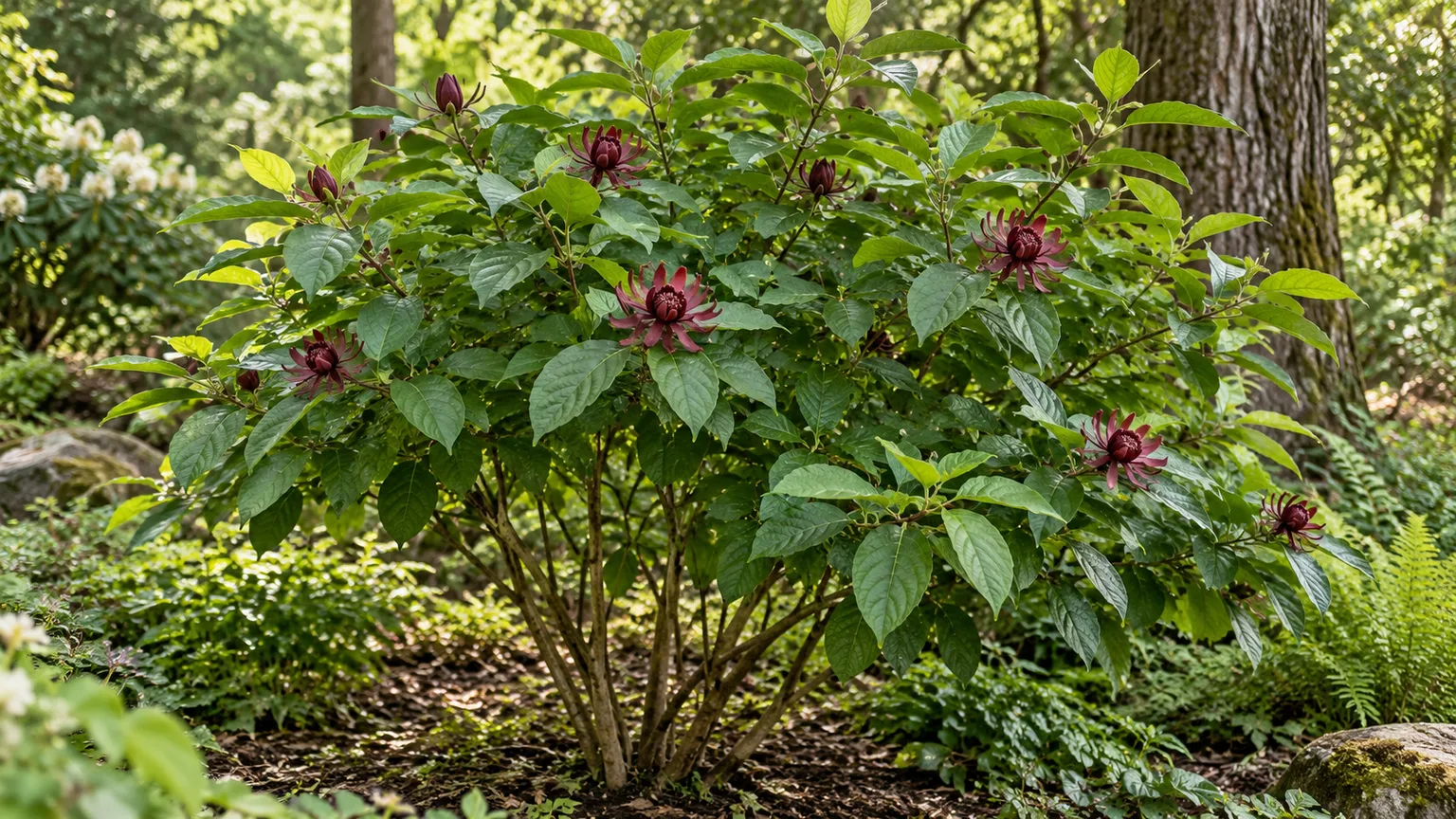
A Carolina allspice shrub earns its place through fragrant spring flowers, handsome summer foliage, and an easy, natural woodland-garden shape. It is also larger and more likely to spread than a small foundation shrub, so success starts with choosing a site that can accommodate a wide, multi-stemmed plant.
Carolina allspice is Calycanthus floridus, also called sweetshrub or eastern sweetshrub. It is not the tropical tree Pimenta dioica whose unripe fruits are ground into culinary allspice, and it is not the unrelated spicebush, Lindera benzoin. When shopping, use the botanical name to make sure you are buying the shrub you intend to grow. Fairchild Tropical Botanic Garden identifies Pimenta dioica as the allspice tree, while North Carolina State Extension describes Carolina allspice as a native deciduous shrub.
What Carolina allspice looks like—and what the name means
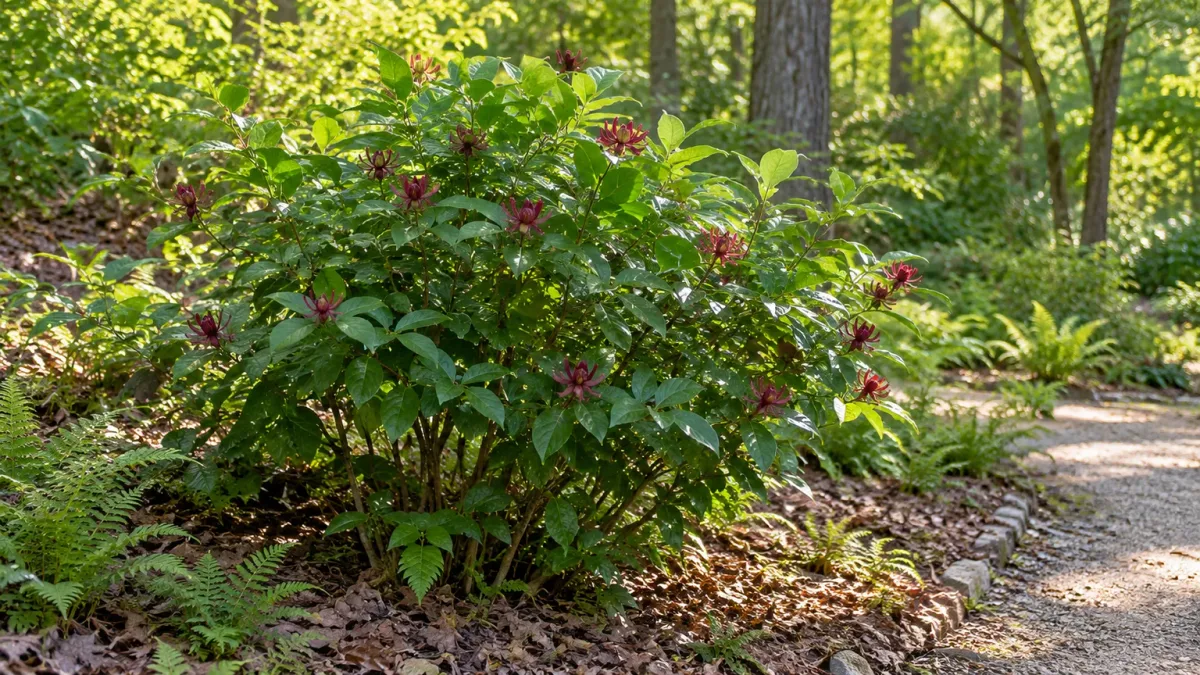
This native eastern shrub forms several stems from its base and usually grows as a rounded or loosely upright clump. Expect roughly 6 to 12 feet of height and a similar or somewhat greater spread, although named selections and garden conditions change the finished size. Dark green, opposite leaves have a lighter underside, turn yellow in fall, and smell aromatic when crushed; the bark is aromatic too. North Carolina State Extension and the UF/IFAS Extension profile describe its woodland origins, fragrant foliage, and multistemmed habit. UF/IFAS also describes the species as endangered in Florida, so Florida gardeners should choose nursery-grown plants and leave wild populations undisturbed.
The flowers are unusual rather than showy from a distance: dark maroon to brown strap-like tepals form a small, waterlily-like flower, often partly hidden among the leaves. The shrub’s fragrance is the reason many gardeners plant it beside a path, patio, or open window, where they can get close enough to notice it. Because a mature plant may be broader than the spot where it was first planted, decide whether you want one specimen, a loose screen, or a naturalizing clump before you dig.
Choose a cultivar for size, flower color, and scent
The species itself is a good choice when you want a native, adaptable shrub and can give it room. Named cultivars let you select for a more compact form, different flower color, or stronger fragrance, but plant labels use overlapping descriptions and scent is subjective. If fragrance is the main reason you are buying one, visit a nursery when plants are blooming and smell the actual specimen rather than relying on a catalog adjective.
| Selection | What to look for | Best reason to choose it |
|---|---|---|
| ‘Athens’ | Pale yellow to greenish-white flowers, glossy leaves, and a dense mound around 6 feet tall | A more compact shape or lighter flowers |
| ‘Edith Wilder’ | Red to reddish-brown flowers described as highly fragrant; can grow larger than the species average | Fragrance and a red-flowered native selection |
| ‘Michael Lindsey’ | Shiny foliage, a compact rounded habit, and very fragrant red-brown flowers | A tidy form with strong scent |
These traits are summarized by the NC State plant profile and the University of Connecticut Plant Database. Availability varies by region, so check the mature dimensions of the exact plant on the tag. Do not choose by flower color alone: a compact cultivar may still need room for lateral growth, and a named plant with especially fragrant blooms will not compensate for drought stress or deep shade if you expect heavy flowers.
Treat fragrance and bloom time as local traits
Carolina allspice has a main flowering flush in spring, but calendars differ across the shrub’s range. NC State places its strongest bloom from mid-April to mid-May in North Carolina, followed by sporadic flowers into summer; UConn describes bloom from May through July. That is not a contradiction to solve with one universal month. Latitude, spring temperatures, cultivar, and growing conditions all shift the window, so look for flowers as leaves emerge and expect the occasional later bloom rather than a continuous display.
The fragrance is equally variable. Garden descriptions compare it with strawberry, banana, pineapple, melon, or spice, while some plants are more subtle than others; scent can also be stronger in warm weather. Fine Gardening notes that flowers continue on and off into early summer, and NC State cautions that fragrance varies among plants. A nursery plant in flower gives you better evidence than a label if scent is a priority.
Pick a site for flowers and mature size
Carolina allspice tolerates full sun through deep shade, but those positions do not produce the same plant. More sun generally gives a denser, more compact shrub and heavier flowering; partial shade is a useful compromise in hot-summer areas, where afternoon shade can protect foliage and reduce stress. In deep shade the shrub can still live, but expect looser, lankier growth and fewer flowers. NC State Extension and Fine Gardening both describe the sun-to-shade range and stronger flowering in sun.
Aim for a site with morning or midday sun and some afternoon protection if summers are hot. A woodland edge, open understory, or east-facing border often fits better than a dry, exposed foundation strip. Place the shrub close enough to a walkway or sitting area to enjoy its scent, but not so close that mature branches block a path, scrape siding, or need annual shearing to stay in bounds. For a single specimen, allow at least 6 feet from neighboring shrubs; use more space—closer to 8 to 12 feet—if you want separate crowns rather than a joined screen. Check the cultivar label because a compact selection and the full species do not need the same footprint.
Plant in soil that stays moist but drains
The ideal soil is rich, moist, and well-drained, but Carolina allspice adapts to a wider range than many ornamentals. It tolerates clay and varied soil pH; the bigger concern is a site that dries out quickly or remains saturated for long periods. A brief flood or wet spell is not the same as constantly waterlogged soil. NC State notes that the plant struggles in drought and sandy soil, while UF/IFAS describes broader soil tolerance and a preference for moist, well-drained ground.
Plant in fall or early spring when the soil is workable and temperatures are moderate. Dig a hole about as deep as the root ball and two to three times as wide, loosen circling roots, and set the root flare at the surrounding soil line. Backfill with the soil you removed rather than creating a rich, sharply different pocket inside poor soil; a hole full of amendment can hold water differently from the surrounding ground. Water the root ball thoroughly, then spread a 2- to 3-inch layer of organic mulch over the root zone, keeping it a few inches clear of the stems.
Check drainage before planting
If the site is unfamiliar, dig a hole about a foot deep, fill it with water, and see whether it drains away rather than standing for a long time. A simple hole test is not a laboratory soil test, but it can reveal a slow-draining pocket that needs a different planting position. If water lingers after rain, plant on a slight rise or choose another part of the garden; do not bury the shrub’s crown in a low spot and hope extra mulch will fix it.
For dense clay, improve the planting area broadly with organic matter only if the bed genuinely needs it, rather than amending just the hole. If the soil is sandy, mulch helps slow drying, but the shrub may still need more frequent irrigation during heat. A soil test is useful before adding lime, sulfur, or fertilizer because the plant tolerates a broad pH range and does not need arbitrary correction.
Water during establishment and dry spells
Keep the root ball evenly moist through the first growing season while new roots spread into surrounding soil. Water deeply enough to wet the root zone, then let excess water drain; a quick sprinkle over the leaves does little for a newly planted shrub. Check soil with a finger or trowel rather than following a rigid calendar, since sand, clay, rainfall, mulch, and temperature all change how fast the bed dries.
Once established, the shrub can handle short dry periods, but it looks and flowers best when soil does not swing from very dry to saturated. During a hot, rainless stretch, water slowly at the base when the top few inches of soil are dry. If the leaves wilt while the soil is wet, pause irrigation and check drainage instead of automatically adding more water. A layer of mulch reduces evaporation and buffers soil temperature, which is especially useful in sunnier sites.
Mulch and fertilize only as needed
A yearly top-up of compost or leaf mulch is usually a better starting point than routine heavy feeding. Carolina allspice is not a high-input shrub, and excess nitrogen can favor leafy growth over a balanced shape. If a plant is growing poorly, first check light, water, drainage, planting depth, and root competition; these problems are more common causes of weak growth than a missing dose of fertilizer.
If a soil test or clear deficiency points to a nutrient need, use a suitable landscape fertilizer at its label rate in the active growing season. Do not pile fertilizer against the stems or add it to dry soil, and do not fertilize late in the season when you want new growth to harden before winter. Keep mulch away from the crown so the stems are not buried and the base can dry after rain.
Prune immediately after the main bloom
The best routine time to shape Carolina allspice is just after its main flowering flush. A light trim then gives the shrub time to grow before the next season and avoids removing as many developing blooms as a late-winter or fall haircut might. NC State notes that flowers can form on both old and new wood, so do not assume a severe cut will cost exactly one season of bloom; the safer practical rule is still to do planned shaping after flowering and keep it selective.
Start by removing dead, damaged, crossing, or very weak stems at the base. For a natural clump, thin a few older stems rather than shearing the outside into a tight ball. If you need a shorter plant, shorten the tallest stems to a healthy side branch, keeping the cuts distributed around the shrub. Remove no more growth than needed in a single season; repeated hard shearing creates a dense outer shell that hides the plant’s arching stems and can make inspection difficult.
If a branch is unsafe or broken, remove it whenever you notice it. Otherwise, avoid pruning before you have seen the shrub flower: if bloom is sparse, first check whether the site is too shady, the plant is still establishing, or winter damage affected buds. A shrub in deep shade may need a brighter position more than it needs aggressive pruning.
Control suckers without losing the shrub’s shape
Carolina allspice spreads by suckers that rise from the base or roots. This can be an advantage when you want an informal screen or naturalized woodland edge, but it can crowd nearby plants in a small bed. UF/IFAS describes the plant as having a potentially aggressive suckering habit while also noting that it is not known to be invasive; “manageable” does not mean “no maintenance.”
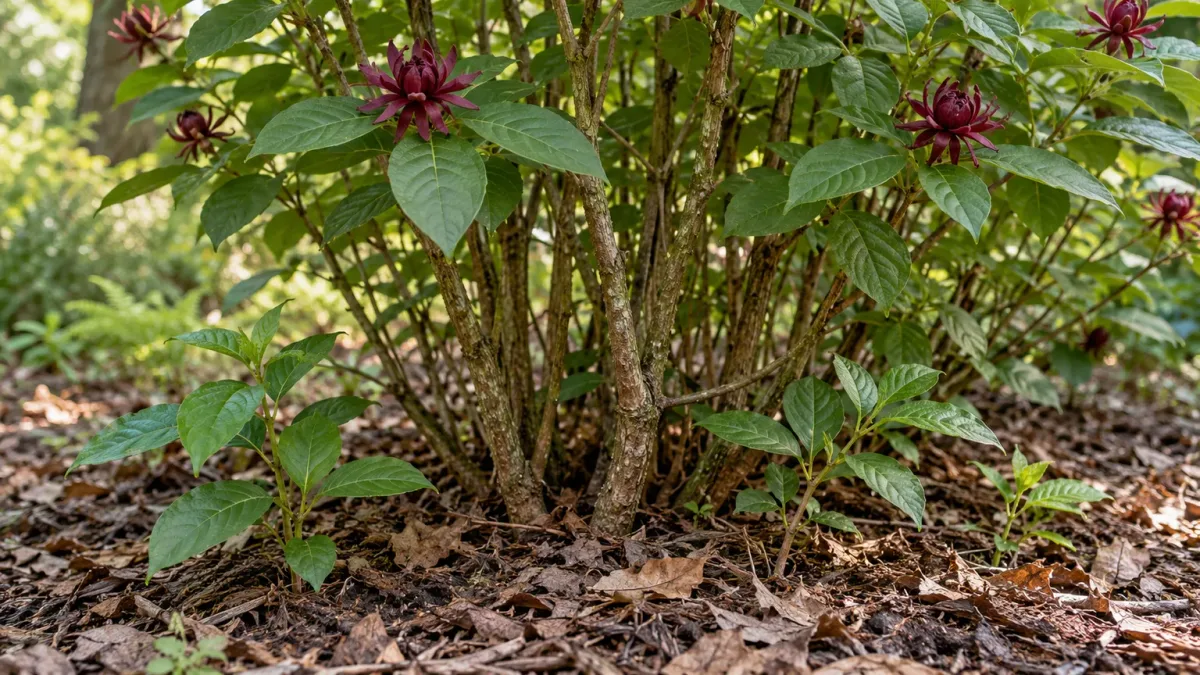
For a single specimen, cut unwanted suckers at their point of origin with a clean spade or pruners, preferably while shoots are small. Recheck the perimeter once or twice during the growing season because new shoots may appear beyond the original crown. If you want a fuller clump, keep a few well-placed suckers and remove the rest; for a screen, allow the shrub to expand within a defined bed. Avoid mowing shoots repeatedly without tracing them back, since that leaves a ragged edge and does not correct the plant’s footprint.
Propagate by sucker, cutting, or seed
The easiest method for a home gardener is usually to transplant a rooted sucker. In spring, find a young shoot with its own roots, separate it from the parent with a sharp spade, and lift as much root as practical. Replant it promptly at the same depth in moist soil and water well while it establishes. A sucker is a clone of the parent shrub, so it is a reliable way to keep the characteristics of a named selection.
Softwood cuttings are another vegetative option. Fine Gardening recommends rooting softwood cuttings in summer, and Tennessee Smart Yards also lists seed and root cuttings as workable methods. Take several healthy, nonflowering shoot tips, remove the lower leaves, and place them in a clean, freely draining propagation mix under bright indirect light. Keep the mix lightly moist and humidity steady without leaving the stems wet or sealed indefinitely. Rooting success varies, so taking more than one cutting is sensible; pot up only after roots have formed and new growth indicates the cutting is stable.
Division suits a plant whose clump already has rooted shoots and can be lifted without damaging the main crown. Use it when you need to thin the plant and want another shrub, rather than digging a large section from a healthy specimen just to experiment. Seed is a slower route and may not preserve the traits of a named cultivar; use it when you want to grow the species and can wait for a seedling to mature.
Start seed with realistic expectations
The urn-shaped capsules mature from green to brown and contain multiple seeds. Collect them when mature, open the dry capsule carefully, and separate the seeds from plant debris. Tennessee Smart Yards describes germination as moderately easy from seed or root cuttings, while the Rockbridge Area Master Gardeners note that stratification can improve germination. Sow seeds about ¼ inch deep in a labeled pot of clean, well-drained seed-starting mix in spring and keep the mix evenly moist, not waterlogged; follow a local nursery or extension recommendation for any cold-moist pretreatment, since a universal stratification period is not established in the sources here. Germination and seedling growth can be uneven, so do not discard the pot just because seedlings do not appear at the same time.
When seedlings are large enough to handle, pot them separately and grow them on until they have a sturdy root system. Gradually acclimate them to outdoor conditions before planting. Seedlings can differ from their parent in flower color, habit, and scent, and they take longer to reach flowering size than a rooted sucker or nursery plant. For a named cultivar, choose vegetative propagation or buy a correctly labeled plant instead of expecting seed to come true.
Grow Carolina allspice in a container only with a plan
A pot can work temporarily or on a patio, but Carolina allspice is a broad, suckering shrub rather than a naturally compact container plant. Choose a large, stable container with several drainage holes and room for the root ball to expand. A compact cultivar such as ‘Athens’ is a more sensible starting point than the full species if space is limited, but even a smaller selection needs regular water and eventual root space.
Use a quality outdoor potting mix, set the root flare at the same level it grew in the nursery pot, and water thoroughly after planting. Containers dry faster than garden beds, so check moisture often in hot or windy weather; do not let the root ball bake dry or sit in a water-filled saucer. If roots begin circling densely or water races straight through, move the plant to a larger pot or into the ground while the weather is mild. A container also exposes roots to deeper winter cold, so protect the pot or move it to a sheltered place in regions with hard freezes.
If you want a permanent low-care shrub, an in-ground planting is usually the better choice. The pot option is most useful when you need a temporary display, want to limit root spread, or can commit to watering and repotting as the plant grows.
Set expectations for winter hardiness
Hardiness references place Carolina allspice broadly around Zones 4 or 5 through 9, but they do not agree on the exact endpoints. North Carolina State Extension includes colder Zone 4 listings, UF/IFAS lists Zones 4A–9A, Gardenia gives 4–9, and the UConn database uses Zone 5. Treat that spread as a reason to check local performance and cultivar hardiness, not as a promise that every plant will thrive in the coldest part of every listed zone.
In colder regions, choose a sheltered site out of drying winter wind, water before the ground freezes if autumn has been dry, and keep a moderate mulch layer over the root zone. Do not mound mulch against the stems. Newly planted shrubs and container-grown plants need more attention than established in-ground specimens because their roots have not yet spread widely and container roots are more exposed to cold. If a selection is marginal for your climate, ask a local native-plant nursery or extension office which cultivars have overwintered reliably nearby.
Troubleshoot weak bloom, leaf disease, and damage
A healthy but flowerless shrub is often planted in too much shade, is still young, or was pruned before flowering. First compare its light with the site guidance above and make sure the plant has not been sheared repeatedly. If growth is lanky and the crown is open, shade is a likely factor; if stems look healthy and the shrub was recently planted, give it time before moving or fertilizing it. Flowering may also vary by cultivar and spring weather, so judge the pattern over more than one season.
Brown, crisp leaf edges usually call for a root-zone check. Probe the soil: if it is dry, water slowly and mulch; if it is wet, let it drain and address the site or irrigation. Aphids or other small sap-feeding insects may appear, but NC State and UF/IFAS characterize serious pest problems as uncommon. Identify an insect before treating; a strong water spray may dislodge a small aphid colony, while unnecessary pesticide applications can harm beneficial insects and pollinators.
Fungal leaf spots, powdery mildew, and dieback are possible, especially where growth is crowded or foliage stays damp. Improve airflow by removing a few crossing stems after bloom, water at the soil surface, and clear badly diseased fallen leaves. Do not strip a shrub bare in an effort to cure a mild leaf issue; preserve enough healthy foliage for recovery and seek a local diagnosis if symptoms spread or recur.
Separate powdery mildew from crown gall
Powdery mildew appears as a pale, powdery coating on leaf surfaces. It is usually a foliage problem, so improve airflow and avoid overhead watering late in the day; prune only enough to open the canopy. The UF/IFAS Extension profile also lists powdery mildew among possible disease issues.
Crown gall is different: look for rough, warty growths at the crown near the soil line rather than a powder on leaves. UF/IFAS states that there is no available treatment and that affected plants should be destroyed. If you suspect crown gall, avoid moving soil from the area or planting a replacement in the same spot before getting local extension advice. A correct diagnosis matters because overpruning or fungicide will not solve a gall.
Handle seed capsules cautiously
Carolina allspice produces urn-shaped seed capsules that can persist after flowering. The capsules are not culinary allspice, and the seeds inside should not be eaten. NC State and UF/IFAS identify the seeds as poisonous or low-severity toxic and describe calycanthin and related alkaloids as the toxic principle. The evidence supports caution around seeds, not a claim that every part of the shrub carries the same risk.
Leave capsules on the shrub if you do not need seed, or collect them with care and store them where children cannot reach them. Keep pruning debris and seeds away from pets as a sensible precaution; if a person or animal has eaten seeds, contact a poison-control service or veterinarian promptly rather than waiting for symptoms. Do not use the leaves, flowers, bark, or seed capsules for tea, potpourri, or flavoring simply because older garden writing mentions their fragrance.
Conclusion
Carolina allspice is easiest to enjoy when you plan around its real character: a fragrant, deciduous native shrub that can grow wide, prefers moist but well-drained soil, flowers more freely in sun, and spreads by rooted suckers. Give it room at a woodland edge or near a path, choose a named cultivar for a specific size or flower trait, and expect scent and bloom timing to vary from plant to plant and place to place.
Water consistently while it establishes, mulch the root zone, and prune for shape just after the main spring bloom. Remove or retain suckers according to the footprint you want, and choose division or cuttings when preserving a cultivar matters. With those decisions made up front—and seed capsules kept out of mouths—this sweetshrub can be a low-input, long-lived addition to a native garden.