Cissus Discolor Care: Light, Water, Pruning & More
Learn Cissus discolor care: choose bright indirect light, water by soil feel, use an airy mix, train the vine, propagate cuttings, and fix common leaf problems.
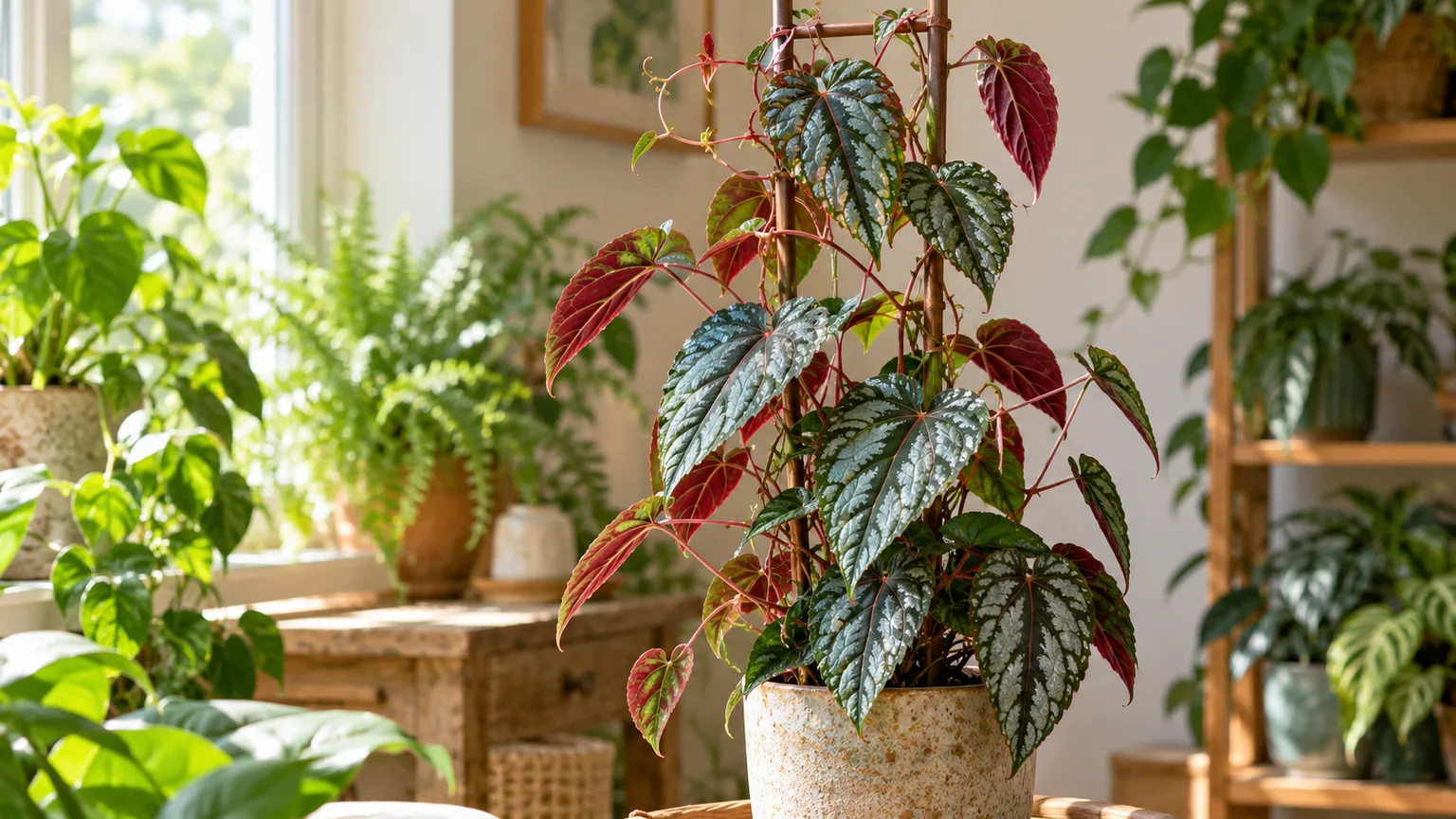
Cissus discolor is a tropical climbing vine grown for its heart-shaped leaves: dark green above, marked with silver, and often burgundy underneath. Give it bright filtered light, warm conditions, and a potting mix that stays lightly moist while draining freely. The main skill is adjusting water and light as the plant moves between indoor and outdoor conditions, rather than following a fixed calendar.
Despite the nickname “rex begonia vine,” it is not a begonia. Kew lists Cissus discolor as an accepted species in Vitaceae, the grape family, and lists Cissus javana among its synonyms; its native range extends from south-central China through tropical Asia. Singapore’s NParks describes it as a tendril-climbing vine suited to semi-shade and well-drained soil. Those details explain the care balance: filtered light for the patterned foliage, something to climb, and moisture without stagnant roots (Kew Plants of the World Online; NParks Flora Fauna Web).
What Makes Cissus Discolor Different
The plant’s appeal changes as it grows. New leaves can emerge with a stronger red or purple cast, then mature into dark green leaves with silvery markings and colored undersides. Slender reddish stems produce tendrils that help the vine attach to support; left unsupported, those same flexible stems spill over a basket or shelf. NParks records the species as a climber with alternate, toothed leaves, angled dark-red stems, and small white flowers. Indoors, the foliage is usually the feature people notice most, while flowers are occasional and understated.
The common name can create a care mismatch. A Cissus discolor is neither a rex begonia nor a true grape for fruit; it belongs to the same family as grapes but is grown ornamentally. Look for the botanical name when buying, especially if you are comparing it with actual rex begonias or other plants sold under “begonia vine.” Kew’s accepted name and synonym record is useful when older references label it Cissus javana.
Quick Care Snapshot
| Need | A useful starting point | Adjust when |
|---|---|---|
| Light | Bright, indirect light; gentle morning sun can work | Leaves scorch near hot glass or growth becomes sparse in dim light |
| Water | Water thoroughly once the top inch begins to dry | A small pot, warm room, or outdoor wind speeds drying; winter slows it |
| Mix | Moisture-retentive but airy, in a draining pot | The mix stays wet for days or dries almost immediately |
| Temperature | Warm, stable indoor conditions; avoid cold drafts | Nights approach 55–60°F outdoors or a window becomes chilly |
| Feeding | Dilute balanced fertilizer during active growth | Pause in winter or when the plant is stressed or recently repotted |
| Habit | Trellis or pole for climbing; hanging pot for trailing | Choose based on available space and whether you want visible stems |
Treat these as starting points, not a timer. A large pot in a cool room can stay damp much longer than a small hanging basket in summer. Check the soil and the plant before changing the routine.
Choose a Spot With Bright, Filtered Light
Set the plant where it receives strong ambient daylight without prolonged, hot direct sun on the leaves. An east-facing window often works well; a bright west- or south-facing window may also work if the pot sits back from the glass or a sheer curtain softens the strongest rays. A spot several feet from the window can be better than a sunbeam that reaches the foliage for hours. NParks categorizes the species as semi-shade, and practical care guidance from Gardenia and Savvy Gardening similarly favors bright indirect light (Gardenia’s rex begonia vine guide; Savvy Gardening’s Cissus discolor guide).
Use the leaves and growth pattern to tune the placement. Pale, scorched patches on the window-facing side suggest too much direct sun; long gaps between leaves and small, widely spaced growth suggest the plant may need more light. Move it in stages over several days instead of shifting it from a dim corner into strong sun all at once. Rotate the pot a quarter turn every week or two if one side is reaching toward the window, but do not rotate so often that you keep changing its orientation.
If winter daylight is weak, place the vine closer to a bright window or use a grow light on a regular daytime cycle. Aim for even coverage down the vine, not only a bright spot on the top leaves. A leggy lower section will not fill in simply because the upper tips receive more light; pruning above a healthy node can encourage new side shoots once conditions improve.
Keep the Root Zone Moist, Not Saturated
Water when the top inch of the mix has begun to dry, then soak the root ball until water drains from the pot. Empty the saucer or cachepot after it finishes draining. This approach keeps the moisture-loving roots supplied while preserving air in the mix; leaving the pot standing in runoff removes that air and raises the chance of root damage.
Check with a finger or a clean wooden skewer rather than watering by weekday. If the top is dry but the mix below remains cool and damp, wait and check again soon. If the whole root ball is dry and has pulled from the pot edge, water slowly in two passes so the mix can absorb it instead of sending most of the water down the sides. A small basket may need frequent checks in warm weather; a larger indoor pot in winter may go much longer. Exact intervals vary too much to be reliable across homes.
Season changes matter because Cissus discolor generally grows more slowly with shorter days and cooler indoor conditions. Reduce watering only as the plant’s actual dry-down slows; do not force a dry winter rest while it is still producing leaves in a warm, bright room. Conversely, if it has dropped most of its leaves after a move, reduce water while it is bare because it is using less moisture. Keep drainage holes clear and avoid repeatedly adding small sips that leave the lower root zone continuously wet.
Use an Airy, Moisture-Retentive Potting Mix
Choose a quality indoor potting mix that holds some water but does not collapse into a dense, airless mass. A practical starting blend is two parts indoor potting mix, one part fine orchid bark, and one part perlite or pumice. That is a flexible home mix, not a formula the plant requires; the goal is a root zone that remains evenly damp for a while but drains promptly after watering. NParks specifies well-drained soil, while Gardenia recommends an organic-rich, well-draining mix with aeration amendments.
Use a container with drainage holes. If water pools on top for a long time, the mix may be compacted or the pot may be oversized. If it dries out almost immediately, the mix may be too coarse, the plant may be root-bound, or the basket may be small and exposed to airflow. Fix the cause rather than adding a layer of gravel inside the pot; gravel does not improve drainage in a container and can leave a wetter band above it.
Provide Warmth and Humidity Without Chasing a Number
A stable, warm room is usually easier than trying to create a miniature greenhouse. Keep the plant away from cold entry doors, drafty windows, and direct blasts from heating or air-conditioning vents. Gardenia lists 60–80°F as a preferred range and cautions against cold drops. If the room feels comfortable to people, the temperature is generally suitable; the bigger risk is a sudden chilly change, especially when a warm plant is moved outdoors overnight.
Higher humidity can help the leaves stay supple, but a specific humidity percentage is not necessary for every home. Start with consistent root moisture and good airflow. If leaf tips repeatedly dry while the root ball is not being allowed to dry out, group plants together or run a humidifier nearby. Misting is brief and does not maintain ambient humidity; wet foliage in still air can also encourage disease. A pebble tray is optional decoration, not a reliable substitute for room-wide humidity control.
Train the Vine or Let It Trail
Choose the growth style before the stems become tangled. A trellis, narrow ladder, or moss pole displays the vine’s climbing habit and keeps leaves separated for airflow; a hanging basket lets the red stems and patterned leaves cascade. NParks notes that tendrils support the climbing form and lists trellises and arbors among landscape uses. Indoors, a small trellis fixed securely into the pot is often simpler than expecting tendrils to grip a smooth wall.
Guide young stems loosely with soft plant ties, leaving room for them to thicken. Do not cinch the tie around the stem or force a brittle section into a sharp bend. Check the support after watering and as the plant grows; a top-heavy vine can pull a lightweight pot over. If you prefer a fuller hanging plant, pinch or prune the longest tips above a node instead of trying to train every stem upward.
Feed Lightly While It Is Growing
During active spring and summer growth, apply a balanced liquid houseplant fertilizer at half the label rate every three to four weeks. Water the plant first if the mix is very dry, then feed; fertilizer salts in a dry root zone can injure roots. Savvy Gardening describes regular feeding through the growing season and stopping in autumn and winter, while Gardenia recommends monthly feeding. A diluted, steady approach is safer than using a strong dose to force rapid vine growth.
Stop feeding when growth slows for the season, after a stressful move, or while the roots are recovering from overwatering. Do not use fertilizer to treat pale or yellow leaves until you have checked light, drainage, and root condition; those symptoms are often environmental. If a white crust forms on the pot rim or soil, pause feeding and flush the mix with plain water, allowing it to drain freely.
Prune for Shape, Renew Growth, and Take Cuttings
Use clean, sharp snips to shorten a vine just above a leaf node, the point where a leaf and tendril join the stem. Cutting above a node leaves a place for a nearby bud to branch. Remove dead or badly damaged leaves at their stems, but avoid stripping healthy foliage simply to make the plant look tidy; leaves are the energy source that supports new roots and shoots.
Prune an indoor plant when it grows beyond its space or becomes sparse, preferably when it is actively growing and has enough light to recover. If you bring a summered plant indoors, trim only what is needed to fit the space and inspect it for insects first. A drastic cut combined with a sudden light change can compound stress. Save healthy stem sections with several nodes for propagation rather than discarding them.
Propagate Cissus Discolor From Stem Cuttings
Stem cuttings are the most dependable home method. Savvy Gardening describes water, soil, and layering methods; Gardenia also recommends node-bearing cuttings and warm, bright conditions. Use a healthy vine and remember which end was closest to the parent plant, since a cutting placed upside down may fail to root.
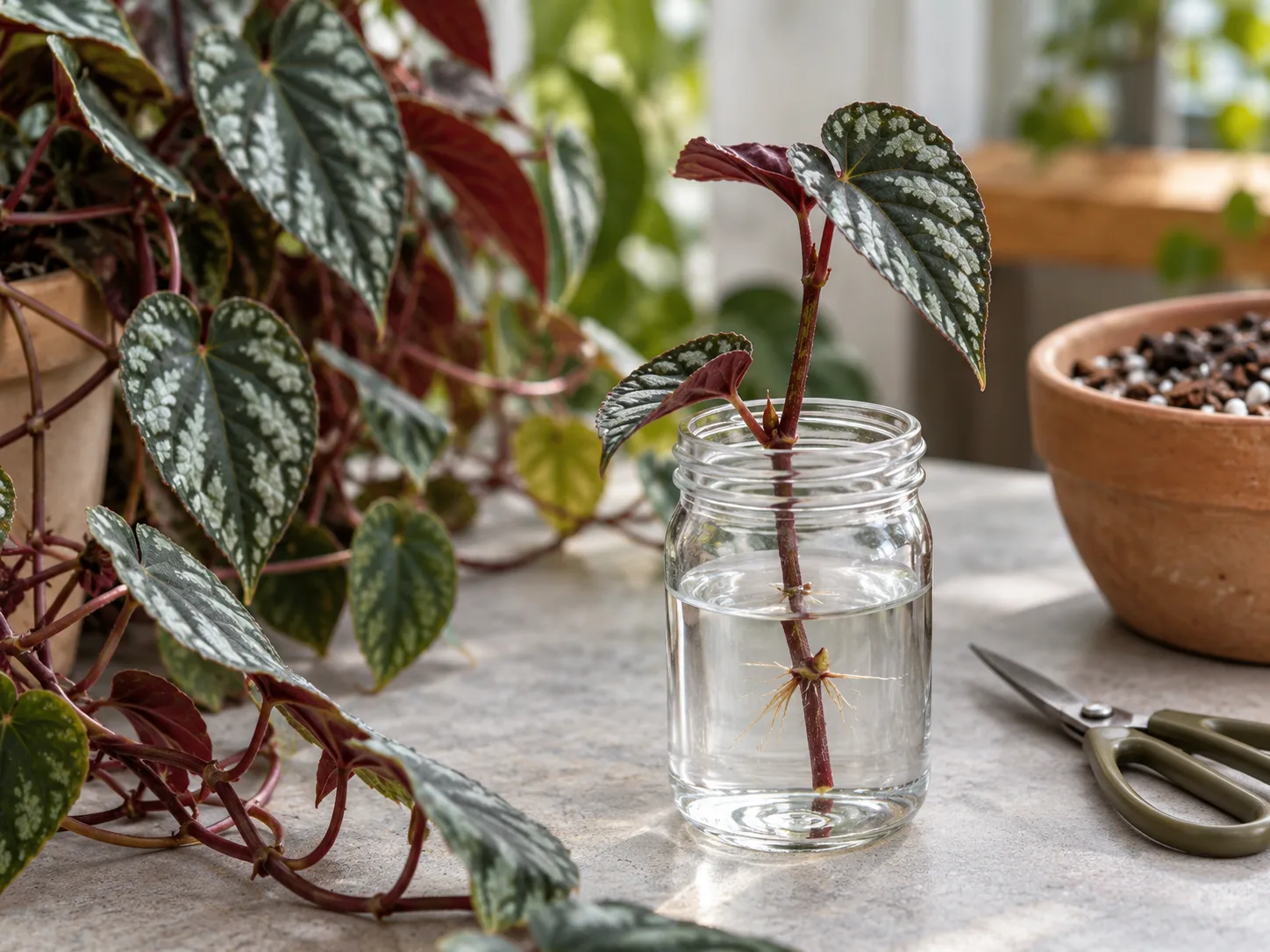
- Choose a flexible, healthy section about 4–6 inches long with at least two or three nodes. Cut just below a node with clean pruners.
- Remove leaves from the lowest node or two. Keep one or two leaves near the tip; if they are very large, trim them slightly to reduce moisture loss.
- For water rooting, place the lower node in a clean jar of room-temperature water and keep foliage above the surface. Change the water if it clouds and rinse the jar if it develops film.
- For soil rooting, insert a lower node into a small pot of moist, airy mix. Enclose the pot loosely in a clear bag if your home is dry, and open it daily for air exchange. The mix should stay lightly moist, not saturated.
- Put either cutting in warm, bright indirect light. Check after several weeks rather than tugging every day. Water cuttings often show roots in roughly four to six weeks, but temperature and plant condition change the timing. Pot up a water-rooted cutting when roots are around an inch long; for soil cuttings, look for fresh growth and gentle resistance.
Layering is useful when you want a new plant without separating the stem immediately. Pin a node on a still-attached vine against the surface of a small pot of moist mix. Once roots form and the node produces growth, cut the connection to the parent and let the new plant establish. If cuttings shrivel, the usual first checks are cold conditions, direct sun, or a medium that dried completely—not a need for stronger fertilizer.
Repot When Roots Have Filled the Pot
Repot in spring when roots circle the bottom, emerge from drainage holes, or the mix dries much faster than it used to. Slow growth alone is not proof of a crowded pot; low light or seasonal slowdown can look similar. Tip the root ball out gently and check before choosing a larger container. If roots are not crowded and the mix still drains, return the plant to its pot and wait.
Move up only one pot size, refresh the mix, and keep the crown at the same depth. A very large pot holds extra wet soil around a small root system, which can make overwatering more likely. Water once after repotting to settle the mix, let it drain, and hold fertilizer until new growth resumes. Gardenia suggests repotting when root-bound, often after one or two years, but the plant’s roots—not the calendar—should make the decision.
Move It Outdoors Safely in Warm Weather
Cissus discolor can spend summer outdoors in a frost-free, warm climate or in a pot in cooler regions. Choose a sheltered place in partial shade, with gentle morning light and protection from harsh afternoon sun. Do not move a plant straight from an indoor shelf into full sun or a windy patio. Savvy Gardening’s practical account recommends summering the vine outdoors, while Kew classifies it as a liana of wet tropical biomes; both point to warmth and protected conditions rather than cold-hardiness (Savvy Gardening; Kew).
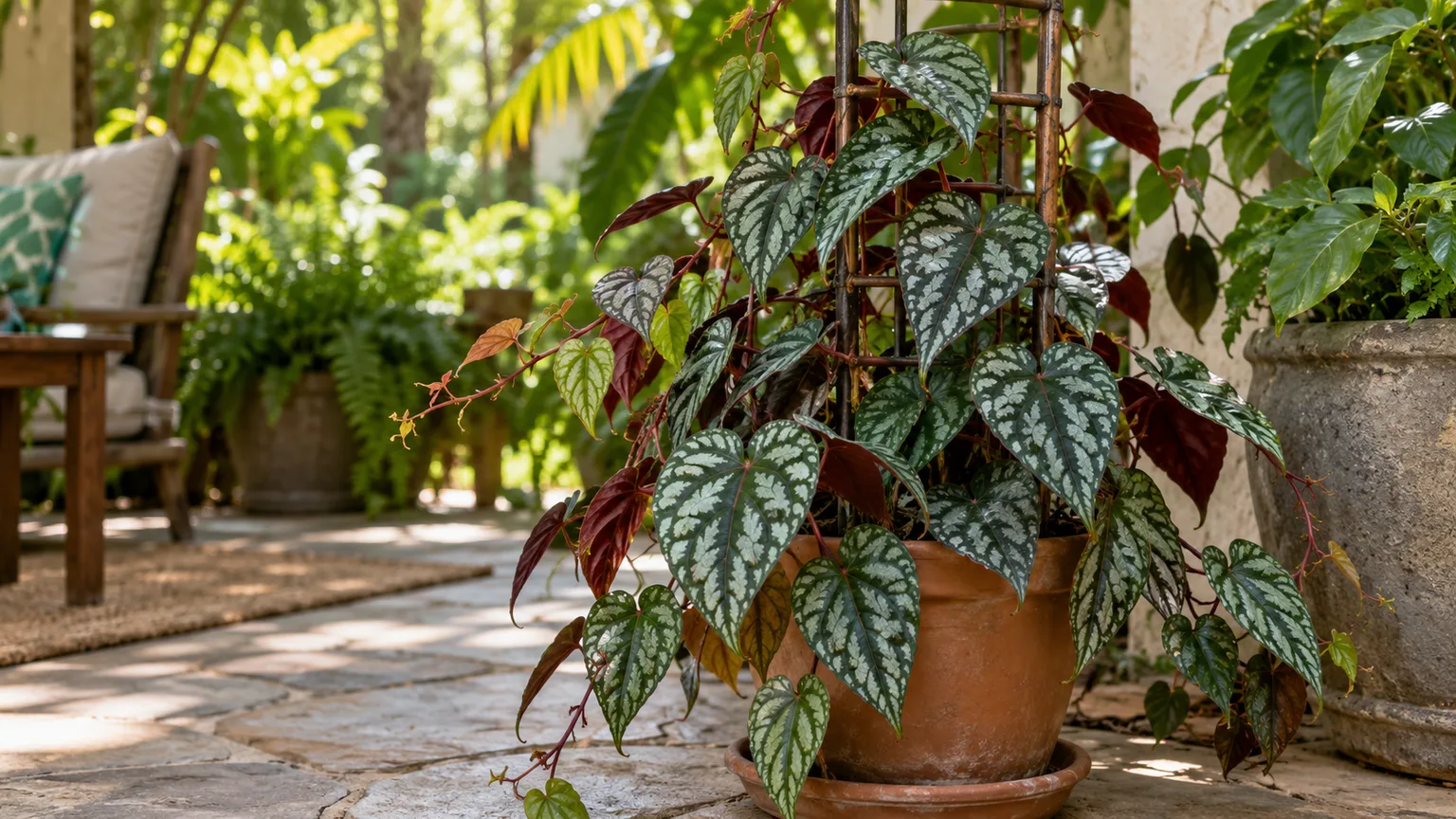
Acclimate it over about a week: begin in bright shade, add a little gentle morning sun at a time, and bring it under cover if leaves show scorch or wind tears them. Check the pot more often outdoors because heat and airflow can dry it quickly. Before nights approach 55–60°F, start planning the move inside; do not wait for frost or for a cold night to damage the leaves. Bring it in gradually, inspect leaf undersides and stem joints, and reduce watering if growth slows after the transition.
Diagnose Yellow Leaves, Browning, and Leaf Drop
Symptoms are clues, not diagnoses. Check where the damage appears, how wet the root ball is, and what changed in the past two weeks before making a correction. Change one major condition at a time so you can tell whether the plant is responding.
| What you see | First checks | A sensible response |
|---|---|---|
| Several leaves yellowing while mix stays wet | Drainage, pot size, smell or softness at roots | Let the mix dry partially; remove rotted roots only if they are confirmed, then repot in airy mix |
| Crispy tips or edges | Dry root ball, hot sun, dry air, fertilizer crust | Rehydrate thoroughly if dry; soften direct sun; pause fertilizer if salts are visible |
| Pale or scorched patches on one side | Direct afternoon sun or hot window glass | Move farther from glass or filter the light gradually |
| Long bare sections and small leaves | Low light, especially on lower vines | Improve even light, then prune selectively above healthy nodes |
| Leaf drop after moving or changing temperature | Abrupt light, temperature, watering, or humidity shift | Stabilize its location and reduce water to match reduced foliage |
An occasional older leaf yellowing is normal. Widespread yellowing with soft stems or a sour-smelling mix is more concerning than one leaf dropping after a move. If the roots are pale and firm, avoid unnecessary root pruning; correct the environment first. If they are brown, mushy, and foul-smelling, remove only damaged tissue with clean tools and repot in fresh, well-drained mix.
Watch for Spider Mites, Mealybugs, and Mildew
Inspect the undersides of leaves, tendrils, and leaf joints when watering, especially after the plant has been outdoors. Fine webbing and stippled leaves can point to spider mites; cottony clusters may be mealybugs. Isolate a plant with suspected pests before treating it, then rinse or wipe the foliage and repeat inspections over the next few weeks. Early detection is easier than trying to treat an established colony hidden in a dense vine.
For a confirmed insect pest, use a product labeled for that pest and indoor ornamental plants, following its directions exactly. Test on a small area first and keep the plant out of direct sun until treated leaves are dry. Avoid applying oils or soaps to a heat-stressed plant or using home mixtures at an unmeasured strength. Powdery growth, persistent spotting, or collapsing stems can have more than one cause; improve airflow and watering practices, remove badly affected material, and seek a local extension diagnosis if the problem continues.
Follow a Seasonal Care Routine
In spring, check whether roots need space, refresh the support, and resume light feeding only after new growth appears. This is also the easiest time to take cuttings because warmth and longer days help the new roots and shoots keep growing. If the plant spent winter in a lower-light room, move it closer to a bright window gradually rather than putting it directly into outdoor sun.
In summer, water according to the faster dry-down if the plant is outside, secure climbing stems, and look for pests weekly. In fall, bring it indoors before chilly nights, inspect it carefully, and prune only enough to fit the room. In winter, keep it warm and bright, reduce fertilizer, and wait longer between waterings only if the soil is actually drying more slowly. This season-based routine follows the plant’s growth, not a rigid calendar.
Conclusion
Cissus discolor grows best when its tropical habits guide the routine: bright filtered light, warmth, a moist but airy root zone, and either a support to climb or room to trail. Check soil before watering, keep runoff out of the pot, and adjust care when daylight and temperature shift. With those basics steady, you can use light pruning to shape the vine, root healthy cuttings, and keep its patterned leaves looking their best without turning care into guesswork.



