How to Grow and Care for California Lilacs
Learn how to grow California lilacs with the right cultivar, planting site, watering routine, and pruning schedule for evergreen and deciduous types.
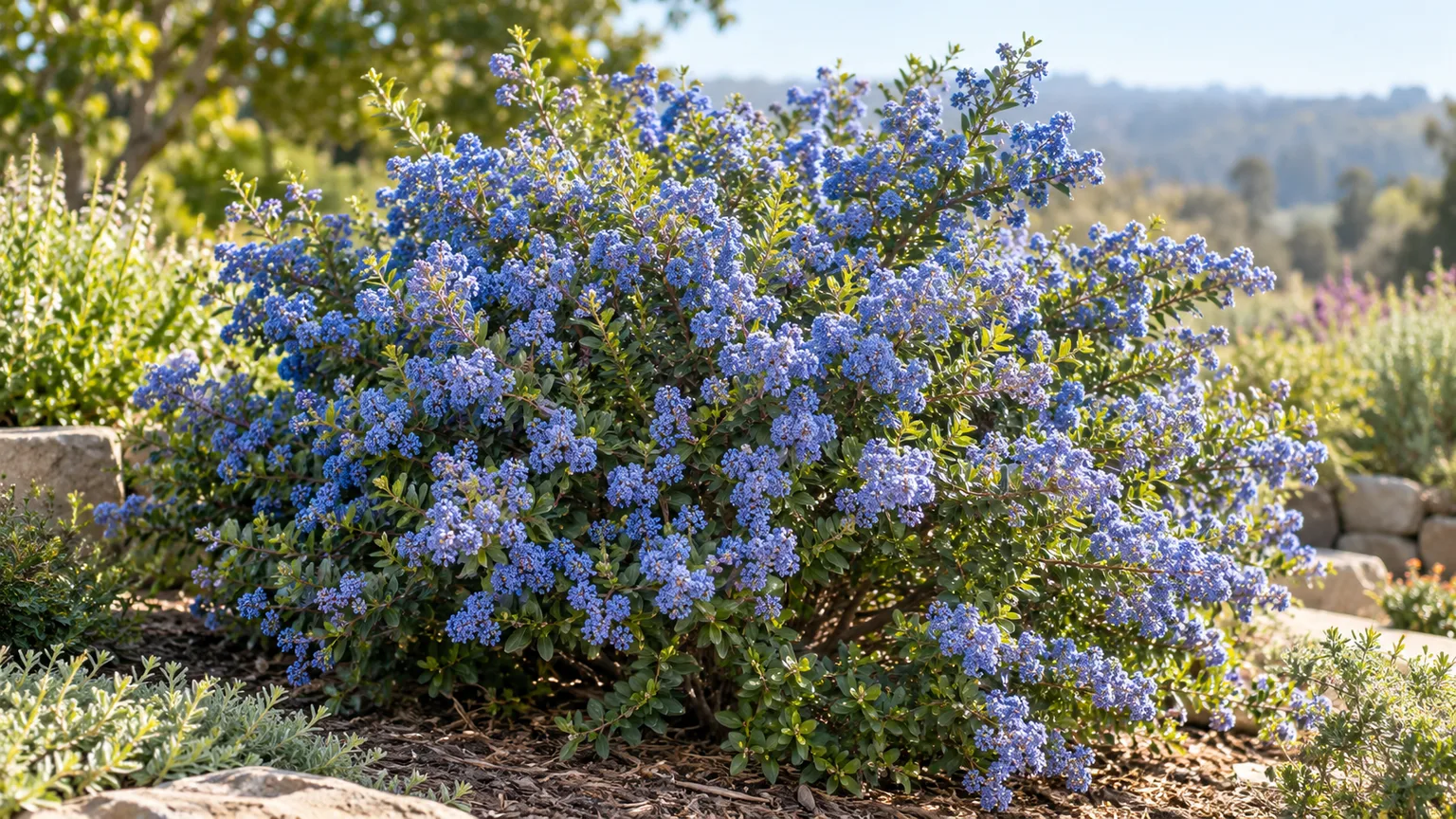
California lilac is the common name for Ceanothus, a genus of flowering shrubs that includes evergreen and deciduous plants, low groundcovers, rounded bushes, and larger wall-trained shrubs. The blue flower clusters are the best-known feature, but the right care depends on which Ceanothus you buy: flowering season, mature size, winter hardiness, and whether it flowers on old or new growth all vary.
The reliable starting point is simple: choose a cultivar suited to your climate and available space, plant it where water drains freely, and give it regular water while its roots establish. Once established, many Ceanothus need little irrigation, but they do not thrive in permanently wet soil. Pruning is the other point where a small mistake can cost you flowers or leave an evergreen shrub unable to recover.
Get to know the Ceanothus you are growing
Ceanothus belongs to the buckthorn family, Rhamnaceae. Although “California lilac” is a familiar name, this plant is not a true lilac in the genus Syringa. The roughly 50 species in the genus vary considerably: some are evergreen, some drop their leaves, and their flowers may be blue, violet, white, or pink. They can be compact shrubs, spreading groundcovers, or plants large enough to train along a wall.
That diversity matters in everyday care. A general instruction such as “prune after flowering” can be wrong for a late-flowering cultivar, while advice for a western evergreen may not suit a deciduous hybrid grown in a colder or more humid region. Read the full botanical name and mature dimensions on the nursery label, then use that information to choose the site and pruning window. The UC Statewide Integrated Pest Management Program describes the genus as including shrubs, small trees, and groundcovers, with care tied to sun, drainage, and establishment.
Choose a cultivar for your climate, space, and bloom season
Start with the job the plant needs to do. A low mound that covers a bank, a compact border shrub, and a vigorous plant against a sunny wall are not interchangeable, even if all are sold as California lilac. Compare the eventual height and spread with the space available; do not rely on the size of the young plant in its nursery pot.
| Type or example | Useful fit | What to check |
|---|---|---|
| Evergreen Ceanothus such as ‘Victoria’ | Year-round foliage and a spring flower display | Its mature width, winter exposure, and whether the site can stay well drained |
| Deciduous C. × delileanus such as ‘Gloire de Versailles’ | A rounded shrub with flowers later in the season; useful where deciduous types suit the local climate | It flowers on new growth and is pruned in spring; check the regional hardiness listing |
| C. × pallidus such as ‘Marie Simon’ | A smaller, rounded shrub with soft-pink blooms | Confirm the plant’s mature size and zone range for your location |
The RHS profile for ‘Victoria’ describes an evergreen cultivar with indigo flowers in mid-to-late spring and a mature size around 1.8 meters tall by 1.2 meters wide. NC State Extension lists C. × delileanus ‘Gloire de Versailles’ as a deciduous summer-to-autumn bloomer and notes that the hybrid handles the heat and humidity found in the southeastern United States. Its profile of C. × pallidus describes a smaller shrub with pink or blue blooms and drought tolerance after establishment. These are examples, not universal promises for every plant carrying the common name.
Cold tolerance is especially easy to overgeneralize. The genus includes plants from different regions and hybrids with different needs; a hardiness zone printed for one cultivar is not a guarantee for another. In colder or exposed gardens, compare the specific cultivar’s hardiness with your local conditions and prefer a sheltered position. In hot, humid summers, select a type with a proven regional fit rather than assuming every California native will cope equally well.
Give it sun, shelter, and fast-draining soil
For the most flowers, choose a sunny location. In very hot inland climates, a little afternoon shade can protect the plant from intense heat, but a site that is shaded for much of the day may produce sparse flowering. Also account for winter exposure: cold winds, frost pockets, and exposed corners can damage evergreen foliage or buds. The RHS recommends a sunny, sheltered position and notes that deciduous Ceanothus are generally less susceptible to wind and frost damage than evergreen types.
Drainage is the non-negotiable condition. Ceanothus can cope with dry periods after establishment, but waterlogged roots are a different problem and can lead to poor growth, dieback, and root rot. Avoid planting where roof runoff collects, where a lawn sprinkler repeatedly soaks the root zone, or where a heavy clay bed stays saturated in winter. If the site drains slowly, use a raised mound or a naturally sloping bed rather than digging a deep, amended pocket that holds water.
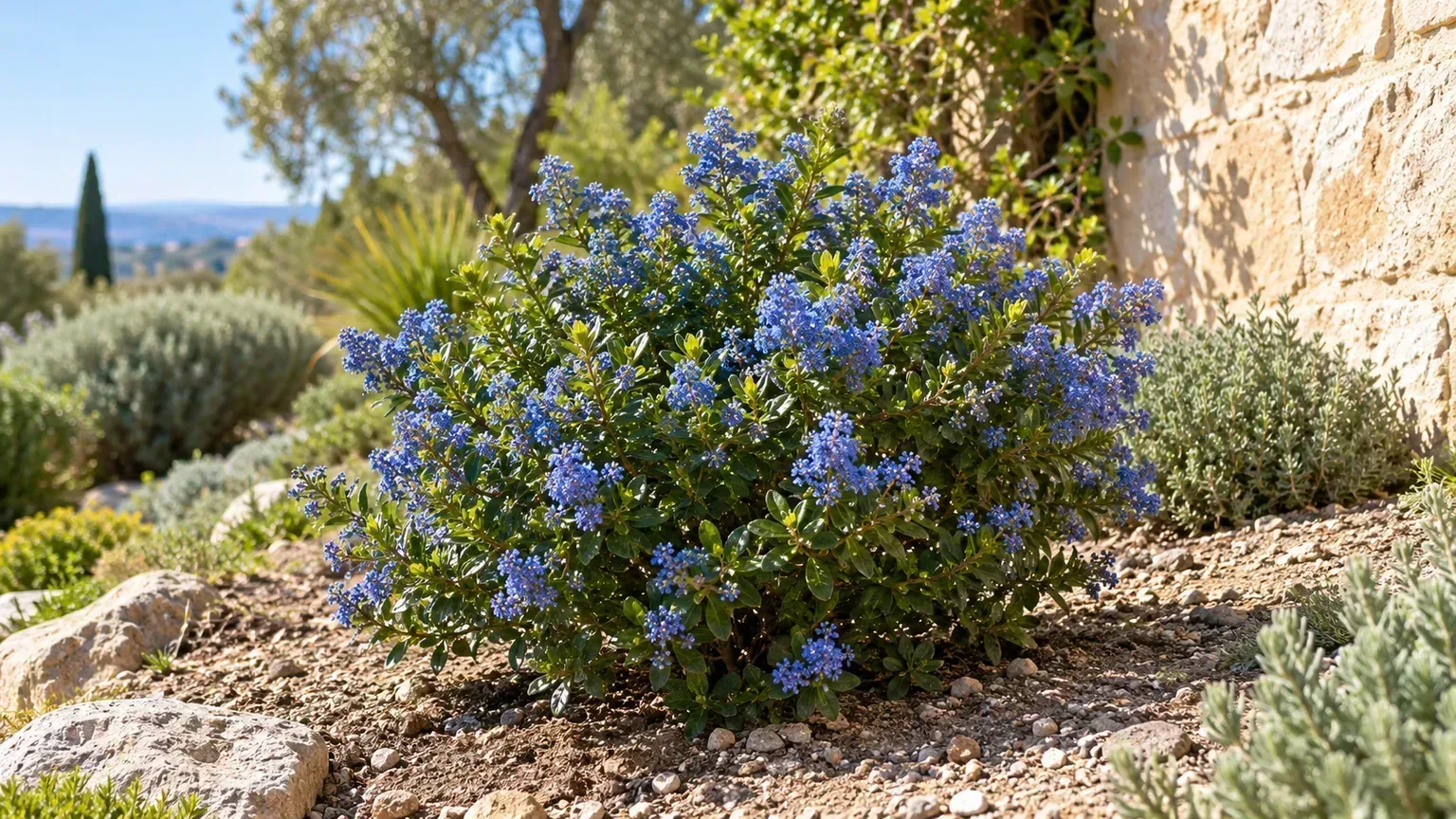
Soil pH is not a reason to assume the shrub will fail, but shallow chalky soil can make nutrients less available and trigger yellow foliage. The RHS notes that some cultivars tolerate lime yet may become chlorotic on shallow chalk. If leaves yellow, investigate drainage and soil conditions before reaching for a high-nitrogen fertilizer; adding nutrients cannot correct oxygen-starved roots.
Plant in spring when winter soil stays wet
In regions with wet winters, spring is the safer planting season because Ceanothus roots are vulnerable in saturated cold soil. The RHS allows autumn planting where soil drains very freely, but spring gives the shrub a longer mild period to settle before its first winter. If you buy a container-grown plant during summer, do not leave it in its pot to dry out; plant it promptly and water it carefully while it establishes.
Before digging, check the label again for mature size and set the shrub far enough from walls, paths, and neighboring plants that you will not have to keep cutting it back. If you plan to train it, install the wires or trellis before planting. Loosen the rootball gently if roots circle the pot, set the plant at the same depth it grew in the container, and backfill with the soil removed from the hole unless a soil test or local guidance points to a specific amendment. A shallow layer of organic mulch can help moderate moisture and weeds, but keep it away from the stems.
Do not improve drainage by creating a small gravel-filled hole inside dense clay; water can collect at the boundary between the amended pocket and surrounding soil. Plant on a broad mound or choose another spot instead. The aim is for excess water to move away from the whole root zone, not just the surface around the trunk.
Water through establishment, then taper
A newly planted Ceanothus needs dependable moisture while it grows roots into the surrounding soil. Water deeply when the rootball and nearby soil begin to dry, then let excess drain; do not follow a fixed weekly schedule without checking the weather and soil. A container-grown shrub or a plant in very free-draining soil can dry out faster than one planted in a cool, heavier bed, so adjust by conditions.
Continue attentive watering through the first few growing seasons, especially during hot, dry weather. The RHS says newly planted plants need additional water for the first few years until roots are established. Once a shrub is well rooted, many Ceanothus are drought tolerant and do not need routine summer irrigation. UC IPM similarly notes that water is needed during growth but little is required after establishment.
The practical test is the soil, not the calendar. If the root zone is still damp several inches down, wait. If the soil has dried and the plant is showing stress during a prolonged hot spell, give it a thorough soak rather than frequent shallow sprinkles. Avoid placing it on a lawn’s daily irrigation cycle: routine shallow watering keeps the surface wet and can encourage weak surface rooting while increasing the risk of root problems. On the other hand, “drought tolerant” does not mean a first-year shrub can be left dry through a heat wave.
Feed sparingly and mulch correctly
Ceanothus usually needs little or no routine fertilizer in ordinary garden soil. Strong feeding can produce soft leafy growth without solving the cause of poor bloom, yellow foliage, or dieback. Start by checking sun, drainage, planting depth, water, and cultivar-specific needs. If a soil test identifies a deficiency, follow its recommendation rather than applying a broad fertilizer by habit.
A thin layer of compost or another suitable organic mulch can help suppress weeds and moderate soil moisture. Keep the mulch clear of the stems and do not pile it into a volcano around the base. The RHS recommends an annual organic mulch but cautions against banking material against stems, where persistent dampness can contribute to decay. In a dry-summer garden, a gravel mulch may suit the plant’s setting better than a thick, moisture-retaining layer of compost.
Prune by flowering time and growth habit
First identify whether your plant is evergreen or deciduous and when it flowers. Pruning at the wrong time can remove the shoots that would carry the next bloom. A light trim after flowering is enough for many established evergreens; the purpose is to correct shape, remove dead or misplaced growth, or keep wall-trained stems within their space—not to shear the shrub into a tight formal ball.
Early-flowering evergreen Ceanothus
For evergreen types that bloom in late spring or early summer, prune soon after flowering. The RHS advises cutting back flowered shoots by roughly one-third to one-half with secateurs; a light summer tidy may be possible if needed. Make selective cuts just above a healthy side shoot or leaf rather than cutting every branch to the same line. Removing a few of the oldest, crowded stems at their origin can improve structure, but avoid stripping away too much live foliage at once.
The main risk is cutting into old, bare wood. Many evergreen Ceanothus do not reliably reshoot from hard pruning into leafless older stems. If a plant has outgrown its space, first decide whether a gentle reduction can preserve leafy growth; if it cannot, replacing it with a more suitable cultivar is often safer than cutting it back hard and hoping. This is why final-size planning matters more than frequent corrective pruning.
Late-flowering evergreens and deciduous Ceanothus
Late-summer-flowering evergreens generally bloom on growth made during the current season, so the RHS recommends pruning in spring and reducing the previous season’s shoots by about one-third to one-half. Some may also have a smaller spring flush on growth from the prior summer, so confirm the cultivar and its bloom pattern before pruning. Do not apply the early-flowering schedule automatically.
Deciduous hybrids such as C. × delileanus flower on new growth and are usually pruned in early to mid-spring. If the plant is young, focus on building a balanced framework; once established, shorten the main flowered stems and thin congested growth to encourage fresh shoots. The RHS notes that deciduous Ceanothus can tolerate harder renovation pruning while dormant, unlike most evergreen types, but recovery may be slow. Check the plant’s identity before attempting renovation and avoid severe pruning just before a late frost.
Train wall-grown shrubs without forcing old wood
Some vigorous Ceanothus can be trained against a wall or fence, but they are shrubs that need support rather than self-clinging vines. Put horizontal wires or a sturdy trellis in place before planting, then guide flexible young shoots outward and tie them loosely with soft garden twine. Keep the ties easy to inspect; as stems thicken, a tight tie can rub or constrict the branch. The RHS advises checking ties at least once a year and repositioning any that have become tight.
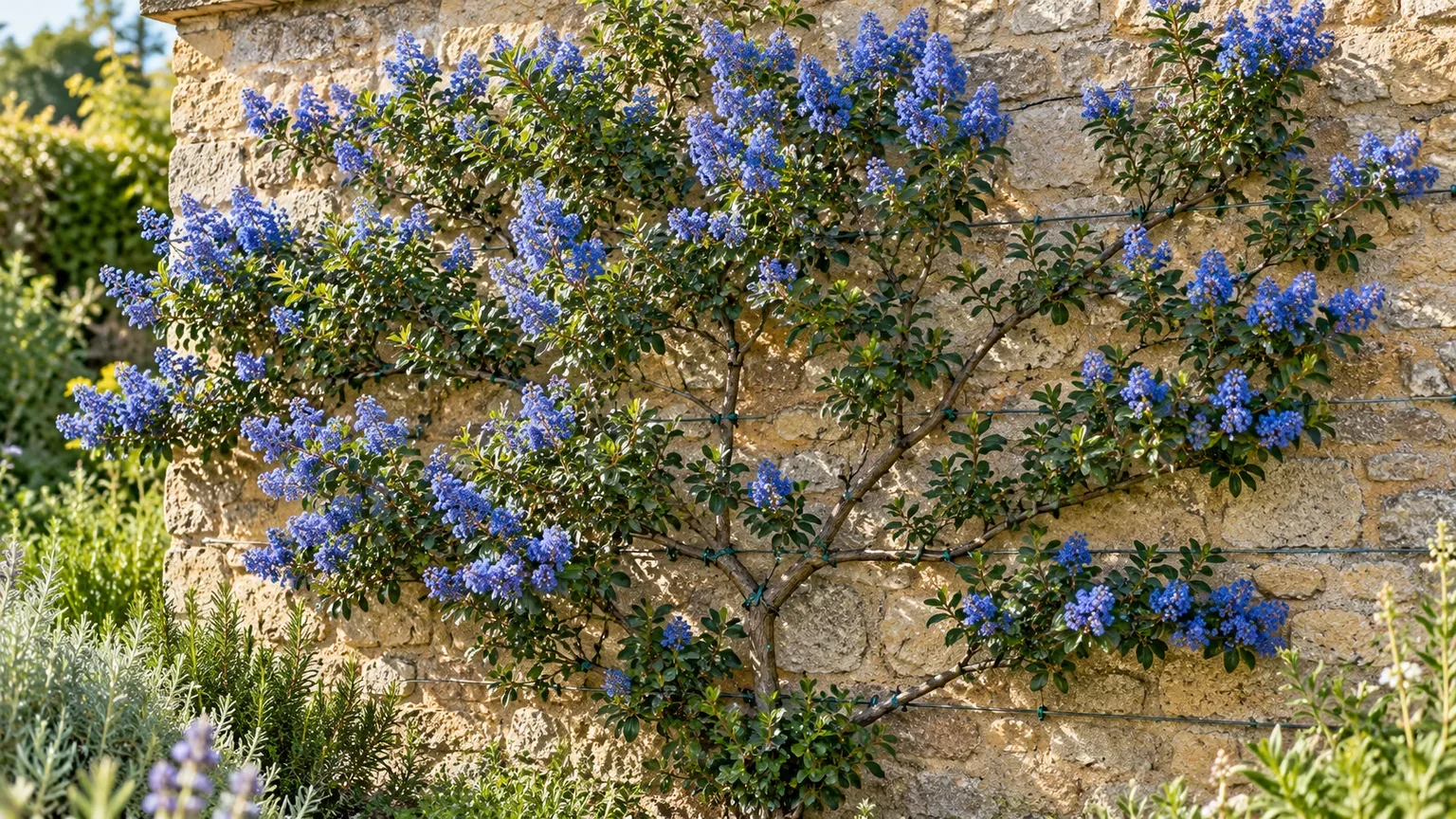
Training is easiest while stems are young. Spread the main branches to fill the support gradually, removing only shoots that grow away from the framework or crowd the center. After flowering, shorten overlong leafy shoots to a side branch while preserving the green growth that will carry the next season’s flowers. Do not wait until a mature, woody shrub has filled the wall and then try to bend its thickest stems into a new direction; those branches can split, and severe cuts may leave evergreen types bare.
Propagate with the right kind of cutting
Cuttings are usually the most dependable way to reproduce a named cultivar because they produce a plant genetically like the parent. The RHS says a cutting-grown Ceanothus may flower in about two to three years, although rooting time and success vary by type and conditions. Use clean pruners, a free-draining propagation mix, and several cuttings rather than relying on one.
Evergreen Ceanothus are commonly propagated from semi-ripe current-season growth taken from mid-summer into autumn. Select healthy shoots that are firm near the base but still flexible near the tip; a heel cutting may root more readily. Keep the cuttings warm and humid without leaving the medium waterlogged. They can be slow to root, so give them time before potting on or planting outdoors.
Deciduous types are generally propagated from softwood tips in late spring or early summer. Choose non-flowering shoots, trim them to a manageable length, remove lower leaves, and keep the medium evenly moist. The RHS reports that softwood cuttings can root in roughly four to six weeks under warm, humid conditions. A rooted cutting still needs gradual hardening off before it is planted outside.
Grow from seed only when variability is acceptable
Seed is a slower and less predictable route. Named cultivars may not come true from seed, so a seedling can differ in flower color, growth habit, and mature size from the parent. For a specific cultivar, take a cutting or buy a labeled plant instead.
Ceanothus seeds have a hard coat and dormancy, and the right pretreatment is not necessarily identical across species. The RHS describes soaking seed in hot water for 24 hours, followed by up to three months of cold, moist stratification and then warm germination. Gardening Know How’s species-specific C. sanguineus guide describes a shorter hot-water scarification method for that species. Those approaches should not be collapsed into one universal recipe: identify the species and follow reliable, species-specific instructions or the seed supplier’s directions. If you do not know the parent species, expect slower and uneven germination, and do not sow valuable seeds until you have checked the recommended treatment.
Diagnose yellow leaves, dieback, and weak flowering
Yellow leaves: Look first at the soil. Shallow chalky ground can cause chlorosis, while a persistently wet root zone can impair roots and produce general decline. Check whether yellowing affects new growth or older leaves, whether the soil stays wet after rain, and whether the shrub sits in a frost pocket. Avoid adding fertilizer until you know whether the problem is nutrient availability, drainage, or another stress.
Brown leaves or damaged buds after winter: Wind exposure and frost can scorch foliage and injure buds, especially on evergreen plants. Note whether damage is concentrated on the windward side or appeared after a cold snap. Prune only clearly dead material once you can see where healthy growth resumes, and improve shelter if the location is repeatedly damaging the plant.
Weak flowering: Too much shade is a common site problem, but pruning at the wrong time can also remove flower-bearing growth. Confirm the cultivar’s bloom season and make sure it is receiving enough direct light. A recently planted shrub may need time to establish, while a shrub that is heavily fertilized may put on leaves instead of a balanced framework of flowers and growth.
Sudden wilt or branch dieback: Check soil moisture several inches below the surface and look for a pattern across the whole plant. If the root zone remains wet, stop routine irrigation and assess drainage; root rot and other diseases are more likely in saturated conditions. UC IPM lists several root and crown rots, cankers, and leaf diseases associated with Ceanothus, so persistent decline is a reason to seek local diagnosis rather than treating a guessed disease.
Scale insects: Inspect stems and leaf undersides for small attached insects and signs such as sticky residue. Scale is among the pests reported on Ceanothus, but a few insects do not automatically justify spraying. Identify the pest first, check whether populations are increasing or causing damage, and choose a response appropriate for the plant and local beneficial insects. The RHS Ceanothus guide and UC IPM profile provide broader problem lists.
Use California lilac as a specimen, screen, or pollinator shrub
A Ceanothus can anchor a sunny mixed border, cover a bank, soften a wall, or serve as a flowering screen. Match the growth habit to the job: a spreading groundcover needs room to run, while a wall-trained cultivar needs a support system and access for annual inspection. Planting too close to a path or foundation turns a low-maintenance shrub into a repeated pruning task.
The flower clusters attract bees and other pollinators, and species-specific profiles also record butterfly value. NC State Extension identifies pollinator and specialized-bee value for C. × delileanus and C. × pallidus. If you are designing for wildlife, let at least some flowered shoots finish their bloom rather than trimming the whole plant as soon as the first flowers fade. This also gives the shrub time to form its next season’s growth.
Conclusion
The best California lilac care begins before planting: choose the right Ceanothus for your climate, size the location for its mature spread, and provide sun with reliable drainage. Water consistently while it establishes, reduce irrigation once it is rooted, and skip routine fertilizer unless soil evidence calls for it.
Before pruning, identify the flowering season and whether the plant is evergreen or deciduous. Early-flowering evergreens are usually trimmed after bloom, late-flowering types are pruned in spring, and deciduous hybrids can tolerate more substantial pruning than evergreen shrubs. That small check protects both the plant’s shape and the blue, pink, or white flowers that make it worth growing.