How to Grow and Care for Common Lilac
Grow a fragrant common lilac in full sun, give it room to spread, and prune after spring flowers. Get a clear care plan for planting, water and bloom problems.
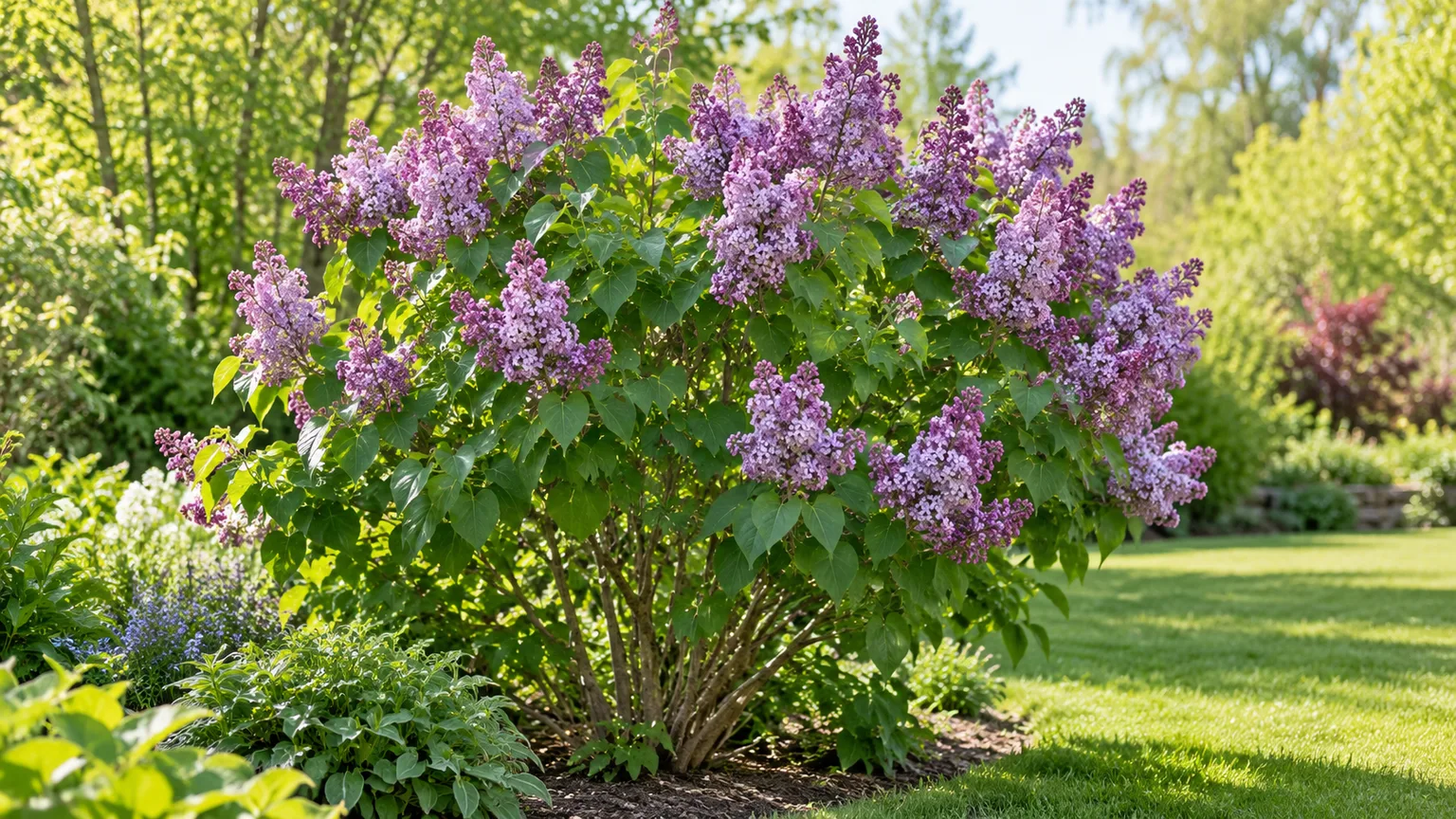
The common lilac (Syringa vulgaris) earns its place with fragrant spring flowers, but it is not a small, all-season shrub. Give it enough sun, room for a broad multi-stem canopy, and a winter cool enough for buds to mature. Then prune after flowering, because next spring’s display is already being prepared on this year’s growth.
That last point explains many bare-looking lilacs: the shrub survives shade, ill-timed pruning, or a warm winter more readily than it produces flowers through them. Start with the site and the plant’s age before reaching for fertilizer or shears.
Quick care facts for common lilac
| Need | What to provide |
|---|---|
| Light | Full sun; aim for at least 6 hours of direct light daily |
| Mature size | Commonly 12–16 feet tall and 8–12 feet wide; allow more room for an old, unpruned plant |
| Soil | Moist but well drained; neutral to alkaline is a good range |
| Water | Water new plants deeply as the root system establishes; water established shrubs through prolonged dry spells |
| Climate | Usually best in cold-winter regions, often USDA Zones 3–7; cultivar and winter chill affect performance |
| Pruning | Shape and remove spent flower clusters just after bloom; save major cuts for a clear reason |
| Fertilizer | Usually unnecessary unless a soil test or diagnosed deficiency supports it |
NC State Extension and the Missouri Botanical Garden both describe common lilac as a full-sun, well-drained-soil shrub that flowers most reliably where winters are cold. Mature dimensions vary by cultivar and pruning history, so use the larger end of the range when choosing a site (NC State Extension; Missouri Botanical Garden).
Choose a site that prevents poor bloom and mildew
A lilac can look healthy and still flower poorly when it is planted in the wrong microclimate. Before buying, check how much direct sun the spot gets from late morning through afternoon, whether the ground stays wet after rain, and whether surrounding trees will shade it as they mature. Think about the mature shrub, not the size of the nursery pot.
Sunlight and airflow
Give common lilac at least six hours of direct sun each day; more is better for bloom. It may grow in light shade, but flower clusters tend to thin as sunlight drops. A bright site also helps leaves dry and gives the shrub’s dense, suckering canopy room for air to move through.
Leave enough space between lilacs and buildings, fences, or neighboring shrubs to accommodate the cultivar’s mature spread. Planting tight against a wall may seem like a way to shelter it, but shade and stagnant air can work against flowering and make powdery mildew more visible. If the only available site receives a few hours of morning sun, choose a plant suited to that light instead of expecting a common lilac to flower like one grown in open sun. Also look for reflected heat: a south- or west-facing wall can make a dry site even hotter in summer, and a roof overhang may keep rain from reaching the root zone. A position with ample light, ordinary garden moisture, and open air is a better long-term fit than a warm pocket that needs constant correction.
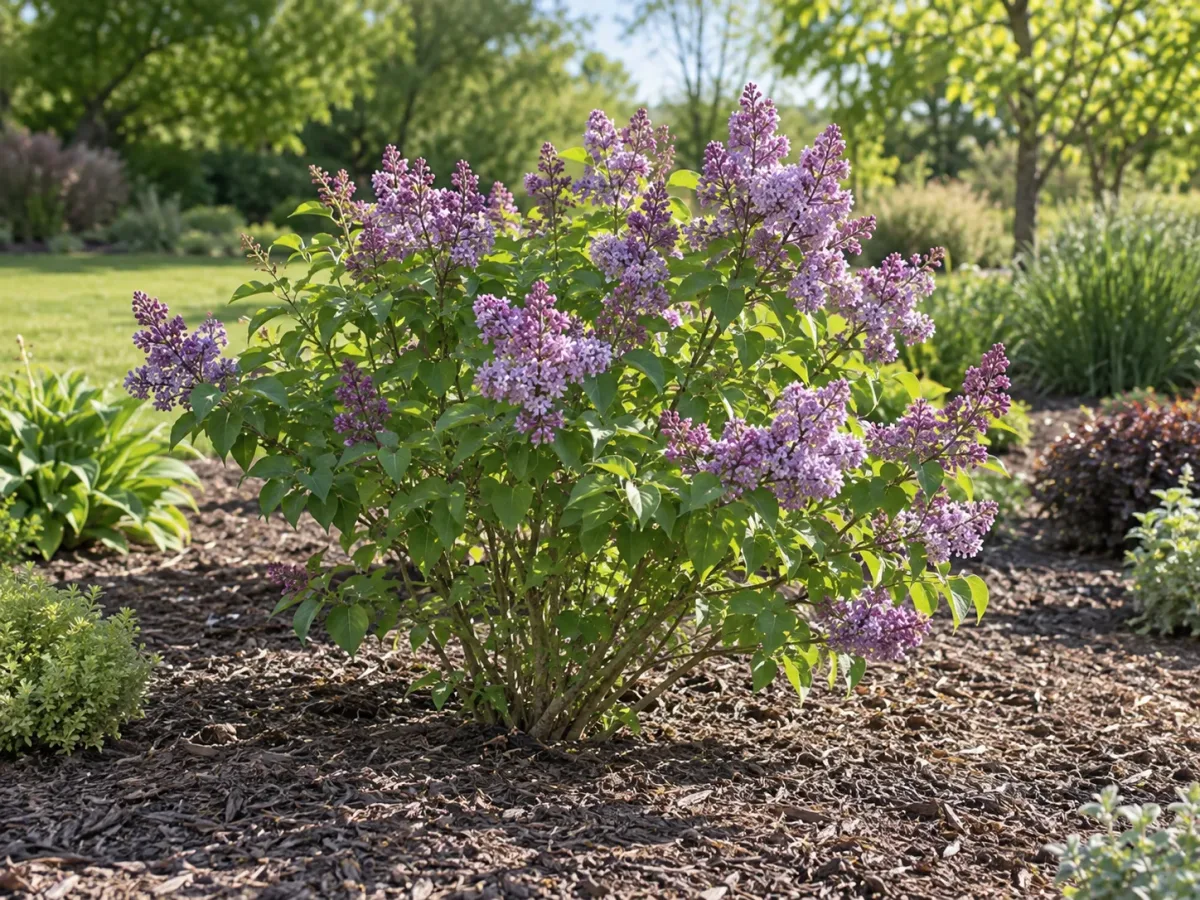
Soil and drainage
Common lilac tolerates several soil textures, including clay and loam, if water drains away rather than collecting around the roots. It prefers neutral to alkaline conditions and can struggle in very acidic or persistently wet soil. If the planting spot stays soggy, fix drainage or select a better location; a deeper planting hole will not solve a high water table or compacted subsoil.
A soil test is more useful than guessing at pH. Do not add lime simply because lilacs prefer less-acidic soil: too much can push the pH beyond what nearby plants need. Likewise, adding a small pocket of rich compost to the hole can create an abrupt change in texture; if the whole bed needs improvement, amend a broad area according to local soil guidance. The RHS profile also lists neutral-to-alkaline, moist but well-drained ground as suitable for Syringa vulgaris (RHS).
Plant common lilac with room to mature
Plant a potted lilac in spring or early fall, when the soil is workable and the shrub is not facing its most stressful heat. In colder areas, spring gives roots more time to establish before winter; in milder climates, fall planting can take advantage of cool weather and seasonal rain. Avoid planting into frozen ground, saturated soil, or a heat wave.
Spacing and planting depth
Measure the eventual width on the plant tag and leave at least that much open space across the planting site. A typical common lilac may spread 8–12 feet, and old plants can become broader. For a loose screen, space plants so their mature edges can meet without forcing the inner branches into a permanently damp thicket; for a specimen, give it air on all sides.
Dig a hole wider than the root ball but no deeper. Lilacs have relatively shallow roots, so set the root flare and the top of the root ball level with, or just above, the surrounding soil rather than burying the stems. Loosen circling roots, backfill with the excavated soil, and water slowly to settle it around the roots. Finish with a shallow layer of mulch over the root zone, keeping mulch several inches away from the stems. These broad-hole, shallow planting directions align with the practical planting guidance from Gardeningetc (lilac growing guide).
Water deeply while roots establish
For the first growing season, check soil moisture every few days in hot, windy weather and less often in cool or rainy spells. When soil a few inches below the surface is dry, water at the base slowly enough to wet the root ball and surrounding soil. A quick sprinkle that wets only the surface encourages shallow roots and does little during a dry stretch. Nursery root balls can dry faster than surrounding soil, so check both the original root ball and the bed around it; a dry pocket inside the planting hole can stress a new shrub even when the garden surface looks damp.
After establishment, common lilac can manage ordinary short dry periods, but do not treat drought tolerance as a reason to let it wilt repeatedly. Water during a prolonged hot, dry spell, especially while flower buds are developing and during the shrub’s first years in the ground. If leaves droop despite damp soil, stop watering and check drainage rather than adding more; roots in saturated soil can be short of oxygen.
Fertilize only for a diagnosed need
Do not put common lilac on an automatic monthly feeding schedule. A shrub with dark foliage and vigorous shoots but few flowers may be getting too much nitrogen, not too little. Excess fertilizer can push soft leafy growth, while a low-flowering shrub may instead be shaded, recently planted, pruned at the wrong time, or short of winter chill.
If growth is weak or leaves show a persistent, unexplained nutrient pattern, test the soil and follow the result or ask a local extension service to interpret it. A light compost mulch can support soil structure without forcing a flush of growth. Do not pour fertilizer into a planting hole or apply a product at the trunk; diagnose the cause first, then use only the amount and timing recommended for that soil and product.
Prune at the right time for next spring’s flowers
Common lilac forms flower buds on growth made during the previous growing season. That makes the timing straightforward: prune for shape just after the flowers fade, while there is still time for new shoots to grow and set buds before winter. A late-winter haircut can remove the very buds you have been waiting to see.
Use pruning to solve a specific problem—dead wood, crossing stems, excessive size, or a crowded center—not to make the shrub look like a clipped ball. The Royal Horticultural Society describes common lilac as tolerant of hard pruning if needed, but routine cuts are easier on the shrub and preserve more of its natural form (RHS pruning guidance).
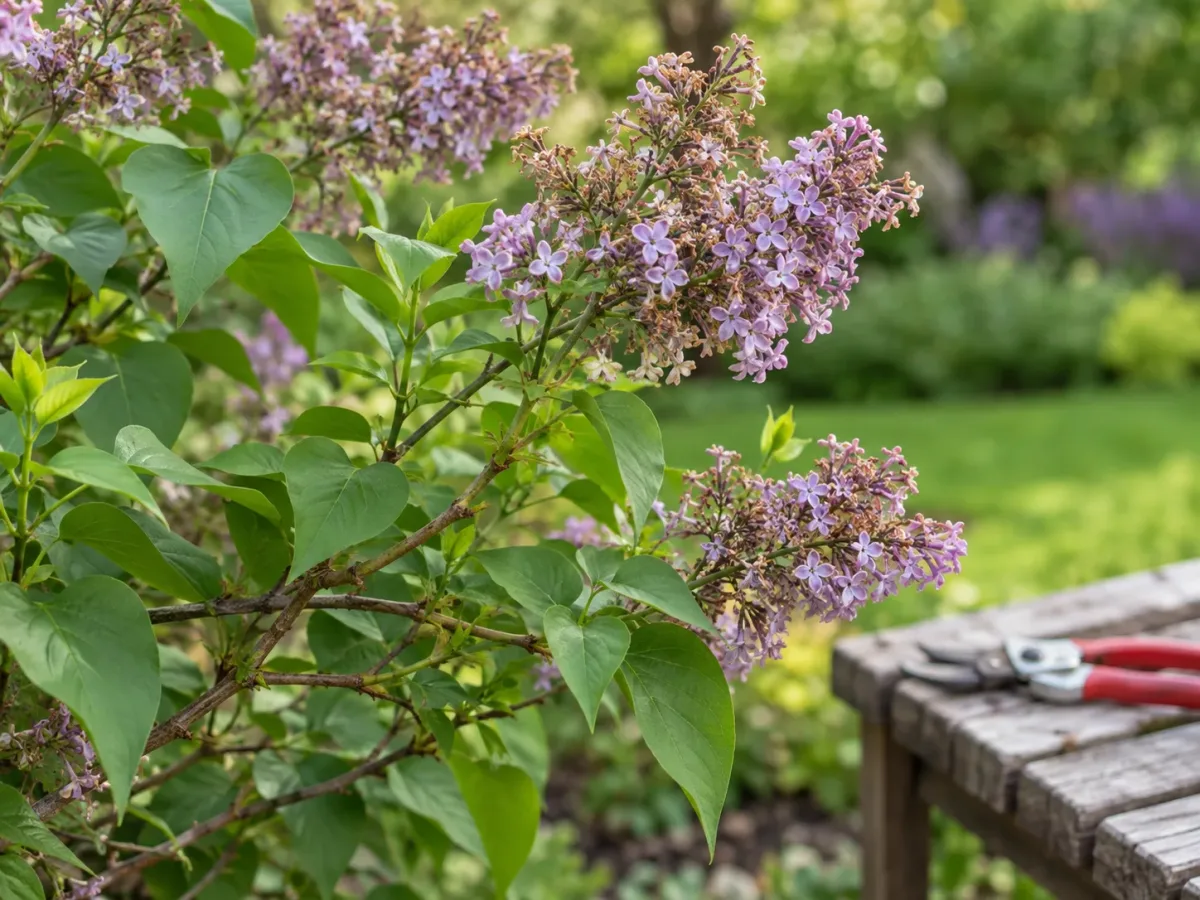
Routine pruning for a young or mature shrub
Start with dead, broken, or diseased stems. Remove them back to healthy wood or to the base, and disinfect tools between plants if you cut through suspect disease. On a newly planted shrub, keep live cuts light while the roots establish; the Fine Gardening pruning guide suggests limiting removal to roughly 15 percent of the living canopy during initial training. Focus on stems that cross, rub, or clearly will not fit the plant’s natural shape rather than trying to perfect every branch.
For an established shrub, take out a few of the oldest trunks at ground level each year, especially if they are thick, bare at the base, or crowding younger stems. This gradual renewal makes room for younger growth without sacrificing the whole year’s flower display. Remove only the suckers you do not want; retaining some healthy young stems lets them replace aging trunks. Fine Gardening’s pruning guidance emphasizes stepping back between cuts and removing old stems gradually rather than shearing the shrub into an artificial outline (Fine Gardening).
You can trim off faded flower clusters if you can reach them without cutting too much foliage, but deadheading is optional. It tidies the plant and prevents seed capsules from forming; it does not replace the need for sun, mature growth, or correct pruning time. For tall plants, do not climb an unstable ladder into a dense canopy. Use a pole pruner from the ground or have an arborist handle large, awkward stems.
Renovate a tall, neglected lilac gradually
A leggy lilac usually does not need every stem cut to the ground at once. Over two or three seasons, remove the oldest, least productive trunks and keep the strongest younger shoots that are growing from the base. That lets light reach lower growth and helps preserve some flowers while the framework renews.
A full rejuvenation cut can be an option for a vigorous, badly overgrown shrub when gradual renewal is impractical, but the trade-off is a reduced display for more than one season while new stems mature. Do not make a dramatic cut on a lilac already declining from root problems, drought, or disease. If you must renovate, take stock of the plant’s health and local timing first; Fine Gardening notes that a few flowers may be lost when renewal cuts are made but that a full reset may take several growing seasons to restore a flowering framework. For an old shrub with uncertain health, staged removal is the safer first choice.
Why is my common lilac not blooming?
Most flower failures have a short list of causes: not enough sun, a young or recently moved shrub, flower buds removed by pruning, insufficient winter chill, or a late frost. Work through these possibilities before changing the soil or buying fertilizer. Leaves that look healthy do not prove the site provides what the flower buds need.
Check age, light, chill, pruning, and nitrogen
- Check the plant’s age and transplant history. A small, newly planted lilac may spend its first seasons building roots and stems. Give it time if growth is healthy; repeated heavy pruning during establishment can delay the point at which it carries a full crop of flowers.
- Count direct-sun hours. If the shrub gets less than six hours, shade is a likely limiter. Nearby trees can gradually turn a once-sunny planting into a shaded one, so look up as well as at the lilac.
- Review last year’s cuts. If you pruned in fall, winter, or early spring, you may have removed formed buds. Wait through the current season and shift routine shaping to just after bloom; do not keep cutting in an attempt to make the shrub flower immediately.
- Consider winter and spring weather. Common lilacs need a meaningful cold rest for strong bud development, and a late freeze can damage buds after they swell. In a mild-winter region, consider a locally recommended lower-chill lilac rather than expecting water or fertilizer to replace winter dormancy. NC State Extension cautions that even low-chill cultivars perform best with an extended cold rest (NC State Extension).
- Look at shoot growth and feeding. Long, soft, leafy shoots with few clusters can point to excessive nitrogen or a heavily shaded canopy. Stop routine feeding, restore light if possible, and test soil before applying anything corrective.
If the plant blooms well on the sunny side but not the shaded side, light distribution is the likely explanation. If buds turn brown after a sudden freeze, wait until growth resumes before pruning; if whole branches wilt or blacken, treat that as a possible disease or injury issue and seek a local diagnosis instead of assuming the shrub simply needs feed. A single bloomless year after a severe late freeze is different from a shrub that has produced leaves but no flowers for several years. Record when it last bloomed, when it was pruned, and whether nearby trees have grown taller; those notes often narrow the cause faster than changing several care practices at once.
Choose a lilac for your space and climate
Common lilac is a strong choice for a cool-winter garden with room for a large shrub. It is a weaker fit for a tight foundation bed, a tiny courtyard, or a region where winter chill is unreliable. Measure the mature plant and check local performance before buying; a cultivar advertised as compact may still become a substantial shrub.
Flower color and form vary widely: ‘Agincourt Beauty’ has large purple flowers, ‘Angel White’ is a low-chill white cultivar, and ‘Sensation’ has purple petals edged in white. If a second flush of flowers matters more than the classic common-lilac form, look for a specifically named reblooming cultivar such as ‘Josee’ and confirm its mature size and climate fit. Reblooming behavior belongs to particular cultivars and hybrids; it is not a dependable feature of every Syringa vulgaris. NC State Extension lists these cultivar differences and notes that lower-chill forms still benefit from a cold winter (NC State Extension).
Propagate common lilac without losing the cultivar
The simplest route to another lilac is often a rooted sucker, a new shoot rising from the shrub’s base or nearby roots. In early spring or fall, choose a healthy young shoot, loosen soil around it, and follow its connection back to the parent. Sever it only after you have found roots of its own; lift a generous root section, replant at the same depth, and keep it evenly moist while it settles. A shoot that has no roots of its own is not ready to transplant; either leave it attached for another season or try layering a low branch. After moving a sucker, avoid feeding it heavily or letting the root ball dry while it re-establishes.
Check whether the parent is grafted before keeping a sucker. A shoot arising from below a visible graft union may belong to the rootstock and can grow into a plant with different flowers or size. If the sucker emerges from an own-root cultivar, it is more likely to match the parent. When there is no suitable sucker, layering a low flexible branch is a practical alternative: pin a section of stem under soil, keep the tip exposed, and separate it after it has rooted. Gardeningetc describes layering and sucker division as straightforward ways to make new plants (Gardeningetc propagation guidance).
Seed is the slowest and least predictable method: it needs a cold period to break dormancy, and seedlings may not repeat a named cultivar’s flower color or form. A seed-grown lilac is a long project, not a quick way to fill a gap in a hedge. Choose a vegetative method when the goal is to copy a particular lilac; use seed only when variation and a longer wait are acceptable.
Spot powdery mildew, blight, and insect damage
A white, powdery film on older leaves in late summer is often powdery mildew. On common lilac it can make foliage look tired but usually causes little lasting harm to an otherwise established shrub. Prioritize a sunny site, adequate spacing, and an open center. Avoid applying fungicide just because a few leaves look dusty; first consider whether the plant is crowded, shaded, or naturally near the end of its seasonal display. NC State Extension notes that mildew can affect appearance while doing little permanent damage (NC State Extension plant profile).
Do not mistake every mark for mildew. Dark, water-soaked patches, blackened shoots, cankers, sudden branch dieback, or repeated wilting deserve a closer look because blights, root disease, and insect injury need different responses. Remove clearly dead wood, keep fallen diseased material out of the shrub, and avoid cutting into wet plants; if symptoms spread quickly, share clear photos with a local extension service before using a pesticide. Scale insects, borers, leaf miners, and caterpillars can affect lilac, but treatment depends on identifying the pest and whether damage is significant. A few chewed leaves are not, by themselves, a reason to spray.
Can common lilac grow in a pot?
A dwarf lilac cultivar can grow in a large container for a time, but full-size Syringa vulgaris is difficult to keep as a permanent patio plant. It develops a broad root system and a tall canopy that can outgrow a pot, dry quickly in summer, or become unstable in wind. Gardeningetc likewise recommends smaller lilac types over the common species for containers (container guidance). A pot also exposes roots to faster temperature swings than garden soil, while the large shrub still needs a cold winter rest. That combination makes a container practical for a compact cultivar in a suitable climate, but a poor way to keep a standard common lilac permanently small.
If a pot is your only option, choose a cultivar sold for compact growth rather than trying to restrict a standard common lilac with repeated root pruning. Use a stable, frost-resistant container with drainage holes, a free-draining potting mix, and a sunny outdoor position. Check moisture more often than you would for a shrub in the ground, and protect the pot’s roots from severe winter swings in climates where containers freeze solid. When the plant starts drying too quickly, loses vigor, or becomes top-heavy, move it to a larger container or plant it in the ground instead of feeding harder.
Conclusion
For reliable common lilac flowers, start with cold-winter suitability, at least six hours of sun, and soil that drains well. Give the mature shrub room, water a new planting deeply through establishment, and skip routine fertilizer unless a soil test points to a need.
When pruning, wait until the flowers fade and protect the buds forming for next spring. Renew an old plant a few stems at a time, and treat a no-bloom year as a clue: check age, sun, winter chill, last year’s cuts, and spring frost in that order. If those conditions do not fit your garden, choose a compact or lower-chill lilac rather than trying to force the common species into the wrong spot.