23 Best Companion Plants for Potatoes
Choose potato companions by job: reduce pest pressure, harvest quick fillers, manage shade, and avoid plant pairings that compete or share disease.
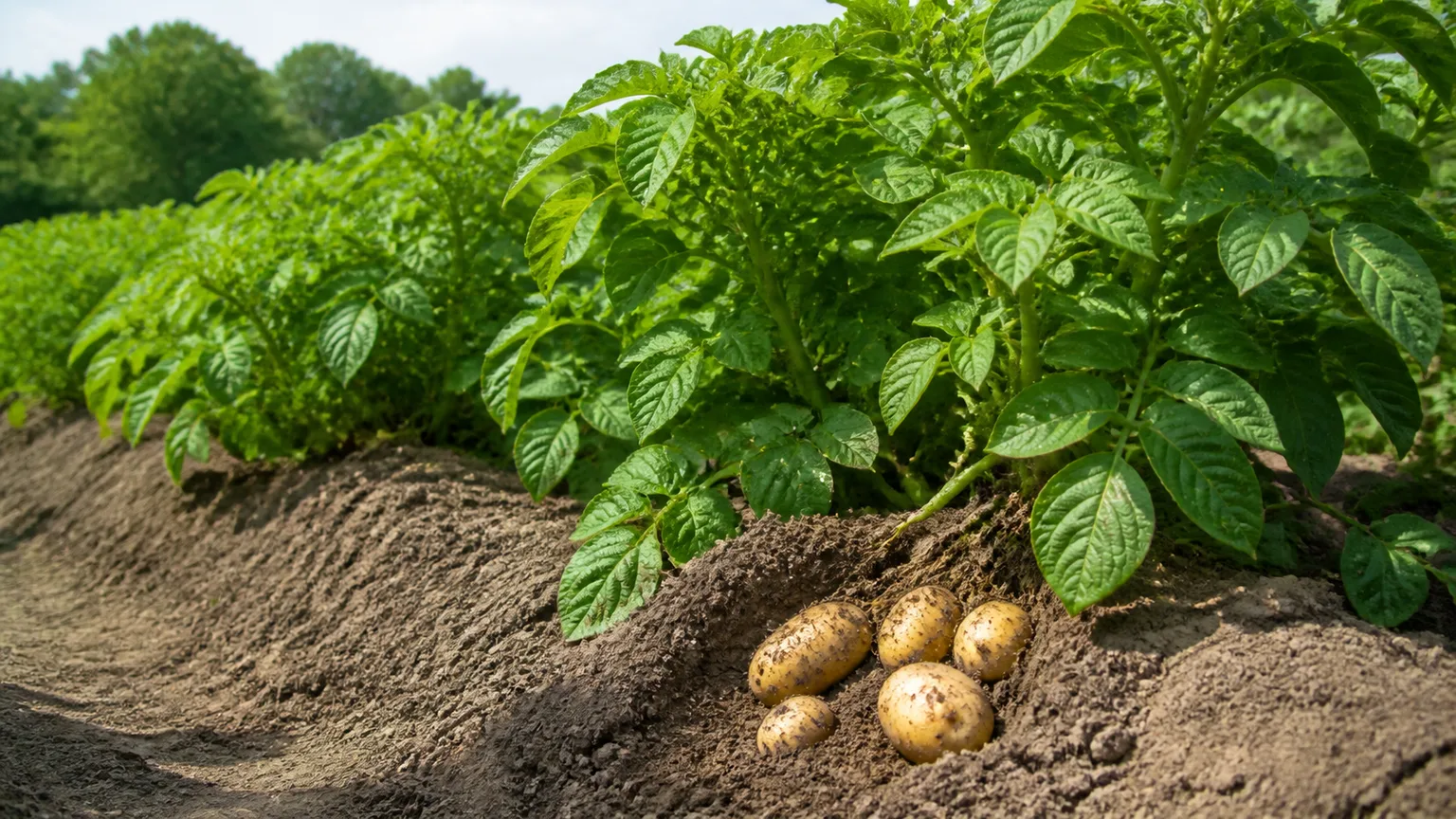
The best companion plant for a potato is not automatically the one with the strongest pest-repelling reputation. It is the plant that fits the potato’s timeline, leaves enough room for hilling and harvest, and solves a real problem in your bed—such as unused edge space, early-season bare soil, or a shortage of flowering habitat.
Potato companion planting works best as careful space-sharing, not as a protective force field. Pair a quick crop with young potatoes, put a small flowering plant on the edge, or use a legume where it will not shade the tuber crop. Keep monitoring the potatoes themselves; no marigold, herb, or onion makes a crop immune to Colorado potato beetles or blight.
The short answer: choose companions by job
If you want a practical starting point, choose from this short list before trying all 23 plants:
| Your goal | Best first choices | Why they earn space | Main caution |
|---|---|---|---|
| Harvest more from the same bed | Lettuce, spinach, radishes, scallions | They are quick and shallow-rooted | Harvest them before the potato canopy closes. |
| Add vertical diversity | Bush beans, peas, or carefully placed corn | They use a different height or season | Do not let foliage shade the potatoes or block airflow. |
| Add flowers and beneficial-insect habitat | Marigolds, sweet alyssum, yarrow, or nasturtiums | Flowers make the bed more useful to pollinators and predators | Habitat is not the same as guaranteed pest control. |
| Use aromatic herbs | Cilantro, parsley, thyme, basil, chamomile, or marjoram | They add edible diversity and flowers when allowed to bloom | Match moisture and sun needs; thyme dislikes wet soil. |
| Plant a boundary crop | Horseradish or onions | They can occupy the edge without living in the tuber zone | Horseradish spreads and should be contained. |
The strongest all-purpose pairing for a small garden is usually potatoes with early radishes or lettuce, scallions at the edge, and a few flowers outside the hilling area. That combination improves space use without asking the potato plant to share its main root and tuber zone with a second hungry crop.
How to choose a potato companion that helps
Potatoes need full sun, steady moisture, loose soil, and room for soil to be pulled around the stems as tubers develop. A companion is useful only if it respects those requirements. If it makes the bed harder to water, inspect, hill, or dig, the theoretical benefit is not worth the lost harvest.
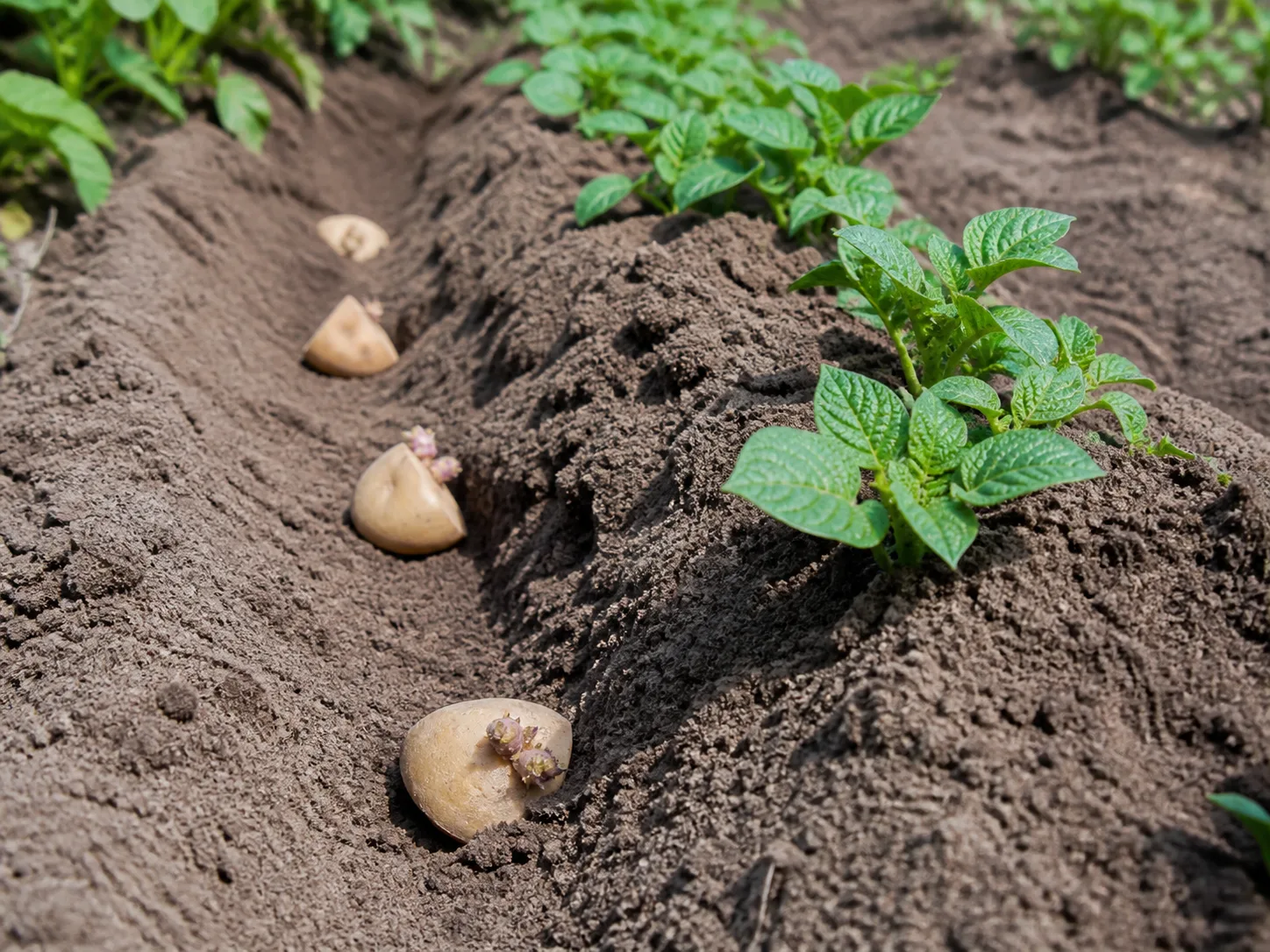
What companion planting can—and cannot—do
Companion planting means deliberately placing different plants near one another because their timing, height, roots, flowers, or smell may complement each other. In a potato bed, the most dependable benefits are often practical: a quick crop uses empty space, a flower supplies nectar and pollen, or a tall plant provides carefully managed shade in a hot climate.
Some claims are harder to generalize. A strong-smelling herb may change where an insect lands in one garden and do little in another. Beans and peas fix nitrogen through root nodules, but they do not instantly pipe a fertilizer dose into nearby potatoes; most nitrogen benefit comes through the legume’s own growth and, later, its decomposing residue. Treat these plants as space-sharing crops first and soil-building partners second.
Pest pressure also needs a realistic plan. The USDA Agricultural Research Service describes the Colorado potato beetle as a major potato defoliator and notes its repeated evolution of insecticide resistance in its overview of Colorado potato beetle research. A companion flower can support predators, but it cannot replace checking leaf undersides, removing egg clusters, or following a locally appropriate integrated pest-management plan.
Spacing and timing rules that prevent competition
Use these rules instead of planting every companion as close as possible:
- Keep the hilling strip clear. Leave the soil immediately around each potato row open enough to add soil or mulch without burying a companion’s crown.
- Put small companions on the outside. Scallions, herbs, and flowers usually belong at the edge of the bed or between rows only when their mature size leaves a walking and harvest path.
- Plant fast crops early. Lettuce, spinach, and radishes can share the bed while potato plants are short, then come out before the canopy becomes dense.
- Use the north side for tall plants. In the Northern Hemisphere, a north-side placement is less likely to cast afternoon shade across the potatoes. In the Southern Hemisphere, reverse the rule.
- Match moisture before matching folklore. A dry-loving thyme plant should not sit in a constantly irrigated potato furrow just because both are edible.
- Leave airflow. Dense foliage that stays wet after rain creates a more troublesome microclimate than a sparse bed with fewer companion plants.
23 best companion plants for potatoes
The list below includes plants that earn a place for at least one practical reason: fast harvest, different growth habit, useful flowers, or a manageable edge position. “Good companion” does not mean “plant directly against the potato stem,” and the caveat on each choice matters as much as the benefit.
Edible crops: legumes, roots, and tall plants
1. Bush beans. Bush beans are the most manageable bean choice because they add a second crop without sending long vines through the potato canopy. They can share a bed when planted outside the main hilling strip, but give both crops enough room for air movement and do not count on the beans to fertilize potatoes immediately.
2. Peas. Peas are a useful cool-season partner in climates where they can finish before the potato foliage fills the bed. They provide a different vertical layer and can leave behind useful plant residue, but a dense trellis beside potatoes can shade the row and make harvest awkward.
3. Corn. Corn can make sense on the north side of a potato bed in a hot, bright garden where limited afternoon shade reduces moisture loss. It is a large, hungry crop, so it is a poor choice for a narrow bed or a small container; if it shades the potatoes for most of the day, remove it from the plan.
4. Cabbage-family crops. Cabbage, broccoli, cauliflower, kale, and Brussels sprouts have foliage above a relatively compact root zone and can share space with potatoes in a large bed. This is a conditional pairing rather than a universal best match: both crops need room and feeding, and a gardener who is short on space may prefer to separate them so rotation and disease cleanup stay simple.
5. Onions. Bulb onions can occupy the bed edge while potato foliage uses the upper space. They are not a magic insect barrier, and their long growing season can complicate digging, so choose them only where you can harvest the bulbs without repeatedly cutting through potato hills.
6. Scallions. Scallions are one of the easiest potato companions because they are small, quick to harvest, and simple to place along a path or bed border. Pull them before the potato canopy closes over them, and use the space for a later crop if your season is long.
7. Garlic. Garlic has a narrow footprint and can be useful at the outer edge of a potato plot, particularly when its harvest date does not collide with the potato digging window. Keep it out of the exact path of a fork or spade, and do not claim that the odor alone will prevent disease or beetles.
Edible crops: quick, shallow-rooted fillers
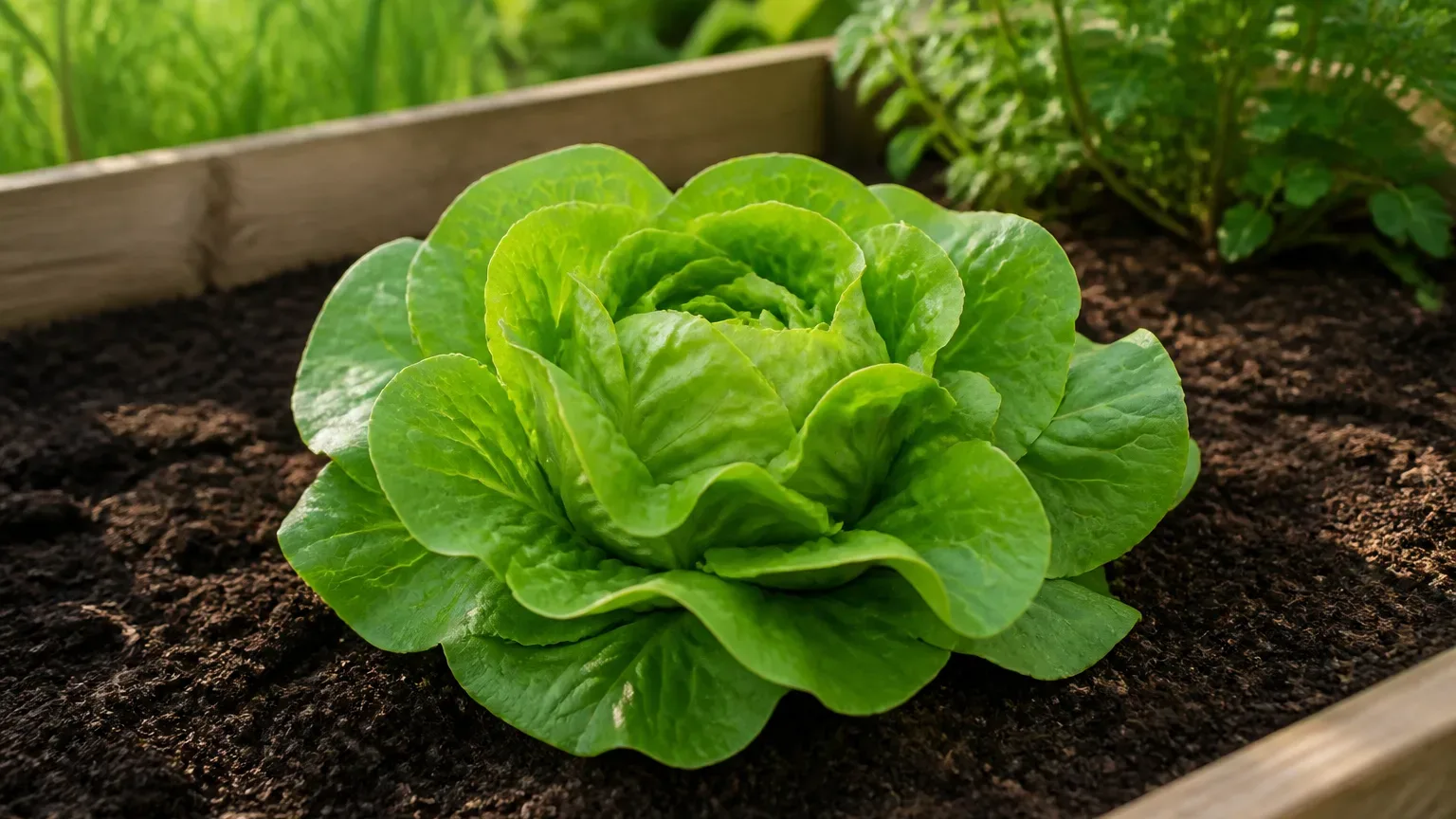
8. Lettuce. Lettuce is a strong space-sharing choice because it grows quickly while potatoes are still small and has a shallow, easily removed root system. Plant it between rows or along the edge, harvest outer leaves early, and pull the remaining plants when they begin to crowd the potato canopy.
9. Spinach. Spinach can fill cool-season gaps around emerging potatoes in a similar way to lettuce. It is most useful as a short-term harvest, not as a permanent groundcover; once heat or potato shade slows it, remove tired plants so the bed does not stay congested.
10. Radishes. Radishes mature quickly and make excellent markers for a potato row, especially when planted where their roots will not be crushed during hilling. They may help occupy space before the potato leaves spread, but they are not a guaranteed flea-beetle or potato-beetle solution.
Herbs for scent and beneficial insects
11. Cilantro. Cilantro is compact, cool-season friendly, and valuable if you allow some plants to flower. Its small umbels can provide forage for beneficial insects, while the leaves give you a harvest before the potato bed reaches full size; succession-sow it rather than expecting one planting to last through hot weather.
12. Parsley. Parsley is a sturdy edge herb that tolerates the moisture common around a well-watered potato bed better than many Mediterranean herbs. Let a few plants flower for insect habitat, but keep them outside the hilling path because established parsley is harder to remove cleanly.
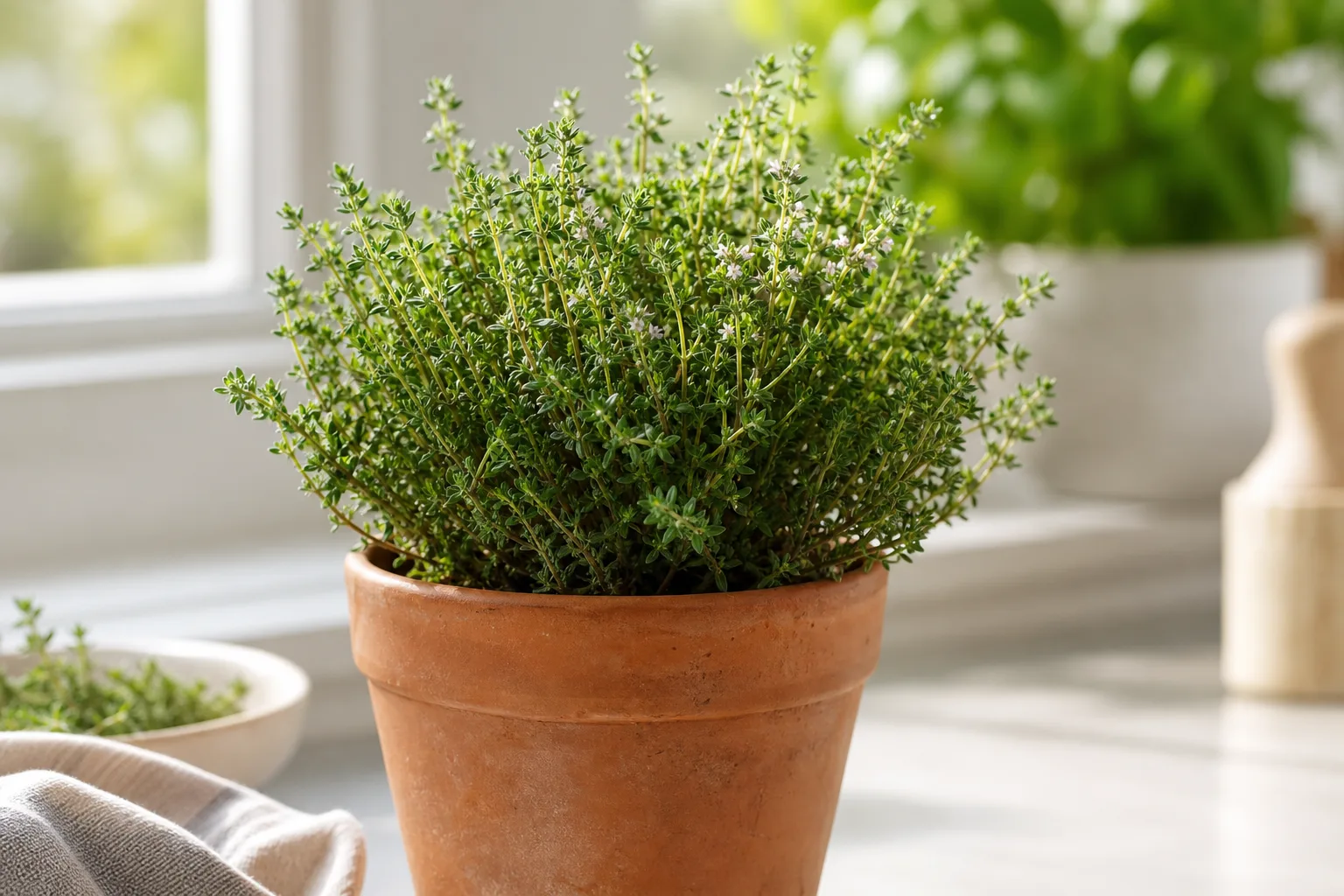
13. Thyme. Thyme is a sensible companion on a sunny, well-drained mound edge where its foliage can stay drier than the potato root zone. It attracts small beneficial insects when flowering, but its water needs differ enough that it should not be planted in a wet furrow or over-irrigated just to match the potatoes.
14. Basil. Basil fits a warm-season garden and can use the open space near young potatoes before the canopy closes. It is best treated as an edible herb that shares the season, not as proven Colorado potato beetle control; leave enough room to harvest it without stepping into the hills.
15. Chamomile. Chamomile brings daisy-like flowers and a light, airy habit to the edge of a potato bed. Its main value is habitat and diversity rather than a guaranteed antifungal effect, so remove crowded plants if they begin to shade the potatoes or stay wet against the foliage.
16. Marjoram. Marjoram is a compact aromatic herb that can sit in a sunny border position and provide flowers when allowed to bloom. It prefers better drainage than potatoes, so use a raised or outer edge rather than planting it in the same low, frequently wet strip.
17. Lovage. Lovage is a tall perennial herb with a strong presence and a flavor that works well with potatoes. Because it becomes large and returns each year, plant it well outside the annual potato bed where it will not be damaged by digging or compete with tubers.
18. Horseradish. Horseradish is often recommended around potatoes because of its pungent foliage and long history in companion-planting traditions. Its most reliable practical feature is that it can occupy a boundary; contain it in a bottomless or dedicated container, and treat pest-resistance claims as unproven in your own garden until monitoring shows a real difference.
Flowers that add habitat without taking over
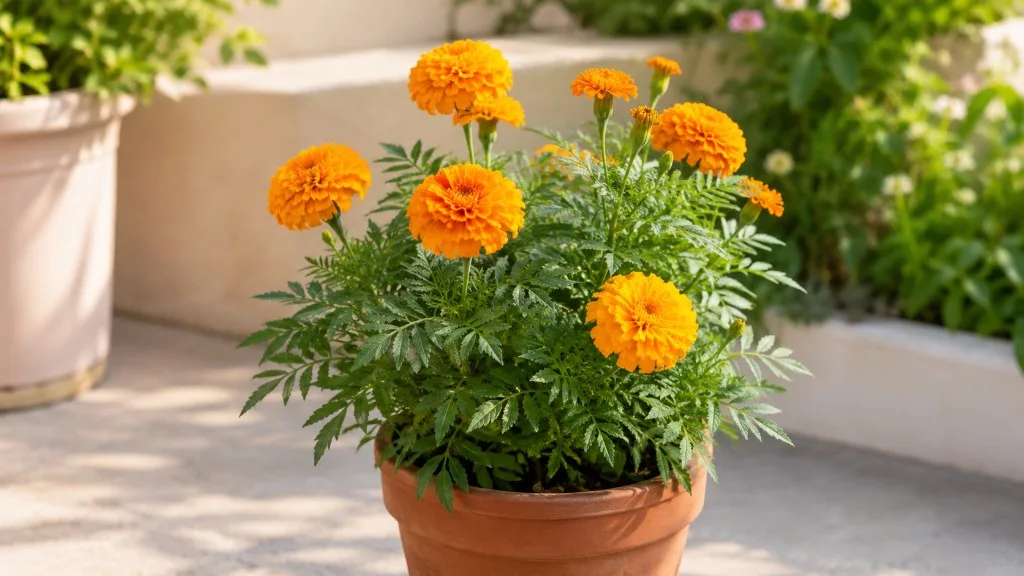
19. Marigolds. Marigolds are easy to grow at the edge of a potato plot and provide flowers that make the bed friendlier to beneficial insects. They may be useful as part of a diverse planting, but they do not reliably repel every potato pest; inspect potatoes directly and remove beetle eggs or larvae when practical.
20. Nasturtiums. Nasturtiums can spill over a bed edge and act as living groundcover, which is useful where bare soil dries quickly. Their trailing growth must stay out of the hilling and harvest zone, and because they can attract aphids, inspect the nasturtium as well as the potatoes instead of assuming it is a one-way trap crop.
21. Sweet alyssum. Sweet alyssum stays low and flowers for a long period when conditions suit it, making it one of the better choices for the outer edge of a potato bed. It can provide nectar for small beneficial insects without competing heavily for height, but do not let a dense mat block access to the potato stems.
22. Yarrow. Yarrow is a perennial flower with deep roots and broad insect value, so it belongs at the edge of a permanent garden rather than in the section you dig every year. It can become vigorous, and its presence should not be used to justify disturbing a productive potato rotation.
23. Petunias. Petunias are compact enough for a border and produce flowers through the warm season, adding visual diversity and potential habitat. They are a supplemental choice, not a beetle cure; choose them when you want a flowering edge that you can monitor and remove easily.
Conditional picks: use the right boundary
Some plants appear on traditional potato companion lists but should be selected with more care than a seed packet headline suggests. Catnip and tansy, for example, may be mentioned for their aromatic foliage, yet both can spread aggressively in favorable gardens; use containers or a distant border if you grow them at all. Fennel is better kept away from the potato bed because it can inhibit neighboring plants and is difficult to move once established.
The same boundary rule applies to borage, clover, and vetch. They can provide flowers, cover, or biomass, but they may become large, self-seed, or compete for water. A plant that is excellent in a broad polyculture can be the wrong choice in a narrow raised bed where potatoes need a clear harvest lane.
Three potato companion layouts that work
The easiest way to design a companion bed is to draw the potato row first, mark the hilling strip, and then place companions in the leftover space. A practical polyculture example documented by Rural Sprout combines potatoes with early greens, radishes, spring onions, peas, beans, and edge herbs, then changes the bed after harvest; that seasonal succession is more useful than treating every companion as a permanent neighbor. Read the Rural Sprout potato polyculture example as a practical garden model, not a universal yield guarantee.
Small raised bed: early greens plus edge flowers
For a compact bed, plant one or two potato rows with enough space to hill them, then sow lettuce, spinach, or radishes along the outside edge. Add scallions between the edge plants if there is still a clear path, and put marigolds or sweet alyssum at the corners where their mature spread will not cover the stems.
Harvest the greens aggressively as the potato foliage expands. The goal is to turn early empty soil into food, not to maintain a four-layer canopy all season. Once the potato plants meet across the row, remove any companion that traps moisture or blocks inspection.
Warm-climate bed: beans or corn on the north side
In a hot climate, a north-side row of bush beans can add a second harvest without placing tall foliage directly between the sun and the potatoes. Corn can work in a wider bed, but use only a few plants and watch the shadow at midday; potatoes still need abundant light, and a tall wall can reduce airflow as well as temperature.
Water both crops at the soil line and mulch the surface rather than relying on shade alone. If the companion is using more water than the potatoes can access, remove it or move it to another bed; a “helpful” shade crop that causes drought stress is a net loss.
Grow bag or container: keep it simple
Containers magnify competition because the root volume and water supply are limited. For the most dependable harvest, grow potatoes alone in a bag or large pot, then place herbs or flowers in separate containers nearby. BBC Gardeners’ World Magazine’s potato-in-a-compost-bag guide uses a limited number of seed potatoes, drainage, repeated covering, and regular watering—constraints that leave little room for a second hungry crop.
If you have a very large container, a single scallion or compact alyssum plant at the outer rim is less risky than corn, beans, or a spreading nasturtium. Never let an ornamental companion hide the container’s drainage holes, and remember that every plant in the pot must be watered and fed from the same finite mix.
Plants to avoid near potatoes
Avoiding a bad pairing is often more valuable than finding a fashionable good one. Some plants share pests or pathogens with potatoes; others compete for the same soil volume, make harvest destructive, or grow so vigorously that the potato row becomes impossible to manage.
Shared disease and family conflicts
Tomatoes, peppers, eggplants, and tomatillos are all nightshades related to potatoes. They can share pests and diseases, which is why family-based rotation matters even when the plants are not touching. Penn State Extension’s plant-family rotation guidance explains that related crops can share vulnerabilities and that repeating the same family in one area can allow pests to build.
The Maine Board of Pesticides Control describes Colorado potato beetle damage on potatoes and notes that the pest can also attack tomato, eggplant, and pepper in its Colorado potato beetle factsheet. Keep these crops in separate beds when possible, and do not compost diseased Solanaceae foliage into a planting area unless your local guidance supports that practice.
Brassicas are more nuanced. They can share a bed with potatoes when spacing, moisture, and rotation are handled well, but they are not automatically better companions than lettuce or scallions. Separate them if your bed is too small, your soil stays wet, or you need a clear rotation plan for both crop families.
Competition, allelopathy, and harvest conflicts
Keep large cucumbers, pumpkins, and squash away from the main potato zone unless you have a very large garden and can direct their vines elsewhere. Their foliage can smother the potato canopy, their roots compete for water and nutrients, and their sprawling stems make it hard to reach the hills without stepping on leaves.
Fennel is a poor neighbor for a mixed vegetable bed because it is difficult to contain and is commonly treated as a plant that can inhibit nearby growth. Sunflowers can create heavy shade and a large root-and-stem footprint, while raspberries are permanent brambles that should not share the annual digging zone.
Carrots, turnips, parsnips, and other root crops are not necessarily disease disasters beside potatoes, but the harvest conflict is real. Digging for tubers can split or dislodge their roots, and both crops need room below ground. Plant them in a separate row that you can harvest without opening the potato hills.
Asparagus is another poor fit because it is perennial and does not tolerate the repeated soil movement that potato hilling and digging require. If you want asparagus, give it a permanent bed and keep annual tuber crops elsewhere.
Care rules that matter more than companions
Healthy potatoes usually depend more on seed quality, sunlight, soil drainage, watering, hilling, and inspection than on a particular neighbor. Build the bed around those basics, then add companions only where they do not interfere.
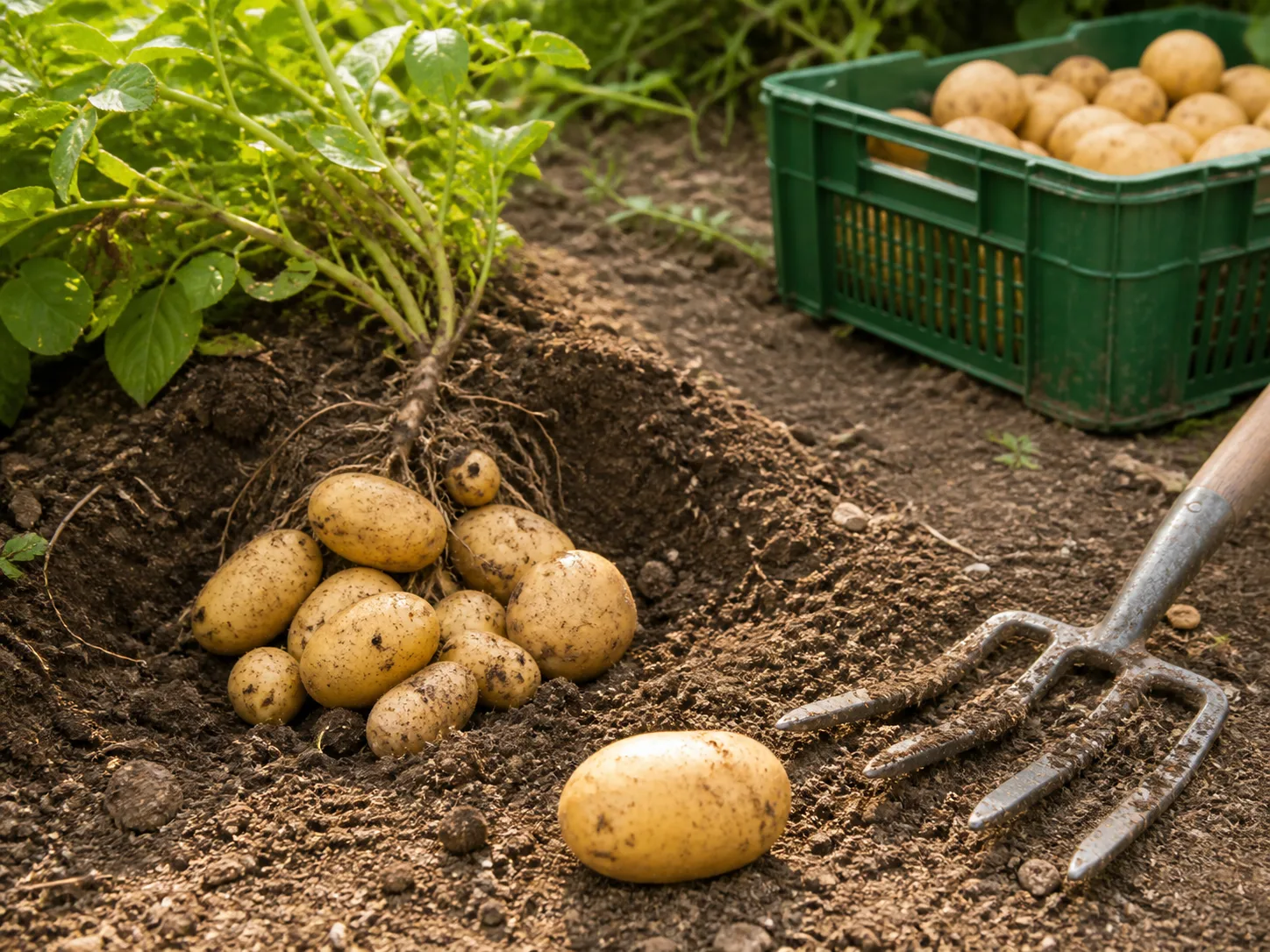
Start with certified or reputable seed potatoes suited to your region, and use loose soil that drains without drying immediately. Hill or mulch around developing stems according to your growing method so tubers stay covered, keep moisture reasonably even, and avoid walking on the bed when the soil is wet.
Inspect the undersides of leaves at least weekly when potato beetles are active. Look for yellow-orange egg clusters, striped adults, and humpbacked larvae; the Maine guidance notes that larvae can feed in groups and cause severe damage. Hand-pick small infestations where practical, and use local extension or pesticide-label guidance for any control product rather than assuming a companion flower has solved the problem.
Do not let companions turn the bed into a humid thicket. Remove spent annuals, cut back sprawling vines, and clear diseased foliage according to local disease guidance. After harvest, collect volunteer potatoes and plan a rotation that moves potatoes and other Solanaceae away from that spot; Penn State’s family-based approach is a useful framework for reducing repeated pest and disease pressure.
Finally, record what actually happened. Note which companions survived the potato watering schedule, which were harvested before crowding, whether beetle pressure changed, and whether digging damaged neighboring roots. Your own bed’s timing, climate, soil, and pest history are more useful than a universal claim that one plant always improves potatoes.
Conclusion
The best companion plants for potatoes are the ones that solve a specific problem without stealing the light, moisture, air, or digging space the crop needs. Start with lettuce, spinach, radishes, scallions, bush beans, or a few edge flowers; add herbs and larger plants only when your layout can support them.
Use flowers to increase habitat, not to promise pest immunity. Keep related nightshades out of the same rotation, contain vigorous perennials, protect the hilling strip, and judge every pairing by the harvest you can reach. A simple bed that is easy to inspect and dig will usually outperform an overcrowded “guild” packed with plants that compete for the same resources.