10 Common Pepper Plant Pests and How to Stop Them
Identify 10 pepper plant pests by their damage, then use water, barriers, sanitation, and targeted treatments to protect leaves, flowers, and fruit.
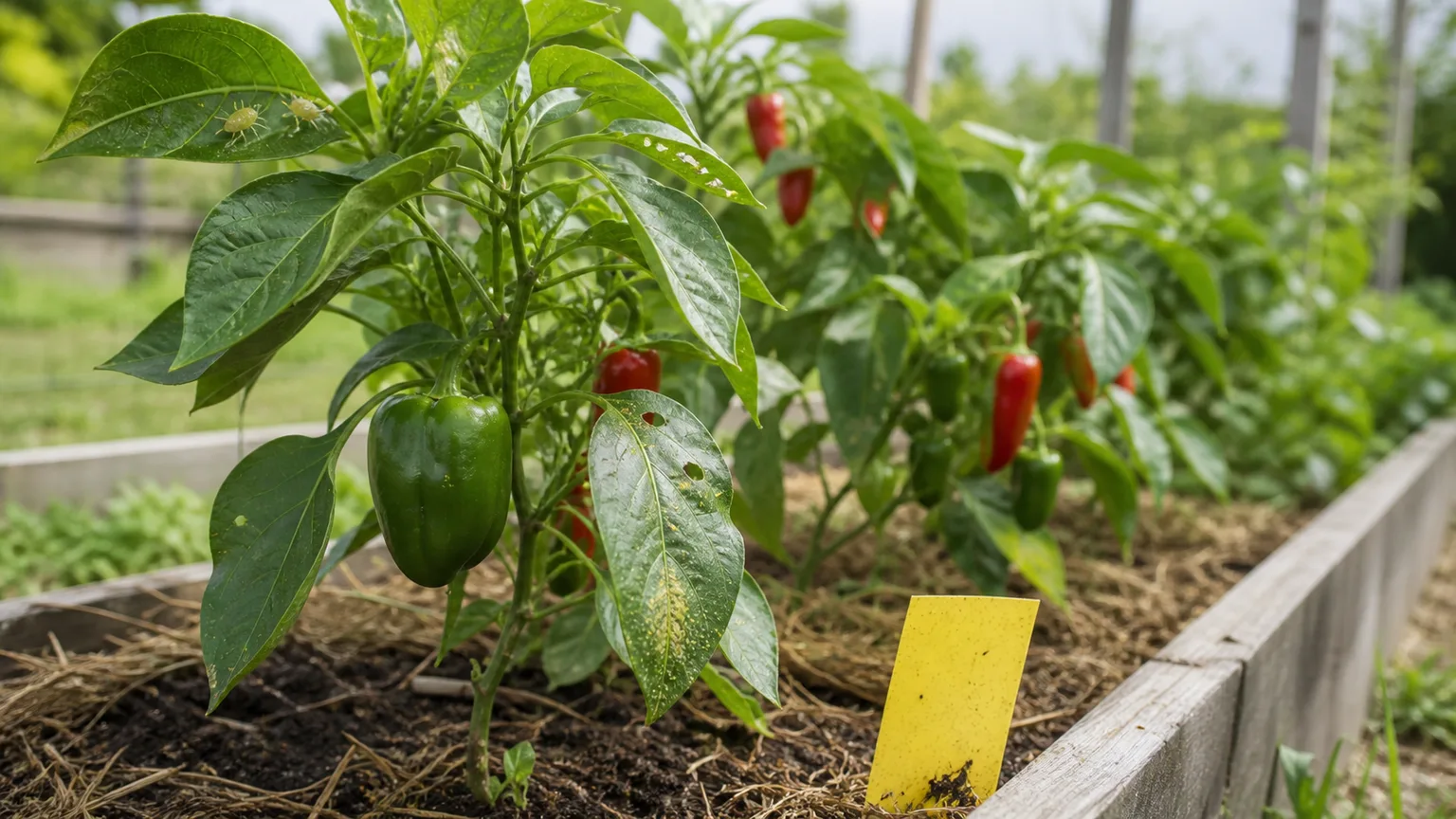
Pepper pests reveal themselves by where they feed. A cluster under a new leaf, a cleanly severed seedling, a silver streak on a flower, and a tunnel inside a pepper are four different problems—and they should not get the same spray.
Start by matching the damage to the pest, then inspect the plant at the time that pest is active. In many home gardens, a strong rinse, handpicking, a stem collar, a floating row cover, or cleanup of fallen fruit does more good than a broad-spectrum insecticide. It covers the pest groups most likely to trouble bell peppers and hot peppers, including those that attack seedlings, flowers, and fruit.
Start With the Damage Pattern
Before you hunt for a tiny insect, look at the plant as a map. Sap suckers usually leave a pattern of stippling, curl, sticky honeydew, or pale distortion; chewing pests leave holes, missing edges, frass, or a severed stem. Fruit-boring pests are different again: the first clue may be a puncture, soft spot, premature drop, or internal tunnel rather than a visible insect.
Match the Sign to the Pest
| What you see | First suspects | Where to look next |
|---|---|---|
| Clusters of tiny insects, curled new leaves, sticky residue | Aphids | Undersides of young leaves, stems, and growing tips |
| Fine yellow stippling, bronzing, or delicate webbing | Spider mites | Undersides of mature leaves, especially in hot, dry weather |
| Tiny silver streaks, distorted flowers, black specks of frass | Thrips | Flowers, new leaves, and protected folds |
| White insects flying up when the plant is shaken; honeydew | Whiteflies | Undersides of leaves and field margins |
| Small round “shotholes” on seedlings; beetles that jump | Flea beetles | Leaf undersides and nearby weeds |
| Seedling cut cleanly at the soil line | Cutworms | Soil surface and the top inch of soil after dark |
| Ragged leaf edges, missing foliage, or caterpillar droppings | Armyworms or cotton leafworms | Leaf undersides, new growth, and egg clusters |
| Entry hole, internal tunnel, rot, or fruit dropping early | Pepper weevils or pepper maggots | Fruit, buds, dropped peppers, and nearby nightshades |
| Ragged holes with slime trails, worst overnight | Slugs or snails | Under pots, boards, mulch, and dense debris |
Use the table to narrow the search, then confirm the pest. Drought, nutrient stress, herbicide drift, and plant viruses can also distort leaves or reduce fruiting, so photograph both sides of an affected leaf and ask a local extension office or diagnostic clinic if the clues do not agree.
The 5-Minute Pepper Pest Inspection
Inspect peppers once a week, and twice a week when plants are small, flowering, or showing fresh damage. Use a hand lens or phone camera, because thrips, mites, whitefly nymphs, and aphid skins are easy to miss. UC IPM’s pepper program organizes scouting around crop stage; that same logic works in a backyard bed even though its pesticide tables are written for commercial production in California. UC IPM pepper guidelines
Use this short route:
- Start at the newest growth. Check the underside of three young leaves, the growing tip, and any curled or pale tissue. Aphids favor tender growth; thrips hide in folds and flowers.
- Check one mature leaf per plant. Look for stippling, webbing, whitefly nymphs, or black frass. Turn the leaf over rather than inspecting only the upper surface.
- Inspect flowers and fruit. Tap a flower over white paper to dislodge thrips. Turn fruit gently and look for punctures, soft spots, scars, or premature color change.
- Scan the stem base and soil line. A missing seedling, a pinched stem, or a plant that has wilted overnight points you toward cutworms or stem damage rather than a leaf pest.
- Look at the ground. Remove one board, pot, or dense clump of mulch near the plant and check for slugs, snails, caterpillars, and fresh droppings.
- Count before spraying. Note affected leaves, beneficial insects, and whether damage is increasing. A few aphids with lady beetle larvae call for a different decision than a whole growing tip covered in aphids.
Scout before watering so you do not wash away evidence. Keep a dated photo log when the same problem returns; timing often tells you more than a single snapshot.
Choose the Least-Disruptive Control First
Integrated pest management, or IPM, is not a promise to avoid every pesticide. It is a sequence: identify, decide whether the damage matters, use the narrowest effective tactic, and reassess. Peppers can tolerate some cosmetic feeding, while a small population can be urgent on a seedling, inside a flower, or in a region where a pest transmits a virus.
Start with physical removal, water, barriers, sanitation, or a targeted biological control when those options fit. Preserve lacewings, lady beetles, predatory mites, minute pirate bugs, spiders, and parasitic wasps when they are already working. Repeated broad-spectrum sprays can remove those helpers and leave a faster rebound of aphids, mites, or whiteflies.
Do not treat the word organic as a safety shortcut. Insecticidal soap, horticultural oil, neem products, pyrethrins, spinosad, and Btk have different targets, persistence, plant-burn risks, and effects on beneficial insects. Use only a product whose label includes peppers or the intended edible crop, follow the label’s mixing and harvest directions, and never improvise a concentrated dish-detergent recipe.
1. Aphids
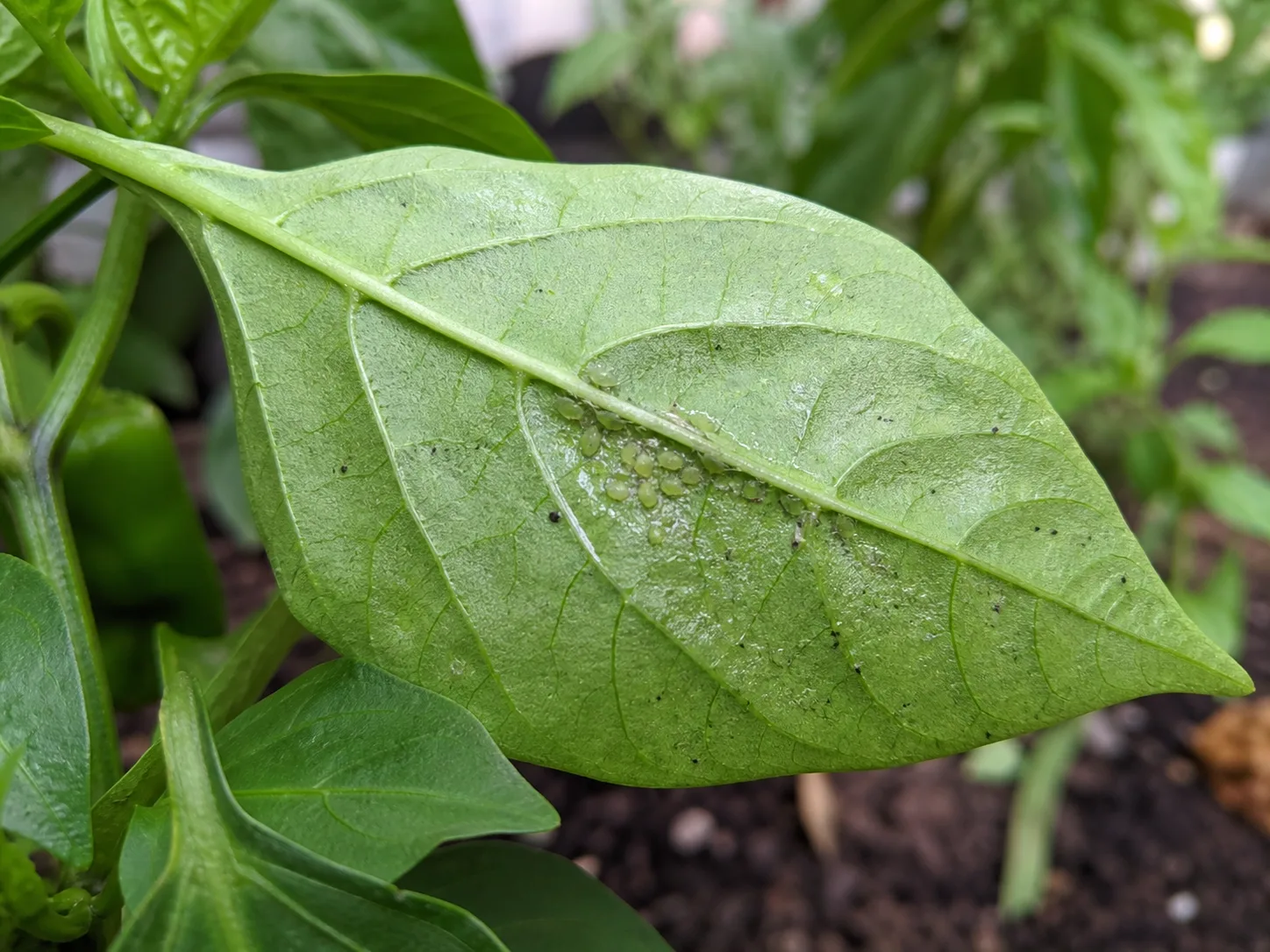
Aphids are soft-bodied, pear-shaped insects that gather in clusters on stems, leaf undersides, and tender growing tips. Green peach aphids are among the common aphids on peppers; colonies may be pale green, pinkish, or darker depending on weather and life stage. Curling new leaves, yellowing, stunted tips, sticky honeydew, and ants moving over the plant are strong clues. UC IPM’s green peach aphid guide
First, direct a firm but not damaging stream of water at the aphids, especially from below the leaves. Repeat every day or two while you monitor the new growth. Knocked-off aphids often do not return to the same plant, and the rinse leaves predators in place. If only a few colonies are present and lacewings, lady beetles, syrphid larvae, or parasitic wasps are active, wait and watch rather than erasing the entire food web.
If aphids keep increasing, use a labeled insecticidal soap or another product approved for edible peppers. Soap works by contact, so spray until the insects are wetted and reach the leaf undersides; it does not provide lasting protection after it dries. Test a small area first, avoid hot sun and drought-stressed plants, keep spray off open flowers when the label warns against it, and repeat only as directed. Homemade laundry or dish detergents are not interchangeable with potassium salts of fatty acids and can burn foliage.
Sanitation helps reduce virus sources and alternate hosts, but it will not eliminate every winged aphid arriving from outside the garden. Reflective mulch can reduce colonization of young plants, while flowering plants that support beneficial insects give predators nectar and shelter. Judge success by clean new growth and a slowing population—not by expecting every aphid to disappear.
2. Spider Mites
Spider mites are not insects; they are tiny relatives of spiders that pierce leaf cells and drain plant fluids. Look for fine yellow stippling, a dusty or bronzed appearance, curling or dropping leaves, and delicate webbing in severe cases. They are easiest to find on leaf undersides, often during hot, dry weather. Shake a suspect leaf over dark paper or use a hand lens to confirm moving dots before treating.
Start with water. Spray the undersides and tops of leaves with enough force to dislodge mites and webbing, then repeat every few days while conditions remain hot and dry. Prune only badly damaged leaves or branches, and bag them rather than leaving them beside the plant. Gardeners’ Path also recommends regular water rinses as a first response, but severe infestations need closer monitoring and more than one intervention. Gardener’s Path pepper pest guide
If rinsing does not slow the population, consider a labeled insecticidal soap or horticultural oil that includes peppers and mites on its label. These are contact treatments, so coverage of the undersides is the make-or-break step; eggs and protected mites may survive, which is why follow-up applications may be required. Do not coat wilted plants, spray during heat, or assume a single application ended the problem.
Avoid reaching for a broad-spectrum insecticide just because the leaves look dusty. Killing predatory mites and other natural enemies can make a mite outbreak worse. If the plant is otherwise vigorous and the damage is limited to a few older leaves, correcting drought stress and monitoring may be enough. UC IPM notes that twospotted spider mites are not a major pepper problem in its California production context, so local climate and crop history matter. UC IPM twospotted spider mite guidance
3. Cutworms
Cutworms are moth larvae that hide in soil or debris by day and feed at night. Their signature is a young pepper seedling severed at or just below the soil line, often with the rest of the plant lying intact nearby. They are not the same as an armyworm chewing holes in leaves, so spraying the foliage after the seedling has been cut is too late for that plant.
After dark, use a flashlight to search around the stem base and just under the soil surface. Handpick any caterpillars and remove loose weeds and plant debris that give them cover. A loose collar made from cardboard, a paper cup, or a clean plastic container can protect each transplant: sink it about an inch or two into the soil and leave a similar amount above the surface, with enough room for the stem to expand. Gardener’s Path describes collars as a proactive measure because they protect the stem before the next night’s feeding. Cutworm guidance in Gardener’s Path’s pepper pest guide
Clear the planting strip several days before transplanting when possible, and keep the area around seedlings weed-free. If cutworms return every year, collars plus a floating row cover over young plants are usually more dependable than a general spray. Beneficial nematodes may help in some soils, but performance depends on species, moisture, application timing, and product instructions; treat them as a local, label-driven option rather than a guaranteed cure.
4. Thrips
Thrips are slender, tiny insects that feed in flowers, leaf folds, and new growth. Their damage appears as silver or pale streaks, distorted leaves or flowers, scarring on young fruit, and tiny black specks of frass. They are also important because some thrips acquire and spread tomato spotted wilt virus as immature insects and transmit it as adults. Once a plant has a virus, removing the insects will not reverse the damage.
Tap flowers over white paper, inspect with a hand lens, and place yellow sticky traps near—not directly against—the crop to monitor movement. Reflective mulch can discourage thrips from colonizing young plants. Avoid planting peppers immediately beside large stands of onions, garlic, or cereals when those crops are already hosting thrips, and remove weedy hosts around the bed. UC IPM and USDA Agricultural Research Service guidance both emphasize scouting, natural enemies, reflective mulch, and avoiding insecticide choices that can worsen resistance or disrupt beneficial insects. UC IPM thrips guidance USDA ARS thrips research summary
Water rinses can reduce exposed adults and larvae, but they will not reach eggs inserted into plant tissue. If treatment is warranted, use only a pepper-labeled product and follow its flower, bee, reentry, and harvest restrictions. Do not spray open flowers simply because a trap caught a few thrips; decide based on rising damage, crop stage, local disease pressure, and the presence of predators. A targeted plan repeated at the correct interval is safer and more useful than a one-time blanket spray.
5. Pepper Weevils
Pepper weevils are small dark beetles with a noticeable snout. Adults feed on buds, flowers, leaves, and fruit, but the larvae are the serious harvest problem: they develop in buds or inside fruit, where a foliar spray cannot reach them. Look for small punctures, malformed or prematurely dropped fruit, internal tunnels, frass, rot, or a pale larva when a suspect pepper is cut open.
This pest is strongly regional. It is more persistent where peppers and other nightshades survive through mild winters, while cold regions may see introductions during the growing season. UC IPM describes sanitation, crop rotation, and pheromone-baited sticky traps as core management tools; it also notes that monitoring should determine whether treatment is needed. UC IPM pepper weevil guidance
Remove dropped fruit every day during an outbreak, harvest promptly, and discard infested fruit and plant debris away from the bed. Do not leave culls in a backyard compost pile if the pile does not reliably heat and finish; you are trying to break the life cycle, not store it beside next year’s peppers. Rotate peppers away from the infested bed and remove volunteer tomatoes, nightshades, and other host plants that can bridge the gap.
If weevils are established in a commercial-growing region, contact your county extension office for locally registered options and monitoring advice. Rutgers Cooperative Extension’s pepper-weevil material demonstrates why a product list cannot be copied blindly: efficacy, resistance, crop registration, preharvest interval, and local law all matter. Rutgers Cooperative Extension pepper-weevil guidance
6. Whiteflies
Whiteflies are tiny, pale insects that fly up in a cloud when an infested pepper is disturbed. Adults and nymphs cluster on leaf undersides, where they suck sap and leave honeydew. Yellowing, stunting, leaf drop, and black sooty mold can follow. Because several whitefly species look similar, a hand lens is useful; UC IPM specifically recommends distinguishing species when the identification affects the management decision. UC IPM whitefly guidance
Begin by checking field margins, nearby weeds, and declining host crops. A yellow sticky card is useful for detecting movement and judging whether numbers are increasing, but it is not a complete solution for nymphs attached to leaves. A strong water rinse can reduce adults, and a labeled insecticidal soap or narrow-range oil can work on exposed stages when the spray reaches the undersides. These contact products have little or no residual effect, so thorough coverage and label-directed follow-up matter.
Protect natural enemies whenever possible. Lacewing larvae, lady beetle larvae, bigeyed bugs, and parasitic wasps attack whiteflies, and unnecessary broad-spectrum sprays can remove those controls. Reflective mulch is most useful early, before the canopy covers the surface; UC IPM notes that its effectiveness declines once foliage shades most of the mulch. When only the outside row is infested, treating the entire bed can create more harm than a focused response.
7. Pepper Maggots
Pepper maggots are fly larvae that feed inside developing peppers. The adult fly lays eggs on fruit, then the small white maggot tunnels through the interior. A tiny puncture or depression, premature rot, a soft fruit, or a pepper that drops before ripening can be the first clue. The adult fly is not the white larva you find inside, and the problem is not the same as a surface-feeding aphid or caterpillar.
Once larvae are inside the fruit, a spray on the leaves will not rescue that pepper. Pick and discard suspect fruit, remove dropped peppers promptly, and do not put infested material next to the crop. Floating row cover is most useful before the egg-laying window in your area, not after flies have already reached the plants; the correct timing varies with region and season. Gardener’s Path describes row covers as the primary prevention and notes that thick-walled peppers can be more attractive than thin-walled types in some areas. Gardener’s Path pepper maggot coverage
Rotate the crop and keep volunteer nightshades out of the same bed. If you grow peppers year after year in one small space, a cover-free period may be difficult, so prioritize exclusion and daily harvest sanitation. Gardening Know How similarly advises identifying the type of worm from the damage and being cautious with treatments around edible crops. Gardening Know How on pepper worms
8. Armyworms and Cotton Leafworms
Armyworms and related cotton or beet leafworms are caterpillars that chew leaves, buds, flowers, and sometimes fruit. Young larvae may skeletonize leaves or leave ragged edges; larger larvae can remove enough foliage to stall a small plant. Look on leaf undersides for egg masses and on the foliage for fresh frass. The name “worm” describes the larva, not a soil worm, and the adult moth is not the stage that Btk controls.
Handpick small infestations into soapy water and crush egg clusters when practical. Inspect at dusk or early morning, when caterpillars are easier to find and less hidden in the canopy. Birds, predatory bugs, and parasitic wasps are useful allies; leave a caterpillar with visible white parasitoid cocoons alone because it is already hosting the next generation of wasps.
For active caterpillars, a labeled product containing Bacillus thuringiensis var. kurstaki (Btk) can be useful when larvae are small and still feeding on exposed leaves. Btk must be eaten, so it does not work on adult moths, eggs, or larvae already protected inside fruit. Follow the product label for edible-crop use and reapplication, and avoid spraying flowers or active pollinators. Gardener’s Path describes Btk as a targeted option for several pepper caterpillars, while broader sprays can remove beneficial insects. Gardener’s Path caterpillar guidance
9. Flea Beetles
Flea beetles are shiny, hard-bodied beetles about an eighth of an inch long with enlarged hind legs. They jump when disturbed and leave small pits or round holes in leaves. The same amount of damage means more on a cotyledon-stage seedling than on a mature pepper: young plants have little leaf area to spare, while established plants can often outgrow moderate feeding.
Protect seedlings and new transplants with a floating row cover, anchored tightly enough that beetles cannot crawl underneath. Remove cruciferous weeds and crop residue near the bed because some flea beetle species build up on those hosts. Transplants often avoid the most vulnerable emergence stage, and keeping seedlings watered during hot, windy weather helps them recover from feeding stress.
UC IPM recommends checking seedlings or recent transplants at least twice weekly and treating when fresh holes appear on vulnerable plants, not automatically once the calendar reaches spring. It also notes that older plants are more tolerant and that spot treatment of outside rows may be enough when beetles are migrating inward. Baits are not an effective flea beetle strategy. UC IPM flea beetle guidance
Avoid dusting every leaf with a product just to make the holes disappear. If the plant has five or more true leaves, is growing steadily, and the damage is not accelerating, continued scouting may be the best trade-off. If a treatment becomes necessary, choose a pepper-labeled option and protect flowers and beneficial insects according to the label.
10. Slugs and Snails
Slugs and snails chew irregular holes in leaves and fruit, often leaving ragged edges and a shiny slime trail. The damage is usually worst after rain, irrigation, or a cool damp night. During the day, they hide under boards, pots, dense mulch, stones, and plant debris, which is why a plant can look fine at sunset and be shredded by morning.
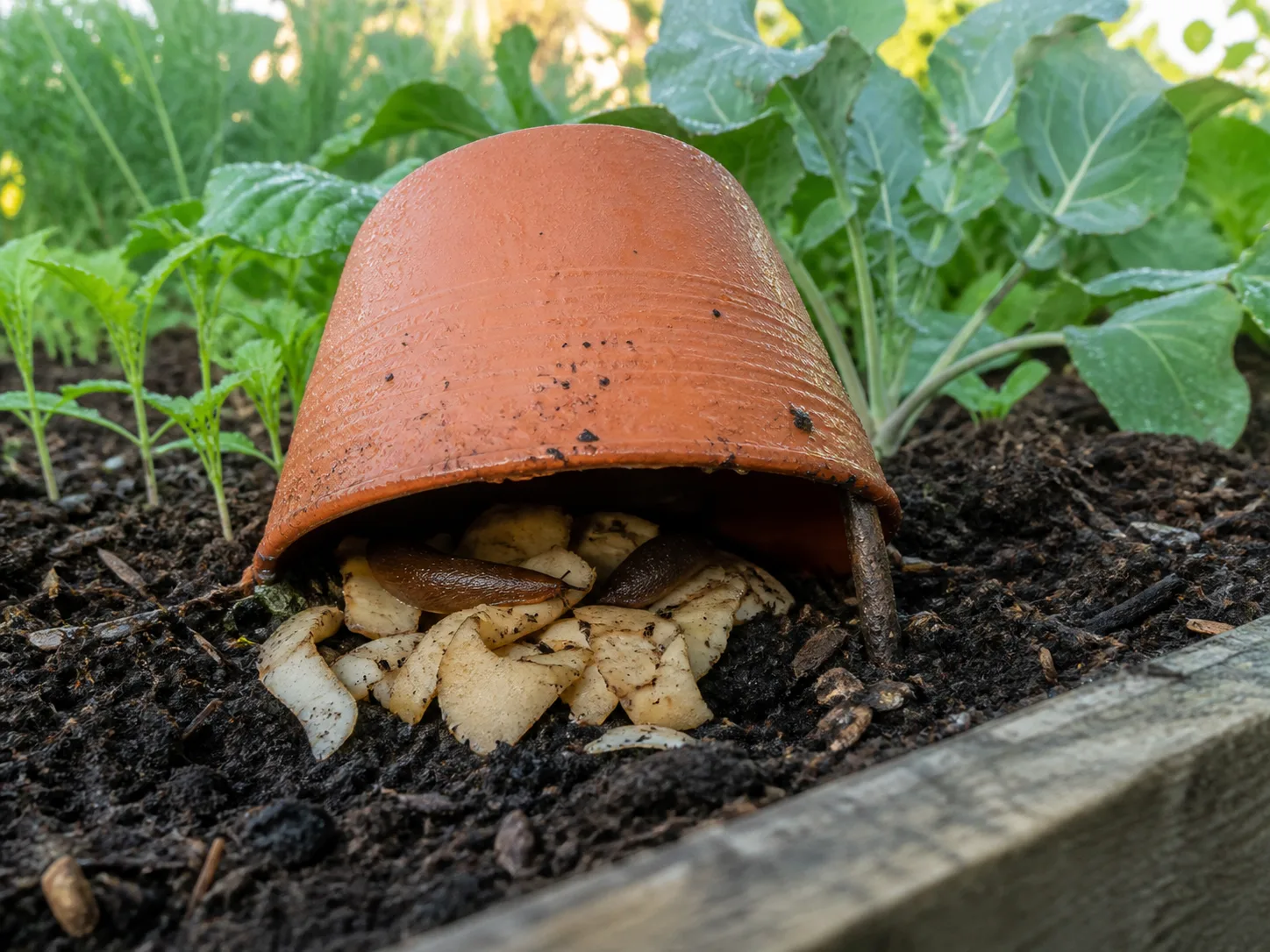
Search with a flashlight after dark or early in the morning, handpick what you find, and drop the pests into soapy water. Remove hiding places immediately beside young peppers, but do not strip the entire garden of mulch or habitat; a well-managed bed still needs soil cover and beneficial wildlife. Water at the base in the morning when practical so the surface is less inviting overnight.
A shallow trap baited with beer or fermenting fruit can collect slugs, but it must be emptied and reset regularly and will not protect a large bed by itself. If you use a commercial slug or snail bait, select one labeled for the crop and follow all placement, child, pet, wildlife, and harvest precautions. Epic Gardening highlights handpicking, habitat-based control, and traps as practical first steps for young peppers. Epic Gardening pepper pest guide
General Prevention That Actually Pays Off
Prevention is not making a pepper garden sterile. It makes pest buildup harder while preserving the insects that keep outbreaks from becoming permanent. Space plants for inspection, water consistently at the root zone, remove weeds that host pests, and clear fallen fruit weekly. Strong plants still get pests, but stressed seedlings have less reserve when damage starts.
Rotate peppers, tomatoes, eggplants, and other nightshades when space allows. Rotation is especially valuable for pests that overwinter in dropped fruit, residue, or soil, but it is not a magic reset for flying aphids, thrips, or whiteflies. Sanitation is also specific: it reduces carryover, while it does not stop every pest arriving from a neighboring bed or field.
Plant flowers that provide nectar and pollen for beneficial insects, and learn the difference between a predator and a pest. Lady beetle larvae and parasitized caterpillars may be more valuable alive than removed. The goal is a stable garden with damage below the point where growth, fruit set, or harvest quality suffers.
How to use row covers without blocking pollinators
Row cover is most useful when the plant is young or when a pest must be stopped before it reaches a protected feeding or egg-laying site. Lay the cover over hoops or a loose frame, seal the edges with soil or clips, and inspect for trapped pests before closing it. Use a cover that allows light and air through, and remove it or open it when flowers need pollination unless you are hand-pollinating and intentionally managing the enclosure.
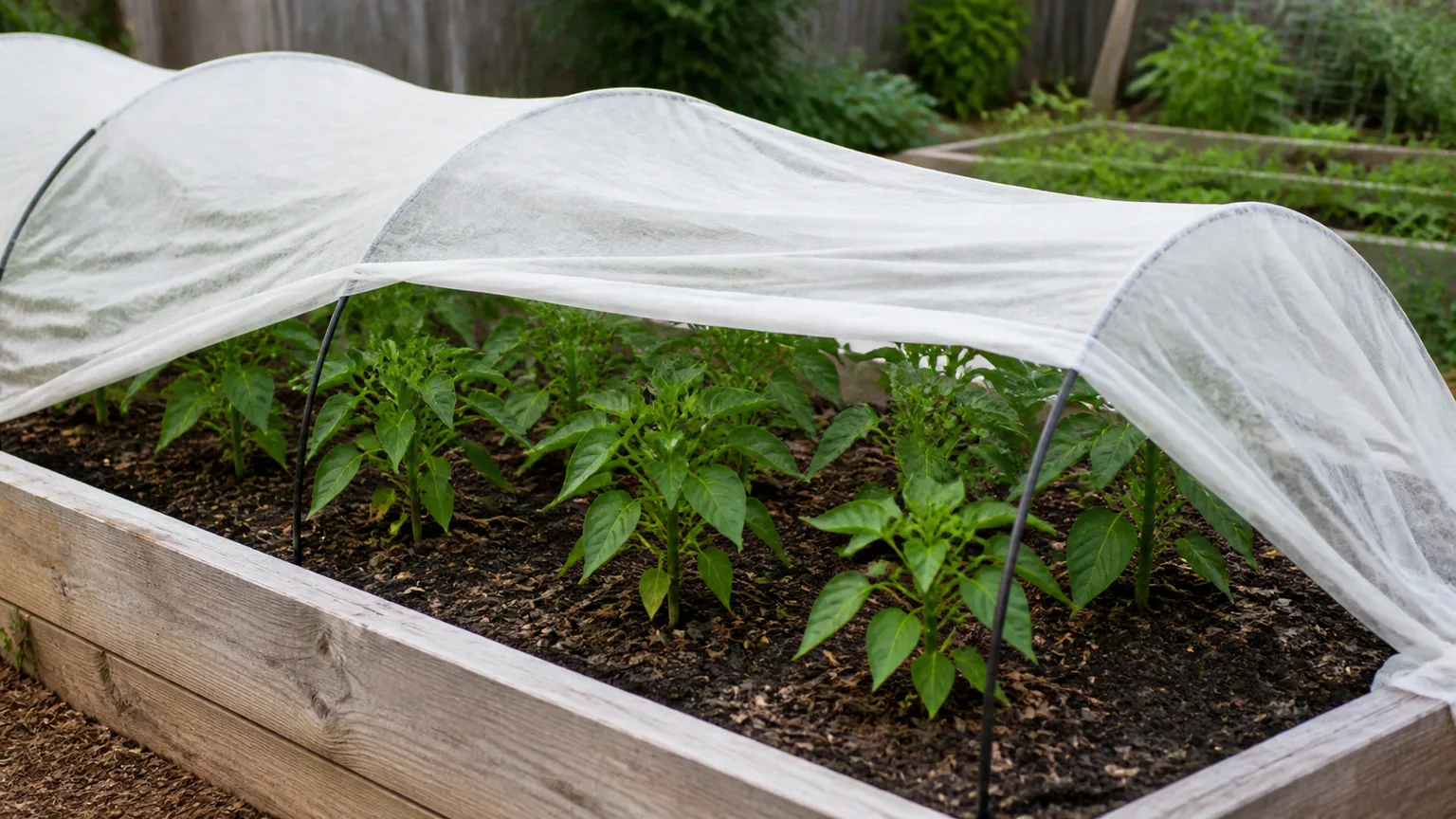
The timing is pest-specific. Cover early for flea beetles and some flying pests, keep a collar at the soil line for cutworms, and cover before the local pepper-maggot flight rather than after fruit is already tunneled. Row cover cannot cure an infestation already inside the plant.
When to use sprays—and when not to
Spray when the pest is correctly identified, damage is increasing or threatens a vulnerable crop stage, and a targeted product is likely to reach the pest. Do not spray because you saw one harmless insect, a few cosmetic holes on an established plant, or a sticky trap with no corresponding plant damage. Never spray open blooms or foraging weeds when the label prohibits it, and avoid drift into ponds, puddles, neighboring beds, or flowering plants.
For contact products such as insecticidal soap and horticultural oil, coverage matters more than a strong mix. For Btk, the caterpillar must eat treated tissue while it is exposed. For fruit borers, the timing window is before entry, so exclusion, scouting, sanitation, and local extension advice matter more than spraying a damaged pepper after the fact.
Read the label every time, even if you have used the product before. It controls the legal crop, concentration, protective equipment, reentry interval, preharvest interval, pollinator precautions, and maximum applications. UC IPM ranks pesticide choices partly by effects on natural enemies, bees, and the environment and directs growers to read labels and rotate modes of action. That is a useful standard for home gardeners too. UC IPM pesticide precautions
Conclusion
The fastest way to stop pepper plant pests is to stop guessing. Match the symptom to the feeding site, inspect the underside of leaves and the inside of suspect fruit, and choose the first control that can actually reach the pest. Water and natural enemies fit aphids and some mites; collars fit cutworms; covers protect vulnerable seedlings and fruit before exposure; sanitation matters most for pests that hide in debris or dropped fruit.
Keep spraying narrow, label-driven, and tied to real damage. When you protect flowers, beneficial insects, and the next harvest while acting early on the few pests that can outrun a pepper plant, most infestations become a manageable garden problem rather than a lost season.