Controlling and Deterring Rabbits in the Garden
Learn how to control rabbits in the garden using exclusion fencing, reapplication-ready repellents, girdling prevention, and habitat changes that reduce repeat visits.
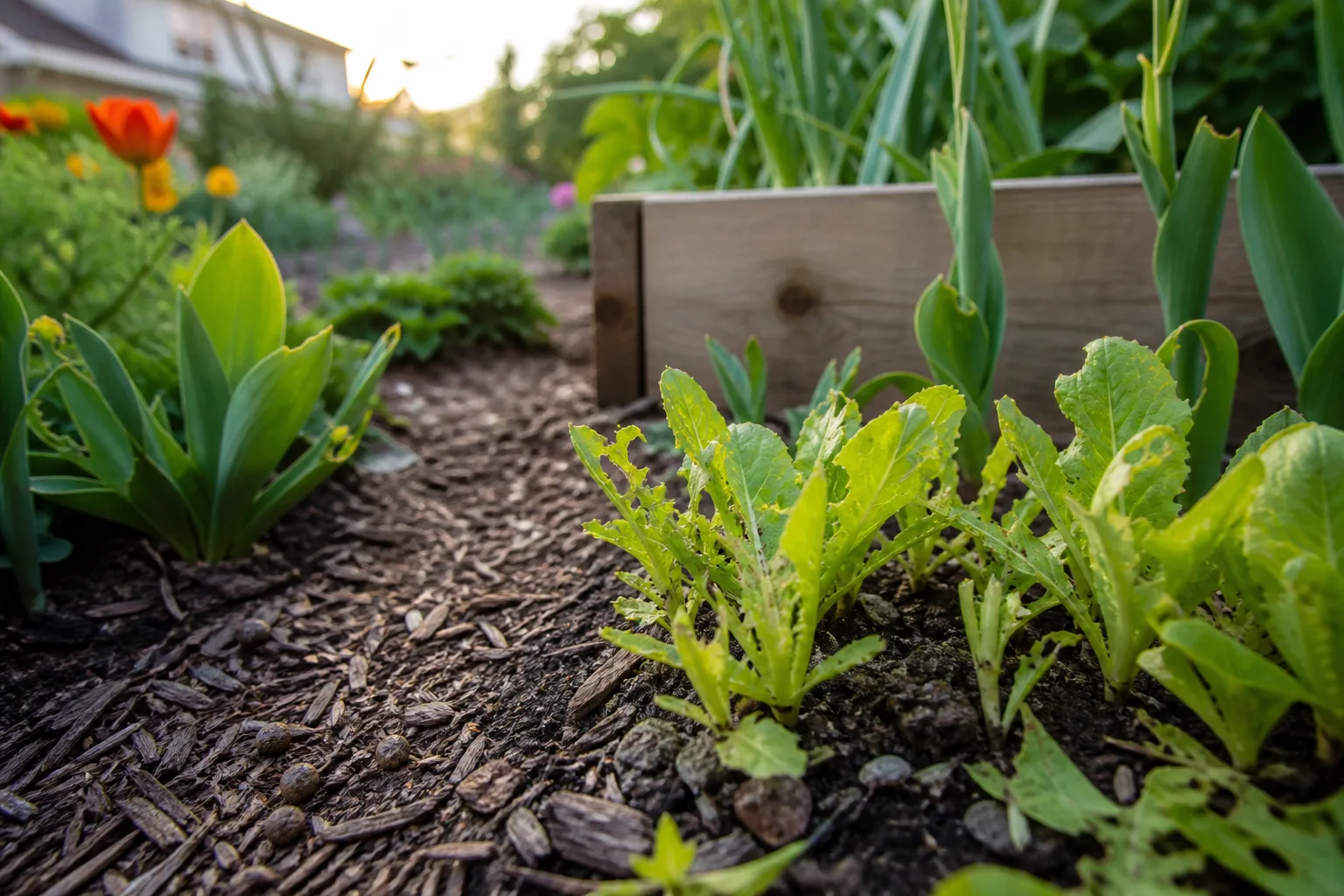
A row of lettuce shaved to stubs overnight usually means rabbits, not slugs or deer — and the fix is rarely a single spray from the hardware store. Controlling rabbits in the garden works best as a layered plan: confirm the culprit, exclude the beds that matter most, protect woody plants through winter, and use repellents or habitat changes only where fencing is impractical. Hungry cottontails will test every shortcut; your job is to remove the easy wins first.
This guide ranks methods by reliability, gives fence specs that match extension guidance, and explains where “rabbit-resistant” plant lists fail. For species-by-species risk, see our companion guide on garden plants rabbits love to eat.
Start With the Right Problem: Rabbit ID and Damage Signs
Before you buy repellent or set traps, confirm rabbits are responsible. Misidentifying deer, voles, or squirrels leads to the wrong barrier height, wrong mesh, and wasted weekends. Eastern cottontails — Sylvilagus floridanus in much of the United States — leave distinct field signs that separate them from other backyard grazers.
The Missouri Botanical Garden’s rabbit IPM guidance notes rabbits are among the most frequently seen garden mammals and lists round droppings, gnawing on older woody stems, and clean clipping of young growth as classic symptoms. Match those signs to damage height and stem shape before you spend money.
Clean Cuts, Pellets, and Low Browsing Height
Rabbits bite with sharp upper and lower incisors, producing clean, angled cuts on stems and leaves — often described as a neat 45-degree clip. Deer lack upper incisors and tend to tear foliage, leaving ragged edges and damage well above rabbit reach. Voles gnaw bark near the soil line in irregular patches; rabbits more often strip young bark in a ring at the base of saplings.
Look for small, round pellet droppings scattered near feeding zones — usually within a few feet of cover such as brush piles, fence lines, or the space under a deck. Rabbits feed heavily from evening into night, so fresh clipping at dawn strongly suggests overnight rabbit visits rather than daytime insect damage.
If you still are not sure, run a simple damage-height test. Measure where stems were cut. Rabbit feeding on herbaceous plants is overwhelmingly below about 20 inches unless snow or a raised planter changes reach. Deer browse often appears above 3 feet on shrubs and leaves torn, hanging strips on branches. Squirrels and chipmunks more often dig bulbs and leave excavation holes rather than neat stem clips on lettuce.
Seasonal Damage Patterns You Should Plan For
Rabbit pressure is not constant. Spring is the crisis season: tender transplants, emerging tulips, pea shoots, and soft hosta leaves arrive just as populations ramp up after mild winters. The Missouri Botanical Garden reports cottontails can produce multiple litters per year, with the first often arriving in March — which is exactly when your most vulnerable plants appear.
Summer damage concentrates on irrigated vegetables, beans, peppers, and low ornamentals like pansies and petunias. Fall browsing shifts toward shrubs and any late greens still soft. Winter is when rabbits turn to bark and twigs; girdling young fruit trees and blueberries can kill plants outright when snow removes other food. Plan protection by season, not by whatever product was on sale last weekend.
Build a seasonal protection calendar on paper. In March, net or fence emerging tulips and pea rows before damage appears — repairing after clipping rarely restores the display you wanted. In June, focus reapplication of any permitted repellent on unfenced containers after heavy rain. In October, install tree guards before the first sustained freeze. In January, walk the property after snowstorms to see whether guards still clear the trunk or need height extensions.
Choose Your Control Strategy in the Right Order
The most expensive mistake is treating every tactic as equal. Integrated pest management for rabbits follows a clear ladder: change habitat where you can, exclude what you must save, repel only as a supplement, and trap only when legal and practical. Complete eradication is rarely possible — or desirable — because mobile rabbits refill empty territory quickly.
The Missouri Botanical Garden is blunt: exclusion is the only consistently effective control measure. Repellents contain damage at best; scare devices habituate; resistant plants fail under stress browsing. That hierarchy should drive your budget and your calendar.
When Exclusion Beats Everything Else
If you rely on a vegetable garden, cutting-flower row, or newly planted shrub border for food or income, fencing is non-negotiable. Repellents wash off in the first rain; marigold edges fail the moment rabbits are hungry; ultrasonic devices show negligible lasting effect in real yards. A properly built fence costs more upfront but replaces weekly reapplication and the emotional cost of replanting the same bed three times.
Exclusion also simplifies diagnosis. When damage stops inside the fence but continues outside, you have confirmation without guessing. Start fence projects before planting, not after the third rabbit disaster.
When Repellents and Habitat Changes Make Sense
Repellents earn their place on unfenced ornamental beds, container groupings, and temporary spring bulb displays where full perimeter fencing looks wrong or is impossible. They also help during the two-week window after transplanting, before plants harden off — but only if you reapply on schedule.
Habitat modification is a long-term pressure reducer, not an instant fix. Removing brush piles, sealing gaps under porches, and mowing tall edge vegetation removes daytime cover near your beds. Iowa State Extension’s rabbit protection guidance emphasizes chicken wire or quarter-inch hardware cloth around vulnerable plantings — implying that physical barriers remain central even when you tidy the yard.
Combine habitat work with exclusion on high-value zones. Clearing cover 30 feet from a unfenced lettuce patch helps less than a 24-inch mesh fence with a buried foot.
Build Rabbit-Proof Fencing That Actually Works
A “rabbit fence” that fails usually failed on mesh size, height, or the bottom detail — not because rabbits are magical. Cottontails rarely jump more than about two feet from flat ground, but they squeeze through surprisingly small gaps and dig when motivated. Build to extension specs, not to whatever roll was cheapest.
Mesh Size, Height, and the Buried L-Foot
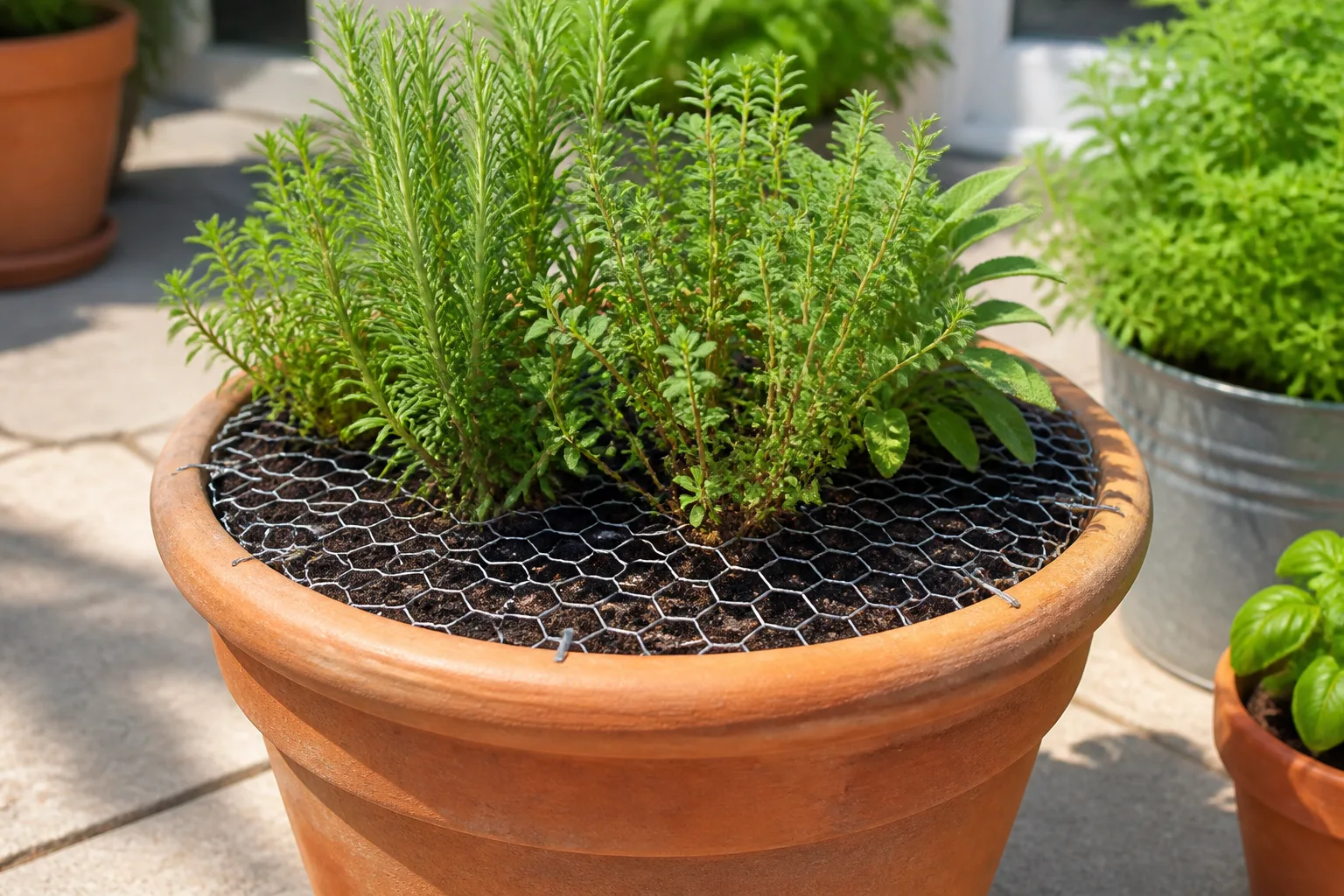
Use 1-inch mesh or smaller. Chicken wire with 1-inch openings is the classic standard cited by Iowa State Extension and the Missouri Botanical Garden. For persistent pressure or baby rabbits, 1/4-inch hardware cloth is safer — many gardeners report young cottontails passing through 2-inch garden-center “rabbit fencing.”
Height: Aim for 24 to 30 inches above ground for flat sites; 18 to 24 inches can work for tight cylinders around individual shrubs once plants mature. The Missouri Botanical Garden recommends at least 2 feet on perimeter fences and burying the bottom at least 3 inches, with the bottom edge secured between posts so animals cannot push under.
The stronger detail is the buried L-foot (apron): bend the bottom 6 to 12 inches outward at 90 degrees and bury it. Rabbits that dig hit mesh instead of open soil. In raised beds, attach hardware cloth across the bottom before filling soil — rabbits will gladly enter from below if the bed touches lawn.
Gates, Raised Beds, and Common Fence Failures
Gates fail more often than straight fence runs. Rabbits slip through daylight gaps under gates or between gate posts. Add a metal flashing or hardware-cloth skirt across the gate threshold, and keep the gate closed while you work — one cottontail inside the fence can eat an entire bed before you notice.
Other common failures include plastic or fiberglass mesh (rabbits chew through), 2-inch openings on decorative fences, and fences that do not extend to solid barriers at corners where bunnies push under. Double-check that fence posts are outside the mesh plane so rabbits cannot compress the wire against a post and squeeze through.
For small ornamental islands, 18- to 24-inch cylinders of 1-inch mesh around individual plants work when full perimeter fencing is overkill. Space the cylinder several inches from the trunk so rabbits cannot reach through; remove cylinders only after stems toughen or browsing season passes.
Raised beds need the same discipline as in-ground plots. A 12-inch tall cedar bed is not a barrier — rabbits hop up and eat from the edge. Either cap the bed with a removable frame of hardware cloth during seedling weeks or surround the entire bed with a standalone fence anchored outside the box. If the bed sits on bare soil, line the bottom with 1/4-inch mesh before adding soil mix so animals cannot tunnel up through the drainage layer.
When buying materials, choose vinyl-coated or galvanized metal over bare steel that rusts through in three seasons. Green PVC-coated poultry netting is easier on the eyes along ornamental paths; hardware cloth is uglier but survives chewing and lasts longer on vegetable plots you will keep fenced for years.
Protect Trees and Shrubs From Girdling and Winter Browse
Woody plants face a different rabbit problem: bark stripping and girdling. When winter removes herbaceous food, rabbits chew the cambium near the base of young apple, cherry, blueberry, hydrangea, and rose stems. A complete ring removes the tree’s transport layer; the plant may leaf out briefly in spring, then collapse.
The Missouri Botanical Garden lists gnawing on older woody plants and clean clipping among rabbit symptoms year-round, with enhanced damage when tender spring growth appears. Winter protection is about height, air space, and snow.
Cylinder Guards, Snow Load, and Multi-Year Saplings
Wrap or fence each vulnerable sapling with 24- to 48-inch hardware-cloth cylinders, keeping mesh several inches from the trunk so rabbits cannot reach through. For multi-stem shrubs, encircle the whole plant, not just one cane.
Snow changes the math. Deep snowpack acts like a step stool; rabbits reach branches you thought were safe. In snowy regions, extend guards taller than summer browsing height — often 36 to 48 inches — or maintain a cleared snow-free band at the trunk when feasible.
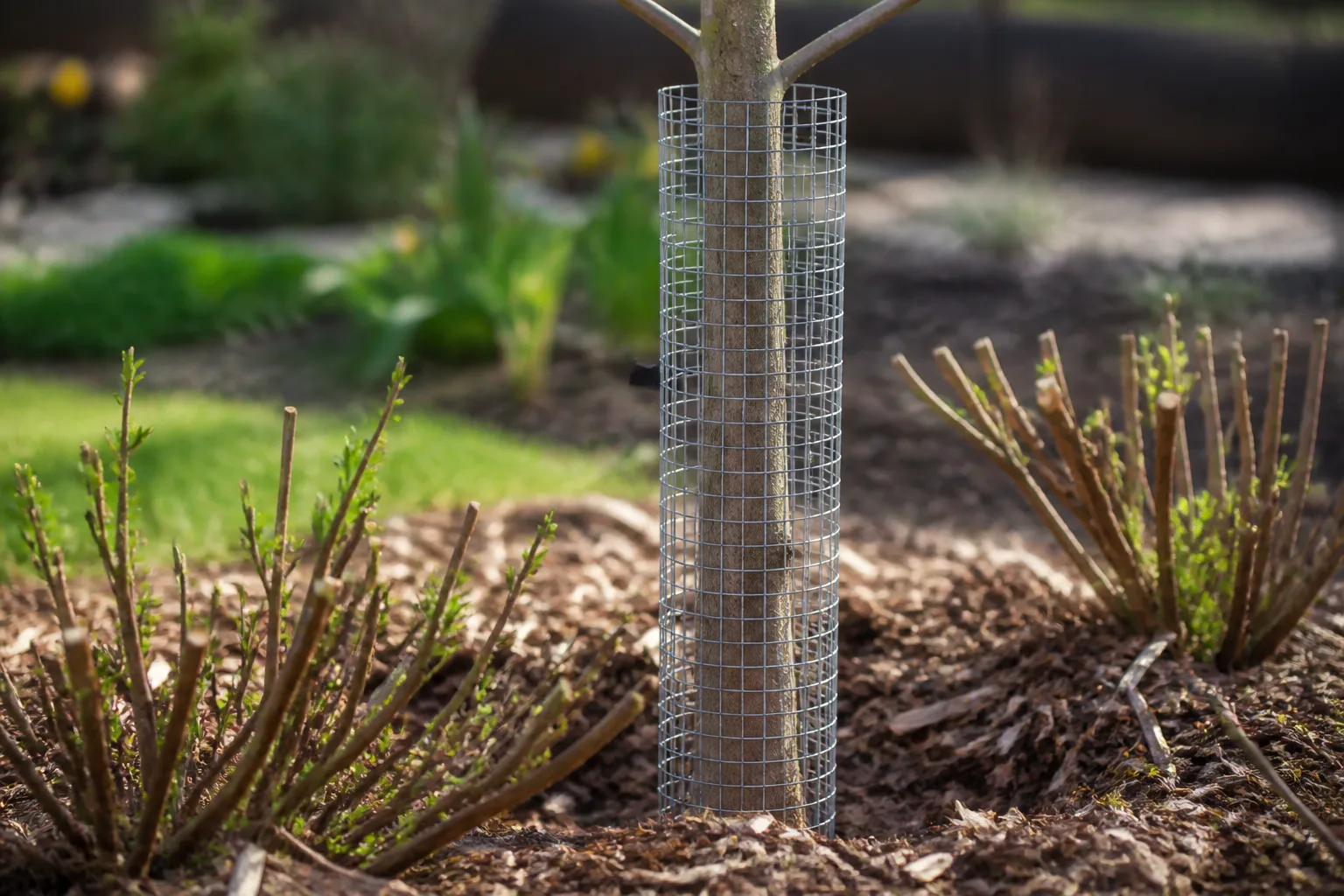
Protect trees for three to five years until bark thickens and browsing interest drops. Do not assume a one-season wrap is enough on fruit trees planted as whips.
Repellents That Hold Up in Real Gardens
Repellents can reduce damage, but the Missouri Botanical Garden classifies them correctly: containment measures, not elimination. They are water-soluble, labor-intensive, and less reliable when alternative food is scarce. Treat them as insurance on top of exclusion — or as a short-term bridge — not as a substitute for mesh.
Apply repellents late in the day. Rabbits feed heavily from evening into night; spraying at dusk aligns taste and odor with active feeding. Rotate products every few weeks so animals do not habituate to one scent profile.
Commercial Products and Reapplication Rules
Commercial repellents fall into a few proven categories. Putrescent egg solids (often labeled for deer and rabbits) smell and taste like rotten eggs; the Missouri Botanical Garden cites products such as Deer-Away (37% putrescent whole-egg solids) as relatively long-lasting contact repellents for ornamental trees and shrubs before flowering. Capsaicin hot-pepper formulas work on contact but wash off quickly and must follow label directions on edible crops.
Thiram fungicides double as contact repellents on dormant woody plants; trade names vary by region. Blood-based granular repellents combine scent aversion with fertilizing nitrogen — useful on bed edges, but repeated blood meal can add excess nitrogen and burn tender plants if overapplied.
Read labels for pet and child safety. Some formulations are not labeled for edible crops; others require wash intervals before harvest. Reapply after every rain, irrigation event, and flush of new growth — a schedule that surprises gardeners who expected one spring spraying to last the season.
The Missouri Botanical Garden also lists ammonium soap fatty-acid repellents (trade name Hinder) as one of the few options labeled for some edible crops — still a contact repellent that washes off. Nicotine- and naphthalene-based granular mixes appear in older product lines; treat them as last-resort chemistry and follow label rates exactly. Never combine products off-label or exceed concentrations hoping for stronger deterrence — you risk plant burn, pet exposure, and illegal pesticide use.
Homemade Sprays, Blood Meal, and Rotation
Home remedies — garlic spray, hot pepper flakes, talcum powder, onion powder, human hair, or coffee grounds — show mixed results in field experience. Northern Gardener’s long-running thread on battling bunnies is full of gardeners who tried marigold borders and pepper flakes, then lost plants anyway until they installed fence. Homemade options can be worth testing on low-value beds, but none should protect your only tomato row.
Blood meal scattered around plants leverages herbivore aversion to slaughterhouse scent and adds nitrogen. It breaks down in soil within one to two weeks and must be reapplied. Bone meal adds phosphorus but is less consistent as a repellent. Alternate scent-based tactics so rabbits do not settle into one ignored smell.
Do not use mothballs for rabbit control. They are not labeled for this use and pose health risks to people, pets, and wildlife. The Missouri Botanical Garden explicitly notes mothballs and moth crystals are not labeled for rabbit control.
Habitat Changes That Reduce Rabbit Pressure
Rabbits stay where cover and food overlap. The Missouri Botanical Garden links high damage to brushy edges, junk piles, thickets, burrows of other animals, and landscaped backyards adjacent to feeding sites. You will not sterilize the neighborhood, but you can make your beds less convenient.
Remove or reduce brush piles, weed patches, and dense ground cover within 20 to 30 feet of vegetable gardens and new shrub plantings. Stack firewood neatly off the ground, seal access under decks and sheds, and keep fence lines mowed so rabbits cannot hide within one hop of your lettuce.
Overseeded clover lawns and sacrificial plantings at the property edge sometimes divert browsing — clover fixes nitrogen and gives rabbits an easy meal away from pansies. This is a diversion tactic, not protection: when clover is mowed short or drought-stressed, prized plants become targets again. Use diversions only alongside fences on beds you cannot lose.
Think of habitat work as shrinking the safe commute between cover and food. Rabbits prefer short routes: under the deck, across ten feet of unmowed edge, into your beans. Break that route with mowed strips, open gravel, or low ground covers they dislike crossing in daylight. You will still see rabbits on the lawn — the goal is to make your vegetable patch the hardest meal on the block, not to eliminate wildlife from the neighborhood.
Predator presence — foxes, hawks, owls — naturally limits populations, but you cannot plan a garden around a fox den. A contained dog may scatter rabbits temporarily; Northern Gardener notes dogs help only when actively moving through the yard, and some rabbits even nest near domestic animals when wild predators avoid those zones.
Rabbit-Resistant Plants Worth Planting — and Their Hard Limits
Plant choice lowers risk; it does not eliminate it. The Missouri Botanical Garden publishes extensive lists of plants heavily damaged versus seldom damaged, emphasizing there are virtually no guaranteed rabbit-proof plants. Lavender, peony, daffodil, onion-family crops, yucca, and many strongly scented herbs appear on seldom-damaged lists — yet spring soft growth, new transplants, and starvation browsing override those preferences.
Use resistant species on bed edges and low-priority zones to steer casual feeding, not to defend a kitchen garden. Our plants rabbits eat at-risk guide groups high-risk vegetables and ornamentals — hosta, tulip, pansy, bean, lettuce — so you can decide where fence spend is mandatory.
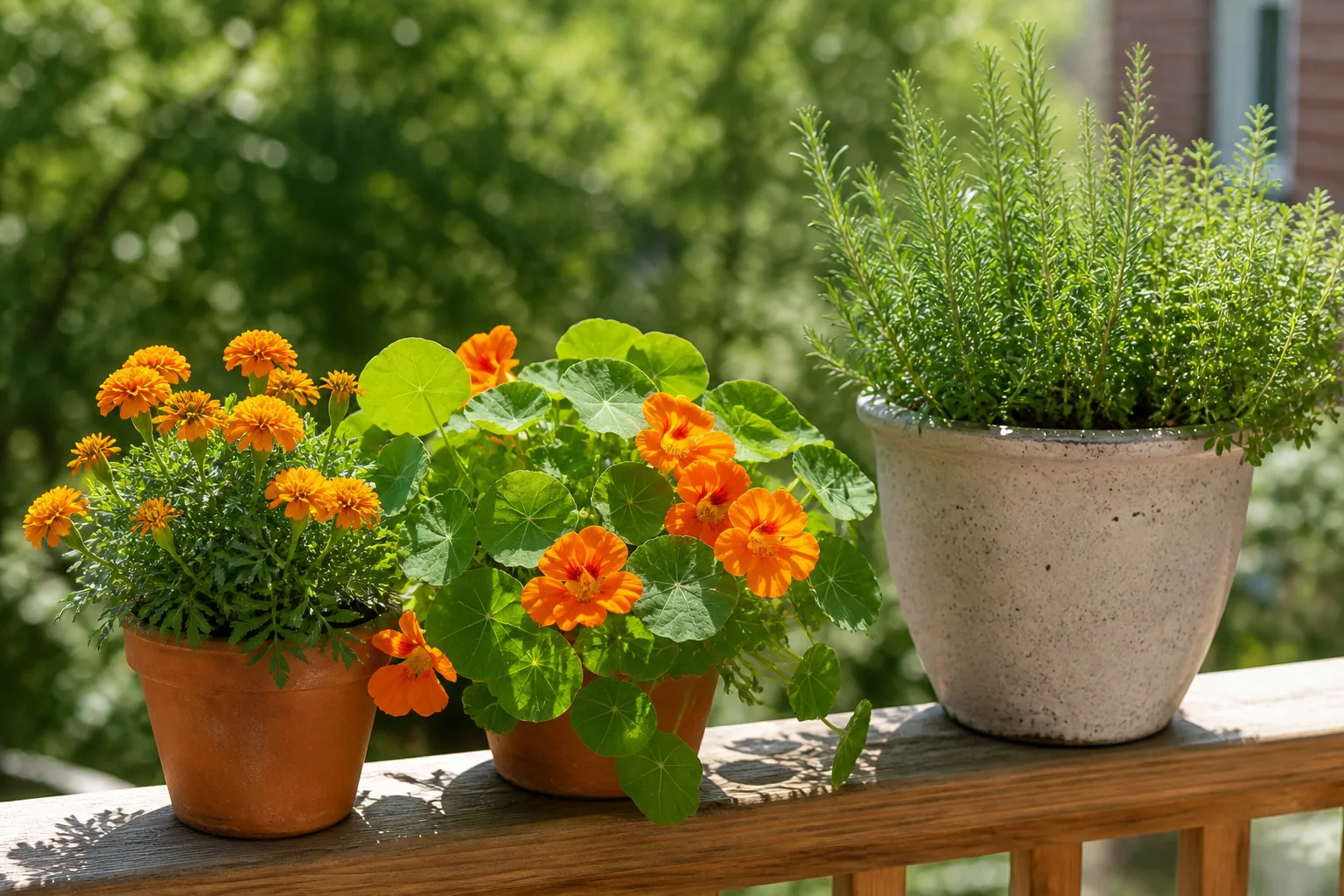
When you see marigolds or lavender listed as deterrents, read that as “sometimes skipped when better food exists,” not as a barrier. Northern Gardener’s community experience matches extension caution: fencing remains the only sure-fire fix many longtime gardeners report after every spray fails.
Group plant choices into three tiers for planning. Tier 1 — fence no matter what: lettuce, peas, beans, tulips, hostas, strawberries, and young fruit trees. Tier 2 — fence during establishment only: ornamental shrubs on seldom-damaged lists until stems woody. Tier 3 — accept some grazing: tough ground covers and mature toxic bulbs in low-stakes borders. That tier system keeps you from fencing the entire yard while still protecting the beds that trigger the most frustration.
Trapping, Pets, Predators, and Tactics That Disappoint
Live trapping appeals when damage feels personal, but it solves little in high-density suburbs. Rabbits are territorial; removing one animal often opens space for another. Relocation can be illegal or inhumane depending on state and local game laws — the Missouri Botanical Garden advises speaking with authorities before trapping because rabbits are managed as game animals in many areas.
If you trap, check devices at least twice daily, provide shade, and release or dispatch humanely per local regulation. Never leave an animal in a trap over a hot afternoon.
Ultrasonic pest repellers show mixed to negligible results in garden settings — consistent with broader wildlife-control research on habituation and line-of-sight obstacles. Save that money for mesh.
Pets vary wildly: some dogs ignore rabbits sunbathing on the lawn; others patrol effectively. Cats may catch young rabbits but also threaten birds. Neither replaces fencing around vegetables.
Conclusion
Rabbit control is an engineering problem dressed up as a gardening problem. Confirm clean-cut, low browsing damage, then build 1-inch-or-smaller mesh fences with a buried or L-shaped foot around anything you cannot afford to replant. Wrap young trees for winter, reapply repellents only where fences cannot go, and trim habitat edges so cover is not stacked against your beds. Plant resistant species to reduce casual hits, not to protect your only row of peas.
When a tactic fails, check the bottom of the fence before buying a new spray. That order — exclude, protect woodies, repel, habitat — is what separates a garden that loses one flat of seedlings from one that loses the same battle every May.