How to Grow and Care for Desert Willow
Learn how to grow desert willow with site, soil, watering, pruning, cultivar, propagation, and troubleshooting advice shaped by climate and drainage.
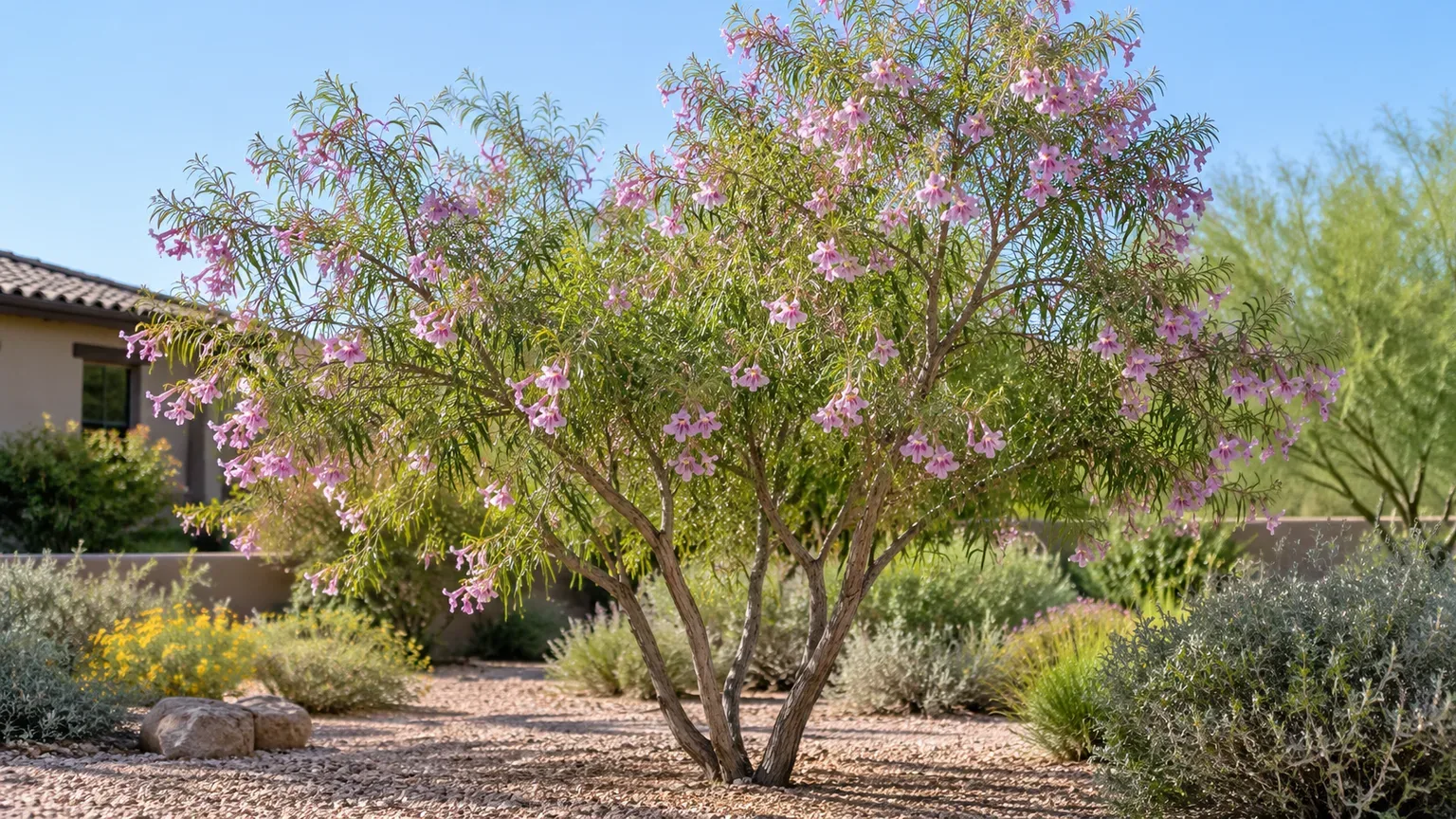
Desert willow (Chilopsis linearis) earns its place in a hot, sunny garden with a long display of trumpet-shaped flowers, a light canopy, and modest water needs once its roots are established. It is not a plant for every dry yard, though: the species can struggle in waterlogged soil, harsh winters, deep shade, or a site too small for an open, spreading tree. Match the planting spot first, then tune watering and pruning to the tree’s age and the way you want it to grow.
Desert Willow at a Glance
| Trait | What to expect |
|---|---|
| Botanical name | Chilopsis linearis |
| Plant type | Deciduous large shrub or small, often multi-trunked tree |
| Typical mature size | Often about 15–25 feet tall and 10–15 feet wide; some references report up to 30 feet or more |
| Sun | Full sun for strongest flowering; light shade is tolerated in some settings |
| Soil | Well-drained; sandy or gravelly sites are a good fit |
| Water | Regular deep watering while establishing; occasional deep irrigation after establishment, adjusted for rainfall and soil |
| Flowers | Pink, purple, lavender, burgundy, or white trumpet-shaped blooms from late spring into summer, sometimes longer |
| Winter habit | Usually deciduous; leaf-out can be late after a cold winter |
Published ranges vary because desert willow is grown across different climates and cultivars. NC State Extension lists a mature height of about 15–25 feet and a width of 10–15 feet, while Oregon State University describes plants from about 10 to 30 feet; use local nursery information to judge a particular selection’s likely form. (NC State Extension, Oregon State University)
What Desert Willow Is—and What It Is Not
The common name describes the plant’s narrow, willow-like foliage, not its botanical family. Chilopsis linearis belongs to Bignoniaceae, the trumpet-vine family, so it is not a true willow (Salix) and does not share the same genus or typical site needs. Its flowers are a more useful clue than its leaves: they are flared trumpets with streaks in the throat, carried near branch tips. (NC State Extension, Stanford Trees of Stanford & Environs)
In nature, desert willow occurs in the Southwest and northern Mexico along washes, stream margins, and other places where water can be available belowground even though the surface dries between rains. That habitat explains a seeming contradiction: the plant tolerates dry spells, but a newly planted specimen still needs help building roots, and a mature one is not best treated as a tree that never needs water. (Native Plant Network, Awkward Botany)
Choose a Site With Sun and Space
Give desert willow at least six hours of direct sun when possible, especially if flowers are a priority. It can survive some light shade, but expect a looser, taller plant and fewer blooms than in an open sunny site; Oregon State notes that it needs well-drained soil and may be pruned to improve its appearance. (NC State Extension, Oregon State University)
Allow room for a canopy that may spread 10 to 15 feet or more, and consider whether you want a natural multi-stemmed shrub or a small tree with a raised canopy. Keep the trunk away from narrow walkways, overhead wires, and places where falling seed pods or light leaf litter would be a nuisance. The species has a low root-damage rating in Cal Poly’s SelecTree, but low potential does not mean roots can be ignored; do not crowd it against paving or utilities. (Cal Poly SelecTree)
Cold hardiness is less uniform than a single zone label suggests. NC State’s profile includes zones 7a through 11b, while Oregon State lists the species as hardy to zone 8; treat zone guidance as a screening tool, then check the cultivar, local winter lows, exposure, and nursery’s regional experience before planting near the cold edge. (NC State Extension, Oregon State University)
Soil and Drainage: Water Must Leave
The most important soil feature is drainage, not richness. Desert willow accepts sand, loam, and some clay, but roots are at risk where water stands for long periods; Cal Poly SelecTree specifically flags root rot when drainage is poor. If the site stays soggy after ordinary rain, choose a different location or plant on a broad, gently raised area rather than trying to turn a wet hole into a dry one. (NC State Extension, Cal Poly SelecTree)
A simple percolation check can prevent a costly mismatch: after rain, see whether the planting area drains within a reasonable period, and dig a test hole to inspect how quickly the subsoil loses standing water. In compacted clay, a raised planting mound or a different tree is usually safer than filling the hole with gravel, which does not correct a poorly draining soil profile. Avoid enriching the backfill with lots of compost; a high-fertility pocket can hold more water than the surrounding ground and discourage roots from moving outward.
Routine fertilizer is usually unnecessary in a suitable landscape site. Desert willow is adapted to lean soils, and adding nitrogen simply because it is not blooming can encourage leafy growth without fixing shade, drainage, winter injury, or establishment stress; first check those conditions, and use a soil test or local extension recommendation if growth points to a true nutrient problem. (Awkward Botany)
Watering Young vs Established Desert Willow
Water a newly planted desert willow deeply enough to moisten the nursery root ball and the surrounding soil, then allow the site to drain. During the first growing season, check the root ball every few days in hot, dry weather; if it is drying, irrigate slowly rather than giving a quick surface sprinkle. In a hot, arid Arizona garden, Watters Garden Center uses one or two irrigations a week for new trees from spring through fall as a local starting point, but sandy soil, extreme heat, rain, and planting size all change the interval. (Watters Garden Center)
For the first two seasons, keep checking the root zone through dry spells instead of assuming the tree is established after a set number of months. Water when the root ball and nearby soil are beginning to dry several inches down; apply a slow soak over the root area, not just at the trunk, so new roots are encouraged to spread. Skip irrigation after substantial rain if soil is still damp, and reduce watering in cool weather when evaporation and growth slow.
Once established, desert willow generally needs far less supplemental water. Cal Poly calls its water use very low and recommends only occasional deep irrigation; Watters Garden Center suggests a deep soak every three to four weeks during extreme heat for mature desert willows in its local Arizona conditions. Use that interval as an example, not a universal schedule, and extend it when soil is heavy, nights are cool, or monsoon rain has wetted the root zone. (Cal Poly SelecTree, Watters Garden Center)
A little supplemental water during a prolonged dry season can support a fresh flush of growth and flowers, but constant wet soil is not a shortcut to better blooms. If leaves wilt, test moisture before reaching for the hose: wilting over wet soil points toward oxygen-starved roots or rot, while a dry root ball calls for a slow soak. Deep-rooted does not mean newly planted, drought-proof, or tolerant of standing water.
How to Plant Desert Willow
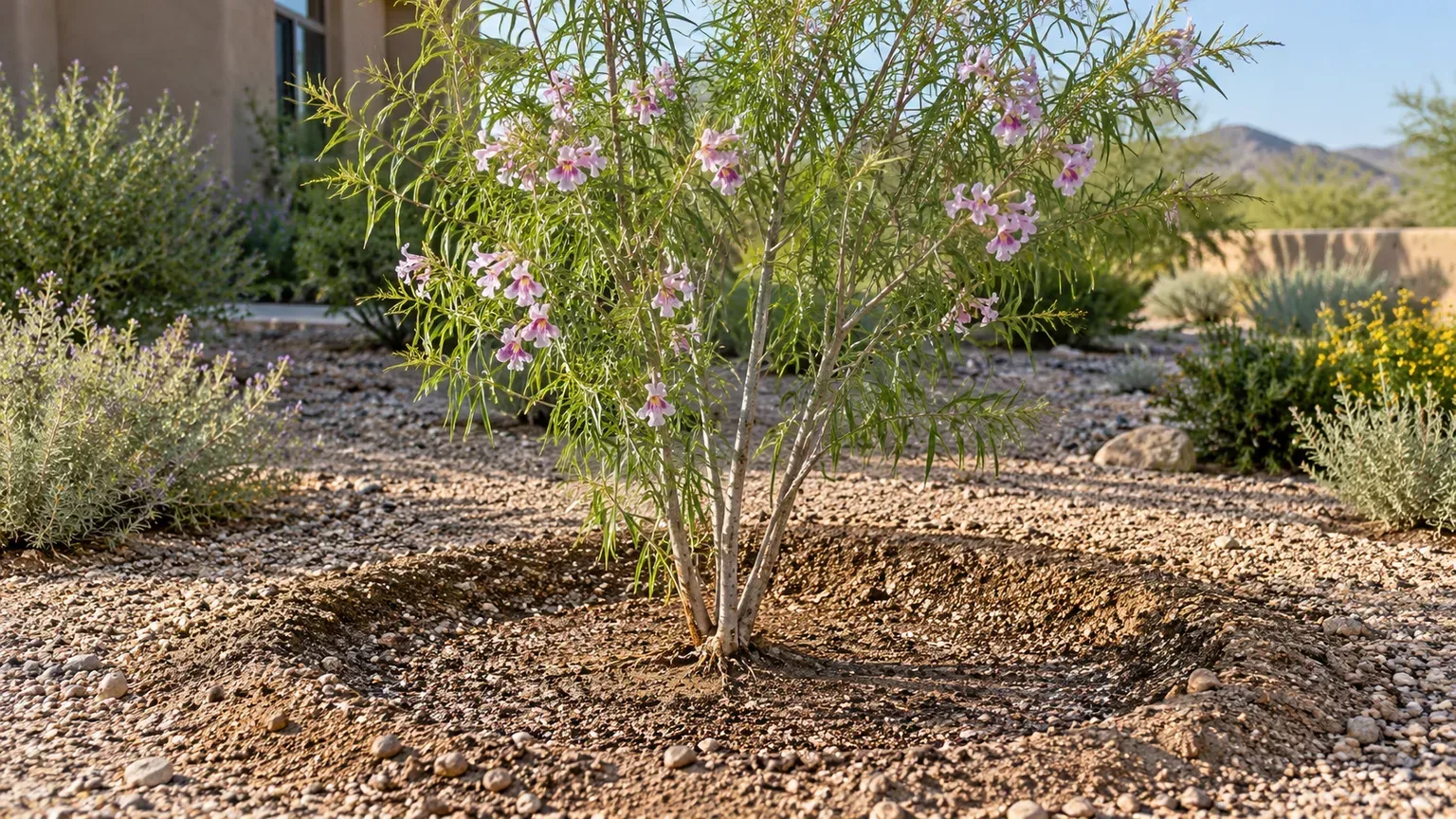
Plant in spring after the hardest frost risk has passed in colder areas, or in fall where winters are mild enough for roots to settle before summer heat. Avoid transplanting in the hottest part of the season if you can; a young tree has a limited root system and needs time to recover from nursery-to-ground movement. Choose the permanent location carefully because desert willow grows quickly while young and develops a broad, open habit. (Watters Garden Center)
Dig a hole about two to three times wider than the root ball but no deeper than the root flare, then loosen circling roots gently before setting the plant. The root flare should finish at or slightly above surrounding grade so water does not pool against the trunk; backfill with the excavated soil, firm it lightly, and water thoroughly to settle air pockets. Do not bury the trunk or pile mulch against the bark.
Form a shallow watering basin just beyond the root ball and keep it broad enough to wet the expanding root zone as the tree grows. A thin organic mulch layer can slow surface evaporation, but keep several inches clear around the trunk and do not build a “mulch volcano.” For the first season, focus on consistent root-zone moisture checks, not fertilizer or corrective pruning beyond damaged branches.
Pruning for Flowers and a Strong Shape
Decide the mature form before making cuts. Desert willow naturally grows as a large shrub or a small multi-trunked tree; if you want a single-trunk look, gradually select a leader and remove competing low stems over several seasons, while a natural shrub form needs little shaping. Local garden center guidance likewise recommends winter-dormant pruning to raise the canopy, while NC State notes that routine pruning can encourage additional trunks and branching. (Watters Garden Center, NC State Extension)
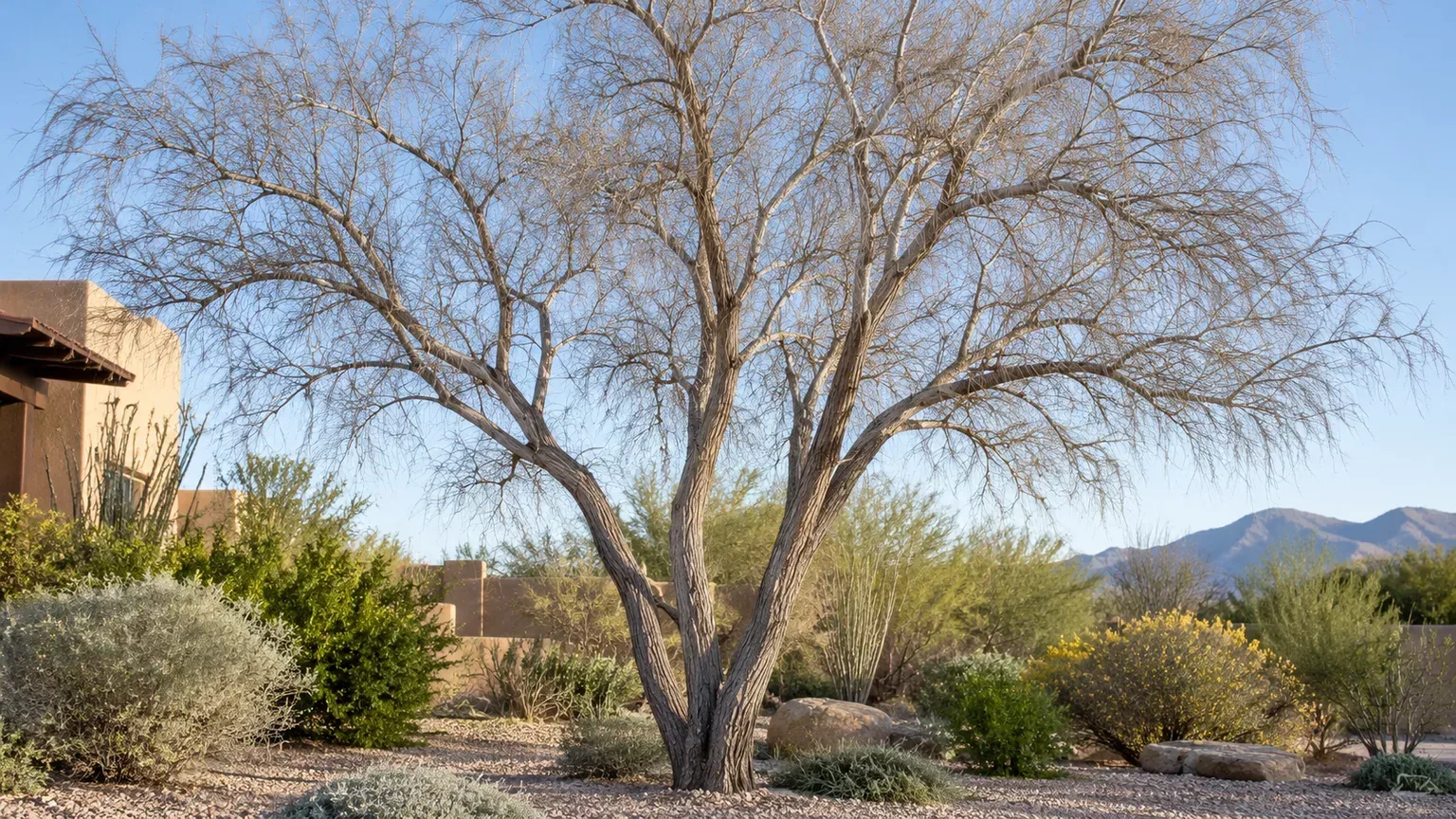
For structural work, prune in late winter while the plant is dormant and the branch framework is visible. Start with dead, broken, rubbing, or inward-growing branches, then make selective cuts back to a branch junction or just outside the branch collar; do not leave long stubs. Keep several well-spaced scaffold stems if you want an open multi-trunk tree, and avoid stripping the interior simply to force a formal silhouette.
Desert willow flowers on new growth, so light, well-timed pruning can encourage branching and another flush of flowers. That does not mean every plant needs an annual one-third cut: a severe reduction can leave a sparse framework, remove useful shade, and trigger vigorous shoots that need more follow-up. If you want to refresh an overgrown tree, spread substantial work over more than one dormant season rather than topping the crown. (NC State Extension, Awkward Botany)
Remove suckers at the base if they conflict with a tree form, or leave selected shoots if you prefer a fuller shrub. Deadheading is optional; removing spent blooms may encourage additional flowers, but harvesting seed pods before they split is more important if you want to limit volunteer seedlings. (NC State Extension)
Flowers, Pollinators, and Seed Pods
Flowers usually appear from late spring into summer, and established trees may continue blooming into early fall when growing conditions support new growth. Blooms range from pink and rose to lavender, purple, burgundy, and white, often with streaks or contrasting color inside the trumpet; flowering season and color depend on selection and local climate. The fragrant flowers attract hummingbirds and other pollinators, making the tree useful in a wildlife-friendly waterwise garden. (NC State Extension, Oregon State University)
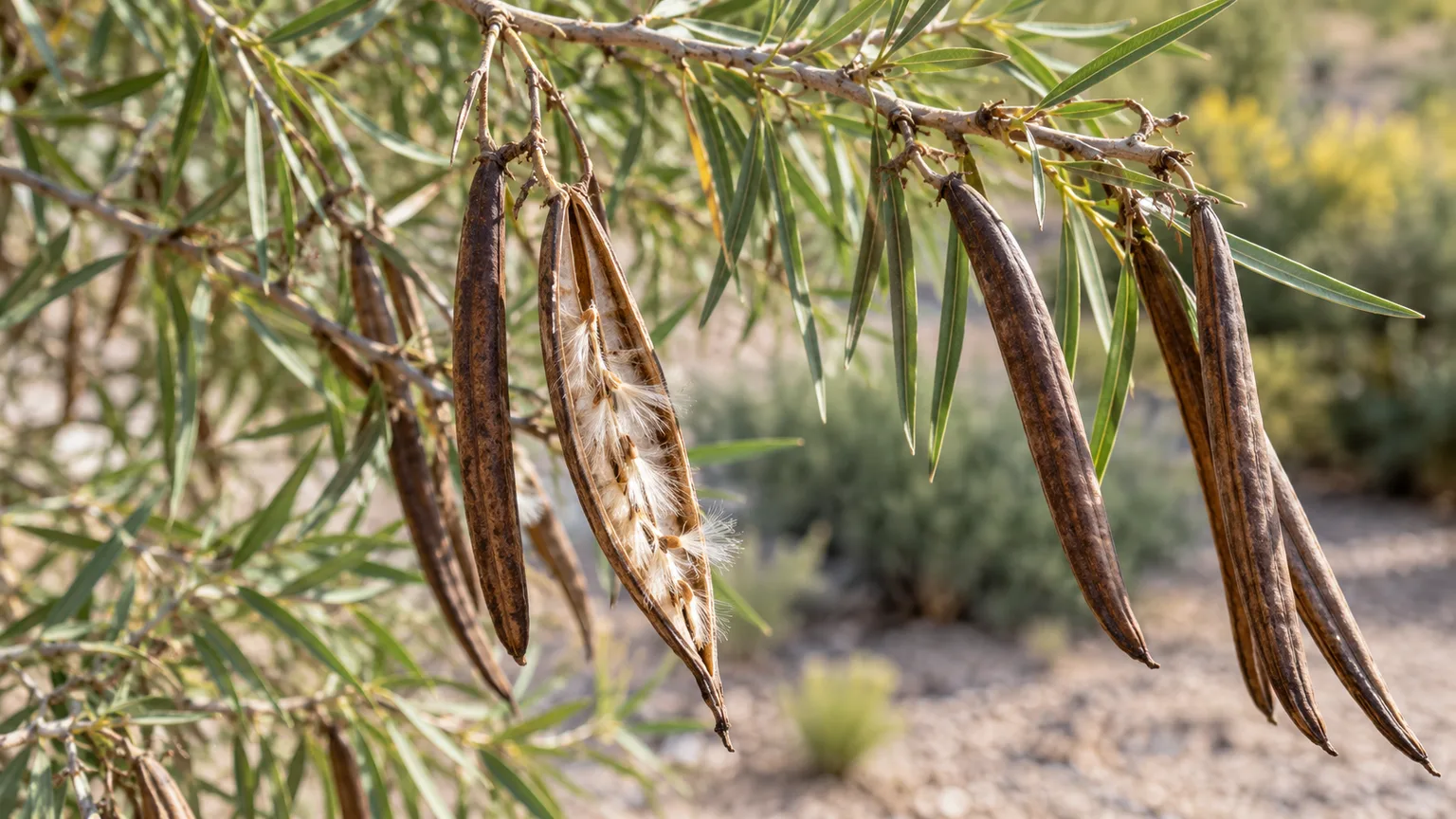
After flowering, long narrow capsules develop and may hang on the branches after leaves fall. They add winter texture, but the capsules can be messy and release many wind-dispersed seeds; if seedlings are unwelcome, collect the pods while they are dry and brittle but before they split. Leaving some pods is reasonable if you want self-seeding or winter interest, but check nearby beds the following spring. (Stanford Trees of Stanford & Environs, NC State Extension)
Cultivars: Choose for Form and Seed Cleanup
Choose a named cultivar for a specific trait, not just a flower photograph. NC State lists ‘Bubba’ as more upright and less shrubby, ‘Art’s Seedless’ as sterile and fruitless, ‘Lois Adams’ as producing few pods, ‘Lucretia Hamilton’ for deep pink-purple flowers, and ‘White Storm’ as a smaller white-flowered selection. Ask the nursery to confirm the mature size and local winter performance of the plant it actually sells; cultivar names are more useful when they come with a clearly documented selection history. (NC State Extension)
A seed-grown desert willow may differ from its parent in flower color, growth habit, and seed production. If you want a particular bloom color or a tree that makes fewer pods, buy a named vegetatively propagated selection instead of assuming a seedling will come true. If seed cleanup is the main issue, a sterile selection such as ‘Art’s Seedless’ is a practical choice, although availability varies by region.
Propagating Desert Willow From Seed or Cuttings
Seed is a straightforward way to grow the species, but it does not preserve a named cultivar’s traits. Collect ripe capsules when they turn dark brown and brittle, then open them over a tray and separate the flat, silky seeds from pod debris. The USDA Forest Service Native Plant Network protocol says seeds are not dormant and do not need stratification or scarification; it reports 40–60 percent germination for well-stored seed and cautions that germination can decline with storage time. (Native Plant Network)
Sow seeds in a clean, free-draining seed mix, barely cover them, and keep the surface evenly moist while they germinate in warm, bright conditions. Pot seedlings individually once they are easy to handle, grow them on until roots hold the mix together, and acclimate them gradually before planting outdoors. If you do not want volunteer trees, collect pods before they open instead of scattering seed from the parent plant.
Cuttings are the better route when you want to reproduce a selected cultivar exactly, and NC State lists both seed and stem cutting as propagation methods. Take healthy semi-ripe growth with several nodes, remove the leaves from the lower portion, and insert the base into a sterile, airy rooting medium; keep the medium lightly moist and the cutting humid but never sitting in water. Rooting success depends on season and plant condition, so for a single valuable cultivar it may be easier to ask a nursery about a rooted clone than to rely on one cutting. (NC State Extension)
Growing in a Container and Protecting It From Cold
Desert willow is a landscape tree, not an ideal long-term container specimen. Its eventual size, open crown, and deep-root habit make a small pot a temporary nursery or overwintering option rather than a permanent growing plan; a container also dries and freezes faster than garden soil. If you grow one in a pot for a few seasons, use a large, stable container with several drainage holes and move it before the root ball becomes tightly bound.
Hardiness sources do not agree on one universal lower limit, and named cultivars may differ. NC State’s zone list reaches 7a while Oregon State gives zone 8, so in colder gardens protect young trees from exposure and repeated hard freezes, and do not assume a sheltered microclimate will make an untested cultivar reliably hardy. Choose a regionally proven plant or a different small tree if winter survival is essential. (NC State Extension, Oregon State University)
A desert willow may remain bare later in spring than surrounding trees, especially after a cold winter. Awkward Botany reports very late leaf emergence in southwestern Idaho and notes possible winter dieback after subzero temperatures; look for living green tissue under a small bark scratch on a few twigs before removing an apparently dead branch. Wait for local warm weather to stabilize, but cut out wood that is clearly dry and brittle once the live/dead boundary is apparent. (Awkward Botany)
Pests and Disease: Rare but Not Impossible
Desert willow has few serious pest problems in suitable conditions, but aphids can gather on tender shoots and flower stalks. Check the new growth before spraying: a small population may not harm an established tree, and a firm stream of water can dislodge aphids without applying a broad-spectrum insecticide around flowering branches. If the infestation returns or persists, identify the pest and follow local extension advice and the product label before treating. (NC State Extension)
The more serious recurring risk is root trouble from persistently wet soil, not a long list of exotic diseases. Yellowing, limp foliage, or dieback can also reflect drought, cold injury, transplant stress, or a bacterial leaf problem; symptoms alone do not identify the cause. Check drainage, root-zone moisture, and recent weather before changing irrigation, cutting back healthy branches, or applying a pesticide. (Cal Poly SelecTree, NC State Extension)
Troubleshooting a Stressed Desert Willow
Start with the growing conditions the plant experienced, not with a product. Dig a small inspection hole at the edge of the root ball and note whether soil several inches down is dry, evenly moist, or saturated; then compare the symptoms with recent rainfall, irrigation, frost, and pruning. This simple check separates an urgent watering need from the more dangerous situation of adding water to roots that are already oxygen-starved.
If soil is wet for days, stop routine irrigation and see whether the site drains after the next rain. Correct the landscape drainage or move a young plant while it is still manageable; do not keep adding compost or gravel only to the planting hole. If the root zone is dry, water slowly across the root ball and surrounding soil and recheck the next day rather than watering repeatedly for a few minutes.
Why Desert Willow Is Not Blooming
First confirm that the tree gets several hours of direct sun and is not surrounded by competing shade or reflected heat that stresses the root zone. Next review the last season’s care: excess fertilizer, hard pruning at the wrong time, a recent transplant, prolonged drought, or a very young seedling can all delay or reduce flowers. Give the plant a full growing season after correcting the main stressor before judging the change. (NC State Extension, Awkward Botany)
Because flowers develop on new wood, selective dormant pruning can support bloom by producing fresh shoots, but repeated heavy cuts are not a reliable bloom treatment. If the plant flowers once and pauses, keep moisture steady during an extended hot, dry spell without allowing the soil to stay wet; a later flush is possible, not guaranteed. Choose a cultivar for the flower color and pod traits you want rather than expecting fertilizer to change a plant’s genetics.
Yellow Leaves, Wilting, or Dieback?
If foliage yellows while soil is soggy or the planting basin retains water, suspect poor drainage and root stress before adding more irrigation. If the root ball is dry several inches down, give it a slow deep soak and resume checking at shorter intervals until conditions stabilize. A yellow leaf or one wilted branch does not prove root rot, so inspect the full pattern and moisture first.
After a cold winter, wait for the plant to leaf out before pruning extensively; desert willow can be late to show new growth. Scratch-test a small twig in more than one part of the crown: green, moist tissue suggests that section is alive, while brown, dry tissue suggests dieback. Prune only confirmed dead or broken wood back to healthy tissue, and seek local extension help if symptoms spread despite corrected water and drainage.
Conclusion
Desert willow is easiest to grow when its natural preferences guide the care plan: abundant sun, room for a loose crown, and soil that drains after rain. The biggest adjustment is timing—water a new tree while roots establish, taper irrigation as it matures, and make structural pruning selectively during dormancy rather than treating it like a yearly haircut. Check local hardiness and cultivar traits before buying, then let the tree’s own growth and the moisture several inches below the surface determine what it needs next.