What Is the Difference Between Cacti and Succulents?
Not every spiny plant is a cactus. See how areoles identify true cacti, which succulents belong to other families, and why care depends on the species.
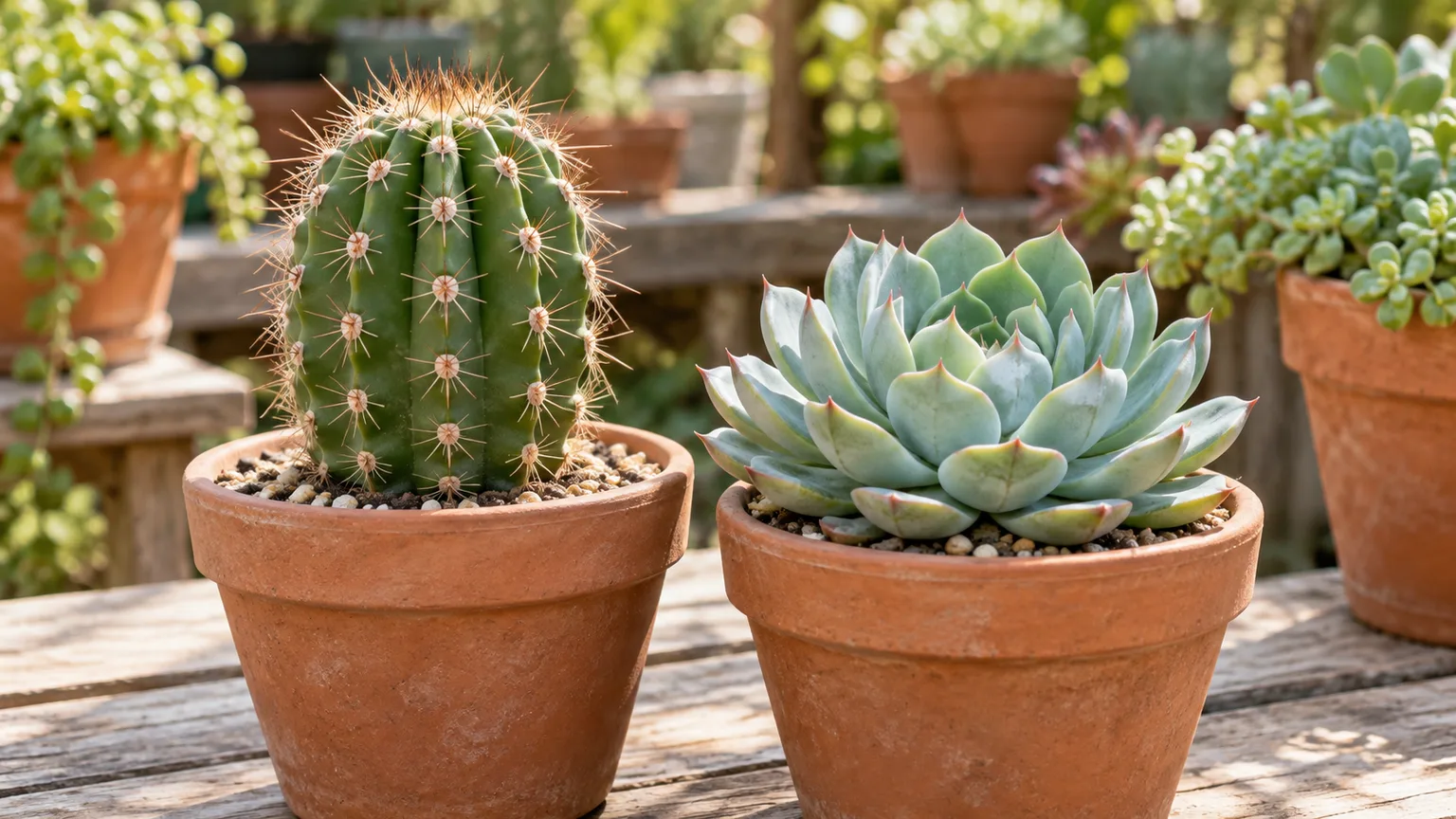
Cacti are succulents, but “succulent” is a broad gardening term, while cactus names a botanical family. That means an aloe, jade plant, or Echeveria can be a succulent without being a cactus. The clearest way to tell a true cactus from a cactus-like plant is to look for areoles: small, cushion-like buds where cactus spines, flowers, or branches emerge.
That distinction helps with more than naming. Many desert cacti and familiar rosette succulents share a need for bright light, careful watering, and free-draining soil, but they do not all have the same sun, water, temperature, or seasonal needs. Forest cacti such as Christmas cactus are the important exception that makes a one-size-fits-all “cactus routine” unreliable.
The short answer: cacti are one kind of succulent
A succulent is a plant with specialized tissue that stores water, usually in leaves, stems, or roots. Botanists do not classify all succulents together as one family; the word describes a water-storage adaptation shared by plants that may be only distantly related. A cactus, by contrast, belongs to the family Cactaceae. Kew’s Plants of the World Online recognizes Cactaceae as a plant family and lists its accepted genera in a formal taxonomic record (Kew Science).
So the quick rule is accurate: all cacti are succulents, but not all succulents are cacti. Echeveria, aloe, agave, haworthia, jade, and many sedums store water but belong to other plant families. A cactus is a particular evolutionary branch within the larger, practical gardening group called succulents.
This is why labels such as “cacti and succulents” are useful at a garden center but not precise descriptions of two mutually exclusive groups. The label usually gathers plants with some overlapping growing needs, not plants that share the same family or identical care.
What counts as a succulent?
Gardeners call a plant succulent when it has visibly or internally thickened tissue that holds water and helps it endure periods when rainfall or irrigation is limited. The storage organ may be a fleshy leaf, a swollen stem, or an underground root or caudex. Some plants are obvious, such as aloe with its water-filled leaves; others look twiggy or nearly leafless because they store water in stems.
The category spans many families and habitats. Echeveria, jade, and Sedum belong to the stonecrop family, Crassulaceae; Aloe belongs to Asphodelaceae; and Agave belongs to Asparagaceae. Their shared “succulent” label describes a useful growth form, not close botanical kinship. The University of Minnesota Extension’s overview gives examples ranging from jade and aloe to agave, kalanchoe, and sedum.
Succulence is also a spectrum, not a single shape. A plant may store water in leaves and still have thin stems, or shed its leaves during drought while relying on fleshy stems. That variety is one reason appearance alone cannot tell you exactly how often to water or how much direct sun a plant can handle.
What makes a plant a cactus?
A cactus is a member of Cactaceae. Cacti come in many forms—round, columnar, flattened, trailing, leafy, and almost spineless—so the popular image of a squat desert plant covered in sharp spines is only one familiar subset. Cacti are largely native to the Americas, though some species now occur elsewhere; their family identity does not depend on a desert habitat or a particular silhouette (Kew Science).
Find the areoles
Areoles are the key diagnostic feature. They often look like small raised dots, pads, or woolly cushions on the cactus surface. Spines may grow from them, but so can flowers, new shoots, or branches. The Missouri Botanical Garden describes areoles as structures unique to cacti, which is why the pattern and origin of a spine matter more than whether a plant simply looks prickly (Missouri Botanical Garden).
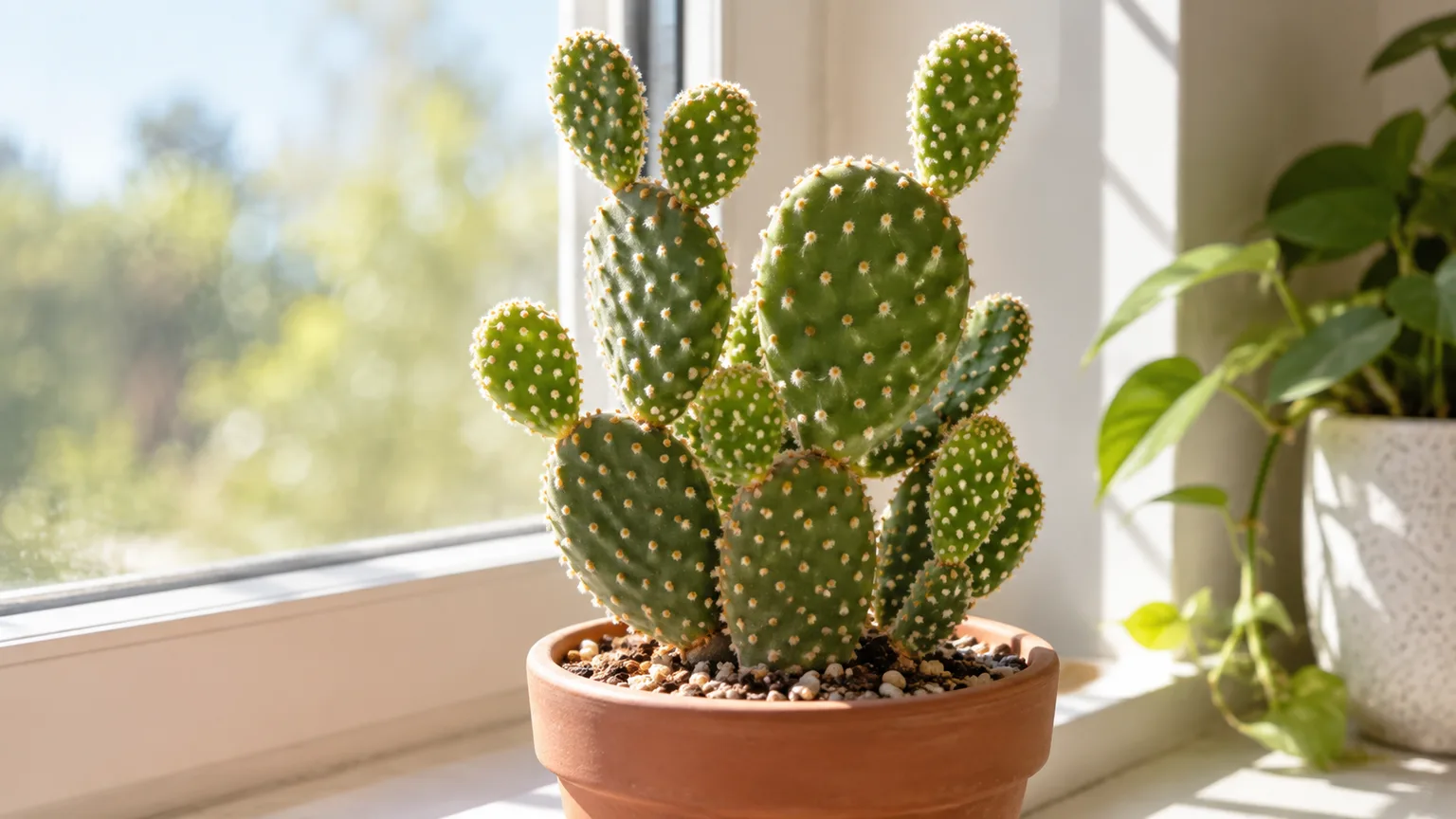
If you are checking a small plant, use a phone camera’s zoom or a hand lens and inspect where each spine emerges. On a bunny-ear cactus, for example, pale clusters of fine glochids sit in repeated areole spots on the pads. A cactus with conspicuous ribs may have areoles spaced along those ribs; a woolly Mammillaria has many small bumps, each with its own spine-bearing areole. You do not need to touch the plant to see the pattern.
Leaves and spines are clues, not the final test
Most familiar cacti have reduced or absent leaves, and their spines are modified leaves that grow from areoles. But “has spines” is not a reliable cactus test: roses, agaves, and many Euphorbia have sharp structures without being cacti. Conversely, some cacti have leaves, and some have no obvious spines at all. Their areoles remain the defining clue.
A true cactus can also carry small, short-lived leaves when young, or retain leaves in a few less typical groups. The long, flat segments of Christmas cactus may look like leaves but are modified stem segments called cladodes. Its flowers emerge at the ends of those segments, while the plant still belongs to Cactaceae. The botanical garden explanation of cactus adaptations helps separate stem, spine, and areole structures from the casual labels gardeners use (Matthaei Botanical Gardens).
Cactus vs. other succulents at a glance
| Trait | Cacti | Other succulents |
|---|---|---|
| Botanical grouping | One family, Cactaceae | Several unrelated families; “succulent” describes water storage |
| Areoles | Present, even when small or spineless | Absent |
| Water storage | Usually in stems; some also have leaves | In leaves, stems, roots, or combinations |
| Common examples | Opuntia, Mammillaria, Rhipsalis, Schlumbergera | Aloe, Echeveria, Haworthia, Agave, Sedum, jade |
| Care shorthand | Desert and forest types differ substantially | Needs vary widely by species and habitat |
Use the table to narrow down an identification, not to choose a watering schedule. Even two plants in the same broad category may need different exposure or soil; the plant’s origin, growth habit, and actual response in your home or garden matter more than the label on a nursery tag.
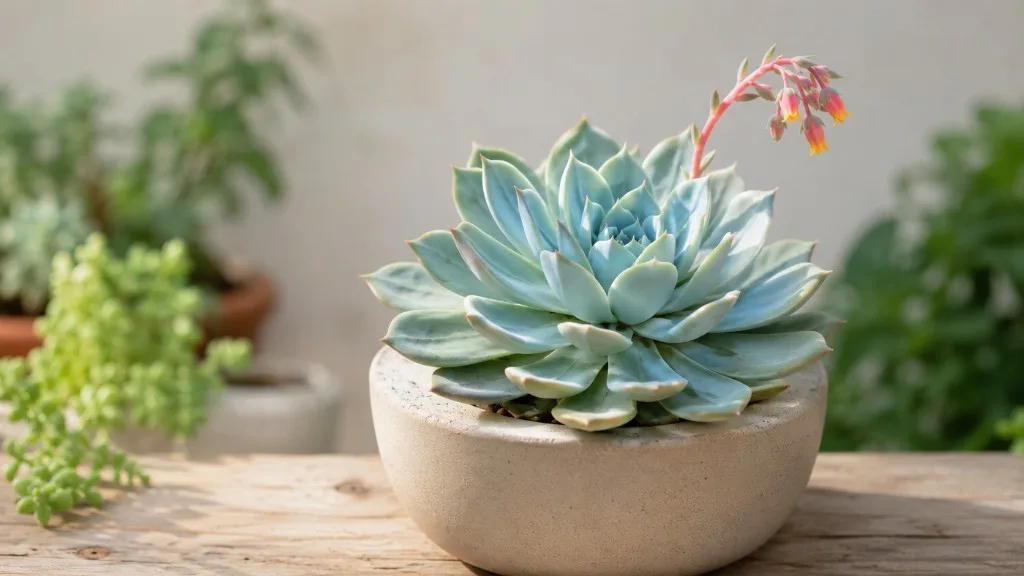
For a visual contrast, a compact Echeveria stores water in its rosette leaves, while a true cactus such as Opuntia shows the repeated areole pattern on its pads. Both are succulents in horticultural language, but only the cactus has areoles.
Plants often mistaken for cacti
A cactus-like outline can be a useful first impression, but convergent evolution means unrelated plants can develop similar ridged stems, spines, or drought-tolerant forms. Look for areoles before you identify a plant by its silhouette, and use the scientific name on a reliable plant label or source when the difference affects handling or care.
Euphorbia lookalikes
Some succulent Euphorbia have ribbed, columnar stems and paired spines that make them look remarkably like cacti. The popular “coral cactus,” often sold as a grafted crested Euphorbia, is not a cactus. Pencil cactus (Euphorbia tirucalli) is another misleading common name: it is a succulent spurge, not a true cactus. Unlike cactus spines, Euphorbia spines are not borne from areoles.
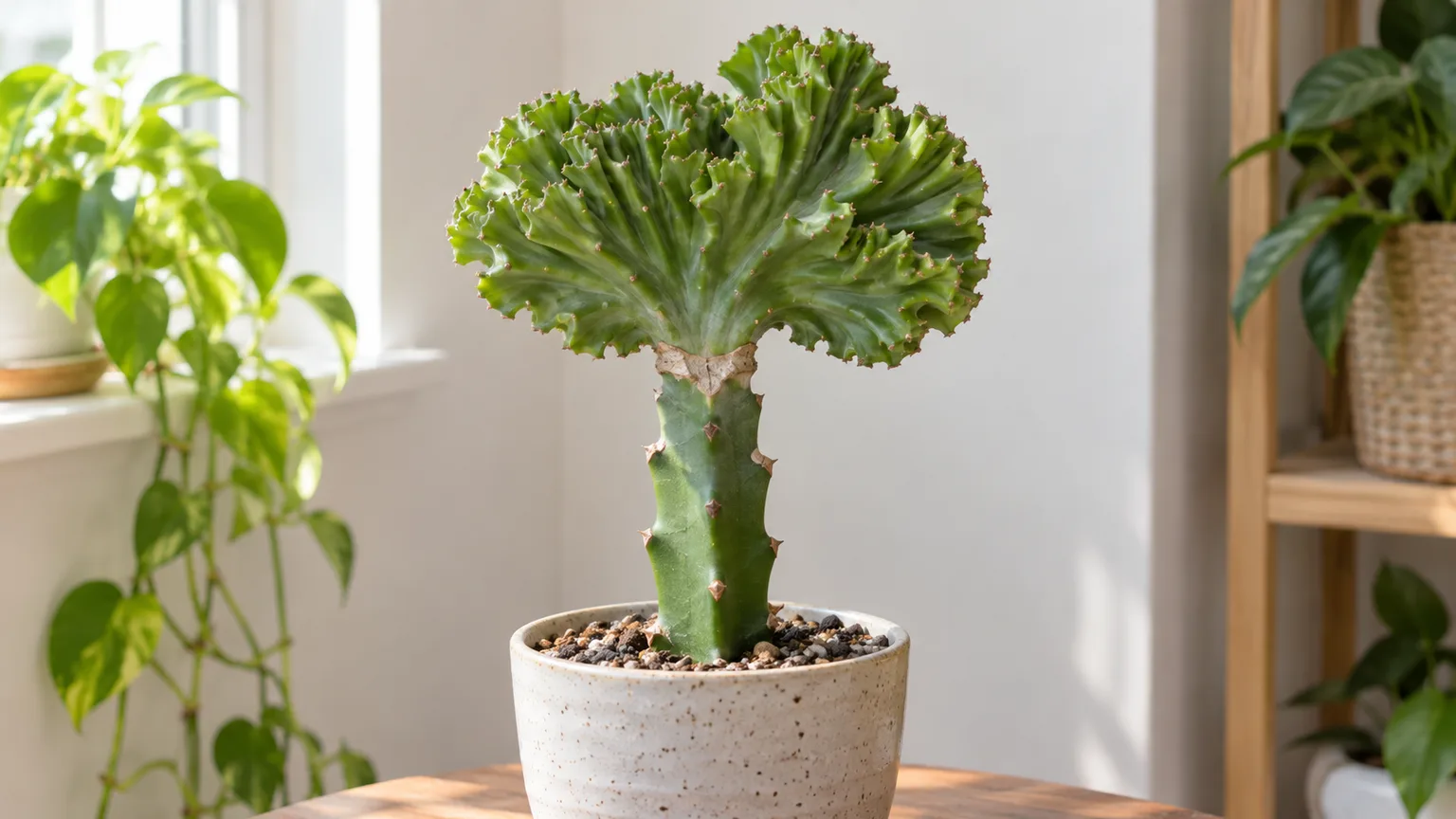
Do not break a stem to look for sap. Many Euphorbia release a milky latex when injured, and it can irritate skin and eyes. If you already know a plant is a Euphorbia, wear gloves and avoid touching your face while pruning or repotting; Poison Control advises protective handling because spurge sap can irritate skin, eyes, and mouth. A cactus may have clear sap too, so sap is only a clue when it is already exposed—not a safe identification test.
Leafy or spineless cacti
Do not rule out a cactus because it has leaves or no dramatic thorns. Pereskia, for instance, is a leafy cactus; its areoles appear at the nodes and may carry spines. Some cultivated cacti have been selected for reduced or absent spines. On these plants, inspect the stem for areoles and look closely near new growth or flower buds.
Opuntia needs extra caution because its areoles may carry glochids: tiny, barbed bristles that can detach and lodge in skin. They may be much harder to notice than the larger spines. Keep hands away from the pads and do not assume a “spineless” label means a completely safe plant; some forms retain glochids even when long spines are absent. Fine Gardening’s guide to cold-climate cacti and succulents also flags glochids on nearly spineless Opuntia as a handling hazard (Fine Gardening).
Why labels group cacti and succulents together
The phrase “cacti and succulents” is a convenience category. Many common indoor varieties share fleshy water-storage tissue and are sold together, and several—especially desert cacti and rosette-forming Crassulaceae—can grow well in similar containers with bright light and a fast-draining mix. A single display label is a starting point for browsing, not a guarantee that the plants can share a pot or watering routine.
Common names add another layer of confusion. “Cactus” may appear in the name of a non-cactus, as with pencil cactus, while “bunny-ear succulent” may describe a genuine cactus. “Hen and chicks” can refer to Sempervivum or Echeveria, depending on the seller. For an uncertain plant, record the scientific name and check whether the family is Cactaceae; a common name by itself is not enough.
Does the distinction change care?
Sometimes, but species and habitat matter more than the label alone. Many desert cacti and common arid-climate succulents both need strong light, a container that drains, and a period of drying between thorough waterings. The distinction becomes important when a plant is a forest cactus, a shade-adapted succulent, a cold-hardy outdoor species, or one with a very different seasonal growth cycle.
Light: strong sun is not universal
Many desert cacti, aloe, and Echeveria grow compactly with several hours of direct sun or very bright light. A south-facing window may suit them, but an indoor plant that has spent weeks in dim light can scorch if placed suddenly in intense outdoor sun. Move it into brighter exposure gradually over a week or two, watching for pale, bleached, or dry patches that can signal sunburn. Outdoor plants also benefit from local shade in unusually hot afternoon conditions.
Other succulents naturally grow under shrubs, on rock ledges, or in filtered light. Haworthia and some Gasteria tolerate brighter shade better than sun-loving Echeveria, while direct midday sun behind glass may overheat even a drought-adapted plant. Stretching toward a window, widening gaps between leaves, or unusually pale new growth can signal insufficient light; brown or bleached patches after a sudden move suggest too much too quickly. Adjust the light rather than assuming all succulents need the same number of sun hours.
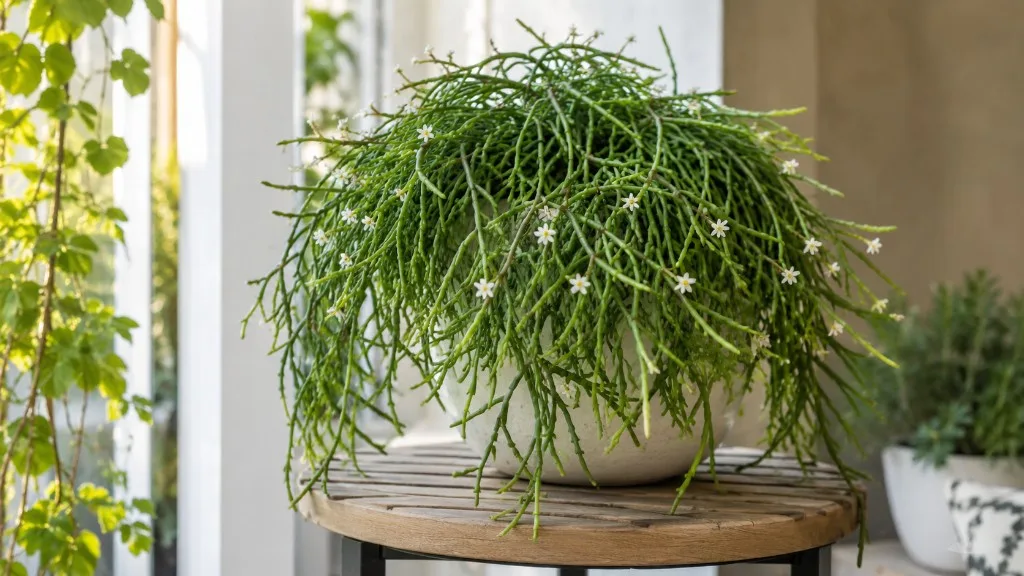
Forest cacti are another exception. Rhipsalis, Epiphyllum, and holiday cacti grow in tropical or subtropical forests, often as epiphytes on trees or among rocks, rather than in exposed desert soil. They generally prefer bright, filtered light and more regular moisture than a desert barrel cactus. The RHS guide to growing houseplant cacti and succulents explicitly separates epiphytic cacti from arid types, and its Epiphyllum guide recommends warm conditions and bright filtered light.
Water and soil: let the root zone guide you
For a potted desert cactus or a typical drought-adapted rosette succulent, water thoroughly so the root ball is moistened, then allow the mix to dry substantially before watering again. Do not add small splashes on a fixed weekly schedule. Check below the surface with a wooden skewer or your finger, compare the pot’s weight after watering and as it dries, and water when the root zone—not just the top crust—has reached the plant’s appropriate dry-down point. During slow winter growth, lower light and cooler temperatures usually mean less frequent watering; during active growth, heat and sun increase demand.
The goal is a cycle of moisture and air, not permanent drought. Roots need oxygen, and soil that stays wet can suffocate roots and encourage rot. Use a pot with a drainage hole and a porous medium matched to the plant. Desert cacti usually need a faster-drying, mineral-rich mix; Echeveria and similar succulents benefit from drainage too, but a mix that dries instantly may leave roots thirsty in hot outdoor weather. Terracotta can speed drying; plastic and glazed pots hold moisture longer, so adjust your checks accordingly.
Forest cacti need a different balance. They still should not sit in waterlogged soil, but they are adapted to a more organic, moisture-retentive mix and more even moisture than desert cacti. If a Christmas cactus is treated like a desert cactus and left bone-dry for long stretches, it may wilt or drop buds. If a barrel cactus is kept as moist as a forest cactus, its roots can rot. The University of California IPM cactus guidance emphasizes deep watering followed by drying for cacti; use that as desert-cactus guidance, not a universal rule for every member of Cactaceae.
Temperature and seasons: match the plant’s habitat
There is no single “cactus temperature.” A species native to high-elevation or temperate regions may tolerate cold that would damage a tropical forest cactus or tender aloe. Some outdoor sedums and Sempervivum survive winter freezes, while many popular indoor succulents are damaged by frost. A potted plant is often more vulnerable to cold than the same species planted in the ground because its roots are exposed on all sides.
Before leaving a plant outdoors, check its scientific name, listed hardiness, and the temperature forecast for the location of the pot—not just the regional average. Wet soil plus cold can be particularly damaging to desert plants, so sheltering a pot from winter rain may matter as much as the minimum temperature. In regions with cold winters, bring tender plants indoors before frost; acclimate them to brighter indoor light over several days and inspect for insects as they come inside.
Seasonal growth also affects care. Many desert cacti and succulents slow down in winter when daylight drops, so reduce watering and pause routine fertilizer until active growth returns. Some holiday cacti set buds as days shorten; stable light and temperature are more useful than a dry, bright desert schedule. For outdoor plants, local rainfall and heat can change the routine dramatically: a container under a roof dries differently from one receiving summer storms.
Can you plant cacti and succulents together?
You can combine them when their needs genuinely overlap, but shared category is not enough. A sunny, dry arrangement of a small desert cactus with a sun-loving Echeveria or Sedum may work if the container drains freely and the plants have room to grow. Pairing a slow-growing cactus with a fast-spreading succulent can become a maintenance problem even when their water needs are similar.
Avoid combining desert cacti with Rhipsalis, Christmas cactus, Haworthia, or other plants that prefer substantially different light or moisture. If one plant needs water while its neighbor must stay dry, the pot will force you to compromise and one of them will suffer. Separate pots inside a shared decorative planter preserve the look while letting you water each plant independently; remove each nursery pot to water, then drain before returning it.
For an outdoor rock garden, group plants by exposure, drainage, and winter tolerance first. A cold-hardy Sempervivum may thrive outdoors where a tender Echeveria will not, and a hardy cactus can still rot in dense, wet winter soil. A small label noting name, light, and seasonal water needs can prevent an attractive mixed planting from becoming a guessing game.
A simple way to identify a plant at home
Use this sequence before changing the plant’s care:
- Look for areoles without touching the plant. Search for repeated small pads, dots, or woolly cushions on stems, ribs, or leaf-like pads. If spines, flowers, or new growth emerge from them, the plant is a cactus.
- Do not decide from spines or leaves alone. Spiny Euphorbia and agaves are not cacti; a leafy or nearly spineless plant may still be a cactus.
- Check the name and family. Search the scientific name in a botanical garden, university extension, or other reliable plant reference. “Cactaceae” confirms a cactus; another family plus fleshy tissue points to a non-cactus succulent.
- Identify the growth setting. A trailing, flat-segmented plant such as Schlumbergera or Rhipsalis is a forest cactus, not a desert cactus. This changes light and watering even though it is still Cactaceae.
- Observe before making a major change. Note the current light, pot type, soil, and how long the mix stays moist. Change one condition at a time and watch new growth; damaged tissue does not always recover, so the next healthy growth is the better measure.
If the areoles are too small to see, the plant has a confusing graft, or the label uses only a trade name, take a clear photo of the whole plant and a close-up of its stem or leaf base. Compare the result with multiple views from a botanical collection or extension source rather than relying on a single seller image. Until you know whether it is an irritant-sap Euphorbia or a glochid-bearing Opuntia, handle it with gloves and keep hands away from your eyes.
Conclusion
The botanical distinction is simple once you know what to look for: succulent describes water-storing tissue, while cactus identifies a member of Cactaceae. Areoles are the most useful visual clue. They distinguish true cacti from spiny Euphorbia, aloe, agave, and other plants that can resemble them.
Care takes more judgment than the labels suggest. Start with the plant’s identity and habitat, then match light, soil, watering, and temperature to that species. Desert cacti and many rosette succulents may share a routine; forest cacti and shade-adapted or cold-hardy succulents often do not. When in doubt, keep plants in separate pots, let the root zone tell you when to water, and make changes gradually.



