Monoecious vs. Dioecious Plants: Key Differences and Uses
Compare monoecious vs. dioecious plants, learn how flower sex works, and see what corn, squash, holly, kiwi, and asparagus mean for pollination and fruit.
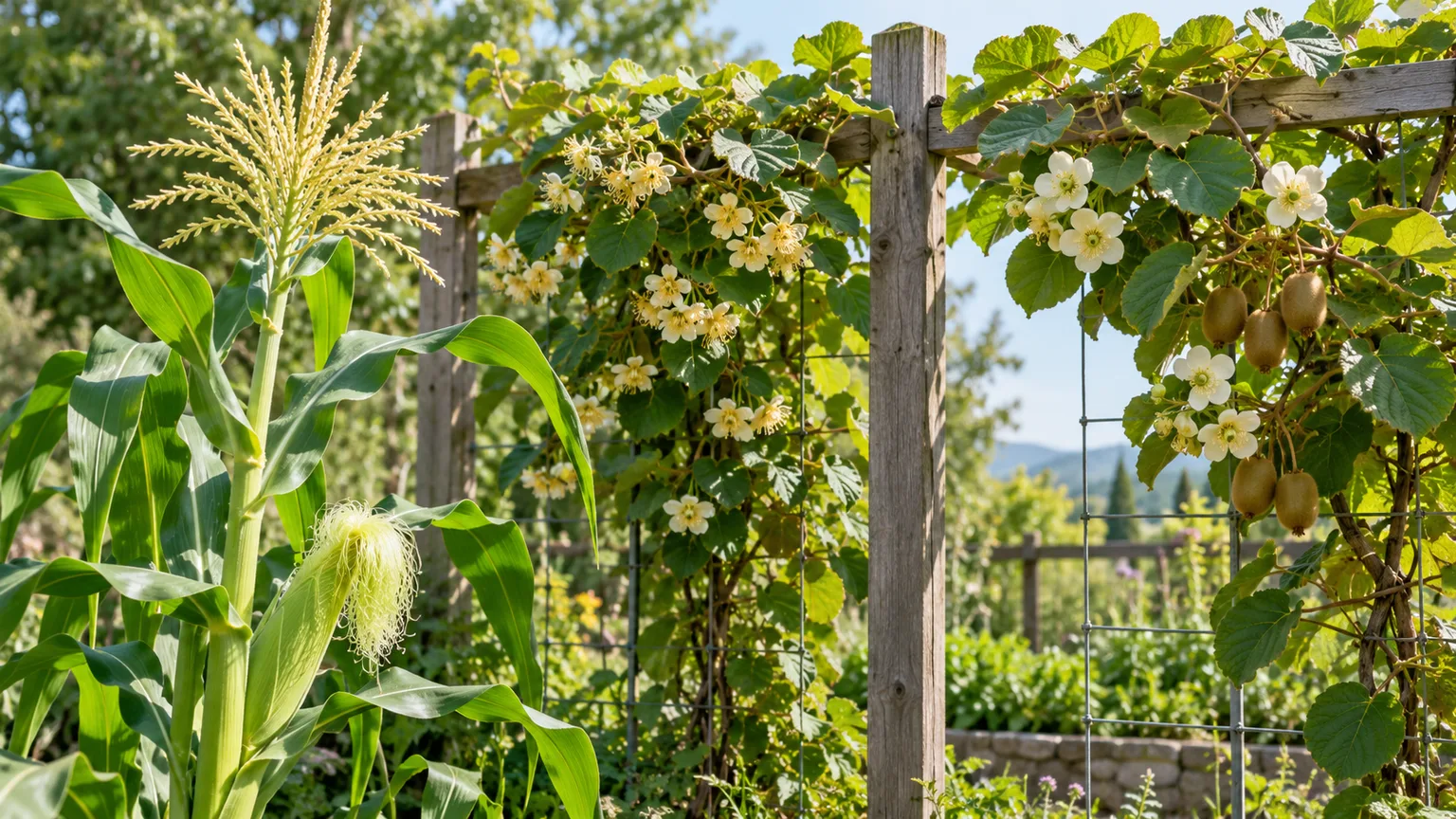
The practical difference is where the two flower sexes occur. A monoecious plant carries separate male and female flowers on the same individual; a dioecious species has male flowers on one plant and female flowers on another. Corn and squash make the first arrangement easy to see, while hollies and kiwifruit show why the second matters when you want berries or fruit.
Those labels answer one question—how reproductive structures are distributed—not every question a gardener may have. Monoecious does not automatically mean self-fertile, pollinator-free, or guaranteed to set fruit. To choose a plant or diagnose a missing crop, separate the layout of flowers from the mechanics of pollination and from the cultivar’s specific needs.
The short answer: count plants, then count flower types
Start by looking at the individual plant, not at a single blossom. If the same plant bears distinct pollen-producing and ovule-bearing flowers, it is monoecious. If individual plants in the species bear one flower sex or the other, the species is dioecious: a pollen-producing male and an ovule-bearing female are separate plants. The Greek roots are a memory aid: mono means one and di means two, while oikos means house.
For garden planning, ask a second question after classification: What has to happen for this plant to produce the thing I want? A female holly needs compatible pollen to make berries; a squash vine needs pollen delivered from a male bloom to a female bloom; an ornamental male ginkgo may be chosen precisely because it will not make the fleshy seed coverings associated with female trees. Definitions are the starting point, not a pollination guarantee. Iowa State Extension and Missouri Extension explain these distinctions and their practical consequences in their guides to plant reproductive terms and pollination mechanisms.
What “male” and “female” mean in a flower
In garden writing, “male” and “female” are convenient shorthand for flower structures that produce pollen or bear ovules. The pollen-producing structure is the stamen, usually made up of a stalklike filament and an anther that releases pollen. The female structure is the pistil or carpel; its stigma receives pollen, its style connects the stigma to the ovary, and the ovary contains ovules that may develop into seeds after fertilization.
The plant-level vocabulary can sound like a description of human gender, but it refers to reproductive anatomy and how it is distributed. A flower can contain both kinds of functional organs; separate flowers on one plant can contain one type each; or flowers of each type can be on different plants. Washington State University Extension’s basic botany chapter lays out the relationship between flower parts, pollen transfer, and plant sexual systems. Once you distinguish these levels, the terms become useful labels rather than a puzzle.
Staminate and pistillate flowers
A staminate flower has functional stamens that release pollen and lacks a functional pistil. A pistillate flower has a functional pistil and lacks functional pollen-producing stamens. You may also see “male” and “female” flowers used for these, respectively; the technical words are more precise, especially when a plant has reduced or nonfunctional structures that make visual identification less obvious.
On a squash or cucumber, the simplest field clue is often at the back of the blossom. A pistillate bloom sits on a small swelling that resembles a miniature fruit; a staminate bloom usually sits on a slender flower stalk without that ovary swelling. This tells you which flower may become a fruit, not whether pollination succeeded. The Royal Horticultural Society’s explanation of plant reproduction also uses hazel’s conspicuous male catkins and tiny female flowers to show that the two flower types on one plant can look dramatically different.
Perfect and imperfect flowers are a separate distinction
A perfect flower has functional stamens and pistil in the same blossom. An imperfect flower has only one functional flower sex—staminate or pistillate. “Complete” and “incomplete” sometimes describe whether all four floral parts (sepals, petals, stamens, pistil) are present, so they are not always exact synonyms for perfect and imperfect. For a home gardener’s first-pass comparison, perfect versus imperfect is the useful distinction: two organs in one flower versus one functional sex per flower.
This is a different axis from monoecious versus dioecious, which describes the plant or species. A monoecious plant may carry two kinds of imperfect flower on a single individual. A dioecious species distributes imperfect male and female flowers between different individuals. In broad botanical usage, some writers also group plants with perfect flowers under monoecious because both reproductive functions occur on one individual; in everyday garden explanations, it is clearer to reserve “monoecious” for the separate-flower arrangement and name perfect flowers separately. The RHS and Missouri Extension use the plant-level versus flower-level distinction to make that difference explicit.
Monoecious plants: separate flower sexes on one individual
A monoecious plant has both flower types somewhere on a single individual. That does not mean every branch has both, that both flowers open together, or that pollen can reach an ovule without a carrier. The arrangement can be conspicuous, as in corn’s tassel and ear, or easy to overlook, as in hazel’s small female flowers beside dangling catkins.
The practical benefit is that a single plant has the potential to supply both pollen and ovules. This can simplify planting compared with a dioecious fruiting species, but the gardener still needs to check the crop’s pollination biology. Wind, insects, timing, cultivar, and pollen compatibility can make the difference between flowers and harvest.
Corn puts the arrangement on display
Corn is a textbook monoecious crop: the tassel at the top of a plant bears pollen-producing flowers, while silk threads emerging from an ear are the receptive stigmas of female flowers lower on that same plant. The pollen is moved mainly by wind, though insects may transfer some as well. Each silk is connected to a potential kernel, so a poorly pollinated ear may have gaps where kernels failed to develop. Iowa State’s corn pollination guide explains that pollen must land on receptive silk for fertilization to occur.
This example also shows why “one plant has both sexes” is not enough to predict a crop. Corn is wind-pollinated, so gardeners usually plant a block rather than a single isolated stalk to improve the odds that pollen shed overlaps with emerging silk and reaches many ears. That is a spacing-and-pollination problem, not evidence that corn is dioecious. Corn plants carry both types of flowers, but pollen from nearby plants often contributes to good kernel set and can cross-pollinate other corn types.
Cucumber and squash reveal it at the blossom base
Many cucumber, melon, pumpkin, and squash plants produce separate male and female flowers on the same vine. The female flower has an ovary just behind the petals—the tiny cucumber or squash-shaped structure that can begin to swell after successful pollination. Male flowers generally appear earlier or in greater numbers at the start of flowering, so a vine covered in blossoms may not yet be ready to produce a crop. Iowa State Extension describes this early male-flower phase and the need for bee transfer in its vegetable pollination guidance; UGA Cooperative Extension notes that pollen from a male cucurbit flower must reach a female flower before fruit development can proceed.
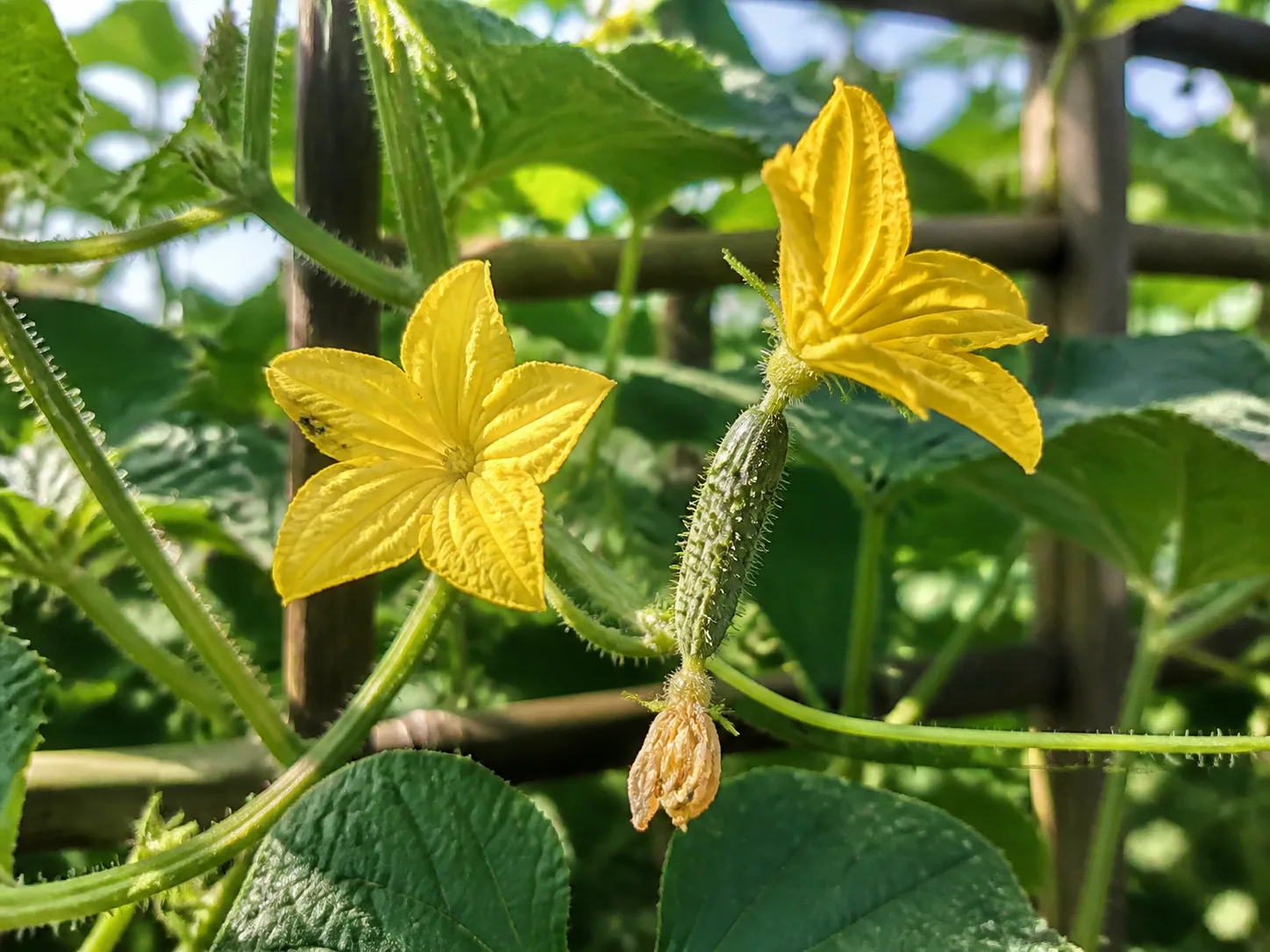
If a female bloom opens but its tiny fruit shrivels or drops, the flower’s sex is not the problem by itself. Pollen may not have arrived while the flower was receptive, or cold rain may have reduced bee activity; hot, dry conditions can also shorten the useful pollination window. Some modern cultivars are gynoecious (mostly or entirely female-flowering) and may be sold with a pollinizer seed included, while a parthenocarpic cultivar can set fruit without pollination. Those traits are separate: a gynoecious cucumber that is not parthenocarpic still needs pollen. Check the seed packet or cultivar description before adding another plant; Penn State Extension’s cucumber-pollination guide explains how cultivar type changes the need for pollen.
Dioecious plants: male and female flowers on separate plants
In a dioecious species, each individual typically produces flowers of one sex. A male plant supplies pollen; a female plant bears ovules and, after successful pollination and fertilization, may produce fruit or seeds. If you are growing the species for a berry, nut, or fruit, the sexes must be represented in the planting—or a compatible pollen source must be close enough for the species’ pollination route.
The reproductive difference is straightforward, but nursery shopping takes more care. Young shrubs and trees may not show their sex until they flower, and foliage can be nearly identical. A cultivar name is not a reliable sex label: the RHS notes that the female holly ‘Golden King’ has a masculine-sounding name, while ‘Silver Queen’ is male. Look for explicit male/female or pollinizer information on the plant tag, then confirm that the named partner blooms at the same time and is compatible with the fruiting plant.
Holly makes the fruiting difference visible
Many hollies are dioecious. The familiar red berries develop on female plants, but most female hollies need pollen from a compatible male holly blooming nearby. In a landscape, that creates a deliberate trade-off: plant a male for pollination even though it will not carry the showy berries, or choose a cultivar marketed as self-fertile if you have little room. The RHS lists self-fertile exceptions such as Ilex aquifolium ‘J.C. van Tol’ and warns that common cultivar names do not reliably identify sex in its holly guide.
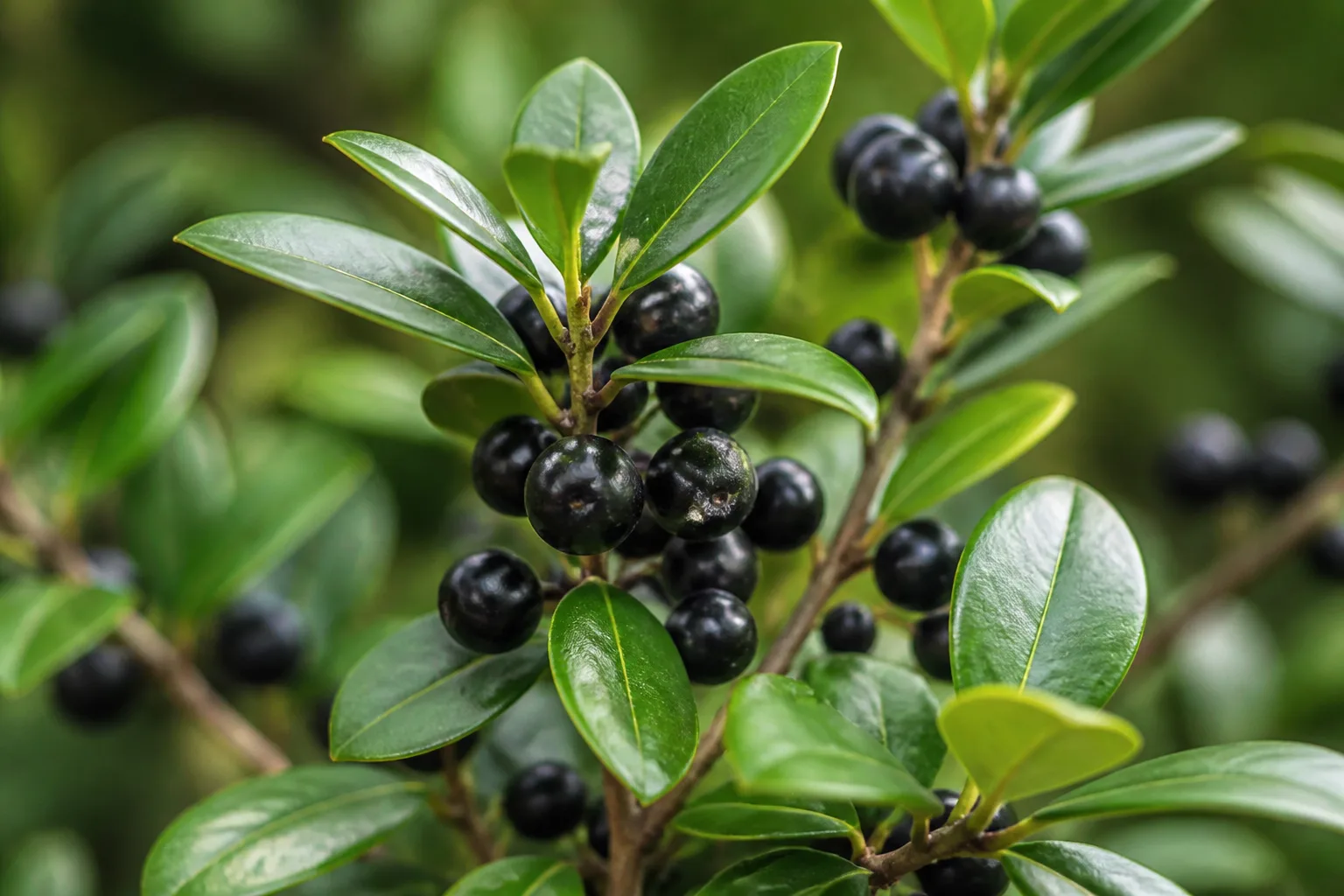
“Nearby” is not a universal number of feet. Pollination distance depends on holly species, flowering time, insects, wind exposure, and site conditions; consult the nursery or a local extension guide for the exact cultivar pairing rather than applying a generic male-to-female ratio. The same logic applies when a female plant flowers but produces no berries: confirm that the pollen partner is actually male, compatible, mature enough to bloom, and flowering at the same time.
Kiwifruit and asparagus show different garden trade-offs
Kiwifruit vines are commonly dioecious: fruiting females and pollen-producing males are grown separately. Oregon State University Extension advises pairing male and female plants of the same species and stresses that flowering must overlap; it also notes that some cultivars are self-fruitful, though a male may improve fruit size for certain varieties. The guide’s local recommendations are specific to the Pacific Northwest, so treat its ratios and timing as regional guidance, not a universal planting formula. Its home-garden kiwifruit guide is a useful model for what to verify before ordering vines.
Asparagus makes the sex distinction matter for reasons beyond fruit. Both male and female plants produce edible spears, but female plants also form red berries and seeds; Minnesota Extension notes that male cultivars often produce more uniform spears and that female seedlings can become unwanted volunteers. The right choice depends on whether you want seed, berry-free foliage, yield, or a particular cultivar—not on a rule that female plants are undesirable. Iowa State Extension lists ginkgo and several ash species as other familiar examples. Garden Organic also lists spinach as dioecious; the fact that a genus contains dioecious species does not mean every member has the same reproductive arrangement, so check the species and cultivar.
Compare monoecious and dioecious plants at a glance
| Feature | Monoecious | Dioecious |
|---|---|---|
| Where the flower sexes occur | Separate male and female flowers on one plant | Male and female flowers on different plants |
| One plant has both functions? | Yes, at the plant level | No, usually one flower sex per individual |
| Familiar examples | Corn, cucumber, squash, hazel | Holly, kiwifruit, asparagus, ginkgo |
| What one plant can provide | Pollen and ovules, but fruit still depends on successful pollination and compatibility | A pollen donor or a fruit-bearing female; a fruiting planting needs both roles represented unless a cultivar is an exception |
| Typical pollination route | Wind or insects move pollen between flower types; hand transfer can work for some crops | Wind or pollinators move pollen from a male plant to a female plant |
| What to check before planting | Bloom overlap, pollinator needs, cultivar type, and whether one plant is enough | Correct sex, compatible species/cultivar, maturity, bloom overlap, and distance |
The table is a decision aid, not a substitute for species-level instructions. “Dioecious” predicts that sex is separated between plants in the ordinary form; it does not tell you a universal number of males, an exact spacing, or whether a named cultivar has been bred to behave differently. “Monoecious” tells you both flower sexes occur on an individual; it does not tell you the insects or wind conditions that crop needs.
A third arrangement: bisexual or perfect flowers
Many plants familiar to gardeners do not have separate male and female flowers at all. Their individual blossoms contain both functional stamens and a pistil, so they are described as bisexual, hermaphroditic, or perfect. Apples, tomatoes, roses, and lilies are common examples of plants with perfect flowers, although their ability to set fruit or seed without another plant varies by species and cultivar.
The third arrangement matters because common explanations sometimes force every plant into a monoecious-or-dioecious choice. That leaves out a large and important set of flowering plants. Even a perfect flower may not self-pollinate: its anthers and stigma can mature at different times, its structure may discourage pollen from reaching its own stigma, or the plant may be genetically self-incompatible. Missouri Extension uses perfect wild plum and imperfect pumpkin flowers to show how flower structure and plant-level arrangement are separate questions (pollination mechanisms).
Does monoecious mean self-pollinating?
No. Monoecious describes where male and female flowers occur, not whether a plant can fertilize itself or whether pollen will move without help. If pollen from one flower fertilizes a pistillate flower on the same individual, botanists call that transfer geitonogamy; it is technically between flowers, even though it stays within one plant. The plant may instead need pollen from another individual, or a physical vector such as wind, a bee, or a human gardener to move the pollen.
Several conditions can prevent a monoecious plant from setting seed or fruit on its own. The two flower types may open at different times; the pollen may be incompatible with the receiving flowers; the species may require cross-pollination; or the pollinator may not be active during bloom. A single plant may carry the right parts but still fail to complete the reproductive sequence. Horticulture writer Plantura discusses how timing, spatial separation, and sterility mechanisms can affect same-plant pollen transfer in its guide to monoecious and dioecious plants; Garden Organic’s basic botany guide for seed savers likewise distinguishes flower arrangement from cross-pollination.
That distinction is why “self-pollinating” should not be used as a synonym for monoecious. If you are buying a fruiting tree, shrub, or vine, search the cultivar name plus “pollination requirements,” “self-fertile,” or “pollinizer.” A product page that merely says “male and female flowers on the same plant” has not yet answered whether the plant will fruit alone.
How pollen transfer becomes fruit and seed
Pollination is the transfer of mature pollen from an anther to a receptive stigma. Fertilization happens afterward, when male genetic material travels through a pollen tube and reaches an ovule. In many flowering plants, a fertilized ovule develops into a seed and the ovary enlarges into a fruit; in other garden crops, we harvest a plant part that is not a fruit at all. These steps are related but not interchangeable: a flower can receive pollen without successful fertilization, and not every fruit-like crop needs seeds to enlarge.
The transport method shapes what “enough plants” means in practice. In a garden bed, bee-pollinated cucurbits depend on visits between flowers; wind-pollinated corn needs a planting arrangement that exposes silks to pollen shed. Dioecious hollies and kiwifruit require a pollen source from another plant, but their vectors and effective distances differ. Minnesota Extension’s pollination overview for fruits and vegetables notes that poor pollination can leave vine-crop fruit small, misshapen, or absent.
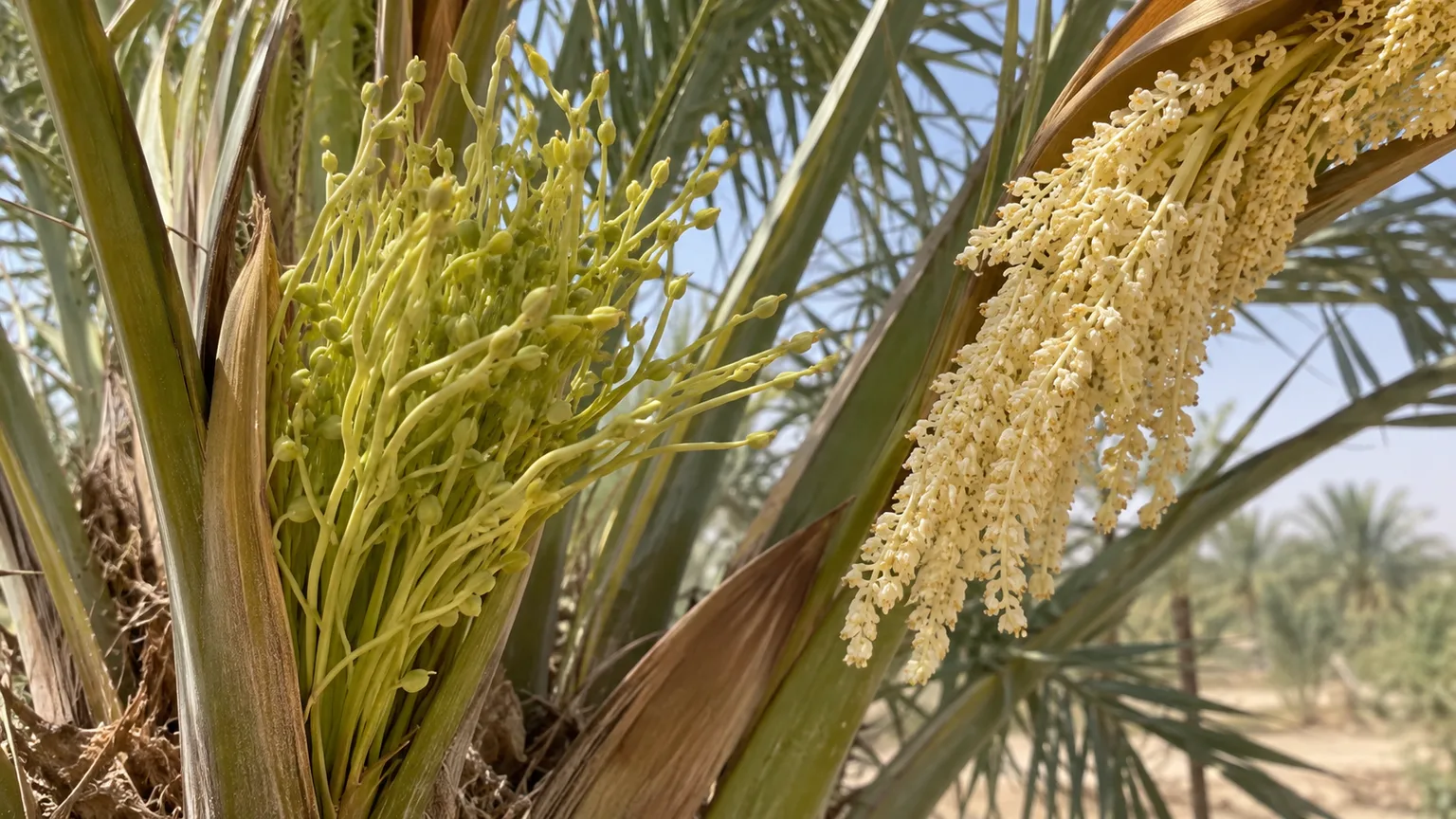
Parthenocarpy is another reason not to treat fruit as proof of fertilization: some cultivars can develop seedless fruit without pollination. Conversely, a flower may be perfectly capable of reproduction yet never produce a fruit if pollination fails. For gardeners, the reliable sequence is: identify the flower or plant arrangement; find out which pollen source and vector that species needs; confirm bloom overlap; then watch whether fruit or seeds develop.
When a dioecious plant flowers but does not fruit
First confirm the identity and sex of the plants. A female plant flowering without a crop does not prove that a male is present nearby; a male plant can flower abundantly but will not bear berries or fruit in the ordinary dioecious arrangement. Labels can be wrong, old nursery tags can disappear, and juvenile plants may not flower until they are mature. For species that are hard to sex before bloom, keep the purchase label or ask the nursery to identify the cultivar’s role.
Next check the pollen match and timing. A male plant of the wrong species or an incompatible cultivar may not pollinate the female; even compatible partners need overlapping bloom. Weather can reduce pollinator activity or damage flowers, and a sheltered urban yard may have fewer insect visits than an open garden. Oregon State Extension’s kiwifruit guide is particularly clear that male and female vines must flower simultaneously for a crop, while RHS guidance warns that most female hollies need a male flowering nearby.
Then rule out exceptions. Some cultivars are self-fertile, and some fruits can develop without fertilization; other species may have variable sex expression or unusual individuals. Do not buy a second random plant as the first response. Verify whether the existing plant is female, what specific pollen partner it needs, how far away that partner can be, and whether the cultivar’s own documentation identifies it as self-fruitful.
Why a monoecious vegetable may bloom without setting fruit
For squash or cucumbers, check the flower before assuming the plant is “all male.” Male blossoms are often the first or most abundant flowers, especially early in the season. Female flowers are identifiable by the tiny ovary behind the petals; if that structure is missing, the flower cannot become a cucumber or squash fruit no matter how many male blossoms are open. As the vine develops, flower sex ratios can shift, so give a healthy plant time to produce female blooms.
If the plant has female flowers, watch them through bloom. A small ovary that turns yellow, shrivels, and drops often points to incomplete pollination or stress during fruit set, not a need for fertilizer. For bee-pollinated cucurbits, protect pollinator activity by avoiding unnecessary pesticide use during bloom and maintaining a steady supply of flowering plants; hand-pollination can be a short-term option for a few flowers if insects are absent. Iowa State’s pollination and fertilization guide explains the transfer between male and female flowers.
Corn requires a different check. If silk emerges after most pollen has shed, or a small planting does not release enough pollen near the ears, kernels may be missing even though the plant carries both flower types. A block of plants generally supports better wind transfer than one stalk, and planting several short rows is often more effective than one long row. Also confirm whether you have a standard variety or a parthenocarpic/gynoecious specialty cultivar; seed companies describe these traits because they change pollination requirements.
Choose plants for berries, fruit, or a cleaner landscape
Before ordering a dioecious plant for a fruit display, make the pollination requirement part of the buying decision. Ask the nursery for the exact male pollinizer cultivar, the female cultivar, whether both bloom at the same time in your climate, whether a neighbor’s plant can serve, and whether a self-fertile selection is available. For kiwifruit, verify the species and cultivar pair; for holly, check sex from the cultivar listing rather than relying on “King,” “Prince,” “Queen,” or “Princess” in its name.
For a low-litter landscape, the same biology can help you choose. A male ginkgo or male ash avoids the fruit or seed structures that some homeowners consider messy, while a female holly supplies berries only when pollination succeeds. That choice affects wildlife food and reproductive potential as well as cleanup, so it is not automatically a better-or-worse decision. In asparagus, selecting a male cultivar may yield uniform spears and fewer seedling volunteers, but a gardener saving seed has a different goal.
For monoecious crops, a single plant may contain both flower sexes but still be a poor one-plant planting if the crop depends on cross-pollination, wind distribution, or insect visits. Read seed-packet descriptions for “gynoecious,” “pollinizer included,” or “parthenocarpic,” and match your planting layout to the crop. For fruit-bearing trees with perfect flowers, look up self-compatibility separately; flower anatomy alone does not settle that question.
Common identification and planting mistakes
The first mistake is labeling an individual flower and then using that label for the entire plant. A staminate blossom is male; a monoecious plant carries both staminate and pistillate flowers; a dioecious species separates them between individuals. A second mistake is assuming every visible structure is functional: some flowers retain reduced, nonfunctional organs, and flowers that look similar can have different reproductive roles.
Another common error is treating a fruiting failure as proof that the plant’s sex label was wrong. Fruit depends on a chain of events—maturity, compatible pollen, receptive flowers, pollen transfer, fertilization, and suitable growing conditions. A single missing step can prevent harvest. When troubleshooting, write down what you observe: flower type, bloom dates, whether pollen or pollinators are present, and whether the ovary swells or aborts. This observation is more useful than changing multiple conditions at once.
Finally, avoid broad claims about what percentage of all plants are monoecious or dioecious. Estimates shift with the population being counted, taxonomic scope, and whether perfect-flowered individuals are grouped under “monoecious.” Those percentages do not help you decide whether your holly needs a male partner or whether bees need to visit squash flowers. A correct species-and-cultivar label is more valuable than a global estimate.
Conclusion: use the label and the species’ pollination needs
Monoecious means male and female flowers occur on one plant; dioecious means those flower sexes occur on different plants. Perfect flowers add a third, flower-level arrangement, and none of these classifications alone tells you whether a plant is self-compatible or how pollen gets to a receptive ovule.
Use the distinction to ask better questions before planting: Which plant or flower produces pollen? What receives it? Does this cultivar need another compatible individual, an insect, wind, or hand transfer? For berries and fruit, confirm sex, cultivar, and bloom overlap; for vegetables, identify the flower and match the pollination method to the crop. That’s the practical meaning of the botanical terms.



