How to Grow and Care for Duckweed in Ponds and Tanks
Learn how to grow duckweed in an aquarium or pond, choose light and water conditions, keep enough open surface, and remove unwanted excess growth responsibly.
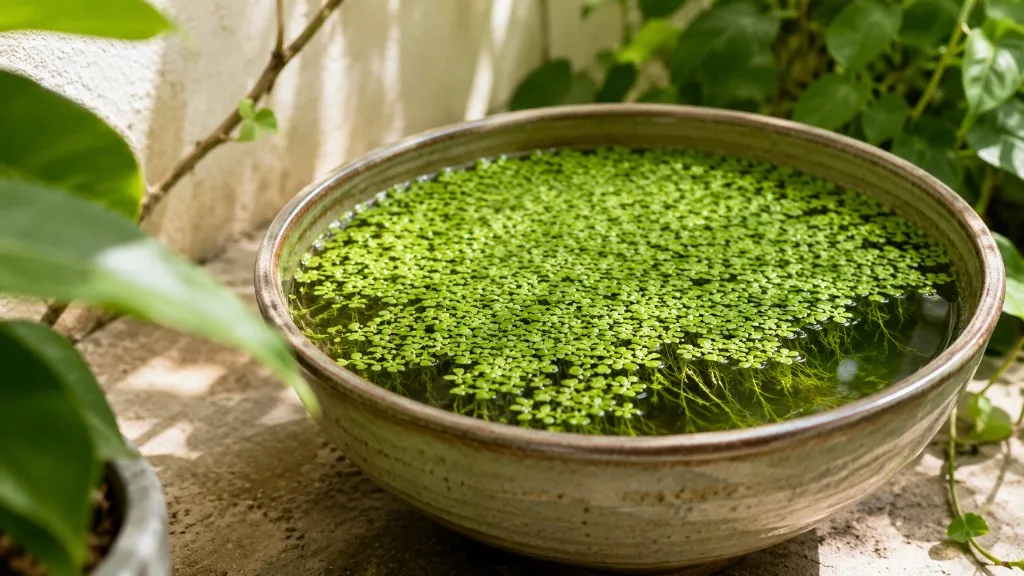
Duckweed is a tiny floating freshwater plant that can be easy to keep and surprisingly hard to contain. It needs no pot or substrate: its small green fronds rest on the water while fine roots hang below and take up dissolved nutrients. In an aquarium, a small patch can provide cover and be harvested as fish food; in a pond, a dense mat can shade other plants and interfere with water-surface oxygen exchange.
Before you add any, decide where the extra growth will go. A tank with a floating ring, open water, and a net within reach is manageable. A pond with an open outlet, nutrient-rich runoff, or no practical way to skim the surface is a poor place to start. Begin with a few clean fronds, use a quiet but functioning water system, and remove excess regularly rather than waiting for a full green carpet.
Duckweed care at a glance
| Care factor | What duckweed needs |
|---|---|
| Plant type | Free-floating freshwater aquatic plant; common duckweed is Lemna minor |
| Placement | On or just below the water surface, not planted in gravel |
| Light | Bright, consistent light; avoid sudden overheating from direct sun on a small tank |
| Water movement | Gentle surface movement; keep fronds from being pushed underwater |
| Nutrients | Often available from aquarium or pond water; do not add general garden fertilizer to a stocked tank |
| Growth | Rapid under favorable conditions; exact pace varies with species, light, temperature, and nutrients |
| Maintenance | Thin routinely and keep filter intakes, feeding areas, and open surface clear |
| Propagation | New fronds bud from older ones; a small healthy starter patch is enough |
| Best use | Controlled aquarium cover or a pond where surface plants can be monitored |
| Main risk | Unchecked surface cover can block light and gas exchange; decay can use dissolved oxygen |
“Duckweed” is a common name for several genera of small floating plants, so a label matters. The care notes here focus on common or lesser duckweed, Lemna minor, while pointing out where related plants behave or look different. Texas A&M AgriLife Extension’s AquaPlant identification guide describes common duckweed as a small, light-green plant with oval fronds and a single root.
Decide whether duckweed fits your aquarium or pond
Duckweed is useful when you want a floating plant that can be harvested, offers surface cover, or takes up some dissolved nutrients as it grows. Small patches may provide shelter for tiny aquatic organisms and shade for fish that prefer dimmer overhead light. In a fish tank, its value depends on the animals and plants already there: herbivorous fish may eat it quickly, while other fish may not touch it. A cover can also obstruct feeding, lights, filter openings, and access to submerged plants.
The same growth habit is a major drawback. A surface mat can spread across a tank before you have decided you like it. In a garden pond, it can be carried by wind or waterfowl, mingle with other floaters, and become tedious to skim. Penn State Extension explains that heavy duckweed or watermeal growth can block sunlight, inhibit oxygen exchange, and reduce dissolved oxygen as plant material dies and decays. A little duckweed does not automatically harm fish; a pond-wide, persistent mat is a different condition.
Choose a contained aquarium or indoor culture tub if you are experimenting, feeding fish, or trying to protect other aquatic plants from shade. Consider pond use only if the species is appropriate where you live, the pond has no easy route for fragments to wash into a drain or natural water, and you are willing to remove it repeatedly. Check local aquatic-plant guidance before buying or moving species, especially when the exact species is not identified.
Identify duckweed before you add it
Common duckweed, Lemna minor, forms tiny, flat, oval fronds that often sit in groups, each with one short root trailing into the water. The fronds are small enough to be overlooked in a pond sample, but a handful can quickly become a visible mat. The frond is the plant’s leaflike body; it is not a rooted stem with ordinary leaves. This simple structure is why duckweed floats freely and does not need aquarium gravel.
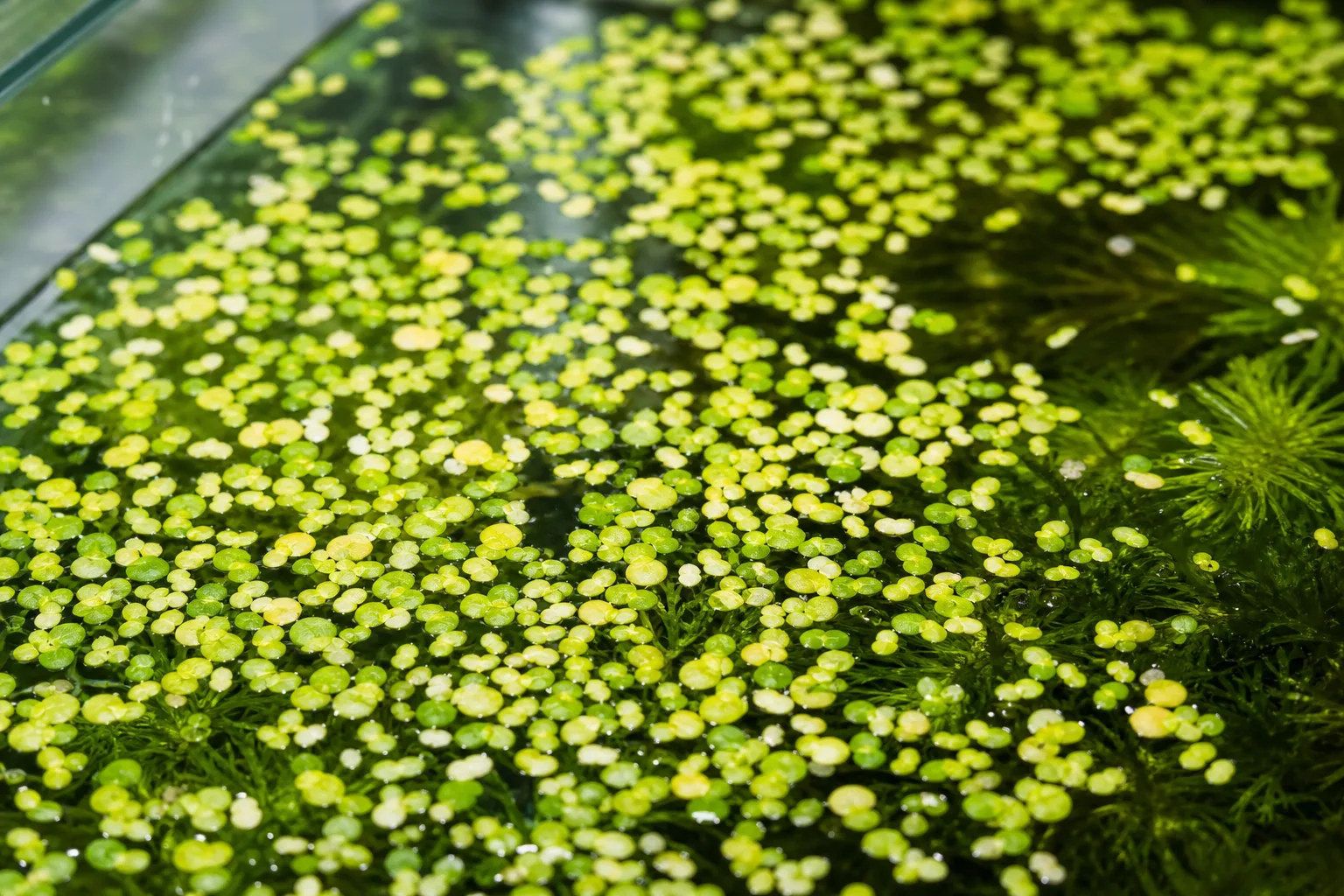
Other plants are often sold or casually identified as duckweed. Greater duckweed, Spirodela polyrhiza, has larger fronds and multiple roots; watermeal, Wolffia species, is so small that it can look like green grains and has no roots. The differences matter when comparing growth, identifying a pond infestation, or trying to remove every last fragment. Texas A&M AgriLife Extension’s duckweed index compares common forms, and University of Maryland Extension groups the common, giant, and watermeal types found in Maryland waters.
If you are buying for an aquarium, ask for a named species rather than a generic bag of mixed floaters. Inspect the water and fronds for snails, algae, insects, or decaying material before introducing them. Wild-collected plants may carry organisms or contaminants into a tank, and an unlabeled plant may be subject to restrictions in your area. When the identity is uncertain, isolate it in a separate container first instead of placing it directly into a stocked system.
Choose a contained growing setup
Duckweed is simplest to grow in an open container of freshwater, because it does not need a substrate, planting depth, or pot. The container should be wide enough to give the fronds surface area and stable enough that routine skimming is easy. Avoid a tiny sealed jar that heats quickly or has no room to remove plants. The Gardening Know How growing guide also separates aquarium culture from pond management and emphasizes monitoring surface cover outdoors. Use conditioned aquarium water or another clean freshwater source; for a fish tank, match the water to the livestock and treat tap water as required by your aquarium setup.
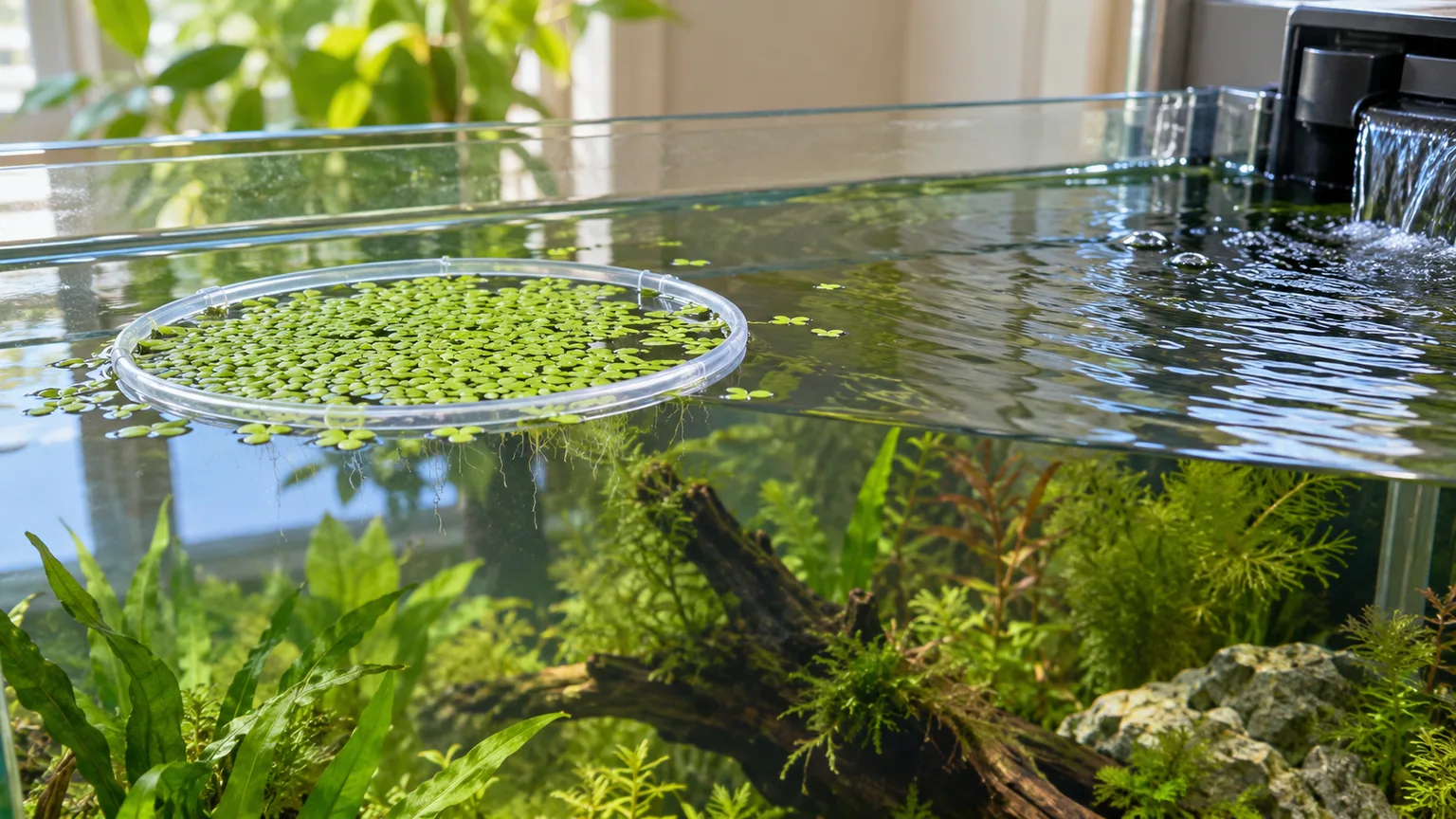
The key design choice is containment. A shallow floating corral made from aquarium-safe airline tubing can keep a patch away from a filter outlet or feeding zone while leaving the rest of the surface accessible. A corral does not stop duckweed from budding, so the ring must be large enough to avoid a dense plug and easy to lift for cleaning. Do not block a filter intake or reduce circulation that the fish depend on just to keep fronds still.
Grow duckweed in an aquarium
In a fish tank, place the starter patch where it can float undisturbed without gathering against a filter, lid, or glass corner. If the outflow pushes fronds under the surface, adjust the patch location or use a floating ring; do not turn off filtration or aeration to suit the plant. Leave open areas so light reaches submerged plants and surface exchange can continue. Aquarium Co-Op’s live-plant guidance similarly recommends slowing the current around floating plants and not allowing them to cover the entire surface.
Duckweed may use dissolved nitrogen and phosphorus already present in a stocked tank, but its growth is not a test of water quality. A thriving patch does not prove that ammonia, nitrite, or nitrate are safe for fish, and harvesting a nutrient-absorbing plant does not replace water changes or filtration. Keep testing water on the schedule appropriate for your tank, especially after adding livestock or changing the plant load.
Grow duckweed in a pond or outdoor tub
In a pond, choose a sheltered area where the plant can float without being swept to an overflow or drain. A garden tub is easier to control, but it still needs a secure location, clean water, and a way to prevent rain or hose water from carrying fronds out. A cover of duckweed can hide the water beneath it, so keep paths for observation and preserve open patches if fish, submerged plants, or pond equipment are present.
Wild duckweed is common in many regions, but not every species or source is appropriate for every pond. Do not transfer a scoop from a local lake into a garden pond simply because it looks healthy. The plant may be a different species, and water can carry unwanted organisms. Buy from a reputable aquatic-plant seller, retain the label, and check regional restrictions before transport or outdoor use.
Give it light, quiet water, and available nutrients
Bright, consistent light supports growth, but full summer sun is not a universal recipe for every container. A small bowl on a hot windowsill can warm rapidly, and strong direct light may encourage algae or large temperature swings. In an aquarium, use the lighting schedule that suits the whole planted tank and position duckweed away from strong surface current. Outdoors, partial shade can reduce heating in a small tub, while deeper shade usually slows growth.
Duckweed obtains nutrients from the water rather than from soil. A tank with fish, shrimp, or other aquatic life often supplies some nutrients through feeding and waste; an isolated culture tub may not. If growth stalls, check that light is adequate, the water is not excessively turbulent, and the fronds are not being eaten or trapped. Do not immediately add fertilizer: weak growth can also reflect water changes, nutrient-poor source water, temperature shifts, or an incorrect plant identification.
Stable freshwater and clean equipment matter more than chasing a single pH number from a generic care chart. Match water conditions to aquarium inhabitants, not to a supposed universal duckweed target. If using an outdoor pond, watch for runoff from fertilized lawns or gardens. Excess nutrients entering a pond can support extensive aquatic-plant growth, so reducing nutrient sources is a better long-term approach than adding more fertilizer to grow duckweed.
Add a small starter culture
A small clean starter is enough because duckweed reproduces by budding from existing fronds. You do not need to plant it or bury its roots. Float a few healthy fronds on the water, spread them out, and let them settle. If the new plants collect in one corner, gently redistribute them or place them inside a floating ring. Keep the surface open around the patch and watch how quickly it expands before adding more.
For an aquarium, rinse or inspect the starter in a separate bowl of conditioned water, then transfer only the clean fronds you want. Avoid pouring shipping water, pond water, or unknown tank water into a display aquarium. Remove hitchhiking snails, algae, and debris with a clean pipette or tweezers. If your tank contains animals sensitive to sudden changes, acclimate the plants to the tank water gradually in a separate container.
For an outdoor tub, set it up away from gutters, storm drains, and places where animals can carry wet plant material elsewhere. Add enough water to keep roots suspended and provide some space above the rim for rain. Do not set the tub where overflow can escape to a nearby ditch or wetland. A controlled indoor culture is the safer trial if you cannot prevent accidental release.
Thin the mat to keep the water usable
Inspect the surface every few days at first, then set a routine based on actual growth. Duckweed grows at different rates depending on species, light, temperature, and nutrients, so claims that it doubles on a fixed schedule are not a dependable care rule. When the fronds begin to overlap densely, scoop out a portion. Keep open water over filter intakes, feeding areas, and submerged plants, and avoid letting a closed mat cover the entire aquarium or pond.
A small fine-mesh net, aquarium shrimp net, or clean spoon works for a tank. Lift clumps slowly so you do not trap fish or pull up other plants. In a pond, use a long-handled pool net or a floating boom to gather fronds where they are easy to remove. Skim in more than one pass if needed; fine duckweed can slip through a coarse net. Clean the tool afterward and do not move wet equipment from one pond to another without removing plant fragments.
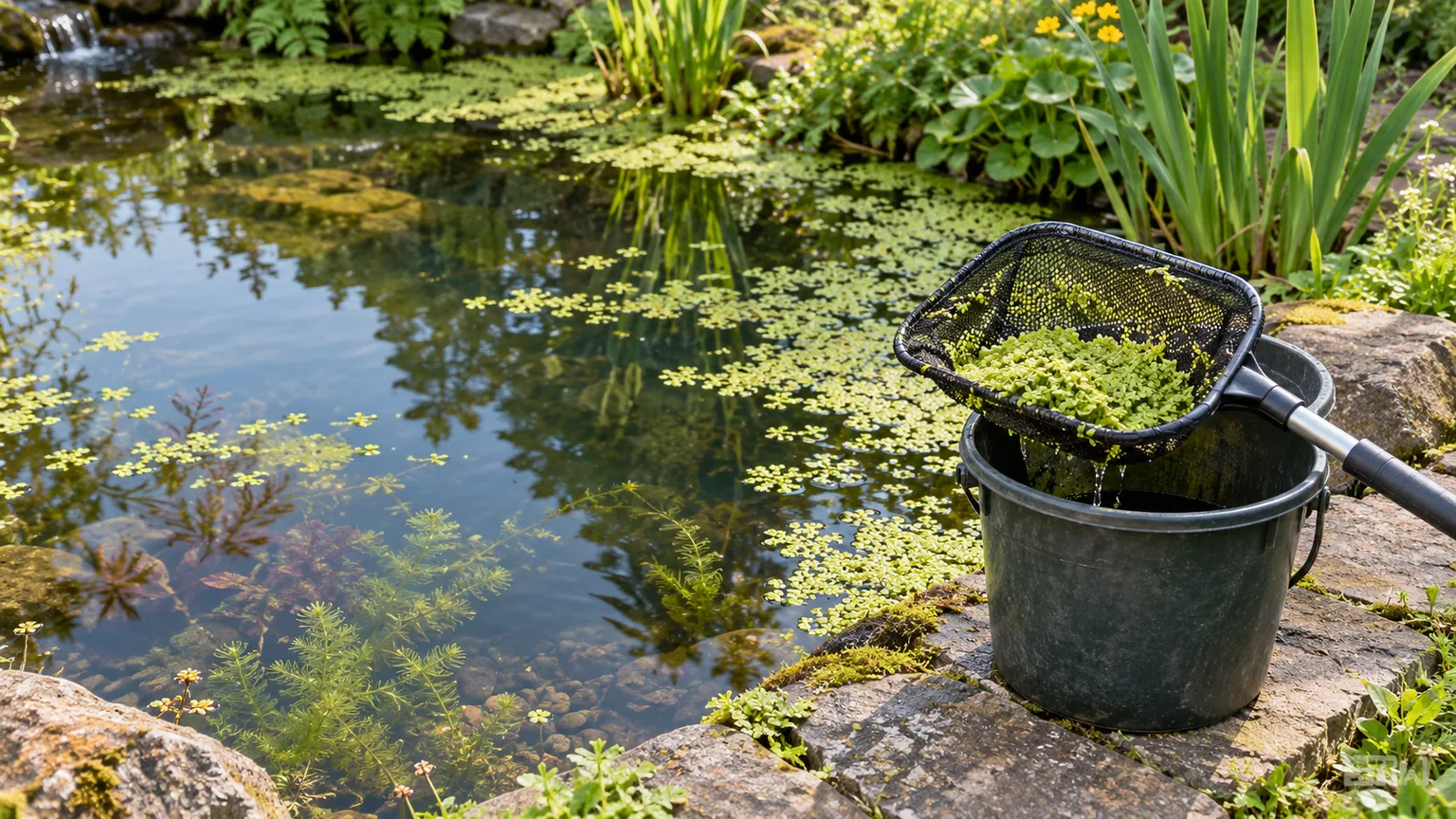
If you want surface cover, do not aim for a completely blank surface or a complete green roof. Keep enough duckweed to serve the purpose, then harvest the surplus before it compacts. Watch whether lower plants are losing light, whether fish still reach the surface to feed, and whether circulation equipment remains clear. A floating plant can be useful and still need frequent thinning.
Harvest, feed, and dispose of excess
Harvest by lifting fronds into a dedicated net or fine sieve and letting excess water drain back into the same tank or pond. Work over a tray so small plants do not scatter onto the floor, garden soil, or another water system. Rinse reusable nets over the same contained system or a waste container, not over a storm drain. The goal is to remove biomass without transferring live fronds somewhere else.
Some fish and invertebrates eat duckweed, but appetite varies by species and individual. Offer a small amount as supplemental food only if the animal’s diet is known to include plant matter and it consumes the fronds promptly. Do not assume that a fish will eat enough to control an overgrown mat, and do not collect feed from water exposed to herbicides, sewage, road runoff, or unknown contamination. If you are growing duckweed specifically as feed, culture it in a separate, clean system with known water inputs.
Dispose of unwanted duckweed in a sealed household waste stream or another route approved locally, after draining it well. Do not compost it where rainfall or irrigation could wash live pieces into a pond, and do not dump it into a creek, ditch, storm drain, or natural wetland. Penn State Extension’s guidance on physical control of duckweed and watermeal advises removing skimmed plant material away from the pond so wind or runoff cannot carry it back.
Manage pond overgrowth without stressing aquatic life
For a small pond, repeated physical skimming is usually the most direct first step. Remove a portion while the mat is still manageable, then monitor how quickly it returns. Penn State Extension notes that harvesting also removes nutrients stored in the plant biomass, but repeated removal may be needed. Reduce fertilizer and nutrient runoff entering the pond by maintaining a vegetated buffer and keeping lawn or garden fertilizer away from the water’s edge.
A complete surface blanket can reduce light for submerged plants and interfere with exchange between water and air. When a large mass dies and decomposes, microbes use dissolved oxygen, which can stress or kill fish. That is why killing or removing nearly all plant material at once can create a short-term water-quality problem even when duckweed itself was the nuisance. Penn State Extension’s pond oxygen guidance explains why dissolved oxygen matters and how decay affects it.
Do not introduce ducks, grass carp, or another animal as a quick fix without understanding local rules, pond size, ecosystem effects, and what else the animals will eat. Avoid treating a pond with an aquarium product or an unlabeled chemical. Large-pond management can require species identification, approved products, permits, and staged treatment; ask a local extension office or qualified aquatic-management professional before using herbicides. A small aquarium is a different setting, but any pesticide or algaecide still has to be explicitly safe for the animals and plants in it.
Use fertilizer cautiously, or not at all
Duckweed can grow on nutrients already dissolved in the water. In a stocked aquarium, fish food and waste often contribute to the nutrient supply, so adding a balanced garden fertilizer can create risks for fish, shrimp, snails, and other plants. The label on a lawn or houseplant fertilizer does not make it safe for an aquarium. Do not follow a generic 10-10-10 recipe or put ordinary fertilizer into an ornamental pond.
If you are running a separate plant-only culture, use a formulation intended for aquatic plants or laboratory culture and follow its label for that use. Start conservatively and watch for algae, odor, cloudy water, or rapid pH changes. For an aquarium with animals, adjust light and placement first; if a nutrient deficiency seems likely, check water parameters and choose a product explicitly labeled for that tank. The same caution applies to adding trace minerals: more is not automatically better.
If the duckweed grows too slowly and submerged plants or livestock are healthy, slow growth may simply be the condition you want. A rapidly multiplying floater can demand more harvesting and block more light. Optimize only for the amount you can use, not the maximum rate the plant might reach.
Adjust care for seasons and winter
In an indoor aquarium, keep the light and water routine steady and remove dead or yellowing fronds as you thin the mat. Avoid placing the tank where sunlight causes large daily temperature swings. If a heater or room temperature changes seasonally, watch the plants for a few weeks and adjust gradually rather than replacing the whole water supply to accelerate growth.
Outdoors, duckweed may expand during warm, calm, nutrient-rich periods and slow or become less visible as conditions cool. Winter survival varies among duckweed species and local pond conditions. Some related species form resting buds, while common duckweed’s survival strategy is not identical; do not rely on an assumed wintering structure unless you have confirmed the species. North Carolina State Extension describes common duckweed as overwintering at the bottom of ponds, and a scientific review of duckweed survival strategies discusses how winter responses differ across the group.
A small outdoor tub is more vulnerable to freezing solid than a pond. If you want to preserve a culture through winter, move a small clean sample indoors to a separate container before hard freezes, keep it in freshwater and provide steady light. Do not bring uninspected pond water into a fish tank. If you do not need to save it, let outdoor plants remain in their local system and avoid moving them to another body of water.
Propagate duckweed
The simplest way to propagate duckweed is to leave a healthy patch in suitable water and allow new daughter fronds to bud from the existing plants. When you want to start another contained culture, transfer a few clean fronds with a clean net or pipette into a separate container of freshwater. The transfer itself is the propagation step; there is no cutting, potting mix, or rooting hormone.
Use water and tools from the same clean system where possible. If moving fronds between tanks, inspect them for algae, snails, and other hitchhikers and avoid mixing water between systems with different livestock or treatment history. Start small, keep the new surface accessible, and confirm the new container has stable light and water before transferring more. Because fronds reproduce vegetatively, even an amount that looks negligible can establish a new patch.
Sexual reproduction through flowers and seed is possible in duckweeds, but home growers generally maintain them through vegetative growth. You do not need to wait for flowers or collect seeds to multiply common aquarium duckweed. If the label names a different genus or species, consult a reference for that exact plant before assuming its seasonal behavior or culture requirements are identical.
Troubleshoot yellow, pale, or disappearing fronds
Yellow, translucent, or browning fronds usually point to a condition to investigate, not an automatic fertilizer deficiency. Check whether the patch has been pressed under water, dried out at the surface, exposed to intense direct sun, chilled, or covered by condensation under a tight lid. In a fish tank, see whether animals are eating the plants before treating the change as a disease. Remove decaying material so it does not break down in the water.
If all growth fades at once, review recent changes in water source, temperature, lighting, fertilizer, medications, and filter flow. Duckweed is particularly easy to push around: a new outflow direction can pile it into a corner or keep it submerged. Compare the water conditions before and after the change, and correct one likely cause at a time. Avoid adding fertilizer, algaecide, or pesticide without identifying the problem and checking compatibility with livestock.
If a pond suddenly fills with duckweed, verify that it is not watermeal or a mixed colony of floating plants. Texas A&M AgriLife Extension emphasizes identification before pond control because related floating weeds can require different management. On a large pond, test for nutrient sources and ask a local aquatic specialist to assess the plant and water conditions. In a small tank, skim what you can reach, restore open surface area, and check that the filter intake is clear.
Know the other duckweeds and look-alikes
Common duckweed is not the only tiny floater. Greater duckweed, Spirodela polyrhiza, is larger and often has multiple roots; watermeal, Wolffia, has no roots and can resemble fine green meal spread across the surface. Mosquito fern (Azolla) forms a different, often reddish or reddish-green plant mat. Some species occur together, so a pond’s surface can contain a mixture rather than one uniform plant.
Watermeal can be particularly frustrating because individual plants are so small they pass through coarse nets and cling to equipment. If a pond is covered by very fine green specks rather than clearly visible oval fronds with tiny roots, take a close sample and compare it with a reliable identification guide before planning control. Texas A&M AquaPlant’s watermeal profile describes Wolffia and provides a comparison route for pond owners.
Aquarium shops may use “duckweed” broadly for more than one species. The plant may still grow as a free-floating floater, but mature size, roots, color, and winter behavior can differ. Keep the label or photograph the plant under magnification if you want to identify it later. Accurate identification makes it easier to choose the right growing conditions and avoid carrying the wrong plant into an outdoor pond.
Avoid common duckweed-growing mistakes
- Adding too much at once: Begin with a small handful or fewer fronds. It is easier to expand a patch than remove a surface mat.
- Fertilizing by a generic recipe: Water chemistry, fish, shrimp, and other plants all change what is safe. Never add general garden fertilizer to a stocked aquarium.
- Turning off circulation: Keep duckweed away from a filter outflow with a floating ring; do not compromise the oxygenation or filtration that fish need.
- Letting the surface close: Thin the plants before they shade submerged growth, obstruct feeding, or cover the entire pond.
- Assuming every tiny green floater is Lemna minor: Watermeal and other duckweeds can look similar but differ in size, roots, and management.
- Dumping excess plants outdoors: Wet fronds can escape through gutters, storm drains, ditches, or pond overflows. Dispose of them where they cannot return to water.
- Using a growth rate as a care target: Fast growth is not always desirable, and the rate depends on the actual species and system.
Conclusion: keep duckweed where you can reach it
Duckweed is easy to start because it floats and grows directly from nutrients in the water. The part that takes planning is limiting its footprint. Identify the species, start with a small clean patch, keep circulation and surface access intact, and skim excess before it becomes a dense mat. For ponds, prevent runoff and dispose of removed plants securely. If you cannot monitor and contain it, choose another aquatic plant.