Ficus Ruby Care: Light, Water, and Propagation Tips
Learn Ficus Ruby care for bright variegation: place it in indirect light, water by soil dryness, choose the right mix, and prune or propagate it safely.
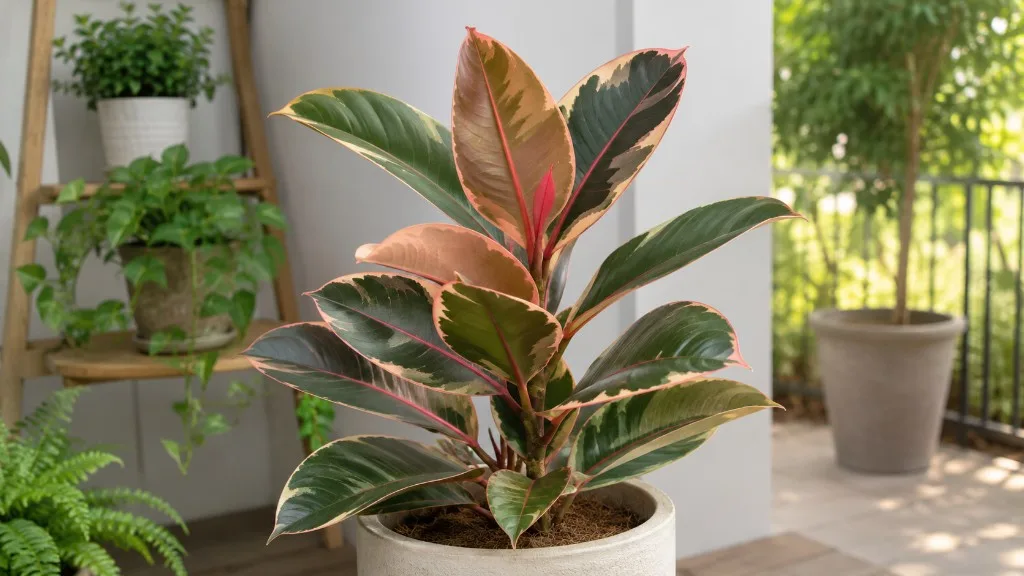
Ficus Ruby is the pink-and-cream form of the rubber plant, Ficus elastica. Give it bright light without a long spell of hot direct sun, water only after the upper potting mix begins to dry, and let excess water drain away; those three habits solve most routine care problems while helping new leaves keep their color.
The plant is more forgiving than its dramatic leaves suggest, but it is not a “put it anywhere and forget it” houseplant. A dark room can keep it alive while the new growth becomes greener and more widely spaced, and a pot that stays wet can damage roots even when the top looks dry.
| Need | A useful starting point | What to check |
|---|---|---|
| Light | Bright, indirect light; gentle morning sun only after acclimation | Color and spacing of new leaves |
| Water | Let the top inch or two of mix dry, then water fully | Moisture below the surface and drainage |
| Soil and pot | Airy houseplant mix and a pot with drainage holes | Water should not sit around the roots |
| Temperature | A warm, steady room away from cold drafts | Leaf drop after a move or chill |
| Feeding | Diluted houseplant fertilizer during active growth | Stop when growth slows in winter |
| Repotting | Move up only when roots have outgrown the pot | Crowded roots, very rapid dry-down, or degraded mix |
Know your Ficus Ruby
Ficus Ruby is a cultivar of Ficus elastica, the rubber plant or rubber tree. Its broad, leathery leaves combine green with creamy sections and pink or red tones, especially in the new growth. The NC State Extension Plant Toolbox describes the species as a tropical evergreen commonly grown as an indoor foliage plant.
Ruby is often confused with Ficus elastica ‘Tineke’, another variegated rubber plant. Tineke tends to show more cream and green, while Ruby usually carries stronger pink or red coloring; young leaves and retail labels can vary, so compare several mature leaves rather than judging the newest one alone. Both are rubber plants with similar basic needs, but variegated plants benefit from brighter conditions than a dark-leaved, mostly green or burgundy form.
Do not mistake the unrelated “baby rubber plant” for a small Ruby. Baby rubber plant is Peperomia obtusifolia, a different species with much smaller, thicker leaves and a compact growth habit. If plant safety matters in your home, check the botanical name on the nursery tag rather than relying on a shared common name.
Give it enough light to keep its color
Set Ficus Ruby where the room is bright for much of the day but the leaves are not exposed to sustained, scorching sun. A spot near an east-facing window often works well; a bright south- or west-facing window can also work if a sheer curtain, nearby wall, or a little distance from the glass softens the strongest rays. North-facing windows vary by hemisphere and building, so judge the actual light at the plant instead of relying on the compass direction.
Ruby needs useful light for both growth and color. The green portions of the leaf contain most of the chlorophyll, while the pale and pink areas contribute less to photosynthesis; in low light, the plant may produce greener leaves and longer gaps between them. The RHS guidance for variegated rubber plants recommends bright, indirect light for Ficus elastica ‘Tineke’, and the same approach is a sensible baseline for Ruby.
Some plants tolerate a short stretch of gentle morning sun, but do not move a Ruby straight from a dim room into direct sunlight. Acclimate it over a week or two by moving it closer to the window in stages, or by increasing sun exposure gradually. Pale cream sections can scorch in strong sun, and a bleached or crispy patch will not turn green again after you move the plant.
Watch the newest growth as your feedback. A compact plant with well-colored leaves is receiving enough light for its current conditions; if the next leaves are smaller, mostly green, or spaced far apart, move it to a brighter position gradually. Rotate the pot a quarter turn every few weeks if one side consistently faces the window, but avoid repeatedly shifting it between rooms.
Water when the upper mix dries
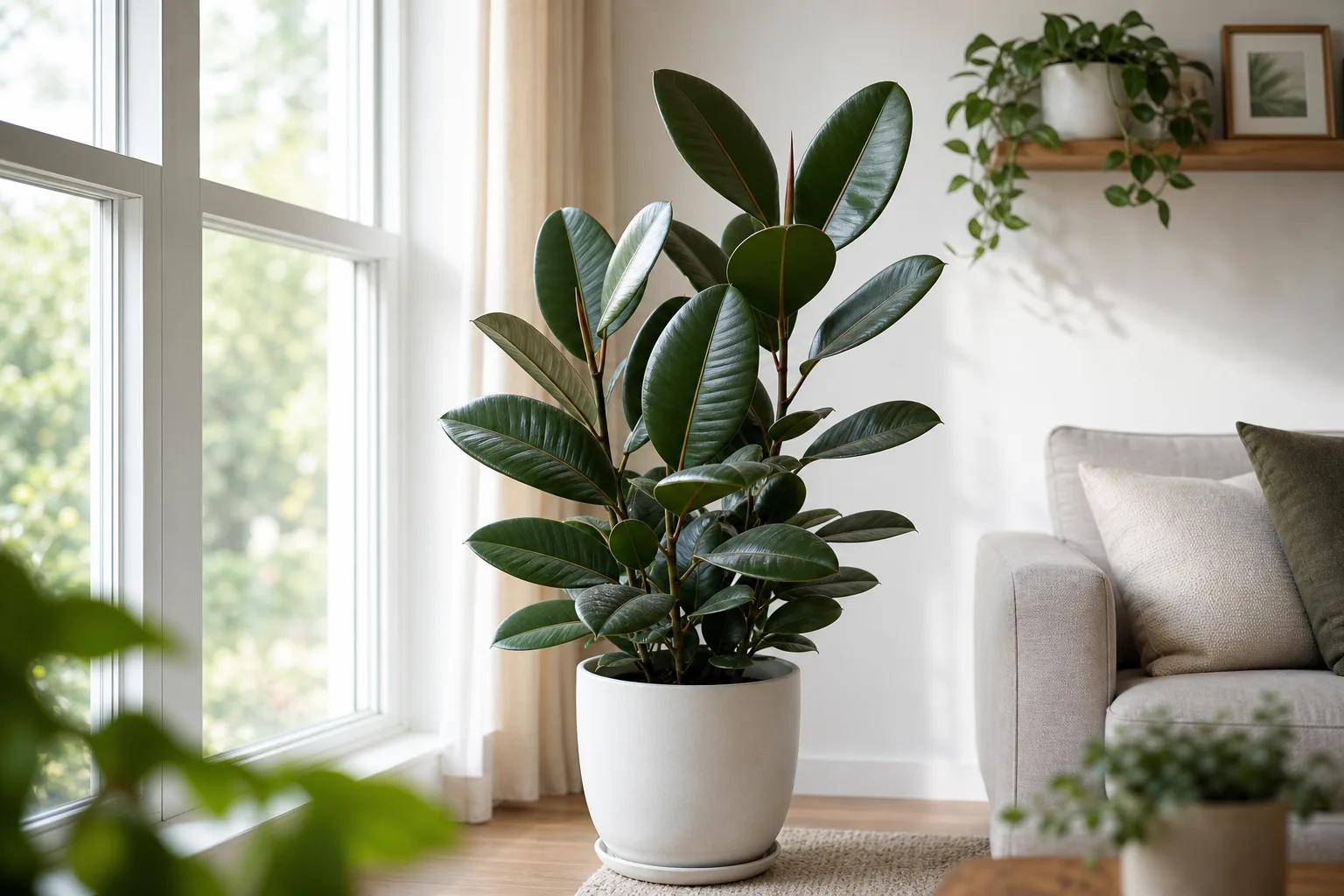
Do not water Ficus Ruby on a fixed weekly schedule. Room temperature, window exposure, pot size, soil structure, and the plant’s growth rate all change how quickly its root ball dries. Instead, feel the mix: when the top inch or two is dry, water thoroughly until excess runs through the drainage hole, then empty the saucer or decorative cachepot.
That cycle gives roots moisture and then air. Leaving the plant in standing water keeps the bottom of the root ball wet and reduces oxygen around the roots, so let the upper mix dry before watering again. In winter or in a dim, cool room, the mix often takes longer to dry, so check before watering rather than repeating the summer interval.
Use the pot’s weight as a second cue after you have checked the soil a few times. A freshly watered container feels heavier than a dry one, and that contrast becomes a quick way to monitor a large plant you cannot easily probe all the way to the bottom. For a tall, deep pot, use a wooden skewer or moisture probe near the root zone; a dry top layer does not prove that the center of a large root ball is dry.
When watering, wet the whole surface evenly instead of dribbling a small amount around the stem. If the mix has become so dry that water runs down the gap at the pot wall, apply water slowly in two passes so the medium has time to absorb it. If water drains very slowly or pools on the surface, check the drainage hole and mix structure instead of adding less and less water indefinitely.
Use a loose mix and a pot with drainage
Use a quality houseplant potting mix that holds some moisture but does not collapse into a dense, airless mass. A practical blend can start with a standard indoor potting mix and include coarse orchid bark and perlite or pumice to open the structure; adjust the proportions to your home, pot material, and watering habits. Ruby needs reliable drainage without being planted in a mix that dries out completely a few hours after watering.
The container needs at least one unobstructed drainage hole. A decorative cachepot is fine if the plant remains in a nursery pot inside it, but empty the outer pot after watering so the inner container is not standing in a puddle. Terracotta dries faster than plastic or glazed ceramic, which can be useful in a home where the mix stays wet, but it may require more frequent checks in warm, bright conditions.
Avoid putting a layer of stones or gravel at the bottom of a pot as a substitute for drainage. That layer does not make a blocked or oversized container safer for roots; use a pot with a real hole and fill it with an even, suitable mix instead. Also avoid garden soil, which can compact in a houseplant pot and make watering harder to manage indoors.
Keep it warm; do not chase humidity
Ficus Ruby prefers a warm, stable indoor spot. Protect it from cold air leaking around a winter window, a frequently opened exterior door, and blasts from heating or air-conditioning vents; sudden temperature swings are more likely to trigger leaf drop than a normal household fluctuation. NC State Extension advises keeping rubber plants above about 55°F (13°C), and avoid exposing a potted houseplant to freezing conditions.
Average home humidity is usually workable if the plant has good light and the root ball is watered sensibly. If the air is exceptionally dry and new leaves or tips repeatedly brown, first check for a dry root ball, harsh sun, fertilizer buildup, and heat vents before buying a humidifier. Daily misting does not reliably raise humidity around a whole plant for long, and water droplets can leave spots on glossy leaves.
You can move the plant outdoors during warm weather if nights remain comfortably above its cold limit, but acclimate it rather than carrying it straight into full sun. Choose a sheltered patio or shaded position, check the pot more often in wind and heat, and bring it inside before cool nights return. A sudden move to an exposed, hot balcony can scorch leaves and cause the same kind of stress as a draft indoors.
Feed only while it is actively growing
During spring and summer, feed a healthy, actively growing Ruby with a balanced houseplant fertilizer diluted according to its label. A half-strength solution once a month is a cautious starting point for many indoor plants; if your product label recommends a different dilution or interval, follow it and watch the plant’s response. Water first if the root ball is bone dry so concentrated fertilizer does not contact dry roots.
Pause or reduce feeding during winter when light is low and growth has slowed. Fertilizer does not restore pink coloring to a leaf that developed in low light, and adding more can injure roots or leave excess salts in the pot. If you see a crust on the soil or crispy margins after feeding, flush the mix with clean water if drainage is good and skip the next application.
Repot when roots need room
Repotting is due when the root ball fills the container, roots are circling tightly or emerging through drainage holes, the plant dries out unusually fast despite proper watering, or the old mix has broken down and drains poorly. Ficus elastica can tolerate being somewhat snug, so a calendar interval is a prompt to inspect, not a reason to disturb a healthy plant every year. RHS guidance suggests repotting rubber plants every two to three years, but the root condition and potting mix should decide the timing.
Choose a container only modestly wider than the root ball, usually about one or two inches larger in diameter. A much bigger pot holds more wet mix than the roots can use, which can extend drying time and increase the risk of overwatering. Keep the root crown at its previous soil level; burying more of the trunk does not make a tall plant more stable.
Slide the plant out gently and loosen only roots that are circling tightly around the outer edge. Trim roots that are black, mushy, or clearly dead with clean shears, but do not strip healthy roots or break the root ball apart just to replace every bit of soil. Set the plant in fresh mix at the same depth, fill around the sides, water it through, and let it settle in its usual bright spot.
After repotting, give the plant a little time to re-establish before pruning heavily or fertilizing. Some short-term adjustment is normal, but widespread leaf drop is a cue to check the new pot’s drainage, soil moisture, and location before adding water or fertilizer. Avoid combining a major root disturbance with a move to a much brighter or colder room.
Prune with a plan and protect yourself from sap
Ficus Ruby does not need routine pruning to stay healthy, but a cut can limit height, remove a damaged stem, or encourage branching below the cut. Use sharp, clean pruners and cut just above a leaf node, the point where a leaf attaches to the stem; new growth may emerge below that point. Make a small number of deliberate cuts in spring or early summer rather than removing a large share of foliage from a stressed plant.
Pruning can help a tall, single-stem plant branch, but it cannot force every branch to produce matching pink leaves. If a whole shoot is solid green while the rest of the plant is variegated, you can remove that shoot back to a point where variegated growth remains if preserving the Ruby look is your goal. Do not keep cutting into a weak plant with few healthy leaves; correct light and root conditions first.
Handling the milky latex
Cuts release white latex sap. It can be sticky and may irritate skin or eyes, so wear gloves, keep the plant away from children and pets while pruning, and avoid touching your face. Wipe drips promptly and clean tools after use; if sap gets on skin, wash it off, and seek medical advice if irritation is significant or persists.
Propagate from a stem section with a node
Take a cutting in spring or early summer when the plant is growing. Use a clean blade to cut a healthy stem tip with at least one node and one or two leaves; a leaf by itself may root but does not contain a growing point that can produce a new stem. Choose a branch with the Ruby coloring you want to preserve, since the new plant inherits the character of the cutting rather than changing into a different cultivar.
Wear gloves and place the cutting on a protected surface because the wound may ooze latex. Blot the cut ends with a damp paper towel until the sap slows, then place the node in water or a lightly moist, airy propagation medium. Keep the cutting warm in bright indirect light and maintain moisture without leaving the base waterlogged.
If rooting in water, keep leaves above the water and change it if it becomes cloudy. If rooting in a small pot, use a loose mix and cover the pot loosely with a clear bag only if the cutting wilts in the room’s dry air; keep plastic from touching the leaves and air it regularly. Rooting speed varies with temperature, light, cutting size, and season, so look for firm roots and fresh growth rather than expecting a fixed date.
When roots are established, pot the cutting into a small container with drainage and regular houseplant mix. Keep the medium lightly moist while the new root system adjusts, then return to the normal dry-top watering routine. Do not start fertilizing until you see active new growth.
Stem cuttings or air layering?
Stem cuttings suit a branch you are already pruning and make a compact new plant. Air layering is useful when you want to root a tall or woody section before separating it from the parent: make a shallow wound below a node, wrap it with moist sphagnum and plastic, and keep the moss damp while roots develop. The RHS ornamental fig guide describes both cuttings and air layering for Ficus elastica, while Epic Gardening’s rubber-plant guide also explains propagation and sap precautions.
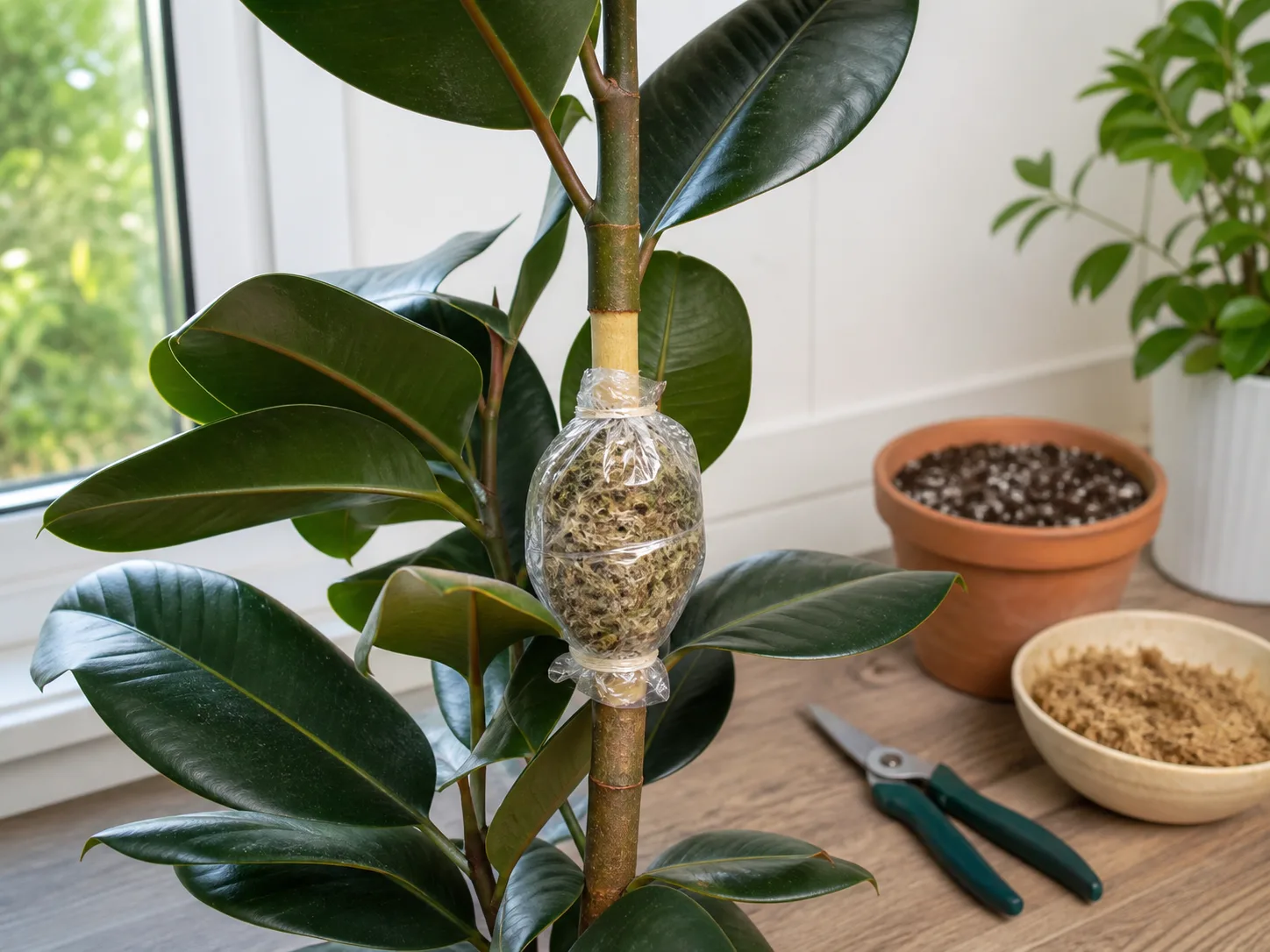
Air layering takes more time and setup than a simple cutting, but the leafy top stays attached to the parent while it forms roots. Once you can see a good root mass through the moss, cut below it and pot the new plant; if roots have not formed, leave it in place and give it more time. For an ordinary pruning trim, a node-bearing cutting is usually the simpler first method.
Read leaf changes before changing care
A single older leaf can yellow and fall as a plant grows, but several leaves changing at once deserves a quick check. Look at where the problem begins, how quickly it spreads, whether the potting mix is wet or dry, and what changed recently: a move, a cold night, a repot, or a new fertilizer can all matter. Diagnose the growing conditions before treating the plant for a pest or adding extra water.
Fading pink or all-green growth
Greener new leaves, longer spaces between leaves, or slow growth often point to insufficient light. Move the plant closer to a bright window gradually, or add a suitable grow light if the room stays dim; do not use harsh direct sun as a quick fix. Existing leaves will not repaint themselves, so judge the correction by the next few leaves.
A branch can sometimes produce a fully green shoot that grows more vigorously than the variegated parts. If the green branch is taking over and you want to maintain Ruby’s color pattern, prune that branch back to its point of origin with clean tools. If the plant is otherwise healthy, a few differently colored leaves are not by themselves a reason to repot or fertilize.
Yellow leaves or sudden leaf drop
If the mix is wet well below the surface and lower leaves are yellowing, suspect that the root zone is staying wet too long. Check that water exits the pot, empty the saucer, and let the upper mix dry before watering again; if the mix smells sour or roots are soft, inspect the root ball and remove clearly rotted material. Do not let a plant with damaged roots sit in a sealed cachepot full of water.
If the mix is dry through most of the root ball, water thoroughly and review how long it went without a drink. Sudden leaf loss after a move, cold draft, light change, or repot can be environmental stress rather than a single watering mistake. Correct one likely cause at a time and give the plant several weeks to respond instead of moving it repeatedly.
Brown edges, spots, and pests
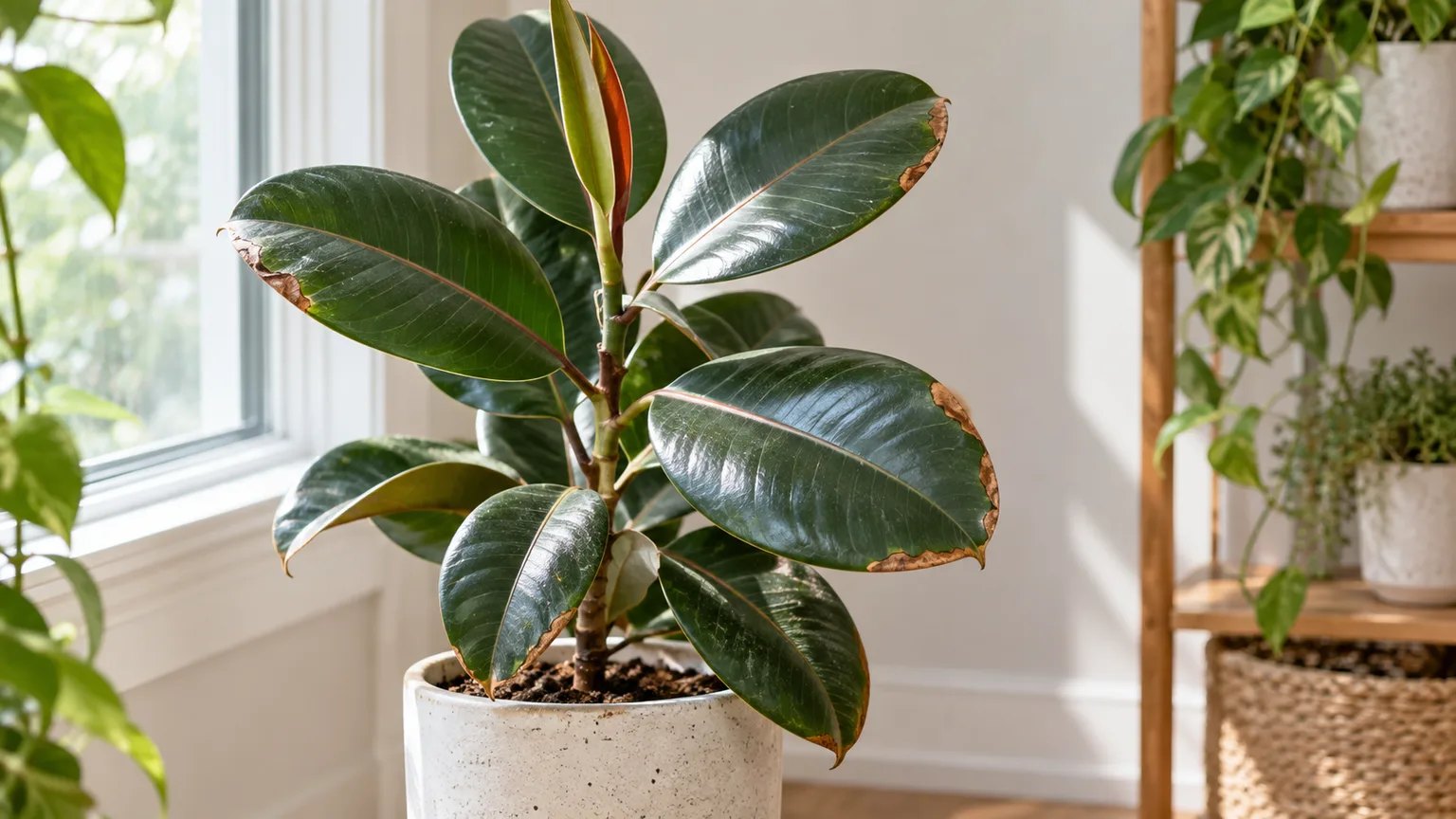
Crispy brown margins can follow dry soil, hot direct sun, low humidity, or fertilizer salts; inspect the whole setup before choosing a fix. A pale, scorched patch on the window-facing side suggests sun injury, while dry edges on several leaves may point to root-zone or indoor-air stress. Damaged tissue will not turn green again, so look for healthy new leaves after making a measured adjustment.
Check the undersides of leaves, the main vein, and the places where stems meet leaves for scale, mealybugs, thrips, or spider mites. Scale looks like small fixed bumps; mealybugs resemble white cottony flecks; spider mites can cause fine stippling and webbing. The RHS rubber-plant profile lists common indoor pests including scale, mealybugs, thrips, and red spider mites.
Isolate an infested plant before cleaning it. For a light mealybug infestation, University of Maryland Extension recommends removing individual insects with a cotton swab dipped in household alcohol, while warning that alcohol on foliage can injure the plant; use it only on pests, test cautiously, and follow product labels for any insecticidal soap. Inspect again in a few days and repeat appropriate control because one treatment may not catch every life stage.
Place it away from pets and curious children
Treat Ficus Ruby as a plant to keep out of reach of animals that chew foliage. The Pet Poison Helpline identifies Ficus elastica as a rubber tree plant whose sap can irritate the mouth and digestive tract if ingested. Do not let pets play with pruned stems or fallen leaves, and wash your hands after handling sap.
If a pet eats part of the plant, contact a veterinarian or a pet poison-control service for advice rather than waiting for symptoms or trying a home remedy. A high shelf is not a dependable barrier for a curious cat, so choose a room or location the animal cannot access. Keep pruning waste and propagation cuttings covered until they can be disposed of safely.
Conclusion
Ficus Ruby keeps its best pink-and-cream color when it receives bright, indirect light, but steady roots matter just as much as a sunny window. Let the upper potting mix dry before watering, use an airy medium and a pot with drainage, protect it from cold drafts, and feed only while it is actively growing.
When the plant changes, start with the newest leaves, root-zone moisture, and recent environmental changes before reaching for fertilizer or pest spray. Repot when roots need room, prune with the sap in mind, and propagate from a node-bearing stem if you want another Ruby. That routine gives the plant a better chance to grow well without turning every leaf change into a crisis.



