How to Grow and Care for Million Bells All Season Long
Grow million bells with the right potting mix, drainage, and pH; learn how often to water, when to feed, and how to keep calibrachoa full from spring to frost.
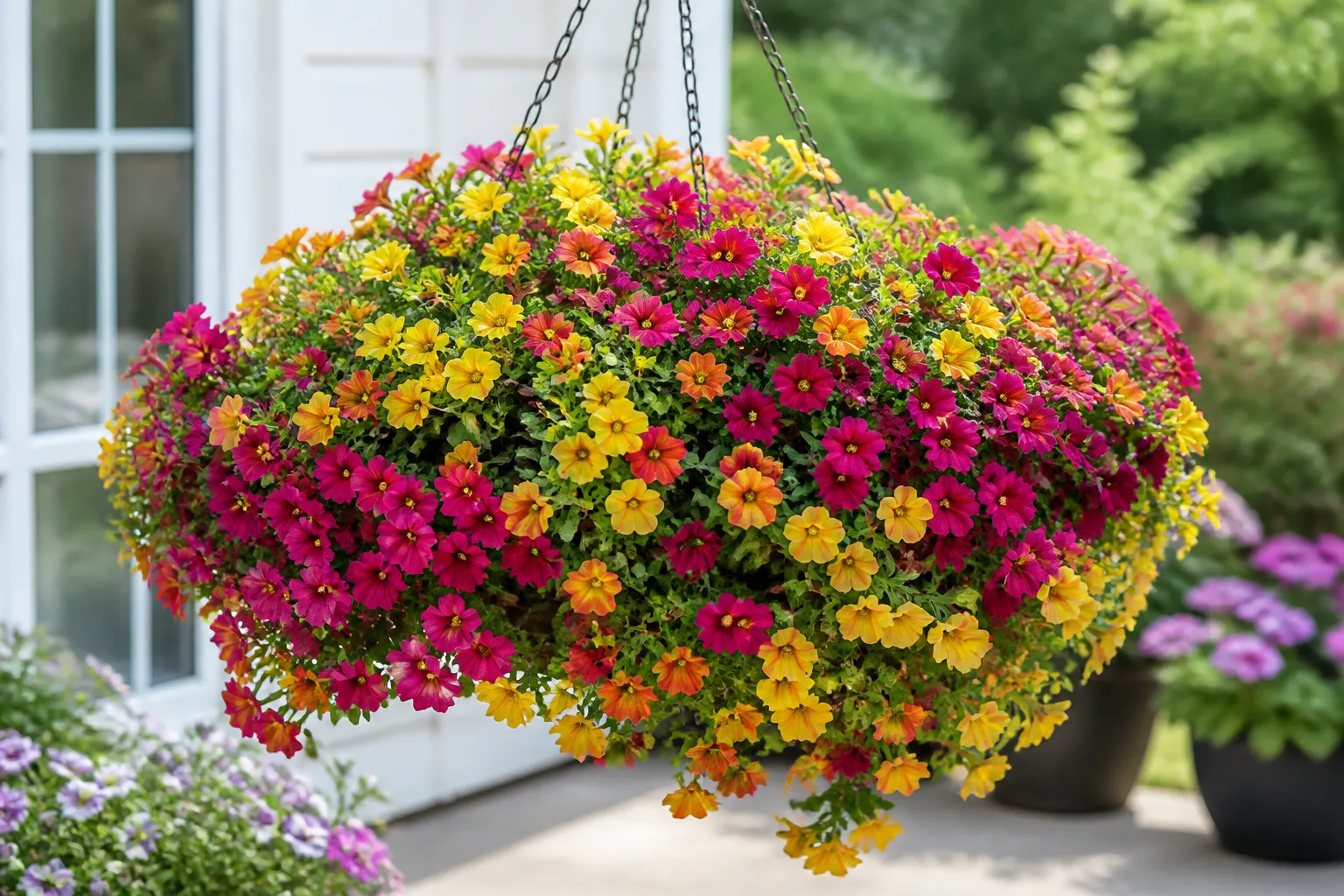
Million bells (Calibrachoa × hybrida) is a warm-season bloomer that looks like a miniature petunia but grows on finer, trailing stems. For the fullest display, give it a sunny spot, a container or bed that drains freely, and potting mix that stays lightly moist without remaining waterlogged. Check baskets often in hot weather, feed modestly through the growing season, and skip routine deadheading: most calibrachoa drop spent flowers on their own.
The two mistakes behind many disappointing plants are keeping the roots too wet and assuming every pale leaf means “add fertilizer.” Calibrachoa is especially sensitive to growing-medium pH, so a plant can look hungry even when nutrients are present but unavailable. The care routine below helps you tell those situations apart.
Million Bells Care at a Glance
| Care need | Starting point | Adjust when |
|---|---|---|
| Light | At least 6 hours of direct sun; 8 hours can produce more flowers | In very hot climates, offer late-afternoon relief if foliage wilts despite adequate water |
| Soil | Loose, moisture-retentive but free-draining mix | Use a pot or raised bed if garden soil holds water |
| pH | Slightly acidic mix; roughly 5.4–6.2 is a useful container-production range | Test before trying to acidify a mix or treat yellow foliage |
| Water | Water when the upper inch or two begins to dry, then soak through | Small baskets in hot wind may need a daily moisture check |
| Feeding | Follow the potting mix or fertilizer label; a diluted liquid feed every 1–2 weeks is a common container starting point | Reduce or pause feeding if the plant is drought-stressed or salt crust appears |
| Deadheading | Usually unnecessary | Pinch or trim when stems become sparse or leggy |
| Winter | Treat as a seasonal annual where frost is routine | Try overwintering only when you can provide bright light and protect the plant from cold |
The pH range above is a practical target drawn from greenhouse and extension guidance, not a reason to measure every pot on a schedule. The fastest first checks are sun exposure, drainage, and how quickly the mix dries.
What Million Bells Are (and Aren’t)
“Million bells” most often refers to compact, trailing hybrids in the genus Calibrachoa. The plants sit in the nightshade family, Solanaceae, alongside petunias, tomatoes, and peppers, but calibrachoa and petunia are separate genera.
Their small trumpet-shaped flowers and sticky oval leaves make the two easy to confuse at a glance; calibrachoa flowers are generally smaller, and its stems often trail more freely. The North Carolina Extension Gardener Plant Toolbox describes the hybrid as a tender perennial usually grown as an annual, while Illinois Extension lists it as a tender annual in its regional landscape.
The name has a bit of history. Million Bells® began as a branded series; a Homes & Gardens horticulture interview describes how the name is now used for hybrids from other breeders, too.
Gardeners often use “million bells” as a common name for calibrachoa generally. Cultivars can differ in vigor, flower pattern, heat response, and whether they mound or trail, so check the plant tag instead of expecting every basket to reach one standard size. University of Minnesota Extension gives a typical spread of 12 to 24 inches and height of 6 to 12 inches; trailing selections can spill farther over a pot.
Most plants are sold as spring bedding plants and produce flowers from late spring or early summer until frost. In a mild, frost-free climate, calibrachoa may persist as a tender perennial; in places that freeze, it is more dependable to grow it as a seasonal annual.
Published U.S. profiles do not use one consistent range: North Carolina State Extension’s attribute list includes Zones 7–11, while many horticultural guides describe calibrachoa as a tender perennial in Zones 9–11. The RHS rates its Million Bells series H2 under the separate UK system. Read any zone listing as a broad reference, not a guarantee that an exposed basket will tolerate frost; the cultivar and local winter conditions matter.
Choose a Site That Delivers Flowers
Pick the site before you pick the watering routine. Calibrachoa can tolerate less-than-ideal conditions, but low light, hot reflected surfaces, and poorly drained soil each create a different problem that more fertilizer will not solve.
Sun, shade, and summer heat
Aim for at least six hours of direct light. In a cooler summer or an overcast region, a brighter site with eight or more hours often gives the heaviest bloom. Garden Design’s calibrachoa guide notes that flowering drops and stems stretch when plants do not get enough sun; the current University of Minnesota Extension care notes recommend full sun and emphasize that these plants are sensitive to pH.
There is a useful heat exception. In a hot inland or southern site where afternoon sun bakes a dark wall or pavement, morning sun with light late-day shade can reduce stress, though it may mean fewer flowers than an all-day-sun position.
If leaves droop in the late afternoon but recover by evening while the mix is still moist, the plant may be reacting to heat rather than needing another drink. Move a movable pot a few feet away from reflected heat before changing the watering schedule.
A sheltered spot also helps flowers and trailing stems avoid damage from strong wind and driving rain. Avoid deep shade beneath a porch roof: a hanging basket may look bright to you while receiving only a short period of direct sun.
Containers, baskets, and garden beds
Containers are the easiest way to control drainage and growing-medium pH, which is why extension guides commonly favor them. A 10- to 12-inch pot can make a generous single-plant display; larger baskets can take multiple plugs, but leave room for each cultivar’s stated spread and growth rate.
Planting too many starts gives instant fullness, then creates a crowded root mass that dries unevenly and leaves little airflow. Use the nursery tag’s spacing guidance rather than cramming in extra plants.
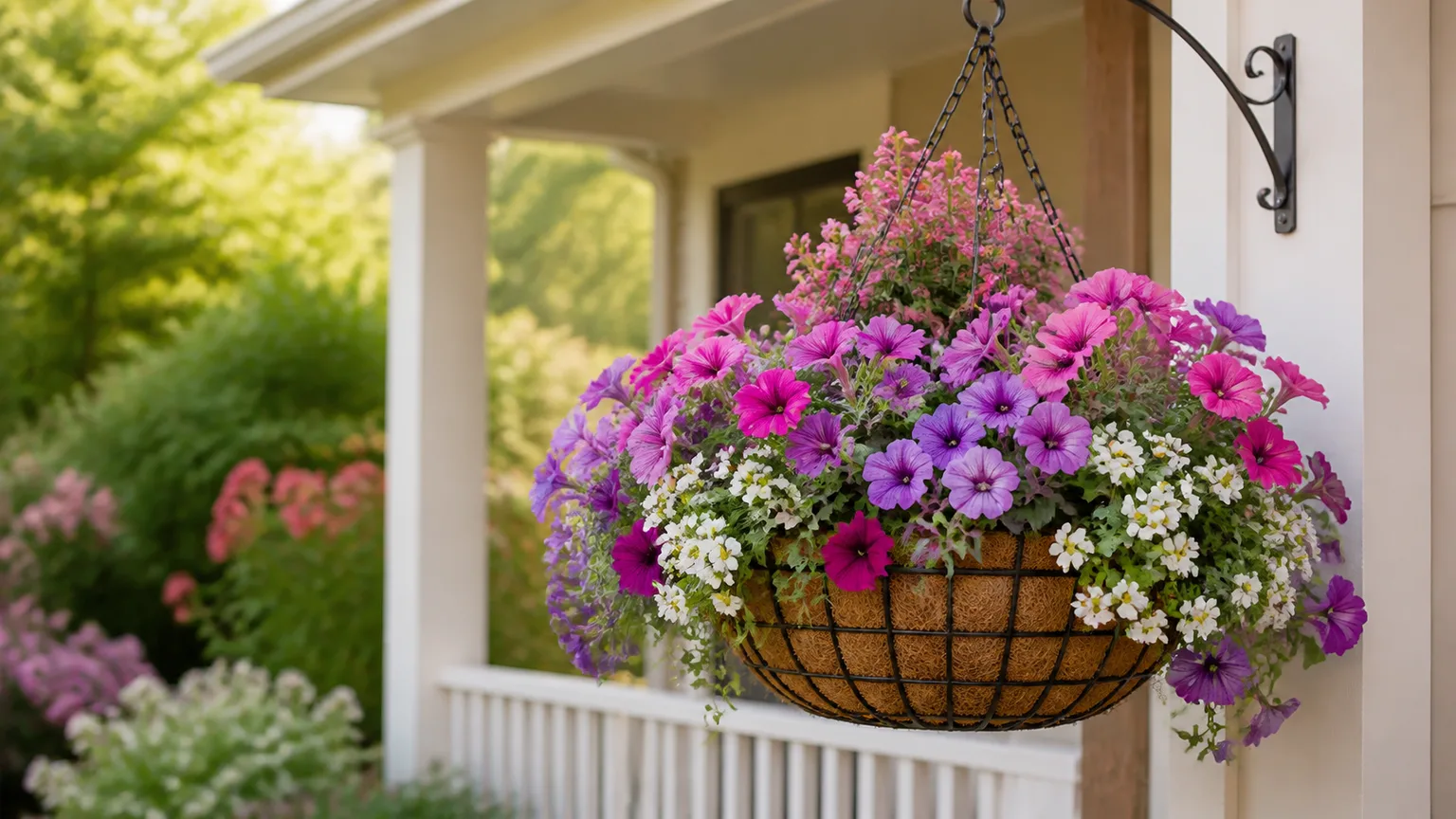
Million bells works particularly well as the “spiller” in a container: its stems cascade over a rim while an upright plant provides height and a compact filler closes gaps. Choose companions that like similar sun and moisture, and keep the planting airy enough that a quick shower does not leave the foliage packed and slow to dry. For a simpler, more controlled basket, plant one vigorous calibrachoa cultivar by itself.
You can grow calibrachoa in the ground, despite extension advice that emphasizes baskets. Illinois Extension includes it as a groundcover or basket plant; Minnesota Extension recommends containers because it is easier to maintain the drainage and acidity it prefers. In practice, try a bed only if water does not linger after rain and the soil is not strongly alkaline. A raised bed or container is a safer choice in heavy clay, a low spot, or soil where nearby plants show iron chlorosis.
Potting Mix, Drainage, and pH
Use a fresh, lightweight potting mix formulated for outdoor containers. It should hold enough moisture that roots do not dry out immediately, but excess water should pass through the drainage holes rather than collect around the root ball.
A mix with several organic components can hold moisture and nutrients while still retaining air spaces. Do not use dense garden soil in a hanging basket; it compresses, adds weight, and often drains poorly in a small volume.
Check the container itself before planting. It needs unobstructed drainage holes; an outer decorative pot should not hold runoff against the nursery pot.
If you use a saucer, empty it after watering. A layer of gravel at the bottom does not fix a pot without holes or make dense soil drain better; it simply reduces the depth of mix available to roots and may leave the root zone wetter than expected.
Calibrachoa is unusually sensitive to pH. In a high-pH mix, iron can be present but less available to roots, which is why young leaves may turn yellow between green veins.
Greenhouse guidance commonly places calibrachoa in the iron-inefficient “petunia group”; University of New Hampshire Extension gives a pH range of 5.4–6.2 for that group. That range is a useful reference for container mix, not a cue to add acid blindly to a garden bed.
If a plant repeatedly develops pale new leaves even while growing in fresh mix, test the medium or ask a local extension office about a test before using an acidifying product. Potting mixes and irrigation water differ, and an unmeasured adjustment can overshoot. Refresh tired container mix at the start of a new season rather than trying to restore an old, compacted, mineral-loaded basket indefinitely.
Water by Root-Zone Conditions
Million bells needs more frequent attention in a hanging basket than in a large garden bed because a small root ball has little reserve. In warm, breezy weather, check the mix every day; in cool, cloudy conditions, a daily watering may keep roots saturated. Use the surface as a cue, not a calendar: feel an inch or two below the top, and water when that layer is beginning to dry.
When it is time, water slowly over the whole surface until it runs freely from the drainage holes. That flushes the full root zone instead of wetting just one pocket.
Let excess drain away, then check the basket again later rather than giving repeated small sips that keep only the top roots wet. A pot that dries out very quickly may be root-filled, undersized, exposed to hot wind, or planted too densely; moving it to a larger container can help more than simply watering several times a day.
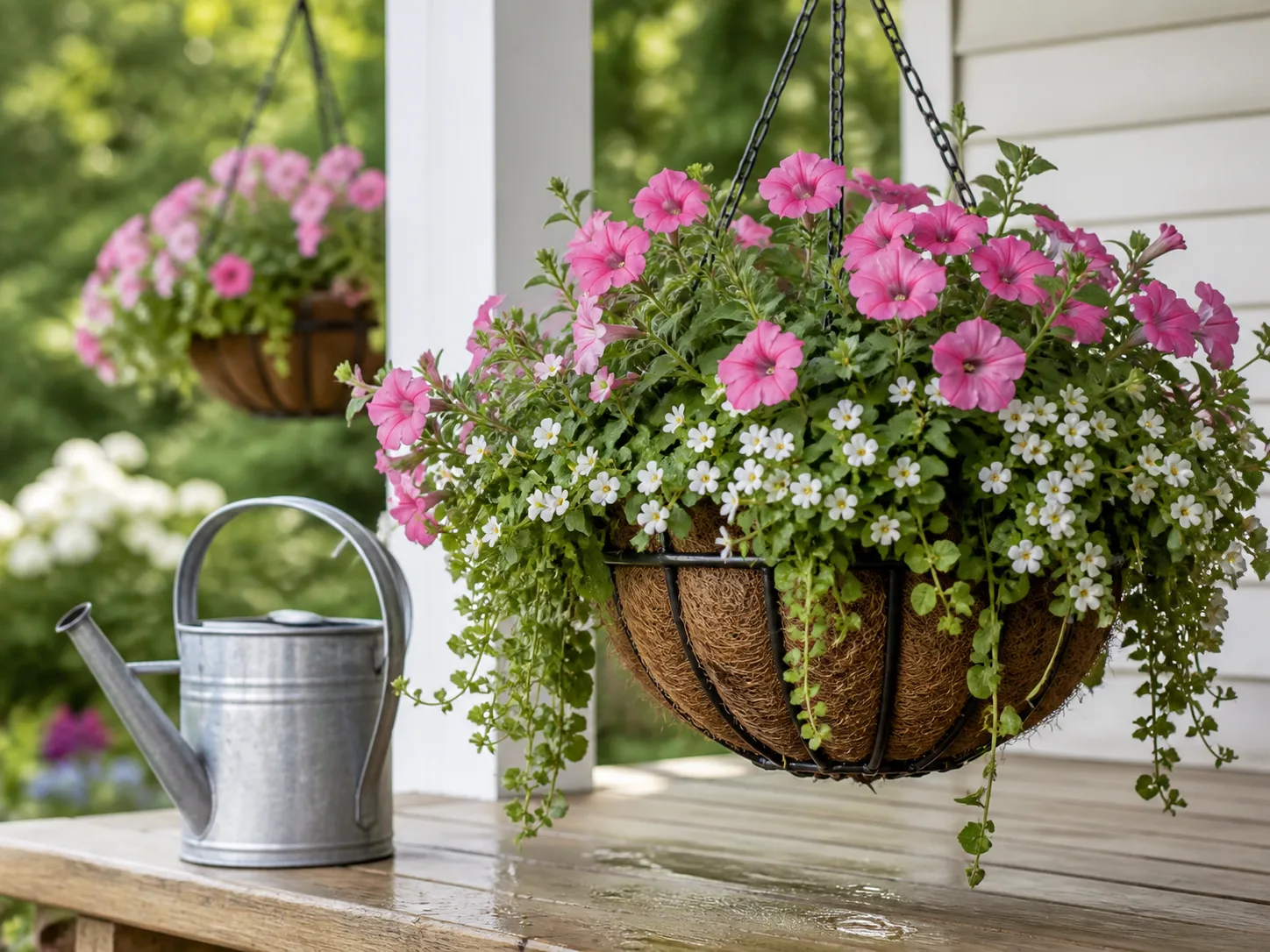
A useful contrast helps with diagnosis. A dry plant usually perks up after thorough watering, while a plant with roots short of oxygen can remain limp even though the mix is wet.
If the basket feels heavy for days, smells sour, or the stems wilt after watering, stop adding water and inspect drainage and roots. Remove a healthy plant from an outer cachepot if trapped runoff is the problem.
Rain counts as watering only if it reaches the root ball. Dense foliage can shed water to the basket edge, and a porch roof may block rainfall altogether.
On the other hand, prolonged rain can waterlog a hanging basket without anyone watering it by hand. Check the mix directly after both hot spells and soaking weather; the same plant may need different care from one week to the next.
Feed for Flowers Without Overdoing It
Calibrachoa produces a long succession of flowers, and container watering gradually washes soluble nutrients from a small amount of mix. Start by reading the potting-mix label.
If it includes a starter charge or slow-release fertilizer, do not add a second full dose at planting. Once that charge is used up, follow the product directions for a flowering-container fertilizer; a diluted water-soluble feed every week or two is a common starting point during active growth. University of Minnesota Extension recommends a balanced fertilizer at planting when needed and soluble feeding every other week.
Feed only a plant that is actively growing and reasonably hydrated. Fertilizer does not repair heat scorch, waterlogged roots, or low light.
Applying a concentrated solution to a dry root ball can injure roots, while repeated heavy feeding can build salts at the surface of a pot. If you see a white crust, flush the pot with clean water when drainage is open and allow it to drain completely before the next feed.
Yellowing is not a fertilizer diagnosis by itself. Older leaves that fade evenly can reflect normal aging or a shortage of mobile nutrients; new leaves that are pale between green veins point more strongly toward iron availability and pH. Iowa State University Extension’s container-nutrition guidance explains that high pH can make iron unavailable to calibrachoa even when fertilizer is present. Fix the underlying condition before increasing the dose.
Keep Plants Full Without Deadheading
Most calibrachoa are self-cleaning: old flowers fall away as new ones open. You can remove a few spent blooms for appearance, but daily deadheading is not necessary to keep the plant flowering. That is one reason the plant works well in a basket that is hard to reach.
Pinching is different from deadheading. If a young plant has only one or two long stems, clip the growing tips lightly to encourage side branching.
The Royal Horticultural Society’s Million Bells profile describes the group as compact trailing annuals and recommends a sunny, sheltered site; Minnesota Extension also notes that trimming the top tips can produce a more compact plant. Pinch early enough that the new branches have time to grow before the main display.
Deadheading advice differs: the RHS profile recommends it regularly, while University of Minnesota Extension and Garden Design describe calibrachoa as self-cleaning. For most modern container cultivars, watch what your plant does: if spent flowers drop cleanly, leave them; if blooms cling during cool, wet weather or make the basket untidy, remove a few by hand.
By midsummer, a once-full basket can look thin at the top and shaggy at the ends. If most stems are still green and healthy, shorten them by about one-third to one-half, leaving plenty of leafy growth and avoiding a cut into bare, woody sections.
Water thoroughly afterward and resume ordinary feeding once new growth appears. Expect a brief pause while the plant rebuilds; shearing trades a short lull in flowers for a denser late-season shape.
Bloom Season and Overwintering Choices
The usual display runs from late spring or early summer until the first hard frost, but the start date depends on when you plant, local temperatures, and the cultivar. A nursery basket already in bloom will continue sooner than a young plug planted in cool soil. The RHS profile describes summer-to-autumn flowering, and North Carolina State Extension describes flowers continuing until frost.
To maintain flowers, keep the root zone evenly moist, preserve strong light, and replace nutrients according to the label rather than force-feeding. When the bloom count falls, check those three conditions before pruning. If the plant is simply leggy, a midseason trim can help; if it is pale and compact with wet mix, more fertilizer or a hard haircut is likely to make things worse.
Whether million bells “comes back” is a climate question, not a promise attached to its common name. In frost-prone areas, expect to replace the plant each spring.
In a warm region where the ground does not freeze, it may behave as a short-lived perennial, but a hanging basket is more exposed to cold than soil and cultivars differ. A plant that survived one mild winter may still be lost in a colder one.
You can try saving a favorite basket in a bright, frost-free room or greenhouse, but do not expect it to thrive like an indoor foliage plant. It needs strong light, less water during slower winter growth, and space away from cold drafts.
Many gardeners find a few rooted cuttings easier to keep than an oversized mature basket. If winter light is weak or the indoor temperature swings sharply, treating the plant as an annual is the simpler and often more reliable choice.
Troubleshoot the Clues Before You Treat
Start with the pattern, then check light, moisture, drainage, roots, and pH in that order. A single symptom can have multiple causes, and changing water, fertilizer, and location all at once makes it hard to tell which correction helped.
Yellow new leaves with green veins
Pale tissue between green veins on the newest leaves is a classic sign of iron chlorosis. In calibrachoa, the underlying issue is often a root-zone pH that is too high for iron uptake, not a lack of iron in the fertilizer bag. Check whether the plant is in old garden soil or mix, whether irrigation water is alkaline, and whether the roots are sitting wet. Iowa State Extension cautions that adding more fertilizer without addressing pH can increase salts while leaving the original problem in place.
By contrast, general yellowing that begins on older leaves can point to a different nutrient issue, natural leaf turnover, or root stress. Look at the whole plant rather than one leaf.
If the mix smells sour or stays wet, restore drainage first; roots damaged by poor aeration cannot take up nutrients normally. For recurring symptoms, use a potting-mix test or local extension diagnosis before adding iron chelate or acidifying amendments.
Wilting, leaf drop, or bare centers
If the plant wilts when the pot is light and dry, water deeply and then reassess how quickly the basket dries. Consider a larger pot, less wind exposure, or fewer plants per container if the mix becomes dry again within hours. Calibrachoa foliage may droop in afternoon heat even when a root ball is moist; shade at the hottest part of the day can help in an extreme site.
If it stays wilted in wet mix, check drainage and roots. Brown, mushy roots or a sour smell suggest root rot rather than thirst. North Carolina State Extension’s Plant Toolbox notes root rot and mold risk from overwatering; Garden Design also flags plants that remain wilted after watering as a warning sign. A badly rotted plant is difficult to rescue; take healthy tip cuttings if appropriate, discard diseased material, and replace compacted or contaminated mix.
A bare center with long stems is more often a light, age, or shape problem than a root disease. Move the plant into stronger light if possible, trim the longest healthy stems, and allow new branches to fill in. Do not strip every stem at once.
Pests, mildew, and other damage
Inspect the undersides of leaves and the newest tips. Aphids cluster on soft growth and may leave sticky honeydew; spider mites thrive in hot, dry conditions and can leave fine stippling or webbing; thrips may scar flowers and leaves.
A light population does not always justify treatment. Rinse foliage with a firm but gentle stream, improve plant spacing, and recheck several days later. Avoid spraying a stressed plant in strong sun, and follow the product label if a pesticide becomes necessary.
Powdery mildew can be subtle on calibrachoa. Lower leaves may show faint pale growth before becoming brown or dropping, and the symptom can resemble nutrient trouble. NC State Extension Plant Pathology documents cases where a microscopic check distinguished mildew from other causes of browning.
Remove badly affected leaves, improve airflow, and avoid keeping the center of a dense basket wet. If a diagnosis would change treatment, ask a local extension clinic rather than guessing from leaf color alone.
Propagate a Favorite Calibrachoa
Most modern calibrachoa hybrids produce little or no viable seed, so growers usually maintain them by vegetative cuttings. A cutting also preserves a cultivar’s flower color and habit more reliably than seed from a hybrid, which may not come true. Check the plant tag before sharing or selling cuttings from a named cultivar; some hybrids have propagation restrictions. University of Minnesota Extension outlines stem cuttings as the practical method.
Choose a healthy, nonflowering tip about four to six inches long. Use clean scissors, remove leaves from the lower half, and place the cut end in water or a clean, lightly moist rooting medium.
Keep it warm in bright indirect light, not hot direct sun, and refresh water if you use a glass. Minnesota Extension reports that roots often begin within three to four weeks, but timing depends on warmth and the cutting’s condition.
Once roots are visible and branching, pot the cutting into a small container of fresh mix rather than a large basket. A tiny cutting cannot use a big volume of wet soil, so the extra mix may remain soggy.
Keep the new plant evenly moist as it establishes, then gradually give it brighter light. If it wilts, check the root ball and moisture before feeding; fertilizer is unnecessary until it is growing.
Common Mistakes That Shorten the Show
The first mistake is watering by calendar. “Every day” can be a useful reminder to inspect a hot basket, but it is not a universal schedule.
Size, wind, rain, pot material, plant growth, and sun exposure change drying speed. Check the mix and water thoroughly when needed rather than repeating a small splash each morning.
The second is fixing yellow leaves with a stronger fertilizer without identifying which leaves changed first. Older leaves yellowing evenly and young leaves yellowing between green veins are different clues. Check roots and drainage, then consider pH and nutrients; using the wrong fix can add fertilizer salts or keep the roots too wet.
The third is treating “well-drained” as “dry.” Calibrachoa still needs regular moisture, especially in small containers. The goal is a mix that holds some water but has air spaces and releases excess water, not a pot that stays dusty or saturated. Do not compensate for a drainage problem with a layer of gravel at the bottom.
The fourth is assuming perennial means winter-proof. Tender plants can persist in mild climates, yet exposed baskets cool faster than garden soil and a cold snap can end the display. Plan to protect, take permitted cuttings, or replace the plant rather than waiting for a frozen basket to revive.
Finally, do not prune on a schedule just because a plant looks full in a photograph. Cut only when stems are sparse or unruly, retain healthy leaves, and accept a short bloom pause. A compact, well-watered plant in bright light generally needs less intervention than a stressed plant being repeatedly pinched and fed.
Conclusion
For reliable million bells care, start with a bright site, a pot or bed that drains freely, and a mix that stays lightly moist. Check baskets often but water only when the root zone is beginning to dry; feed by the label and diagnose yellow leaves before increasing fertilizer.
Let spent flowers fall, trim only when stems become leggy, and treat the plant as an annual anywhere frost is likely. Those simple checks make it easier to enjoy the long cascade of color without turning routine care into guesswork.



