How to Plant and Grow Foxtail Lilies: A Care Guide
Learn when to plant foxtail lilies, how to set their star-shaped roots around the crown, and how sun, drainage, frost care, and patience affect flowering.
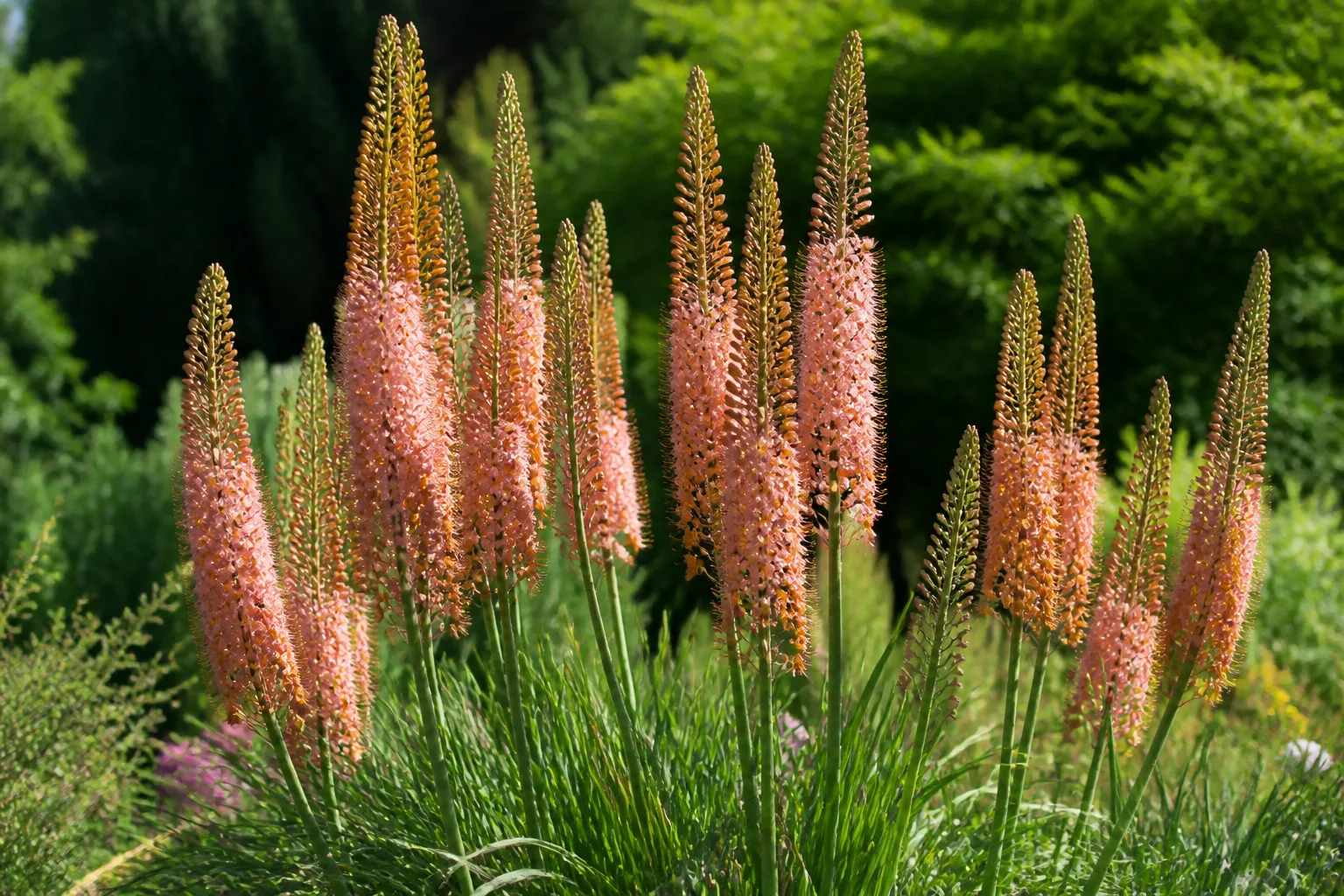
Foxtail lilies are dramatic in bloom and unusually easy to lose between seasons. Their roots look like a small starfish, their flower stalks can tower over a border, and the crown that joins those roots is sensitive to both rough handling and standing water. The key is to give the crown a sunny, well-drained home, spread its roots without bending or breaking them, and then leave the plant undisturbed.
Foxtail lily care at a glance
Plant Eremurus in full sun and soil that drains freely through wet winter weather. Buy a healthy dormant crown and plant it promptly in the season your supplier recommends; that may be spring or late summer to early autumn, depending on the source and your climate. The planting hole should be broad enough for the roots, with a low mound under the crown. Keep the central growing point at or just below the soil surface, while the roots fan out around it.
During spring growth, water when rainfall and soil conditions call for it, but never keep the bed soggy. Once foliage dies after flowering, the plant enters a dry summer rest, so do not continue watering it as if it were an actively growing leafy perennial. In colder or exposed gardens, protect the dormant crown from wet and severe freeze-thaw conditions, then shield early shoots if a late frost is forecast. These few seasonal distinctions matter more than a rigid weekly care schedule.
What you are planting: a crown, not a true lily bulb
“Foxtail lily” is the common name for Eremurus, also called desert candle or king’s spear. Despite the name, it is not a member of the true lily genus Lilium. Eremurus belongs to the Asphodelaceae family and grows from a central crown with fleshy roots radiating outward; it is a hardy herbaceous perennial, not a conventional onion-like bulb. North Carolina Extension describes the plant as a clump-forming perennial with a basal rosette and a dense spike of star-shaped flowers, with mature heights varying from about 3 to 10 feet by species or cultivar (NC State Extension).
Star-shaped roots radiate from one fragile growing point
The dormant root often arrives looking like a thick central bud surrounded by fleshy “fingers.” The central bud is the future shoot; the roots spread laterally to anchor the plant and store resources. This form is why a narrow, deep hole or the usual rule for a tulip bulb can cause trouble: you need room to support the crown and lay out the roots without folding them under it.
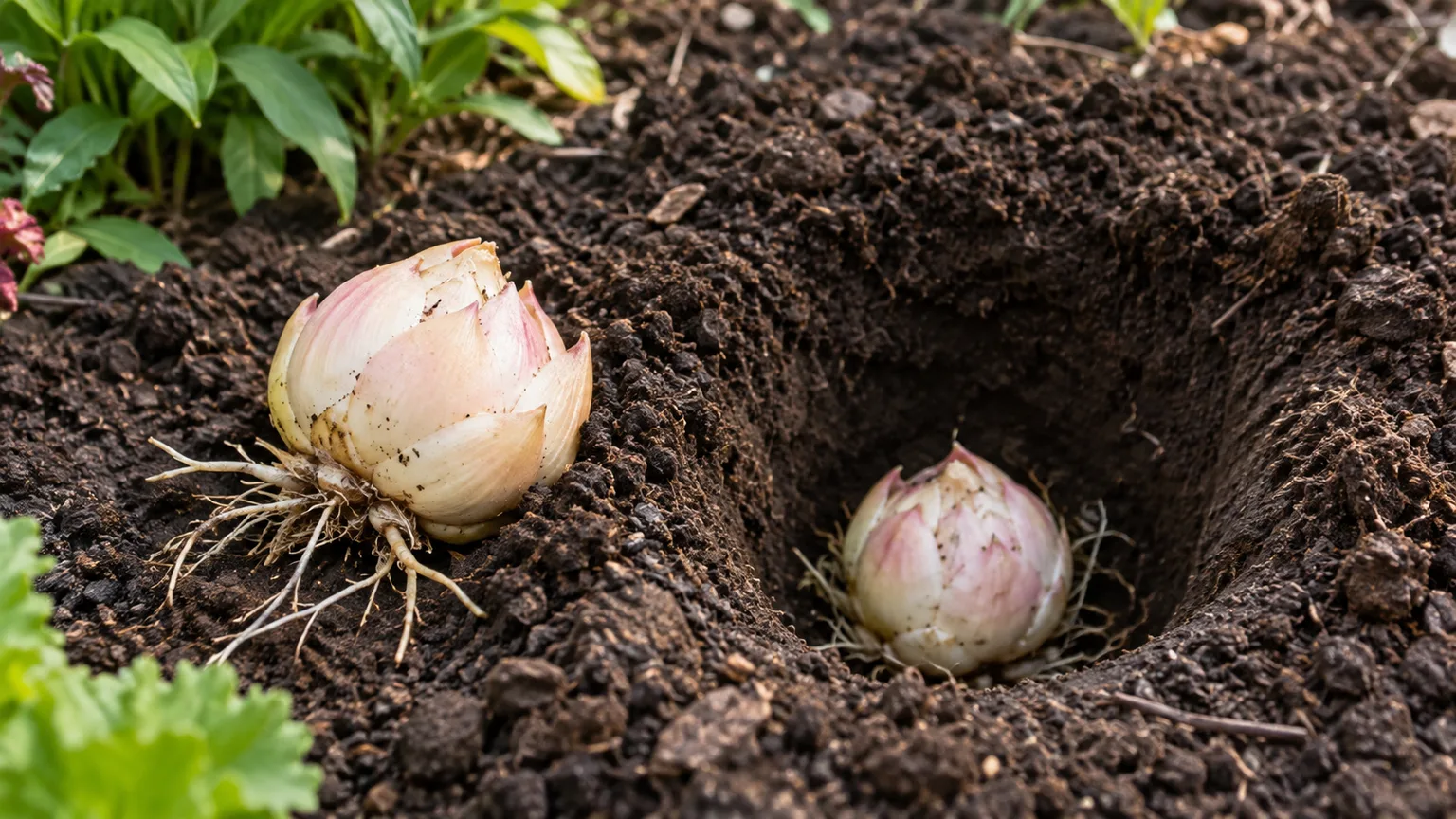
Handle the root structure by its crown or by supporting it from beneath, not by lifting it by a root. A broken tip does not automatically doom a plant, but snapping several major roots or damaging the crown can reduce establishment and blooming. If the roots look soft and somewhat spongy, that can be normal for dormant stock; a completely shriveled, powder-dry crown is a worse sign. White Flower Farm notes that some discoloration and sponginess are normal on arrival, while roots that have dried to a powdery state are not worth planting (White Flower Farm).
When to plant foxtail lilies
There is no single calendar month that fits every supplier and climate. The Royal Horticultural Society lists spring or late summer to early autumn as planting windows, and notes that bare-root crowns are commonly available in early spring or summer; plant them as soon as possible after purchase. Some growers ship dormant crowns in autumn, while others send them in spring. Follow the planting window for the stock you receive and avoid leaving a dry, bare-root crown in storage while waiting for a preferred month (RHS growing guide).
Match planting to dormant stock and your climate
In a cold-winter garden, plant early enough for the crown to settle before the ground freezes, but do not place it in a cold pocket where spring shoots will be repeatedly hit by frost. In a mild or wet-winter climate, spring planting can be preferable if autumn soil stays saturated. The right choice is the window that lets dormant stock establish in a free-draining bed without sitting in cold, waterlogged ground.
When a crown arrives, check that its central bud is intact and that the roots are not powder-dry. If the roots are dry but still firm, the RHS suggests a short soak of a couple of hours before planting; do not leave them submerged overnight. If you cannot plant the same day, keep them cool and follow the supplier’s storage instructions rather than letting them dry in sun or warmth. Container-grown Eremurus can be planted in spring, but the roots are fragile and the plant is generally better suited to a permanent outdoor bed than long-term pot culture.
Choose a site where drainage and sun work together
Give foxtail lilies the sunniest practical spot, ideally with at least six hours of direct light and shelter from strong prevailing winds. Their origin in dry grasslands and rocky slopes is a clue to their preferences: they need light, air, and soil that does not stay saturated. The RHS recommends a sunny, freely draining site away from frost pockets, and warns that the shallow fleshy root system resents disturbance and competition. Avoid a low spot that collects roof runoff or water from a sloping lawn, even if it receives full sun.
Test the bed before planting
Do a simple drainage check before committing a scarce crown. Dig a hole roughly a foot deep, fill it with water, and let it drain once to pre-wet the surrounding soil. Refill it and observe whether water remains for much of the day or into the next morning. A hole that stays saturated after a day is a warning that a foxtail lily may rot there; use a raised bed, a naturally sloping site, or a different plant rather than trying to cure the problem with a layer of gravel at the bottom.
In heavy clay, improve the entire bed’s structure with a raised planting area and coarse mineral material worked through the root zone. A small amount of sand mixed into a clay planting hole can make a dense pocket rather than good drainage. Compost can improve soil structure and fertility, but it cannot turn a waterlogged site into a dry one. The goal is a bed that drains after rain and can still hold enough moisture for spring foliage while the plant is actively growing.

The image shows a general perennial planting setup, not an Eremurus crown. For a foxtail lily, make the excavation wider than the root spread and keep nearby digging to a minimum after planting. A sunny, airy position also makes it easier to see the leaves and mark the crown before it disappears into summer dormancy.
How to plant foxtail lily roots step by step
Prepare the bed first, then open the packaging and position the crown. That order limits the time the exposed roots spend drying and reduces the temptation to handle them repeatedly. RHS recommends a shallow hole about 6 to 8 inches deep and wider than the roots; Illinois Extension describes planting crowns over a mound and spreading the finger-like roots over it. These descriptions are compatible when you distinguish the depth of the excavation from the depth of the crown itself (University of Illinois Extension).
Set the crown shallowly and spread roots over a mound
- Dig a broad, shallow hole at least as wide as the root structure. Roughen the bottom and mix a little coarse horticultural grit or sharp sand through the soil in the planting area if the native soil already drains well.
- Build a low central mound of gritty soil. It should be tall enough to hold the crown slightly above the surrounding root zone, not a cone that forces every root straight down.
- Set the crown on the mound with the growing point upward. Spread the fleshy roots out like spokes, supporting them so they lie naturally rather than bending sharply or crossing in a tight knot.
- Backfill gently around and over the roots. Keep the central growing point at or just below the final soil surface. Sources give different measurements: some describe the crown sitting near the surface, while others give a deeper hole or say to cover the roots by several inches. They are describing different parts of the structure. Do not bury the crown several inches merely because the hole is 6 to 8 inches deep.
- Settle the soil with a careful watering if the bed is dry, then let excess water drain away. Mark the spot with a cane or durable plant label placed beside—not through—the crown.
The crown depth is the detail that deserves more attention than an exact inch count. Garden Illustrated advises keeping the growing point just below the soil, with the roots spread over the prepared surface and covered only shallowly; it also recommends a grit mulch around, but not over, the crown (Garden Illustrated’s Eremurus guide). The Chicago Botanic Garden and North Carolina Extension describe holes or root placement at roughly 6 inches or more. Since cultivars, soil texture, and local winter conditions differ, follow the grower’s directions if they are specific to the crown you bought, but protect the bud from deep burial and standing water.
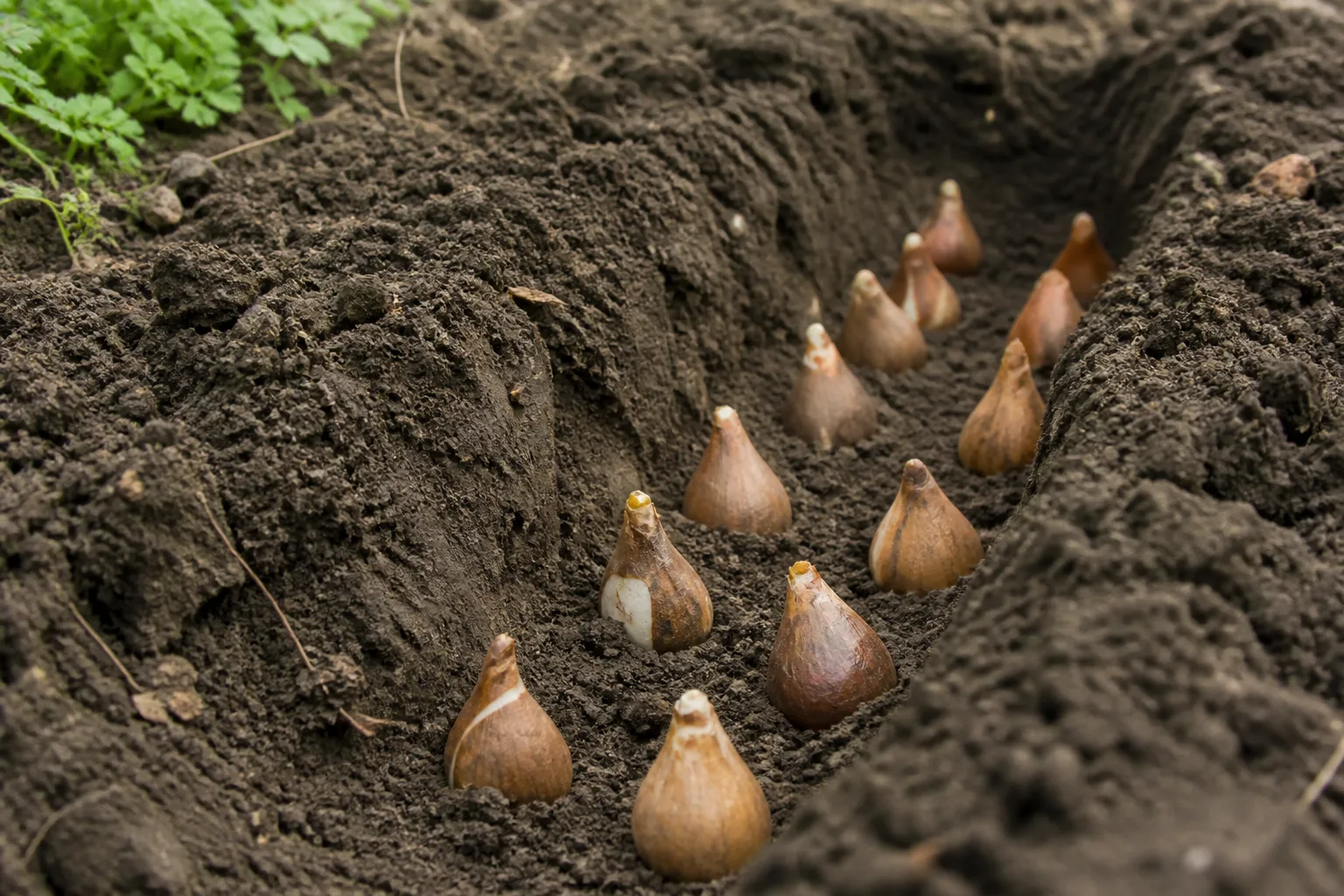
This comparison is useful because foxtail lily “bulbs” are not shaped like the bulbs in the photo. A tulip or similar bulb has a compact body and a clear up-down orientation; Eremurus has an exposed central crown with brittle roots radiating outward. Use the broad-hole-and-mound method for Eremurus, not a tight bulb planter hole.
Space crowns for their mature size
Spacing depends on the species or cultivar, not only on whether you want one plant or a dramatic group. The RHS lists 1 to 3 feet between crowns according to size and vigor, while NC State Extension gives a potential mature spread from about 20 inches to 5 feet. Small yellow E. stenophyllus can fit a more compact border; E. robustus may send an 8- to 10-foot spike above a clump that spreads several feet. Check the label for both height and spread, then leave the leaves room to receive sun and air.
For a group, plant crowns in an informal drift rather than a perfectly straight line. Eremurus blooms from late spring into summer, depending on species and location, and its straplike basal leaves begin to decline after flowering. Place the clump behind lower spring perennials or among shallow-rooted companions that will not demand frequent digging. Do not pack crowns tightly to get instant fullness; the roots need room, and dividing crowded plants later risks damage. A small group of well-spaced crowns usually looks more intentional than a dense cluster of flower spikes fighting for support.
Water and feed during active growth
Water according to what the plant is doing and how quickly the bed dries, not by a fixed “one inch every week” rule. During active spring growth, the foliage and developing spike need available moisture. If there has been no meaningful rain and the soil is dry a couple of inches down, water slowly at the soil line. If the soil still feels cool and damp, wait. Frequent shallow watering keeps the surface wet without helping the deeper root area and can aggravate rot in a heavy bed.
After flowering, the foliage often yellows and dies back as the plant moves into summer dormancy. At that point, reduce irrigation and let the soil trend dry; the RHS specifically notes that dormant Eremurus prefers dry summer conditions. This is not the same as withholding water while green leaves are actively growing. In climates with summer rain, the site’s drainage matters more than trying to shield an established plant from every shower. Avoid planting in a container saucer or any basin that traps water.
Foxtail lilies do not need heavy feeding to produce a spike. If the soil is poor or growth is weak, use a balanced or potassium-forward fertilizer in spring according to its label; do not pour concentrated liquid feed onto dry roots or apply a high-nitrogen lawn fertilizer that pushes soft foliage. The RHS recommends a spring potassium feed for active growth and reserves additional feeding for weak or frost-damaged plants. Compost worked into the wider bed before planting is a better starting point than repeatedly feeding a plant whose real problem is shade or waterlogging.
What to do after the flower spike fades
The flower spike opens from the bottom upward, so the top may still be in bud as the lower flowers begin to fade. If you want a tidy border or do not want seedlings, cut the spent spike after most flowers have finished, using clean pruners. If you want seed, leave the spike long enough for its capsules to form and dry, then collect the winged seeds before they scatter. Cutting the flower stalk does not harm the underground crown.
Leave the straplike leaves in place while they are green. Those leaves replenish the crown after bloom, and removing them immediately can reduce the plant’s energy for the next season. Let them yellow naturally, then trim the dry foliage away. Because the dormant plant can disappear completely, keep the marker in place and avoid planting a shovel or digging fork through the spot later in summer.
Protect dormant crowns and tender spring shoots
Hardiness ratings are only part of the winter picture. Eremurus can tolerate cold when planted in suitable conditions, but wet soil around a dormant crown can be more damaging than a cold, dry spell. In a cold climate, apply a loose, dry winter mulch after the ground cools, and keep wet, compacted material from sealing the crown. In a mild but rainy climate, prioritize drainage and a site that sheds water rather than adding a thick insulating layer. Remove or pull back mulch as growth resumes so that it does not smother the emerging rosette.
Young spring leaves are vulnerable when a late freeze follows warm weather. If a hard frost is forecast after shoots emerge, cover the plant temporarily with horticultural fleece or a light cloche and remove it when temperatures rise. The cover should not press heavily on the foliage. Since the leaves may emerge before the flower stalk, mark the crown early and check the forecast during the local frost season. The Chicago Botanic Garden’s guidance for its colder Midwestern climate includes winter mulch and protection for shoots on cold spring nights, while the RHS likewise flags frost damage to young growth; local weather and soil drainage should determine how much protection you use.

Stake tall stems and manage common problems
A healthy E. robustus can reach 8 to 10 feet, while smaller species and hybrids are often closer to 3 to 5 feet. Tall spikes catch wind, especially when the soil is wet and the stem is heavy with flowers. Choose a sheltered location first. If a plant still needs support, put a discreet stake beside the crown before the spike is tall, or stake from outside the root zone; pushing a stake down beside an established stem can puncture the shallow roots. Use a soft tie and leave enough slack for natural movement.
Slugs and snails can chew emerging leaves and weaken a young plant. Check the crown area at dusk and remove hiding debris; use locally approved controls only as directed on the product label. Frost-damaged leaves may look ragged, but if the central crown remains firm and the bed drains, the plant may recover. Root and crown rot is more concerning: persistent wet soil, a soft crown, or failure to return after a wet winter points to drainage or planting-depth trouble rather than a need for more fertilizer. The NC State Plant Toolbox lists slugs and snails among common problems and emphasizes well-drained soil, wind shelter, and careful handling of the fragile roots.
Propagate only when you can protect the crown
Eremurus slowly forms offsets and can be raised from seed, but neither method is a quick route to an identical flowering clump. Division preserves the parent cultivar more reliably, yet it risks the brittle roots and can set the plant back. Seed is a patient project: germination may be irregular, seedlings need several years to mature, and plants raised from hybrids may not match the parent flower color or height.
Division is risky; seed takes years
Only lift an established clump if it has become crowded or you have a compelling reason to move it. Wait until flowering is over and the foliage has died down, then loosen the soil well outside the crown with a fork. Lift from beneath, not by pulling the stems or roots. If the crown naturally separates into viable pieces with a sound bud and roots, replant each promptly; do not slice a healthy crown into tiny fragments just to increase the count. The RHS recommends dividing mature clumps after flowering and dieback, with care to avoid damaging the fleshy roots; North Carolina Extension also notes that division is possible but fragile.
To grow from seed, collect mature, dry capsules and sow fresh seed in autumn in a well-draining seed mix, or follow the packet’s stratification instructions. Keep the mix lightly moist rather than saturated and label the tray. Germination can be erratic, and flowering commonly takes three to five years from seed, so this method suits gardeners willing to raise plants without a guaranteed replica. Transplant seedlings only when they are large enough to handle and can be moved with minimal root disturbance. For most gardens, purchasing a named crown is the faster route to a known color and size.
Diagnose leaves without flowers or a missing plant
If a new crown grows leaves but no flower spike, first consider age and establishment. A crown planted recently may need more than one season to settle, and seed-grown plants routinely take several years to flower. If a mature clump has stopped blooming, review the growing conditions in this order: does it get direct sun, does water drain through the bed in winter, was the crown disturbed or buried, and did frost or slug damage remove much of the spring foliage? Fix the limiting condition rather than increasing fertilizer by default.
If the plant vanishes after flowering, it may simply have completed its annual cycle and gone dormant; the marker helps distinguish dormancy from a missing crown. If it does not return in spring, look for a wet planting pocket, a soft or rotted crown, or root damage from nearby digging. A crown that survives but produces weak growth may benefit from a spring feed, but improving drainage and protecting healthy leaves usually matters more. An established plant that has not flowered for a season is not necessarily dead, so wait through a full growth cycle before digging it up.
Conclusion
Foxtail lilies are worth the careful start when you can offer the conditions they need: full sun, shelter from harsh wind, and soil that drains well during winter and dries during summer dormancy. Plant a dormant crown in a broad hole, set the growing point near the surface, and fan its fragile roots over a low mound rather than treating it like an ordinary bulb. Then water during active growth, let the foliage finish naturally, and protect shoots only when your local frost risk calls for it. With the crown left undisturbed, patience is often the final part of good Eremurus care.



