Do Dryer Sheets Repel Mice? What Works Better
Do dryer sheets repel mice? Learn why they are unreliable, how to confirm mouse activity, and which exclusion, sanitation, and trapping steps work better.
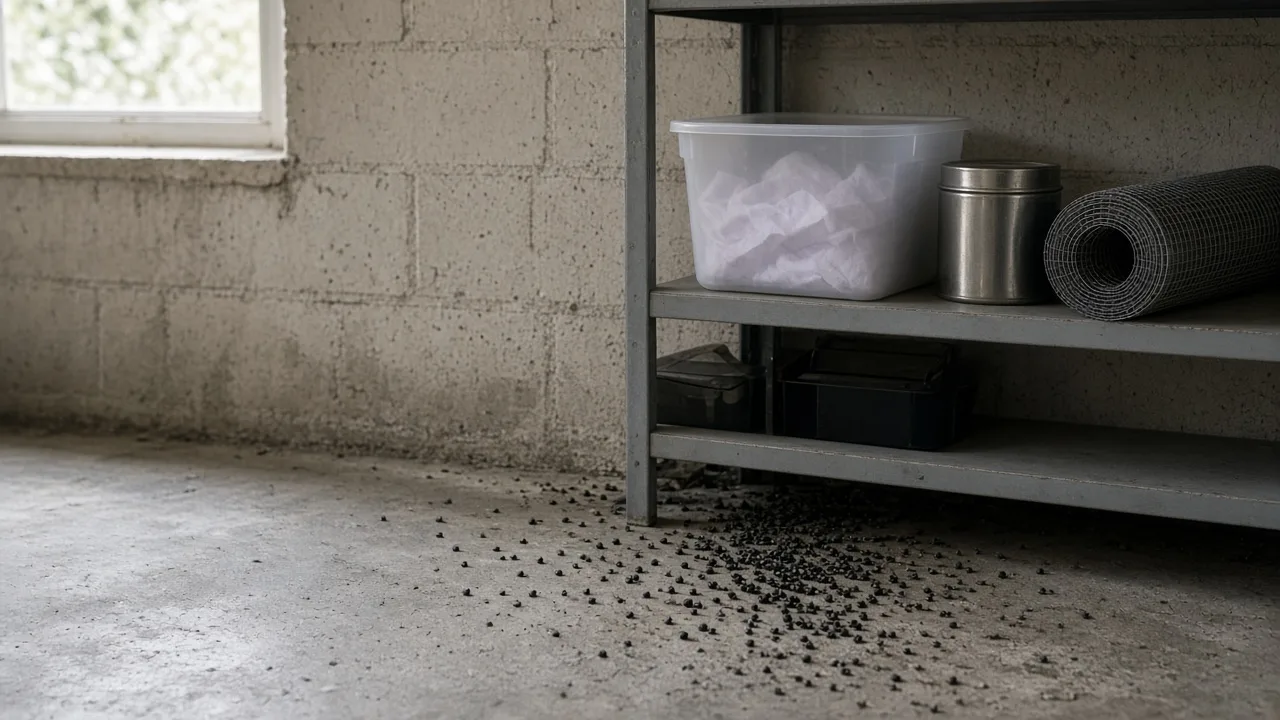
If you found a mouse dropping in a drawer, shed, or garage, a dryer sheet can feel like an easy first move. It is inexpensive, already in the house, and strongly scented enough that you may wonder whether that smell will make a mouse turn around.
The honest answer is not reliably. A dryer sheet may make a small area smell unfamiliar for a short time, but it does not close the gap a mouse uses, remove its food, or tell you whether the animal is still inside. If you are trying to solve a real mouse problem, spend your first effort on evidence, exclusion, sanitation, and traps. Those actions change the conditions that let mice stay.
The quick answer: dryer sheets are not a dependable mouse barrier
There is no good reason to treat dryer sheets as a proven mouse-control product. The scent may briefly make a particular corner less attractive, but a mouse that can still reach warmth, food, water, or nesting material has a strong reason to investigate again. Odor also weakens as the sheet dries, becomes covered in dust, or is overwhelmed by the smells already present in a garage, wall void, attic, or shed.
That distinction matters: a deterrent is not the same as control. Control means stopping entry, removing the resources that support the mouse, or reducing the population with a method you can monitor. The CDC’s rodent-control guidance organizes prevention around removing food, water, and shelter, then sealing openings and trapping rodents that remain.
If you want to put out a dryer sheet while you work, treat it as a low-stakes extra—not the plan. Do not stuff sheets into wall gaps, around a furnace, inside a dryer vent, or near a hot appliance. They can block airflow, become debris, and give you false reassurance while the mouse continues using another route.
What dryer sheets can and cannot do
A dryer sheet can add fragrance to a confined space. That may interrupt a mouse’s familiar scent map for a while, especially if the animal has not yet settled there. It might also make a closet or drawer less pleasant at the exact moment you place it, which is why anecdotes about sheets “working” can sound convincing.
What it cannot do is create a physical barrier, remove a nest, sterilize droppings, protect food, or stop reproduction. It also cannot distinguish between one mouse passing through and an established population. A sheet left near a droppings trail may change what you smell without changing what the mouse does.
Use the following test before giving the sheet credit: clean the evidence safely, remove nearby attractants, and mark the location. If new droppings, urine spots, or gnaw marks appear, the mouse is still active regardless of how strongly the laundry fragrance lingers. If nothing reappears, that suggests the sign may have been old or the mouse was removed; it does not prove the sheet repelled anything.
| Method | What it changes | How to judge it |
|---|---|---|
| Dryer sheet | Odor in a small area | Temporary comfort measure at most; no reliable population signal |
| Peppermint, cloves, bay leaves, or similar scents | Odor and taste around a spot | Unproven as a lasting barrier; replace only if you enjoy the scent |
| Sealing a gap | Physical access | Inspect the repair and watch for fresh signs |
| Securing food and reducing cover | Mouse resources | Fewer attractants and less shelter over time |
| Snap traps | Mouse population | Captures, fresh signs, and a clean week provide measurable feedback |
Why scent deterrents fade so quickly
Mice have a highly developed sense of smell, but that does not mean every strong smell keeps them away. Smell helps a mouse find food, recognize routes, and investigate danger; it is not a permanent off switch. In the Nebraska Extension publication Controlling House Mice, house mice are described as adaptable animals that can live close to people and move through a structure in repeated trips between shelter and food.

An unfamiliar scent can trigger caution, but caution usually buys time rather than guarantees departure. When the reward on the other side is a warm wall cavity, a bag of birdseed, or crumbs under a refrigerator, the mouse may test the route again. Repeated exposure also makes the smell less novel, while airflow distributes it unevenly.
This is why “mice hate this smell” is a weak decision rule. Even a scent that bothers a mouse in a small test area cannot seal a building, reach every wall void, or keep a determined animal from using a different path. The Gardening Know How guidance on mice in mulch likewise notes that fragrant plants such as mint or lavender have little evidence behind them as a reliable deterrent.
How to tell whether mice are still active
Before choosing a remedy, establish whether you are dealing with a current mouse or a leftover sign. One old dropping in a rarely opened box is a different problem from fresh pellets beside the stove every morning. The most useful first step is to clean a small area correctly, remove the food source, and check for new evidence over the next several days.
Droppings, gnaw marks, and nesting material
Mouse droppings are usually small, dark pellets with at least one tapered end. Size and color can vary with the animal’s diet, so do not diagnose a species from a single pellet. Nebraska Extension reports that house mice may leave dozens of pellets as they explore, which is why a trail near a wall or behind an appliance is more meaningful than one isolated dropping.
Fresh gnaw marks can appear on cardboard, food packaging, soft wood, insulation, soap, and electrical wiring. New damage tends to have cleaner edges and may be paired with droppings. Chewed wiring is a safety issue, not merely a housekeeping clue, so do not keep using damaged equipment until it has been inspected.
Nests are made from shredded paper, fabric, insulation, or other fibrous material and are often hidden near steady warmth. Look behind appliances, inside stored boxes, around water heaters, and in quiet wall or ceiling spaces. A musky odor, scratching after dark, or a pet repeatedly staring at one section of wall can support the diagnosis, but none of these clues replaces a physical inspection.
Less obvious clues around food, walls, and appliances
Mice often travel beside walls and objects rather than crossing open floors. Check the back edges of cabinets, the space under appliances, the corners of closets, and the floor-to-wall joint. Greasy rub marks can build up where repeated traffic contacts a painted baseboard, though dust, cooking residue, and other pests can create confusing marks.
Look for disturbed food, tiny holes in packaging, a bowl of pet food left overnight, and seed scattered below a feeder. In a garage or shed, inspect bags of grain, compost ingredients, stored bulbs, cardboard, and fabric. A daylight sighting can happen, but it may indicate crowding or a heavily used area; it is not a requirement for deciding to act.
Start with a 15-minute mouse inspection
Start at the newest or most concentrated sign and work outward. Photograph the area if you need to move items, then note the room, height, nearby food, and direction of any gnawing. This turns a vague fear that “mice are everywhere” into a short list of places to inspect and monitor.
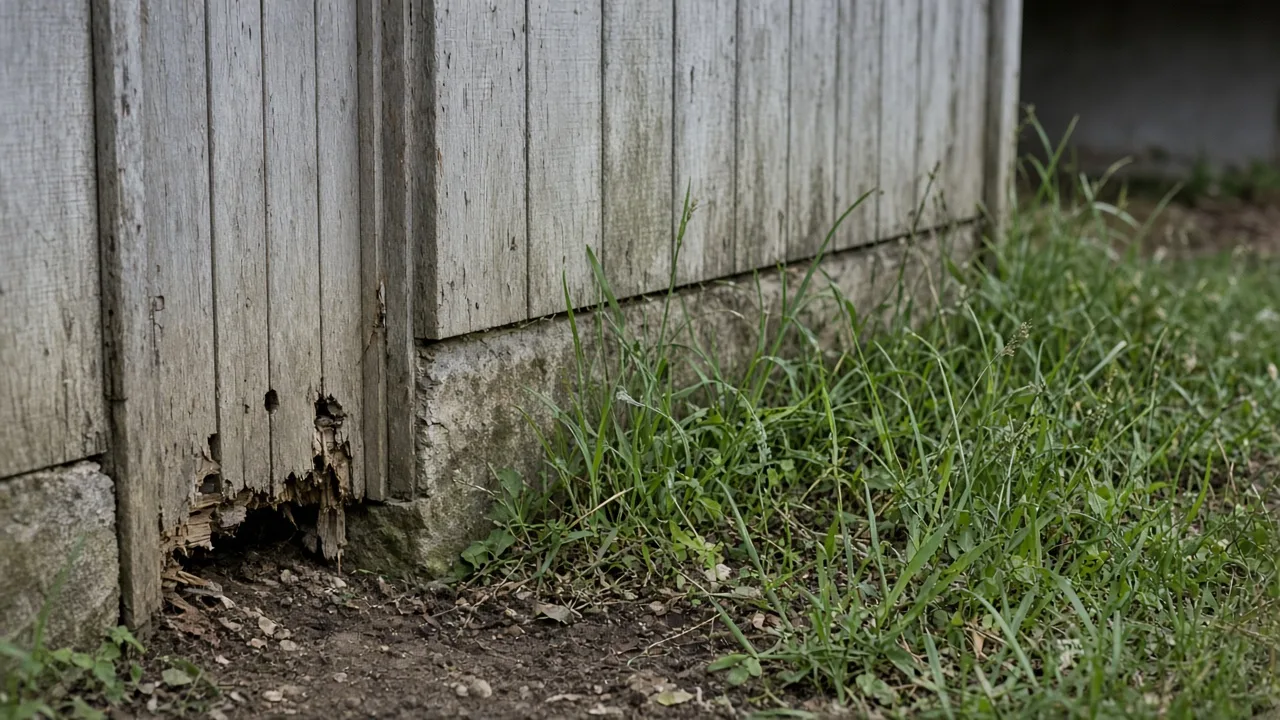
Inside, check under and behind kitchen cabinets, behind the refrigerator and stove, around washing-machine and sink pipes, near water heaters and furnaces, around floor and dryer vents, at doors and windows, and in attic, basement, and crawl-space edges. Outside, inspect the foundation-to-ground joint, roof and soffit lines, utility penetrations, garage doors, shed doors, and vents. The CDC seal-up guide specifically calls out these routes because a mouse can use an opening about 1/4 inch wide—roughly the width of a pencil.
Do not begin by emptying the entire house or scattering fragrances everywhere. A focused inspection gives you better placement for traps and better evidence about whether a repair worked. If you find a nest or substantial contamination, leave the area undisturbed until you can follow the cleanup precautions below.
Seal the openings mice actually use
Exclusion is the step a dryer sheet can never perform. Seal the entry route after you identify it, and keep traps inside if a mouse may already be present. Closing every exterior hole before dealing with an animal inside can simply force it into a wall, ceiling, or another room.

Small gaps need metal or mesh plus sealant
For a small hole, pack a rodent-resistant material such as steel wool or a suitable metal mesh into the opening, then secure it with caulk or another compatible sealant. The metal provides resistance to gnawing; the sealant holds the repair and stops airflow around it. Soft paper, fabric, plastic foam by itself, or a loose dryer sheet is not a durable mouse plug.
Larger openings need a fitted repair: hardware cloth, metal flashing, cement, a properly installed vent cover, or a piece of solid material that cannot be pushed aside. Keep the repair tight around pipes and cables. If you can see daylight, feel a draft, or insert the tip of a pencil, assume the opening deserves attention rather than trusting an odor.
Check doors, vents, pipes, and outbuildings
Doors and windows need intact weather stripping and a bottom seal that meets the threshold. Inspect around utility lines, plumbing, electrical conduits, foundation cracks, attic vents, crawl-space openings, and the dryer vent. A vent must still exhaust correctly, so use a purpose-built cover or have the repair assessed rather than filling the duct with household material.
Apply the same logic to garages, barns, cabins, and sheds. If a building is rarely opened, check it after long vacancies and before storing food, seed, textiles, or cardboard. Seal the structure, then keep an inspection gap around stored items so you can see new droppings instead of creating a hidden nesting zone.
Remove food, water, and nesting cover
Sanitation is not about keeping a perfect kitchen. It is about making the area less rewarding than the next available route. Store dry food, birdseed, livestock feed, and pet food in thick plastic, metal, or glass containers with tight lids. Wipe spills quickly, wash dishes after use, and put pet food and water away overnight if that fits your animal’s care routine.
Inside, use lidded garbage containers and clean residue from the bottom and sides. Outside, keep grills clean, close garbage tightly, and position bird feeders away from the house. A feeder can be good for birds while still spilling enough seed to support rodents, so reduce ground waste and avoid placing it beside a foundation, garage, or shed.
Remove nesting cover as well as calories. Cardboard stacks, fabric scraps, cluttered shelves, brush, debris piles, and densely packed storage all give mice somewhere to hide. Raise stored materials off the floor when practical and leave a visible inspection space between them and the wall. The RHS notes that mice and voles can be normal garden wildlife, but damage rises when populations and shelter increase; the goal is to reduce conflict and access, not to make every outdoor space biologically empty.
Set snap traps for measurable control
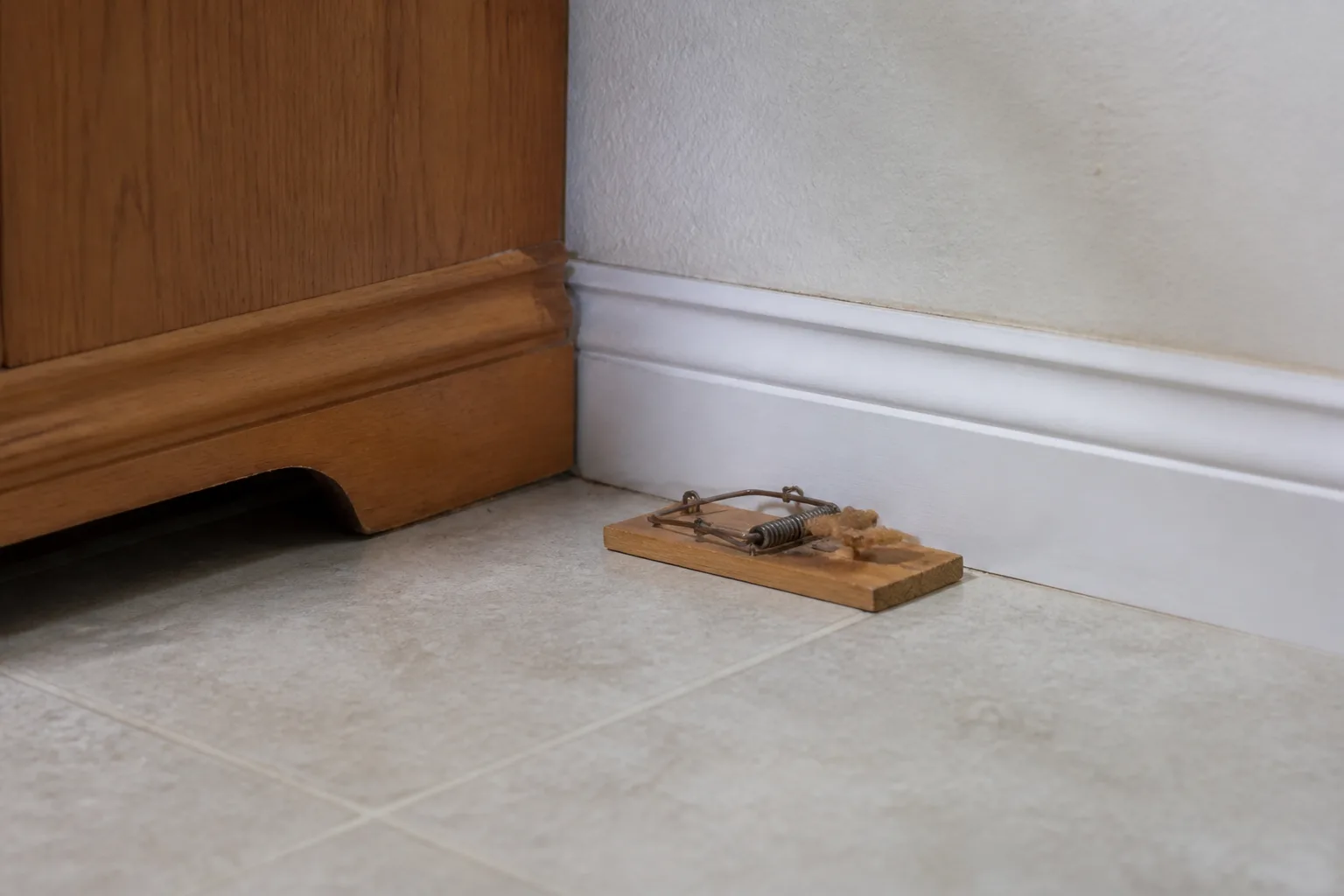
If you have current signs, snap traps usually provide the clearest next step for an indoor mouse problem. They are pesticide-free, let you see whether the plan is working, and remove a carcass before it can become an odor inside a wall. The CDC’s trap guidance recommends traditional snap traps and advises keeping traps and bait away from children and pets.
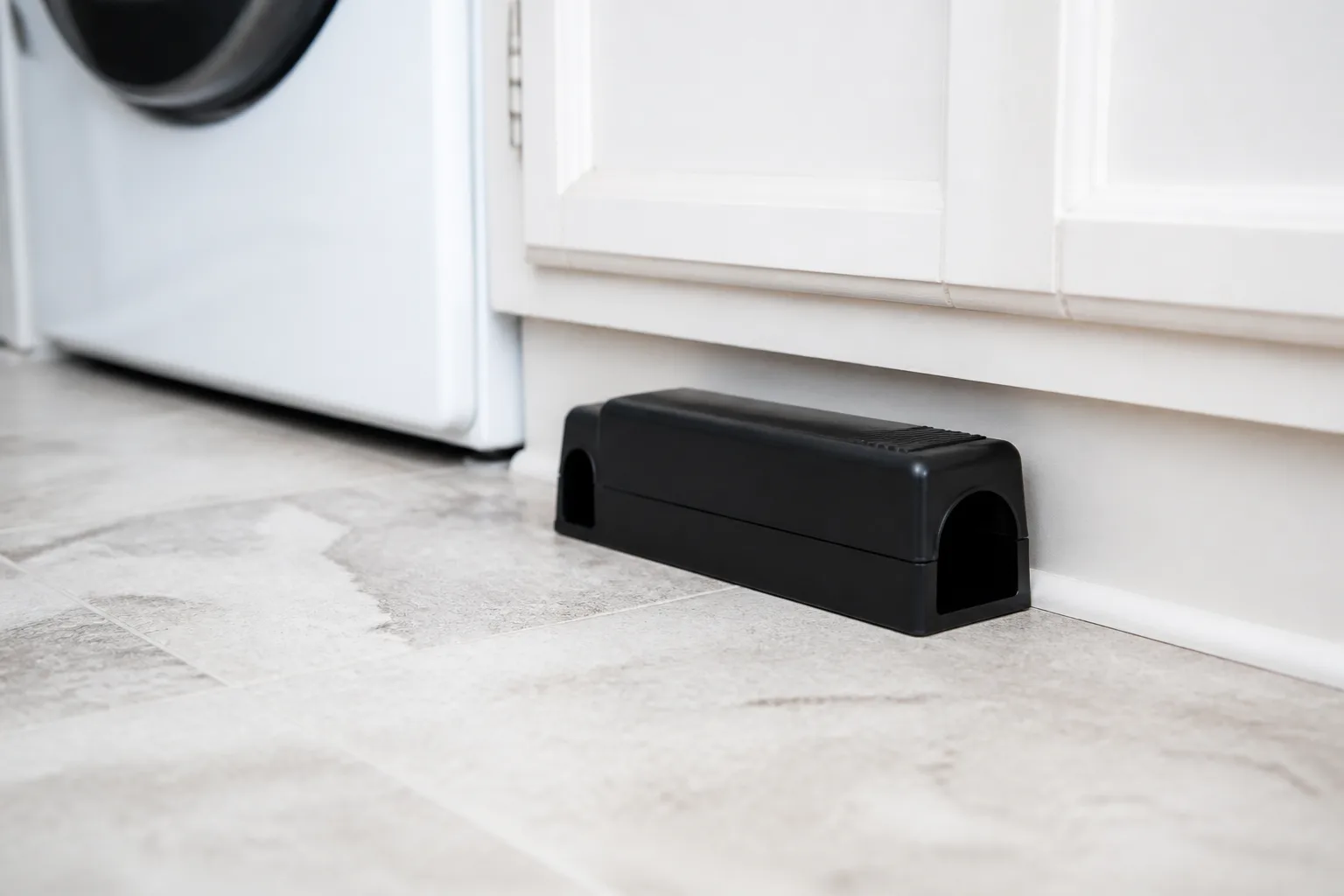
Use a mouse-sized trap and follow its instructions. A small amount of a sticky food lure can work, but placement is more important than offering a gourmet bait. If a pet or child could touch the trap, put it inside a secured protective station or choose a different location; do not leave an exposed device in a hallway and hope everyone remembers it is there.
Placement matters more than bait flavor
Set the baited end against a wall so the trap and wall form a T. Mice tend to run along edges, and this position puts the trigger across the route. Place traps behind appliances, at the back of cabinets, near droppings and gnaw marks, beside suspected entry routes, and in quiet utility spaces where children and pets cannot reach them.
Several correctly placed traps in a small active area are more useful than one trap in the center of a room. Nebraska Extension advises concentrating traps where activity is evident and spacing them no more than about 10 feet apart in active areas. Check them daily, reset as needed, and keep monitoring after the first capture; one mouse caught does not prove the route is clear.
If bait disappears without a capture, insects may be taking it, the trap may be poorly positioned, or the trigger may be too difficult for the mouse to set off. Move the trap a short distance along the wall, use less lure, and inspect the area again. Do not smear insecticide on the trap or mix household chemicals into bait.
What to do after a trap catches a mouse
Treat the carcass, trap, and nearby droppings as contaminated material. Put on rubber or plastic gloves, spray the mouse and surrounding area with a household disinfectant labeled for that use, and allow the product to remain wet for the label’s contact time. The CDC cleanup instructions say not to sweep or vacuum rodent urine, droppings, or nesting material first because disturbed particles can become airborne.
Use paper towels to pick up wet waste, place it in a covered garbage container, disinfect the hard surface, and wash your gloved hands before removing the gloves. Wash bare hands with soap and warm water afterward. If the contamination is extensive, the animal entered heating or cooling ducts, or you cannot clean an area without disturbing insulation, contact a qualified professional or local health department for situation-specific advice.
Treat scents and household remedies as extras
You will find many suggestions involving peppermint oil, cloves, bay leaves, cayenne, hot pepper sprays, ammonia, mothballs, or a radio. Their appeal is understandable: they are familiar household objects and feel gentler than traps. The problem is that a strong smell, a spicy residue, or a new sound does not address the resources that keep mice in place.
The most defensible way to use a scent is as a temporary reminder while you complete a real repair. For example, put a dryer sheet on a shelf only after food is sealed, then spend the same visit sealing the gap behind the shelf. Do not spray pepper mixtures where children, pets, or people with respiratory sensitivity can contact the residue, and never use mothballs as an improvised room deodorizer or place them where children or animals can reach them.
Ultrasonic and electronic devices have the same limitation in a different form. Nebraska Extension reports that repeated sounds are quickly habituated to and that ultrasonic signals are directional, weaken with distance, and do not pass well through objects. A device may be interesting to test, but it should not replace a trap or a repair simply because you cannot see its effect.
Prevent mice around gardens, sheds, and mulch
Outdoor mouse activity is not automatically an indoor infestation. The RHS describes mice and voles as part of garden biodiversity and notes that damage is often minor when numbers stay low. If you see a few tracks near a compost pile or find a nibbled fruit outdoors, start by reducing concentrated food and cover rather than scattering poison around the yard.
Thin or selectively placed mulch is easier to inspect than a deep, undisturbed blanket beside a shed or tree trunk. Straw, leaves, and wood chips can provide useful soil protection, but they also provide cover. Gardening Know How recommends avoiding unnecessarily thick mulch, removing excess materials, and keeping the yard tidy when rodents are using the bed as shelter.
Protect vulnerable seedlings, bulbs, fruit, and stored produce with physical barriers and contained storage. Clean spilled birdseed, move feed into lidded bins, keep brush and debris away from the foundation, and raise woodpiles off the ground. A tidy perimeter will not repel every wild mouse, but it reduces the easy routes and hiding places that connect the garden to the house.
Avoid outdoor poison as a casual “natural” solution. A bait that kills a mouse can also expose pets, children, scavenging wildlife, or a raptor that eats the carcass. If outdoor control is necessary, use a legal, correctly labeled product in the required protective station and follow local rules; in many garden situations, barriers, storage, cleanup, and professional advice are the safer starting points.
When bait or professional help makes sense
Traps and exclusion are a strong first line for a small indoor problem, but they are not a test of personal virtue. Bait may be considered when activity persists despite careful trapping and exclusion, especially in inaccessible areas, but rodenticides carry risks that scented household items do not. Use only products registered for your location, follow the label exactly, and use the specified tamper-resistant station.
Never scatter loose bait in a kitchen, attic, garden, or shed. Keep products inaccessible to children and pets, remove uneaten bait as the label directs, and do not assume a poisoned mouse will die outdoors. The location of a carcass is unpredictable, so poison can trade a visible problem for a hidden odor or contamination inside a wall.
Call a pest professional when signs continue after a focused week of exclusion and trapping, when you find heavy contamination, when mice are entering ventilation systems, or when the entry point is structural and unsafe to reach. A professional should explain the inspection, the entry repairs, the monitoring plan, and the safety precautions—not simply sell you a box of bait.
A practical seven-day plan
Day 1: Photograph and mark the newest evidence. Inspect the nearby wall edges, cabinets, appliances, vents, pipes, and stored goods. Remove accessible food and water, but do not sweep or vacuum droppings.
Day 2: Clean the small contaminated area using the CDC method: gloves, disinfectant, adequate wet contact time, paper towels, covered disposal, and handwashing. Discard contaminated cardboard and set aside questionable insulation or porous material for professional advice.
Day 3: Seal the obvious openings. Use metal mesh or steel wool with sealant for small gaps and a fitted repair for larger holes. Check the door sweep, weather stripping, utility penetrations, and dryer-vent area without obstructing appliance airflow.
Day 4: Set several snap traps along active walls, with the baited end against the wall. Keep them away from children and pets, and check them every day. If the first positions show no activity, move the traps toward the newest evidence instead of adding more fragrance.
Day 5: Inspect the outside perimeter, garage, shed, bird feeder, compost area, woodpile, and mulch. Remove nesting cover, tighten storage, reduce spilled seed, and move materials so you can see the foundation and walls.
Day 6: Review the evidence. A clean area with no new signs is encouraging; fresh droppings, urine, or gnawing means the control loop is still active. Adjust trap placement and look for a missed opening rather than declaring victory because a dryer sheet still smells strong.
Day 7: Continue trapping until signs stop, then leave monitoring traps or inspection points in place for a while. If evidence persists, contamination is extensive, or access is unsafe, bring in a professional. The goal is not merely to make the room smell different; it is to make the structure difficult to enter and unrewarding to occupy.
Conclusion
Dryer sheets may briefly alter the smell of a small area, but they do not reliably repel mice or solve the reason mice are there. Use them only as an optional short-term extra, never as a barrier, cleanup method, or substitute for evidence.
The dependable sequence is straightforward: confirm fresh activity, clean contaminated areas safely, seal openings about 1/4 inch and larger, remove food and nesting cover, and place snap traps along active walls. Add pet- and child-safe precautions, monitor for a full week, and escalate when the problem is heavy, hidden, or connected to ventilation. That approach gives you something a scented sheet cannot: a way to see what changed and what still needs fixing.



