Do Yucca Plants Need Dry or Wet Soil? Care by Setting
Do yucca plants need dry or wet soil? Get practical checks for spineless houseplants and hardy garden yuccas, plus clear steps to prevent waterlogged roots.
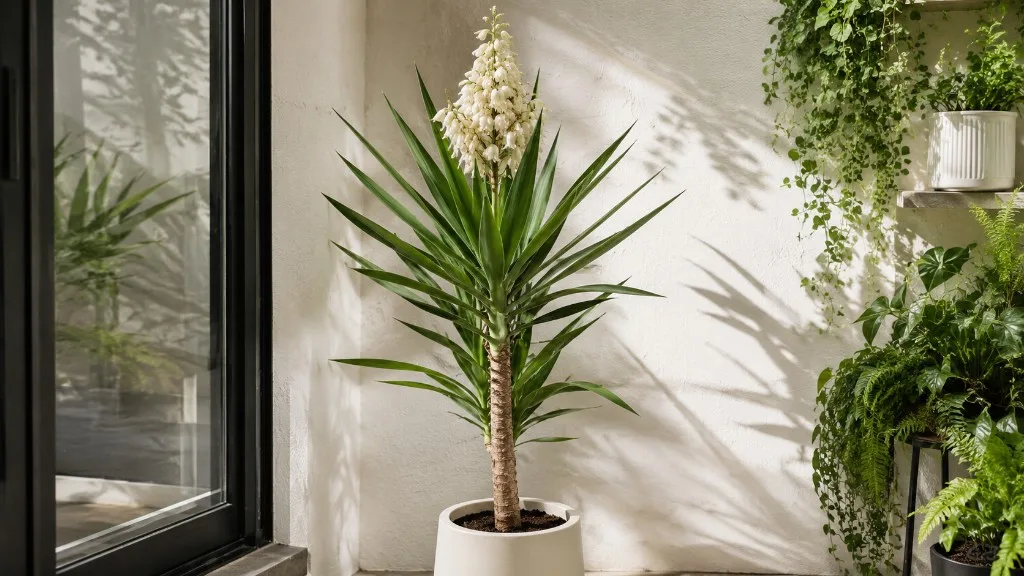
A yucca should not sit in waterlogged soil, but “keep it dry” can be misleading if it makes you avoid watering altogether. Most yuccas do best when the root zone receives a thorough drink, drains freely, and then has time to dry between waterings. The exact amount of dry-down depends on whether the plant is a spineless indoor cane, a hardy garden yucca, or a desert species, and whether it grows in a pot or in the ground.
The practical goal is moisture followed by air, not permanent drought. North Carolina State Extension describes spineless yucca as drought tolerant and warns that overwatering can be problematic, while the Missouri Botanical Garden recommends a well-drained sandy mix and letting potted soil dry between waterings. That means a yucca can accept water during active growth; the trouble starts when the mix or bed keeps its roots wet for too long.
The short answer: let the roots dry down, not sit soggy
For most yucca plants, choose soil that drains quickly and let it dry between waterings. Indoor yucca owners should check the mix below the surface before watering; gardeners with an established outdoor yucca should first consider rainfall and how long the planting spot stays wet. A routine such as “water every Sunday” ignores the biggest variables: pot size, soil texture, light, temperature, plant size, and weather.
“Dry” does not mean a yucca needs to live in bone-dry dust all year. North Carolina State Extension describes the spineless yucca, listed as Yucca gigantea and formerly known as Y. elephantipes, as preferring moist but well-drained loam or sandy soil. The same profile recommends a much more open indoor container mix—one part potting mix to three parts perlite or sand—and flags overwatering as a problem. Those details fit together: a brief wet phase after watering is acceptable when excess water can escape and air returns to the root zone.
A better rule is to water according to the condition of the root zone, not the calendar. Let a container mix dry substantially before the next soak, but do not turn a newly planted yucca into a no-water experiment while its roots are establishing. Outdoors, a long-established plant in a suitable site may need no supplemental irrigation for long stretches, while a recently planted one may need an occasional deep soak during a dry spell.
What “dry soil” means for a yucca
Soil can be damp immediately after watering and still be “well drained.” Drainage describes how excess water moves away; it does not mean the roots never encounter moisture. In a healthy container, water passes through the mix and out the drainage hole, leaving the particles moist for a time before the pot dries down. In a landscape bed, rain can wet the root zone, but the surrounding soil should not remain saturated or hold a puddle around the crown.
The phrase “dry between waterings” describes the interval after that excess water has left. For a potted yucca, the surface can dry first while the lower root ball remains cool and wet, so checking only the top crust is a weak test. Use a finger or wooden skewer several inches down, or compare the pot’s weight with how it felt just after watering. If the deeper mix still feels damp and the pot is heavy, wait; if it has dried substantially and the plant is actively growing, water thoroughly.
Outdoor soil works differently because roots extend beyond a small container and receive water from rain over a wider area. The question is not whether the soil feels dry at the surface at noon, but whether excess rain moves away from the crown and whether the root zone has had time to aerate. A sunny, raised planting area can stay healthy after a storm; a low pocket that remains sticky or puddled for days is a poor match for many yuccas.
Think of the target as a cycle: wet enough to supply roots, drained enough to restore air, and dry enough before the next irrigation to avoid a constantly saturated root zone. The length of each phase is not fixed. A small pot in bright light may dry faster than a large container in a dim room, and a sandy mound dries differently from compacted garden soil.
Yucca species change the moisture target
“Yucca” is a genus, not one plant with one exact watering requirement. The common indoor plant is usually spineless yucca, while outdoor beds may contain clumping, trunk-forming, or desert-adapted species. Their shared preference for drainage does not erase differences in growth habit, climate tolerance, or how much seasonal wetness they can take.
| Yucca type | Typical setting | Moisture and drainage approach |
|---|---|---|
| Spineless yucca, Yucca gigantea/Y. elephantipes | Indoor container or warm-climate landscape | Water when the mix has dried down; use a draining container and airy mix. |
| Hardy garden yuccas such as Y. filamentosa and Y. gloriosa | Outdoor bed or patio pot | Use well-drained soil; established plants often rely on rainfall, but avoid a wet winter site. |
| Desert forms such as Y. brevifolia or Y. rostrata | Arid landscape or carefully managed pot | Favor very open, coarse soil and avoid routine irrigation once established. |
Spineless yucca indoors: forgiving, but not swamp-proof
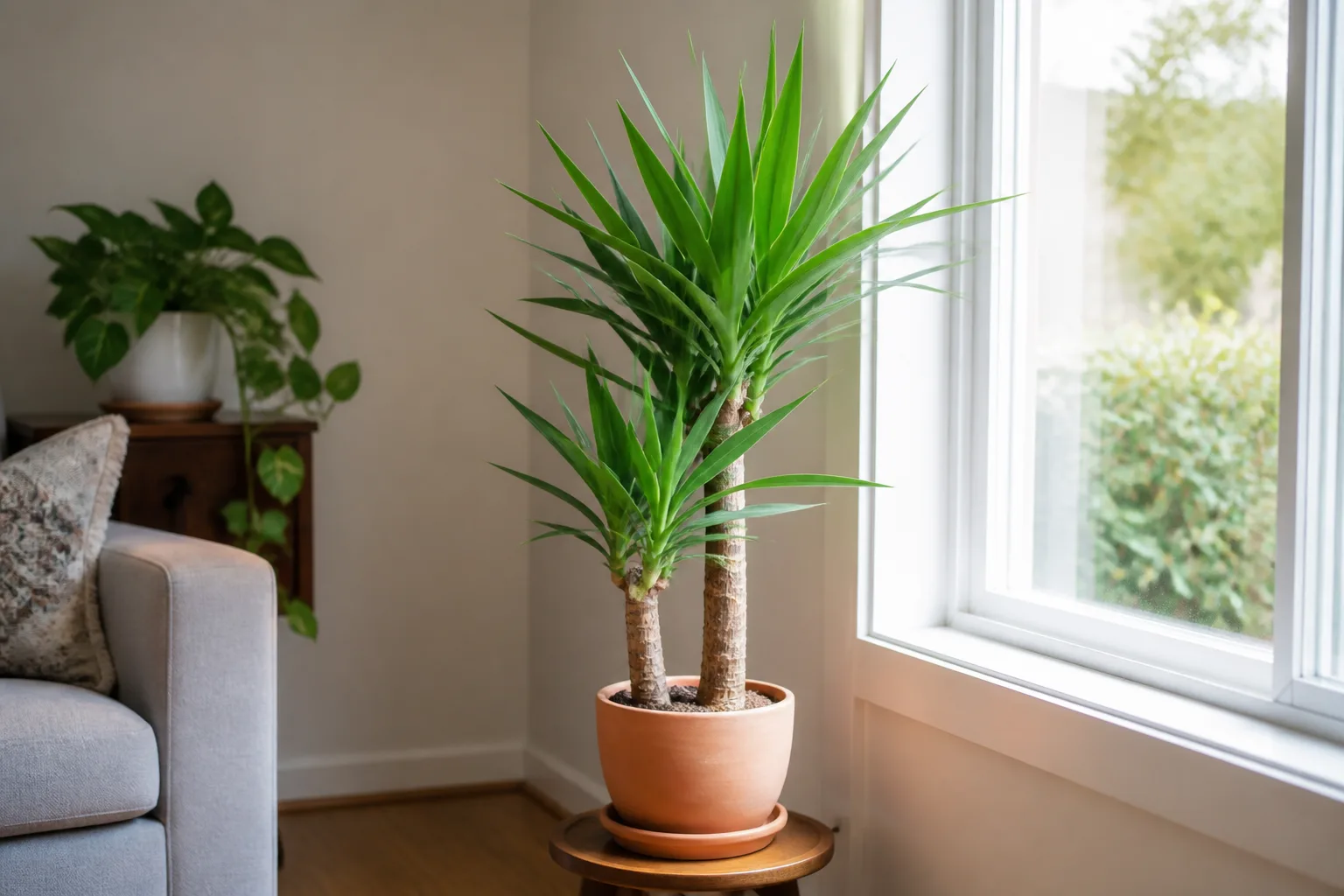
The tall cane yucca sold for homes is often labeled Yucca elephantipes; North Carolina State Extension uses Y. gigantea and notes the older name. It is a tropical plant compared with many cold-hardy landscape yuccas, so advice for a garden Adam’s needle should not be copied word for word for a houseplant. In a pot indoors, its roots depend on the container and mix to provide the drainage that rainfall and deep garden soil would otherwise influence.
The North Carolina State Extension suggested houseplant blend—one part potting mix to three parts perlite or sand—illustrates how much more open a container substrate may need to be than ordinary moisture-retentive potting soil. The RHS recommends extra horticultural grit in container compost, then thorough watering with surplus allowed to drain; its indoor advice also emphasizes well-drained compost and careful watering. These are starting points, not a universal recipe: the right mix depends on the base compost, pot, and indoor conditions. For ingredient ratios and amendments, use the more detailed yucca soil guide.
An indoor cane that stands in a decorative cachepot or a saucer full of water is exposed to a different risk from one in a pot with a clear drainage hole. After watering, lift the nursery pot out of its cover pot and empty the collected water. The presence of a dry-looking top layer does not make standing water at the bottom safe.
Hardy landscape yuccas: rainfall and drainage both matter
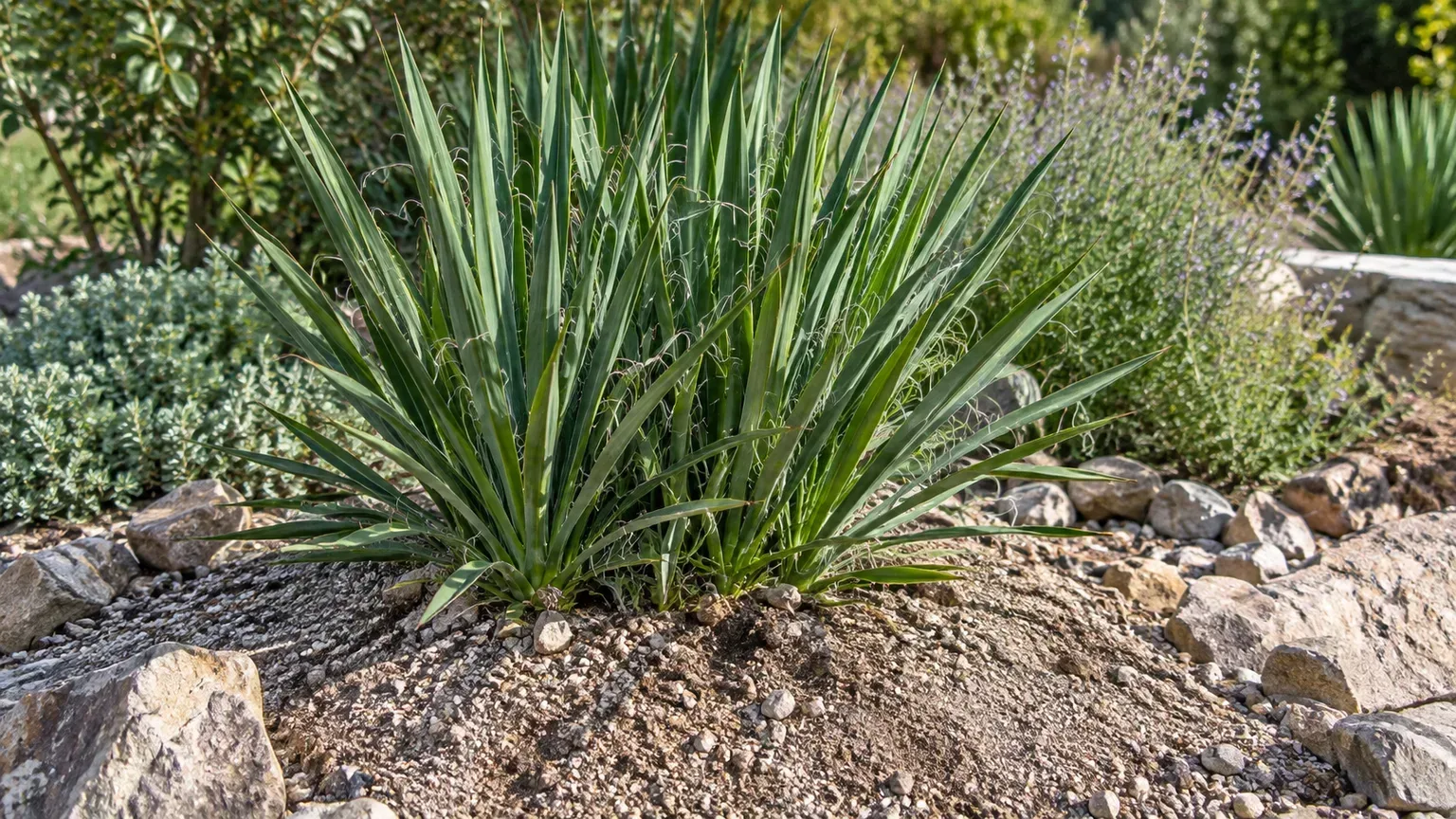
Clumping species such as Yucca filamentosa and trunk-forming Y. gloriosa are common outdoor ornamentals. The RHS describes these hardier yuccas as full-sun plants for well-drained soil, while the BBC Gardeners’ World profile for Y. rigida calls for very free-draining soil and notes that winter wet may need protection. A plant can be drought tolerant in summer and still suffer when cold-season rain leaves its crown and roots wet.
Some garden yuccas tolerate more variation in ordinary soil than a desert species or a potted cane. That does not mean they are wetland plants. UF/IFAS Extension lists spineless yucca as tolerant of several soil textures when drainage is good and warns against planting where drainage is not superior; for its Florida landscape context, it says not to irrigate established yucca. That is a useful warning about overwatering, but it should not be turned into a universal “never water any yucca” rule for a fresh planting or a container.
Desert yuccas: keep the root zone especially open
Desert species have a narrower margin for repeated wet soil. The Missouri Botanical Garden describes Joshua tree, Yucca brevifolia, as a plant of dry, coarse, well-draining soil and states that supplemental water should be limited to prolonged drought. That guidance is species-specific and climate-specific, yet it shows why advice written for a spineless houseplant cannot be generalized to every yucca.
A desert yucca planted in a wet climate may need a high, sharply drained site, a protected position, or a container that can be sheltered from winter rain. A layer of gravel does not make a waterlogged location suitable if the surrounding soil still holds water. If the species label is missing, identify the plant before making major changes; leaf shape alone may not be enough to distinguish a hardy landscape plant from a tender cane yucca.
Indoor yucca pots: check the root ball, then water fully
Houseplant watering is a decision made at the pot, not at the plant label. A bright window, warm room, small pot, and airy mix can make soil dry sooner; low light, cool winter conditions, a large ceramic container, and fine potting mix can keep the root ball wet much longer. Two yuccas in the same home may therefore need water on different days.
Check below the surface
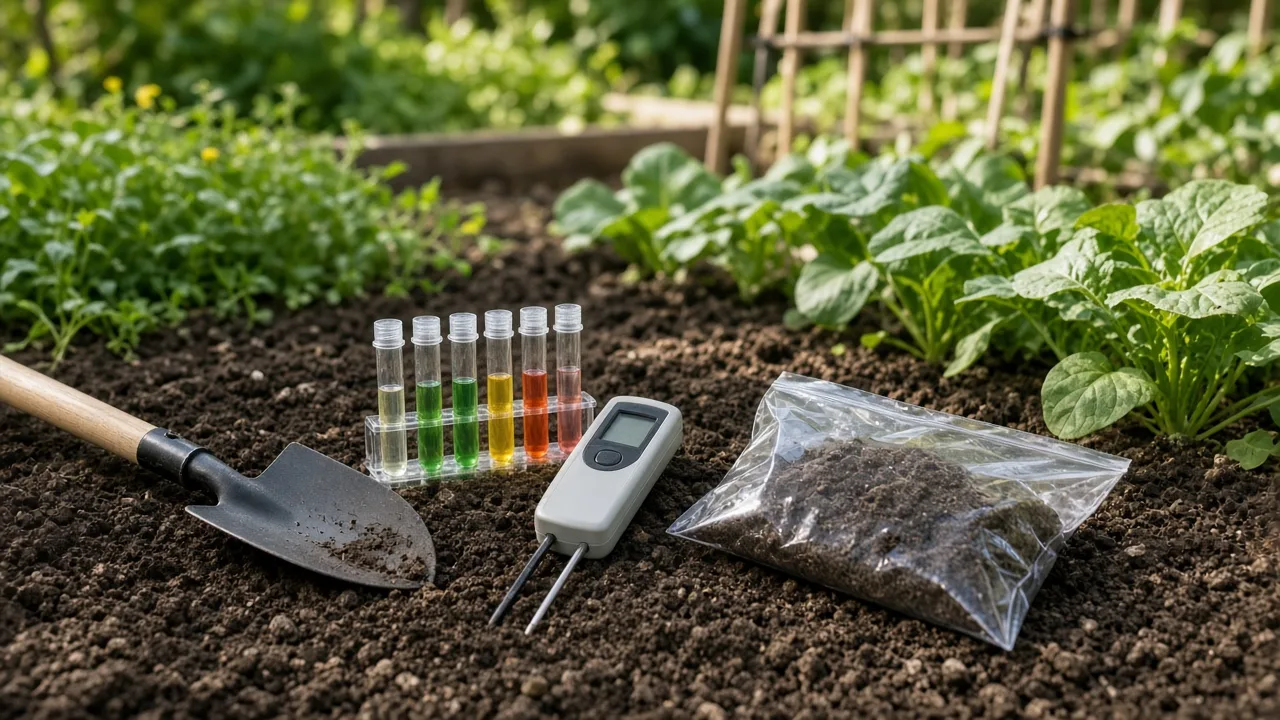
Before watering, check several inches into the mix, especially in a deep pot. A moisture meter can help you notice a wet lower layer, but use it as one clue rather than a precise instruction: probe placement, salts, and the meter’s calibration can change the reading. A wooden skewer left in the middle of the root zone for a short check can reveal damp mix clinging to it, while a pot that feels light compared with its post-watering weight is another useful cue.
Do not mistake a dry crust for a dry root ball. Peat-heavy or compacted mix can form a pale, dry surface while staying wet near the bottom; in that case the problem is not a need for more water but poor air space or slow drainage. If this pattern repeats, review the pot’s drainage hole, mix structure, and light level rather than adding water because the leaf tips look tired.
Let extra water leave the pot
When the deeper mix has dried substantially, water the soil evenly until excess runs from the drainage hole. This wets the whole root ball more consistently than giving a few sips at the surface, which can leave dry pockets and encourage roots to stay near the top. Let the pot finish draining before returning it to a saucer or decorative cover.
If water races down the gap beside the root ball and the center stays dry, the mix may have become hydrophobic or pulled away from the pot wall. Do not respond with increasingly frequent small drinks. Rewet the root ball slowly in stages, then consider refreshing a degraded mix if it repeatedly refuses to absorb water; the yucca watering guide covers how to make the next watering more reliable.
A pot should not sit inside an oversized container that holds a reservoir of runoff. A cachepot is fine if you remove the inner pot to drain, or if you empty the cover pot after watering. The goal is not to keep every particle dry; it is to prevent standing water from turning a well-drained mix into a continuously wet root zone.
Outdoor yuccas: choose a site that sheds excess water
For an in-ground yucca, the planting location often matters more than a soil amendment. A sunny slope or raised bed can shed water; a depression at the bottom of a downspout may stay saturated despite having sandy soil in the planting hole. Before planting, observe how the site behaves during and after rain rather than relying on the soil’s color on a dry day.
Read the bed after rain
Look for puddles, runoff, and wet soil that clings to a trowel long after rain has stopped. A single puddle does not prove that every yucca will fail there, but repeated standing water around the crown is a strong reason to choose another spot or raise the planting area. Gardenia’s growing guide likewise centers yucca placement on well-drained soil and notes that sandy, loamy, and rocky soils can all work when drainage is adequate.
Do not assume that adding a bucket of sand to heavy clay will solve the whole bed. The water may still collect where the amended hole meets dense surrounding soil, and the plant will remain in a wet basin. If a site drains poorly, a broad raised mound or raised bed, a higher location, or a species better suited to the local conditions is often a more reliable fix than changing only the soil inside the planting hole. Gardenia’s yucca growing guide likewise treats drainage as the condition that makes different soil textures workable.
Treat new plantings differently from established plants
A recently planted yucca has not yet explored the surrounding soil with an established root system. During its first dry spells, a deep soak may help the root ball and nearby soil stay in contact; then allow the area to drain and dry before repeating. Nature & Garden’s outdoor guidance for Y. gloriosa and Y. filamentosa makes this distinction: mature plants commonly survive on rainfall, while new plants can benefit from occasional deep watering during their first dry season.
Once a yucca has settled in, do not automatically add irrigation whenever nearby annuals are watered. Check the root zone first, and account for rain, heat, and soil. UF/IFAS cautions that spineless yucca should not be irrigated in a poorly drained landscape; this is particularly important in climates where warm, humid conditions can coincide with persistently wet soil. An outdoor potted yucca is an exception to the “rainfall takes care of it” idea because the container has a limited volume and may sit under an eave where rain cannot reach it.
Adjust for season, light, and weather
The same plant can use water at different rates across the year. Bright spring and summer light usually supports more active growth, while short winter days, a cool room, or a sheltered indoor spot slow water use and extend the interval between soaks. The Missouri Botanical Garden advises reducing water for potted Y. elephantipes during indoor winter months; the RHS similarly says to water sparingly in winter and let the surface compost dry before watering thoroughly.
Outdoor weather changes the calculation too. A yucca beneath a roof overhang receives less rain than one in an open bed; a windy, sunny patio pot can dry much faster than a sheltered garden planting. Rainy winter conditions pose a different risk from a hot summer drought because cold roots use less water while wet soil may persist. Use season as a reason to check more or less often, not as a substitute for checking.
If you move a potted yucca outside for summer, expect the mix to dry faster in wind and sun, but acclimate it to stronger light rather than leaving it in a new spot that scorches leaves. When you bring a tender species indoors, lower light and cooler conditions can slow dry-down. Do not carry over the outdoor watering rhythm unchanged; recheck the pot’s depth and weight.
Read the soil and plant together
Leaves do not tell you the full story by themselves. A single lower leaf yellowing as a cane ages can be normal, and drooping can result from several kinds of stress. Combine the plant’s appearance with the deeper soil condition, pot drainage, recent watering, and recent weather before changing the routine.
Signs the root zone is staying too wet
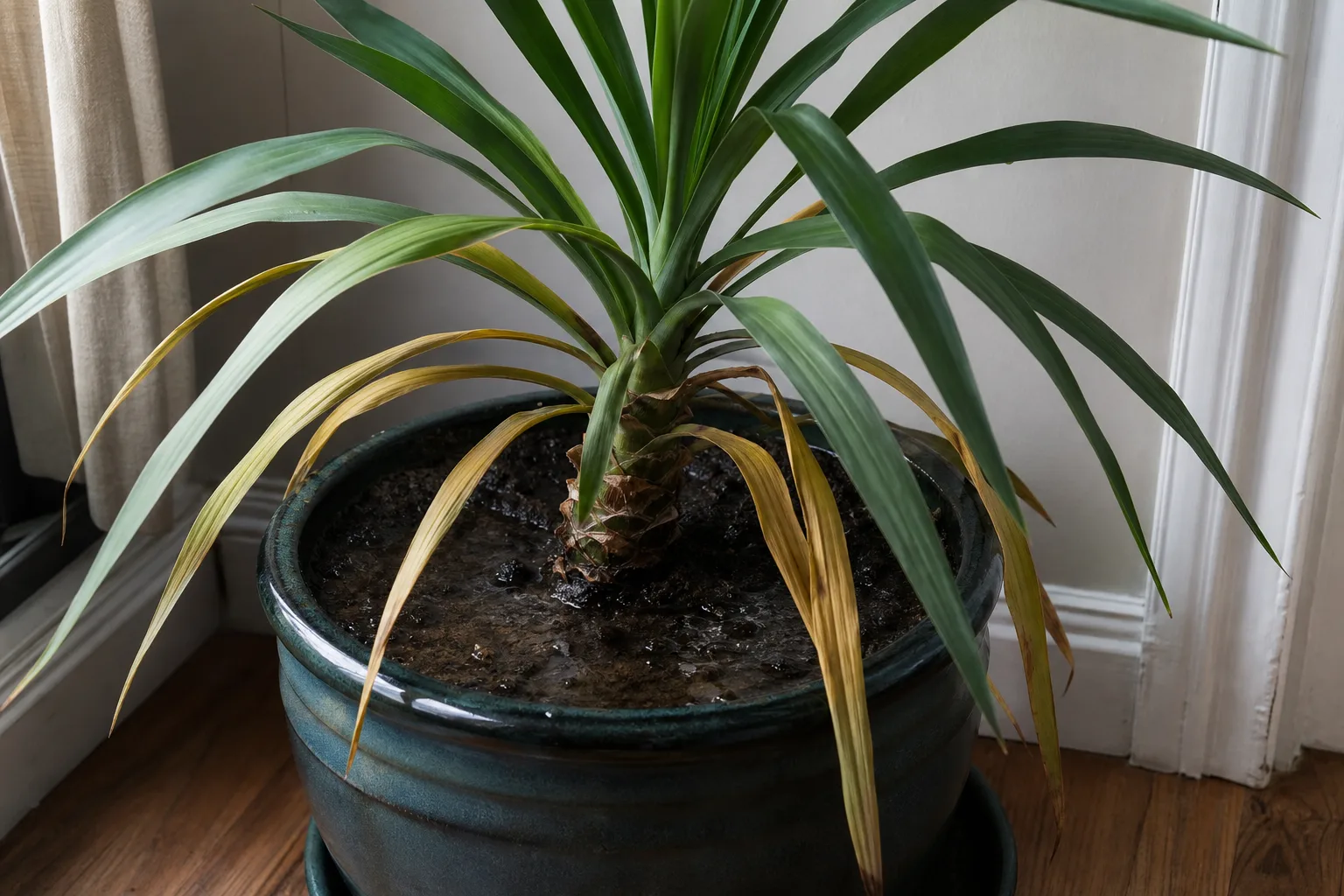
Warning signs include a mix that remains damp for a long time, a sour or swampy smell, fungus gnats repeatedly breeding around the pot, widespread sudden yellowing, limp lower leaves, or a soft trunk near the soil line. The RHS notes that sudden yellowing and limpness of lower yucca leaves can follow overwatering and advises reducing water; if roots have begun to rot, remove the plant, discard decayed compost and roots, and repot it in an appropriately sized container. These symptoms warrant inspection when several appear together, not an automatic rescue based on one yellow leaf.
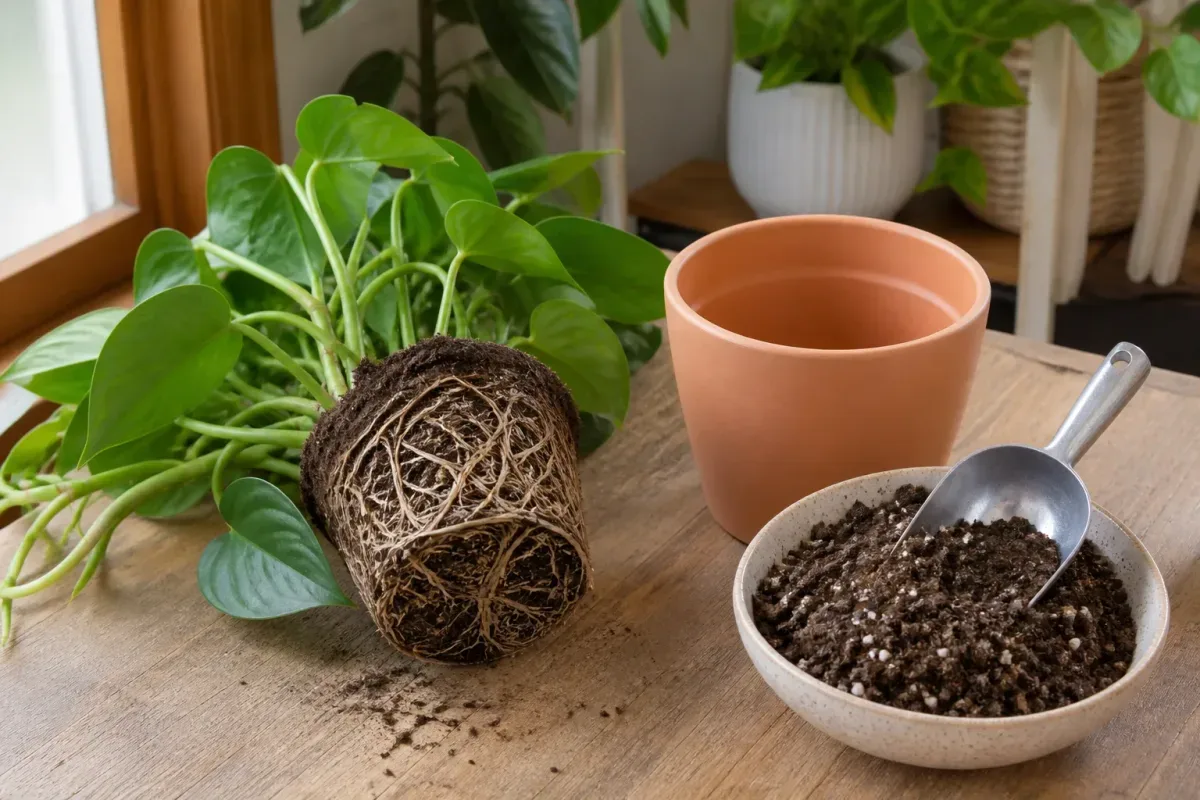
If you unpot the plant, healthy roots should feel firm, while decayed roots may be dark, soft, and unpleasant-smelling. Check whether the pot has a usable drainage hole and whether the root ball is sitting below runoff trapped in an outer pot. The matching yucca overwatering guide can help separate root-zone trouble from light stress or normal leaf aging.
Signs the plant is too dry
A thoroughly dry mix, a very light pot, and leaves losing firmness together make underwatering more plausible. Severe or repeated drought can cause dry, crisp leaf edges or a plant that fails to recover its turgor after a good watering, but those signs are not unique to thirst. Sun scorch, drafts, old foliage, and other stresses can look similar, so check the roots and recent conditions before concluding the plant needs a more frequent schedule.
When the plant is dry but still firm at the trunk base, water the entire root ball and allow it to drain. Then wait for the mix to dry down again before repeating. If the water runs straight through without wetting the center, correct that absorption problem instead of increasing the amount of water that remains in the saucer.
How to correct soil that stays wet
Start with the least disruptive checks: stop watering while the root ball is still wet, remove standing water from the saucer or cachepot, and confirm that the drainage hole is open. Move the plant to brighter conditions only if its light is inadequate, and avoid cold drafts; do not add fertilizer to a plant whose roots may be stressed. If the mix dries normally after these adjustments and the trunk remains firm, a full repot may not be necessary.
If the mix remains saturated, smells sour, or the plant has soft tissue at the base, inspect the roots. Trim only clearly dead, mushy tissue with a clean tool, discard old soggy mix, and repot into fresh, open mix in a container just large enough for the remaining root system. Keep the crown at its original height and choose a pot with a drainage hole; burying the base deeper or moving the plant into a much larger, wet pot can prolong the problem. For a detailed mix recipe and repotting choices, follow the yucca plant soil guide.
An outdoor plant in a wet pocket may not be rescued by changing the surface around it. Divert runoff, improve the planting height, or move the plant if you can do so without causing more damage. Where the existing drainage pattern cannot be changed, choose a better-drained location for the next yucca rather than repeatedly watering, amending, and replanting in the same puddling spot.
Conclusion
Yucca plants generally need well-drained soil that dries between waterings. A short period of moisture after a deep watering is normal; soil that stays saturated is the problem. Indoor spineless yucca depends on a free-draining pot and a moisture check below the surface, while outdoor yuccas depend on a suitable site, rainfall, species, and establishment stage.
Before watering, identify the kind of yucca if you can, check the root zone rather than the surface alone, and make sure excess water has somewhere to go. If the soil is still damp, wait; if it has dried down and the plant needs water, soak it fully and let it drain. That simple cycle protects yucca roots far better than treating every plant or season to the same schedule.