How to Grow and Care for Evening Primrose
Learn how to grow evening primrose from seed, match its light and soil needs, support flowering, and manage self-sowing in beds or containers.
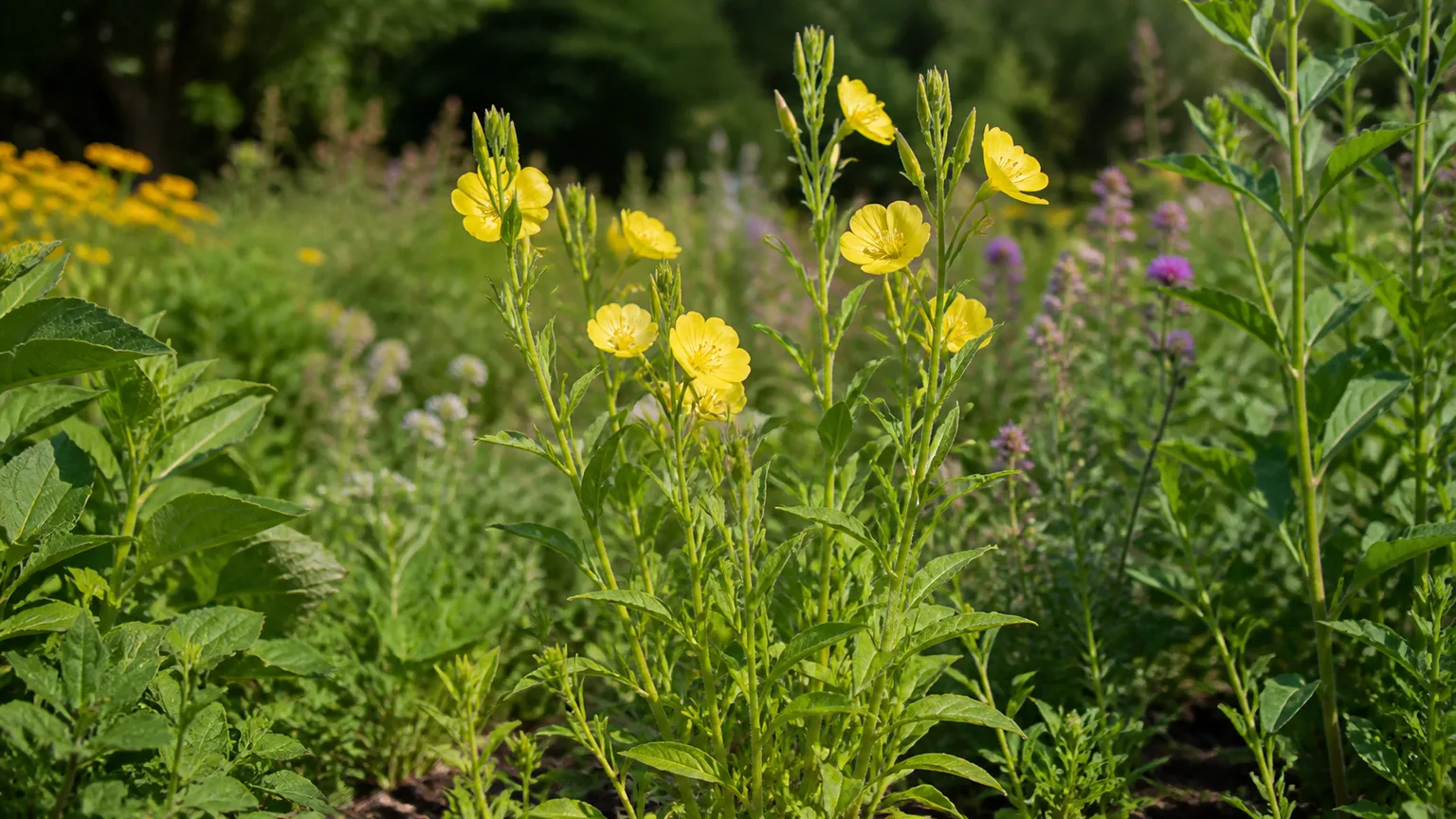
Evening primrose looks deceptively simple in a seed catalog: yellow flowers, easy sun, native charm. In the ground, it runs on a biennial clock that catches many gardeners off guard. A healthy leafy rosette in year one is not a failure—it is the plan. Flowers, seed, and the parent plant’s death arrive in year two, often replaced by dozens of seedlings if you let seed capsules mature.
This guide focuses on common evening primrose, Oenothera biennis, the tall yellow-flowered North American wildflower most seed packets and plant labels mean when they say “evening primrose.” Other Oenothera species can be perennial, shorter, pink-flowered, or far more aggressive spreaders. Check the botanical name before you copy any advice here.
Is Evening Primrose Right for Your Garden?
Evening primrose fits gardeners who want informal height, dusk fragrance, and strong pollinator value without a high-maintenance perennial schedule. It works well in cottage borders, meadow edges, gravel gardens, pollinator patches, and herb gardens where a little self-sowing is welcome rather than alarming.
It is a poor match for formal, tightly edged beds, narrow foundation plantings, and any site where a 3- to 7-foot flowering stem would block a view or flop across a path. The NC State Extension Plant Toolbox notes that plants can reach about 3 to 5 feet tall and 2 to 3 feet wide, with rapid growth once the flowering stem rises. Give the stem room before you sow.
Use this quick site test:
- Light: Can the spot receive at least six hours of direct sun? A little afternoon shade can help in very hot climates, but deep shade produces thin stems and few flowers.
- Drainage: Does water leave the root zone within a day after rain? Evening primrose tolerates lean and rocky soil better than crowns sitting in winter wet.
- Space: Is there vertical clearance for a tall stem and horizontal room for seedling volunteers next season?
- Spread tolerance: Are you willing to deadhead or edit seedlings, especially near lawn, paths, or open soil?
If drainage is poor, fix the site or choose a deep container before buying seed. Rich, constantly wet beds are where this supposedly easy plant turns difficult.
Evening primrose also pairs well with other sun-loving natives and cottage-garden companions that tolerate lean soil: black-eyed Susan, coneflower, yarrow, and ornamental grasses can frame the tall stem without competing for heavy fertility. Avoid planting it ahead of low evergreens or short perennials that will be hidden once the flowering spike rises in year two.

Know Which Evening Primrose You Are Growing
“Evening primrose” is a common name shared across many Oenothera species. Growth habit, flower color, hardiness, and spread potential all change with the species on the label.
The Biennial Life Cycle Explained
Oenothera biennis is a biennial. In the first growing season it forms a basal rosette of lance-shaped leaves close to the ground. Through winter the rosette persists. In the second season a hairy, often reddish-green stem bolts upward, branches, and carries a terminal panicle of lemon-yellow, bowl-shaped flowers from roughly summer into fall.
Individual flowers open near dusk, release a mild fragrance, and remain open into the next morning before closing in midday heat—hence the common name. After flowering, narrow seed capsules form. Each capsule can hold many seeds; NC State Extension describes pods splitting when ripe to release seed. The flowering plant then dies, having completed its life cycle.
Because seedlings replace older plants, a patch can look “perennial” even though each stem is biennial. That distinction matters when you ask why a plant did not bloom: a first-year rosette is usually doing exactly what it should.
A simple year-by-year calendar helps:
- Late summer to fall (year 0): Sow seed on open soil or allow ripe capsules to drop. Rosettes may appear before frost in mild climates.
- Spring to fall (year 1): Rosette expands; roots deepen. No flowers yet. Thin competing weeds so the rosette receives full sun.
- Late winter to spring (year 2): Stem elongates rapidly. Side branches form; leaves shrink toward the top of the spike.
- Summer to fall (year 2): Flowers open in sequence along the panicle. Seed capsules follow. Parent plant senesces after seed ripens.
- Next spring: New volunteers from fallen seed restart the cycle.
If you buy potted “evening primrose” at a nursery, ask whether the plant is a first-year rosette or a second-year bloomer. A rosette in a small pot is a reasonable purchase; a 4-foot flowering stem crammed into a quart container is a transplant risk.
Other Oenothera Species You May Encounter
Not every evening primrose behaves like O. biennis.
| Species / type | Habit | Flower notes | Garden note |
|---|---|---|---|
| Oenothera biennis | Biennial | Pale yellow, night-opening | Self-sows freely; taproot |
| Oenothera fruticosa (sundrops) | Perennial | Bright yellow, often day-opening | Less aggressive than some primroses |
| Oenothera macrocarpa (Ozark sundrops) | Perennial | Large yellow cups | Sprawling; good for hot, dry edges |
| Oenothera speciosa (pink evening primrose) | Perennial | Pink to white | Can spread aggressively by runners and seed |
If your goal is a contained border, verify the species before planting. If your goal is a managed wildflower patch, O. biennis is often the right starting point—provided you control seed drop.
Evening Primrose Care at a Glance
| Need | Practical target |
|---|---|
| Botanical name | Oenothera biennis |
| Life cycle | Biennial (appears perennial through self-seeding) |
| Mature size | About 3–5 ft. tall, 2–3 ft. wide |
| Hardiness | USDA zones 4a–9b per NC State Extension |
| Light | Full sun preferred; light partial shade acceptable |
| Soil | Average to poor, well-drained; sand, loam, gravel tolerated |
| Soil pH | Acidic to neutral (roughly below 8.0) |
| Water | Regular while establishing; drought-tolerant once settled |
| Fertilizer | Usually unnecessary; excess nitrogen weakens stems |
| Bloom time | Summer into fall in the second year |
| Propagation | Seed (best); division impractical due to taproot |
| Spread | Self-seeds; seeds can persist in soil for decades |
| Wildlife | Moths, bees, birds; host to primrose moth larvae |
Evening primrose is not a heavy feeder and rarely needs scheduled fertilizer. In average garden soil, skip feeding entirely. If a soil test shows a genuine deficiency, use a balanced, low-nitrogen amendment sparingly in early spring on year-one rosettes rather than dumping fertilizer on flowering stems.
Light: Full Sun, Moon Gardens, and Stem Strength
Evening primrose is often sold as a moon-garden plant because its flowers open as daylight fades. That night habit does not mean it wants shade during the day. The NC State Extension profile lists full sun—six or more hours of direct light—as ideal, with partial shade tolerated.
Strong light builds shorter, stiffer stems and more flowers. Plants in too much shade stretch toward light, flop, and bloom sparingly. Place evening primrose where you can enjoy the evening show from a patio or window, but choose a site that is openly sunny for most of the day.
In hot-summer regions, a little afternoon shade can reduce heat stress on young rosettes. Do not interpret that as permission to tuck the plant under trees. Judge light at the soil surface where the rosette sits, not where a nearby fence catches sun.
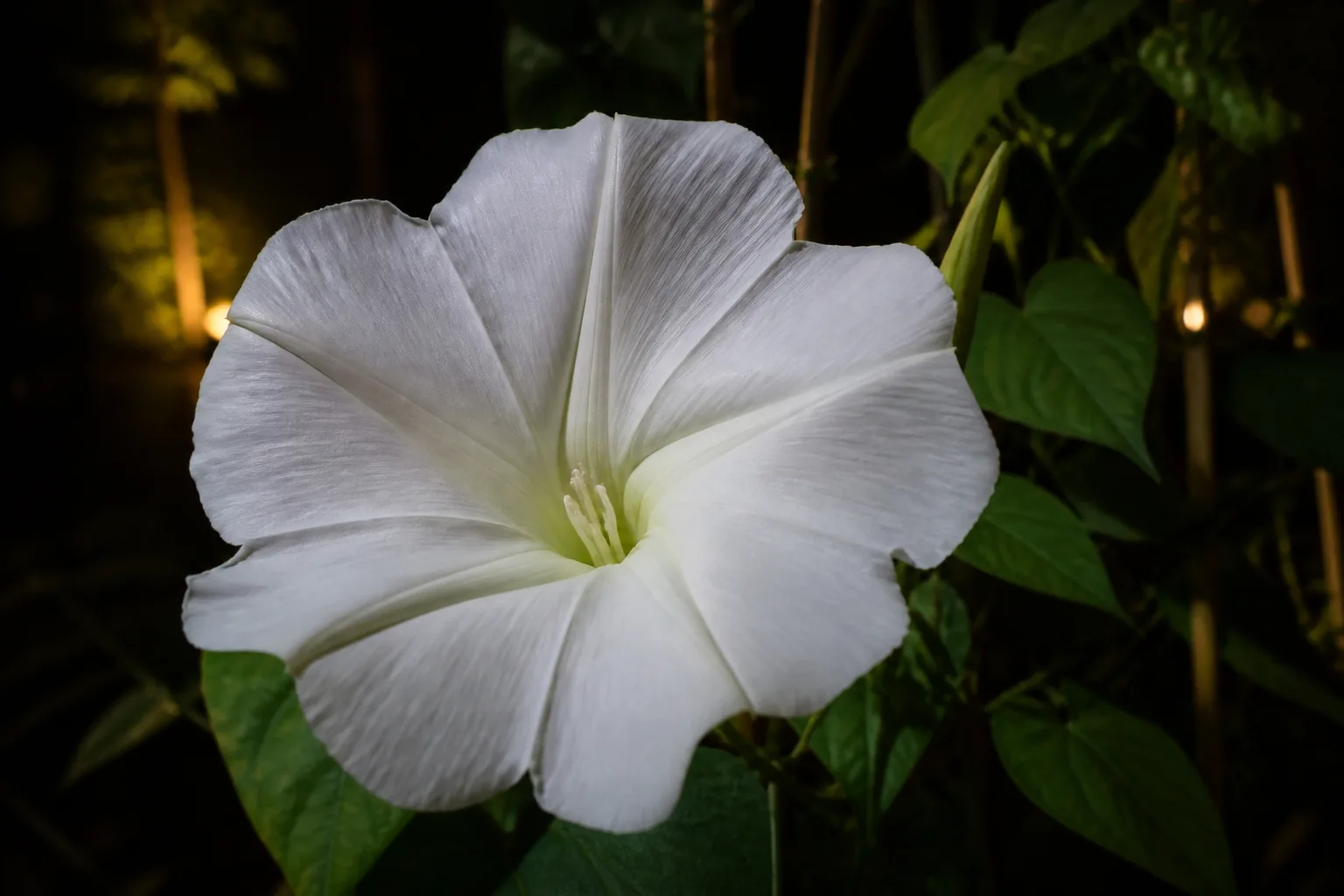
For moon gardens, place evening primrose where you naturally walk at dusk—near a patio, bedroom window, or path you use after dinner. Pair it with other white or pale flowers that show up in low light, such as moonflower vine or white nicotiana, but give each plant its own sun requirement rather than crowding shade lovers beside sun seekers.
Soil and Drainage: Why Lean Ground Outperforms Rich Beds
Evening primrose is adapted to disturbed, open ground—fields, roadsides, prairies, and thin soils. NC State Extension recommends medium-moisture, well-drained sandy soil in full sun and notes tolerance for gravelly conditions and occasional dryness.
Heavy, waterlogged clay is the main soil failure mode. Crowns that stay wet through winter rot, and summer irrigation on poorly drained beds encourages root problems. If your soil is compacted, fork in coarse sand or fine gravel and plant on a slight mound rather than in a sunken bed.
Contrary to many border perennials, poor soil is often an advantage. Nature & Garden’s Oenothera biennis guide notes that sandy, stony, and thin soils suit the plant and that rich manure-heavy beds produce soft, floppy growth with fewer flowers. Skip high-nitrogen fertilizer unless a soil test shows a clear deficiency.
A light organic mulch can keep summer roots cooler, but pull mulch back from the crown in wet climates so the rosette does not sit damp through winter.
Soil pH is flexible. NC State Extension lists acidic to neutral conditions (below about 8.0). Chalky or alkaline gardens can still grow evening primrose if drainage is sharp; if leaves look pale and growth is weak despite good sun and moisture, a soil test is more useful than guessing about pH.
Watering Without Encouraging Root Rot
Water new sowings and young rosettes enough to keep the upper soil from drying completely while roots establish. Once plants are settled, evening primrose is highly drought tolerant, according to NC State Extension.
The practical rule is simple: water when the soil is dry several inches down, then soak the root zone. Avoid daily sprinkles that wet foliage without reaching roots. In containers, check more often because the mix dries faster than garden soil.
Yellowing leaves with wet soil usually point to root stress, not hunger. Brown, mushy roots confirm the problem. Cut back irrigation, improve drainage, and remove severely affected plants rather than feeding them.
During prolonged summer drought, a deep soak can support flowering and seed set on second-year plants. Established rosettes often survive dry spells without help if drainage is good.
Evening primrose prefers cool establishment weather. NC State’s cultural notes align with field observations: rosettes that develop during moderate spring temperatures often produce sturdier flowering stems than plants pushed with heat and nitrogen early in the season. In hot climates, prioritize fall sowing or early spring planting so the rosette finishes sizing up before peak summer.
How to Grow Evening Primrose From Seed
Seed is the reliable propagation method. Mature taproots make division impractical, and large flowering plants transplant poorly.
Direct Sowing in Fall or Spring
Evening primrose seed needs light to germinate. Press seed onto prepared soil rather than burying it deeply. BBC Gardeners’ World recommends sowing in late autumn or early spring, either in pots or directly where plants should grow.
Fall sowing lets natural cold stratify seed outdoors in climates where the seed tolerates winter moisture. Seedlings emerge in spring and spend the season as rosettes.
Spring sowing gives you a clearer view of germination timing. Keep the seedbed evenly moist until seedlings appear, then thin while plants are small. NC State Extension suggests spacing that allows roughly 12 inches to 3 feet of spread per plant at maturity; Nature & Garden recommends leaving strong seedlings about 40 cm (16 inches) apart after thinning.
Prepare soil by clearing weeds, loosening the surface, and firming lightly. Water once after sowing, then monitor moisture until the first true leaves expand.
Stratification, Transplants, and the Taproot Rule
If you start seed indoors, mimic winter chill: sow on moist seed-starting mix, cover the container, and refrigerate for several weeks before moving to a bright, cool window or under grow lights. Transplant seedlings into individual pots before roots coil, then move them outdoors after hardening off.
Move young rosettes in their first year, not tall second-year flowering plants. Gardeners’ World warns that the long taproot can be damaged when biennial plants are planted out in their flowering year. Lift a generous soil ball, disturb roots as little as possible, and water thoroughly after planting.
If you need evening primrose in a precise spot, sow there. Collecting seed from a roadside colony is possible, but identify the plant with confidence and follow local rules about wild collection.
Germination can be irregular when seed is old or when soil dries out during warm spells. If direct sowing fails once, scratch the surface lightly, re-sow fresh seed, and keep the bed consistently moist for two to three weeks. Avoid burying seed under mulch or crusted soil; light is part of the germination requirement.
Pruning, Deadheading, and Seed Collection
Evening primrose does not need shaping cuts for health. Remove damaged leaves at the base with clean snips. Stake second-year stems only if wind exposure is severe; neighboring plants often provide enough support in informal plantings.
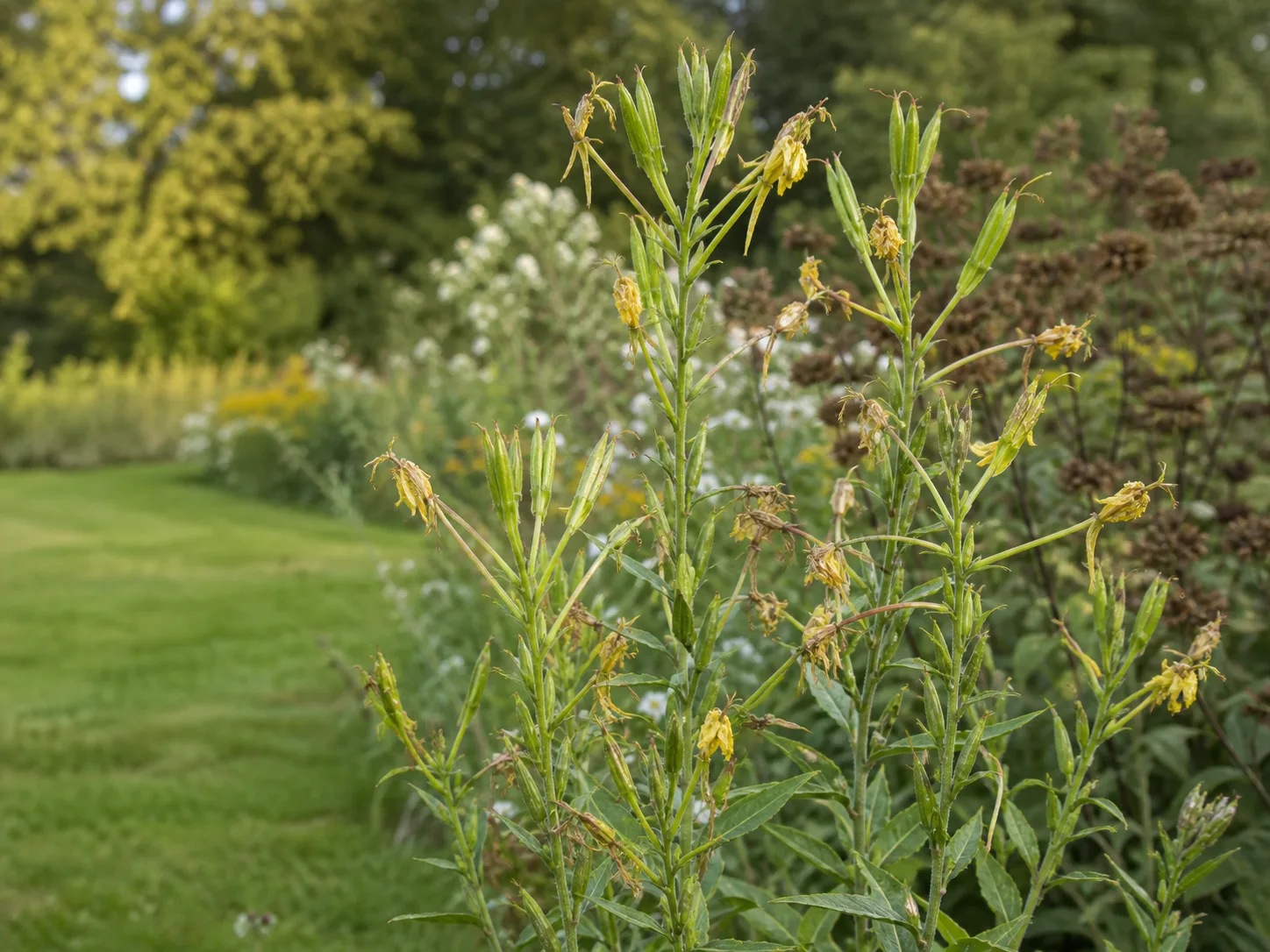
Deadhead if you want fewer volunteers and a tidier bed. Snip spent flowers or young capsules before they mature. Leave a few capsules only if you want deliberate reseeding or plan to collect seed.
To harvest seed, let selected capsules turn brown and dry on the plant, then clip them before they split. Store seed in a labeled paper envelope in a cool, dry place. Remember that soil seed banks can remain viable for decades; NC State Extension notes viability up to about 70 years. Missing one season of deadheading can matter for years.
Cut finished flowering stems to the base in late fall if you do not want standing structure. Some gardeners leave stems for goldfinches and other seed-eating birds, as Nature & Garden suggests.
Growing Evening Primrose in Containers
Containers can work for young plants or for keeping spread contained, but choose depth over width. A shallow decorative pot fights the taproot and topples when the flowering stem rises.
Use a pot with drainage holes and a stable, free-draining mix. Place it in full sun. Water when the upper mix dries, and empty saucers so roots do not sit in water. Expect the flowering stem to tower above the pot rim; this is not a compact patio annual.
Containers freeze and thaw faster than ground soil. In cold regions, insulate the pot or move it to a sheltered spot for winter rosettes. Even then, treat container culture as a trial unless you are willing to repot or replace plants after flowering.
Group one or two containers on a sunny deck rather than lining a shaded walkway. A single second-year plant in a 12- to 16-inch-deep pot can be an effective way to trial evening primrose without committing an entire border to self-sowers.
Wildlife Value and Responsible Edible Harvest
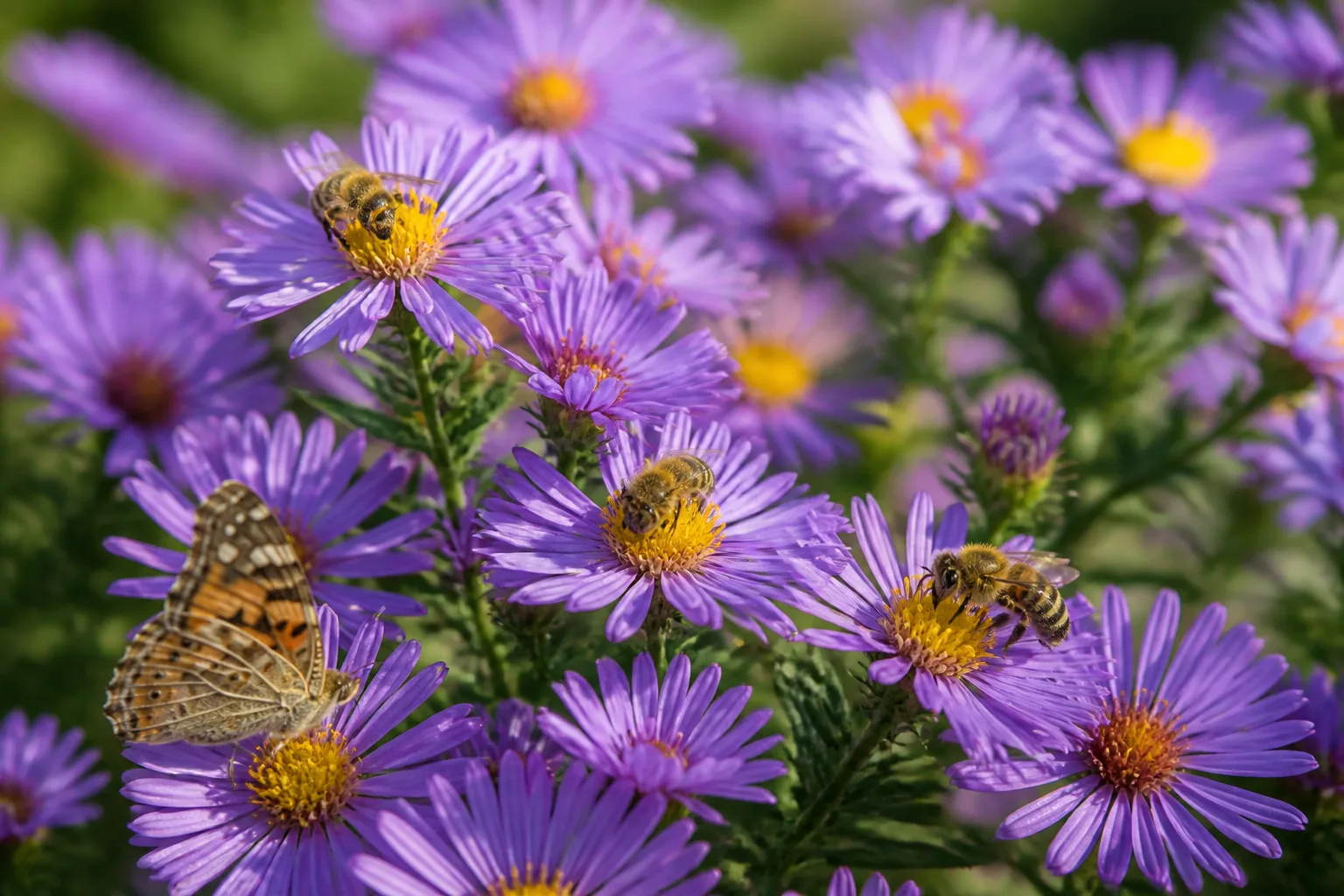
Evening primrose is more than ornament. NC State Extension lists value for bees, butterflies, moths, songbirds, and specialized bees including Melissodes fimbriatus and Lasioglossum oenotherae. Flowers are pollinated by night-flying moths drawn to fragrance and by bees visiting open blooms in early morning. Larvae of the primrose moth (Schinia florida) feed on flower buds, and birds eat ripe seed.
In the garden, that means evening primrose belongs in pollinator-focused plantings and informal wildlife borders, not only in “pretty flower” beds.
Young roots, leaves, and seeds have traditional edible uses, and evening primrose seed oil is commercially extracted for supplements. This is a gardening guide, not medical advice. If you harvest for the kitchen, use confirmed O. biennis, take modest amounts from vigorous plants, and avoid areas treated with pesticides or roadside pollution. Do not confuse garden plants with unrelated “primroses” in the genus Primula.
Historically the plant was called King’s cure-all and collected for varied folk uses. Modern gardeners usually grow it for flowers and habitat rather than harvest, but knowing the edible parts explains why seed suppliers and herb catalogs list the same species. Roots are typically dug from first-year rosettes in late fall or early spring; leaves can be treated like other mild greens in small quantities; ripe seed can be sprinkled on food or saved for replanting.
Common Problems and Practical Fixes
Evening primrose is generally low maintenance, but a few patterns recur.
No flowers on a leafy plant: Check age first. First-year rosettes normally produce leaves, not blooms. If the plant is in its flowering year, inspect sun exposure, overcrowding, and excess nitrogen. Correct the site rather than adding fertilizer.
Tall, floppy stems: Usually too little light, too-rich soil, or overcrowded seedlings. Thin volunteers, improve sun, and stake only as a last resort.
Yellow leaves with wet soil: Suspect root rot or crown rot. Reduce watering, improve drainage, and remove collapsed plants.
Wilting in heat: Check moisture at root depth. Dry soil needs a deep soak. Wet soil with wilting foliage suggests root damage.
Sparse flowers on mature plants: Measure light at the plant, not across the yard. Partial shade far from the equator may still be too dim for strong bloom.
Pests: Slugs and snails can shred young rosettes in spring. Sharp grit, hand picking after rain, and clearing wet debris help. Aphids on buds can be knocked off with water. NC State Extension reports no serious insect or disease problems on established plants; powdery mildew and leaf spot can appear in crowded, humid conditions. Improve airflow and remove badly affected leaves.
Fungal leaf spots and gray mold: Wet, humid weather plus dense planting can produce brown or gray patches on leaves and spent flowers. Remove affected tissue, thin seedlings, and water at soil level. Severely infected second-year plants are easier to replace from seed next season than to rescue with sprays in a home garden.
Beetles on foliage: Several native beetles chew evening primrose leaves. Occasional holes rarely threaten a healthy plant. Hand-pick if damage is heavy on small rosettes; established flowering stems usually outgrow minor feeding.
Managing Self-Seeding Before It Manages You
Self-sowing is evening primrose’s superpower and its main garden risk. NC State Extension flags the species as weedy and notes easy naturalizing by seed. The USDA PLANTS profile for Oenothera biennis shows broad native and naturalized distribution across much of North America.
Decide your tolerance before flowers fade. In a dedicated meadow or back border, allow some seed set and edit excess seedlings in spring. Along lawn edges, paths, and vegetable beds, remove capsules before they split.
If you inherit unwanted volunteers, hoe or pull small rosettes while young. Mature taproots resist digging. A thick mulch in cultivated beds can reduce new germination, though it will not erase long-lived seed already in soil.
When spread would harm nearby natural areas, keep plants in containers, deadhead consistently, or choose less aggressive Oenothera species such as sundrops for similar yellow color.
Conclusion
Evening primrose rewards gardeners who respect its schedule. Treat Oenothera biennis as a biennial wildflower, not a compact ever-blooming perennial. Give it full sun, draining average soil, and enough vertical space for a summer-to-fall flower spike. Sow seed on the soil surface, thin early, and transplant only young rosettes if you must move plants.
Deadhead when you need control; leave seed when you want the patch to persist. Watch drainage more closely than fertilizer. Once you align expectations with the plant’s night-opening flowers and generous seed production, evening primrose becomes a reliable source of color, fragrance, and wildlife value without demanding constant care.