10 Fall Shrubs for Color From Fall Into Winter
Choose fall shrubs for color, berries, late flowers, and winter structure. Compare site fit, mature size, planting timing, and first-winter care.
The best fall shrubs for color do more than turn red for a week. They give a garden a sequence: leaves that change, berries that remain after leaf drop, flowers that arrive late, bark that catches winter light, or a shape that still looks intentional when the bed is bare.
There is one timing detail that changes the promise of this list. Planting a shrub in fall does not guarantee its biggest display that same fall. If you install a container plant while it is already colored, you may enjoy that show; if you plant after the leaves drop, the payoff is mainly root establishment and better growth next year. That is still a good trade: cool air and warm, workable soil can be easier on a new shrub than summer heat, provided you plant early enough and keep the root ball hydrated.
The ten choices below include familiar performers and native alternatives. Use the site notes as filters. A shrub that is spectacular in full sun may be a poor choice under a tree, and a plant advertised as “low maintenance” can become high maintenance if its mature width, suckering habit, or soil preference was ignored at planting time.
Start With the Site, Not the Leaf Color
Before buying, record four facts: the number of hours of direct sun, whether the soil stays wet after rain, the space available at maturity, and the winter exposure. Morning sun with afternoon protection is very different from reflected heat beside a south-facing wall. Likewise, “moist” soil means consistently damp with oxygen available to roots; it does not mean a hole that stays full of water.
Match the visual job to the location. Oakleaf hydrangea and Japanese maple make strong focal plants, while sweetspire and chokeberry are better for a looser border or rain-garden edge. Witch hazel and spicebush reward a position where you can notice seasonal details. Birchleaf spirea works when you want a smaller, repeatable mound, and staghorn sumac belongs where its broad, colony-forming habit has room rather than in a narrow foundation bed. A practical seasonal selection guide from Ally Berry likewise starts with light, soil, mature size, and the kind of seasonal interest you actually want.
Use this quick filter at the nursery:
| If your priority is… | Start with… | Watch for… |
|---|---|---|
| Red or burgundy foliage | Oakleaf hydrangea, chokeberry, Japanese maple | Sun level, wind, and cultivar size |
| Color in wet-but-drained soil | Virginia sweetspire, black chokeberry | Standing water and winter drainage |
| Berries for birds | Chokeberry, arrowwood viburnum, spicebush | Species, pollination, and fruit persistence |
| Late flowers or winter detail | Witch hazel, oakleaf hydrangea | Bloom timing and mature spread |
| A compact shrub border | Birchleaf spirea, dwarf oakleaf hydrangea | The tag’s mature width, not today’s pot size |
Hardiness zones are useful, but they are not a complete site assessment. A plant can survive the coldest average winter in its zone and still fail in a wind tunnel, a waterlogged clay pocket, or a spot where spring sun warms buds too early. Read the tag, then look at the actual exposure.
Why Fall Is a Useful Planting Window
Fall offers a practical combination: the air is cooler, the soil may still hold summer warmth, and evaporation is often lower than in midsummer. The shrub can spend more of its energy making roots before the next hot season. A named garden-center source describes the same sequence for trees and shrubs: plant while the ground is workable, water deeply, mulch without burying the trunk, and postpone fertilizer and major pruning until spring, as detailed by Georgina Garden Centre. Rooted in Nature also emphasizes warm soil, ample spacing, correct planting depth, mulch, and deep watering while roots establish.
That window is not unlimited. In cold climates, finish several weeks before the ground normally freezes; in warm climates, the planting season can extend later, but heat and drought still matter. Skip planting when the soil is frozen, saturated enough to smear into a dense mass, or so dry that the hole cannot be watered thoroughly. A dormant shrub is not a license to ignore the roots.
Planting Sequence for a Strong First Winter
Start by setting the shrub in its pot at the intended location. Check it from the house, path, and neighboring windows, then measure the mature width listed for the species or cultivar. Penn State Extension’s fall-interest guidance makes this simple planning step explicit: put the garden on paper and account for the plant’s eventual size before committing to a spot.
Dig a hole two to three times wider than the root ball but no deeper. The top of the root ball should finish level with, or slightly above, the surrounding soil, especially in heavy clay. A hole that is too deep can settle and bury the root flare; a hole that is too narrow leaves circling roots with nowhere to move.
Slide a container shrub out without pulling on the stems. If roots are tightly circling, loosen a few on the outside with your fingers or make shallow vertical cuts through the outer mat. Backfill primarily with the soil you removed, breaking up large clods but avoiding a soft pocket of rich amended soil that encourages roots to stay in the hole. Water slowly until the entire root zone is wet.
Finish with a 2- to 3-inch mulch layer spread like a doughnut, leaving open space around the stems. Mulch conserves moisture and buffers temperature swings; it should not touch the trunk or form a volcano. Check the soil weekly until the ground freezes, and water during dry spells even after the shrub has dropped its leaves.
10 Fall Shrubs for Color and Seasonal Interest
1. Oakleaf Hydrangea
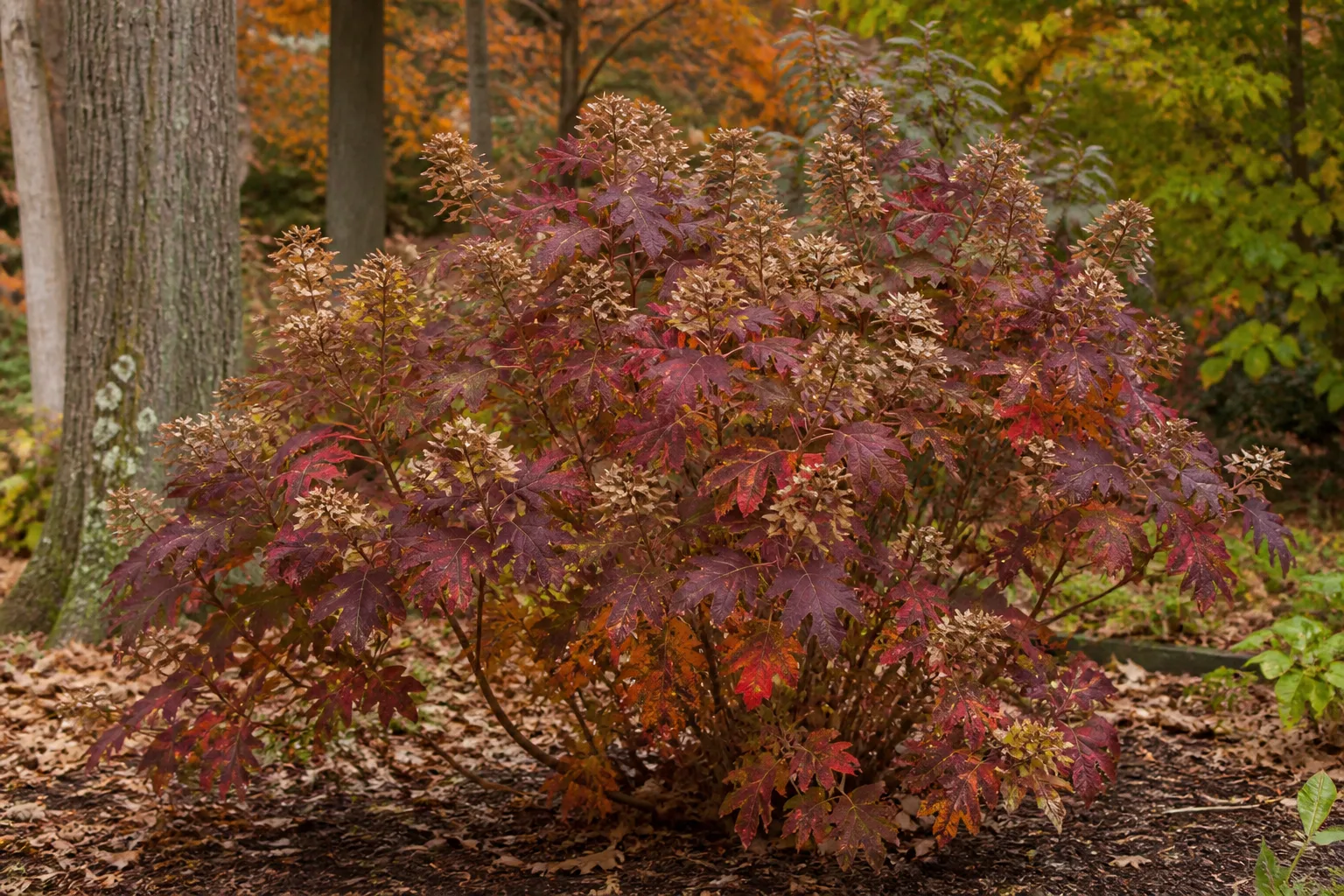
Oakleaf hydrangea (Hydrangea quercifolia) earns its place by stacking several seasons of interest. Large, oak-shaped leaves can move through burgundy, red, purple, and bronze in fall, while the old flower panicles and exfoliating cinnamon-colored bark continue to give the shrub texture after the foliage thins. Penn State Extension describes it as a sizeable shrub—often about 6 feet tall and wide, though cultivars vary—and recommends well-drained soil with part shade.
Give it morning sun or bright part shade in hotter climates, and protect it from the reflected heat that can scorch broad leaves. Its fall color is better when the plant is not drought-stressed, but the roots should never sit in stagnant water. Choose a dwarf cultivar for a foundation bed only after checking the mature dimensions; “dwarf” is relative, and a plant that stays 4 feet wide can still swallow a narrow path.
This is the best choice here when you want a focal shrub that still looks designed after leaf drop. Avoid heavy fall pruning because hydrangeas can carry next year’s flower buds on older wood; remove only broken or diseased stems until you know the cultivar’s bloom habit.
2. Burning Bush
Burning bush (Euonymus alatus) is famous for intense red foliage and distinctive corky wings on its stems. It tolerates a range of conditions and can be visually effective as a massed hedge, but the ecological caution is not optional: it is invasive in many regions because birds spread its seeds into natural areas. University of Maryland Extension specifically recommends skipping it where it threatens native plants.
If the shrub is restricted or invasive where you live, choose a different plant rather than trying to manage the problem with pruning. University of Maryland Extension specifically recommends skipping burning bush in areas where it can displace native plants. A local native-plant list or state invasive-plant council is a better final check than a nursery label. If it is permitted and you still select it, give it full sun for the strongest color, generous mature spacing, and a plan for removing volunteer seedlings.
Think of burning bush as a color reference, not an automatic recommendation. Chokeberry, sweetspire, viburnum, and some sumacs can provide red foliage, fruit, or both while supporting a more regionally appropriate planting. The right replacement depends on your soil and the size of the space.
3. Virginia Sweetspire
Virginia sweetspire (Itea virginica) is a useful bridge between summer flowers and fall foliage. Its fragrant white flower spikes appear in early summer, then the leaves can turn yellow, orange, red, or burgundy as temperatures cool. It prefers evenly moist soil and can handle more shade than many of the brightest fall-color shrubs, making it a smart candidate for a woodland edge, downspout garden, or damp border.
Do not interpret “tolerates wet soil” as “plant it in a sealed puddle.” Improve a chronically waterlogged site first, or choose a true wetland plant. Sweetspire can spread by suckers, which is helpful for stabilizing a loose planting and inconvenient in a meticulously clipped bed. Leave room for its natural habit or plan to remove unwanted shoots while they are small.
Choose it when your site is part shade and reliably moist, especially if you want a shrub that does not depend on one brief peak of red leaves. Its lingering foliage can carry color later into the season than a plant in a hot, dry location.
4. Black Chokeberry
Black chokeberry (Aronia melanocarpa) combines white spring flowers, glossy foliage, dark fruit, and red to purple fall color. The berries are edible but famously astringent when raw, which makes them more valuable to wildlife and preserves than to casual snacking. In a garden, the fruit can remain after leaf drop, although birds and weather determine how long the display lasts.
Plant it in full sun for the best fruit and strongest fall color, but it can manage part shade. It tolerates a wide range of soils and is a particularly good candidate for a rain-garden edge or a spot that stays moist without being submerged. Penn State Extension notes both its fall color and its ability to hold red fruit from early fall into winter, while Maryland Extension highlights its native wildlife value.
The trade-off is shape. Chokeberry can form a thicket through suckering, so it is better in a naturalistic border than in a narrow formal foundation line. Use several plants to make the habit feel intentional, or select a compact cultivar after checking its mature spread. It is one of the strongest burning-bush alternatives when red foliage and bird food are both priorities.
5. Birchleaf Spirea
Birchleaf spirea (Spiraea betulifolia) is a smaller, easier-to-place shrub for gardeners who want fall color without a six-foot anchor. Its rounded habit, birch-like leaves, and spring-to-summer flower clusters create a tidy mound; in fall, foliage may shift to yellow, orange, red, or purple depending on cultivar and weather. Full sun produces the densest growth and most dependable color.
Use it along a path, at the front of a mixed border, or in repeating groups where a large shrub would block windows. Spirea flowers on new growth, so renewal pruning is generally a late-winter or early-spring task rather than a reason to shear in fall. Remove only damaged wood now, and let the shrub keep its remaining leaves as long as they are healthy.
The key is not to promise one exact color. Leaf color varies with genetics, night temperatures, light, and drought stress. Buy the cultivar for its mature size and habit first; regard the autumn color as the seasonal bonus.
6. Witch Hazel
Common witch hazel (Hamamelis virginiana) earns attention twice: its leaves turn yellow with orange tones in fall, and its spidery yellow flowers open in late fall or early winter, often after the leaves have dropped. That sequence makes it valuable in a garden where most shrubs go quiet by November. It is also a native eastern North American shrub that can become a small tree-like specimen over time.
Give it sun to part shade and soil that stays evenly moist but drains. It is a slow-to-moderate investment compared with a fast hedge, so place it where its eventual height and open branching can be appreciated. Do not crowd it against a foundation just because the nursery plant is short.
Witch hazel is the choice for late-season detail rather than a wall of instant red. Its flowers are delicate and weather-dependent; a hard freeze can shorten the show. That is a limitation, not a failure, and the shrub still contributes form and fall foliage in ordinary years.
7. Staghorn Sumac
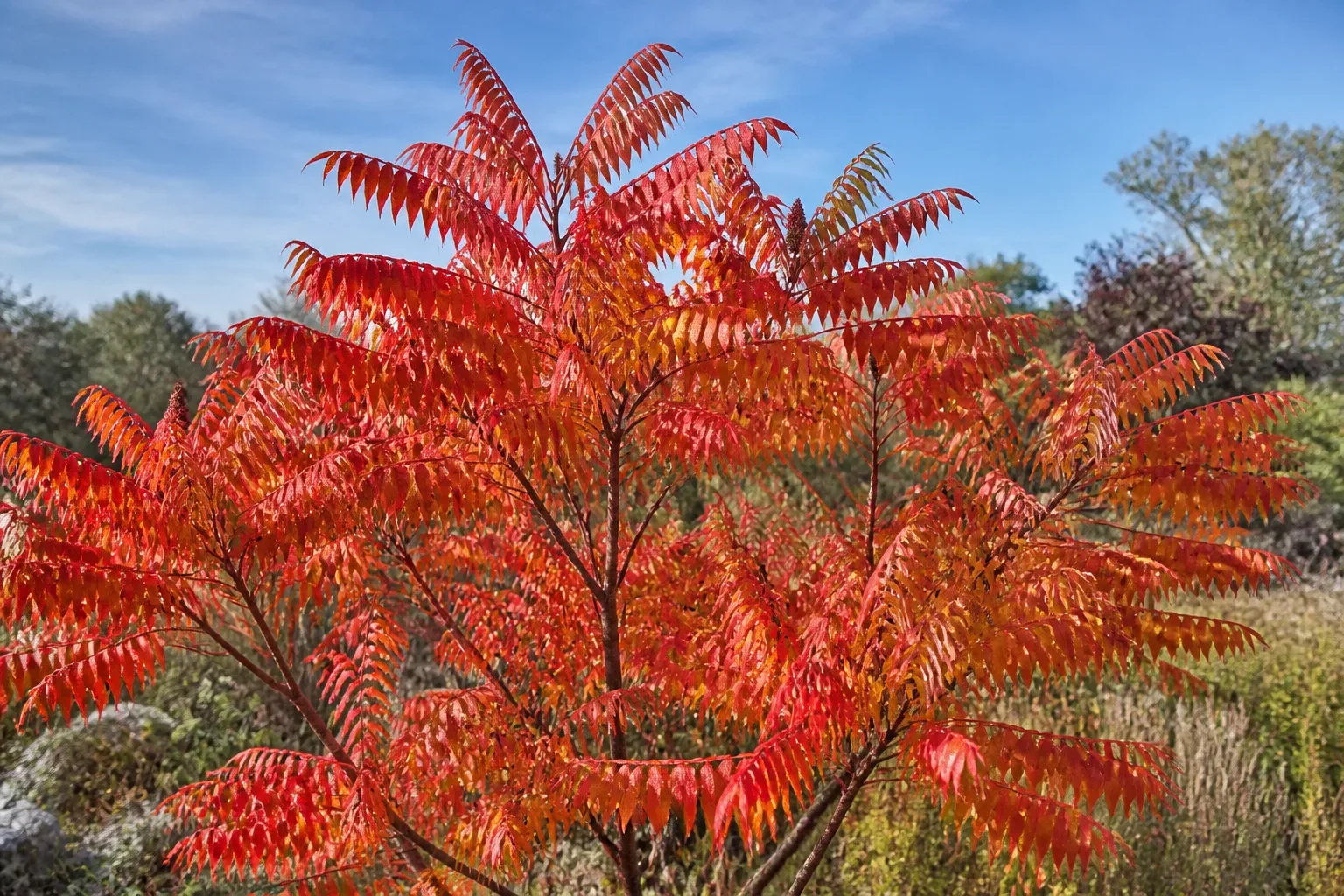
Staghorn sumac (Rhus typhina) brings bold compound leaves that turn orange, scarlet, and red, along with upright fuzzy fruit clusters that can persist into winter. Its open, branching structure catches low autumn light, and birds use the fruit. It is a large shrub or small tree in the landscape, often much taller and wider than the phrase “fall shrub” suggests.
Give it full sun and enough room to sucker. It is a strong candidate for a slope, roadside edge, or naturalized area where a colony is an asset; it is a poor match for a two-foot-wide foundation strip. Sumac also gets confused with poison sumac, but they are different plants. Identify the species before planting, and do not rely on a vague common name from an unlabeled cutting. For a regional example of why fall-color shrubs should be matched to habitat and scale, see King County’s Native Plant Guide, which pairs fall foliage with berries, bark, and the natural form of each plant.
If your yard is small, look for a regional compact sumac such as fragrant sumac (Rhus aromatica) cultivars, not a reduced-size claim about staghorn sumac itself. Maryland Extension notes that shorter fragrant-sumac cultivars can provide red-orange color, drought tolerance, and scented foliage in a more manageable footprint.
8. Arrowwood Viburnum
Arrowwood viburnum (Viburnum dentatum) offers the kind of layered performance that makes a shrub useful beyond one season. It produces spring flowers, dense foliage, fall color that can move through yellow, orange, red, or burgundy, and blue-black fruit that can feed birds. The genus includes many species and sizes, so confirm the botanical name and cultivar before assuming every viburnum will behave alike.
Plant it in sun to part shade with regular moisture and good drainage. It can work as a hedge, wildlife border, or structural shrub, but mature width matters more than the pot’s current silhouette. If berries are important, ask whether the selected cultivar sets fruit well alone or benefits from another compatible viburnum flowering at the same time; fruiting can vary with pollination, weather, and bird pressure.
Arrowwood is a good all-season backbone for a mixed border. It will not always produce the brightest red in every yard, but flowers, fruit, and fall foliage spread the interest across more months than a shrub chosen only for one leaf color.
9. Japanese Maple
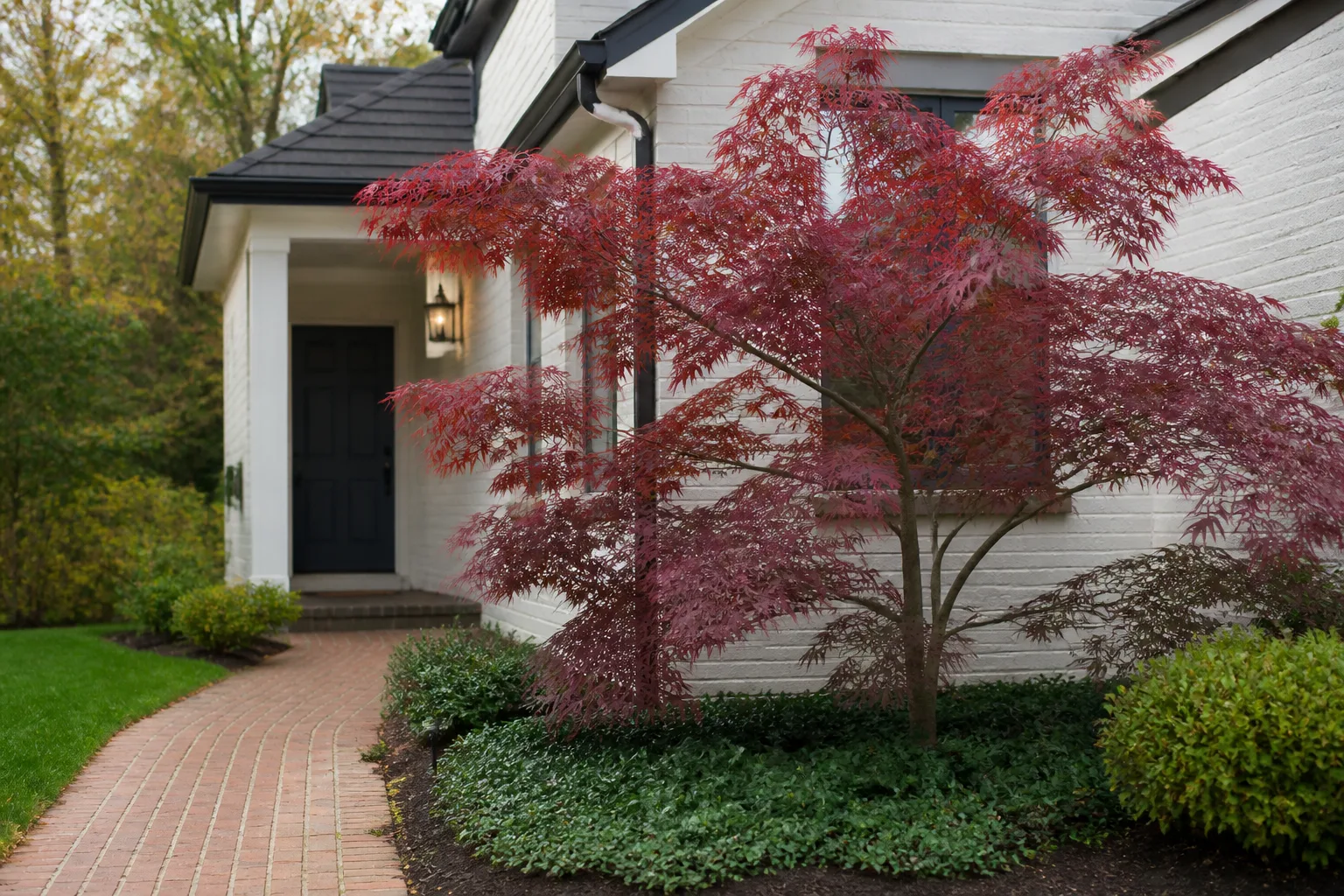
Japanese maple (Acer palmatum) is technically a small tree, but compact, multi-stemmed cultivars often fill the visual role of a large shrub. Their finely divided leaves can turn crimson, scarlet, orange, or gold, and the branching habit remains attractive after leaf drop. The plant is especially effective as a specimen near a path, patio, or front entry where its shape can be seen from close range.
Partial shade, afternoon protection, and shelter from drying wind help preserve delicate foliage. Morning sun can provide stronger color without the scorch risk of an exposed western wall. Keep the soil evenly moist while the tree establishes, but do not turn the planting hole into a basin that collects winter water.
Choose a cultivar for mature height, width, leaf form, and hardiness—not just the photograph on the tag. Japanese maple is a focal-point purchase, so it deserves the best-drained, most visible position rather than a leftover corner. Prune sparingly; its structure is part of the appeal.
10. Spicebush
Spicebush (Lindera benzoin) is a native shrub with small yellow flowers in early spring, aromatic foliage, yellow fall color, and red fruits on female plants. It is also a host plant for spicebush swallowtail caterpillars, so it contributes habitat as well as seasonal beauty. The overall effect is softer than a blazing maple but more ecologically useful than many ornamental-only shrubs.
Give it part shade to shade and soil that is moist but drained. It can grow in sun if moisture is reliable, though hot, dry exposure can shorten the foliage display. Spicebush is dioecious: separate male and female plants occur, so you need an appropriate male nearby if you want the female’s red berries. Ask the nursery how the plants are sexed rather than buying one shrub and assuming fruit is guaranteed.
Use spicebush at the edge of a woodland garden, beneath high deciduous trees, or in a loose screen. It is a strong choice when your definition of fall color includes yellow leaves, red fruit, and wildlife function, not only scarlet foliage.
Design for Color After the Leaves Drop
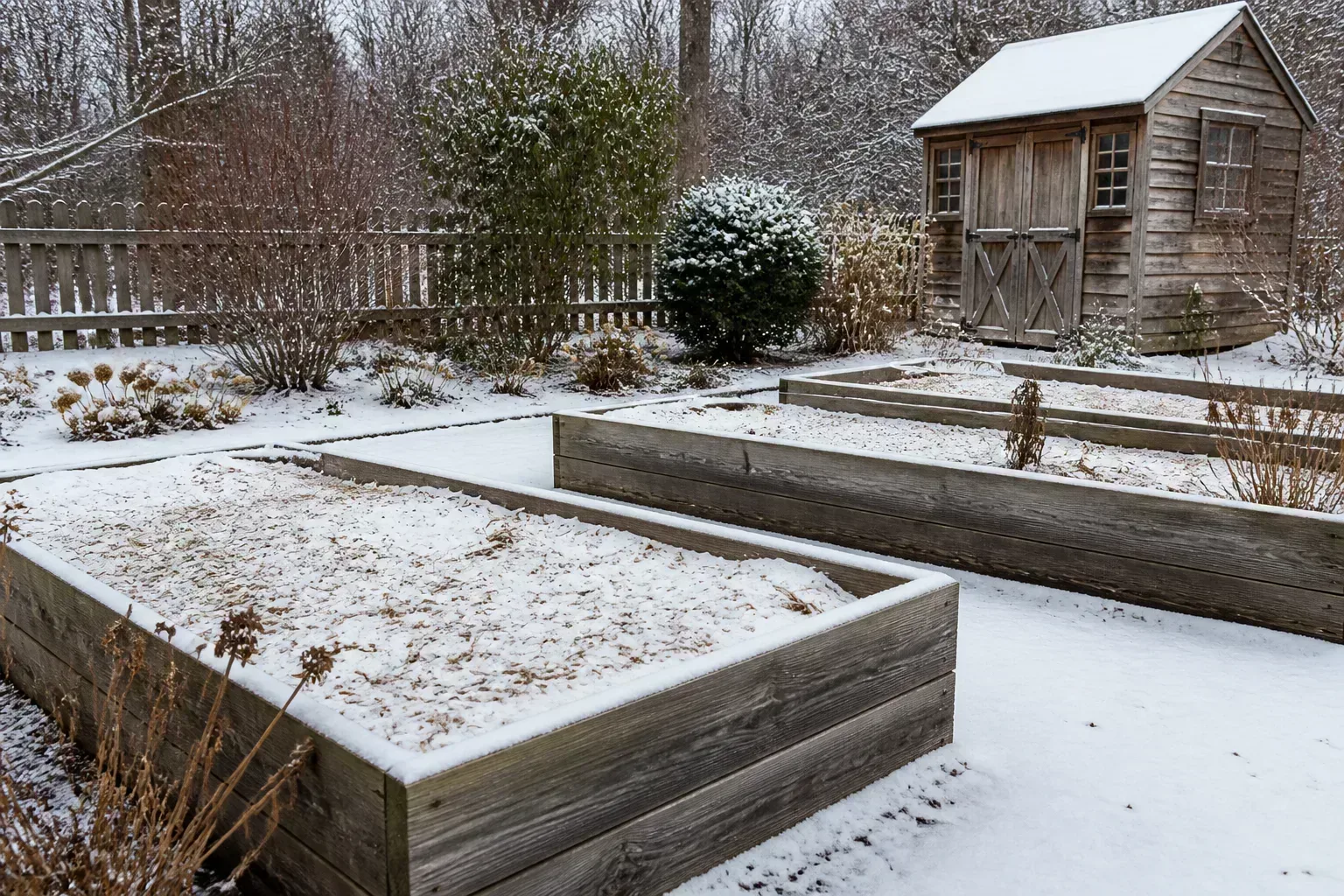
Avoid building a bed out of ten shrubs that all peak in the same two-week window. Instead, choose one foliage anchor, one fruiting shrub, one late-flowering or bark-interest plant, and one evergreen or persistent-texture companion. Penn State Extension recommends considering bark, fruit, form, and texture alongside leaf color; that is the difference between a garden that photographs well in October and one that still reads as a garden in January.
Layer by scale. Put oakleaf hydrangea, viburnum, or witch hazel toward the back or where their eventual width is welcome. Use birchleaf spirea at the front, sweetspire in a damp transition zone, and chokeberry or spicebush where a looser, habitat-minded planting can spread naturally. Repeat a color or texture twice rather than collecting one of everything; repetition makes a small garden feel deliberate.
Also design for the view you actually have. A shrub that turns brilliant red in a backyard corner is less useful than a yellow-foliage witch hazel visible from the kitchen. Mark windows, paths, and outdoor seating before buying. Fall color is a seasonal event, so place it where you will notice it. That emphasis on combining foliage, fruit, bark, form, and texture follows Penn State Extension’s design guidance, not just a color-chart approach.
Care Through the First Winter
The first winter is about root moisture and protection from extremes, not about forcing growth. Check the soil beneath the mulch with a finger or small trowel. If the top few inches are dry and the ground is still workable, water slowly over the root ball and the surrounding backfill. A deep soak is more useful than a daily splash that wets only the surface. Rooted in Nature’s fall-planting instructions likewise recommends infrequent, generous watering adjusted for weather and soil condition.
New shrubs can need attention during an autumn drought, even after leaves fall. Evergreen shrubs lose water to wind all winter, but deciduous shrubs also benefit from hydrated roots going into dormancy. Stop watering when the ground is frozen or when rain has already kept the soil saturated. Repeatedly watering an already wet clay site can be as damaging as neglect.
Keep mulch a few inches away from stems, and refresh the ring if wind exposes the root ball. Protect only when the plant and exposure justify it: a windbreak, temporary burlap screen, or fencing against browsing can help, while tightly wrapping every shrub can trap moisture and create breakage. Do not fertilize in late fall to stimulate tender top growth. Let the plant establish, then feed according to its species and soil test in spring.
Common Mistakes That Cost You Next Year’s Show
The first mistake is choosing by current pot size. A shrub that fits the shopping cart can become a five-foot-wide problem in three years. Measure the mature width before planting, and resist the urge to solve crowding with constant shearing. Repeated hard pruning often removes flowers, fruiting wood, or the natural structure that made the plant attractive.
The second mistake is assuming every red-leaved shrub is interchangeable. Burning bush may be invasive in your area; Japanese maple may scorch in wind; chokeberry may sucker; sumac may colonize; sweetspire may disappoint in dry soil. The replacement must match the same site function, not just the same catalog color.
The third is planting too deeply. A newly planted shrub can look stable when buried, but buried root flares and trunks stay wet and lose oxygen. Set the top of the root ball correctly, water the full root zone, and use mulch—not extra soil—to smooth the transition.
Finally, do not judge a fall planting by the first spring alone. Transplanting can temporarily reduce growth and flower production while roots recover. If the stems are alive, the planting depth is correct, and moisture is steady, give the shrub a season to establish before changing the site or piling on fertilizer.
Conclusion
The best fall shrubs for color are the ones that fit your actual yard and keep contributing after the first flush of red leaves. Oakleaf hydrangea and Japanese maple bring focal drama; chokeberry, viburnum, and spicebush add fruit and wildlife value; sweetspire solves a moist part-shade problem; witch hazel extends the season with late flowers; and spirea gives smaller gardens a manageable mound. Burning bush and staghorn sumac can be beautiful, but both demand a regional and space check before you plant.
Plant while the soil is workable, set the root ball at the right depth, water deeply through dry spells, and mulch without touching the stems. That modest first-winter routine is what turns a colorful nursery purchase into a shrub that can carry your garden from autumn into winter for years.



