10 Fast-Growing Flower Seeds for Quick Garden Color
Want flowers sooner? Compare 10 fast-growing seeds by bloom speed, light, season, and garden use, then follow a simple sowing plan for reliable color.
If a bare bed or empty container needs color quickly, flowers grown from seed can be more useful than waiting for a nursery plant to become available. The important caveat is that “fast-growing” does not mean every seed will bloom in the same number of days. Germination may take three days, while the first flower takes another five or ten weeks. Soil temperature, daylight, water, variety, and the date you sow all change the result.
The ten flowers below are good candidates for a quick display because they either germinate readily, flower in a short season, or tolerate direct sowing. Use the packet’s days-to-maturity as your final reference. In most gardens, the fastest route to color is a warm, sunny bed, fine seedbed, even moisture during germination, and a second sowing two or three weeks after the first.
For the basic rules behind those choices, compare Iowa State University Extension’s seed-starting guidance and NC State Extension’s Plant Toolbox. For seasonal timing and practical cultivation notes, the Royal Horticultural Society’s annuals guidance is a useful complement. These references support the general method; the seed packet remains the authority for a named cultivar.
What “fast-growing” really means for flower seeds
There are three different clocks in a seed packet. Germination is the time until a seedling appears. Transplant size is the time until the plant can safely move outside. Days to flower is the time from sowing, or sometimes from transplanting, until the first usable bloom. Packets do not always measure these periods in the same way, so do not treat a 60-day claim as a guarantee.
Warm-season flowers such as zinnias, cosmos, nasturtiums, and sunflowers lose time if planted into chilly soil. Cool-season flowers such as calendula and violas can lose time when exposed to intense heat. A flower that is technically quick may still be a poor choice if the season is wrong for it.
How to choose the quickest seed for your garden
Start with the site, not the color on the packet. Full sun usually means at least six hours of direct light, and flowering plants commonly need that light to build enough energy for buds. In a hot climate, afternoon shade can protect cool-season flowers, while a warm wall or raised bed can help heat-loving annuals.
Check frost, light, soil, and mature size first
Direct-sow after the last frost date when the seedling cannot tolerate cold. If you need spring color before that date, start violas or calendula indoors only if you can provide strong light and a gradual hardening-off period. Choose a bed that drains after rain; fast growth is not the same as growth in permanently wet soil. Finally, check height. Morning glory and tall sunflowers can overwhelm a small container, while sweet alyssum can disappear behind a border plant.
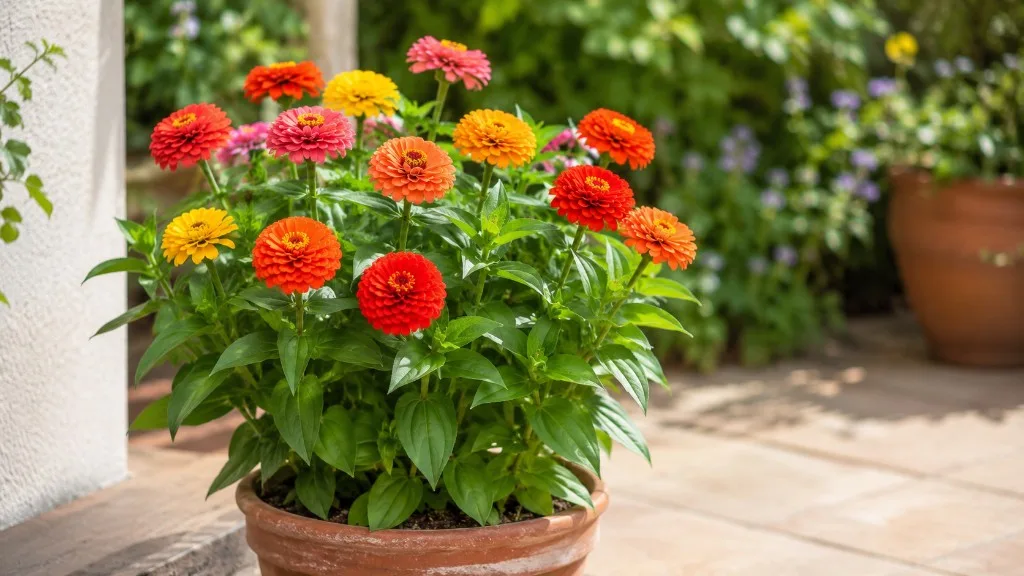
Zinnias for heat-loving, cut-and-come-again color
Zinnias are among the most reliable choices for a warm-season color gap. Many varieties germinate in under a week in warm soil and begin flowering roughly six to eight weeks after sowing. They prefer full sun, good drainage, and soil that is not heavily fertilized with nitrogen. Direct-sow them once nights and soil have warmed, or transplant young seedlings without disturbing the roots.
Choose a branching or “cut-and-come-again” type if you want repeated bouquets. Give plants enough space for air movement, water at the soil line, and remove faded flowers if you want the plant to keep producing rather than putting all its energy into seed. Zinnias are fast, but shade, crowding, and wet foliage can turn a promising stand into a sparse or disease-prone one.
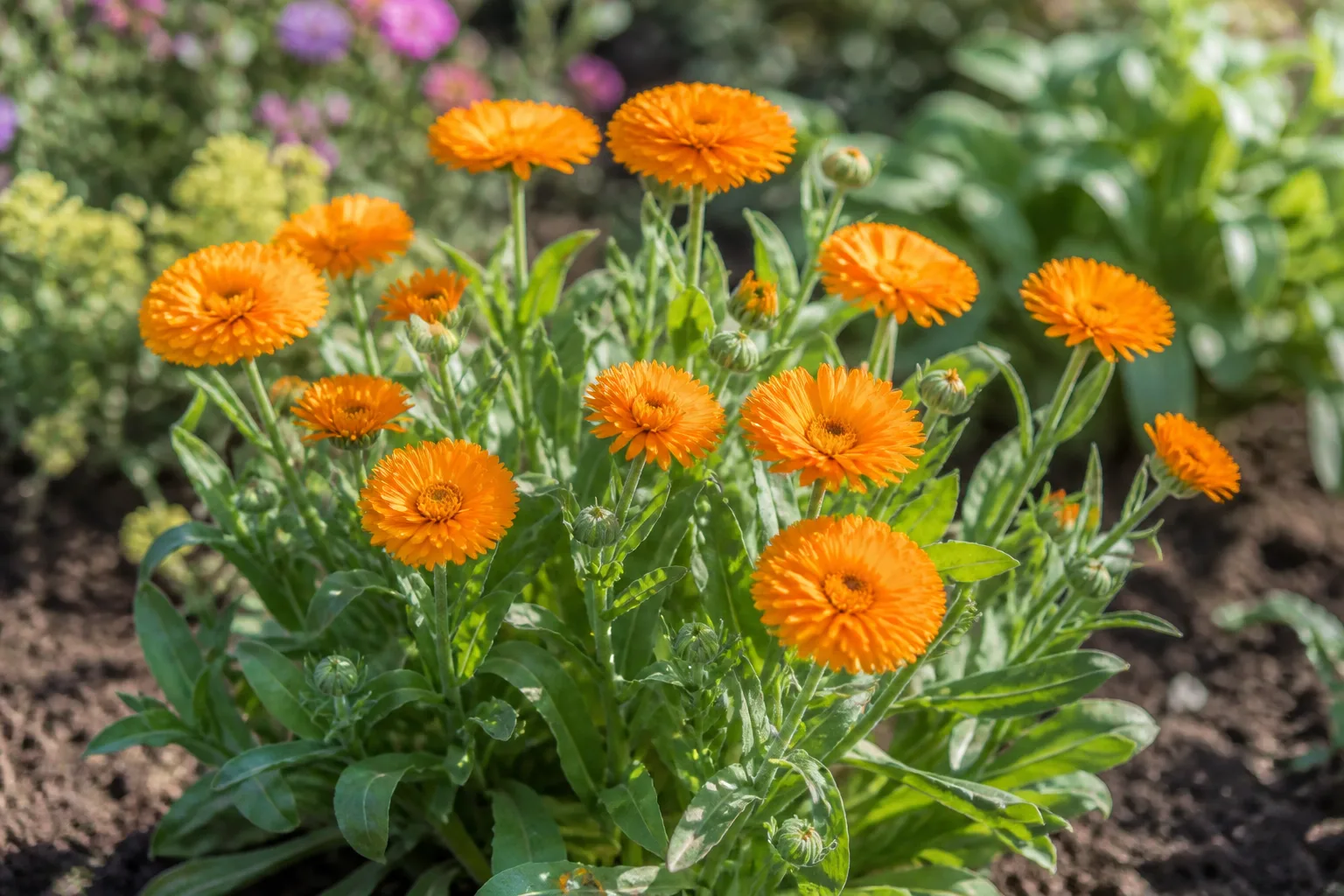
Calendula for cool-season brightness
Calendula, sometimes called pot marigold, is a useful bridge flower for spring and fall. Seeds generally emerge in about five to ten days, and flowers may arrive in six to eight weeks under favorable conditions. Sow the large, curved seeds shallowly in a sunny spot with moderate moisture. In regions with hot summers, calendula often performs better before the hottest weather arrives or after summer heat eases.
The yellow and orange flowers are especially effective in vegetable beds and containers. Deadhead for more flowers, but leave a few heads if you want to collect seed. Calendula can reseed in some gardens, though winter cold, wet soil, mulch, and cultivar differences make volunteer seedlings unpredictable.
Sweet alyssum for edging and containers
Sweet alyssum is a low-growing choice for the front of a border, a hanging basket, or a pot where a soft spill is useful. It can bloom in about two months, sometimes sooner in mild weather. Scatter the tiny seeds on the surface of prepared soil and press them in rather than burying them deeply; they need light and consistent moisture to get started.
The plant prefers sun to partial shade and appreciates protection from severe heat. If a first flush fades in midsummer, shear it lightly, water deeply, and wait for cooler conditions rather than assuming the plant is finished. Alyssum is not a tall centerpiece; its value is filling the lower edge while taller annuals develop.
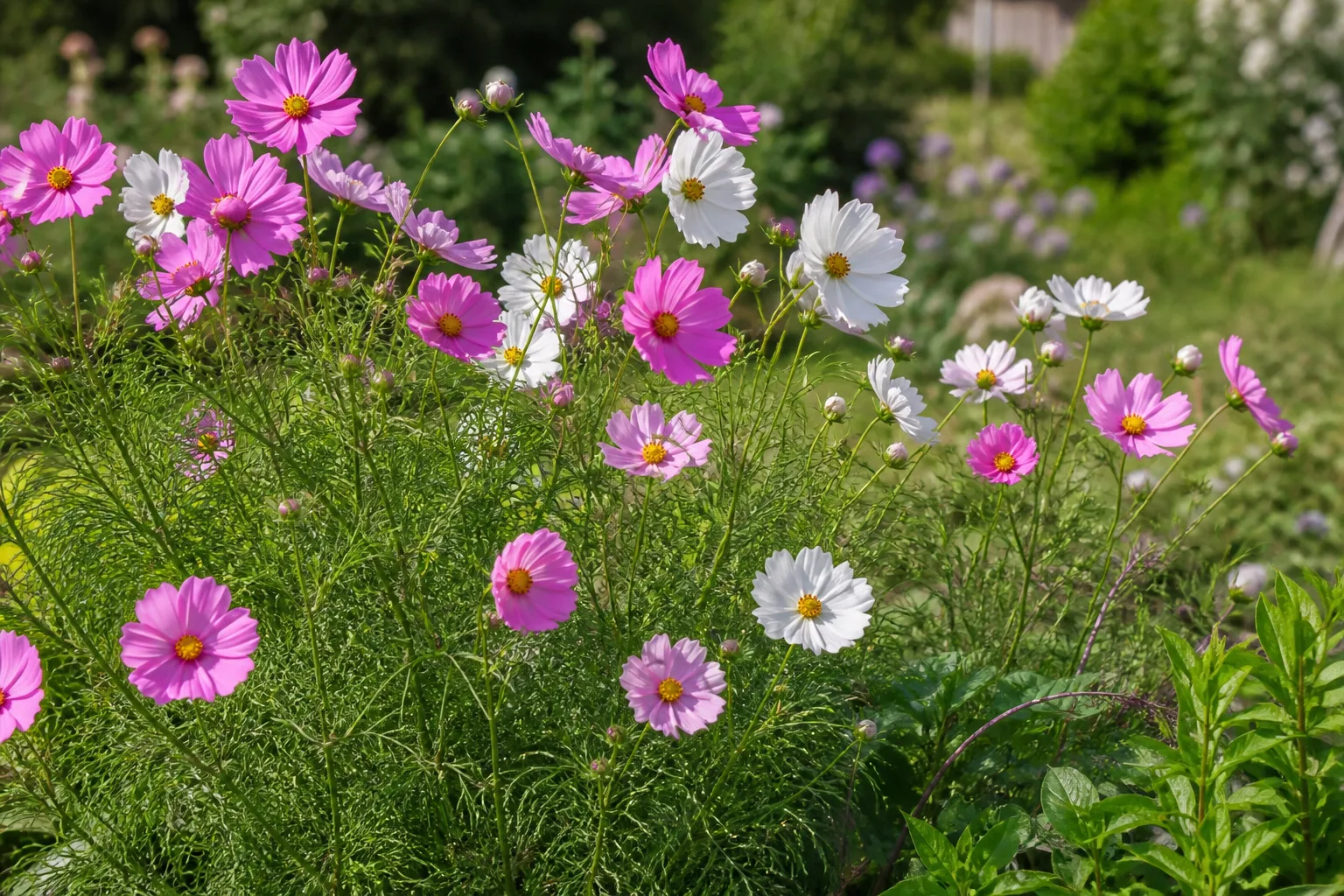
Cosmos for an easy pollinator border
Cosmos are excellent for a sunny, informal bed because they tolerate ordinary soil and can grow from direct-sown seed to flower in roughly two to three months. Sow after frost when the soil is workable. Planting too early in cold, wet ground is a common reason for a slow start.
Avoid overfeeding cosmos. Rich soil can produce tall, floppy foliage with fewer flowers, while moderate fertility and full sun encourage a more balanced plant. Taller varieties may need support in windy sites. Cut flowers regularly or remove faded blooms to keep the display going, and expect some varieties to drop seed for next year without treating that as a guarantee.
Nasturtiums for edible flowers and trailing color
Nasturtiums are quick to germinate, often within a week, and usually flower in about ten to twelve weeks depending on variety and conditions. Their large seeds are easy to handle. Soak them briefly only if the packet permits and sow them directly after the danger of hard frost has passed. Keep the soil evenly moist while seedlings establish, then avoid turning the site into a constantly wet bed.
Trailing types suit containers and walls; compact types are easier to fit into a border. Nasturtiums often produce more leaves and fewer flowers in rich soil, so do not automatically add fertilizer when growth looks vigorous. If you plan to eat the flowers, grow them without unlabelled pesticides and wash blooms before serving. Treat their reputation as a companion plant as a reason to observe the garden, not as a promise of pest control.
Annual phlox for compact, old-fashioned blooms
Annual phlox, especially Phlox drummondii, can flower in approximately seven to eleven weeks from seed. It is a different proposition from slow perennial phlox. Give it full sun, drainage, and a fine seedbed. Direct sow after frost or start it indoors early enough to transplant without letting seedlings become root-bound.
Annual phlox is useful in a small bed because it stays relatively compact while adding red, pink, white, or lavender color. Thin seedlings early. Crowded plants compete for light and air, and a dense mat can remain damp after rain. If flowering starts slowly, check whether the plants are receiving enough direct sun before adding fertilizer.
Violas for early-season containers
Violas are a better quick choice for cool weather than for midsummer heat. They can take one to two weeks to germinate and commonly need twelve to sixteen weeks from seed to flower, so they are not the fastest on the list by calendar days. Their advantage is that they can provide color in early spring or fall when warm-season annuals are not comfortable.
Start violas indoors with reliable light, or sow them well ahead of the intended display. Keep the medium moist but not saturated and harden transplants gradually. In a container, place them where they receive bright light and afternoon protection in hot climates. Remove spent flowers to keep the small plants looking fresh.
California poppies for lean, sunny soil
California poppies are a strong match for a sunny, well-drained bed where many plants would grow too leafy. Direct-sow the delicate seeds because their roots dislike disturbance. Press them into the soil surface or cover only lightly, keep the seedbed evenly moist until emergence, and then reduce watering once plants are established if rainfall is limited.
They can reach maturity and flower in about two months in a suitable season. Heavy clay, excess irrigation, and rich fertilizer are more likely to slow or weaken them than a modest, lean soil. In climates where they reseed, allow a few seed pods to mature, but remove them before opening if you need strict control over where plants appear.
Morning glories for a fast annual vine
Morning glories are fast climbers as well as flower producers. Seeds may germinate in a week or two and flower in roughly two to three months. Nicking or soaking the hard seed coat can improve and speed germination, but use a light touch and follow the seed supplier’s directions. Sow after frost near a sturdy support; the vine needs something to climb from its earliest growth.
Plan the location before sowing. A morning glory can cover a small trellis quickly and can tangle with nearby plants. Flowers often open in the morning and close later in the day, so place the vine where that timing can be enjoyed. Some morning glory species and cultivars reseed aggressively in warm climates. Check local guidance and the packet’s species name, and remove unwanted seedlings while they are small.
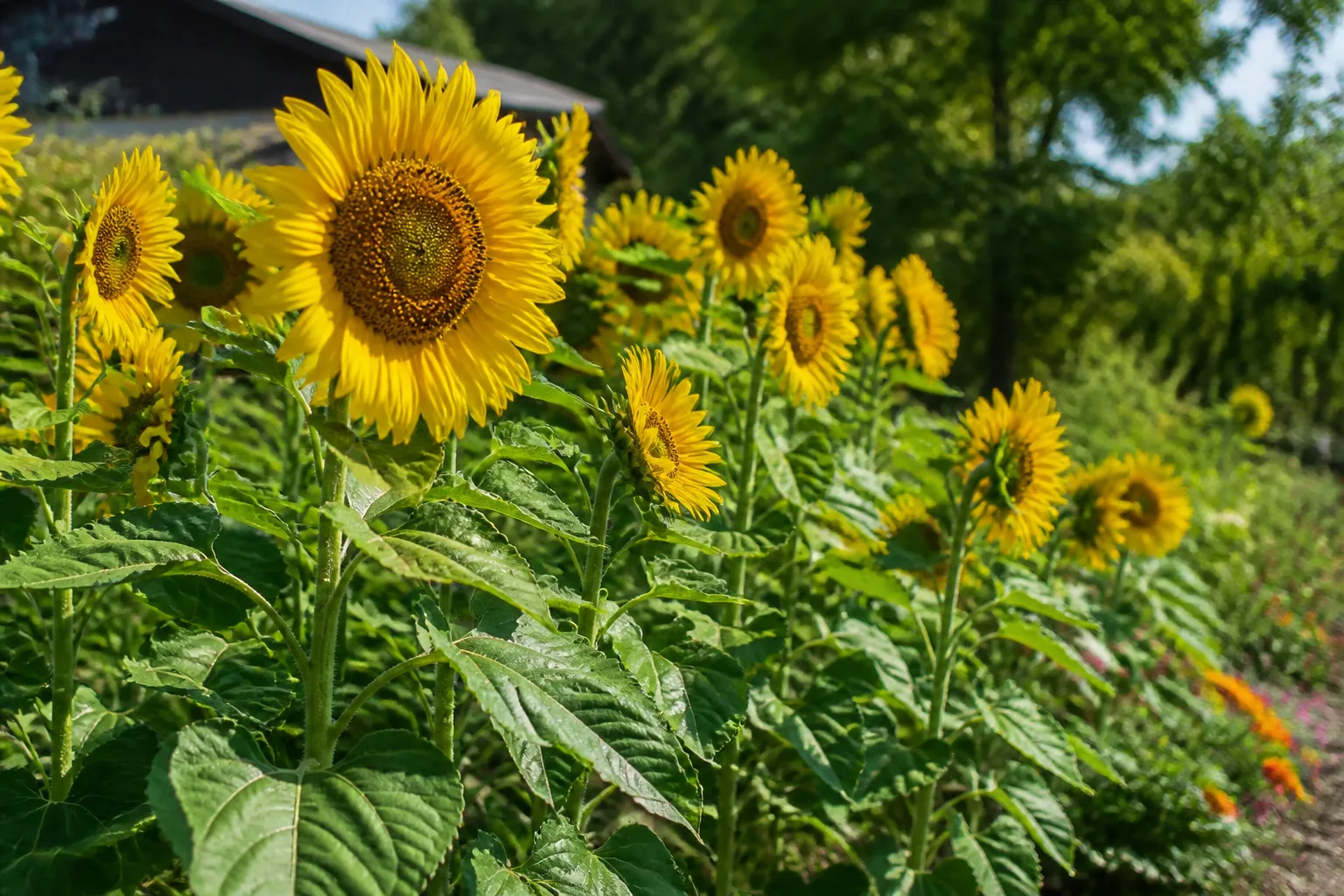
Sunflowers for a tall late-season payoff
Sunflowers are not all equally quick, but short-season and branching varieties can bloom in around 60 days. Sow the large seeds directly after frost in full sun, about as deep as the packet recommends, and water the seed row consistently until plants are established. Succession-sow every two or three weeks for a longer harvest of cut flowers.
Choose a mature height that suits the site. A dwarf type can work in a container, while a tall type may shade vegetables or lean into a path. Wind, drought, and shallow soil can slow development. If birds are a concern, protect developing heads with an appropriate barrier rather than assuming every variety will mature at the same pace.
A simple seed-to-bloom schedule
For a quick display, count backward from the date you want flowers. Add the packet’s days to maturity, then add a weather buffer of two to three weeks. For example, a 60-day warm-season annual sown in cold soil may behave more like an 80-day project. In early spring, start cool-season choices first. After frost and soil warming, sow the warm-season group.
Sow a small first patch rather than the entire packet. If the first patch emerges evenly, sow a second patch two or three weeks later. Mark each row with the cultivar and date. This simple record tells you whether “slow” was caused by the flower, the weather, or the site and makes the next sowing more accurate.
How to sow for the fastest, strongest start
Remove weeds before sowing; tiny seedlings lose the race to established roots. Break the top inch of soil into a fine, crumbly seedbed, then water it before placing seed so you do not wash seed into a trench. Sow at the packet depth, firm the soil gently, and use a fine spray until emergence. A thin covering can help retain moisture, but do not bury seeds that require light.
Thin seedlings when they have their first true leaves. Crowding produces weak stems and makes watering and inspection difficult. Once plants are established, water deeply enough to wet the root zone, then let the surface begin to dry for species that dislike constant moisture. Feed only when the soil test or plant performance suggests a need; excess nitrogen often creates leaves faster than flowers.
Why fast seeds still fail to bloom quickly
Cold soil is the first suspect for warm-season flowers. Next check light: bright ambient daylight is not the same as six hours of direct sun. Uneven watering can interrupt germination, while saturated soil can deprive roots of oxygen. Seed planted too deeply may never emerge, and seedlings left unthinned may survive but flower poorly.
Also check the packet date and cultivar. Old seed can have reduced germination, and a tall, late sunflower will not match the schedule of a compact, early variety. Transplants can lose time after moving if they were not hardened off. Finally, do not judge the whole row by one late seedling. Uneven soil contact, birds, crusted soil, or a small dry spot can create gaps that have nothing to do with the flower’s natural speed.
How to extend color with succession sowing
Succession sowing is the most dependable way to get “instant” color more than once. Divide the seed packet into two or three sowings. Plant the first when the conditions are right, the second after two or three weeks, and the last only if the remaining season is long enough for that flower. This works especially well with zinnias, cosmos, nasturtiums, calendula, and sunflowers.
Pair different speeds and seasons instead of forcing one plant to do every job. Calendula or violas can carry a cool spring container, while zinnias or cosmos take over in summer. Sweet alyssum can remain at the edge as taller flowers change. Remove exhausted plants promptly if they are shading a new sowing, but leave healthy self-sown seedlings only where you can maintain the spacing.
Conclusion
The fastest flower seed is the one matched to the season and site. Choose zinnias, cosmos, nasturtiums, or a short-season sunflower for warm full sun; calendula, sweet alyssum, and violas for cooler conditions; California poppies for lean sunny soil; annual phlox for compact color; and morning glory when you have a sturdy support for a vine. Use the packet’s cultivar-specific timing, add a weather buffer, and sow in waves rather than betting the entire season on one date.
The result will not be instant in the way a flowering transplant is, but it can be fast, inexpensive, and longer-lasting. A prepared seedbed, even moisture, timely thinning, and a second sowing do more for quick color than a dramatic promise on the front of a packet.