How to Use Fish Emulsion Fertilizer in Your Garden
Use fish emulsion fertilizer with a label-first plan. Compare product types, choose a soil drench or foliar feed, and avoid odor, crop, and runoff mistakes.
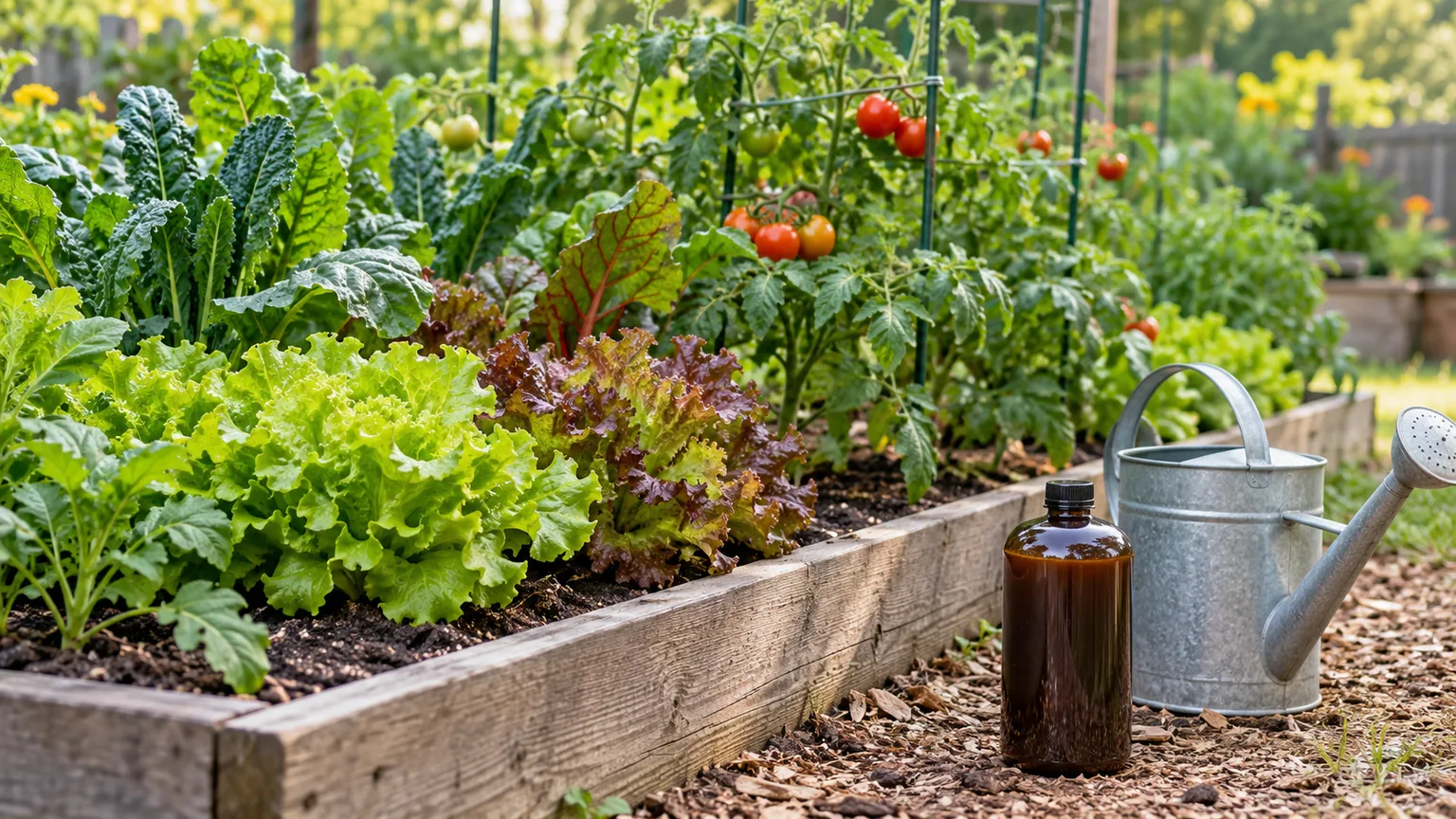
Fish emulsion can be a convenient liquid fertilizer when a plant needs nutrients and the product’s analysis fits the job. It is not a tonic every garden needs, and “organic” does not mean that every bottle has the same formula, is harmless when concentrated, or can be applied at any rate.
The useful sequence is straightforward: check whether the plant actually needs feeding, read the guaranteed analysis and crop directions, mix only the stated amount, then apply it where roots can use it without washing the solution away. That prevents the common mistake of borrowing a recipe or schedule from a different product.
What fish emulsion is—and what the name does not tell you
Commercial fish emulsion is a liquid fertilizer made from fish material left over from processing. The contents are processed and stabilized into a concentrated product that gardeners dilute with water; the resulting analysis and directions depend on the actual formulation, not simply the word “fish.”
That distinction matters because fish fertilizer is a category, not one standardized recipe. For example, NC State Extension’s research review described the fish emulsions in its 2004 study as commonly labeled 2-4-1, while Pennington’s product guide describes an Alaska fish fertilizer labeled 5-1-1 and gives different mixing rates for vegetables versus berries. Those examples are not competing universal formulas; they show why the bottle in your hand is the authority for that product’s rate.
Emulsion, hydrolysate, and fish meal are different products
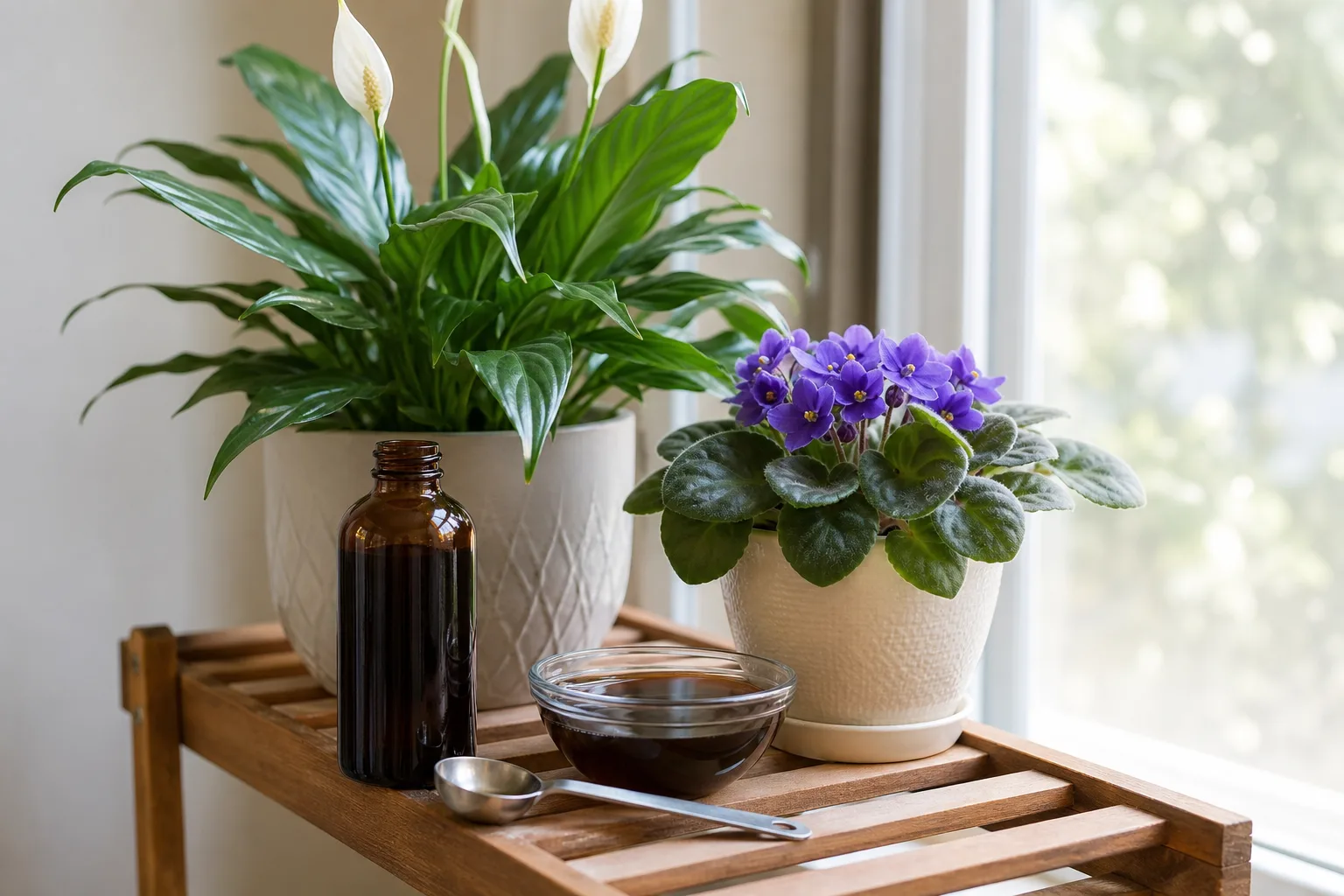
Fish emulsion, fish hydrolysate, and fish meal all come from fish, but they are not interchangeable. Emulsion is a processed liquid; hydrolysate is produced by breaking down fish material through hydrolysis and may retain a different mix of organic compounds; fish meal is a dry, ground material that behaves differently in soil. Some retail products blend fish with seaweed or other ingredients as well.
The names alone do not tell you how much nitrogen is available, how much phosphorus or potassium is present, whether the product can be used as a foliar spray, or how often it should be applied. Epic Gardening’s overview of fish products is useful for recognizing these categories, but compare the specific product’s guaranteed analysis and label rather than transferring its advice—or another gardener’s dilution—to a different bottle.
Read the guaranteed analysis before choosing a bottle
The three numbers in an N-P-K analysis represent the percentages by weight of nitrogen, phosphate, and soluble potash, in that order. A 2-4-1 product and a 5-1-1 product do not deliver the same balance: the first supplies proportionally more phosphorus, while the second is more nitrogen-heavy. Nutrients listed as secondary or micronutrients may also differ, and some fish products include seaweed or other inputs.
Before buying, look for the crop or plant group named on the label, its guaranteed analysis, dilution rate, application method, coverage area, frequency, storage instructions, and any warnings. Then compare the analysis with a soil-test recommendation or a real crop need. If phosphorus is already high, a product that adds more may not be a smart routine choice even if the plant is green and the label says organic.
Do not treat “low analysis” as permission to pour on extra concentrate. An organic product can still supply too much of a nutrient, and repeated liquid feedings add up. If you are growing under an organic certification program, verify the exact product with your certifier or accepted-input list; the word “organic” on marketing copy does not, by itself, establish that a product is approved for every certification or use.
When fish emulsion is a useful fit
Fish emulsion can fit a garden when the crop is actively growing, the label permits that use, and its nutrient profile matches the need. A leafy vegetable with a documented nitrogen requirement is a more logical candidate than a mature shrub with no deficiency or a fruiting crop already making excessive leaf growth.
Because it is sold as a liquid concentrate, it can be measured for a small bed, a row of vegetables, or a container when the directions include that use. It can also be easier to portion than bulk granular fertilizer for gardeners who are following a soil-test recommendation. Convenience is its advantage; it does not make the product a complete soil-building amendment or a substitute for diagnosing poor growth.
Situations where a measured application can help
Consider fish emulsion when a soil test or a local crop recommendation indicates a nutrient need that matches the product, especially if you want a liquid feed for actively growing leafy crops. A modest, correctly diluted application can be part of a broader fertility plan, but compost, mulch, irrigation, and crop rotation may address other problems more directly.
It can also be useful when transplant labels or a trusted local growing guide call for a liquid feed and the fish product’s directions match the crop. NC State’s older greenhouse work found that tomato and pepper transplants treated with a fish-and-seaweed blend at the tested rate grew taller and heavier with twice-weekly drenches than untreated controls. That was a specific transplant trial—not proof that every garden plant needs feeding twice a week.
When another approach is better
Skip fish emulsion when the plant is dormant, stressed by drought or waterlogged soil, newly planted with roots still establishing, or already surrounded by rich compost or recently fertilized potting mix. Fertilizer will not fix insufficient light, root damage, poor drainage, pests, or the wrong soil pH; correcting the real cause is safer than stacking nutrients on top of it.
It is also a poor fit when the smell is a problem, the garden is next to a pond or storm drain, wildlife has been digging in beds, or the product label excludes the crop or application method you want. If you need a precise correction to phosphorus, potassium, or a micronutrient, choose a product and rate matched to the soil report rather than relying on fish emulsion’s variable blend.
How to apply fish emulsion without guessing
Treat the directions on your chosen product as a small calculation, not as a general fish-fertilizer recipe. The dilution ratio and the area one gallon covers can differ between brands, products, crop groups, and application methods. One manufacturer, for example, lists 2 tablespoons per gallon for outdoor annuals and vegetables and 3 tablespoons per gallon for berries and perennials, with a coverage rate of 25 square feet per gallon; those are that product’s directions, not a general fish-emulsion recipe. Another label may not match them at all, so check the bottle you own.
Let the label set dilution and coverage
Use this workflow each time you mix a new product or switch crops:
- Shake the concentrate if the label directs it. Suspended material can settle, so an unmixed bottle may not deliver the same amount from each pour.
- Measure the label’s concentrate precisely. Use a dedicated spoon or measuring tool rather than estimating with a household cap.
- Add it to the stated amount of water. Do not make the solution stronger to “help” a struggling plant or weaker and apply it more often unless the label allows that adjustment.
- Mix only what you can use in that session. Follow the storage instructions for both the concentrate and any diluted remainder; do not keep mixed fertilizer in a drink bottle or an unlabeled container.
- Apply only the stated amount to the stated area or plant group. If a label gives coverage per square foot, measure the bed and calculate the amount for that area rather than pouring until the soil looks wet.
If the label gives tablespoons per gallon and coverage per gallon, the relevant amount for a smaller bed is the concentrate needed for the fraction of a gallon you will apply. Do not use an exact sample rate from a blog as a fallback if your bottle is missing directions; contact the manufacturer or choose a clearly labeled product instead.
Why a soil drench is the practical default
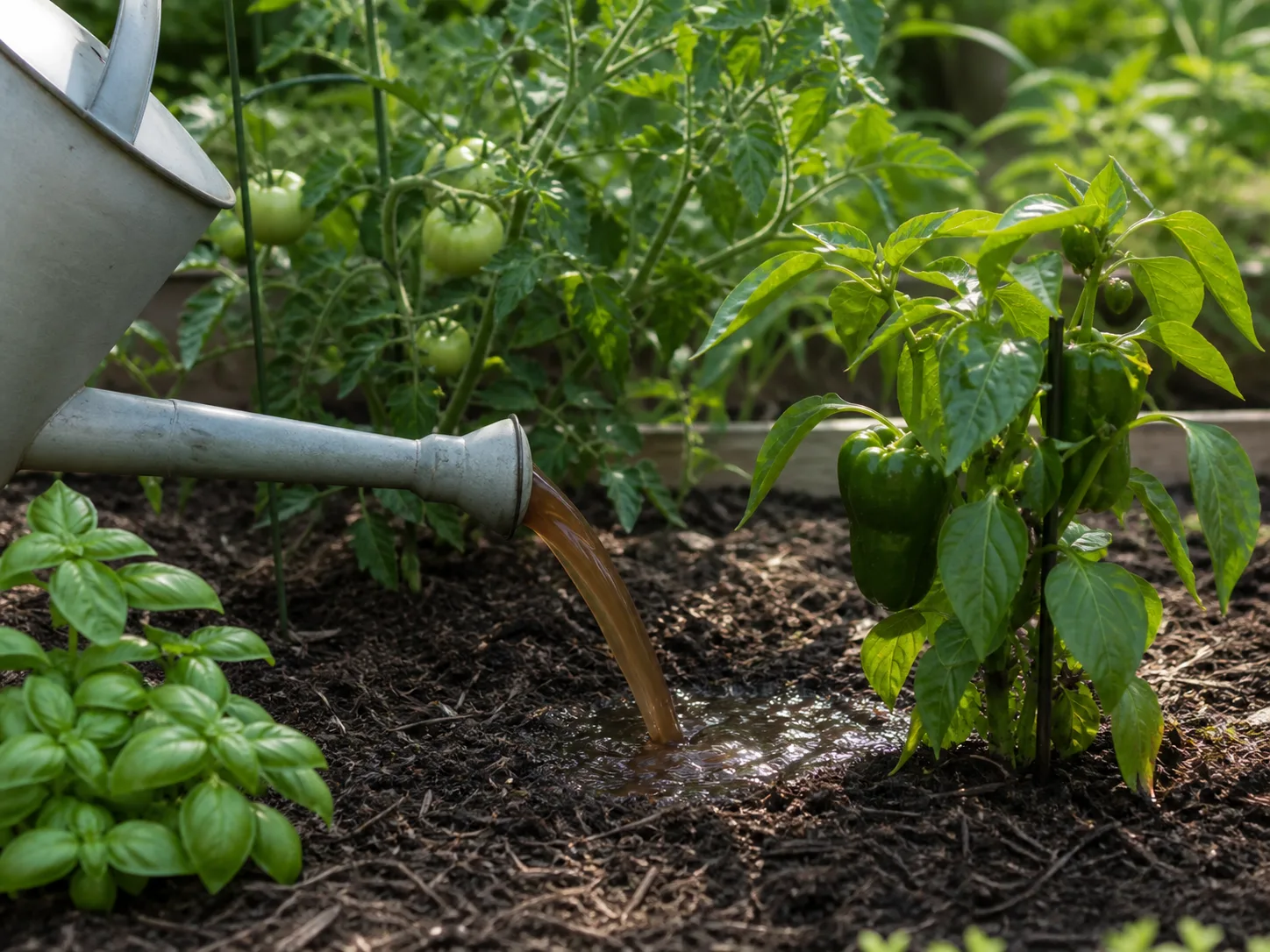
For vegetables, direct the diluted solution to the soil around the root zone, not onto stems, flowers, or harvestable leaves. Water the bed first if it is very dry, then apply evenly; a concentrated stream in one spot can expose roots to more fertilizer than the rest of the plant receives. Follow the product’s instruction about whether to water afterward, since directions vary.
A soil drench also makes it easier to keep fishy residue off edible foliage and reduces the reason to spray a smelly solution around the whole garden. It is not a reason to flood the bed: use only the labeled volume, keep solution off pavement, and stop if water begins running downhill or toward a drain.
Foliar feeding has limits
A foliar spray is not automatically more effective because leaves can absorb some nutrients. The mixture must be permitted for foliar use, diluted exactly as directed, and kept off produce unless the label explicitly allows contact with the edible portion. Spraying during strong sun or heat can also leave residue or stress tender foliage, so follow the label’s timing and test a small area if directions permit.
NC State’s field and greenhouse research is a useful corrective to claims that a foliar fish spray guarantees better harvests. In Melissa Ann Brown’s associated NC State thesis, foliar applications of fish, seaweed, and their blend did not increase plant nutrient levels or yields in the tested sweet pepper, broccoli, and lettuce trials; the Extension summary also reports no significant yield or grade advantage from the pepper foliar spray. That finding is limited to the products, crops, and conditions tested, but it is enough reason not to promise a yield boost or to spray leaves by default.
Set timing by crop, season, and growth
Do not start with a calendar interval such as “every two weeks.” Start with the crop’s feeding needs, the soil or potting mix already present, and the label’s maximum frequency. NC State’s twice-weekly transplant treatment was a greenhouse comparison with a specific fish-and-seaweed blend; it is not a home-garden schedule. Manufacturer instructions can be less frequent and may vary by plant group.
For a short-season leafy crop, feeding makes most sense during active leaf growth if the soil or local recommendation calls for it. For tomatoes and other fruiting vegetables, early nitrogen may support establishment, but too much can encourage leaves at the expense of flowers and fruit. Stop or reduce feeding as the crop slows, approaches dormancy, or reaches a stage when the label or local extension guide says not to fertilize.
In containers, count fertilizer already present in the potting mix and consider how often the pot is watered. Repeated watering can move soluble nutrients through drainage, but that does not mean you should automatically increase the dose; follow the product’s container rate and watch plant growth. For beds that are amended regularly with compost or manure, account for those nutrient contributions before adding another liquid feed.
Which plants may benefit—and which need something else
Leafy vegetables such as lettuce, kale, and many herbs are common candidates for nitrogen-focused fish emulsion, provided the analysis and label suit the crop. That does not mean every leafy plant needs more nitrogen: pale leaves may come from root stress, cold soil, water problems, or nutrient lockout, and older leaves can decline naturally.
Tomatoes, peppers, cucumbers, annual flowers, lawns, and houseplants appear on some product labels, but “works on” is not a universal recommendation. Check the label for the exact category and rate, then consider whether the plant is in active growth and whether the nutrient balance fits. If a tomato plant is dark green with vigorous vines but few flowers, more fish emulsion is unlikely to be the first answer.
Plants that prefer lean soil, are dormant, or have recently been fed may need no additional fertilizer. Succulents and many drought-adapted plants can be damaged by a rich or frequent feeding routine; for them, a lower-frequency, species-specific fertilizer plan is usually more appropriate than applying fish emulsion because it is organic.
Use fish emulsion around edible crops with care
A fertilizer labeled for vegetables can be used on edible crops according to its directions, but that does not make every application method equally sensible. A soil-directed drench keeps the concentrate and fish odor away from the edible surface. If the product does not clearly permit foliar application to that crop, do not invent permission from a general fish-fertilizer article.
Avoid spraying lettuce, herbs, berries, or produce close to harvest unless the product label explicitly describes that use and any required interval. Keep the concentrate, mixing tools, and diluted solution away from harvested food and food-preparation surfaces. Wash hands after mixing, clean reusable tools, and follow the actual label’s precautions for protective equipment and accidental contact.
Before eating produce, rinse it under clean running water and rub firm produce; do not use soap or household detergent, as the FDA’s produce-cleaning guidance recommends. That is ordinary produce handling, not a way to make an off-label or excessive fertilizer application acceptable. If a product label is unclear about a crop or harvest timing, ask the manufacturer or local Cooperative Extension service before using it.
Manage odor, storage, pets, and wildlife
Fish emulsion can smell strongly when the bottle opens, when it is mixed, and after it lands on soil or foliage. Deodorized products may reduce the odor, but they can still smell fishy and should not be treated as scent-free. Apply only where the label allows, avoid wetting leaves unnecessarily, and choose a different fertilizer if the odor would make a patio, greenhouse, or indoor room unpleasant.
Store the concentrate tightly closed in its original labeled container, upright, in a cool location recommended by the manufacturer. Keep it out of reach of children and pets, away from food, and never transfer it to a beverage container. Clean spills promptly and wash any measuring tool before it is used for food or drink.
The odor can attract pets or wildlife that investigate the bed, especially if concentrate or scraps are left accessible. Do not leave fish emulsion in an open bucket, pour it into a pet bowl or pond, or use homemade fish scraps as a surface dressing where animals can reach them. Keep people and animals away during application and until the treated area has dried or the label’s re-entry guidance is met; if an animal consumes concentrate, contact a veterinarian with the product label available.
Prevent overfeeding and nutrient runoff
More frequent feeding is not a shortcut to faster growth. A plant that has adequate nutrients cannot use an unlimited supply, and excess nitrogen can produce soft, overly leafy growth or interfere with flowering and fruiting. If growth seems poor, first check moisture, drainage, light, temperature, root health, and the history of fertilizer and compost additions.
NC State Extension’s soil-testing guidance explains that soil tests measure pH and plant-available nutrients and help guide fertilizer decisions. Soil-test advice is regional, so use your local extension lab or equivalent service when available; do not assume a result from a different region or crop transfers directly to your bed. In gardens that receive routine compost, manure, or other amendments, test results are especially useful before adding another source of phosphorus or nitrogen.
Apply only to soil that can absorb the solution. Avoid fertilizing frozen, saturated, or waterlogged soil and do not apply just before heavy rain; avoid slopes or edges where water can carry fertilizer toward pavement, a storm drain, pond, stream, or other water body. Sweep or rinse accidental spills from hard surfaces into a garden area only if the label allows and the soil can take it up, not into a drain.
Should you make fish fertilizer at home?
You can find recipes for fermenting fish scraps, but homemade fish fertilizer is not the same standardized product as a commercial emulsion. Its nutrient concentration, pH, maturity, and application rate are unknown unless you have it analyzed, and fermentation can produce a persistent odor. A recipe that says “one part fish and three parts sawdust” does not tell you what N-P-K dose reaches a particular plant. For example, Gardening Know How’s homemade emulsion recipe calls for fish, sawdust, and molasses, but that is not a tested analysis or a universal rate.
For most home gardeners, buying a clearly labeled product is the more predictable choice. It provides a guaranteed analysis, plant-use directions, mixing rates, and storage guidance that a bucket of homemade scraps cannot. If you compost fish waste instead, use a properly managed, animal-resistant composting system and follow local guidance; do not bury raw scraps beside edible plants or keep a fermenting bucket where children, pets, or wildlife can reach it.
“Organic” also does not automatically mean environmentally impact-free. A product made from fish may use processing byproducts or other fish inputs, and a bottle alone may not reveal the source or sustainability of the upstream fishery. A peer-reviewed review of fishmeal and fish-oil supply chains describes how sourcing and use vary across the larger industry; if fish sourcing matters to you, look for transparent manufacturer information rather than assuming all fish-derived fertilizers have the same footprint.
Common mistakes and how to correct them
- Using another brand’s dilution: Product concentrations and directions differ. Stop and find the rate printed for your exact bottle and crop before mixing.
- Feeding on a fixed calendar: A schedule may ignore the soil test, potting mix, season, or crop stage. Resume only when the label and plant’s actual need support another application.
- Using fish emulsion to diagnose yellow leaves: Yellowing can come from watering, roots, pH, pests, or natural aging. Check those causes before adding nitrogen, which may not solve the problem.
- Spraying edible leaves by default: A foliar application can leave odor or residue and may not improve yield. Use a root-zone drench unless the label clearly permits the foliar use you intend.
- Applying before heavy rain: Nutrient solution can leave the bed before roots use it. Wait for a dry weather window and apply to soil that is moist but not saturated.
- Keeping a diluted batch indefinitely: Follow the product’s storage directions and keep any allowed remainder in a clean, labeled, closed container. If it changes in a way the label warns against, dispose of it according to local directions rather than applying it to plants.
- Assuming organic means safe: Concentrate can still harm plants through misuse and can be a hazard if swallowed or splashed. Keep it secured and follow the bottle’s precautions.
If you have already applied too much, do not add more fertilizer or another amendment to “balance” it. If the soil drains freely and the label does not advise otherwise, water the root zone enough to move excess soluble material below the immediate surface without creating runoff; avoid flooding saturated or poorly drained ground. Photograph the product label, record how much was applied and where, then contact the manufacturer or local extension office if plants show injury or you are unsure whether a corrective rinse is appropriate.
Conclusion
Fish emulsion is a useful option when a plant has a real nutrient need, the product’s analysis fits, and its label supports the crop and application you plan to use. It is not a universal fertilizer, a reliable yield booster, or a reason to spray edible foliage on a fixed schedule.
Check the soil or potting mix first, choose a bottle by its guaranteed analysis, measure exactly as directed, and apply to the root zone when practical. Store the concentrate securely, plan around the odor, and keep fertilizer out of runoff pathways; if the plant is already growing well, skipping a feed is often the better choice.



