What Is Fescue Grass? Types, Uses, and Care
Compare tall fescue with five fine fescues by shade, traffic, drought, and maintenance needs, then match a seed type to your yard.
Fescue is a group of cool-season grasses used in lawns, pastures, erosion control, and ornamental plantings. When a lawn seed bag says “fescue,” it usually means either tall fescue, a durable, relatively broad-bladed turf grass, or fine fescue, an umbrella name for several finer-leaved grasses often chosen for shade and lower-input sites.
Those two categories are not interchangeable. Tall fescue is a practical pick for many sunny or partly shaded lawns that need better summer resilience; fine fescues can make a softer, lower-input cover in cooler regions, especially where light is limited and soil drains well. Neither category is a magic lawn for every yard: cultivar, climate, drainage, and how much wear the lawn takes all change the result.
What fescue means on a lawn seed label
Fescue is not one grass variety. The name covers many related grasses, but the lawn trade focuses mainly on turf-type tall fescue and five fine-fescue types. Some species are bred for livestock forage, roadside cover, or ornamental clumps rather than the short, even surface most homeowners picture as a lawn.
Most lawn fescues are cool-season grasses. They grow most actively in the cooler parts of spring and fall, slow during hot weather, and may lose color or go dormant during prolonged summer stress. Their ability to stay green depends on local weather, soil, cultivar, and water; “drought tolerant” does not mean a fescue lawn never needs irrigation.
The name on the front of a seed bag is only the beginning. Look at the species and cultivar names in the fine print, then match them to your climate and site. Kansas State’s turfgrass selection guidance emphasizes that species and cultivars differ in appearance, growth habit, use, pest resistance, and environmental fit; planting an unadapted grass can mean weak turf and more replanting or inputs later (Kansas State University).
Tall fescue vs. fine fescue: quick comparison
| Trait | Turf-type tall fescue | Fine fescues |
|---|---|---|
| Leaf look | Wider, coarser blade than fine fescue; newer cultivars can be more refined | Narrow, fine or bristle-like blades |
| Growth habit | Usually grows as a bunch, though cultivars can vary | Creeping red types spread by rhizomes; Chewings, hard, and sheep are mainly bunch-forming |
| Best fit | Sunny to moderately shaded lawns needing heat and drought resilience | Cooler-region lawns and low-input areas with partial shade and well-drained soil |
| Main limitation | Clumps do not repair bare spots as quickly as a spreading bluegrass lawn | Many types wear poorly under repeated traffic and struggle in hot, wet conditions |
| Maintenance | Moderate; mow and water for active growth, with regional recommendations | Often low to moderate; avoid excess nitrogen and summer traffic when stressed |
This is a broad comparison, not a guarantee for every cultivar. A shade-selected tall fescue may behave differently from an older pasture type, and the fine fescues themselves vary in shade tolerance, drought response, and wear resistance. For decisions that affect a whole lawn, follow trial data or extension recommendations for your region.
Turf-type tall fescue
Turf-type tall fescue is the lawn form sold in improved cultivars for color, density, texture, and disease or stress tolerance. It generally has wider blades than fine fescues and forms a strong, upright bunch. The roots can explore deeper soil than many shallow-rooted lawn grasses when the profile is open and deep enough, which helps explain its reputation for summer resilience.
Tall fescue can suit a homeowner who wants a cool-season lawn that handles moderate use and needs less summer irrigation than some alternatives. It still needs establishment water, and a newly seeded area cannot rely on deep roots that have not grown yet. During a long, hot dry spell, established turf may slow, brown, or enter dormancy rather than remain lush without water.
Fine fescues
Fine fescue is a category, not a single species. The leaves are narrow, giving a finer texture than typical tall fescue. Fine fescues are often included in seed mixes for shade or lower-input lawns, but the exact mix matters: strong creeping red, Chewings, hard, sheep, and slender creeping red fescue do not have identical growth habits or stress tolerances.
Purdue Extension’s management review notes that fine fescues can fit lawns, parks, roadsides, and other low-input sites, but recommends adjusting the choice to region and site. In southern Indiana, for example, tall fescue may perform better than fine fescues in some shaded areas because summer stress can thin the fine-fescue stand; that is a regional example, not a blanket rule for all climates (Purdue Extension).
Meet the five fine fescues
The five lawn fine fescues are usually discussed together because their leaves are fine, but choosing among them can matter. A blend may contain several types, and seed labels sometimes make it hard to tell which one will dominate. Purdue Extension summarizes differences in color, growth habit, shade tolerance, drought resistance, traffic wear, and nitrogen needs; its comparisons show why “fine fescue” alone is not a complete specification (Purdue Extension).
Creeping red and slender creeping red
Strong creeping red fescue has rhizomes: underground stems that can help it fill small gaps over time. Slender creeping red has shorter or fewer rhizomes and is less common in retail seed blends. Both can help a cool-season mix handle shade, but “creeping” does not mean they spread as aggressively or repair wear as quickly as Kentucky bluegrass.
Purdue’s relative rankings show that the two red fescues differ in shade, mowing, wear, and drought performance, so a label that identifies which red fescue is present is more useful than a vague “shade grass” claim. Even a creeping type can thin where dogs run the same route, soil stays saturated, or summer heat and drought overlap.
Chewings fescue
Chewings fescue is a dense, fine-bladed, mostly bunch-forming grass with strong shade tolerance. It may fit a lightly used lawn or a shady margin where a fine texture is desirable. Because it is mainly bunch-forming, it is not the best choice if you expect it to spread rapidly into large bare areas.
Chewings fescue can be more tolerant of mowing and wear than some other fine fescues, but that is a relative difference within the group—not proof that it is a sports-field grass. LawnStarter’s regional guide for Columbus also separates traffic and shade tolerance by species rather than assigning one rating to all fine fescues (LawnStarter).
Hard and sheep fescue
Hard fescue and sheep fescue are often used where low fertility, lower mowing frequency, or a more natural look matters more than a uniformly manicured finish. Both are mainly bunch-forming. Hard fescue is a common choice for low-input turf and slopes; sheep fescue often has a blue-green cast and can be used in naturalized or ornamental settings.
These grasses are not simply “better” because they need less attention. They can be slower to cover a damaged patch and are not ideal for a heavily used play lawn. A site that gets constant foot traffic, stays wet, or faces intense summer heat may need a different species or a non-turf surface.
What does fescue look like?
Tall fescue typically has a wider, more substantial blade than fine fescue. Fine fescue leaves are notably slender, sometimes almost hair-like; some types look soft and dense when mowed, while hard and sheep fescue can appear blue-green or gray-green. Color and blade width vary among cultivars, so appearance alone rarely identifies the exact species.
Growth habit is another clue. A tall-fescue lawn may show individual clumps or tufts where plants have not knitted together, especially after drought or wear. Creeping red fescue can fill gaps by short rhizomes, while Chewings, hard, and sheep fescue generally enlarge as clumps rather than spreading fast across bare soil.
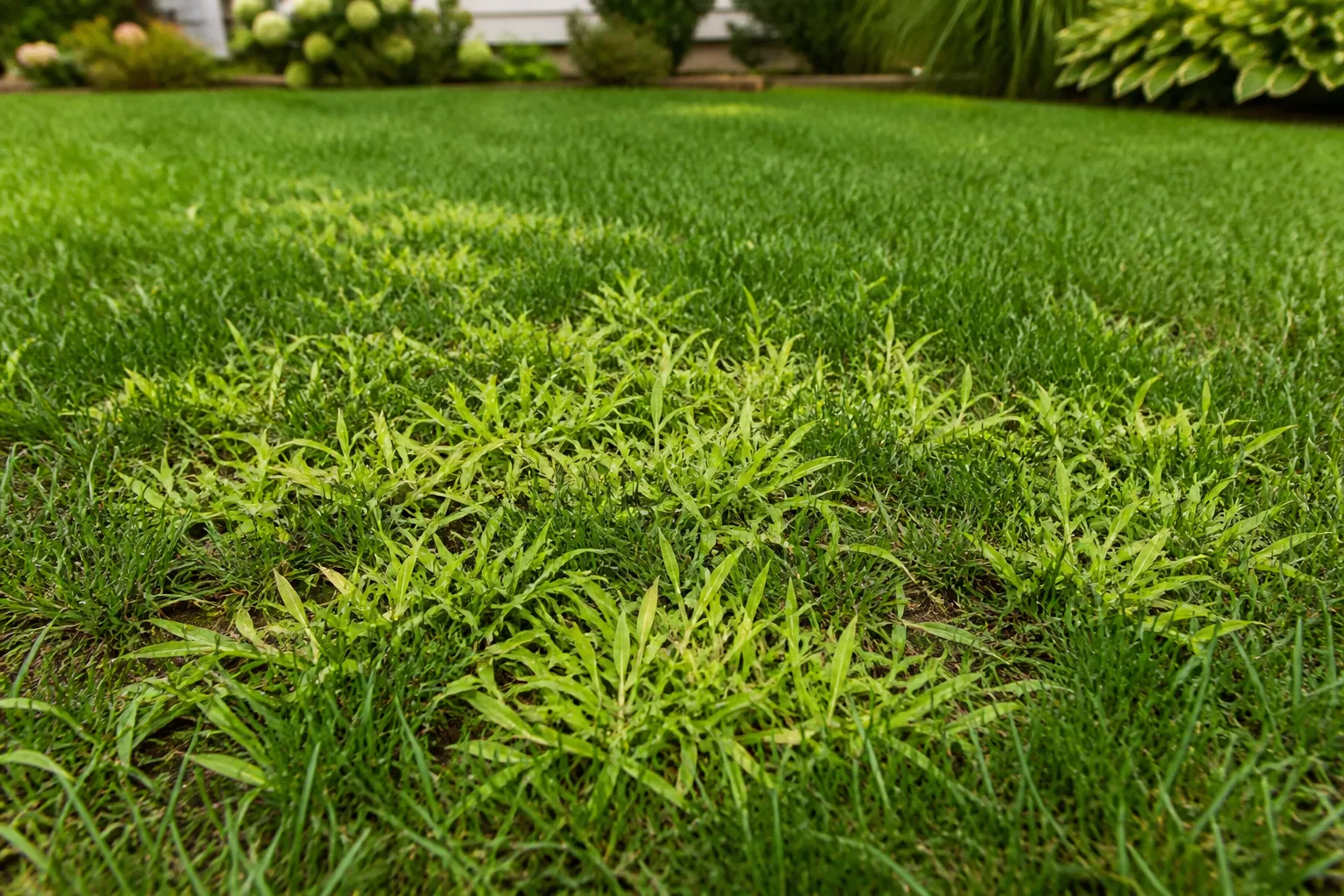
A rough, coarse clump in a fine-textured lawn may be tall fescue, but it could also be another grass or a mixed seed stand. If you are diagnosing an existing lawn, inspect several plants and check a local extension identification guide before applying a selective herbicide or reseeding. Treating an unknown grass can damage the desirable turf around it.
Is fescue right for your yard?
Start with the site and how you use it, not with a single benefit printed on a seed bag. Note the hours of direct sun, whether the soil drains after rain, the amount of summer heat, the expected foot traffic, and whether you can water during establishment. Then choose a species and cultivar that is recommended for your region.
For a yard with mixed conditions, a seed mix may be more forgiving than a single species. A mix can include complementary grasses for sun, shade, quick establishment, or disease resistance, but its value depends on compatible species and the actual percentages on the label. It is not automatically a better choice than a suitable single-cultivar stand.
Choose tall fescue for sun, heat, and use
Turf-type tall fescue is often a strong candidate for cool-season and transition-zone lawns that get sun or partial shade, have well-drained soil, and experience warm summers. It can handle regular family use better than many fine fescues, though a vigorous tall-fescue lawn still suffers when traffic repeatedly crosses the same small area. Put a path or stepping stones where use is concentrated instead of expecting any grass to withstand constant wear.
Tall fescue can also work where the homeowner wants a durable lawn without the rapid spreading habit of Kentucky bluegrass. The trade-off is repair: if clumps die or a bare strip forms, the lawn may need overseeding. Lawn Love’s Colorado Springs comparison describes tall fescue as a useful drought-resilient choice and fine fescue as more shade tolerant but less traffic tolerant; read that as regional context, since cultivar and local climate change the outcome (Lawn Love).
Tall fescue is not the automatic answer for the Deep South or every hot, humid lawn. Cool-season turf can struggle through sustained heat, and disease pressure may increase when the canopy stays wet overnight. Check local university trials for cultivars adapted to your area, particularly if you are near the warm edge of the species’ recommended range.
Choose fine fescue for light shade and lower inputs
Fine fescues are often the best cool-season group to consider for partial shade, dry shade, and lower-input landscapes. Their lighter maintenance needs can make sense on a slope, a lightly used side yard, or a naturalized area that does not need a putting-green finish. Some types can tolerate reduced mowing, but a “no-mow” label still depends on the chosen species, site, and desired appearance.
Shade does not eliminate the need for light. Penn State Extension explains that trees compete with turf for sunlight, water, and nutrients, and that shade can reduce turf density and wear tolerance. It recommends fine fescues among the most shade-tolerant grasses, while warning that they prefer drier soils and do not tolerate constantly wet conditions; tall fescue may suit moderate shade (Penn State Extension).
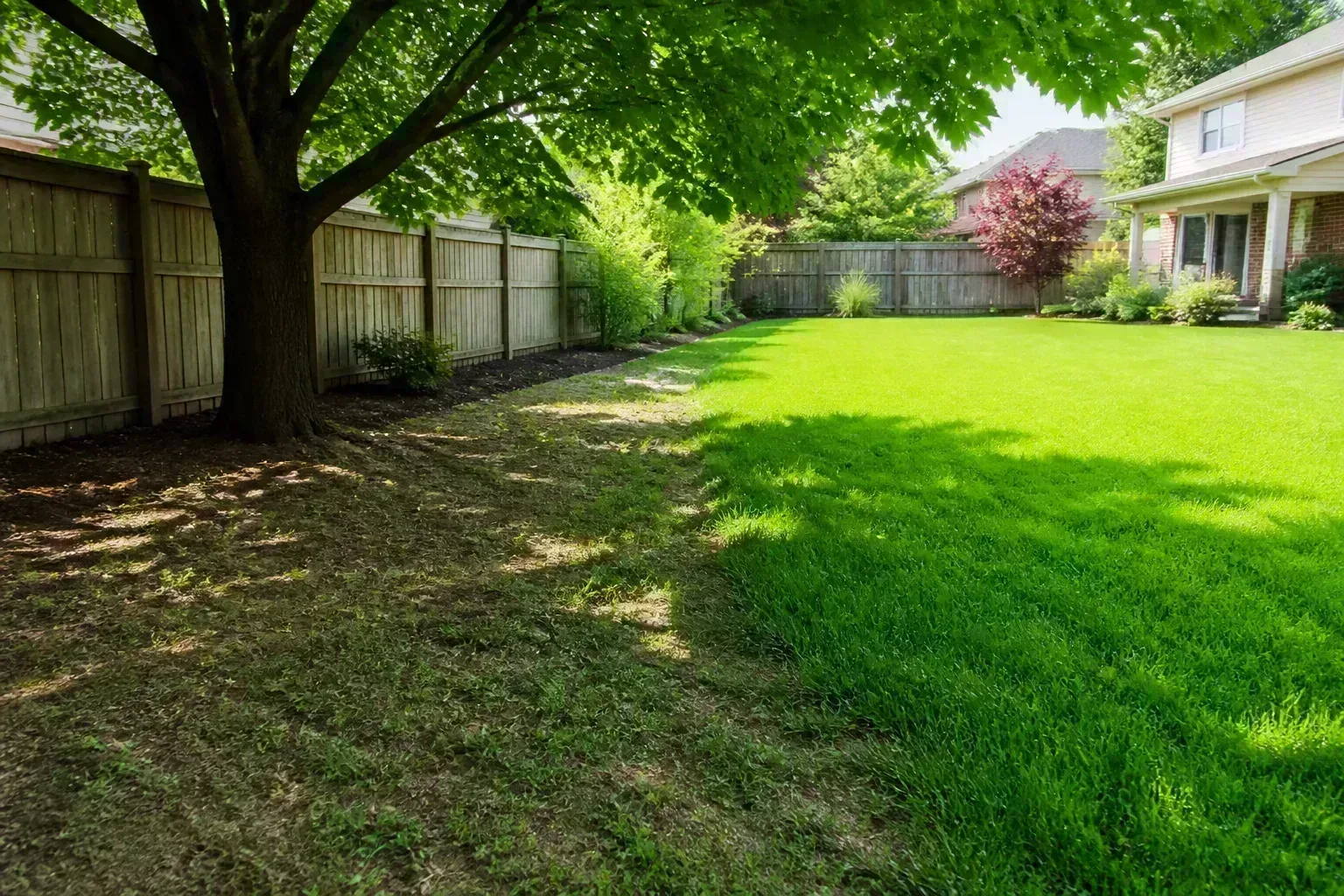
If the area is dark, soggy, and crowded with surface tree roots, changing the seed may not solve the underlying problem. Improve light and drainage only when it is safe and practical for the tree, and consider a ground cover or mulch where turf repeatedly fails. Fine fescue can stretch the possibilities of a cool-season lawn; it cannot remove the limits imposed by deep shade.
Fescue compared with Kentucky bluegrass and ryegrass
Compared with Kentucky bluegrass, tall fescue usually offers better heat and drought resilience in suitable soils, while bluegrass can spread by rhizomes and repair worn or damaged areas more readily. Bluegrass often needs more irrigation to stay green during dry weather. The choice is a trade-off between summer resilience and self-repair, not a universal winner.
Compared with perennial ryegrass, tall fescue is usually coarser but can be better adapted to summer heat and drought in transition areas. Ryegrass germinates quickly and can establish fast, which makes it useful in some mixes, but quick sprouting alone does not make a lawn durable for every season or site.
Fine fescues stand apart for shade and low-input potential, particularly in cooler regions, but repeated foot traffic is a weaker fit. In a mixed yard, a blend of fine fescue for shade and another compatible cool-season grass for sunnier or higher-use areas may be more practical than asking one grass to perform everywhere. Follow local extension advice because species compatibility and cultivar ratings vary across regions.
What fescue needs to thrive
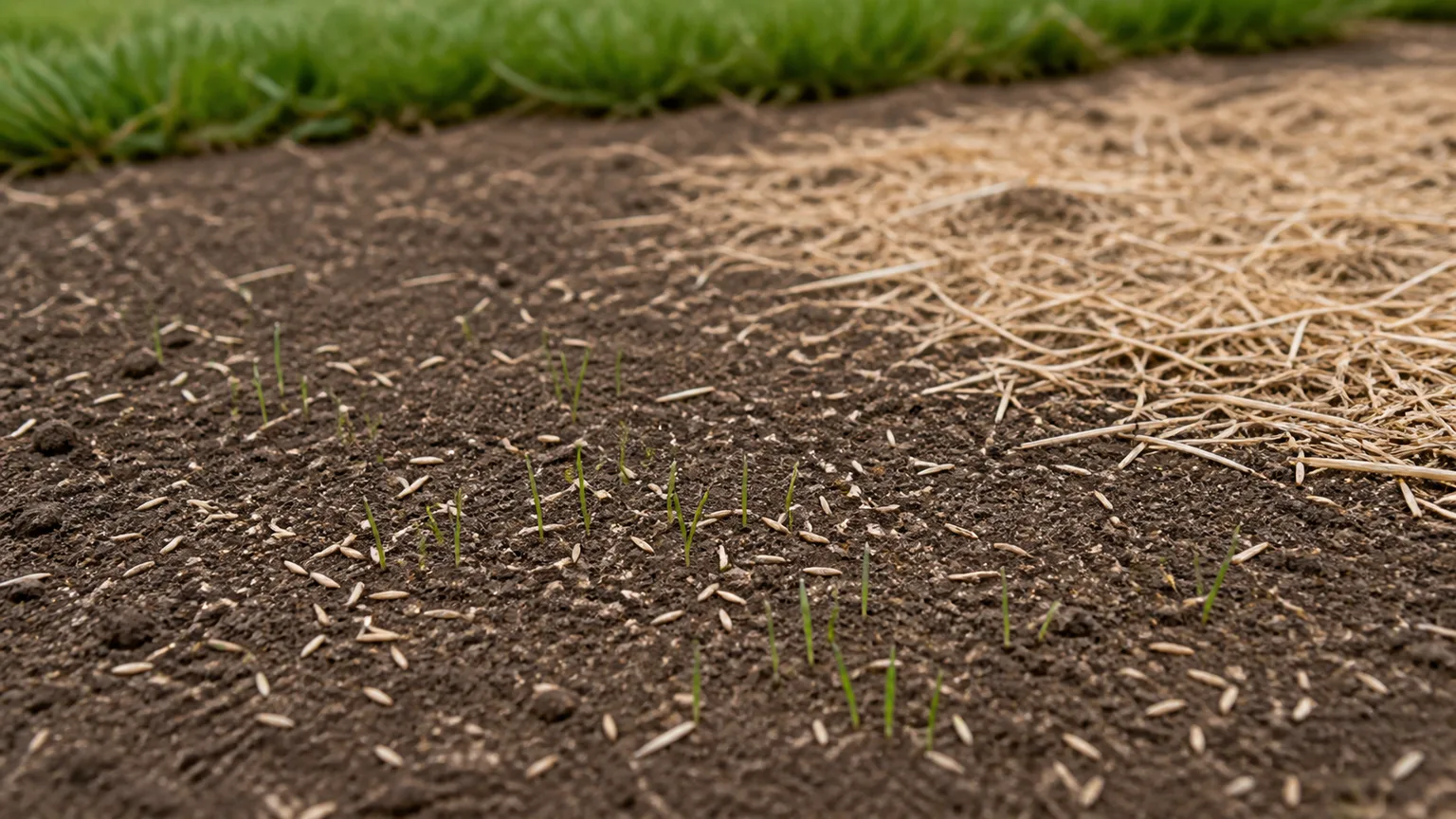
New seed needs steady moisture at the surface until it germinates and begins rooting. Keep the seedbed evenly damp, not flooded, and reduce watering frequency as roots deepen. A seedling cannot access the deeper soil moisture that gives established tall fescue some of its drought advantage.
Once established, water to wet the root zone rather than running a sprinkler briefly every day. Soil type, weather, mowing height, and rooting depth determine the interval; probe the soil or inspect the turf before irrigating. Fine fescue may need little supplemental water through a mild spring or fall, but extended summer drought can still thin it or push it into dormancy.
Mow according to active growth and the local recommendation for your cultivar. Purdue Extension gives a general home-lawn mowing range of 2.5 to 4 inches for fine fescues, notes that shaded turf benefits from a slightly higher cut, and advises against removing more than one-third of the leaf blade in one mowing. Its fertilizer guidance for established fine fescue is low to moderate—0.5 to 2 pounds of nitrogen per 1,000 square feet per year—with the majority applied in fall and no summer fertilization; those are region-specific extension figures, not a substitute for local soil-test advice (Purdue Extension).
Do not fertilize a weak lawn heavily to force faster growth. Excess nitrogen can produce lush leaves that need more mowing and may increase disease or weed problems in fine fescue. A soil test helps you distinguish an actual nutrient need from shade, compaction, poor drainage, or an unsuitable grass choice.
Read the bag before buying fescue seed
Check the label’s species and cultivar list, not just words such as “shade,” “drought,” or “premium.” For tall fescue, look for turf-type cultivars recommended for your region; generic pasture or utility seed may create a coarser, less uniform lawn. For fine fescue, see whether the blend names creeping red, Chewings, hard, sheep, or slender creeping red fescue and whether the proportions fit your goal.
Compare the pure seed percentages, germination rates, weed seed, inert matter, and coverage rate. A large bag can contain a smaller share of actual grass seed than you expect, while a cheap blend may include varieties that do not match your climate. Local extension trials or a state turfgrass recommendation can help you decide whether the cultivars are worth paying for.
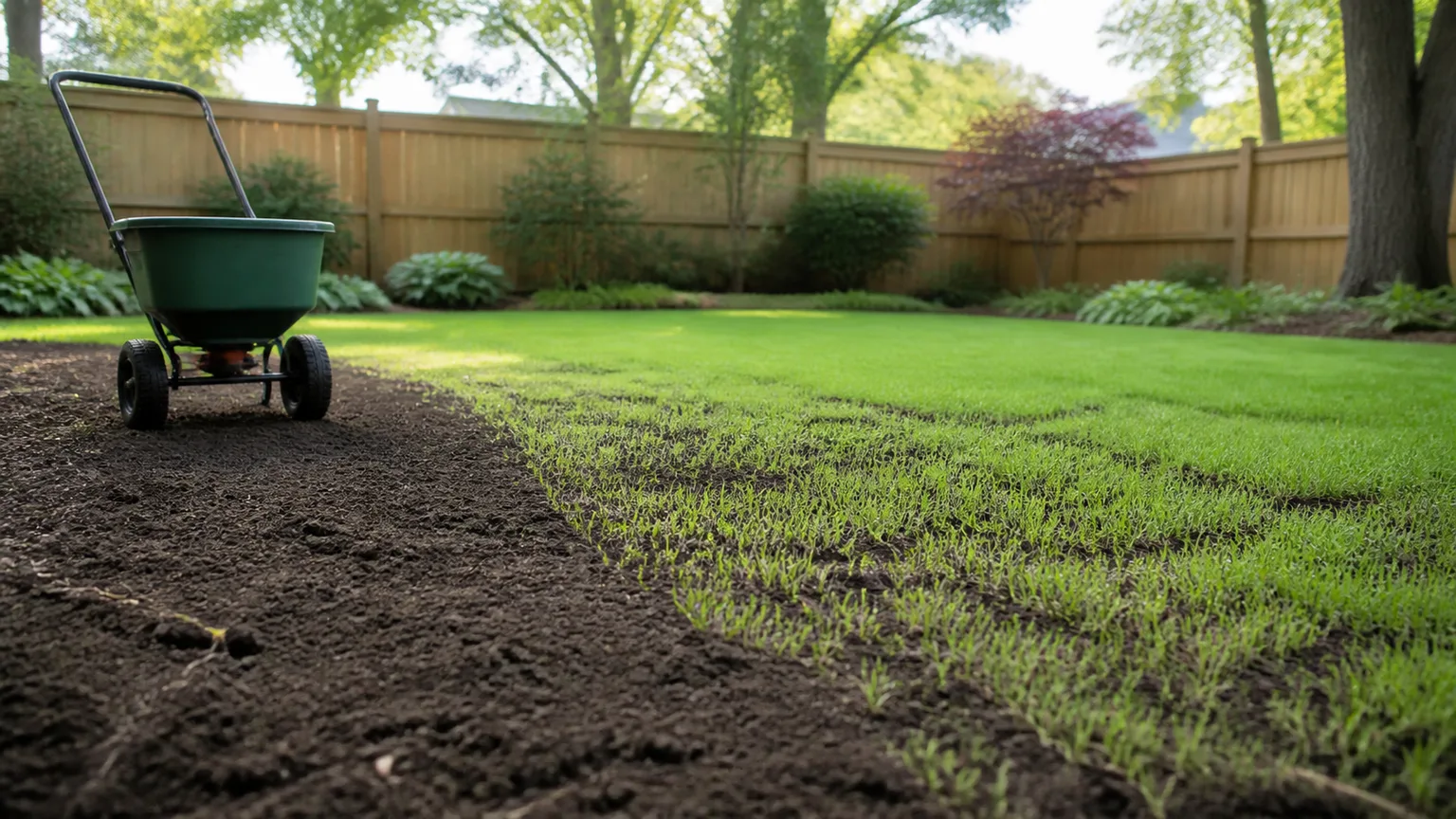
The timing of planting matters too. Cool-season fescues are generally established when temperatures favor cool-season growth and seedlings can root before heat stress. In many northern and transition areas that points toward late summer or early fall, but the ideal window shifts with latitude and elevation. If you are repairing an existing lawn, distinguish new-lawn seeding from overseeding and follow the package rate for the job.
Endophytes, pets, and livestock: what matters
An endophyte is a fungus that lives inside some grasses. In some tall-fescue varieties, the fungus can help the plant tolerate certain stresses or deter some insects, but endophyte status is a seed and cultivar trait—not a universal property of all fescue, and not a substitute for selecting grass that fits the site.
The endophyte discussion is especially important for forage. Penn State Extension explains that traditional endophyte-infected tall fescue can produce alkaloids toxic to grazing animals; endophyte-free and novel-endophyte varieties are used to reduce that livestock risk. For an ordinary ornamental lawn, this does not mean the grass is poisonous to people or that walking on it is unsafe. If you plan to feed clippings to livestock, do not assume lawn seed is suitable feed; identify the cultivar and get region-specific agricultural guidance (Penn State Extension).
When fescue is the wrong answer
Skip fescue—or use it only as part of a planned mix—when the lawn must recover rapidly from intense play, when the site is wet for long periods, or when summer heat is severe for cool-season turf. A fine-fescue lawn in particular can lose density under repeated traffic or sustained hot, wet conditions. A tall-fescue lawn can look uneven if it is mixed with very different grass textures and colors.
Deep shade is another boundary. If an area gets little direct light, has compacted or exposed roots, and repeatedly loses turf, another round of “shade seed” may only create a short-lived green flush. Penn State’s shaded-turf guidance describes how tree roots and canopy affect water, nutrients, and light together; if those constraints cannot be changed, a ground cover is a more honest long-term choice than repeated reseeding (Penn State Extension).
Ornamental blue fescue is different
Blue fescue is usually grown as a small ornamental clump for its blue-gray foliage, not as a uniform lawn. It belongs to the broader fescue naming world but is not interchangeable with turf-type tall fescue or a fine-fescue lawn mix. It looks best in a border, rock garden, or container where individual mounds can be seen and maintained as ornamental plants.
The practical check is simple: if a plant tag or seed packet describes a compact blue clump for accent planting, do not use it to seed a walkable lawn. Conversely, a lawn mix containing “fine fescue” is not a packet of blue fescue just because both names include fescue. Match the botanical or turf-use description to the job.
Conclusion
Fescue grass is a broad label for several grasses with different looks and uses. For a lawn, the main choice is usually turf-type tall fescue for a more durable, summer-resilient cool-season lawn or fine fescue for a finer-textured, lower-input site with partial shade and well-drained soil.
Before you buy, check the species and cultivar, compare them with local extension guidance, and be realistic about shade, drainage, traffic, and summer heat. If the conditions do not suit any grass, changing the landscape is often more successful than searching for a fescue that can overcome them.