9 Companion Flowers That Help Deter Garden Pests
Discover nine companion flowers for vegetable gardens, where to plant them, which pests they may influence, and why scouting still matters.
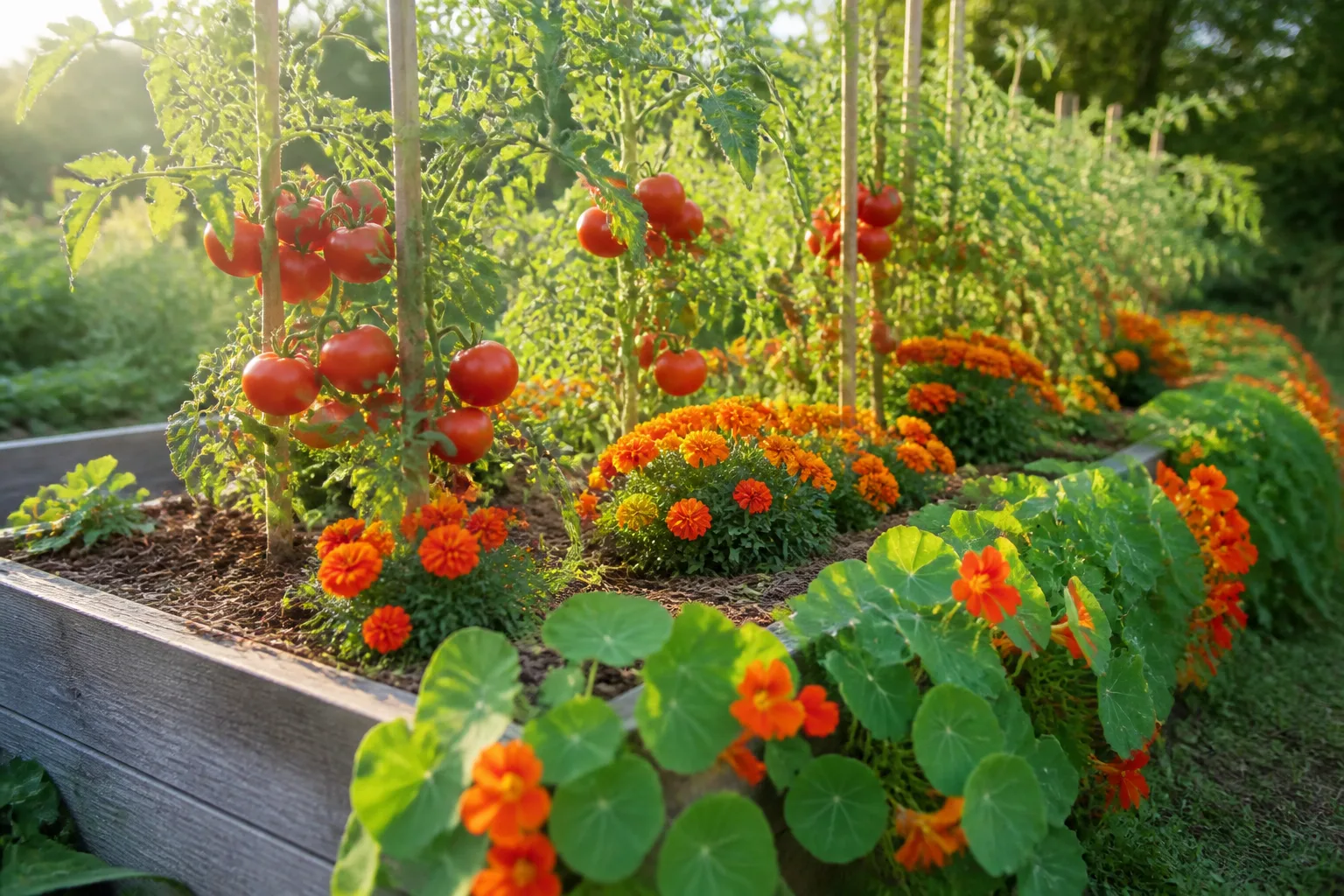
Companion flowers can make a vegetable garden harder for pests to find and more useful to the insects that hunt them. They are not a force field, though. A flower may provide nectar to hoverflies, create visual diversity around a crop, draw aphids onto a monitored trap plant, or repel one pest under particular conditions while doing almost nothing for another.
That distinction matters. If you want a garden with fewer damaging insects, choose flowers for a specific job, preserve the vegetables’ light and airflow, and keep scouting after the blooms open. The nine choices below cover direct evidence, beneficial-insect habitat, trap-crop potential, pollination, and native border value so you can build a plan that fits your bed instead of trusting a one-size-fits-all chart.
What companion flowers can actually do
In a practical sense, companion flowers are flowering plants grown near vegetables to create a useful relationship. The relationship might be ecological, such as supplying nectar for an adult hoverfly whose larvae eat aphids; physical, such as adding low foliage that breaks up a solid block of one crop; or behavioral, such as giving a pest another green surface to land on while it searches for its preferred host.
University extension guidance supports companion planting as a legitimate horticultural practice, but it also rejects the idea that every plant pairing has a predictable magical effect. Washington State University Extension describes benefits that include biodiversity, habitat for natural enemies, and disruption of pest feeding, while noting that plant relationships can be positive, negative, or neutral depending on the species and setting. Washington State University Extension’s evidence-based companion-planting guide is a useful corrective to the claim that a strong-smelling flower automatically repels every insect.
Flowers are often most valuable as insectary plants. They feed adult beneficial insects with nectar or pollen and give predators and parasitoids a reason to remain near the garden. Hoverfly larvae, lacewing larvae, lady beetle larvae, and parasitic wasps can all contribute to pest suppression, but they do not appear on demand just because one marigold is blooming. A longer, more diverse flowering window gives them a better chance of finding resources.
There is also a difference between a flower that attracts beneficials and a flower that attracts the pest. Nasturtiums are commonly used as a trap crop for aphids, for example. That can be useful only if you inspect the nasturtiums and remove or manage heavy infestations before the aphids spread into your beans, kale, or cucumbers.
Choose a flower by its job, not by folklore
Start with the problem you can observe. If the leaves are sticky and curled, look for aphids or whiteflies. If brassica leaves have holes, look for caterpillars and flea beetles. If squash seedlings are wilting or scarred, identify whether squash bugs, cucumber beetles, disease, or root stress is responsible. A flower cannot be selected intelligently until you know what it is supposed to change.
Then choose among four jobs. Use marigolds when you want to test a specific whitefly-related pairing with tomatoes. Use sweet alyssum, cosmos, chamomile, Queen Anne’s lace, or native perennials when your goal is to feed small beneficial insects. Use nasturtiums as a deliberate, monitored decoy. Use sunflowers, purple coneflower, and blanketflower to add structure and a longer season of pollinator and predator habitat around the productive bed.
The strongest plan often combines jobs rather than repeating one flower nine times. A small tomato bed might use French marigolds among the tomatoes, sweet alyssum along the front edge, and a taller flower on the north side. A brassica bed might use row cover over young plants, alyssum or chamomile outside the cover, and nasturtiums in a spot you can inspect every few days.
Nine companion flowers worth trying
The flowers below are not ranked as universal winners. Each one has a different use, a different amount of space it needs, and a different way it can fail. Select two or three that fit your crops and conditions, then record what happens for one growing season.
1. Marigolds for tomato whiteflies and bed diversity
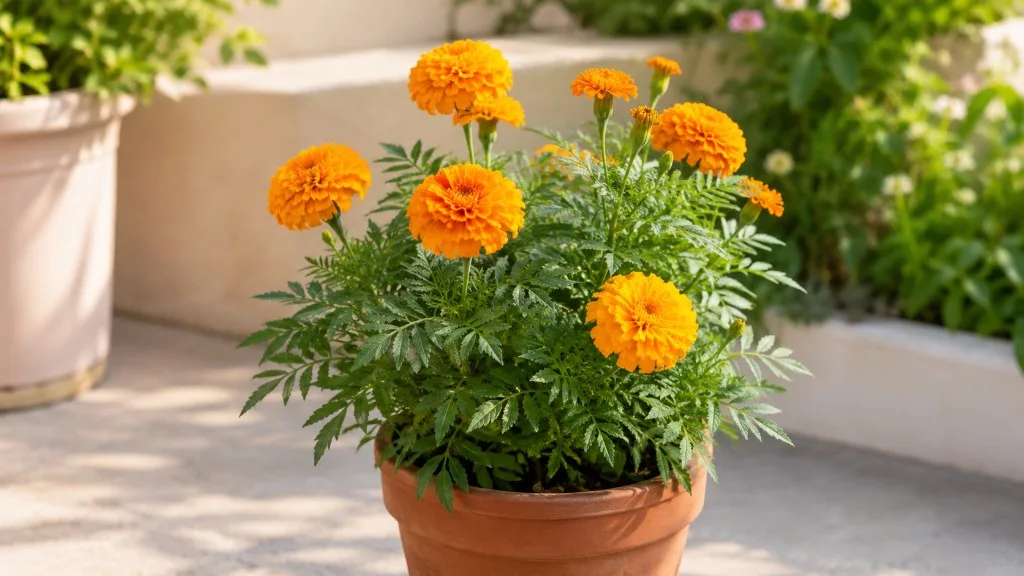
Marigolds are the classic companion flower because they are easy to start, flower through warm weather, and fit beside many vegetables. Their most useful evidence is more specific than the usual claim that they repel “bugs.” In protected tomato trials, French marigolds were associated with lower glasshouse whitefly pressure, and researchers identified airborne limonene from the marigolds as a likely repellent compound.
Newcastle University explains that the effect was tested by interspersing French marigolds through tomato plots and that adding marigolds after whiteflies had already built up was less effective. That gives you a practical rule: plant them early and distribute them through the crop rather than placing one pot at the far end of a bed after the infestation is established.
Keep the claim narrow. Marigolds are not a guaranteed answer for cabbage worms, squash bugs, or every aphid species. Washington State University Extension also notes that a repellent effect can have trade-offs: in one example, French marigolds discouraged a pest’s natural enemies as well as the pest. Choose French marigolds for an early tomato experiment, visual diversity, and easy flowers—not as permission to stop checking leaves.
2. Sweet alyssum for aphid-hunting hoverflies
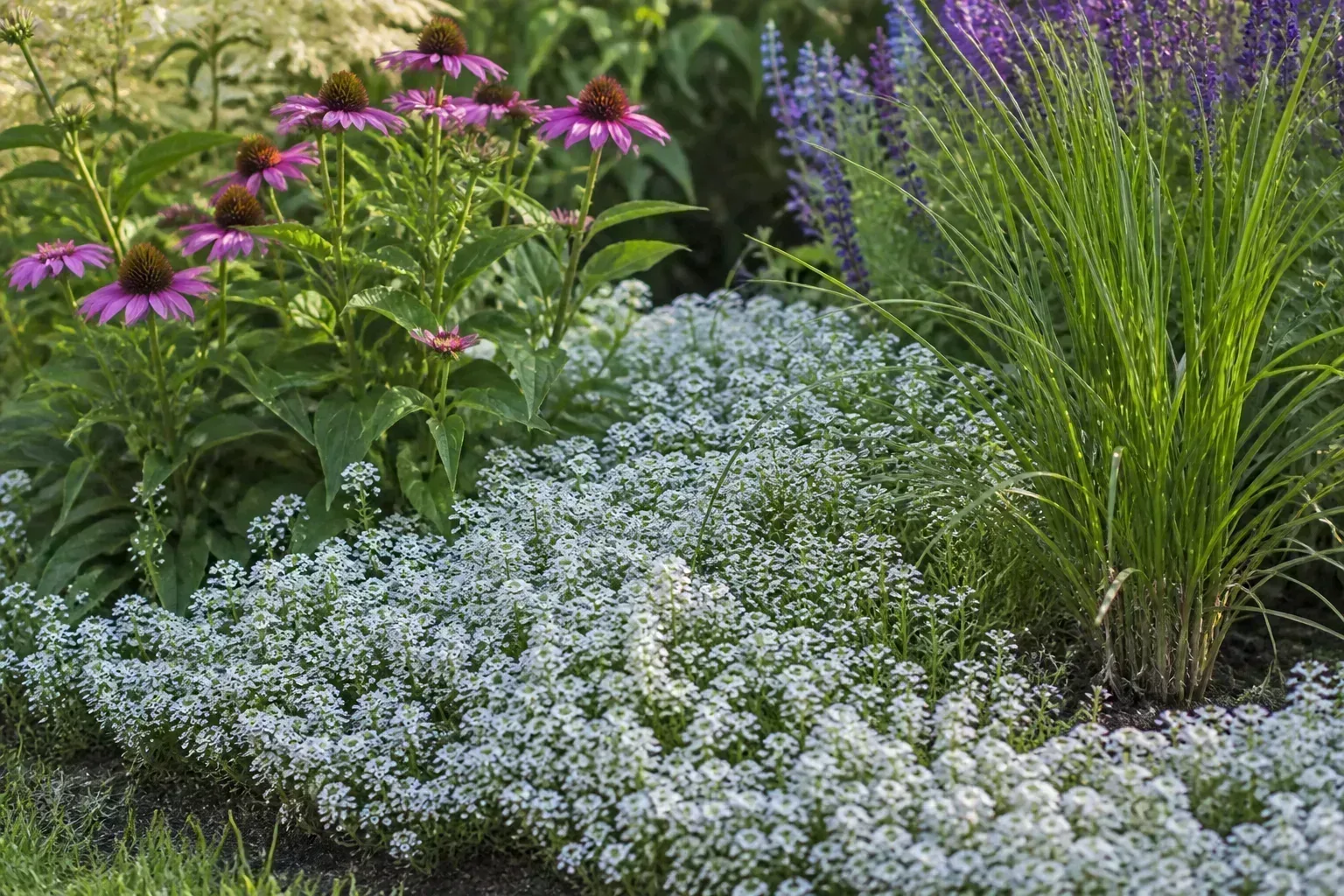
Sweet alyssum is one of the best small-space choices because its low mounds can flower for a long period without shading a vegetable canopy. Its tiny, accessible flowers are visited by small insects, including hoverflies. The adult flies feed at flowers, while the larvae of many hoverfly species hunt aphids.
The important limitation is that more hoverflies do not automatically equal fewer aphids. A field study in organic California lettuce tracked sweet alyssum strips and found that adult hoverflies responded quickly to changes in floral resources, but the short manipulation did not establish a clear reduction in aphid or larval numbers. The California lettuce hoverfly field study is a good reminder that insect behavior, weather, crop scale, and timing all affect results.
Plant alyssum along the sunny front or side of a bed, close enough for beneficial insects to move into the crop but far enough to preserve the vegetable spacing. It pairs naturally with lettuce, brassicas, peppers, and young tomatoes. If it becomes woody or stops blooming in heat, shear it lightly and water according to the plant’s needs; a stressed, dormant alyssum patch cannot provide much nectar.
3. Nasturtiums as a monitored trap crop
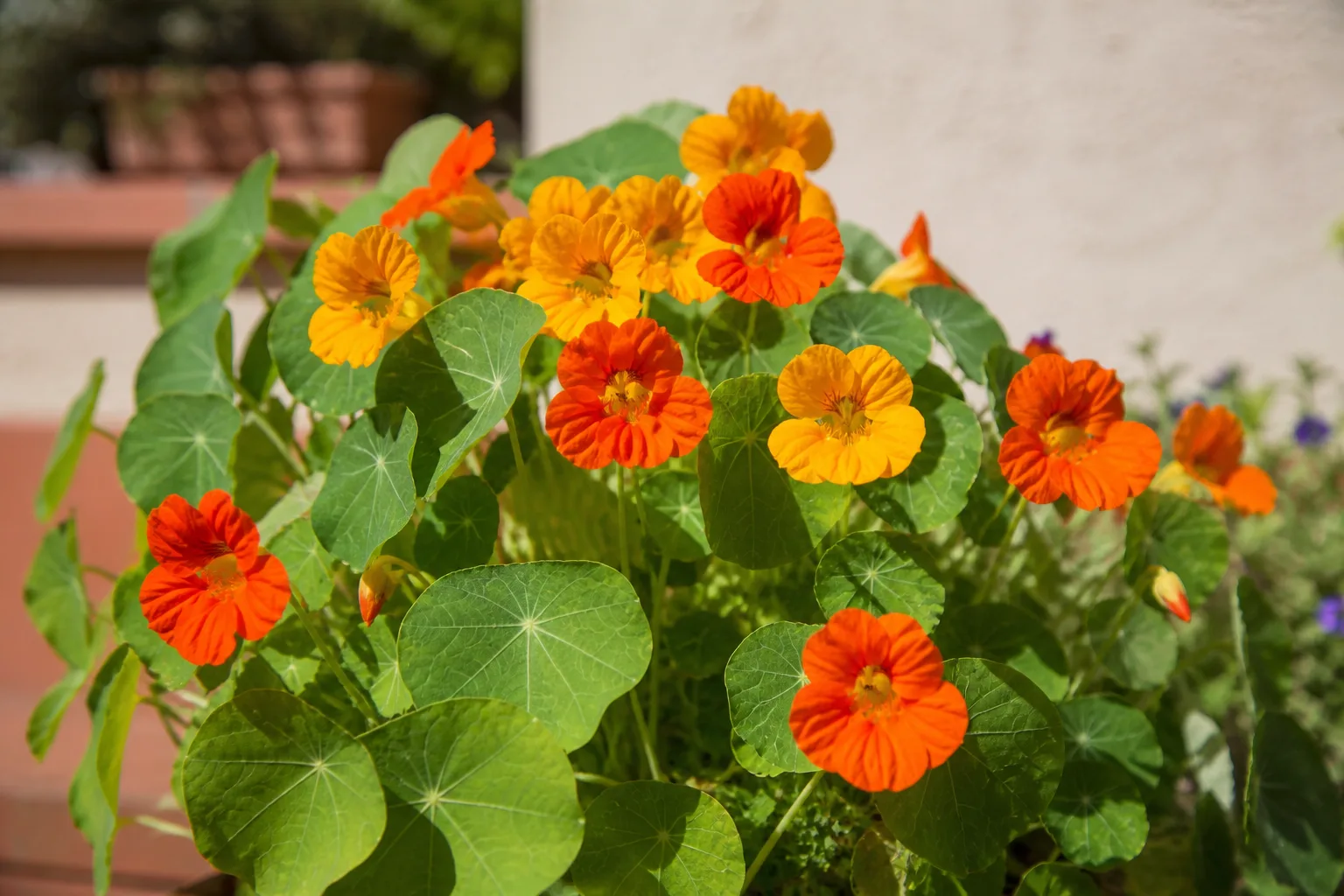
Nasturtiums earn their place through a different strategy. Their rounded leaves and bright flowers can draw aphids and some chewing insects away from a more valuable crop, making them a trap crop rather than a simple repellent. Their flowers and young leaves are edible, and their trailing habit can cover bare soil at the edge of a bed.
That “sacrificial” role is useful only if you are willing to sacrifice or manage the plant. Inspect the nasturtium twice a week when aphids are active. Pinch off infested tips, remove a badly covered plant, or use a control suited to the pest and crop rather than allowing a dense colony to mature beside beans or kale.
Put nasturtiums at the outside edge of squash, cucumber, melon, or brassica beds, and direct the vines away from the crop. Avoid burying a small seedling beneath a wall of nasturtium foliage. The West Virginia University Extension companion-planting guide includes nasturtiums among possible companions for cabbage-family crops, cucumbers, and squash, but its larger point is the one to keep: companion planting is not an exact science, and results vary by place.
4. Cosmos for a long bloom window
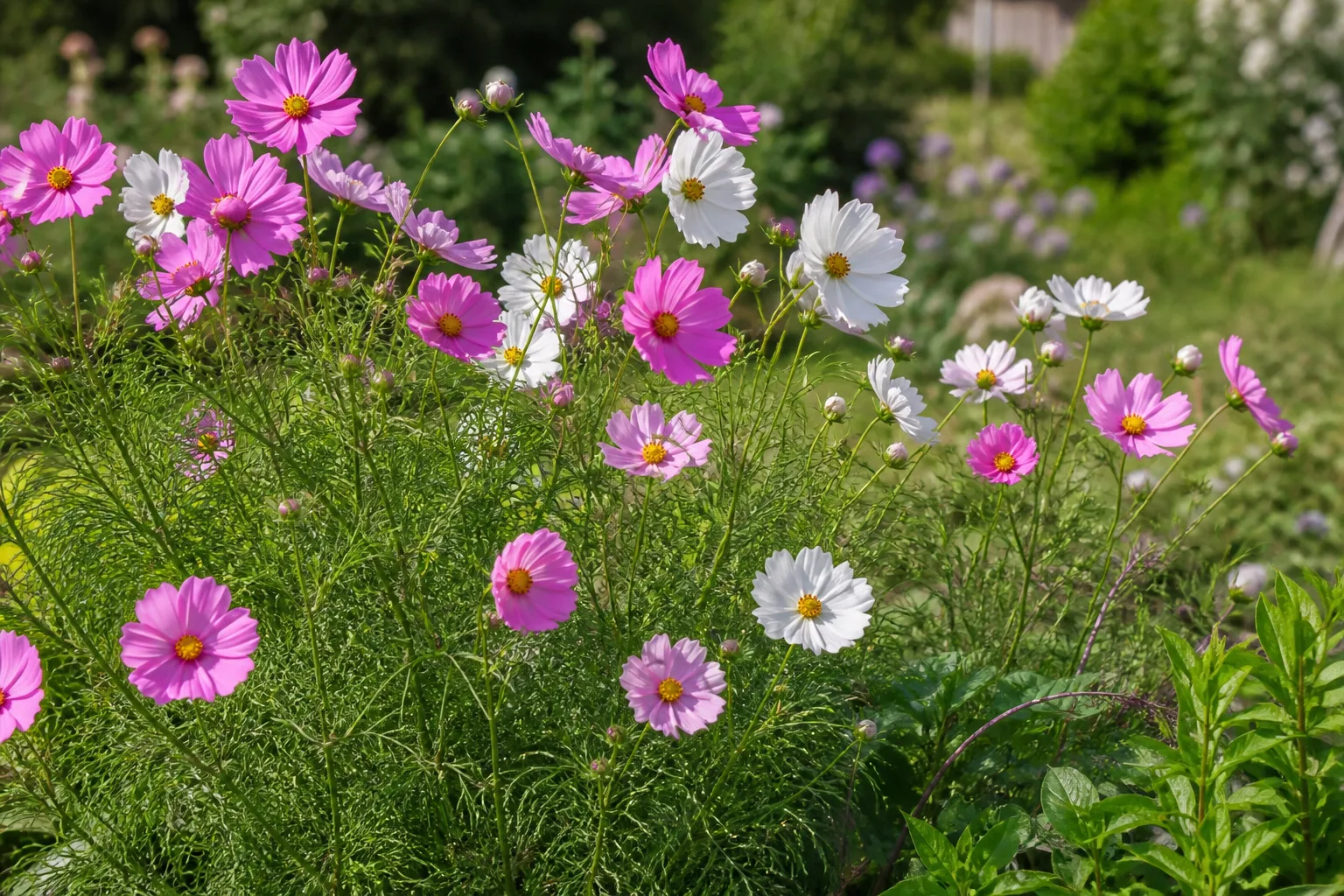
Cosmos provide airy foliage, open flowers, and a long warm-season bloom period with relatively little fuss. Their daisy-like flower structure lets many bees, hoverflies, and other insects reach the center, so cosmos are useful when your main goal is a steady supply of floral resources near fruiting vegetables.
They do not have a strong case as a direct pest repellent, and they should not be sold as one. Their contribution is indirect: a bed with flowers, herbs, and different leaf shapes is a more varied habitat than a single uninterrupted block of tomatoes or beans. The Old Farmer’s Almanac describes this diversity approach as a way to support beneficial insects and make it harder for some pests to locate their host plants, while also warning gardeners that traditional pairings can fail or even increase pest numbers.
Cosmos can become tall and floppy in fertile soil. Plant them at the back or on the side that will not shade vegetables, stake them before they lean into the crop, and remove some spent blooms if self-seeding would overwhelm a narrow bed. They work well beside tomatoes, peppers, cucumbers, and cut-flower edges where their height is an asset rather than a liability.
5. Sunflowers for height and pollinator traffic
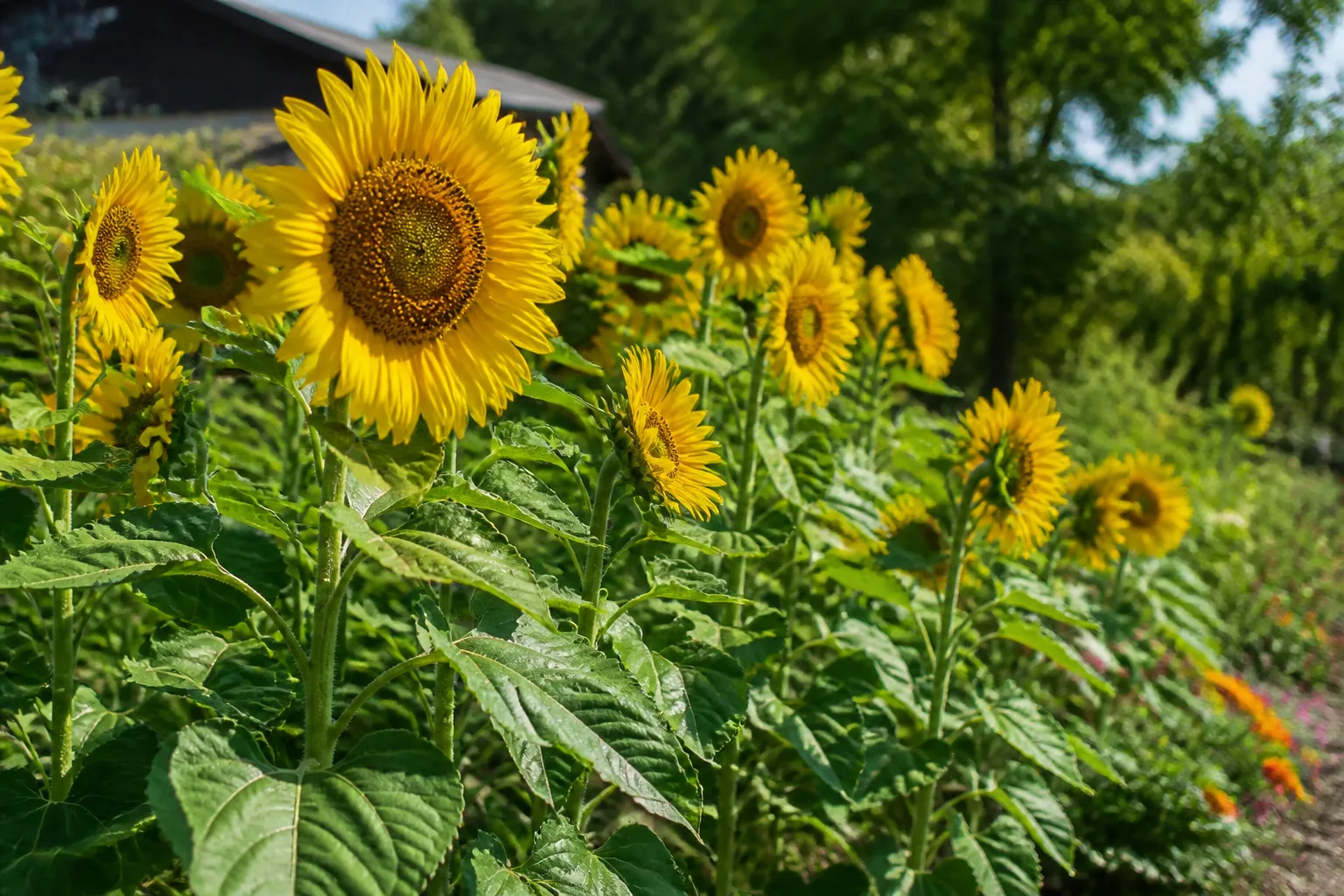
Sunflowers are best understood as structural companions. Their large blooms draw bees and other visitors, and their height can add a visible pollinator landmark to a vegetable garden. They can also support a vertical design when planted where they will not steal light from the crop.
Plant them on the north side of a bed in the Northern Hemisphere, or use the seasonal sun angle in your location to decide where their shadow will fall. A sunflower that shades peppers all afternoon is not helping just because bees visit it. Give the roots room, keep stems out of a narrow path, and stake varieties that are exposed to wind.
Sunflowers can also attract birds, which may be welcome or may create a problem if you are protecting ripening tomatoes and seed crops. Treat them as a pollinator and habitat feature, not a bug spray. Their greatest value is often outside the vegetable rows, where they add height and bloom without competing with a low crop.
6. Purple coneflower for a native perennial edge
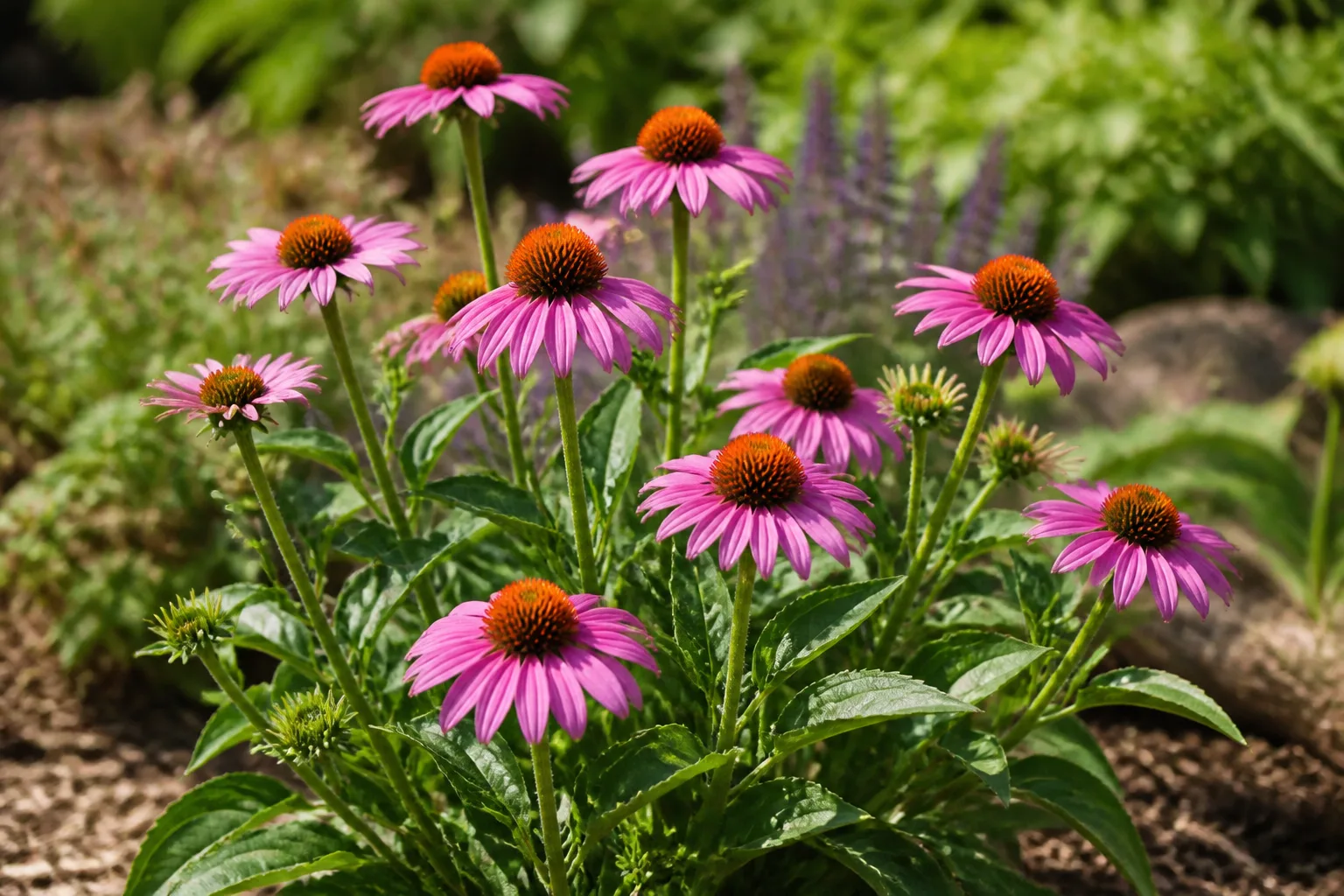
Purple coneflower, or Echinacea purpurea, is a durable perennial for a sunny border. Its broad flower heads provide a seasonal resource for bees and butterflies, and the sturdy stems and seed heads add habitat after flowering. Because it returns, it can become part of the garden’s long-term structure rather than something you must sow every spring.
That permanence is also the reason to plant it at the edge, not in the middle of a rotating vegetable block. Purple coneflower is not a rapid aphid-control treatment, and a newly planted clump may take time to settle. Use it to build continuity around the bed, especially if annual flowers disappear between vegetable successions.
Choose a site with good drainage and enough mature width for the cultivar. Leave a clear inspection path between the perennial border and the vegetables so fallen stems, weeds, and volunteer seedlings do not create a hidden, humid strip. A perennial edge is useful only when you can still reach the crops.
7. Blanketflower for a sunny, dry border
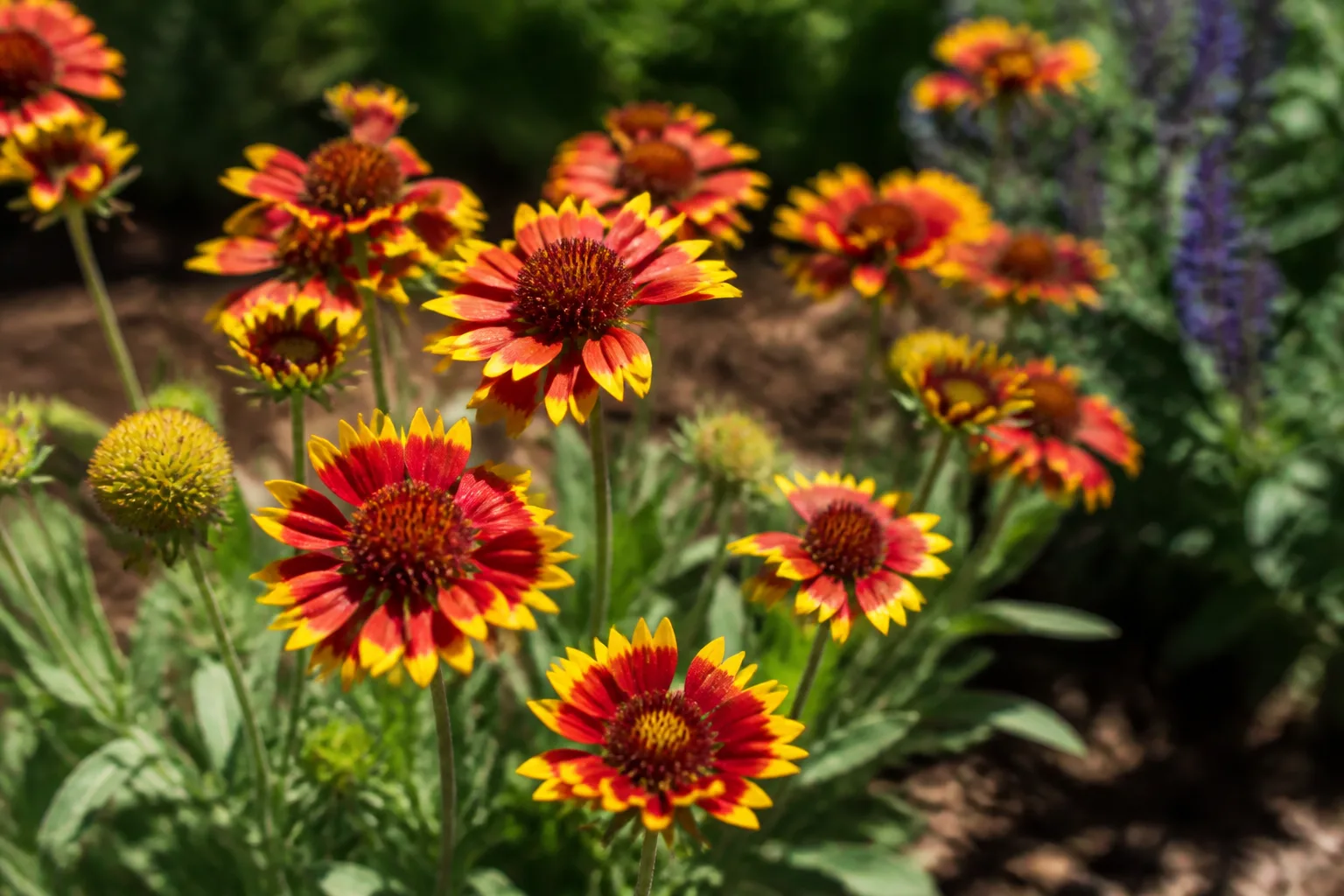
Blanketflower, or Gaillardia, brings bright daisy-like blooms to hot, sunny borders and can tolerate drier conditions once established. Its open flowers can support visiting pollinators, and its long flowering season makes it a practical companion near vegetables that occupy the bed through summer.
Use blanketflower where it will not be overwatered for the sake of thirsty cucumbers or lettuce. Different water needs are a real companion-planting conflict: a plant adapted to a dry edge can decline in a wet vegetable bed, while the gardener may compensate by watering the whole area too often. Put it just beyond the vegetable bed’s high-moisture zone when necessary.
Give it room to spread or form a clump, and divide or thin it if it begins to crowd annual crops. It is a better border plant than a filler tucked into every gap. The flowers can increase garden diversity, but they cannot compensate for poor drainage, weed competition, or a pest that is already damaging vegetables faster than natural enemies can respond.
8. Queen Anne’s lace for small beneficial insects
Queen Anne’s lace has flat, umbrella-shaped flower clusters that make nectar easier for many small insects to reach. Plants in the carrot family can be especially valuable around a vegetable garden because tiny parasitoid wasps and other beneficial insects can use their flowers even when larger blooms are less accessible.
This choice needs more caution than an annual marigold. Queen Anne’s lace can be invasive or weedy in some regions, and its leaves can be confused with poisonous relatives such as poison hemlock. Do not collect roadside umbels for a food garden. Use a correctly identified, legally permitted cultivated form or choose a locally native, non-invasive alternative with similar open flower clusters.
Plant it in a managed strip or at the north edge of a bed if the plants are tall. Deadhead before seed dispersal if local conditions make it spread aggressively. Its job is to provide floral access for beneficial insects, not to create a permanent thicket that competes with carrots, beans, or greens.
9. Chamomile for a low, open-flowered edge
Chamomile combines a low habit with small, open flowers and a useful herb harvest. The blooms can provide nectar to hoverflies and other small visitors, and the plant fits beside low herbs, greens, and the outer edge of beds better than a tall flower does.
Keep chamomile from becoming a damp mat around the vegetable stems. It can spread across open soil, and dense foliage makes it harder to see slugs, aphids, or disease lesions. A narrow edging row with enough room to reach the crop is more useful than a thick underplanting that hides the soil.
Chamomile works well where you want a gentle transition between a vegetable bed and a path. Pair it with a taller flower elsewhere if your goal is a continuous bloom sequence. Its contribution is habitat and diversity, not a reliable chemical barrier against a named pest.
Place flowers so they help instead of compete
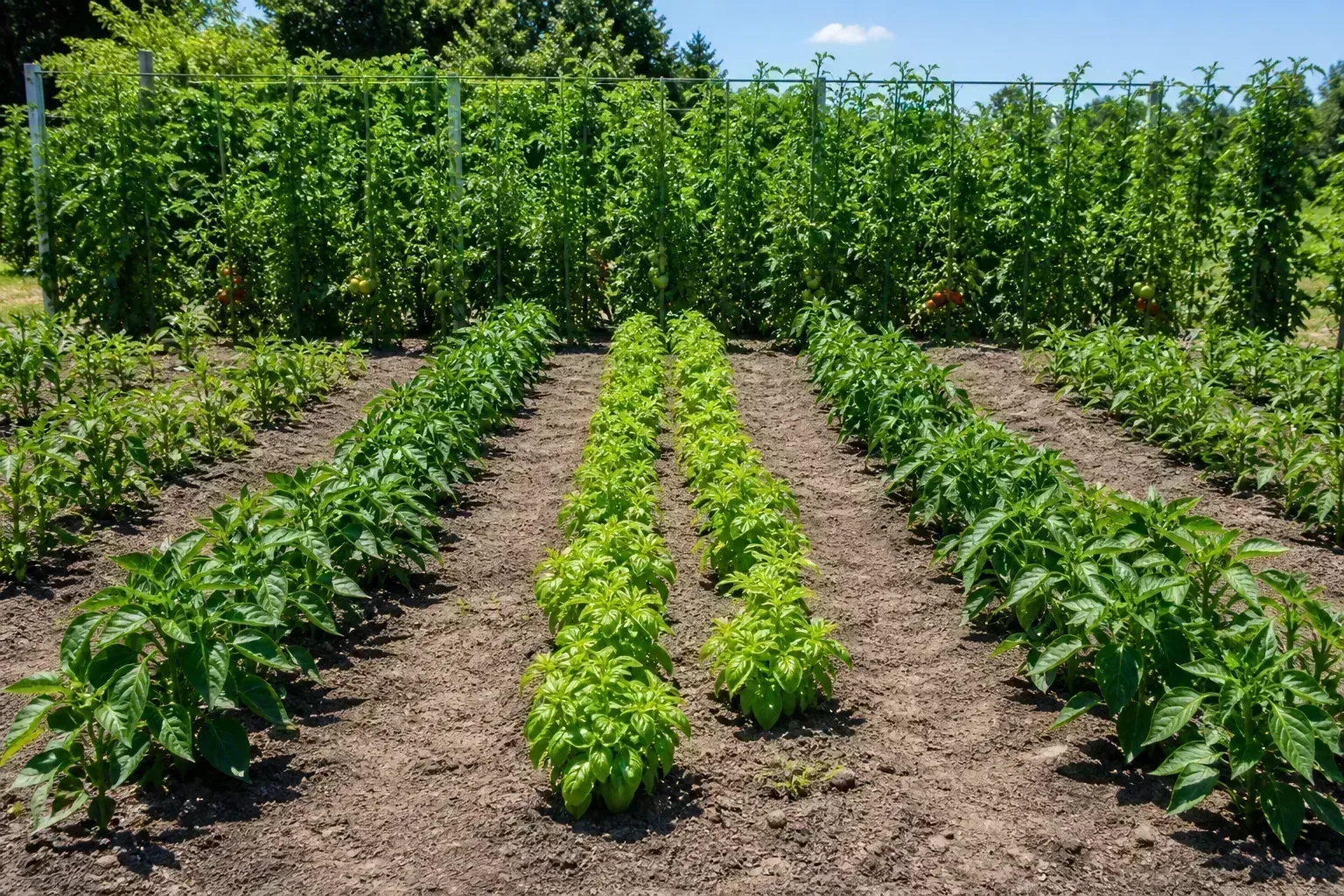
Put the vegetable crop first. Establish the crop’s mature spacing, root room, trellis, and path access before adding flowers. If a flower can fit only by forcing tomatoes closer together, blocking airflow around cucumbers, or placing a perennial inside a rotation area, it is the wrong flower for that location.
For low companions such as sweet alyssum and chamomile, use the sunny border or a few repeated pockets along the outside of the bed. For a trap crop such as nasturtium, choose a location you will pass often enough to inspect. For tall flowers such as sunflowers and cosmos, use the north edge in the Northern Hemisphere or another position that keeps the most productive vegetable leaves in sun.
Proximity matters, but closer is not always better. West Virginia University Extension suggests that positive companion relationships are generally placed within a few rows, while also emphasizing that crops grown in large, uniform blocks can be more vulnerable to pest buildup. Burpee makes a similar case for mixing flowers and herbs through vegetable plantings rather than treating a bed as one continuous crop. In a home garden, start with flowers within easy reach of the crop rather than at a distant ornamental border, then preserve each plant’s full mature width.
Do not let a flower’s mature size surprise you. Borage, sunflowers, cosmos, blanketflower, and vigorous nasturtiums can take much more room than a seed packet’s young plants suggest. Mark the future width on your bed plan, keep a clear path for scouting, and thin volunteers before they become a humid wall.
Match companion flowers to the pest pattern
The most useful flower plan is not “one marigold per tomato.” It is a response to the pest’s life stage, feeding location, and timing. Use flowers to improve the surrounding system, then use a direct tactic when the pest is already causing unacceptable damage.
Aphids and whiteflies
Aphids cluster on new growth and leaf undersides, while whiteflies take flight when foliage is disturbed and often remain on protected leaf surfaces. For aphids, start with sweet alyssum, chamomile, cosmos, or an open-flowered border that can feed hoverflies and parasitoid wasps. Nasturtiums can be a useful decoy if you inspect them closely instead of treating their infestation as success by itself.
For tomato whiteflies, French marigolds are the most defensible direct experiment in this list because of the tomato research on limonene. Plant them before pressure builds, distribute them near the crop, and check whether whiteflies actually decline. If they do not, wash small colonies from leaves, remove heavily infested material where practical, improve airflow, and use a control labeled for the crop and pest if the damage justifies it.
Avoid broad-spectrum sprays over blooming flowers. They can remove the predators and pollinators you planted the flowers to support. When a treatment is necessary, identify the pest, read the product label, protect open blooms, and apply only as directed.
Cabbage worms and flea beetles
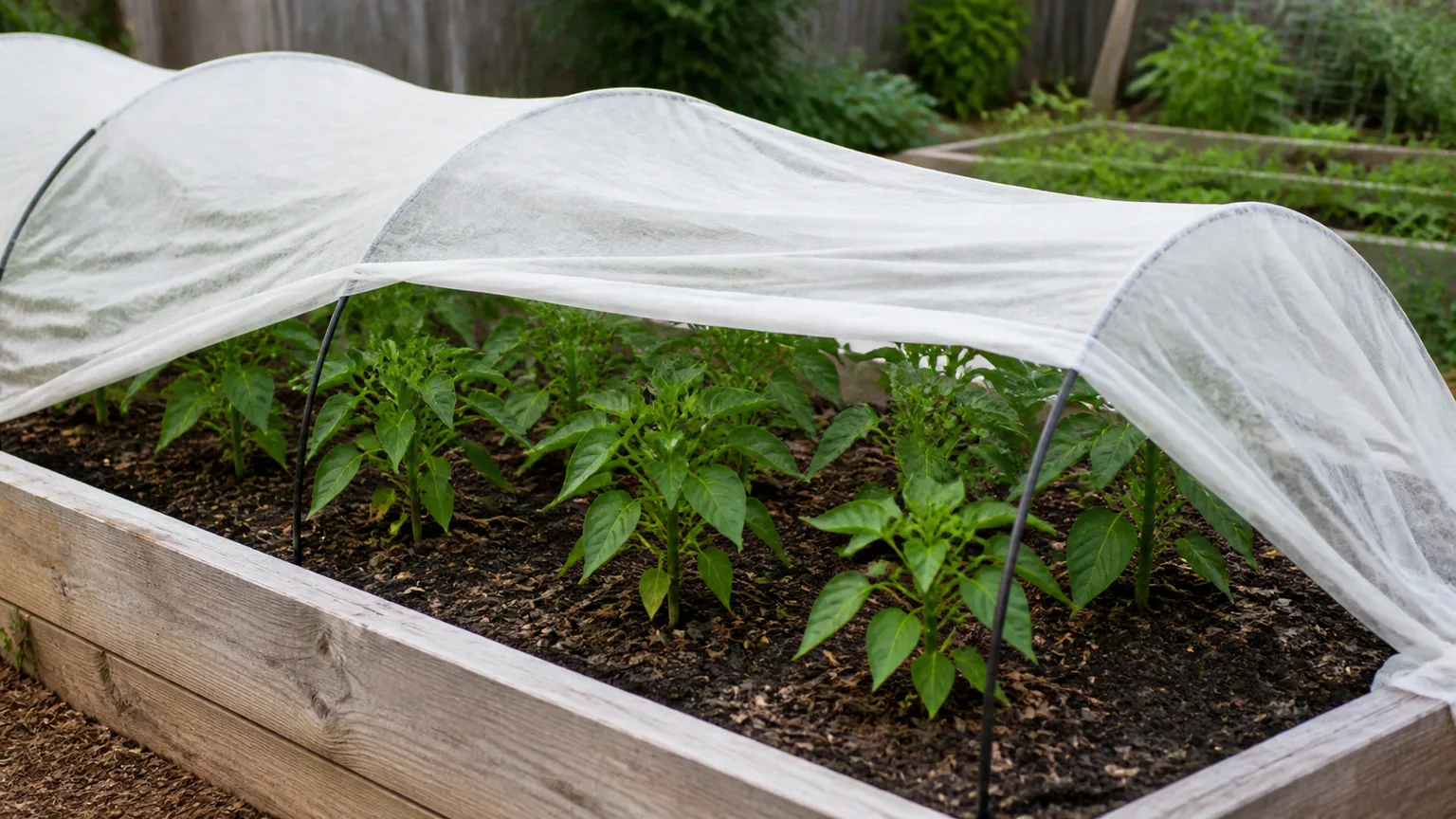
Brassicas are often damaged by caterpillars even in a flower-rich garden. Sweet alyssum, chamomile, Queen Anne’s lace, cosmos, and marigolds can increase floral diversity or offer resources to beneficial insects, but none of them reliably keeps cabbage worms from laying eggs on kale or broccoli.
Use row cover over young brassicas when the target pest is excluded by the fabric, then remove or manage it according to the crop’s pollination needs. Inspect undersides of leaves, hand-pick caterpillars, and look for holes that are increasing rather than waiting for a companion flower to solve the problem. A flower edge is support for the system; row cover and scouting are direct protection.
Flea beetles are similarly difficult because they jump and feed quickly on small seedlings. Put flowers outside the bed if space allows, keep seedlings growing vigorously, and use a physical barrier when damage is severe. Do not overcrowd a brassica bed with tall companions that reduce airflow or make the tiny beetles harder to see.
Squash bugs and cucumber beetles
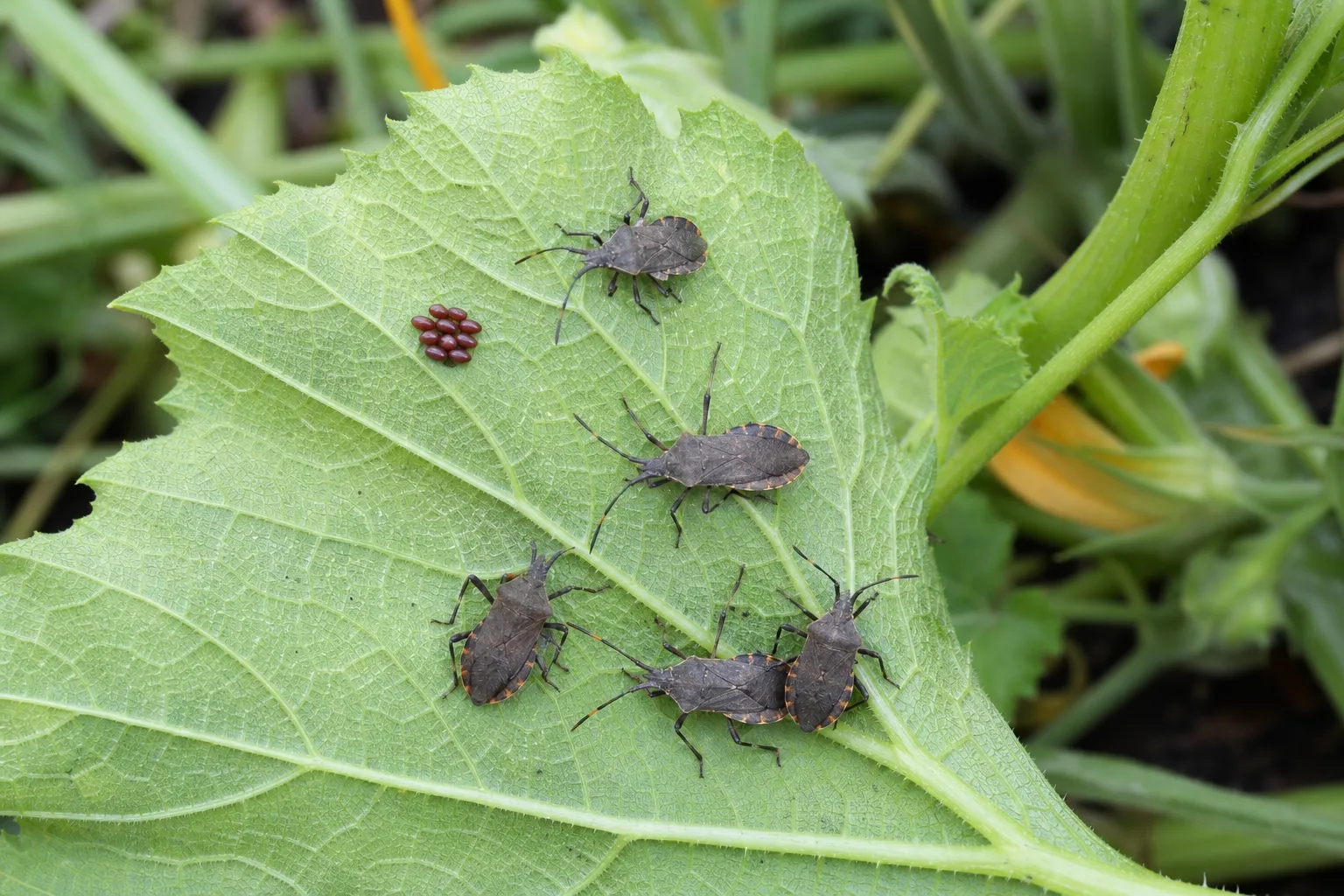
Cucumbers, squash, and melons need pollinators for good fruit set, so flowers can be valuable even when they do not repel the pest. Sunflowers, cosmos, borage-like open resources, chamomile, and nasturtiums can bring more insect activity to the garden, while nasturtiums may serve as a monitored edge trap in some beds.
Keep the vines from swallowing the flowers or vice versa. Direct nasturtium stems away from the crown, place tall flowers where they will not shade the cucurbit leaves, and leave enough soil access to inspect stems for squash bug eggs and adults. Hand removal, board traps, row cover while plants are young, and crop sanitation may do more for the harvest than adding a fourth flower.
If cucumber beetles are spreading bacterial wilt or the plant is collapsing, do not wait for a flower-based remedy. Remove severely affected plants, protect replacements with an appropriate barrier, and ask a local Extension office about the pest and disease timing in your area. Companion planting is a preventative layer, not emergency care for a failing vine.
Build flowers into an integrated pest-management plan
Integrated pest management, or IPM, keeps companion flowers in their proper place. The plan begins with prevention and identification, uses the least disruptive effective tactic, and escalates when damage or risk warrants it. Flowers are most useful as one layer in that sequence.
- Identify the pest before choosing the flower. Photograph the insect or damage, inspect leaf undersides, and distinguish chewing, sucking, disease, and wildlife damage. A marigold cannot correct a fungal wilt, and a nasturtium trap crop is irrelevant to slugs.
- Plant before the pressure peaks. Flowers need time to establish and bloom. The tomato-marigold whitefly research is a good example of why waiting for a large infestation reduces the value of a companion.
- Preserve the crop’s conditions. Keep the recommended vegetable spacing, direct tall growth away from the sun, match water needs, and leave a path for inspection. A crowded flower bed can increase humidity and hide pests.
- Create a continuous, not just decorative, bloom window. Combine a low annual with a perennial edge or stagger sowing dates so beneficial insects have resources across the season. Choose locally appropriate plants rather than importing a potentially invasive flower.
- Scout at least weekly, and more often for trap crops. Look for pest numbers, predator numbers, fresh damage, and flower crowding. Record what you see instead of assuming that an attractive bed is a successful pest-control bed.
- Use direct controls when the threshold is reached. Hand-pick, wash off aphids, remove diseased material, use row cover, improve sanitation, or apply a labeled product according to its instructions. Protect open blooms and avoid broad treatments that erase beneficial insects.
- Review the result at season’s end. Keep flowers that improved access, pollination, bloom continuity, or observable pest pressure. Move or remove flowers that shaded crops, spread aggressively, consumed too much water, or hosted pests without a manageable benefit.
Washington State University Extension emphasizes that companion planting can have unexpected outcomes, including helping one beneficial insect while interfering with another. The West Virginia University guidance likewise recommends treating companion charts as a starting point and recording which combinations succeed or fail in your own location. That is a stronger habit than defending a flower pairing that your garden is clearly disproving.
For a compact plan, choose one flower for each of three roles: French marigold for a specific tomato-whitefly test, sweet alyssum or chamomile for low beneficial-insect habitat, and nasturtium as a monitored decoy where aphids are a recurring problem. Add a tall or perennial border flower only when the bed has room. This keeps the experiment manageable and makes it easier to see whether the flowers are earning their space.
Conclusion
The best companion flowers are not the ones with the boldest promise. They are the ones that fit your crop’s spacing, bloom when beneficial insects need them, solve a clearly defined garden problem, and remain easy to inspect. French marigolds have a useful tomato-whitefly example; sweet alyssum and chamomile support a low insectary edge; nasturtiums can draw pests onto a plant you are prepared to manage; and cosmos, sunflowers, purple coneflower, blanketflower, and Queen Anne’s lace add different kinds of floral structure and habitat.
Plant a few flowers early, place them close enough to matter but far enough to preserve light and airflow, and watch the actual insects rather than trusting a chart. When pests still cause damage, pair the flowers with identification, barriers, hand removal, sanitation, crop rotation, and labeled controls. That layered approach gives your vegetable garden the best chance of becoming both more beautiful and more resilient.