Front Yard Landscaping Ideas With Rocks and Mulch
Front yard landscaping ideas with rocks and mulch—rock types, mulch colors, ground prep, and 28 curb-appeal layouts for slopes, small yards, and dry climates.
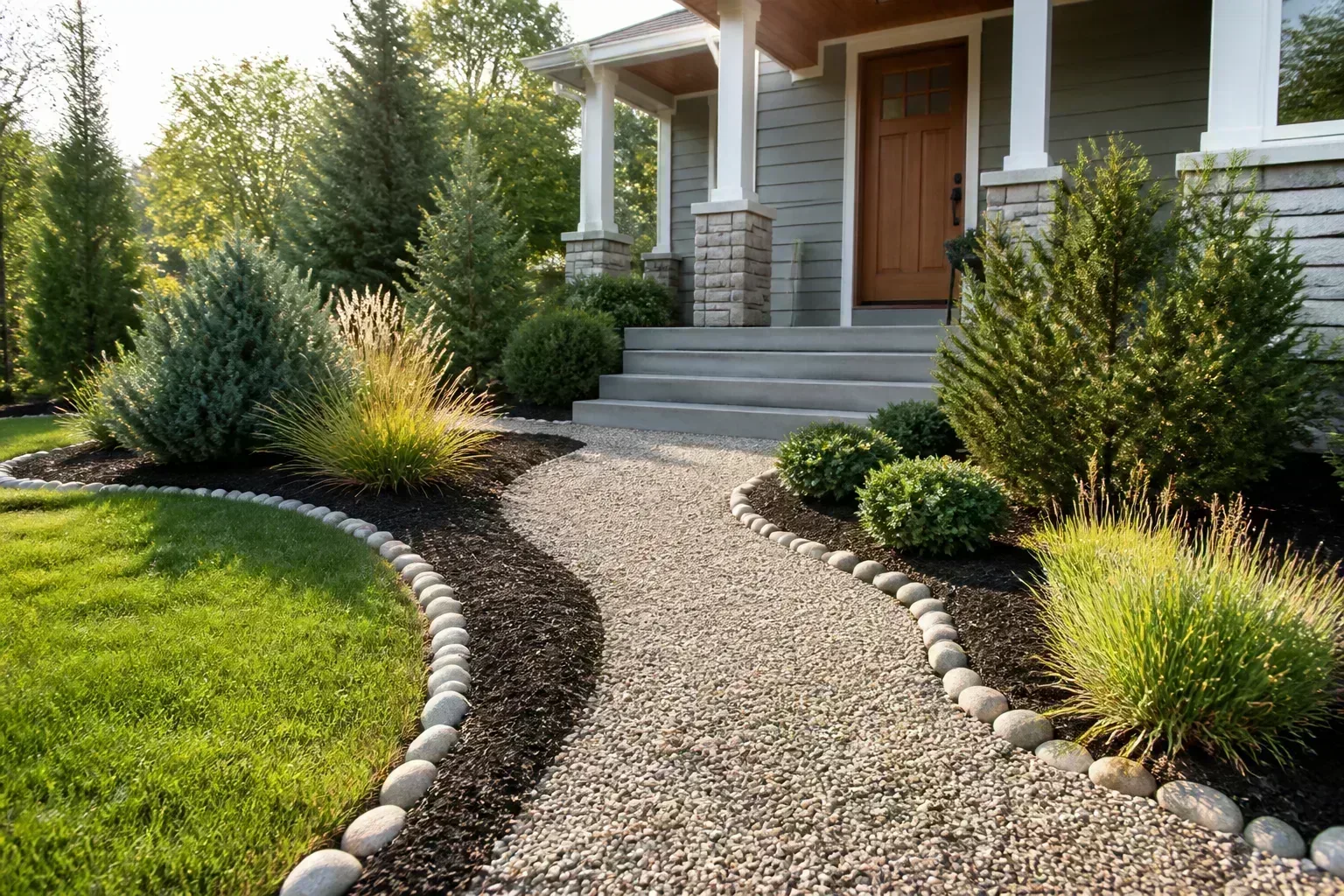
Rocks and mulch are two of the fastest ways to make a front yard look finished without installing a full hardscape budget. Used well, they control weeds, sharpen edges, improve drainage, and give you a neutral backdrop for shrubs, grasses, and the occasional flowering perennial. Used without a plan, they create hot, weedy beds, gravel that migrates into lawn, and mulch volcanoes that slowly damage the trees you meant to protect.
The ideas below cover 28 front yard layouts you can build around rock and mulch—from boulder-accented slopes to minimalist gravel yards and red-mulch borders—but they only work if you match material to site conditions first. Read the planning sections, then borrow the layouts that fit your sun, slope, and maintenance budget.
Start With the Job Rocks and Mulch Need to Do
Before you pick a color, decide what each zone in the front yard must handle. Rocks excel where you need permanence: paths, driveway strips, dry borders, erosion control on grade, and fire-safe zones around outdoor flame features. Mulch excels where you want soil improvement, moisture retention, and a softer visual frame around plants.
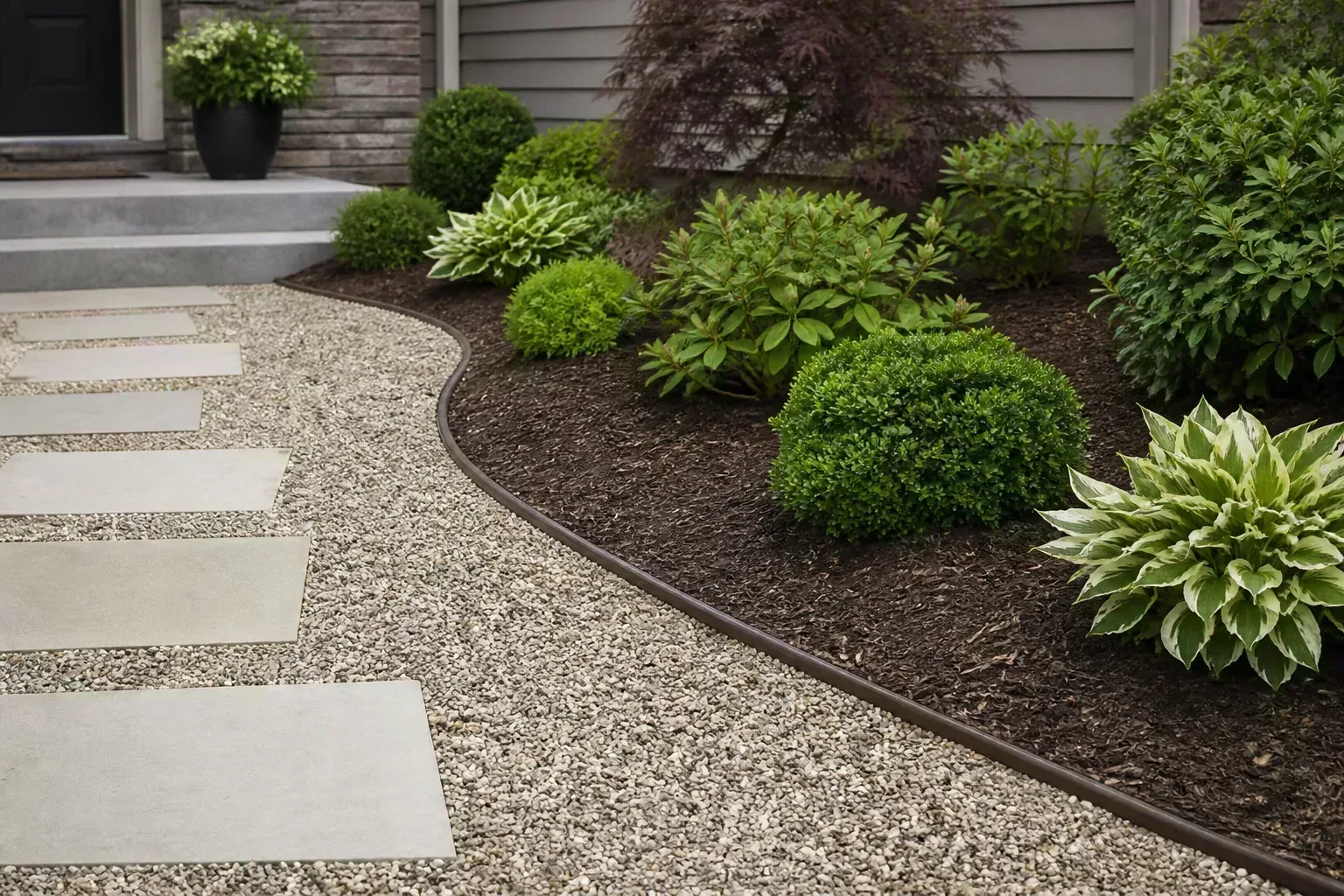
A strong front yard usually uses both on purpose. Pea gravel might carry foot traffic along a walk, while shredded bark mulch feeds foundation shrubs. Large boulders might hold a slope, while dark mulch makes evergreen foliage read cleaner from the street. If every surface is rock, the yard can look harsh and run hot in summer. If every surface is mulch, you refresh material every year and still fight weeds along edges.
Write two lists on paper: hard zones (paths, parking edges, utility strips) and plant zones (beds, tree rings, shrub borders). That split keeps you from putting walkable gravel in a bed or fluffy mulch where tires compress it.
Audit Your Front Yard Before You Buy Materials
Fifteen minutes of observation beats fifteen bags of the wrong stone. Walk the front yard at mid-morning and late afternoon. Note where sun bakes pavement, where roof runoff pools, and where dogs or delivery drivers cut corners.
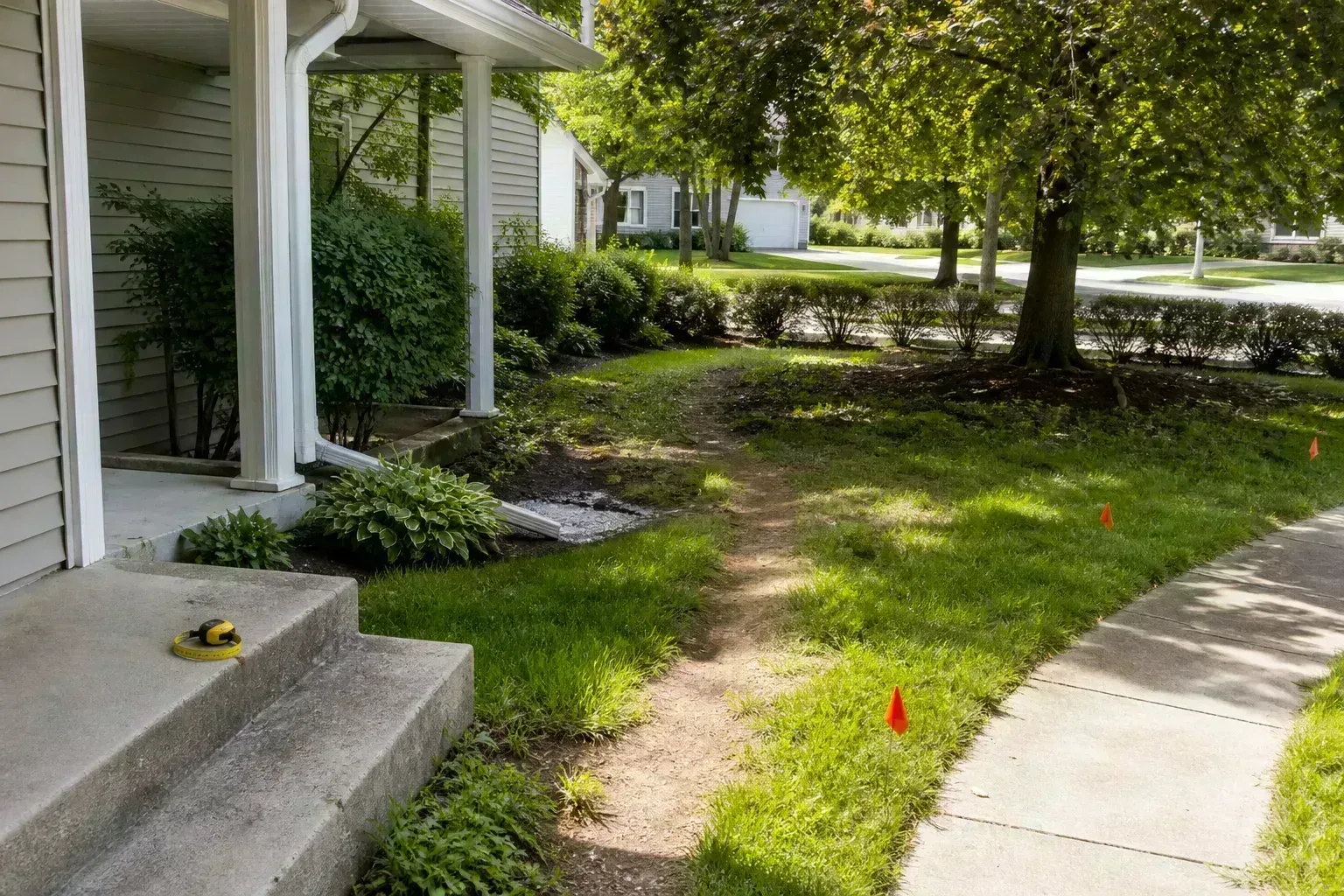
Map sun, slope, drainage, and foot traffic
Label each bed full sun, part shade, or deep shade under porches and trees. Slope matters as much as sun: gravel and crushed stone on a grade needs edging and a compacted base or it will travel downhill after the first hard rain. Flat beds still need a slight crown so water does not sit against the house foundation.
Measure the view from the curb and from the front door. The entry walk is your primary sightline; materials there should be stable underfoot and visually tied to the porch and trim colors. Narrow side strips beside driveways need low profiles that will not catch mower wheels or car doors.
The RHS front garden design guide stresses balancing hard surfacing with planting so runoff soaks in rather than racing to the storm drain. If you are replacing lawn with rock, check local rules on impervious cover and consider permeable gaps or planted pockets where regulations require them.
A Practical Guide to Landscaping Rock Types
Landscaping rock is not one product. Size, angularity, and color change how it drains, how it feels underfoot, and how much maintenance it needs.
River rock, pea gravel, and crushed stone
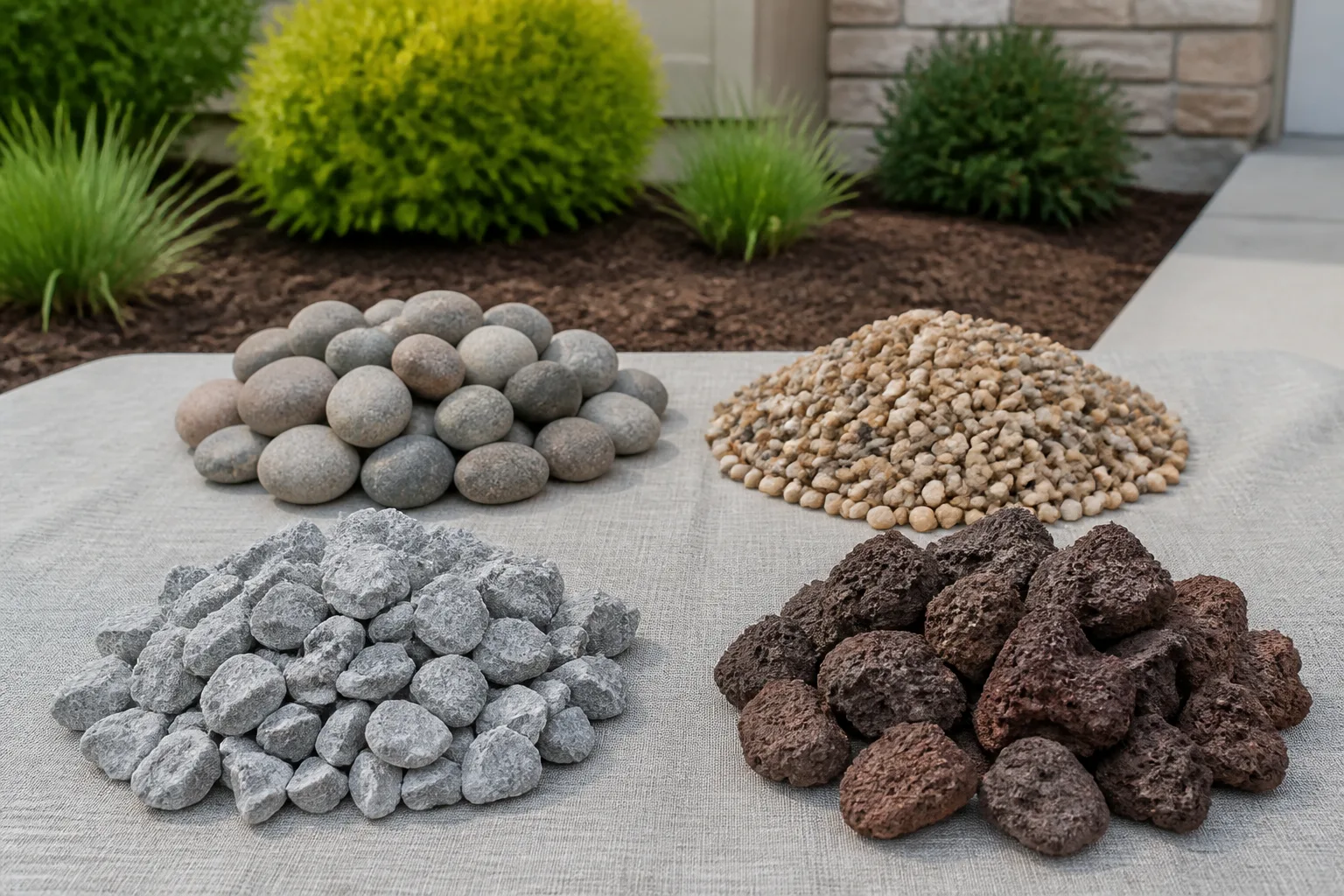
River rock is smooth, rounded, and decorative. It drains freely and looks polished in borders and dry creek accents, but it rolls under shoes and wagon wheels. Use it where foot traffic is light—bed edges, rain-garden swales, or accents around boulders—not as a primary path unless you accept occasional raking.
Pea gravel is smaller and softer underfoot, which is why it shows up in walkways, courtyard sitting areas, and fire-pit surrounds. It shifts unless you install a firm edge and a compacted base. Pair it with pavers or concrete pads at the front door so chair legs and strollers have a stable landing.
Crushed stone (angular gravel) locks together better than round stone. It suits driveway aprons, parking strips, and paths that must stay put. It is rough on bare feet, so keep it out of play areas and primary barefoot routes.
Boulders, flagstone, lava rock, and brick chips
Boulders add height on flat lots and act as natural steps on slopes. One or two well-placed stones often replace a dozen small accent plants for year-round structure. Set them partly buried so they look grounded, not like props waiting to roll.
Flagstone and other flat sedimentary stone work for steppers, porch landings, and formal walks. Lava rock is lightweight, porous, and permanent—useful as a red or black accent in dry beds where organic mulch would blow away. Brick chips add warm red tones that echo brick facades; they are sharp underfoot and best as visual fill, not paths.
Choose Mulch by Color, Texture, and Plant Needs
Organic mulch—shredded bark, hardwood, pine needles, compost blends—breaks down and improves soil over time. Penn State Extension notes that organic mulches moderate soil temperature, conserve moisture, and protect trunks from mower damage when applied correctly. Inorganic stone mulches do not provide those soil benefits.
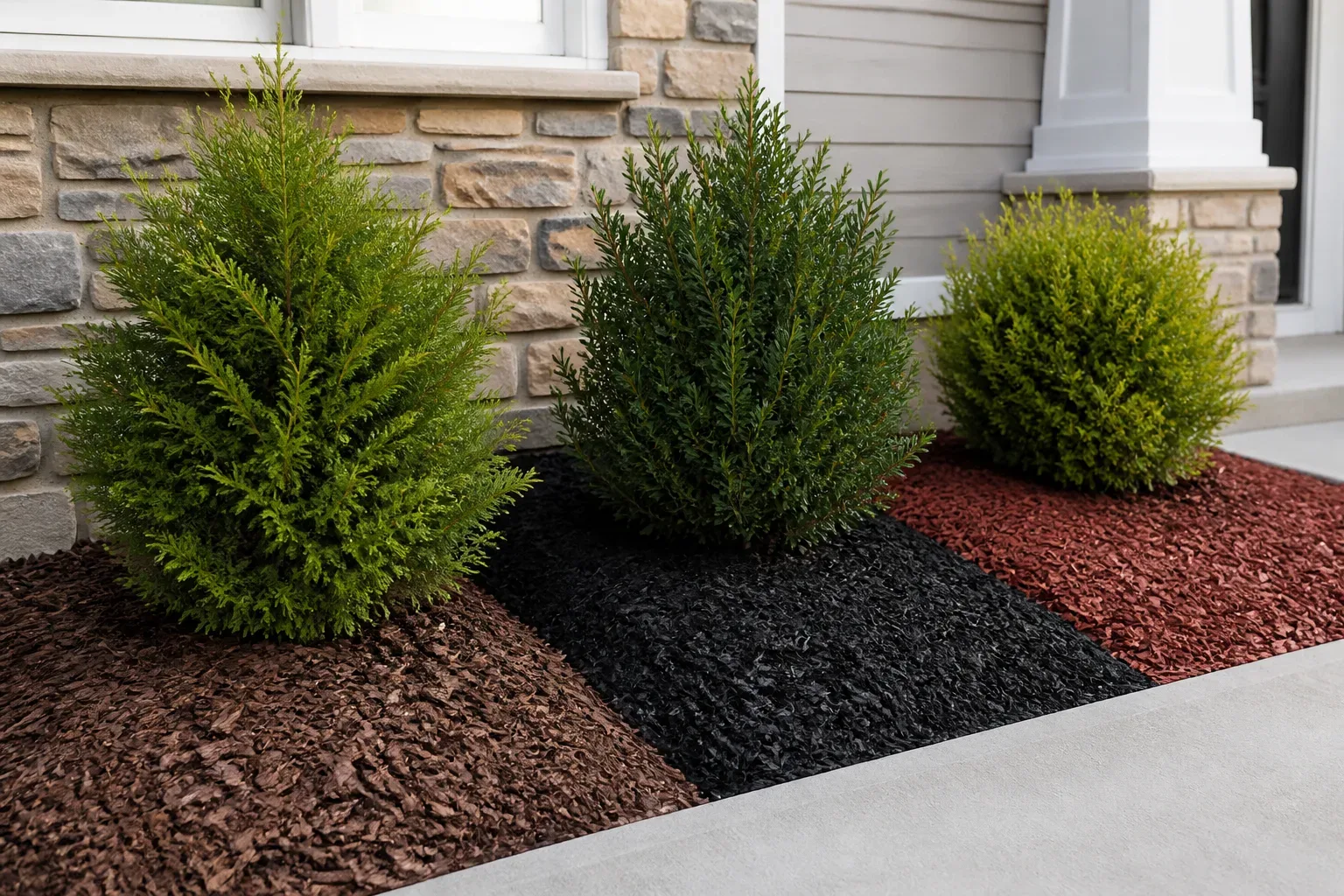
Brown and natural bark suit most siding colors and age gracefully. Black mulch makes green foliage pop but can absorb heat; use it away from heat-sensitive plants and reflective glass. Red mulch pairs well with brick, terra-cotta, and warm neutral stone; it fades and may need refresh sooner than brown tones.
Depth matters more than brand. Penn State Extension recommends 5–7 cm (2–3 in) of organic mulch on well-drained soils, less on poorly drained sites, and never piled against trunks. Fine double-shredded mulch needs a thinner layer because it packs and blocks air. Keep mulch back from stems and expose the root flare where trunk meets soil—piled mulch against bark is the harmful practice often called volcano mulching.
Refresh mulch when the layer thins, but scrape and measure first. Adding new mulch every year without checking depth is the same as applying too much at once.
Prepare the Ground for Rocks or Mulch
Skipping prep is how weeds win and gravel disappears into lawn. The sequence is the same whether you choose rock or mulch; only the top layer changes.
Remove turf and weeds from the bed outline. Grade so water moves away from the house. For rock areas that receive foot or tire traffic, add a compacted base of crushed stone before the decorative layer. Install edging—steel, brick, stone, or a clean trench—so materials do not migrate into grass.
Landscape fabric or heavy cardboard can suppress weeds under rock, but it is not magic. Organic debris collects on top, weeds root in that layer, and fabric eventually shows at edges. Fabric works best under decorative rock in low-traffic beds where you are not planting extensively. For planted mulch beds, paper or cardboard under mulch is often enough, and it decomposes instead of strangling roots later.
Calculate volume before delivery. Measure length × width × desired depth, then add 10 percent for settling. Spread rock evenly, rake to grade, and leave planting pockets cut through fabric where shrubs will go. For mulch, spread after plants are in place so you are not burying trunks during planting.
Rocks or Mulch? Use This Decision Framework
Neither material wins everywhere. Use this quick filter at each bed edge.
Choose rock when you need decades of stability, sharp drainage, fire-safe clearance, or a sculptural minimalist look with drought-tolerant plants. Rock costs more upfront but rarely needs replacement. It does not improve soil, can overheat roots in full sun, and may increase irrigation needs for leafy shrubs planted among dark stone.
Choose mulch when you are growing shrubs, perennials, or trees that benefit from cooler roots, slower evaporation, and organic matter as it decomposes. Mulch is cheaper per initial install but needs annual or biennial refresh. It can harbor pests if piled too deep or against wood siding and trunks.
Mixing both is not only allowed—it is often the best front-yard solution. A classic pattern: pea-gravel or crushed-stone path and driveway ribbon, with mulch beds flanking the walk for hydrangeas, boxwood, or ornamental grasses. Another: boulder and river-rock border around a mulch tree ring. Alternate textures in the same bed only when a low edge clearly separates them; otherwise gravel drifts into mulch and looks messy within a season.
Texture and Color Contrast Ideas for Curb Appeal
These first eight ideas focus on pairing materials so the front yard reads intentional from the street.
1. Contrasting textures and colors. Combine smooth river rock along a concrete walk with a dark bark mulch bed and evergreen shrubs. The hard path carries traffic; the mulch softens the foundation line. Match mulch tone to roof or shutter color for cohesion.
2. Large boulders for dimension. On flat lots, one or two boulders break up low horizontal lines and replace high-maintenance annual color. Place them off-center—not symmetrically flanking the door unless the architecture is formal.
3. Matching pathway and driveway materials. Repeat the same paver-and-gravel mix from driveway to front walk so the approach feels designed, not patched. Mulch beds on either side keep the hardscape from feeling like a parking lot.
4. Pebble border around a mulch bed. A 15–20 cm band of smooth pebbles between lawn and mulch creates a crisp edge that is easier to reshape than poured concrete. Dark mulch inside the border makes foliage contrast stronger.
5. Minimalist rock-dominant yard. Small lots and modern facades suit a mostly gravel front with one circular mulch island for a specimen shrub or ornamental grass. Maintenance is raking gravel and refreshing one small mulch zone.
6. Clean breezeway connection. Where a side path links front and back, use the same rock mix underfoot and mulch only in planted strips. Consistency makes a narrow side yard feel wider.
7. Curved gravel ribbons with evergreens. Sweep crushed stone or fine gravel in a curve through lawn or mulch, echoing the bed edge. Cypress, juniper, or low boxwood hold the shape through winter.
8. Complementary color pairing. Light gray stone against white siding and a blue door reads coastal; pair with brown mulch rather than red unless brick on the house pulls warm tones forward.
Ideas for Sloped, Small, and Corner Front Yards
Slope and size change the math. These seven layouts address grades and tight footprints.
9. Leveling and terracing with boulders. On a sloped front yard, bury boulders one-third deep and backfill with mulch tiers for shrubs. Stone holds grade; mulch planting pockets are easier to irrigate than gravel pockets on a hill.
10. Sloped steps with red mulch accents. Use flat boulders as informal steps across a side slope, with red mulch and tough ground covers between stones. Choose plants that tolerate reflected heat if stone faces afternoon sun.
11. Small-yard driveway focus. When there is little room for beds, invest in an attractive driveway edge: crushed stone between concrete pads, with a narrow mulch strip for one structural shrub rather than a wide bed you cannot maintain.
12. Corner yard stacked-stone border. The odd corner where lawn meets sidewalk is ideal for a raised edge of stacked stone and a mulch pocket with one upright evergreen or grass clump. Corners draw the eye—keep planting simple.
13. Under-tree mulch ring with rock edging. Large street trees need mulch wide to the drip line, not grass against the trunk. Ring the bed with larger rocks and keep mulch pulled back from the bark to avoid volcano mulching.
14. Multiple focal beds. Instead of one deep bed, use two or three smaller mulch islands with boulder anchors between windows or along a long facade. Repetition reads calmer than one busy mixed border.
15. Tranquil bench nook. In a side or corner bed, set pavers on compacted gravel through mulch to a small bench. It is a front-yard version of a courtyard pause—best where noise and privacy allow sitting.
Leveling slopes with boulders and terraced mulch beds
On grades steeper than about 15 percent, treat rock as retaining structure first and decoration second. Bury the downhill face of each boulder and direct runoff into planted swales, not toward the foundation. Mulch on slopes needs edging or it slides; shredded bark grips better than nuggets on grade. If erosion persists, add a short dry creek of river rock in the drainage path before replanting uphill beds.
Pathways, Driveways, and Symmetrical Entry Zones
Hard surfaces carry the heaviest use. These six ideas keep rock zones functional.
16. Clean lines with concrete and gravel. Modern facades pair large concrete pads with fine gravel infill. Keep gravel out of the mower line with steel edging and sweep stray stone weekly during the first month until it settles.
17. Symmetrical gravel walk to a centered door. Formal entries benefit from matching gravel bands and mirrored mulch beds with the same shrub cultivar on each side. Symmetry fails if the shrubs are different sizes—buy matched containers or the same cultivar count per side.
18. Budget-friendly DIY path. For a weekend project, lay landscape fabric, edge with brick or steel, add compacted base, then top with pea gravel. Plant low mulch beds on each side after the path is set so you do not trample new shrubs.
19. Outdoor zones with different floor materials. Define a front sitting area with gravel, keep planting beds in mulch, and leave a narrow turf or ground-cover strip only where you need green. Zone changes should be edged, not blended.
20. Red mulch with pea-gravel border. Warm stone paths and red mulch can unify brick houses; keep the gravel band narrow so it does not dominate the planting.
21. Alternating rock and mulch bands. In a wide bed, stripe coarse lava rock and dark mulch in shallow bands for graphic interest. This works best with few plant types—otherwise maintenance becomes fussy.
Tree Beds, Foundation Plantings, and Multiple Garden Areas
Plant-focused zones still need the right ground cover.
22. Grand large-yard mulch garden. Wide front lawns can support a deep mulch border with repeating boulder pairs and massed shrubs. Scale stone to the house—oversized boulders on a cottage look accidental; undersized stone on a two-story facade disappears.
23. Earthy exterior with natural stone and brown mulch. Tan siding, wood trim, and native-toned mulch with local fieldstone boulders tie the house to the region. This is especially effective where the lot already has mature trees.
24. Mulch bed with mixed accents. Within one bed, combine mulch with a few pavers, a planter box, or a vertical ornament—variation without replacing the whole bed with rock. Keep accents on the same color story.
25. Stacked-stone raised edge. Low dry-stacked stone raises a bed for drainage and makes perennials stand taller against pavement. Top with mulch inside; cap stones if you sit on the wall.
26. Fire-pit or courtyard rock surround. If your front courtyard includes a fire feature, use non-combustible rock in the clearance zone and mulch only outside flame reach. Budget rock borders work here, but follow manufacturer clearance and local fire rules—not all front yards should host open flame near overhangs.
Rock Gardens, Minimalist Yards, and Dry-Climate Fronts
Dry and desert fronts favor rock; these four ideas lean into that.
27. Patterned rock garden. Arrange contrasting river rock, lava rock, and crushed stone in graphic zones with minimal planting—yucca, sedum, or agave in pockets cut through fabric. Think art panel, not crowded perennial border.
28. Rocks with succulents on desert-style facades. Southwest and drought-prone regions suit gravel mulch substitutes and succulent masses between boulders. Skip organic mulch in the hottest zones where it dries instantly; use decomposed granite or crushed granite with drip irrigation at plant roots.
For humid climates, rock gardens still work in raised, fast-draining beds; choose sedums and herbs that tolerate wet winters if your soil holds water. The RHS low-maintenance gardening guidance applies here: fewer plant types, more hardscape, and honest acceptance of regional limits beat importing a desert look that fights your rainfall.
Common Rock-and-Mulch Mistakes to Avoid
Volcano mulching—mulch piled against trunks—is the most common front-yard error. Penn State Extension lists root suffocation, bark decay, pest habitat, and heat damage as consequences. Pull mulch back until the root flare shows.
Skipping edging lets gravel invade lawn and mulch spill onto walks. Install edge before fill, not after weeds appear.
Dark rock tight against south-facing glass reflects heat onto siding and fries shallow roots. Leave an air gap or use lighter stone near foundations.
Landscape fabric under planted mulch beds long-term can block water and trap roots. Prefer fabric only under decorative rock with few plants.
Mixing walk and bed gravel without changing size or edge causes constant raking. Use larger angular stone for traffic, smaller round stone for accents.
Ignoring first-year watering because rock looks “low maintenance.” New shrubs still need establishment irrigation whether the surface is bark or stone.
Our low-maintenance front yard landscaping guide pairs well with this page when you are ready to choose shrubs and reduce lawn. For edging detail, see brick edging ideas. For foundation structure, low-maintenance shrubs for front yards narrows plant picks once beds are mulched.
Conclusion
Front yard landscaping with rocks and mulch works when each material has a job: rock for stability, drainage, and paths; mulch for plant health and softer frames. Audit sun, slope, and traffic before you order stone. Prep soil, edge beds, and keep mulch shallow and away from trunks. Then borrow from the 28 layouts above—contrast textures at the entry, terrace slopes with boulders, stripe gravel paths through evergreen mulch beds, or go minimalist in dry climates—with the confidence that you are choosing a system, not just a photo.



