How to Grow and Care for French Lavender All Year Long
Learn how to grow French lavender (*Lavandula dentata*): choose a sunny, fast-draining site, water new plants wisely, prune safely, and protect tender pots.
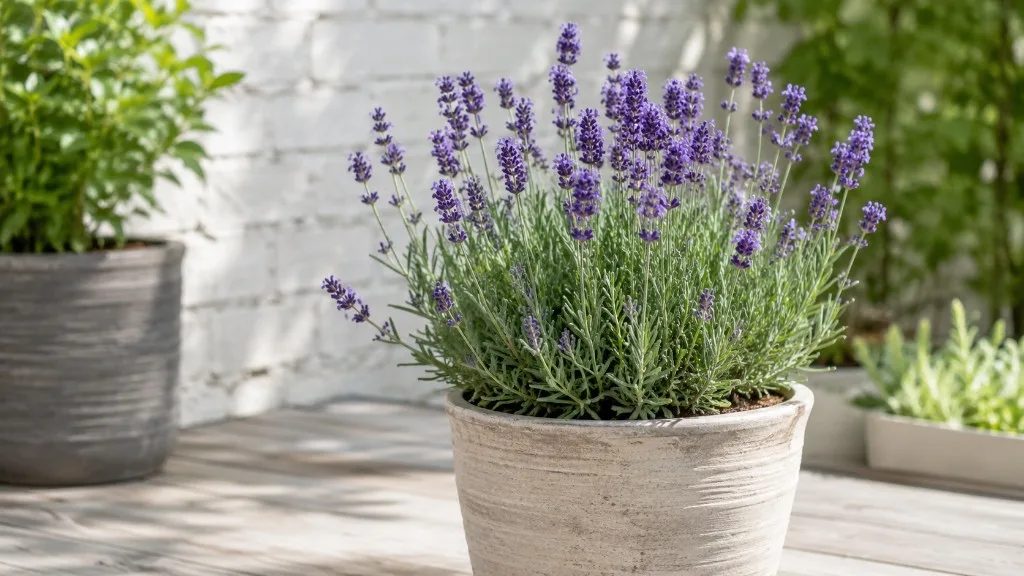
French lavender (Lavandula dentata) is a sun-loving, evergreen subshrub with finely toothed leaves and purple-blue flower spikes. It is easier to keep when its roots drain quickly and it gets enough light, but it is less cold-hardy than the lavenders many gardeners know from temperate perennial borders. In a warm, dry-summer climate it can flower for a long season; in a cold or wet-winter climate, treat it as a container plant you can shelter.
The two decisions that prevent most disappointments are confirming which “French lavender” you bought and choosing a site where rainwater does not linger around its crown. Once the plant is established in a suitable spot, water less often than you would for a thirsty border perennial, trim only leafy growth, and protect it from the kind of winter that its local hardiness rating cannot tolerate.
Identify French Lavender—and Separate It from Spanish Lavender
The name French lavender is used inconsistently in the nursery trade. This guide means Lavandula dentata, also sold as fringed or toothed lavender. Check the botanical name on the pot or plant label before using any care advice: the Royal Horticultural Society lists L. dentata separately from L. stoechas and the hardier English lavender group, and its species profile describes the toothed foliage and purple-blue flower spikes of L. dentata (RHS species profile).
Look first at the leaves. L. dentata has narrow gray-green to green leaves with small, repeated teeth or lobes along the edges. Its small flowers sit in dense spikes with purple bracts near the tip; the plant forms a bushy, woody-based shrub rather than a soft herbaceous clump. Fragrance is noticeable but often more herbal or camphor-like and less sweet than the familiar scent of English lavender.
Spanish lavender usually means L. stoechas. Its flower head is a compact, cone-like cluster topped by conspicuous petal-like bracts, often compared with rabbit ears. The RHS distinguishes those tender lavenders from L. dentata in its lavender growing guide. English lavender, L. angustifolia, has smoother leaf margins and generally tolerates colder winters. All three need drainage and sun, but a winter strategy that works for English lavender may fail with L. dentata.
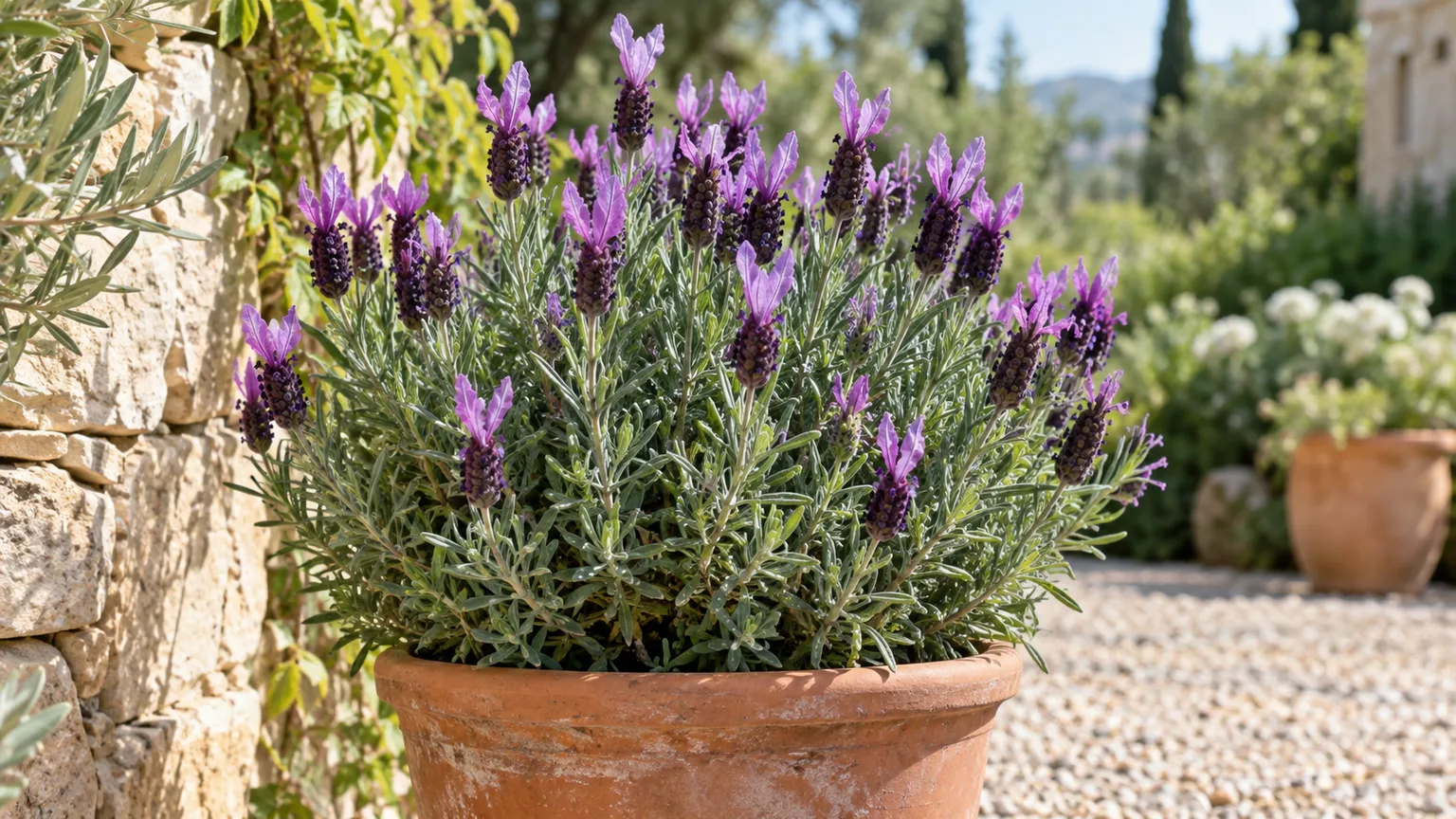
For a quick buying check, read the Latin name, inspect the leaf edges, and ask the nursery how the plant was overwintered locally. Common names alone are not reliable enough to identify a lavender or predict its frost tolerance. L. dentata is mainly grown for its foliage, flowers, and long ornamental display; it is not the usual culinary lavender, so choose a clearly identified culinary cultivar if your goal is cooking rather than garden color (Home for the Harvest’s French lavender guide).
Choose a Sunny Site and Plan for Winter
Give French lavender the sunniest practical location you have. Aim for at least six hours of direct sun, with more sun helpful in cooler climates. In shade, stems stretch toward light, the center stays damp longer, and flowering usually becomes weaker. A warm wall or a sunny, open slope can improve the conditions, but leave enough space for air to move around the plant instead of wedging it between dense, moisture-loving neighbors.
Heat itself is rarely the main problem. The harder combination is warm weather with humid air, frequent rain, and soil that stays wet overnight. In those conditions, allow extra spacing, avoid overhead irrigation, and favor a raised bed or pot that sheds water. A sunny position cannot compensate for a saturated root zone: if the spot collects runoff or remains muddy after rain, choose another site before planting.
French lavender is a tender Mediterranean shrub, not a dependable cold-climate perennial everywhere it is sold. The RHS rates its listed L. dentata profile H3 and recommends a sheltered, sunny position; its broader lavender guidance notes that L. dentata is among the less hardy types that may need winter cover (RHS plant profile; RHS lavender guide). A named cultivar, local exposure, and winter drainage can all change the outcome, so use zone labels as screening information rather than a guarantee.
Treat Hardiness as a Climate Risk, Not a Promise
U.S. garden references place L. dentata around USDA Zone 8 and warmer, while the RHS lists an H3 rating; neither is a promise that an exposed plant in wet soil will survive a hard winter (Home for the Harvest; Gardenia; RHS species profile). A plant against a sunny south-facing wall in sandy soil may survive a brief cold snap that damages an exposed plant in a damp bed. Prolonged freezes, cold wind, repeated freeze-thaw cycles, and wet winter soil raise the risk even when a catalogue says the zone is suitable.
If your winters regularly fall below the plant’s local tolerance, grow it in a container from the start or accept that it may behave as an annual. Do not rely on a thick, wet mulch packed against the crown for protection; that can trap moisture where the plant is already vulnerable. In marginal climates, a dry, sheltered root zone and a movable pot are usually more useful than a calendar-based promise that the plant is “hardy to” one temperature.
Prepare Soil That Drains Before You Plant
Fast drainage matters more than achieving a precise soil pH. French lavender tolerates a range of soil reactions, but it struggles when compacted clay or a low spot keeps its roots wet. Aim for ordinary, moderately fertile to lean soil that releases excess water promptly. You do not need to make the bed rich: high fertility can encourage soft, leafy growth at the expense of a compact shape and flowers.
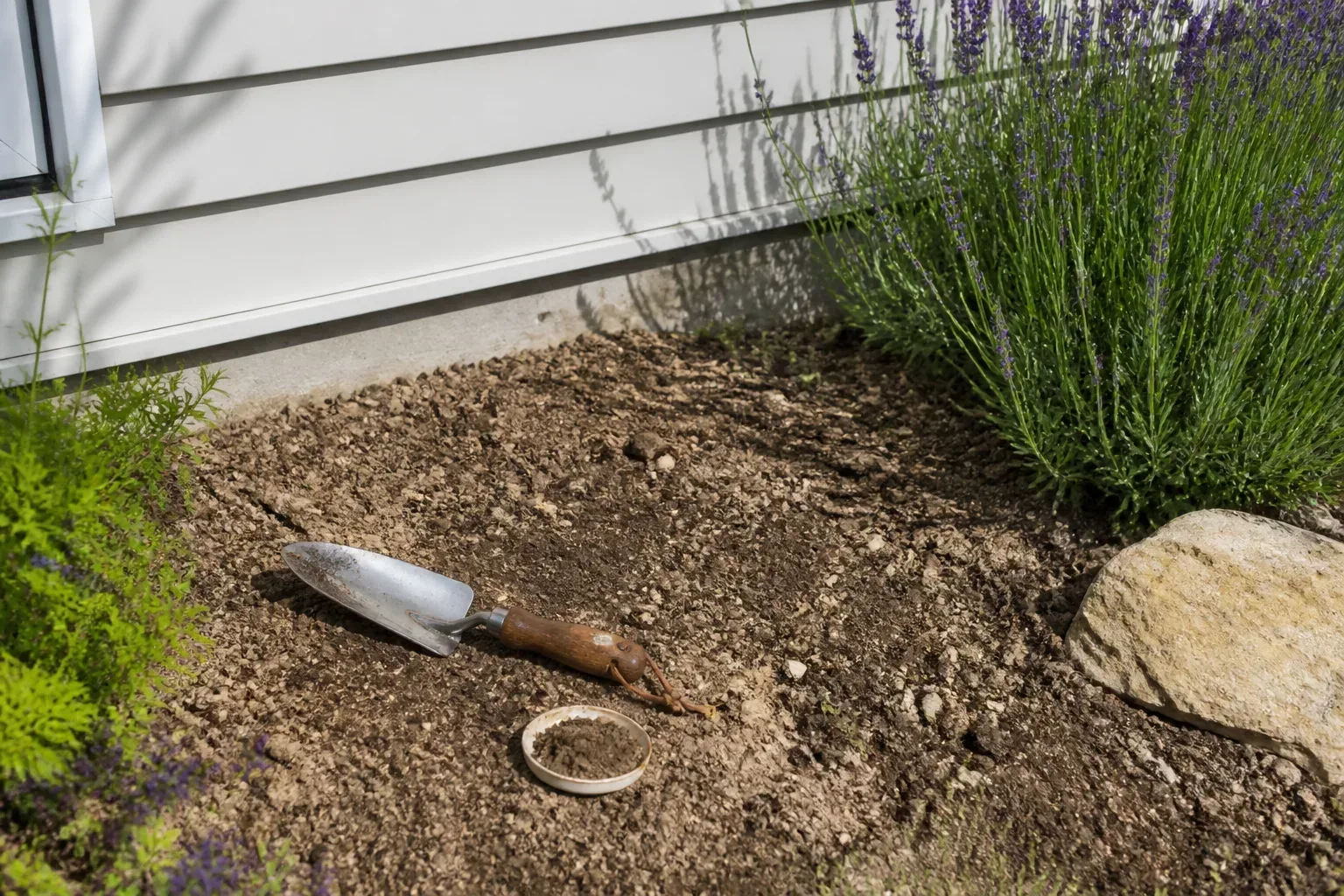
Test the site after a substantial rain. If water remains pooled for hours or the soil smears into a dense, sticky mass, do not solve the problem by pouring a small amount of sand into the planting hole; a little sand mixed into clay can leave a heavy, poorly structured pocket. Instead, plant on a broad raised mound, use a properly built raised bed with free-draining soil, or move the plant to a container. The RHS recommends raising lavender on a mound or in a raised bed when soil is heavy (RHS cultivation advice).
If the bed drains adequately but has a compacted surface, loosen a broad area rather than making a narrow amended hole. Keep the root flare at or just above the finished soil line, and use a thin gravel mulch only if it will not cover the crown. Skip routine lime unless a soil test shows that the soil is strongly acidic and the amendment is appropriate for that site. Drainage and sun are the first corrections; fertilizer and pH tinkering will not rescue roots sitting in winter water.
Plant French Lavender at the Right Depth
Plant in spring after the soil begins to warm and the danger of severe frost has passed. This gives the shrub time to extend roots before its first winter. In reliably mild regions, fall planting can work while the soil is still warm, but it is a poor choice where cold rain arrives early or the plant has little time to establish.
Water the nursery pot before planting if the root ball is dry, then slide the plant out without pulling on the stems. Loosen circling roots gently, set the root ball at the same depth it grew in the pot, and backfill without burying the lower woody stems. A buried crown stays damp and can decline even when the surrounding bed seems well-drained.
Give the mature shrub room rather than crowding it for an instant hedge. The RHS lists its profile at about 0.5–1 m tall and up to 1–1.5 m wide, though cultivar, climate, and pruning affect final size (RHS species profile). Space plants so foliage can dry after rain and so you can see the base when checking for woody stems or rot. Water deeply after planting to settle soil around the roots, then shift to an establishment routine rather than keeping the bed constantly moist.
Water by Root-Zone Dryness, Not a Weekly Calendar
Newly planted French lavender needs more attention than an established shrub. During its first growing season, check the root ball and nearby soil every few days in hot, rainless weather. If the upper few inches have dried and the root zone is no longer cool and moist, water slowly at the base until moisture reaches the roots; if the soil is still damp, wait. The objective is a thorough drink followed by an opportunity for air to return to the soil, not a daily sprinkle.
Once roots have spread into the bed, in-ground plants can usually handle dry spells without routine irrigation. Water during an unusually prolonged drought when the plant shows sustained stress, but confirm the soil is dry first. Newly established lavender is more vulnerable to drought than a mature shrub, while established lavender in wet clay is more likely to fail from excess water than from ordinary summer dryness. That is why a fixed “weekly” interval is less useful than looking at soil and weather.
Containers need closer checks because a small volume of mix dries faster than garden soil. In hot, windy weather, inspect the pot every day or two; water fully when the mix has dried well below the surface, and let the excess drain away. Do not leave the pot standing in a saucer of water. In cool weather or winter, the plant uses water slowly, so extend the interval and keep the mix on the dry side. Both the RHS and Epic Gardening distinguish newly planted lavender from drought-tolerant established plants and note the greater watering needs of containers (RHS lavender guide; Epic Gardening lavender guide).
Grow French Lavender in Containers
A pot is a practical way to grow L. dentata where winter cold, wet clay, or poor garden drainage would make an in-ground planting risky. It also lets you move the plant to a protected location without disturbing its roots. Place the container outdoors in full sun during the growing season; French lavender is not a low-light houseplant, and a bright indoor window rarely provides the airflow and direct sun of an outdoor site.
Choose a Pot That Can Dry Between Waterings
Choose a container with unobstructed drainage holes and enough room for the root ball plus a modest margin of fresh mix. A pot only slightly wider than the root mass is easier to manage than a very large container full of wet soil. Terracotta can help the sides of the root zone dry, but any durable pot works if water can escape. Do not put a layer of gravel in the bottom as a substitute for drainage holes; the holes and free-draining mix do the real work.
Use a loose, free-draining potting mix rather than dense garden soil or a water-retentive mix formulated for moisture-loving annuals. A commercial mix amended with horticultural grit or pumice can improve drainage, but the whole root zone must remain airy, not just the bottom inch. Set the crown at the same level as before and keep the pot raised slightly if its holes might sit against a flat surface.
Check the mix rather than watering by day of the week. In the hottest part of summer, a pot in direct sun may need water more often than an in-ground plant; in a cool, cloudy spell, the same pot can stay damp much longer. Repot when roots densely circle the container, mix has broken down or become difficult to wet evenly, or the plant repeatedly dries within a day. Move up one pot size, not several, so unused mix does not stay wet around a small root system.
Overwinter Pots in a Bright, Sheltered Place
Before a hard frost, move the pot to a bright, cool, frost-protected space such as an unheated greenhouse, cold conservatory, or sheltered porch with strong light. Avoid a heated, dim room: warmth can prompt weak growth while the light is inadequate. Keep the root ball only lightly moist through winter, protect it from repeated rain, and do not fertilize while growth is slow. The RHS recommends keeping less-hardy lavender covered in winter and relatively dry, especially in containers where roots have less insulation (RHS lavender growing guide).
In spring, reintroduce the plant to outdoor sun gradually if it has spent winter under cover. Check for live green growth before trimming away frost-damaged tips, and wait until the forecast is settled before leaving it outdoors full-time. If the plant has been exposed to frost, give it time to show which stems are alive rather than cutting the whole canopy immediately.
Feed Lightly and Encourage a Long Bloom
French lavender usually needs little fertilizer in a garden bed. If a soil test or clear growth pattern shows a deficiency, correct that specific problem rather than applying a high-nitrogen lawn or general-purpose feed. Too much nitrogen encourages soft shoots that can flop, shade the shrub’s center, and become more vulnerable to cold or damp. Plants in pots gradually use the nutrients in their mix, but refreshing the mix during repotting is often preferable to repeated feeding.
Bloom time varies with climate, cultivar, and winter damage. In warm regions, L. dentata may flower over a long season and sometimes produce repeated flushes; in cooler places, flowers are more concentrated in the warm months. Do not interpret a missed calendar month as a diagnosis. Check light, drainage, age, and recent pruning: a shaded plant or one cut hard into old wood is unlikely to respond to extra fertilizer.
Remove a few spent flower stems if you want a tidier plant or to encourage another flush, but stop deadheading when new growth would be exposed to impending cold. For cut flowers, take stems when the first flowers on a spike are opening, and harvest after morning dew has dried. French lavender is generally valued as an ornamental rather than the standard culinary type, so keep flowers from treated nursery stock out of food and use an identified culinary lavender when cooking is the goal (Home for the Harvest).
Prune Without Cutting into Old Wood
Lavender develops a woody base with leafy growth above it. The safest pruning rule is simple: make every shaping cut where you can see living green growth below it. Old, bare stems do not reliably break into new shoots, so a hard cut into brown wood can leave a permanent hole or kill that branch. Use clean, sharp shears and take a little off at a time; you can always remove more, but you cannot restore a stem cut too far back.
Shape the Green Canopy After Flowering
After the main flush, remove spent flower stalks and lightly shorten leafy shoots to keep the shrub rounded. Keep cuts above the green, leaf-bearing portion and leave enough foliage to feed new growth. If the plant flowers repeatedly, you can deadhead selectively through the season, but avoid constant shearing that removes every new shoot before it matures.
The RHS species profile recommends deadheading after flowering and trimming in late summer to limit straggly growth, while warning against autumn pruning in wet or cold areas and against cutting into old wood (RHS L. dentata profile). In a climate with early frost or cold, wet winters, a light trim after flowering is safer than a late, severe cut. If the plant needs a second tidy-up, remove only dead or frost-damaged tips in spring once you can see where healthy growth resumes.
What to Do with a Woody or Neglected Plant
Do not try to transform a mature, bare, woody shrub with one hard haircut. First look for green shoots lower on each branch; prune only above those shoots and accept an uneven outline if necessary. If a stem has no living foliage or buds below the proposed cut, remove that whole stem at the base only if doing so will not leave the shrub sparse or unstable.
For a plant with a mostly dead center, few green shoots, or years of bare wood, replacement is often more reliable than rejuvenation. Take cuttings from healthy young growth before removing the old plant so you can preserve the cultivar. Regular small trims are easier on the shrub than a drastic attempt to reset its shape every few years.
Propagate French Lavender from Cuttings
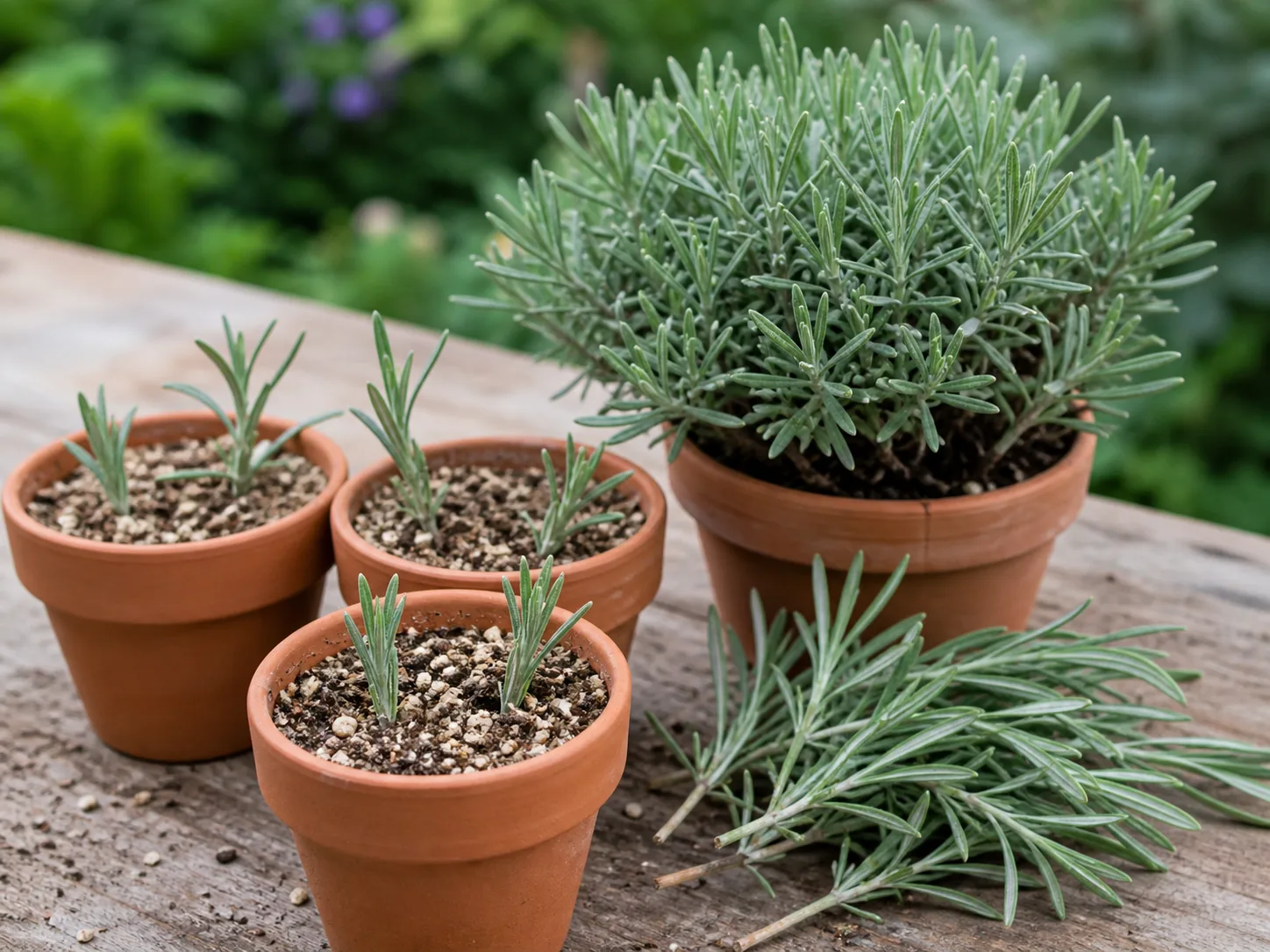
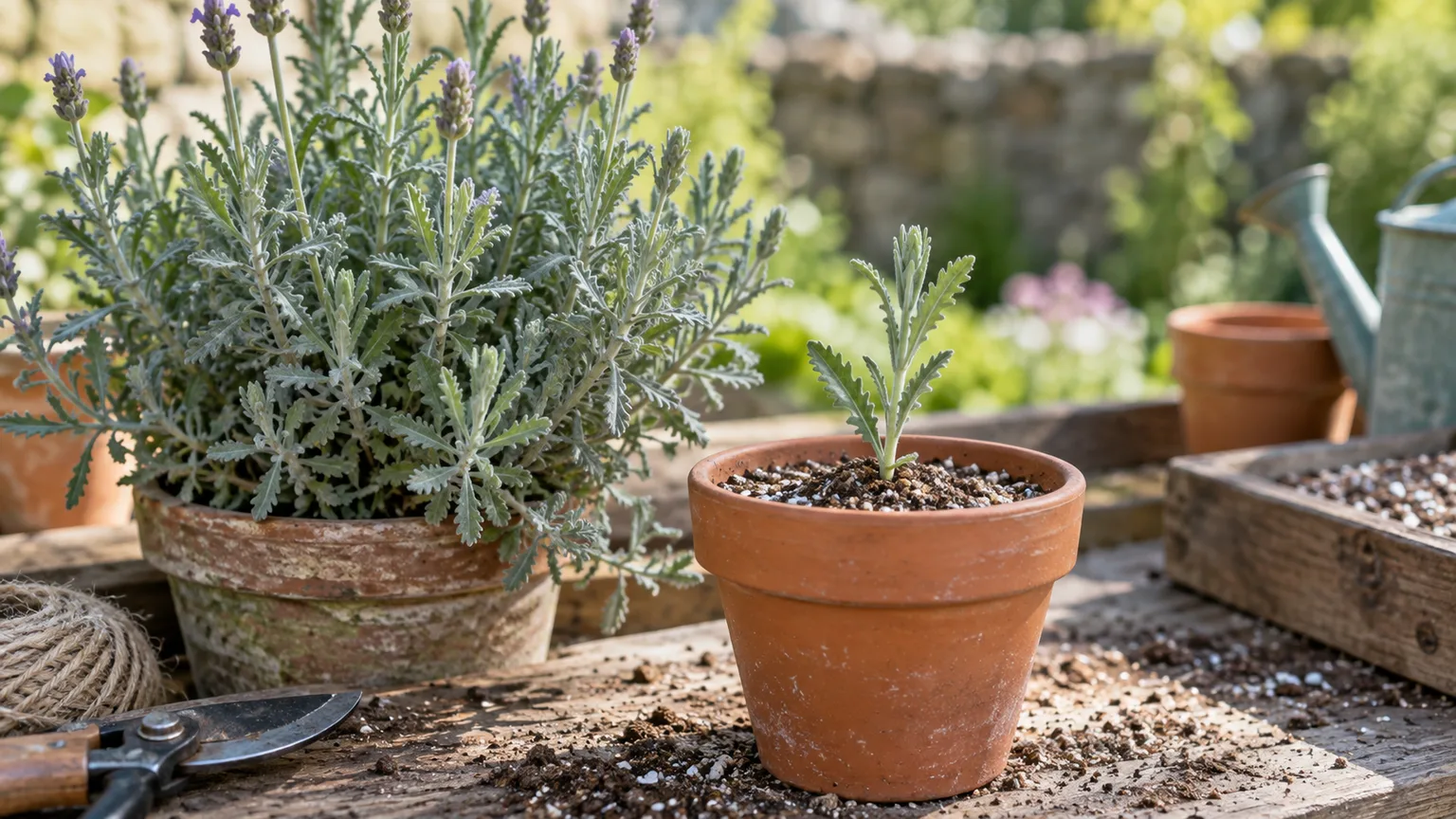
Cuttings are the most dependable way to reproduce a named plant with the same general traits. Take soft or semi-ripe shoots in late spring through summer, when the current season’s growth is firm enough to handle but not fully woody. Select a healthy, non-flowering shoot and use clean snips; avoid weak tips, diseased material, and branches that are already old and brittle. The RHS lists softwood cuttings in early summer and semi-ripe cuttings in late summer as methods for lavender, while Home for the Harvest gives species-specific cutting advice for L. dentata (RHS propagation guidance; Home for the Harvest).
Prepare a small pot with a clean, gritty, free-draining propagation mix. Remove leaves from the lower part of a 3–4-inch shoot, keeping a small tuft at the tip, and insert the bare portion into the mix. Firm it gently so the stem stands upright, then water enough to settle the medium and let it drain. Rooting hormone is optional; it cannot compensate for a waterlogged pot or a cutting that dries out.
Place the pot in bright, indirect light and warmth, out of harsh midday sun while roots are forming. Keep the medium slightly moist, not saturated, and avoid sealing the cutting in a humid plastic cover that keeps leaves wet. Check progress after several weeks by tugging gently or looking for roots at a drainage hole; do not pull the stem up repeatedly to inspect it. Once rooted, pot the cutting individually and acclimate it gradually to full sun before planting outdoors.
Grow from Seed Only When Variation Is Acceptable
French lavender can be raised from seed, but seedlings are slower and may not match a named parent in size, flower color, or growth habit. If the label names a cultivar and you want a close copy, use a cutting instead. Sow seed on a fine, free-draining seed mix, cover lightly, and keep it evenly but modestly moist in a bright place; do not leave a seed tray waterlogged or assume every seed will germinate at the same time.
Pot seedlings on when they are large enough to handle without damaging the roots. Grow them on in bright conditions and protect them from frost while small. Plant them out only when they have a sturdy root system and the weather is suitable for establishment. Seed is a reasonable experiment if you want several plants and can tolerate variation; it is not the quickest route to a uniform border.
Diagnose Yellow Leaves, Wilting, and Root Rot
Yellow leaves and drooping stems are symptoms, not diagnoses. Start by checking the soil several inches below the surface and the plant’s recent weather. If the root zone is wet, compacted, or sour-smelling, excess moisture is a stronger suspect than thirst. If the soil is bone dry and the whole plant is limp during heat, water stress becomes more plausible. Cold injury, transplant shock, shade, and natural aging can also discolor foliage, so do not respond to every yellow leaf with fertilizer or more water.
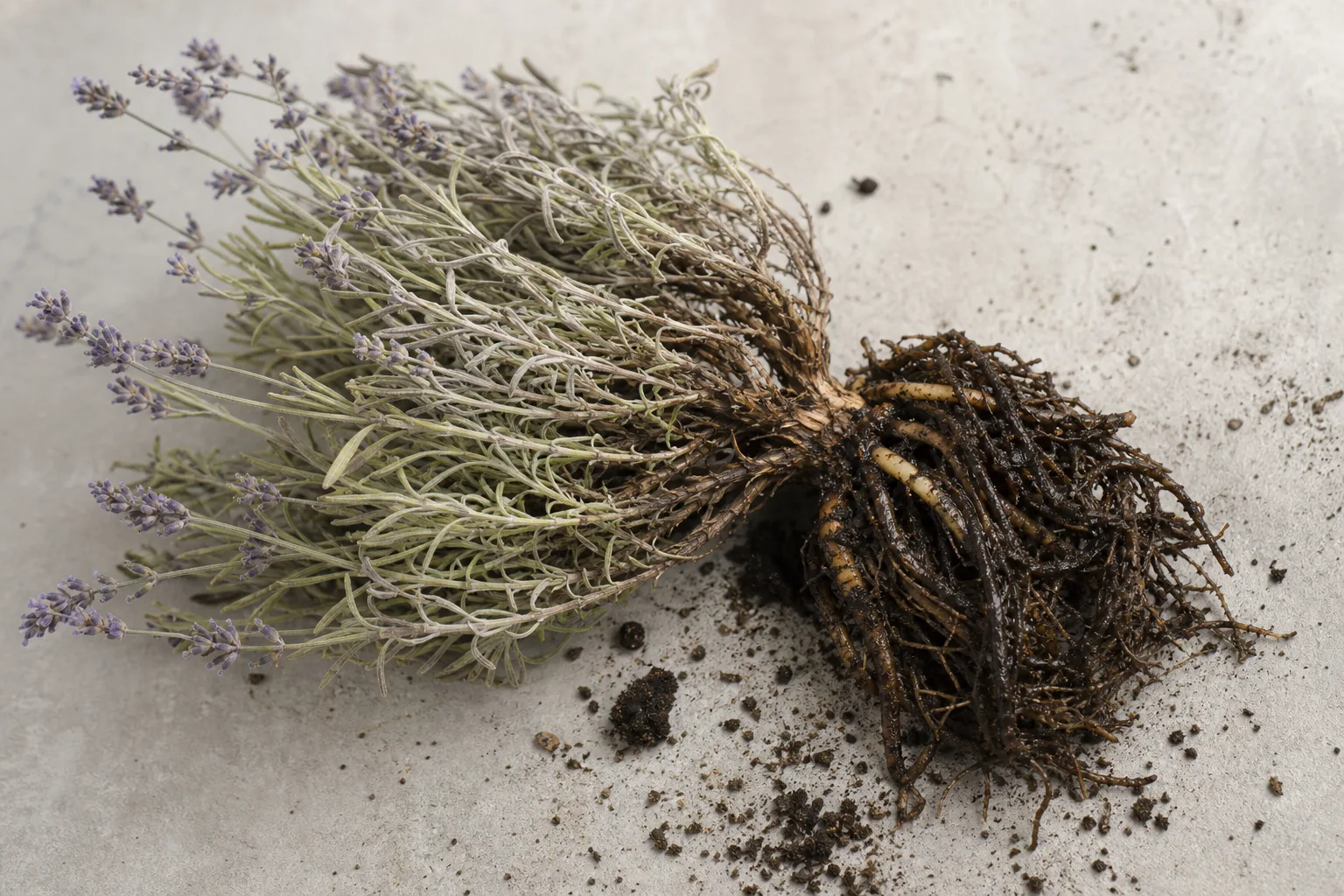
For a potted plant that stays wet, tip it out and inspect the roots. Healthy roots should be firm; roots that are dark, soft, and breaking apart are damaged. Trim only clearly dead roots with clean snips, move the plant into fresh, airy mix in a pot with open drainage, and hold water until the mix begins to dry. If the crown and most roots are rotted, recovery is unlikely; take healthy cuttings if any remain and discard the collapsed plant.
For an in-ground shrub, stop irrigation temporarily and assess whether runoff or a low planting depth is keeping the base wet. Improve drainage across the planting area, not just around the stem, or move the plant to a raised bed. Browning tips alone do not prove root rot; inspect soil and roots before making a major change. Avoid cutting the plant back hard while it is stressed, because it needs its remaining green foliage to recover.
Check for Pests Before Treating
Lavender is not immune to pests. Aphids may cluster on soft growth, and the RHS lists rosemary beetle and cuckoo spit insects among possible problems on lavender. Look beneath leaves and along flower stalks before deciding that a sticky or spotted leaf is a watering issue. For a small aphid cluster, rinse or remove the affected shoot and recheck the plant; identify a pest before choosing any pesticide and follow the label if a treatment is genuinely needed.
Conclusion: Keep the Roots Drier Than the Foliage
French lavender rewards a gardener who matches its climate limits instead of forcing it into a damp, cold site. Identify Lavandula dentata by its toothed leaves, give it full sun and quick drainage, water young plants according to the soil, and move vulnerable pots somewhere bright and frost-protected for winter. In warm regions, those basics can support a long flowering season with little routine feeding.
The maintenance rule that saves the most plants is to preserve green growth. Prune lightly above leafy shoots, do not bury the crown, and investigate wet roots before adding water or fertilizer. If your garden cannot provide sun and drainage through winter, a movable container is not a compromise; it is the most practical way to grow this tender lavender.